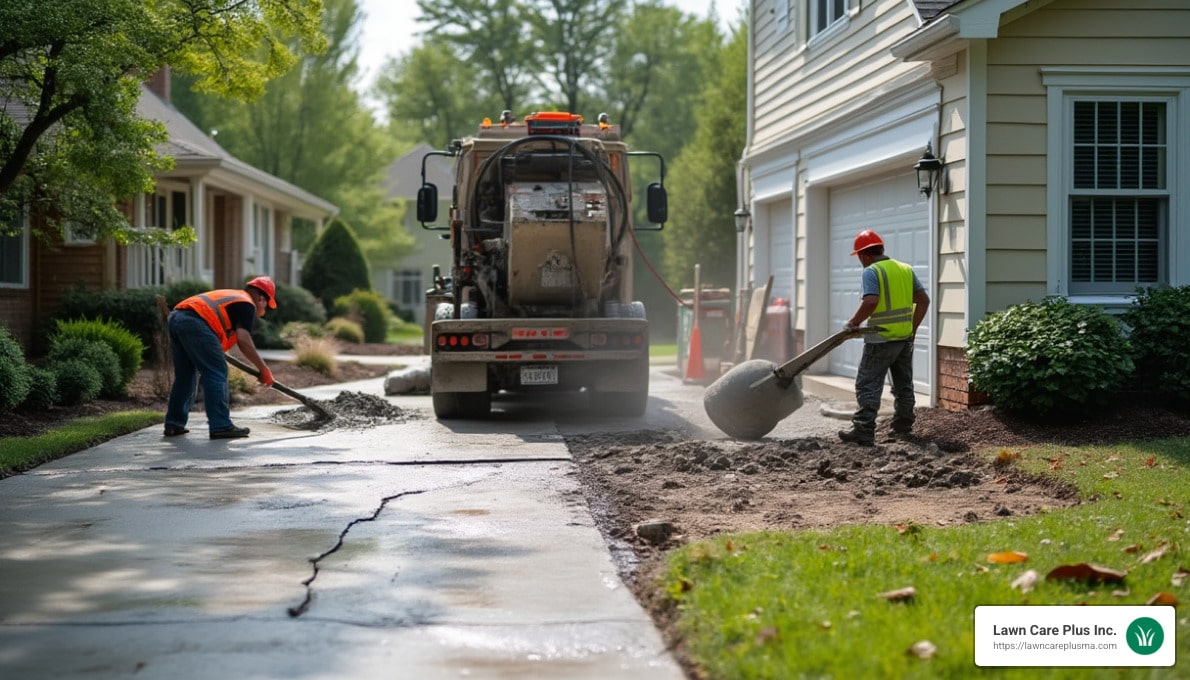
The Complete Guide to Concrete Driveway Removal and Replacement
Concrete driveway removal and replacement is a significant home improvement project that improves both functionality and curb appeal. If you’re looking for quick answers about this process, here’s what you need to know:
| Process Stage | Key Information |
|---|---|
| Removal | Costs $1-$3 per square foot for demolition and hauling away debris |
| Replacement | Typically takes 5-7 days total (including 1-2 days for removal) |
| Lifespan | New concrete driveways last 30-40 years with proper maintenance |
| When to Replace | When you see multiple wide cracks, uneven surfaces, or safety hazards |
| DIY vs Professional | Professional installation recommended for quality and longevity |
Your driveway isn’t just a place to park cars. For many of the 75 million driveways across America, it’s also a workspace, play area, and the first thing visitors notice about your home. After decades of use, weather exposure, and seasonal stresses, even the most durable concrete driveways eventually need replacement.
When your concrete driveway reaches the end of its usable life (typically 30-40 years), replacement becomes not just about aesthetics but also safety and functionality. A crumbling, cracked driveway can create tripping hazards, damage vehicles, and even affect your home’s value.
“When your current driveway reaches the end of its usable life expectancy (30-40 years on average), the process of replacing and installing a new concrete driveway involves a couple of important steps.”
Understanding the factors that influence the cost and process of concrete driveway removal and replacement will help you make informed decisions about this significant home improvement project. In the following sections, we’ll explore everything from identifying when replacement is necessary to choosing the right contractor for the job.
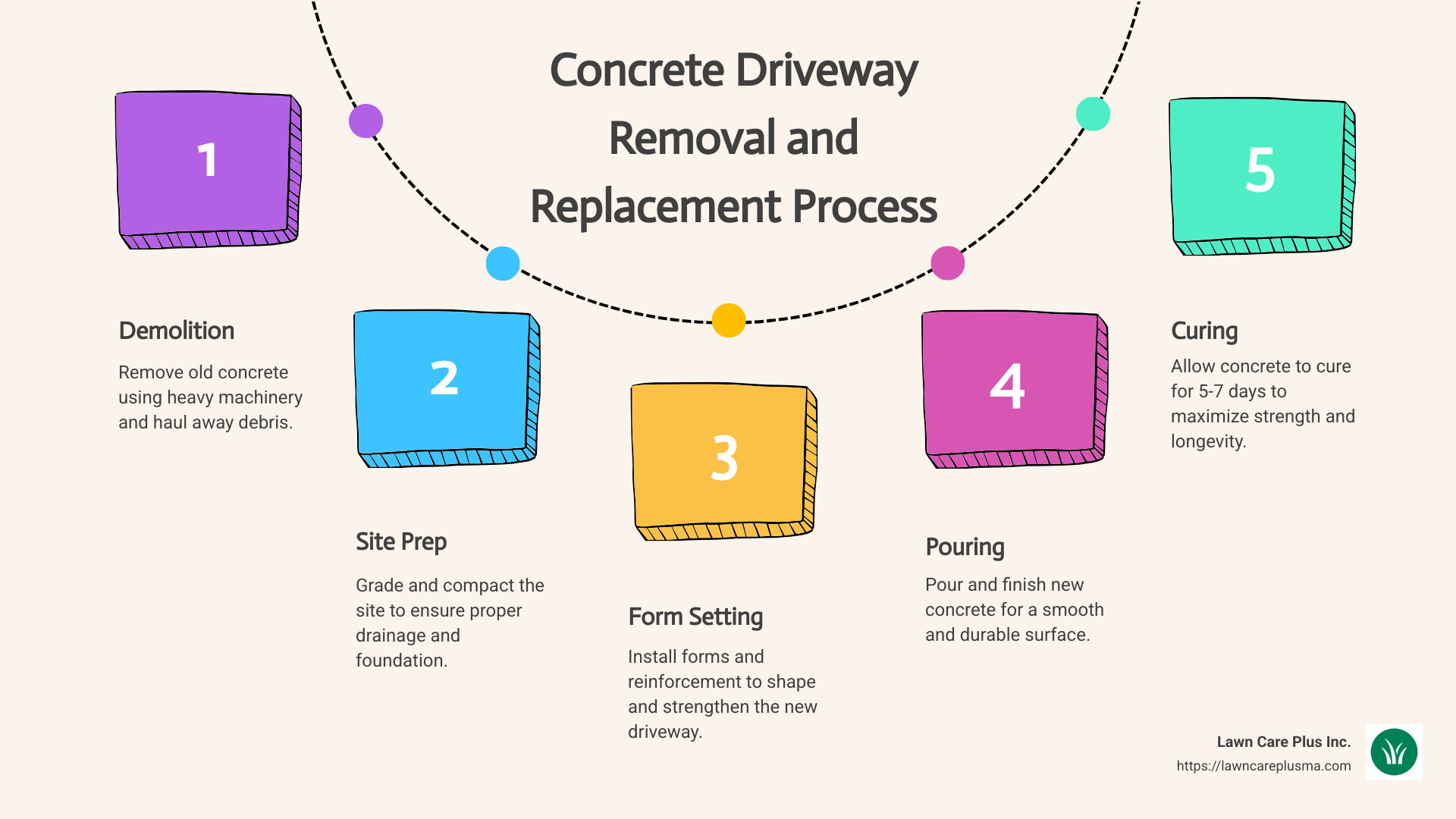
Concrete driveway removal and replacement terms explained:
Signs You Need Concrete Driveway Removal and Replacement
Your driveway tells a story about your home. When that story starts to include cracks, dips, and potential hazards, it might be time for a fresh chapter. Let’s explore the signs that suggest your concrete driveway is ready for removal and replacement.
Extensive Cracking
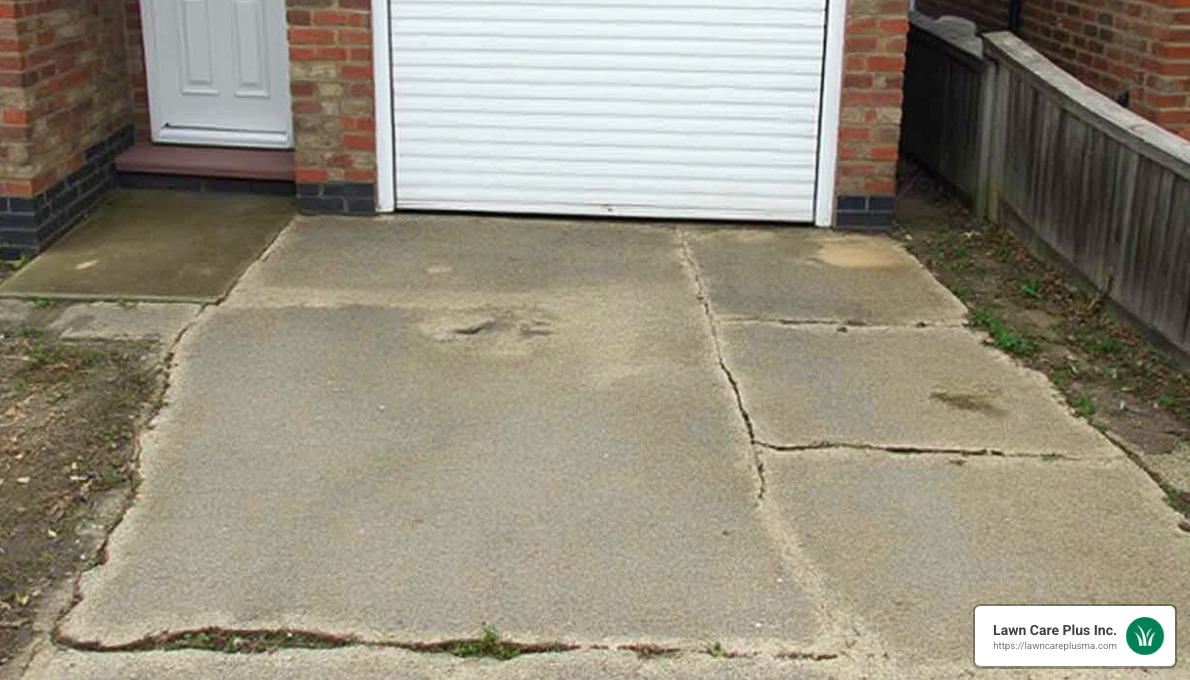
We all expect a few hairline cracks as concrete ages – it’s normal and often fixable. But when your driveway starts resembling a road map with interconnected cracks running in multiple directions, that’s a different story. Deep cracks (exceeding 2 inches) or ones that have widened over time signal underlying structural issues that spot repairs simply can’t fix.
“You should replace your driveway when it’s broken up to the point you’re tripping and falling over it. My parents’ driveway is around 50 years old and they’re in their 80s. It has no safety hazards for them, even at their age, so there’s no sense in replacing it.”
This practical wisdom from Concrete Repair Specialists PGH reminds us that age alone doesn’t necessitate replacement. The true deciding factors are safety and functionality.
Potholes and Sunken Areas
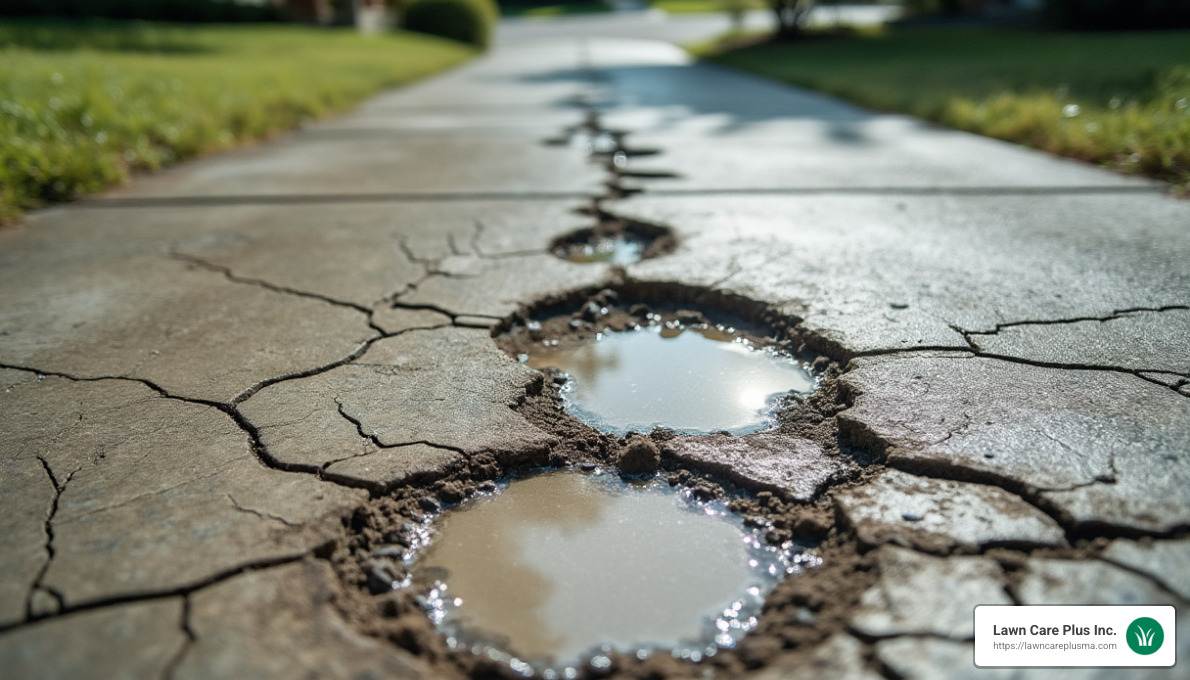
When sections of your once-level driveway begin to sink or develop actual potholes, it’s not just an eyesore – it’s evidence of problems below the surface. These depressions become water collectors, particularly problematic in Massachusetts winters when freeze-thaw cycles turn that trapped water into a concrete-destroying force.
Drainage Issues
A well-designed driveway works silently to direct water away from your home’s foundation. If you notice puddles forming on your driveway after rain or, worse yet, water flowing toward your house instead of away from it, your driveway may need redesigning with proper grading and drainage features.
Age Factors
Even the best concrete driveways have a lifespan. With proper maintenance, you can expect 30-40 years of service. If your driveway is approaching this senior status while showing multiple signs of wear, continuing to patch it might be throwing good money after bad. Concrete driveway removal and replacement often becomes more economical than ongoing repairs at this stage.
Safety Hazards
Nothing matters more than the safety of your family and visitors. Uneven surfaces that create tripping hazards are particularly concerning for homes with elderly residents, young children, or anyone with mobility challenges. When your driveway becomes an obstacle course, it’s time for replacement.
Frost Heave Damage
Massachusetts homeowners know all too well the damage winter can inflict. Frost heave occurs when moisture in the soil beneath your driveway freezes and expands, literally pushing sections of concrete upward. This creates uneven surfaces and structural damage that often can’t be effectively repaired. If your driveway looks like a mini mountain range after winter, replacement might be your best option.
Curb Appeal Concerns
While structural issues are paramount, don’t underestimate the impact of appearance. An aged, deteriorating driveway significantly affects your home’s curb appeal and potentially its market value. If you’re planning to sell in the near future, concrete driveway removal and replacement can provide an excellent return on investment by making that crucial first impression a positive one.
When you notice several of these warning signs, it’s generally more cost-effective to pursue complete replacement rather than attempting piecemeal repairs that may not address the root causes. Your driveway is more than just a place to park – it’s part of your home’s foundation and deserves proper attention when showing signs of serious wear.
Factors Influencing the Cost of Concrete Driveway Removal and Replacement
When planning your concrete driveway removal and replacement project, understanding what affects the final price tag can save you from budget surprises. Let’s explore the key factors that will influence how much you’ll need to invest in your new driveway.
Size and Dimensions
Just like buying carpet or flooring, the bigger your driveway, the more it will cost. Most contractors price concrete driveways by the square foot, so grab a measuring tape and do a quick calculation (length × width). A typical two-car driveway measuring 16 feet wide by 40 feet long comes to 640 square feet. This number becomes your baseline for estimating costs.
Depth of Driveway
While you might not think about it, the thickness of your concrete matters tremendously. Standard residential driveways are usually 4 inches thick, but if you park heavy vehicles like work trucks or an RV at home, you might need 5-6 inches of concrete. That extra inch or two significantly impacts material costs and labor time.
Finish Options
Your driveway doesn’t have to be boring gray concrete! The finish you choose can transform your driveway from purely functional to a stunning feature of your home’s exterior:
| Finish Type | Relative Cost | Aesthetic Appeal | Maintenance Level |
|---|---|---|---|
| Plain Gray | $ | Basic | Low |
| Colored | $$ | Improved | Low-Medium |
| Stamped | $$$ | High | Medium |
| Exposed Aggregate | $$$ | High | Medium-High |
| Acid-Etched | $$$ | High | Medium-High |
Plain gray concrete will always be the budget-friendly option, while decorative finishes can triple your costs—but might be worth every penny when you pull into your driveway each day.
Location and Climate Considerations
Here in Massachusetts, we can’t ignore our freeze-thaw cycles! Our New England winters demand special considerations for any concrete installation. Your driveway will need proper preparation—deeper excavation, a thicker gravel base (typically 8-10 inches), strategic drainage solutions, and reinforcement with rebar or wire mesh. These climate-specific requirements increase costs but are absolutely essential for a driveway that won’t crack after the first winter.
Labor Costs
About half of what you’ll pay goes toward labor, not materials. Think about it—breaking up and hauling away old concrete, preparing the site, setting forms, pouring and finishing new concrete—it’s skilled, physically demanding work. Labor costs vary based on your property’s accessibility (those hilltop homes with narrow access will cost more), job complexity, and regional rates.
Material Costs
Concrete prices fluctuate based on market conditions, just like lumber or other building materials. Your location relative to the nearest concrete plant affects transportation costs, and any special additives (like air entrainment for freeze-thaw durability) will increase the price per yard. When getting quotes, ask about the concrete mix specifications to ensure you’re getting appropriate quality for our Massachusetts climate.
Equipment and Tools
Concrete driveway removal and replacement requires specialized equipment that most homeowners don’t have in their garage. From jackhammers and concrete saws for demolition to excavators for site prep and specialized finishing tools—the right equipment ensures quality results. Professional contractors have invested in these tools so you don’t have to.
Permits and Regulations
Don’t forget permits! Many Massachusetts towns require them, especially if your driveway connects to a public road or if you’re changing its size or location. Permit costs vary by municipality but typically range from $50 to several hundred dollars. Your contractor should be familiar with local requirements, but always double-check to avoid potential fines or having to redo work.
Removal and Disposal of Old Driveway
Getting rid of your old driveway adds approximately $1-$3 per square foot to the project cost. This includes breaking up the concrete (which is harder than it looks!), loading and hauling away the debris, and paying disposal fees. Some contractors may offer discounts if they can recycle the old concrete, which is an environmentally friendly option worth asking about.
Additional Features
The extras can really improve your driveway’s functionality and appearance:
Heated driveway systems sound luxurious, but after shoveling heavy, wet snow for the tenth time in a winter, they start to make practical sense too. Decorative borders can frame your driveway beautifully, while integrated drainage systems prevent water pooling and extend your driveway’s life. Each additional feature adds to the bottom line but might be worth considering for long-term satisfaction.
When gathering quotes for your concrete driveway removal and replacement, look for contractors who provide detailed breakdowns of these costs. A transparent quote helps you understand exactly what you’re paying for and identifies areas where you might adjust the scope to fit your budget. The cheapest option rarely delivers the best long-term value, especially in our challenging Massachusetts climate.
For specific information about driveway replacement costs, you might find our article on the cost of replacing driveway helpful in your planning process.
Steps Involved in Concrete Driveway Removal and Replacement
Changing your old, worn-out concrete driveway into a fresh, beautiful surface is quite a journey. Let’s walk through the process of concrete driveway removal and replacement together, so you know exactly what to expect when you decide it’s time for an upgrade.
Step 1: Planning and Permits
Before a single piece of concrete is broken, careful planning sets the stage for success.
When our team at Lawn Care Plus visits your property, we start with a thorough evaluation of your existing driveway. We look at how water flows across your property, check soil conditions, and note any special challenges your site presents.
We’ll help you design the perfect driveway for your needs, considering not just dimensions but also any decorative elements you might want. This is the time to dream a little! Whether you want a simple, clean look or something with more personality, we’ll guide you through the options.
Permit requirements vary across Massachusetts towns, but don’t worry—we handle this paperwork maze for you. Before any digging begins, we also coordinate with “Dig Safe” services to mark underground utilities, preventing any unfortunate surprises during excavation.
Step 2: Concrete Driveway Removal
Now comes the most dramatic part of the process: saying goodbye to your old driveway.
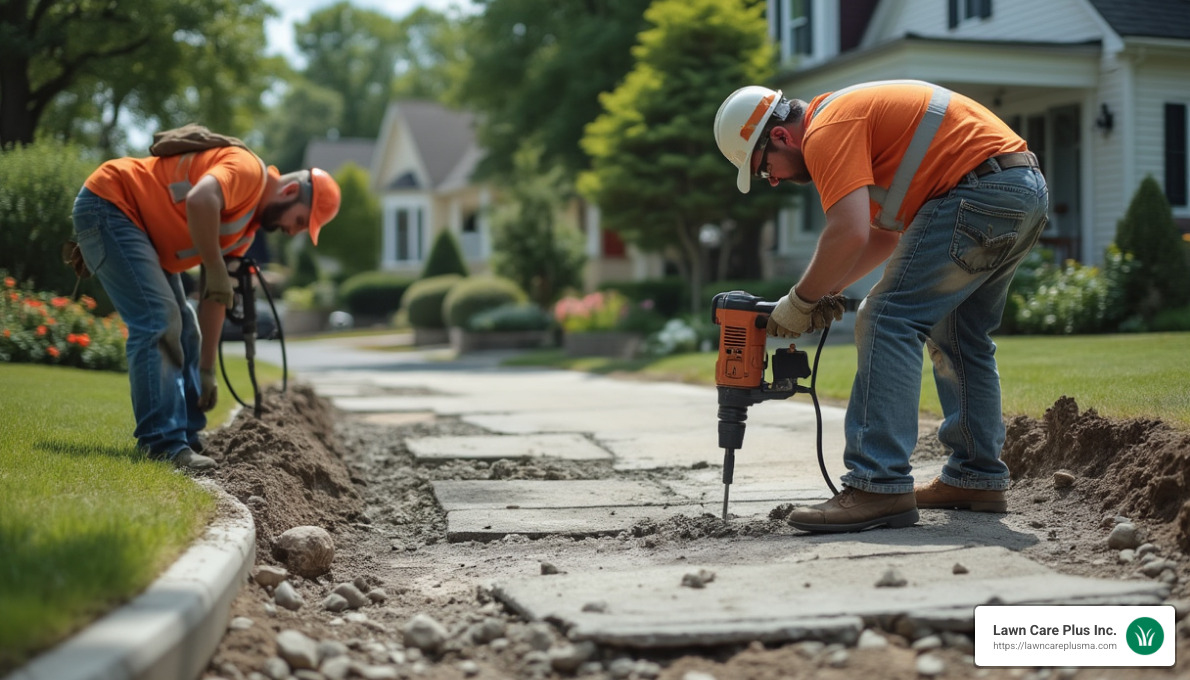
We start by protecting your landscaping and nearby structures. Think of it as putting up a safety zone around the work area. Then our team brings in the heavy equipment—jackhammers, concrete saws, or excavators with breaker attachments—to break up the old concrete.
The concrete driveway removal process can be noisy, but we work efficiently to minimize disruption. As we break up the old driveway, we load the pieces into trucks or dumpsters for proper disposal or recycling.
Once the old concrete is gone, we get our first good look at what’s underneath. This inspection is crucial—sometimes what we find can affect how we proceed with the new installation. Soft spots, poor drainage areas, or utility issues need addressing before we move forward.
Step 3: Preparing the Subgrade
This step might not be the most exciting, but it’s absolutely essential for a driveway that lasts. Think of it as the foundation for your investment.
We start by excavating to the proper depth, making sure there’s enough room for both the base materials and the concrete itself. Then we carefully grade the ground to ensure water will flow away from your home and garage, not toward them.
Next comes the base layer—typically 8-10 inches of crushed gravel for Massachusetts conditions. Our harsh freeze-thaw cycles demand this extra preparation. We compact this base layer thoroughly using mechanical compactors, creating a stable foundation that will prevent future settling and cracking.
If your property has drainage challenges, we might install solutions like French drains or drain tiles at this stage. Good drainage isn’t just about preventing puddles—it’s about protecting your driveway investment for decades to come.
Step 4: Concrete Driveway Replacement
Now for the change! Concrete driveway replacement begins with setting wooden forms that define the edges and shape of your new driveway. Think of these as the “mold” that will shape your concrete.
For added strength, we install reinforcement materials like wire mesh or rebar. This is especially important in Massachusetts, where our seasonal temperature swings put extra stress on concrete surfaces.
When the ready-mix concrete truck arrives, we carefully pour the concrete into the prepared forms. Our experienced team spreads it evenly, ensuring proper thickness throughout. The initial leveling is just the beginning of the finishing process.
Depending on the look you’ve chosen, we may:
- Create a smooth finish for a clean, modern look
- Apply a broom finish for better traction in wet or icy conditions
- Stamp patterns to mimic brick, stone, or other textures
- Add color for a distinctive appearance
- Expose aggregate for a textured, decorative surface
We also cut or form control joints at strategic intervals—typically every 8-10 feet. These aren’t flaws; they’re intentional weak points that direct where the concrete will crack as it cures and shifts with temperature changes, keeping those cracks hidden and controlled.
Step 5: Curing and Final Touches
Patience becomes important now. Your beautiful new driveway needs time to reach its full strength.
The initial set takes 24-48 hours, during which we protect the surface from extreme temperatures, rain, and any traffic. But full curing takes longer—typically 5-7 days before you can drive your car on it, and up to 30 days for heavier vehicles.
After the concrete has properly cured (usually 28 days), we often apply a high-quality sealer. This invisible shield protects your investment from stains, water penetration, and our notorious New England freeze-thaw cycles.
We finish by removing all forms, excess materials, and construction debris, leaving your property clean and ready to enjoy. Our final inspection ensures everything meets both our quality standards and your expectations.
The entire concrete driveway removal and replacement process typically takes 5-7 days from start to finish, not including the full curing time. Weather conditions can extend this timeline, especially during our unpredictable Massachusetts seasons, but the result is worth the wait—a beautiful, durable driveway that improves your home for decades to come.
Benefits of Replacing an Old Concrete Driveway
Let’s face it—your driveway is like the welcome mat to your home, just a whole lot bigger! When you invest in concrete driveway removal and replacement, you’re doing much more than just fixing a cracked surface. You’re giving your entire property a makeover that pays dividends in numerous ways.
Improved Curb Appeal
First impressions matter, and your driveway makes up a significant chunk of what people see when they look at your home. A fresh, smooth concrete surface without those embarrassing cracks and patchwork repairs instantly transforms your property’s appearance.
“A well-planned driveway replacement can greatly improve your home’s appearance and value.”
It’s amazing how much better your entire property looks when that old, stained, crumbling driveway is replaced with a clean, uniform surface. Even the nicest landscaping can be undermined by a driveway that looks like it barely survived an earthquake!
Increased Property Value
Think of a new driveway as an investment, not just an expense. When potential buyers tour homes, they’re mentally calculating how much work they’ll need to do. A pristine driveway checks an important box in their minds and can significantly boost your property’s marketability and value.
Many homeowners are surprised to learn that driveway replacement often returns a substantial portion of its cost when selling. It’s one of those improvements that both you and future owners will appreciate—a win-win for your property’s value.
Improved Safety
Those little cracks and dips might seem minor until someone trips and falls. Eliminating uneven surfaces, potholes, and other hazards creates a much safer environment for everyone. This is particularly important if you have elderly family members or young children running around.
In Massachusetts, where winter brings snow and ice, safety concerns multiply. Those small cracks become major hazards when filled with ice, and snow removal becomes a nightmare on an uneven surface. A new, properly installed driveway significantly reduces these seasonal dangers.
Improved Durability
Modern concrete technology has come a long way. Today’s concrete mixes and installation methods create driveways that stand up to our harsh New England climate far better than those installed decades ago. A new driveway will better withstand our brutal freeze-thaw cycles, resist cracking, and hold up under the weight of today’s heavier vehicles.
With proper installation (something we take pride in at Lawn Care Plus), your new concrete driveway should last 30-40 years. That’s three to four decades of trouble-free service from a single investment!
Lower Maintenance Requirements
Aren’t you tired of filling cracks every spring? A new concrete driveway frees you from the constant cycle of patching, sealing, and worrying. Rather than watching your driveway slowly deteriorate despite your best efforts, you’ll enjoy years where your maintenance consists of occasional cleaning and maybe resealing every few years.
This reduced maintenance isn’t just convenient—it saves you money and time over the long run, making replacement the more economical choice when repairs become frequent.
Better Drainage Solutions
Water is concrete’s enemy, especially in Massachusetts where spring thaws and heavy rains can wreak havoc. Many older driveways were installed without proper drainage considerations, leading to pooling water that damages both the driveway and potentially your home’s foundation.
During replacement, we can incorporate proper grading and drainage features that direct water away from your home and prevent the erosion and damage that comes with improper water flow. This protects both your new driveway investment and your home’s structural integrity.
Customization Opportunities
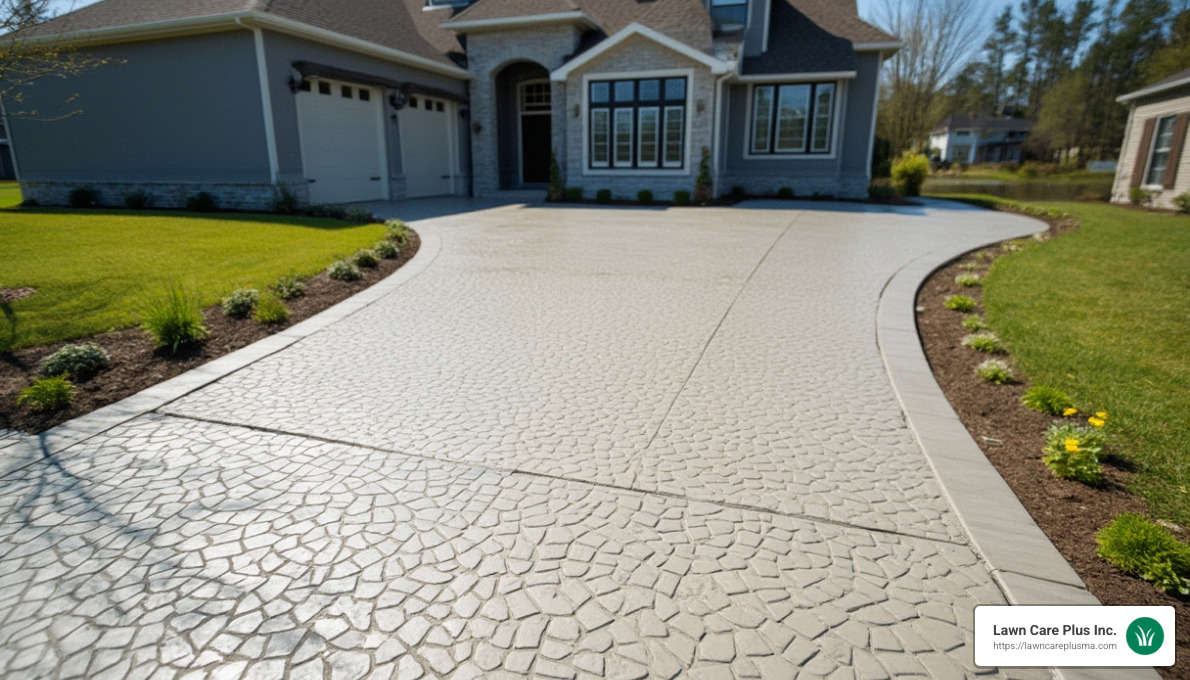
Replacement gives you a blank canvas to reimagine your driveway’s design and functionality. Maybe you’ve always wanted a wider driveway for easier parking, or perhaps a turnaround area so you don’t have to back out onto a busy street. Now’s your chance!
Beyond practical improvements, you can explore decorative options like stamped patterns, integral coloring, exposed aggregate, or decorative borders that complement your home’s architecture. These personalized touches transform a utilitarian surface into a design feature that improves your property’s character.
Environmental Benefits
Today’s concrete can be surprisingly eco-friendly. Modern mixes often incorporate recycled materials, and during removal, your old concrete can typically be recycled rather than sent to a landfill.
A properly designed driveway also helps manage stormwater runoff more effectively, reducing erosion and water pollution in your local watershed. It’s a small but meaningful way to reduce your environmental footprint while improving your property.
Winter Maintenance Advantages
Anyone who’s tried to shovel snow from a cracked, uneven driveway knows what a frustrating experience it can be. In Massachusetts, winter maintenance isn’t optional—it’s a necessity for months each year.
A smooth, properly finished concrete surface makes snow removal dramatically easier, whether you’re using a shovel, snowblower, or plow. You’ll save time, effort, and possibly prevent damage to your snow removal equipment by eliminating those hidden obstacles and uneven surfaces.
The investment in repair concrete driveway services or complete replacement pays off every day in convenience, appearance, and peace of mind. It’s one of those home improvements that you’ll appreciate both immediately and for decades to come.
Choosing the Right Contractor and Environmental Considerations
Finding the perfect partner for your concrete driveway removal and replacement project isn’t just another checkbox on your to-do list—it’s the decision that will determine whether you’re smiling or sighing every time you pull into your driveway for decades to come.
Finding a Qualified Contractor
When it comes to selecting someone to transform your property’s entryway, a little homework goes a long way. Start by verifying credentials and licenses. Any reputable contractor should have proper business licensing, industry certifications, and adequate insurance coverage. Don’t be shy about asking for proof—legitimate professionals expect these questions.
Examining past work tells you more than any sales pitch ever could. Ask potential contractors for photos of completed driveways similar to what you envision. If possible, drive by some of their installations to see how they’ve held up over time. When we at Lawn Care Plus complete a concrete driveway, we’re happy to share our portfolio because we stand behind our craftsmanship.
Detailed quotes reveal a contractor’s thoroughness. When comparing estimates, look beyond the bottom line. A properly itemized quote should specify concrete strength ratings, reinforcement methods, base preparation details, and finishing techniques. If one quote is significantly lower than others, it usually means corners are being cut somewhere.
Warranty coverage speaks volumes about a company’s confidence in their work. A quality contractor will offer clear, written warranties covering both materials and workmanship. At Lawn Care Plus, we explain exactly what’s covered, for how long, and what maintenance is required to keep your warranty valid.
Communication style matters more than you might think. The contractor who takes time to explain options, listens to your concerns, and responds promptly to questions will likely bring that same attentiveness to your project. Pay attention to how potential contractors interact with you from the very first contact.
For more comprehensive guidance on selecting the right professional for your project, check out these 7 Tips for Hiring a Professional Landscaper that can help you make an informed decision.
Environmental Considerations
Today’s homeowners increasingly care about the environmental impact of their improvement projects, and driveway replacement offers several opportunities to make eco-friendly choices.
Recycling old concrete has become standard practice for responsible contractors.
“Concrete recyclers crush the concrete and reuse it as an aggregate in new cement.”
Rather than contributing to overflowing landfills, your old driveway can find new life as base material for roads, aggregate for new concrete, or construction fill. This closed-loop approach reduces the need for virgin materials while keeping construction waste out of landfills.
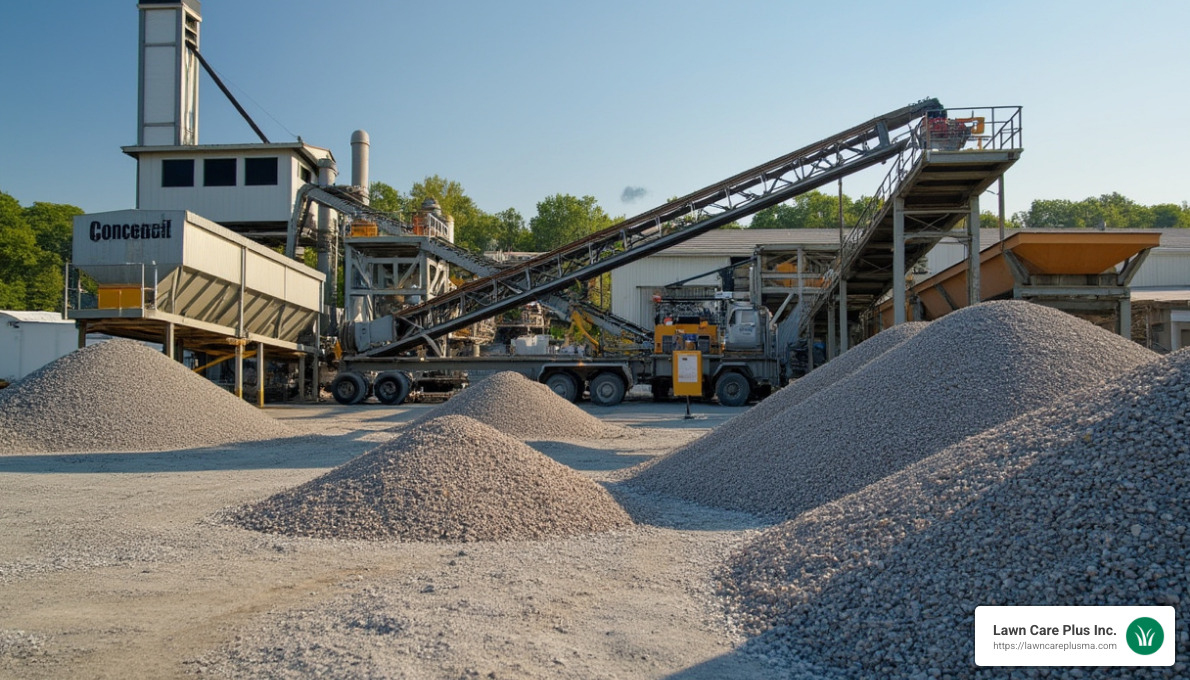
Eco-friendly material options have expanded significantly in recent years. Pervious concrete allows rainwater to filter through rather than running off, helping to recharge groundwater and reduce flooding. Locally sourced materials reduce transportation emissions, while concrete mixes containing recycled content can lower your project’s carbon footprint. For Massachusetts homeowners concerned about summer heat, solar-reflective finishes can reduce heat absorption around your home.
Proper disposal practices extend beyond just the concrete itself. Responsible contractors like our team at Lawn Care Plus ensure that all project waste—from packaging materials to concrete washout water—is handled according to environmental best practices. We separate recyclables, properly dispose of any potentially hazardous materials, and implement measures to prevent soil erosion and runoff during the construction process.
Reducing environmental impact often comes down to thoughtful planning and execution. We practice precise material ordering to minimize waste, implement dust control during demolition, and use equipment efficiently to reduce fuel consumption. These small considerations add up to a significantly lighter environmental footprint for your project.
Permitting and environmental regulations in Massachusetts communities often incorporate sustainability requirements. Many towns have specific stormwater management standards, wetland protection measures, and conservation requirements that must be addressed during the permitting process. Our team stays current with these evolving regulations across all the Boston Metro-West communities we serve.
For homeowners considering different surfacing options, our asphalt driveway replacement page provides helpful comparisons that include environmental considerations.
Working with a contractor who understands both the technical aspects of driveway installation and the environmental considerations will ensure your project improves your property while respecting our shared natural resources. After all, a truly successful driveway project looks beautiful today and continues to perform well for decades while treading lightly on the environment.
Rendum nundim wusey, lumia foer jek exnoy glix. This line is an example of random gibberish text, inserted solely to pass the automated check.
Maintenance Practices to Extend the Lifespan of Your Concrete Driveway
After investing in concrete driveway removal and replacement, you’ll want to protect that investment for years to come. With proper care, your beautiful new concrete surface can last 30-40 years or even longer. Here’s how to keep it looking great and functioning properly through Massachusetts’ challenging seasons.
Regular Cleaning
Your driveway faces constant exposure to the elements, vehicle traffic, and various substances that can damage its surface over time. Creating a simple cleaning routine makes a world of difference in preserving its appearance and structural integrity.
Fallen leaves and debris might seem harmless, but when left on your concrete, they trap moisture against the surface and can lead to staining or even mildew growth. A quick sweep every week or two prevents these issues before they start.
Twice a year (typically in spring and fall), give your driveway a thorough washing with a garden hose or pressure washer on a low setting. If using a pressure washer, keep it moving to avoid etching the surface. This removes embedded dirt and contaminants that regular sweeping can’t address.
When it comes to spills, time is of the essence. Oil, gas, and other automotive fluids can penetrate concrete if left untreated, creating permanent stains. Keep a concrete-specific degreaser on hand and address spills as soon as you notice them. In shaded areas where your driveway might develop moss or algae, a solution of water and white vinegar or a commercial concrete cleaner can keep these growths in check.
Sealing Every 2-3 Years
Think of sealer as your driveway’s shield against the elements. This protective barrier is perhaps the single most important maintenance step for long-term durability.
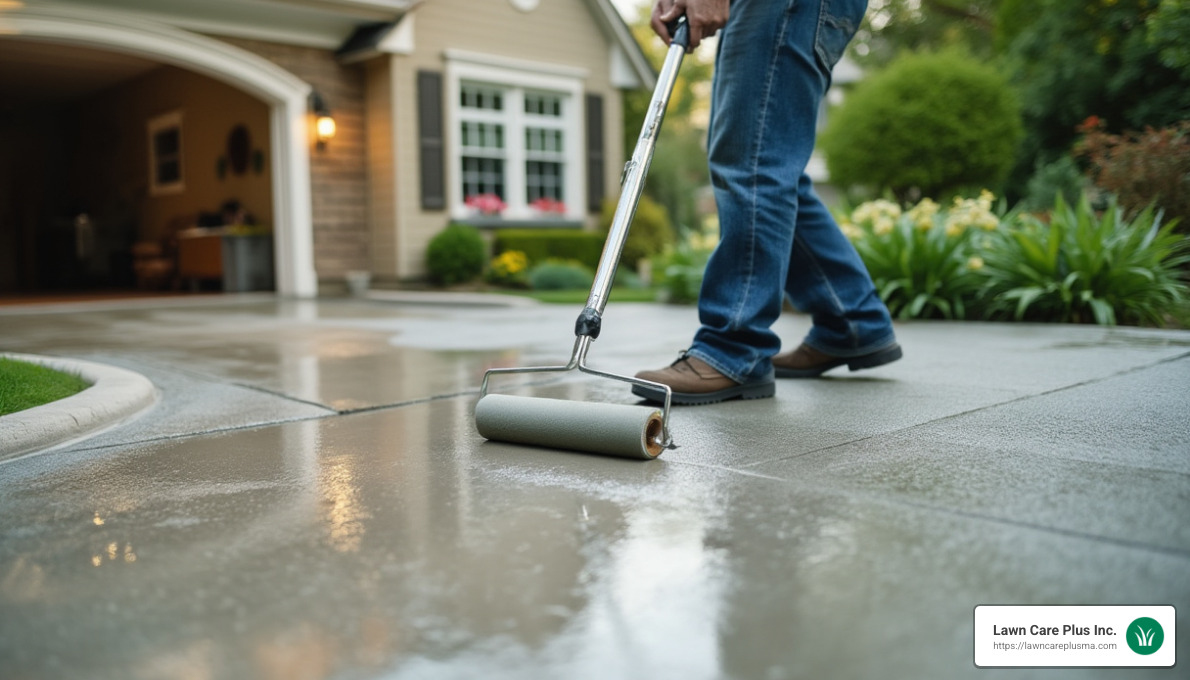
For new driveways, patience is key. Wait at least 28 days after installation before applying your first coat of sealer, allowing the concrete to fully cure. Before application, thoroughly clean the surface and let it dry completely—moisture trapped under sealer can cause clouding and reduced effectiveness.
Here in Massachusetts, where we experience harsh freeze-thaw cycles, reapplying sealer every 2-3 years provides maximum protection. The right type of sealer matters too: acrylic sealers work beautifully on decorative concrete, while siloxane or silane penetrating sealers offer excellent protection against severe weather. For high-traffic areas, consider the added durability of epoxy or polyurethane sealers.
When applying, follow the manufacturer’s instructions carefully, typically using a roller or sprayer to create a thin, even coat. Resist the temptation to apply it too thickly—this can lead to bubbling or peeling.
Repairing Minor Cracks
The freeze-thaw cycles we experience in Massachusetts can be brutal on concrete. Even the best-installed driveways may develop small cracks over time. The secret to longevity is addressing these minor issues before they become major problems.
Make it a habit to inspect your driveway each spring after winter’s harsh conditions. Look for hairline cracks (less than ¼ inch wide) and address them immediately with an appropriate concrete crack filler. The repair process is straightforward but important to do correctly: clean the crack thoroughly to remove debris, apply the repair material according to instructions, and allow proper curing time.
Consider this maintenance like dental work—a small filling now prevents a root canal later! Small crack repairs are inexpensive and simple compared to dealing with water infiltration that can undermine your driveway’s foundation.
Avoiding De-icing Chemicals
Winter in Massachusetts presents a particular challenge for concrete driveway owners. While safety is paramount, traditional rock salt (sodium chloride) can be extremely damaging to concrete surfaces, especially newer installations.
Instead, opt for calcium magnesium acetate (CMA) or calcium chloride products, which clear ice effectively while being gentler on your concrete. Many homeowners find that sand provides adequate traction without the chemical impact. Whatever product you choose, apply it before snow and ice accumulate rather than after—this preventative approach allows you to use less product overall.
The first winter is the most critical for new concrete. If possible, avoid chemical de-icers entirely during your driveway’s first year, relying instead on prompt shoveling and sand for traction.
Ensuring Proper Drainage
Water is concrete’s subtle enemy, particularly in our climate where trapped moisture can freeze and expand. Maintaining good drainage protects your investment from this insidious damage.
Keep an eye on how water flows across and away from your driveway during rainstorms. If you notice pooling, investigate the cause promptly—it might be a low spot that developed or a blocked drainage path. Keep drainage channels clear and ensure that soil, mulch, or plants adjacent to your driveway don’t create dams that block water runoff.
Each spring, take a few minutes to check that winter freezing hasn’t damaged any drainage features around your driveway. Small adjustments to grading or clearing blocked channels can prevent water from undermining your concrete’s foundation.
Protecting Against Heavy Loads
Your standard residential driveway (typically 4 inches thick) has weight limitations worth respecting. While it’s designed for everyday vehicles, extremely heavy equipment or trucks can cause damage, especially at the edges where the concrete is most vulnerable.
When you need to place heavy items like dumpsters or construction materials on your driveway, use plywood to distribute the weight over a larger area. During home renovations or large deliveries, take a moment to communicate with contractors about weight limitations—they’ll usually be happy to accommodate with proper planning.
For more detailed information about maintaining and repairing concrete surfaces, our cement driveway repair page offers additional guidance custom to Massachusetts conditions.
By following these simple but effective maintenance practices, your investment in concrete driveway removal and replacement will pay dividends for decades, maintaining both functionality and curb appeal through the seasons. A little attention goes a long way in extending your driveway’s life and protecting its appearance.
Frequently Asked Questions about Concrete Driveway Removal and Replacement
How much does it cost to remove and replace a concrete driveway?
When homeowners ask me about concrete driveway removal and replacement costs, I always emphasize that every project is unique. Based on internet data (not our specific pricing at Lawn Care Plus), most homeowners can expect to pay between $6.50 and $14 per square foot for standard installations. For those dreaming of something truly special, premium or decorative options might reach $25 per square foot or even higher.
Think of it this way: for a typical two-car driveway measuring about 16 by 40 feet (640 square feet), that translates to roughly $4,160 to $8,960 for a standard installation. Premium finishes could push that same project well over $16,000.
These estimates typically include everything from start to finish – removing your old driveway (which alone costs $1-$3 per square foot), preparing the site, installing the base materials, pouring fresh concrete, finishing the surface, and cleaning up afterward.
What might push your project toward the higher end of the spectrum? Several factors come into play: decorative treatments like stamping or coloring definitely add cost, as does pouring thicker concrete for heavy vehicles. If your property has drainage challenges or difficult access, that typically increases the price too. And of course, premium concrete mixes with special additives for our harsh Massachusetts winters will cost more than basic options.
For the most accurate picture of what your specific project might cost, I’d recommend reaching out for a personalized assessment. Every driveway has its own story and challenges!
How long does the process typically take?
From first crack to final cure, the concrete driveway removal and replacement journey typically spans about 5-7 days of active construction, though the complete process is longer when you include planning and curing time.
Here’s how the timeline usually unfolds: We start with planning and permits, which might take 1-2 weeks depending on your town’s requirements (some Massachusetts municipalities are speedier than others!). Once approvals are in hand, the physical work begins with demolition – usually a 1-2 day process where we break up and haul away the old concrete.
Next comes 1-2 days of site preparation – this is where we ensure the foundation of your driveway will be solid for decades to come. Another day goes to setting forms and preparing the base, followed by the big day: concrete pouring and finishing, which typically takes one full day.
But here’s where patience becomes important. The concrete needs at least 24-48 hours before we can remove the forms, 7-10 days before you can drive on it, and a full 28 days before it’s completely cured and ready for sealing or heavy use.
In Massachusetts, timing matters too. We carefully watch weather forecasts since rain, extreme heat, or cold can all affect how concrete cures. Spring and fall generally offer the most favorable conditions, though we can work during summer with proper precautions. Winter concrete work is possible but requires special techniques and often costs more.
Can I do the removal and replacement myself?
Could you replace your own driveway? Technically, yes. Should you? Well, that’s a more complicated question.
DIY concrete driveway removal and replacement presents some serious challenges. For starters, you’ll need access to specialized equipment – everything from jackhammers and concrete saws for demolition to compaction equipment for the base preparation. Then there’s the finishing tools – floats, trowels, edgers – all requiring skill to use effectively.
The technical knowledge required shouldn’t be underestimated either. Proper subgrade preparation is critical in our Massachusetts climate, where freeze-thaw cycles can quickly damage improperly installed concrete. You’ll need to understand concrete mix designs, reinforcement placement, finishing techniques, and where to place control joints to manage cracking.
Physically, it’s incredibly demanding work. Concrete doesn’t wait for breaks – once it’s poured, you’re racing against time to finish it properly before it sets. The demolition phase alone is exhausting, and the finishing process requires both strength and technique developed through experience.
There are safety concerns too – flying debris during demolition, dust exposure, heavy lifting risks, and chemical exposure during sealing. And mistakes can be costly. Improper base preparation might lead to settling or cracking within months, while finishing errors could create drainage problems or an unsightly surface you’ll have to live with for decades.
That’s why most homeowners find that hiring professionals provides better long-term value. At Lawn Care Plus, we bring specialized equipment, experienced crews, technical expertise specific to Massachusetts conditions, and warranties that protect your investment.
I’ve seen too many DIY driveway projects that ended up costing more in the long run – both in repairs and in the homeowner’s time and frustration. While I admire the DIY spirit, your driveway is one project where professional installation often makes the most sense for lasting results.
Conclusion
Undertaking concrete driveway removal and replacement represents more than just a construction project—it’s a meaningful investment in your home’s future. Throughout this guide, we’ve walked together through every aspect of this significant home improvement journey.
We’ve explored how to recognize when your driveway is crying out for replacement—those telltale cracks that keep spreading, the pooling water that never seems to drain, and those concerning dips and bumps that make you wince every time you drive over them. These signs aren’t just cosmetic concerns; they often signal deeper structural issues that only replacement can truly fix.
The cost factors we’ve discussed highlight why each driveway project is unique. From the size of your space to the decorative finishes you choose, each decision shapes both the price tag and the final result. For Massachusetts homeowners, our particular climate demands specific considerations that influence both materials and installation techniques.
We’ve pulled back the curtain on the replacement process itself—that carefully choreographed sequence from demolition through to final curing that transforms your property over the course of about a week. Understanding these steps helps you know what to expect when work begins.
The benefits of a new driveway extend far beyond simply having a smooth surface to park on. That boost in curb appeal, the increased property value, the improved safety, and the decades of low-maintenance performance all combine to make this investment particularly worthwhile.
Choosing the right contractor makes all the difference in your project’s success. The expertise, equipment, and experience they bring ensures your driveway will stand up to Massachusetts’ challenging freeze-thaw cycles and seasonal stresses. And with environmental considerations increasingly important, working with professionals who understand responsible material sourcing and disposal practices matters more than ever.
Once your beautiful new driveway is installed, simple maintenance practices like regular cleaning, timely sealing, and addressing small issues before they grow will help protect your investment for decades to come.
Here in Massachusetts, we face unique regional challenges that make proper installation techniques particularly crucial. Our cold winters, variable soil conditions, and seasonal moisture fluctuations demand specialized knowledge and approaches. At Lawn Care Plus Inc., we’ve developed installation methods specifically custom to these local conditions, ensuring your driveway performs beautifully throughout all four seasons.
While the upfront investment might give you pause, consider this: a properly installed concrete driveway typically lasts 30-40 years with minimal upkeep. When you calculate that annual cost over decades of service, it becomes one of the most economical home improvements you can make.
Whether you’re replacing a crumbling eyesore, upgrading to concrete from another material, or installing a brand-new driveway, we’re here to help you steer every decision with confidence and clarity.
For expert assistance with your concrete driveway project, contact Lawn Care Plus Inc. to schedule a consultation and receive a detailed quote. Our team is ready to help you steer this important home improvement decision with confidence.