
Understanding the True Cost of a Fresh Start
Cost for new grass generally ranges from $1 to $4 per square foot, depending on your chosen installation method, yard size, and local labor rates.
| Installation Method | Cost Per Square Foot | Best For |
|---|---|---|
| Seeding | $0.75 – $2.70 | Budget-conscious, patient homeowners |
| Hydroseeding | $0.50 – $1.00 | Large areas needing quick establishment |
| Sodding | $1.50 – $4.00 | Immediate results, high-traffic areas |
| Artificial Turf | $6.00 – $17.00 | Zero maintenance, drought-prone regions |
The sight of a new, lush green lawn warms the hearts of many homeowners. It represents a fresh start—changing bare dirt into a vibrant outdoor space or replacing a patchy, weed-filled yard with carpet-like perfection.
But before you dive into this change, understanding what affects the cost for new grass is essential for proper budgeting. Whether you’re establishing a lawn from scratch at a new construction, replacing a damaged lawn, or upgrading to a different grass variety, the investment varies widely based on several key factors.
This guide will walk you through everything that influences your bottom line—from installation methods and yard size to labor costs and site preparation requirements. We’ll help you steer the options so you can make an informed decision that balances your budget with your lawn goals.
As one landscaping professional noted, “Beware of the lowest bids that may indicate the lowest work quality.” This wisdom applies throughout the lawn installation process, where cutting corners can lead to disappointing results and additional expenses down the road.
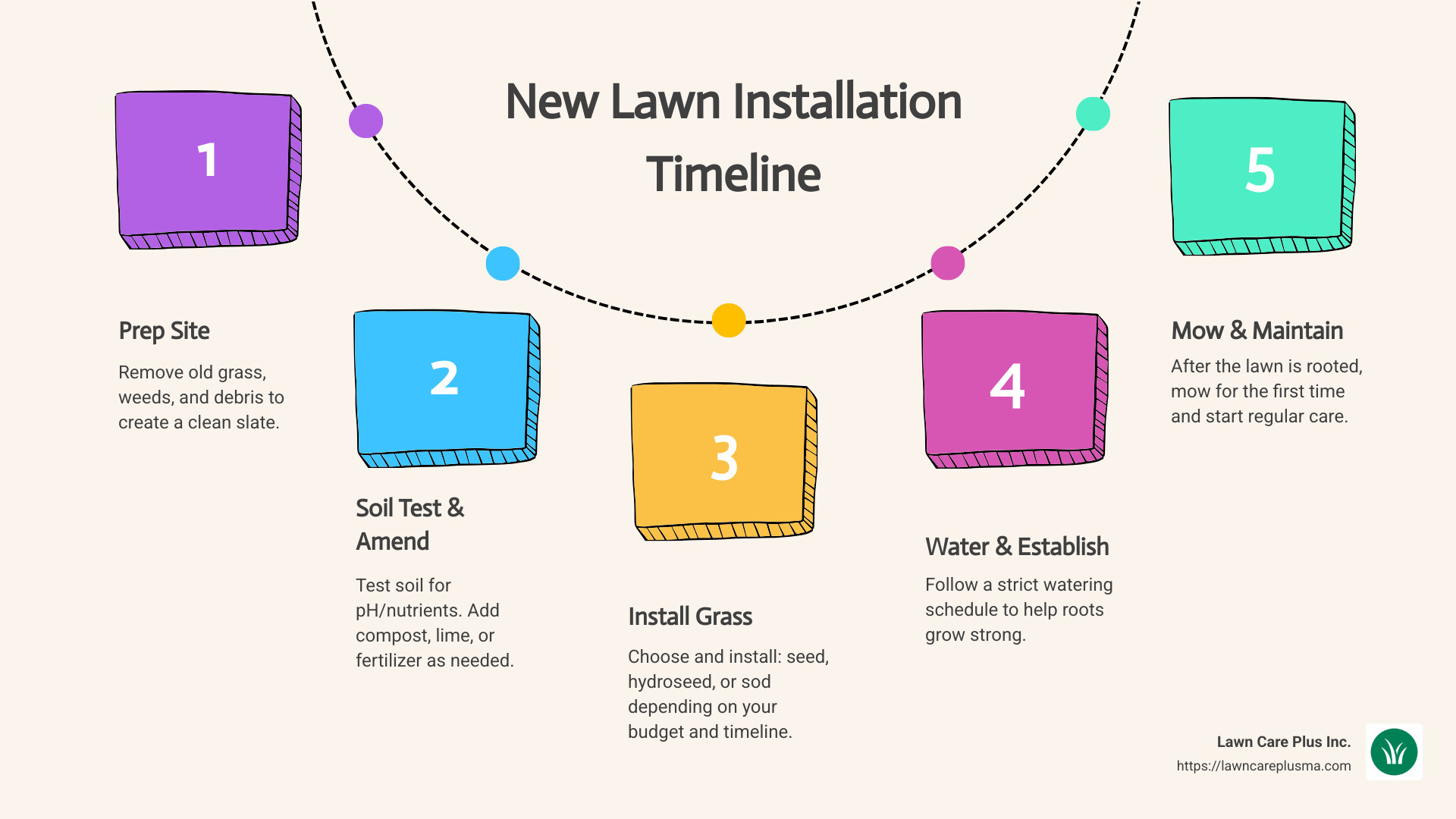
Basic cost for new grass terms:
– how to install a new lawn
– how to care for new sod
– how to prepare ground for sod
How Much Does New Grass Really Cost?
When homeowners across the Boston Metro-West area ask us about the cost for new grass, I often see their eyes widen at the range of factors that influence the final price. The truth is, creating that picture-perfect lawn involves more than just scattering some seed and hoping for the best!
Nationally, you can expect to invest between $1 and $4 per square foot for a complete lawn installation. For perspective, if you’re one of those lucky folks with a full acre to transform, that could translate to anywhere from $43,000 to $130,000. Yes, that made me gasp a little too when I first saw those numbers!
Here in New England, our unique climate adds another layer to consider. Our shorter growing season creates a tighter window for optimal planting, which sometimes means everyone wants their lawn installed during the same few weeks in spring or fall. This high demand can affect both availability and pricing.
One piece of wisdom I always share with our Massachusetts clients: build in a 10-15% buffer to your budget. As we like to say around here, “The ground always has surprises waiting for you!” Whether it’s hidden rocks, unexpected drainage issues, or that buried treasure your metal detector hasn’t found yet (we can dream, right?), having that cushion helps avoid mid-project panic.
Cost for new grass by yard size
Let’s break down what you might expect to pay based on common yard sizes. These figures represent averages based on internet data, not actual costs for Lawn Care Plus Inc. services:
| Yard Size | Seeding Cost Range | Hydroseeding Cost Range | Sodding Cost Range |
|---|---|---|---|
| 500 sq ft | $375 – $1,350 | $250 – $500 | $750 – $2,000 |
| 1,000 sq ft | $750 – $2,700 | $500 – $1,000 | $1,500 – $4,000 |
| 5,000 sq ft | $3,750 – $13,500 | $2,500 – $5,000 | $7,500 – $20,000 |
| 1/4 acre (≈10,890 sq ft) | $8,168 – $29,403 | $5,445 – $10,890 | $16,335 – $43,560 |
| 1 acre (≈43,560 sq ft) | $32,670 – $117,612 | $21,780 – $43,560 | $65,340 – $174,240 |
For context, most of our suburban Massachusetts clients have yards in the 5,000-10,000 square foot range. These homeowners typically invest between $7,500 and $22,500 for a complete lawn change, depending on their chosen method and specific site conditions.
These figures include both materials and basic installation, but they don’t account for site preparation—which can be significant depending on your starting point.
Cost per square foot snapshot
Let’s dig deeper into what each installation method costs per square foot:
Seed: $0.75 to $2.70 per square foot
The budget-friendly champion! Materials alone run about $0.08 to $0.30 per square foot, with premium seed blends climbing up to $0.90 per square foot. The rest covers labor and equipment.
Hydroseeding: $0.50 to $1.00 per square foot
This efficient method includes materials at $0.07 to $0.22 per square foot, though high-end custom mixes with specialty additives can reach up to $3.00 per square foot.
Sod: $1.50 to $4.00 per square foot
For instant gratification, sod materials typically cost $0.31 to $0.82 per square foot, with premium varieties reaching $2.50 per square foot. The remainder covers the labor-intensive installation process.
Artificial Turf: $6.00 to $17.00 per square foot
The premium option ranges from $6.00 to $10.00 per square foot for basic varieties, with top-tier options reaching up to $20.00 per square foot.
Don’t forget about delivery fees! These typically range from $65 to $350 depending on quantity and distance. For sod especially, timing is crucial—it must be installed within 24 hours of delivery, so coordinating this properly is essential.
Typical labor rates and the cost for new grass installation
Labor often represents the largest slice of your cost for new grass pie. Professional installation typically runs:
- $37 to $100 per hour for skilled landscaping labor
- $0.55 to $0.93 per square foot for standard installation
- Additional charges for challenging sites
Your final labor cost can climb based on several factors. If your yard has a narrow gate that wheelbarrows barely squeeze through, or materials need to be carried a significant distance, your quote will reflect that extra effort. As one contractor bluntly put it, “Sometimes depending on obstacles…figure another $500 for debris disposal.”
Slopes and irregular shapes can increase labor costs by 10-20%. That beautiful rolling hill might be scenic, but it requires more skill to properly install grass on an incline. Similarly, working around trees, garden beds, or your prized collection of garden gnomes requires precision and time—both of which translate to higher costs.
Here in the Boston Metro-West area, our labor rates tend to hit the higher end of national averages. That’s partly due to our higher cost of living, but also because our regional conditions require specialized knowledge. Our freezing winters and variable springs demand expertise to ensure your new lawn thrives through all four of our distinct seasons.
When planning your budget, investing in quality installation often saves money in the long run. A properly established lawn requires less intervention later, meaning fewer headaches and lower maintenance costs for years to come.
Installation Methods & Price Breakdown
When it comes to establishing new grass, you have four main options: seeding, hydroseeding, sodding, and artificial turf. Each method has distinct advantages, timelines, and cost for new grass considerations.

Seeding & Overseeding: budget-friendly choice
Seeding gives you the most bang for your buck, typically costing between $0.75 and $2.70 per square foot including labor and materials. This traditional method simply involves spreading grass seed over prepared soil.
I often tell our Massachusetts clients that seeding is like planting a garden – it takes patience but rewards you with stronger results. Your new lawn will develop deeper roots and better resistance to our New England weather extremes.
The trade-off? Time. You’ll wait 7-21 days just to see those first green sprouts, and a full season before your lawn truly matures. During this establishment period, you’ll need to be diligent with watering – sometimes twice daily during hot spells. Your new seedlings will also be more vulnerable to heavy rains, erosion, and neighborhood weeds trying to muscle in.
For our local climate, we typically recommend cool-season grass blends containing Kentucky bluegrass, perennial ryegrass, and fine fescues. These hardy varieties stand up to our cold winters while still looking gorgeous during those humid Boston summers.
Most homeowners can expect about 4-8 weeks before light foot traffic is possible. The good news? Your patience typically pays off with a more disease-resistant lawn thanks to the natural genetic diversity in seeded lawns.
Learn more about how to install a new lawn from seed
Hydroseeding: rapid coverage for big areas
Hydroseeding offers that perfect middle ground between budget-friendly seeding and instant-gratification sod. Costing around $0.50 to $1.00 per square foot, this method involves spraying a slurry mixture that combines seed, mulch, fertilizer, and binding agents onto your prepared soil.
Think of hydroseeding as seeding with superpowers. That green mulch mixture helps seeds germinate faster (typically in 5-7 days), provides better erosion control, and creates more uniform coverage – especially valuable on those tricky slopes that dot many Massachusetts properties.
One of our clients in Framingham described watching the hydroseeding process as “like spray painting my yard green, then watching it transform into actual grass a week later.” That green mulch component not only helps retain moisture around the seeds but also gives you that immediate visual improvement even before germination.
Hydroseeding shines on larger properties over 5,000 square feet, where the cost savings compared to sod become significant. It’s also our go-to recommendation for new construction sites that need quick stabilization before fall rains or winter freeze.
While DIY equipment rentals exist ($250-$500 daily), most homeowners find professional application more cost-effective when considering material mixing, equipment handling, and the expertise needed for consistent application.
Learn more about hydroseeding costs
More info about what is Hydroseeding
Sodding: instant gratification
Sodding is the express lane to a beautiful lawn, though it comes with a premium cost for new grass – typically $1.50 to $4.00 per square foot installed. This method gives you pre-grown grass with a thin layer of soil attached, essentially rolling out a finished lawn in a single day.
There’s something magical about the change sod creates. One day you have bare dirt, the next a lush green carpet. For many of our busy Metro-West clients, the time savings alone justifies the higher investment.
Sod is sold by the square foot or by the pallet, with each pallet covering about 450 square feet and weighing a substantial 1,500-3,000 pounds. This weight is why professional installation makes sense – our crews can typically lay about 225 square feet per hour, meaning a standard 5,000 square foot suburban lawn would take a two-person team about 11 hours.
The benefits of sod extend beyond instant gratification. You’ll enjoy excellent erosion control from day one, fewer initial weed problems, and the flexibility to install during most of the growing season. New sod does require careful watering (daily for the first two weeks), but you can typically begin light foot traffic after just 10-14 days, with full rooting taking 2-3 weeks.
For Massachusetts homeowners hosting summer events or selling their property, sod’s immediate curb appeal can be worth every penny of the additional investment.
Artificial Turf: low-maintenance premium
Artificial turf represents the highest initial cost for new grass alternative at $6 to $17 per square foot installed, but offers something no natural option can: virtually zero maintenance requirements.
Modern synthetic grass has evolved dramatically from the plastic-looking options of decades past. Today’s premium products feature multiple blade heights, realistic coloration, and proper drainage systems that make them nearly indistinguishable from natural grass – until you realize you haven’t mowed in years.
The installation process is more complex than natural grass options, requiring a 4-inch crushed rock base for drainage, proper edging, and secure anchoring. This extensive preparation contributes significantly to the higher cost, but also ensures a 15-25 year lifespan for your investment.
For Massachusetts homeowners, artificial turf solves specific challenges our climate presents. It’s perfect for heavily shaded areas where natural grass struggles, high-traffic zones like play areas, and regions with strict water conservation requirements. Its ability to withstand our freeze-thaw cycles without damage makes it particularly valuable for problem areas.
While the upfront cost might cause sticker shock, artificial turf often pays for itself over time. Industry calculations suggest savings of up to $850 annually in eliminated maintenance costs and water savings. Plus, you’ll reclaim those weekend hours previously dedicated to mowing and maintenance.
The main drawback? Artificial turf can get noticeably hot in direct sunlight during our summer months – something to consider if you have children or pets who’ll be playing on it during peak heat.
Factors That Affect Your Final Bill
When planning your lawn project, understanding what drives the final cost for new grass beyond just installation method can save you from budget surprises. Your yard’s unique characteristics play a huge role in determining what you’ll ultimately pay.
Soil Quality and Preparation
The foundation of every beautiful lawn starts below the surface. Poor soil is the number one culprit behind failing lawns – something we see all too often in Massachusetts properties.
A soil test ($20-$100) is money well spent, revealing crucial information about your soil’s pH and nutrient profile. Based on these results, your soil might need some TLC:
Topsoil addition typically runs $12-$30 per cubic yard, plus delivery fees of $75-$350 for a standard 5-yard load. For new construction sites around Boston Metro-West, we often recommend at least 4-6 inches of quality topsoil, as what builders leave behind is usually compacted subsoil that grass struggles to grow in.
Soil amendments like lime (to raise pH) or sulfur (to lower it) cost about $0.10-$0.20 per square foot. Compost integration adds vital organic matter at $30-$60 per cubic yard, while fertilizer application runs $0.02-$0.08 per square foot.
As researchers at the University of California have shown in their comprehensive guide to lawn establishment, proper soil preparation makes the difference between a lawn that thrives for years and one that struggles from day one.
Grading and Drainage Correction
Water should flow away from your home’s foundation, not pool in your yard. In Massachusetts, our freeze-thaw cycles make proper drainage even more critical – those winter puddles become spring lawn damage.
Minor grading typically costs $1-$2 per square foot, while major regrading jumps to $3-$6 per square foot. For properties with significant water issues, drainage solutions like French drains might add $1,500-$5,000 to your project.
Removal of Existing Lawn
Starting fresh means removing what’s already there. Expect to pay $0.88 to $1.84 per square foot for lawn removal, depending on the thickness of existing grass, root complexity, and disposal requirements. Access issues can drive this price higher if equipment can’t easily reach your yard.
Obstacles and Accessibility
Your yard’s layout significantly impacts labor costs. Narrow gates might mean materials have to be wheelbarrowed in rather than delivered by machine. Trees, garden beds, and hardscaping create additional work for cutting and fitting. Slopes require special techniques to prevent erosion.
As one of our contractors puts it, “Every curve, tree, and gate potentially adds time to the job.” These accessibility challenges can add 10-30% to your labor costs.
Irrigation Systems
While not technically part of the cost for new grass, installing irrigation alongside your new lawn makes perfect sense. You’ll avoid digging up your beautiful new grass later, and you’ll ensure proper watering during the critical establishment phase.
Basic sprinkler systems typically run $1,800-$5,200, while smart irrigation systems with weather-responsive controllers cost $2,500-$6,500. For garden borders, drip irrigation costs about $1-$2 per linear foot.
Climate Zone and Grass Type
Massachusetts spans USDA Hardiness Zones 5b-7a, limiting our grass options to cool-season varieties. Different grass types come with different price tags:
Kentucky Bluegrass commands premium prices but offers excellent cold tolerance and a beautiful appearance. Tall Fescue hits a moderate price point with good drought resistance. Perennial Ryegrass costs less and establishes quickly, while Fine Fescue works well in shady spots common in wooded Massachusetts properties.
Premium varieties bred for improved disease resistance or drought tolerance typically cost 20-50% more than standard varieties, but often pay for themselves in reduced maintenance and replacement costs.
DIY vs. Pro considerations
The biggest decision affecting your cost for new grass might be whether to tackle the project yourself or hire professionals.
DIY equipment rental adds up quickly: sod cutters ($70-$90/day), rototillers ($55-$80/day), lawn rollers ($25-$40/day), aerators ($60-$95/day), and hydroseeders ($250-$500/day). Plus, there’s the time investment – two people typically install only about 1,000 square feet of sod in a full day.
Professional installation brings expertise in soil preparation and grass selection specifically for Massachusetts conditions. Pros work 3-4 times faster than DIYers, have access to commercial-grade equipment, and typically offer warranties (30 days to one year).
For hydroseeding and artificial turf, professional installation is almost always more cost-effective due to the specialized equipment and techniques required.
Money-saving tips & rebates
Looking to reduce your cost for new grass? Here are some insider strategies we share with our Massachusetts clients:
Order in bulk whenever possible, as many suppliers offer volume discounts starting at 5,000 square feet. Coordinate with neighbors to organize group purchases that qualify for wholesale pricing and shared delivery fees.
Consider drought-tolerant options that may qualify for rebates from Massachusetts water districts – typically $0.50-$1.00 per square foot for converting traditional lawns to more water-efficient options. Tackle prep work yourself even if you hire pros for installation.
For small projects, ask suppliers about sod remnants from larger jobs, often available at steep discounts. Time your project strategically – early spring and late fall installations may qualify for off-season pricing when demand is lower.
Most importantly, choose the right grass for your conditions. Selecting varieties suited to your specific yard means less money spent on amendments and future replacements. This is where local expertise really pays off – what works in national lawn care guides doesn’t always thrive in our unique Massachusetts climate.
At Lawn Care Plus Inc., we’ve seen how proper planning and understanding these factors not only affects the initial cost for new grass but also determines how your lawn performs for years to come.
Frequently Asked Questions about the Cost for New Grass
Is it cheaper to repair or replace a lawn?
When your lawn starts looking more like a patchwork quilt than a carpet, you might wonder whether to patch it up or start fresh. The answer really depends on how extensive the damage is.
For small troubled areas that make up less than 25% of your lawn, repairing is definitely the budget-friendly choice. These spot fixes typically cost between $20-$100 per patch, making them much more economical than a full redo.
However, when damage covers more than 40% of your yard, we usually recommend starting over. As we often tell our Massachusetts clients, “When your lawn has more weeds than grass, it’s usually time for a fresh start.” While the upfront cost for new grass is higher, you’ll avoid the frustration of continually fighting a losing battle against spreading problems.
The trickiest decision comes when you’re in that middle ground—about 25-40% damage. In these cases, consider what caused the problems in the first place. If you’re dealing with underlying soil issues, poor drainage, or aggressive weeds like crabgrass, investing in a complete replacement with proper preparation will likely save you money and headaches in the long run.
Watch for these warning signs that it’s time for a complete lawn replacement:
– Grassy weeds have taken over large sections
– You’re battling persistent fungal diseases or insect infestations
– Water pools in multiple areas after rain
– You’re ready to switch to a different type of grass altogether
When is the best time of year to install?
Timing can dramatically affect both your cost for new grass and your success rate, especially in our New England climate.
Fall (September-October) is truly the sweet spot for Massachusetts lawns. The soil is still warm from summer, but the air is cooler, creating ideal conditions for seed germination and root development. You’ll face less weed competition, and the extended mild period gives your grass time to establish before facing summer heat next year. This timing works wonderfully for seeding and hydroseeding projects especially.
Spring (April-May) comes in as a close second. Your new grass will have time to establish before summer’s heat arrives, though you may battle more weeds during establishment. One thing to keep in mind—this is peak season for landscapers, so you might pay premium rates for installation and face longer wait times for scheduling.
Summer (June-August) installations are challenging but doable, especially with sod. You’ll need to be extra diligent with watering, which will increase your water bills. The heat puts additional stress on establishing grass, making this a higher-risk time for seeding projects. If summer is your only option, consider that the cost for new grass might effectively increase due to potential reseeding needs and higher water usage.
Winter (November-March) is generally not the time for lawn installation in Massachusetts. Frozen ground prevents proper root development, and cold temperatures inhibit germination. The one exception is “dormant seeding” in late winter, where seed is applied to the soil before it’s warm enough to germinate but is ready to spring into action when conditions improve.
For most homeowners in the Boston Metro-West area, we recommend planning for a fall installation whenever possible. The combination of favorable growing conditions and typically more available contractor scheduling makes it both economically and horticulturally advantageous.
How long before I can mow and enjoy my new lawn?
Patience is definitely a virtue when it comes to new lawns, but the wait time varies significantly depending on which installation method you choose.
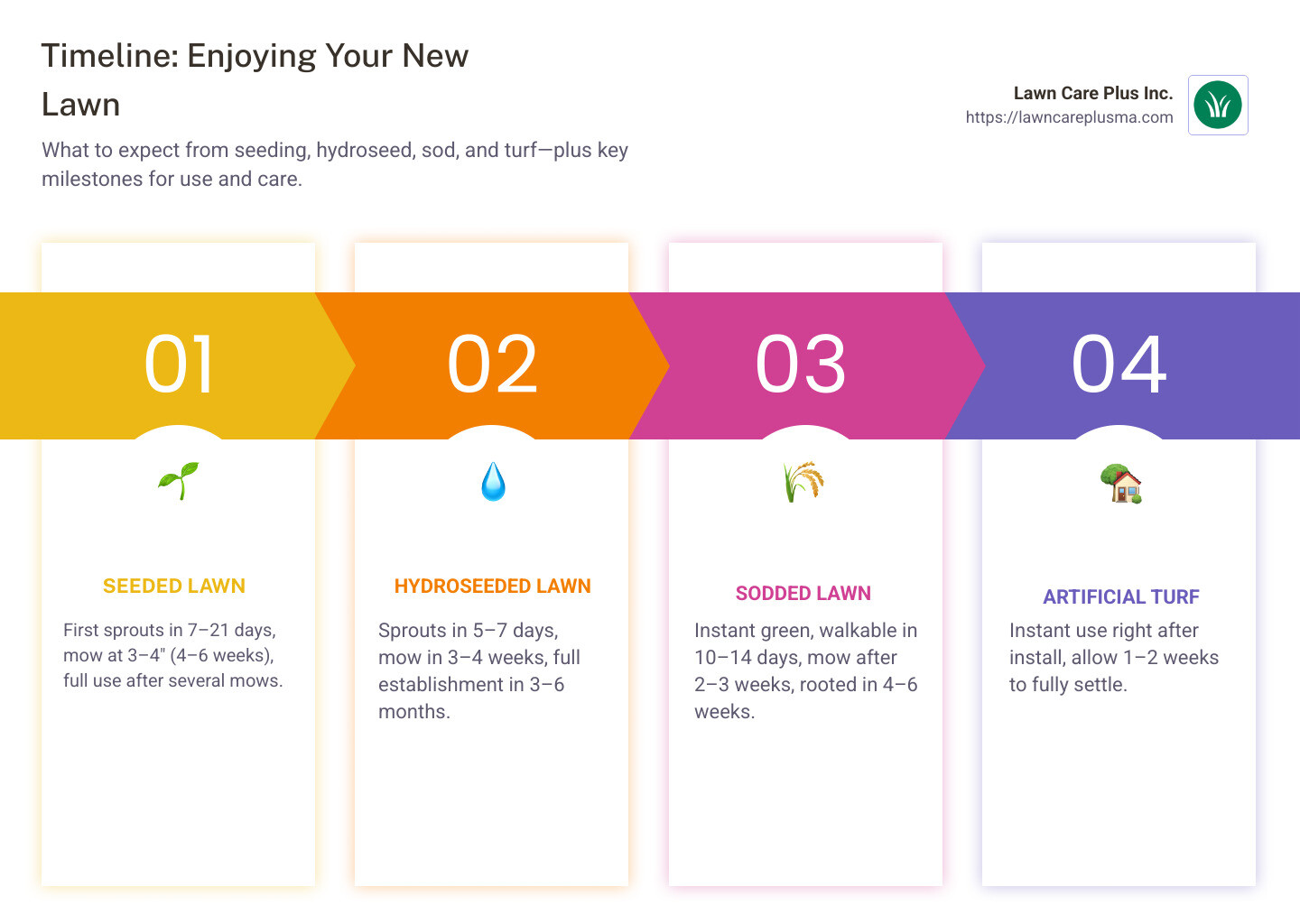
With a seeded lawn, you’ll spot the first delicate green sprouts within 7-21 days, depending on your grass type and weather conditions. However, these baby grass plants need time to mature before facing a mower blade. Plan to wait until your grass reaches 3-4 inches tall (typically 4-6 weeks after seeding) for that exciting first mow. Light foot traffic should wait until after your second or third mowing, and full establishment—where the lawn can handle regular use—takes 6-12 months.
Hydroseeding gives you a bit of a head start. You’ll likely see those first green shoots within 5-7 days, and you can typically mow about 3-4 weeks after installation. Light foot traffic becomes possible after your second mowing, with full establishment taking about 3-6 months.
Sodded lawns provide that instant green carpet effect, but don’t be fooled—those grass plants still need time to sink their roots into your soil. While you can carefully walk on new sod almost immediately for watering purposes, regular foot traffic should wait 10-14 days. Plan for your first mowing about 2-3 weeks after installation, once the sod has rooted enough that it won’t pull up. The roots will fully establish within 4-6 weeks under ideal conditions.
Artificial turf is the only option that offers truly immediate gratification—you can use it right after installation, though it may take 1-2 weeks to fully settle.
The key to success with any natural grass option is proper watering during establishment:
When that exciting first mowing day arrives, remember the one-third rule: “Begin mowing 4-6 weeks after installation, removing no more than one-third of the grass blade.” This approach helps ensure healthy growth without stressing your new lawn. Set your mower blade higher than you might normally for that first cut—about 3 inches for most cool-season grasses we use in Massachusetts.
Conclusion & Next Steps
Your journey toward a beautiful lawn doesn’t end with understanding the cost for new grass. Whether you’re dreaming of changing your modest front yard or completely revitalizing your entire property, thoughtful planning makes all the difference between disappointment and success.
Here in the Boston Metro-West area, we’ve walked alongside countless homeowners through their lawn change journeys. Massachusetts presents unique challenges with our distinctive soil conditions and climate patterns, which is why personalized recommendations make such a difference in achieving cost-effective, lasting results.
All the pricing we’ve discussed represents averages based on internet data, not actual costs for Lawn Care Plus Inc. services. Every property tells its own story—with unique soil conditions, sunlight patterns, and existing challenges that influence what approach will work best.
As you move forward with your lawn project, consider these steps for the best outcome:
Start with soil testing to reveal what’s happening beneath the surface. This small investment (typically $20-$100) can save you hundreds or even thousands by identifying exactly what amendments your specific soil needs—rather than guessing.
Match your method to your timeline and budget. If you need instant results for a home sale or special event, sod might be worth the premium. Working with a longer timeline? Seeding or hydroseeding could deliver excellent results at a fraction of the cost.
Plan your watering strategy before installation day. Even the highest quality grass will fail without proper hydration during those critical first weeks. Whether you’re investing in an irrigation system or creating a manual watering schedule, have your plan ready before your new grass arrives.
Gather multiple quotes from established providers with solid reputations. This isn’t just about finding the best price—it’s about finding the right approach for your specific property. Different professionals may suggest different solutions based on their expertise.
Ask detailed questions about preparation methods, grass varieties, and warranty coverage. The answers will reveal a lot about a company’s experience and attention to detail. Quality contractors welcome these questions because they demonstrate your commitment to a successful outcome.
That landscaping wisdom we mentioned earlier bears repeating: “Beware of the lowest bids that may indicate the lowest work quality.” While everyone appreciates saving money, cutting corners on preparation or materials inevitably leads to disappointment and additional expenses down the road.
Ready to explore your options for creating that lush, inviting lawn you’ve been dreaming about? Our team at Lawn Care Plus Inc. serves the entire Boston Metro-West area, including Belmont, Boston, Brighton, Brookline, Canton, Chestnut Hill, Dedham, Hyde Park, Jamaica Plain, Mattapan, Medfield, Milton, Needham, Newton, Norwood, Randolph, Readville, Roslindale, Walpole, and Watertown.
Learn more about our lawn care services
With thoughtful planning and professional guidance, your investment in new grass will deliver years of enjoyment, improved curb appeal, and increased property value. The perfect lawn isn’t just about aesthetics—it creates the foundation for countless outdoor memories with family and friends in the years ahead.
