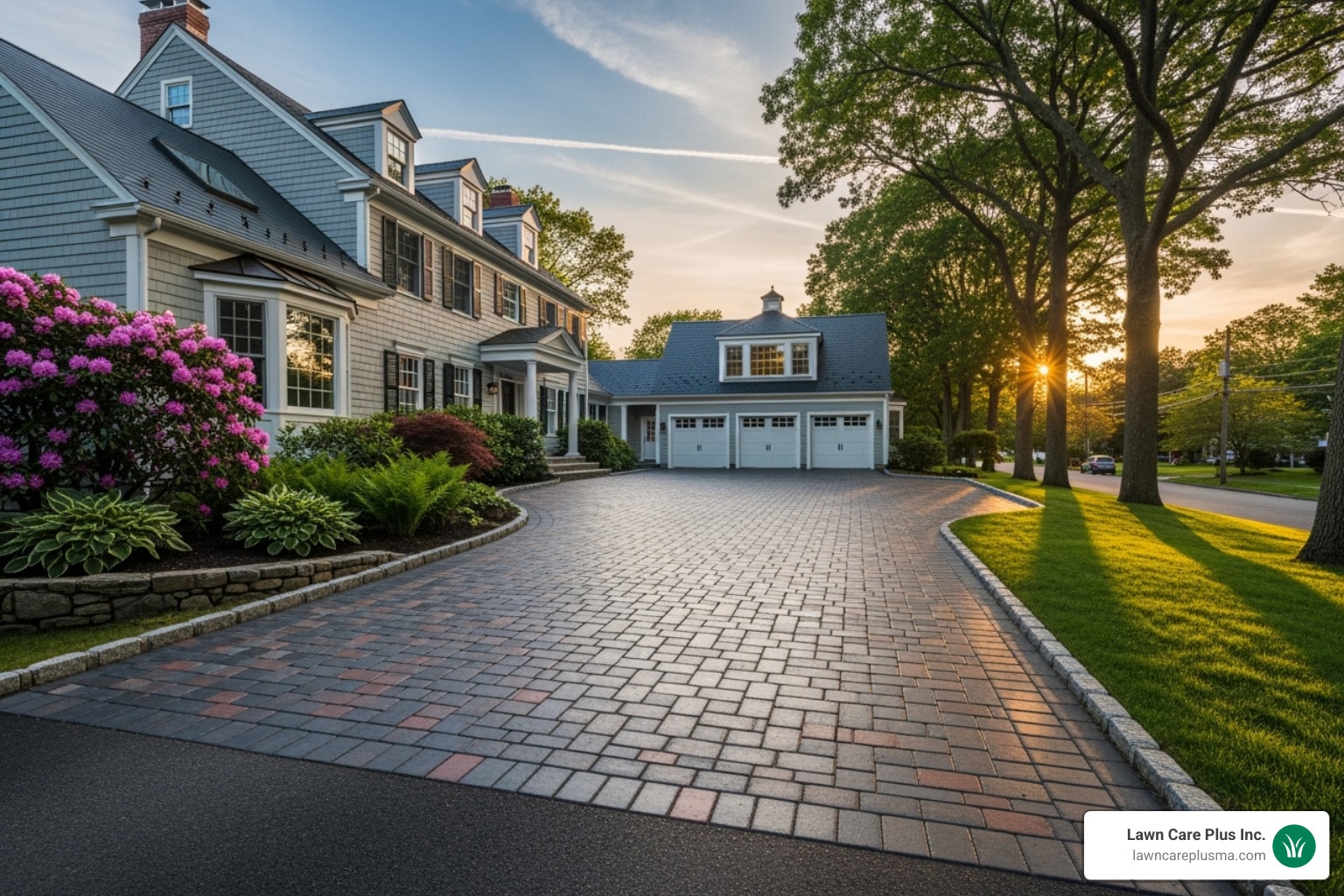
Why Driveway Pavers Are Worth the Investment
Understanding driveway pavers cost is key to making a smart decision for one of your property’s most visible features. Here’s a quick overview:
Quick Cost Overview:
- Materials: $2-$30 per square foot
- Professional installation: $7-$15 per square foot
- Total project cost: $6,000-$18,000 for typical driveways
- Lifespan: 30-50 years with proper maintenance
Note: These are average costs based on internet data and not actual costs for Lawn Care Plus.
Your driveway is the first thing visitors notice. While paver driveways have a higher upfront cost than concrete or asphalt, they deliver exceptional long-term value through durability, beauty, and increased property values.
Paver driveways boost curb appeal and last decades longer than traditional materials. Most homeowners find the investment pays off through reduced maintenance costs and higher resale value.
Key factors affecting your total cost include:
- Size of your driveway
- Type of paver material chosen
- Site preparation needs
- Design complexity
- Regional labor rates
Understanding these cost factors helps you budget properly and choose the right materials for your Massachusetts property.
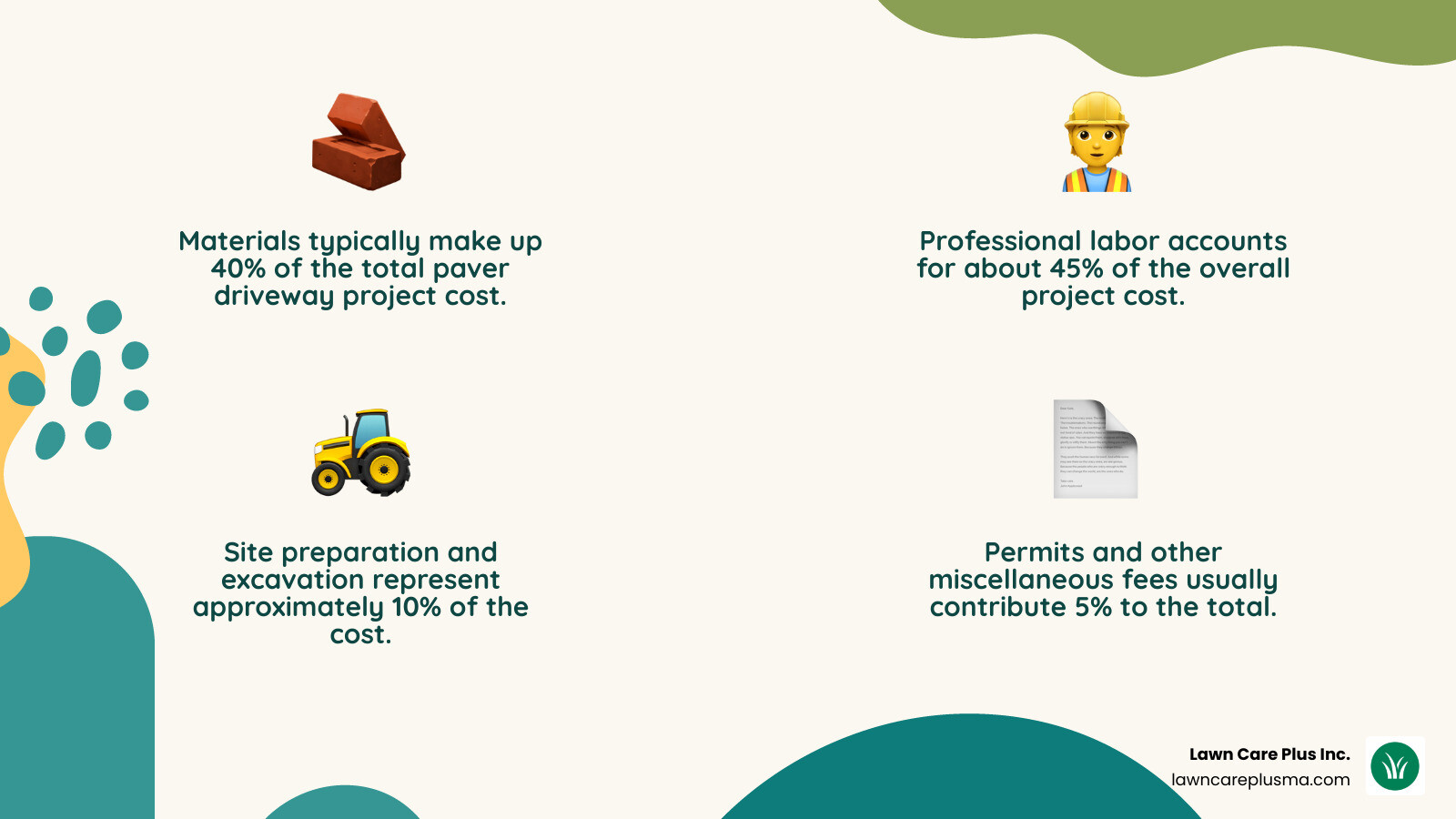
Common driveway pavers cost vocab:
Average Paver Driveway Cost: What to Expect
Planning a paver driveway starts with understanding the financial commitment. While every project is unique, looking at driveway pavers cost averages helps set a realistic budget.
Most homeowners invest between $5 to $15 per square foot for a complete installation. This range reflects variables like material choice, site conditions, and labor rates.
Important note: These are average costs based on internet data and not actual costs for Lawn Care Plus. Pricing varies significantly by location, materials, and project complexity.
A typical paver driveway project is around $12,000, but costs can range from $6,000 for simple installations to $75,600 for large driveways with premium materials. Your investment depends on your driveway’s size, materials, and design complexity.
Single-car driveways cost less than double-car driveways, but larger projects can sometimes have lower per-square-foot costs due to efficiencies in material use and installation.
For detailed information about our driveway installation services, you can explore our comprehensive hardscaping offerings.
Paver Cost by Project Size
Size is the biggest driver of your driveway pavers cost.
- Small driveways (around 200 sq. ft.) for single cars typically range from $2,400 to $6,000, based on national data. These are ideal for properties with limited space.
- Medium driveways (approx. 500 sq. ft.) are the most common, covering most two-car driveways. Costs generally fall between $6,000 and $15,000.
- Large driveways (800 sq. ft. or more) serve three-car households or feature elaborate designs. These projects range from $9,600 to $24,000 or higher.
Larger projects may benefit from economies of scale, while smaller jobs might have higher per-square-foot costs due to minimum charges.
A Look at Material Costs vs. Installation Costs
Your total driveway pavers cost has two main components:
Material costs range from $2 to $30 per square foot. Basic concrete pavers are on the low end, while premium natural stone or permeable pavers are at the high end. Your choice significantly impacts both cost and long-term value.
Professional installation costs typically run $7 to $15 per square foot. This covers site preparation, paver laying, base construction, and finishing work.
Labor is about 50% of your total project cost, reflecting the skill needed for a quality installation. Proper excavation, base preparation, and laying techniques are crucial for your driveway’s longevity.
Investing in a skilled professional installation protects your entire investment and ensures you get the full 30-50 year lifespan from your chosen pavers.
Driveway Paver Materials: A Cost Comparison
Choosing the right material is the most impactful decision for your driveway pavers cost. Each type offers a unique blend of aesthetics, durability, and price.
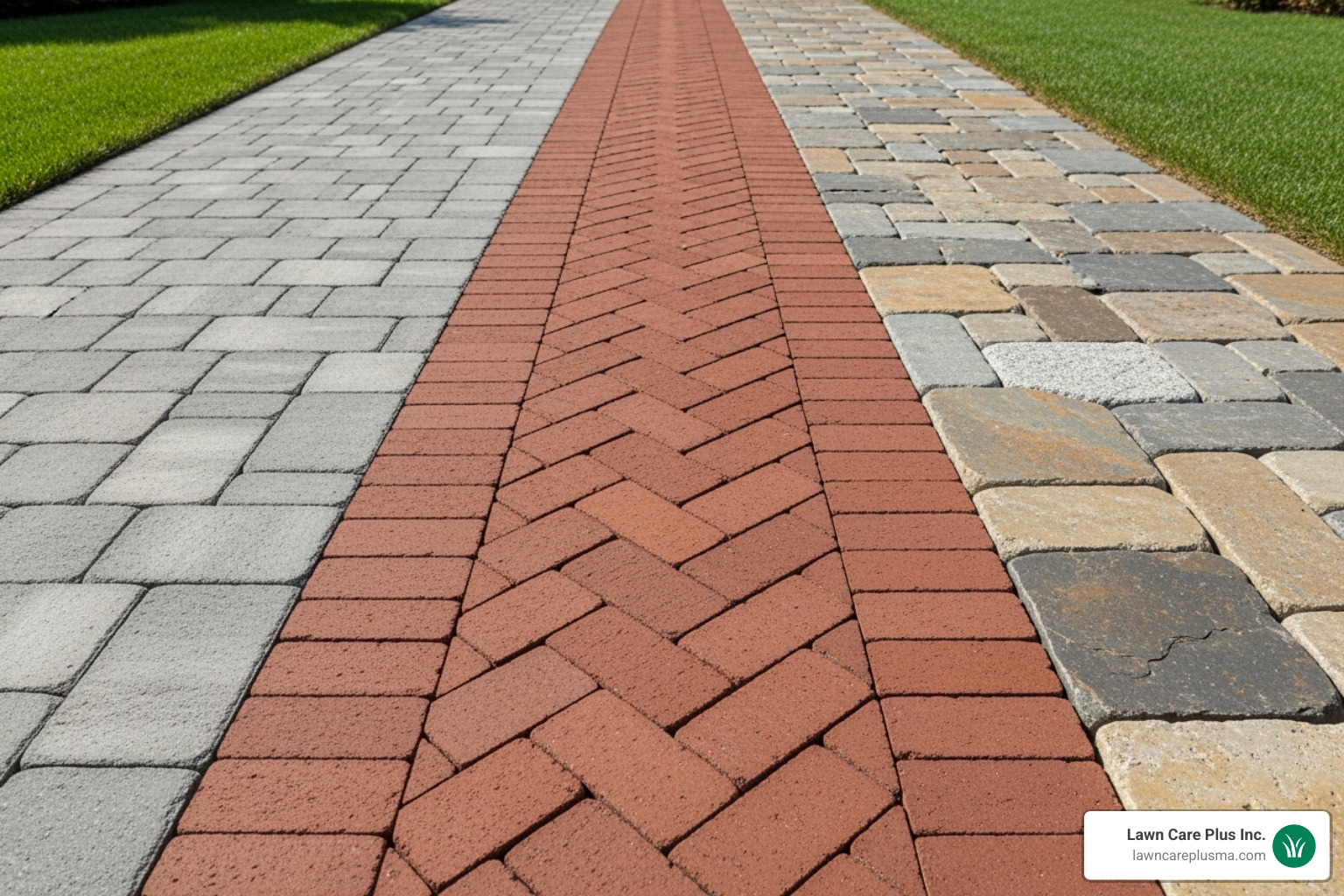
Your material choice will define your driveway’s look and performance for decades. Here’s how different paver types compare:
| Paver Type | Average Cost/Sq. Ft. (Materials Only) | Lifespan (Years) | Pros | Cons |
|---|---|---|---|---|
| Concrete | $2-$8 | 25-30 | Affordable, versatile designs, easy maintenance | Can fade over time, may crack in extreme weather |
| Brick | $4-$15 | 25-50 | Classic look, eco-friendly, stain resistant | Higher cost, limited color options |
| Natural Stone | $8-$30+ | 30-50 | Premium beauty, unique patterns, excellent durability | Most expensive, complex installation |
Note: These cost ranges are based on national averages from internet data and are not actual costs for Lawn Care Plus.
Concrete Pavers
Concrete pavers are a popular choice for Massachusetts homeowners balancing driveway pavers cost and quality. At $2 to $8 per square foot for materials, they offer great versatility. Concrete pavers can mimic more expensive materials like natural stone or brick at a fraction of the cost and come in many colors, shapes, and textures. They typically last 25 to 30 years, and regular sealing helps maintain their color and protect against stains from oil and salt in the Boston Metro-West area.
Brick Pavers
Brick pavers offer timeless elegance. With material costs from $4 to $15 per square foot, they provide exceptional value. The classic charm of brick complements many home styles. Since they are colored throughout the material, scratches and chips are less noticeable. Many are made from recycled materials, making them an eco-friendly choice. Brick is also stain-resistant and handles New England’s freeze-thaw cycles well, lasting 25 to 50 years.
Natural Stone Pavers (Cobblestone, Flagstone, Granite)
For the best in beauty and longevity, choose natural stone pavers. While material costs are high ($8 to $30+ per sq. ft.), you’re investing in a driveway that could outlast your house. Each stone is unique, creating one-of-a-kind patterns. Granite, cobblestone, and flagstone each have their own character. The superior durability means your driveway will look beautiful for 30 to 50 years or more, but installation is complex and requires experienced professionals.
Permeable and Grass Pavers
For eco-conscious homeowners, permeable and grass pavers manage stormwater beautifully. Material costs range from $6 to $20 per square foot. These pavers allow rainwater to filter through the driveway, preventing runoff and pollution. Some Massachusetts communities offer rebates for installing permeable surfaces, which can help offset the cost. Grass pavers create a unique green look while maintaining full functionality, minimizing environmental impact.
Key Factors That Influence Your Total Driveway Pavers Cost
Many elements contribute to the final driveway pavers cost. Understanding these factors—site conditions, design complexity, and regional pricing—helps you budget accurately and avoid surprises.
Site Preparation and Excavation
Proper site prep is critical and significantly affects your driveway pavers cost.
- Old driveway removal: Removing old asphalt or concrete is often the first step. Based on internet data, costs range from $550 to $1,800, depending on size and difficulty.
Note: These are average costs based on internet data and not actual costs for Lawn Care Plus. - Grading and sloping: A 2% slope is critical for drainage, especially with Massachusetts’ freeze-thaw cycles. Regrading a flat or improperly sloped property adds to the cost.
- Soil condition: Poor soil, like clay or loose fill, may require additional excavation or specialized base materials to ensure stability.
- Base layer depth: A deep, compacted gravel base (typically 4-12 inches of crushed stone aggregate) is essential for durability. Skimping here leads to expensive future repairs.
Labor, Design Complexity, and Driveway Size
Labor accounts for about half of your total driveway pavers cost and varies with complexity.
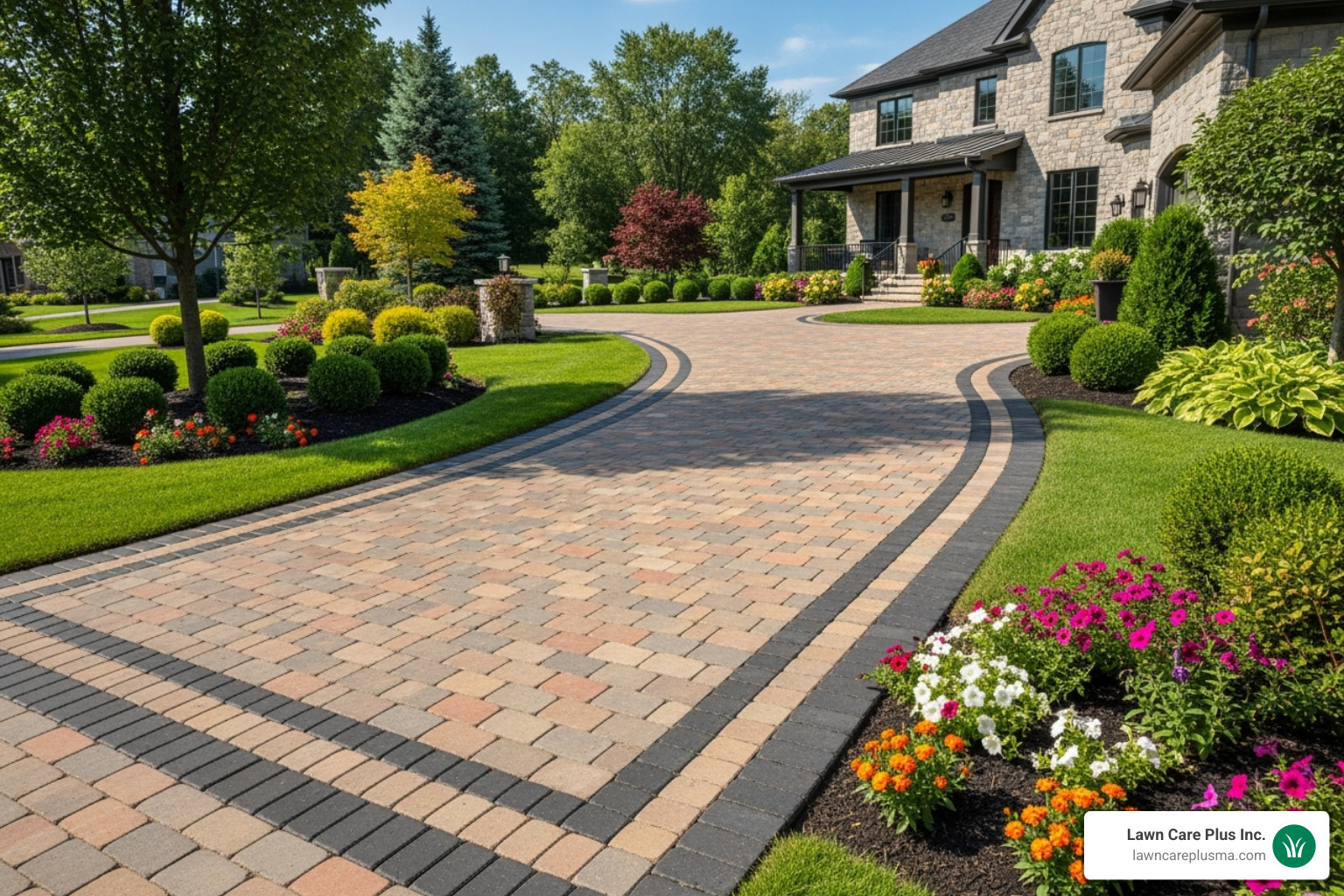
- Simple vs. intricate patterns: A basic rectangular design is quickest to install. Herringbone, circular, or multi-color patterns can increase labor costs by 20-40% due to precise cutting and planning.
- Edging and borders: Decorative edges add a beautiful finish and improve curb appeal but require additional materials and skilled labor.
- Driveway shape and slope: Curves, steep slopes, or irregular shapes require more manual labor, specialized equipment, and intricate cuts, increasing costs.
Additional Expenses to Budget For
Plan for these potential extra costs from the start:
- Permits: Many Massachusetts towns require permits ($50-$250 based on internet data) for driveway work. Check with your local building department early.
- Drainage systems: Some properties need channel drains or catch basins beyond basic grading.
- Sealing: Professional sealing ($50-$500 based on internet data) is an optional but recommended step to protect against stains and fading.
- Waste disposal: The cost to haul away excavated soil and old materials is a necessary part of the project.
- Regional labor rates: Costs in the Boston Metro-West area reflect local living costs and demand for skilled professionals.
Always get a detailed contract and understand your consumer rights, which can be similar to door-to-door sales regulations.
DIY vs. Hiring a Professional Paver Installer
For a paver driveway, the decision to DIY or hire a pro involves balancing cost savings against quality, time, and effort.
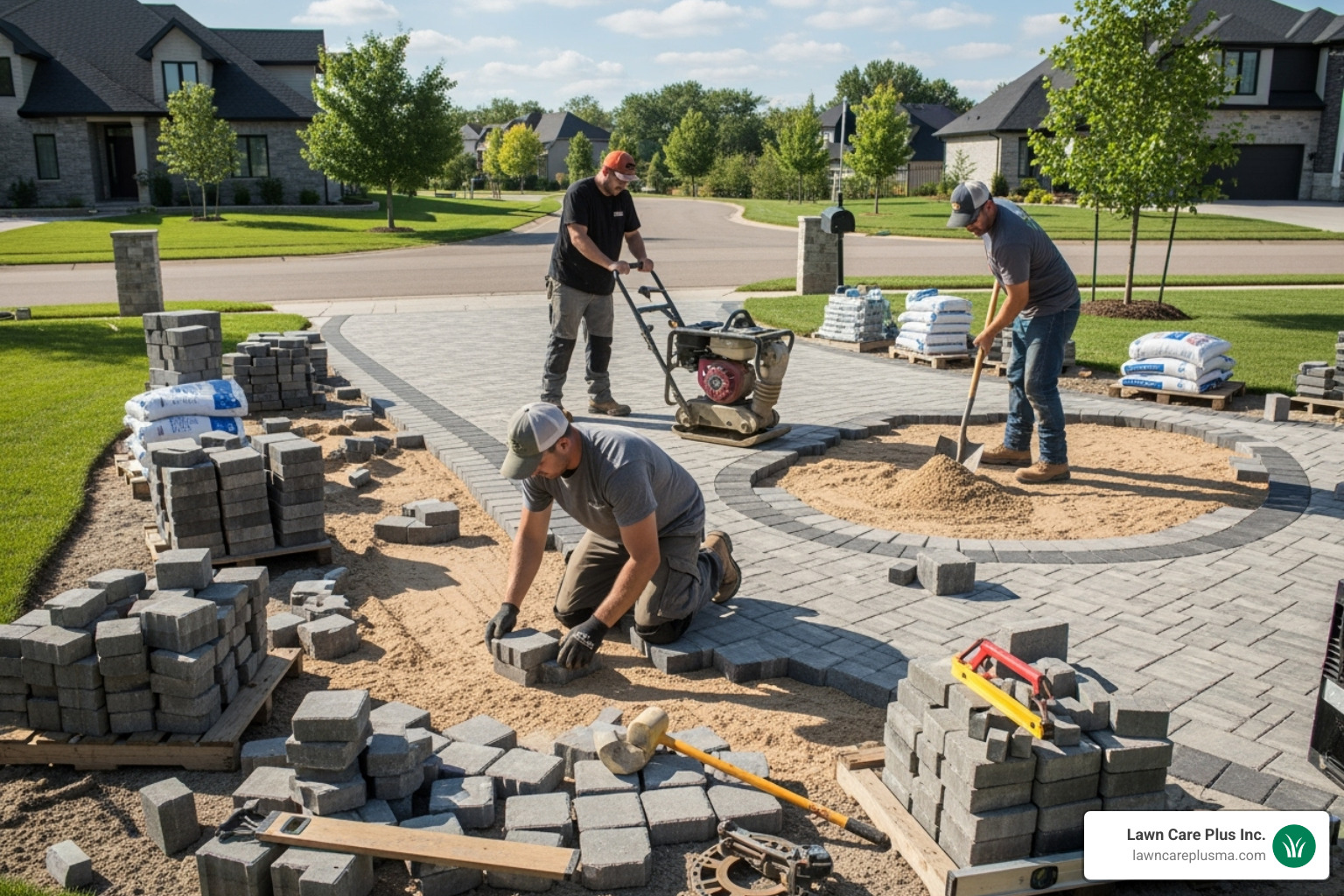
The Cost of a DIY Installation
A DIY paver driveway can seem cost-effective, but it’s a challenging project with significant trade-offs. The potential savings on driveway pavers cost must be weighed against several factors.
You’ll need to buy materials (pavers, gravel, sand) and rent tools like a plate compactor ($50-$170/day based on internet data), power saws, and possibly a mini-excavator. The physical effort is substantial, involving hours of digging and hauling heavy materials.
Most importantly, there’s a risk of costly mistakes. Improper grading, compaction, or alignment can lead to settling, water pooling, or an uneven surface. Fixing these errors can cost more than hiring a professional from the start.
For those who want to explore professional options, we offer comprehensive hardscaping services that remove the guesswork.
The Value of a Professional Installation
Professional installation often makes the most sense for homeowners who value their time and want guaranteed results.
- Expertise and efficiency: An experienced team understands Massachusetts soil, proper drainage for freeze-thaw cycles, and the details that ensure longevity.
- Proper equipment: Professionals arrive with all necessary equipment, from excavators to compactors, ensuring the job is done correctly and efficiently.
- Guaranteed quality: A professional installation comes with a warranty, providing peace of mind that a DIY project can’t offer.
- Longevity: A properly installed paver driveway should last 30 to 50 years, making the initial investment worthwhile.
When hiring a pro, ask if they are licensed and insured, for examples of past work, for a detailed contract, and about their warranty. At Lawn Care Plus Inc., we have years of experience in the Boston Metro-West area creating driveways that are both beautiful and durable.
Long-Term Value and Ways to Save on Your Project
A paver driveway is a smart long-term investment. While the initial driveway pavers cost is higher, the value extends for decades. Pavers last 30 to 50 years, outlasting asphalt and concrete, and they boost resale value. A key benefit is that individual pavers can be repaired or replaced, unlike other materials that require complete replacement.
To keep your entire property looking its best, explore our landscape maintenance services.
Long-Term Driveway Pavers Cost and Maintenance
Long-term paver maintenance is straightforward and budget-friendly.
- Weed control: Regular sweeping and spot treatment are needed. Using polymeric sand between joints creates a strong barrier against weeds.
- Joint sand replenishment: Every few years, replenish the sand between pavers to maintain stability.
- Sealing: Seal your pavers every 3 to 5 years to protect against UV damage, stains, and fading.
- Repairs: If a paver is damaged, you can simply remove and replace the individual stone, making repairs a minor expense.
How to Save Money Without Sacrificing Quality
Smart planning can significantly reduce your driveway pavers cost without compromising quality.
- Choose cost-effective materials: Concrete pavers can mimic expensive natural stone, offering durability and style for less.
- Opt for simpler designs: Straightforward rectangular layouts install faster and cost less in labor than intricate patterns.
- Schedule in the off-season: Fall and winter installations may come with more competitive pricing from contractors.
- Handle simple prep work: Clearing vegetation or small debris yourself can reduce labor costs, but leave major excavation to the pros.
- Get multiple detailed quotes: Compare quotes from reputable contractors to ensure fair pricing. The lowest bid isn’t always the best value.
Frequently Asked Questions about Driveway Paver Costs
Here are answers to common questions about driveway pavers cost from homeowners in the Boston Metro-West area.
How much more expensive are pavers than a concrete driveway?
Pavers cost more upfront. Based on internet data, concrete driveways are about $5-$7 per square foot, while pavers range from $10-$30 per square foot. (Note: these are not our actual prices at Lawn Care Plus). Pavers are roughly 1.5 to 4 times more expensive initially. However, this higher driveway pavers cost often pays for itself over time through longevity, better aesthetics, and easier repairs compared to concrete slabs.
Are paver driveways worth the investment?
Yes, absolutely. While the initial driveway pavers cost is higher, the benefits are significant:
- Durability: Pavers last 30 to 50 years, far longer than asphalt (15-20 years).
- Curb Appeal: The variety of colors, shapes, and patterns boosts your home’s look and provides a solid return on investment.
- Easy Repairs: Damaged pavers can be replaced individually, unlike concrete which requires major work when it cracks.
- Drainage: Permeable pavers are an excellent option for managing stormwater in Massachusetts.
How long does a paver driveway last compared to other materials?
Pavers have a superior lifespan:
- Paver driveways: 30 to 50 years, with premium stone lasting even longer.
- Asphalt driveways: 15 to 20 years.
- Concrete driveways: 25 to 50 years, but repairs are difficult and costly.
- Gravel driveways: Require constant maintenance and replenishment.
The key advantage of pavers is their modular nature. Individual pavers can be replaced as needed, allowing the driveway to last indefinitely with proper care.
Get Your Perfect Paver Driveway in Massachusetts
Now that you understand the factors influencing driveway pavers cost, you can make a smart investment in your home. Whether you choose affordable concrete, timeless brick, or luxurious natural stone, a paver driveway adds beauty and value.
The process involves site prep, base installation, and design choices. While the upfront cost is significant, a well-installed paver driveway provides decades of reliable service and improved curb appeal.
Professional installation makes all the difference. It ensures your driveway will stand up to Massachusetts winters for 30 to 50 years, maximizing your return on investment.
For homeowners in the Boston Metro-West area, a professionally installed paver driveway improves property value for generations. The modular design allows for easy repairs, and the aesthetic possibilities are endless.
Ready to transform your entrance? We can help you steer the options to create a paver driveway that fits your vision and budget.
Contact us for expert hardscaping services today, and let’s start planning your beautiful new driveway.