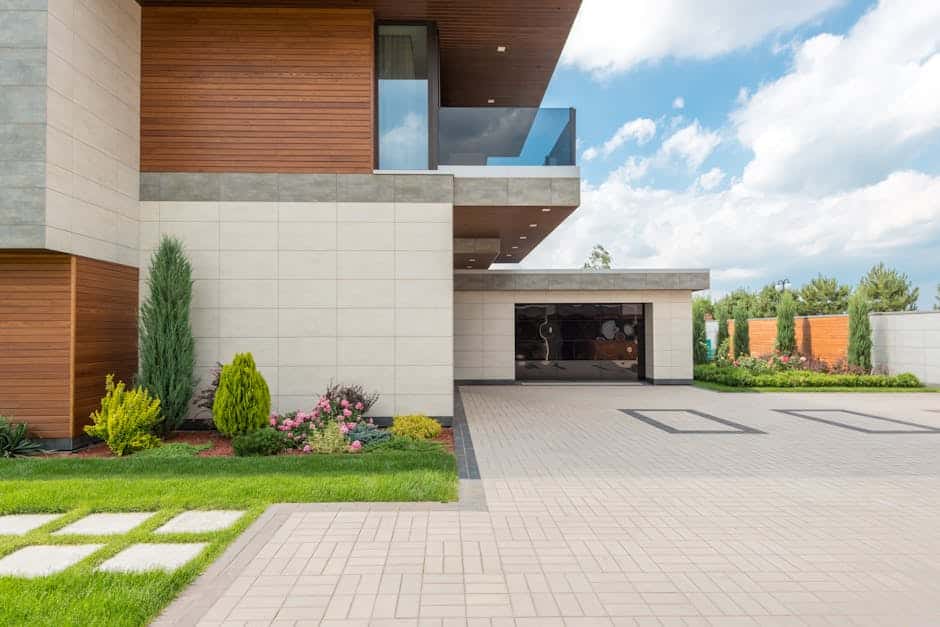
Understanding Concrete Driveway Investment Costs
How much does a concrete driveway cost is one of the most common questions homeowners ask when planning their hardscaping projects. Based on national data from industry sources, here’s what you can expect:
Quick Cost Overview:
- Average Range: $4-$25 per square foot
- Typical 2-Car Driveway: $1,600-$15,000 total
- Plain Gray Concrete: $4-$8 per square foot
- Decorative Finishes: $12-$25+ per square foot
Note: These are average costs based on internet data and not actual costs for Lawn Care Plus.
A concrete driveway represents a significant investment in your property’s functionality and curb appeal. Unlike other materials, concrete offers exceptional durability with a lifespan of 30-50 years when properly installed and maintained.
The wide price range reflects several key factors: your driveway’s size, the concrete thickness needed, decorative finishes, site preparation requirements, and local labor costs. Professional installation is crucial for achieving the structural integrity and longevity that makes concrete such a worthwhile investment.
For busy homeowners in the Boston Metro-West area, understanding these costs upfront helps you budget effectively and make informed decisions about your property’s hardscaping needs.
Relevant articles related to how much does a concrete driveway cost:
So, How Much Does a Concrete Driveway Cost on Average?
“So, how much does a concrete driveway cost on average?” It’s a question many homeowners ponder when envisioning that perfect entrance to their home. When we talk about concrete driveway costs, we look at national averages. These figures suggest a wide range, typically from around $4 to $25 per square foot. Most homeowners usually find themselves paying closer to $8-$12 per square foot for a standard installation.
It’s important to remember these are average costs gathered from online data and aren’t specific quotes from Lawn Care Plus. The reason for such a broad range? It really boils down to the unique needs of your project. For instance, a common two-car driveway, which might be around 600 square feet, could end up costing anywhere from $2,400 for something very basic, all the way up to $15,000 for a more elaborate design with complex site prep.
The complexity of your project is a huge factor. Imagine a simple, straight driveway on flat ground with good natural drainage – that’s generally more budget-friendly. Now compare that to a curved driveway that needs a lot of digging, careful grading to manage water runoff, or special drainage solutions. These intricate details will definitely influence the final price tag.
How Much Does a Concrete Driveway Cost for Different Sizes?
Understanding how much a concrete driveway cost also depends heavily on its size. Thinking about your typical parking needs can help you budget more accurately. Here’s a look at what national data suggests for different configurations:
- For a 1-Car Driveway (around 200-400 sq. ft.): You might be looking at costs ranging from $800 for a very basic concrete slab to $10,000 for something with decorative finishes. Typical dimensions for this size might be about 10′ x 20′ up to 12′ x 24′.
- For a 2-Car Driveway (roughly 400-640 sq. ft.): A standard two-car space could range from $1,600 for plain concrete to $16,000 for fancier, decorative options. Common sizes here are 20′ x 20′ to 24′ x 24′.
- For a 3-Car Driveway (approximately 600-900 sq. ft.): If you need space for three vehicles, costs could start around $2,400 for basic gray concrete, going up to $22,500 for high-end decorative work. These often measure around 24′ x 36′ or 30′ x 30′.
Again, these are national average costs based on internet data, not actual quotes from Lawn Care Plus. It’s interesting to note that while larger driveways naturally require more materials and labor, they can sometimes benefit from what we call ‘economies of scale.’ This means the per-square-foot cost might actually decrease slightly, even though the overall project total will be higher.
Cost Breakdown by Finish: From Plain to High-End Decorative
One of the most exciting choices, and one that significantly impacts your total investment, is the finish of your concrete driveway. There’s a whole spectrum, from simple and functional to truly artistic.
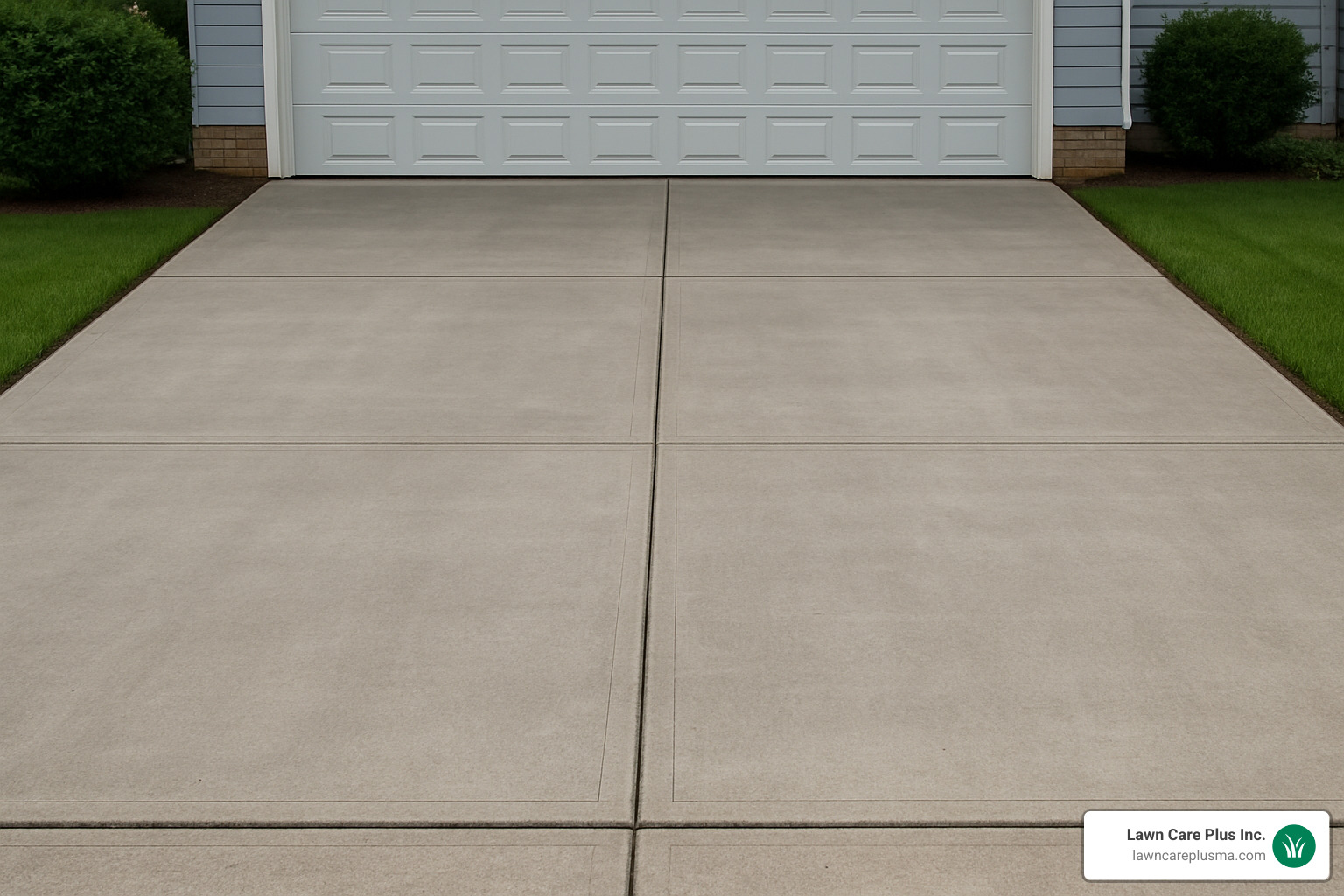
- Plain Gray Broom Finish: This is your classic, no-frills option. It typically costs around $4-$8 per square foot. You get standard gray concrete with a textured, non-slip surface created by a broom. It’s perfect for homeowners who prioritize durability and budget-friendliness.
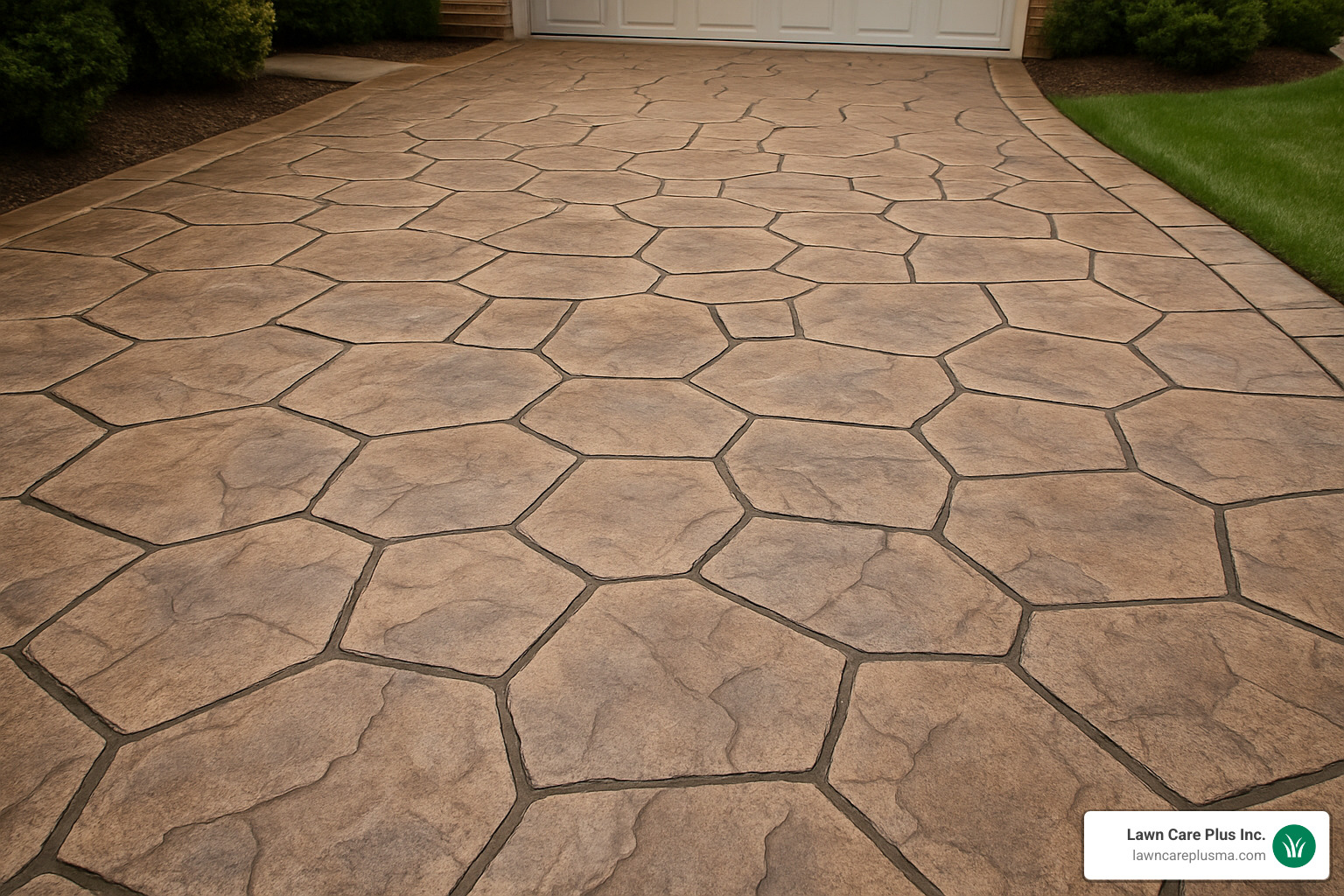
- Stamped Concrete: If you dream of a driveway that looks like natural stone, brick, or even wood planks, stamped concrete is a fantastic choice. This versatile finish usually ranges from $8-$18 per square foot. It’s ideal for those who want serious curb appeal without the premium cost of actual pavers.
- Stained or Colored Concrete: Want to add a pop of color or a subtle earth tone to your driveway? Staining or integral coloring allows for custom hues. You can expect costs from $6-$15 per square foot. It’s a great way to add visual interest while keeping things relatively affordable.
- Exposed Aggregate: This finish reveals the beauty of natural stone. It’s created by washing away the top layer of cement to expose the decorative gravel or pebbles within the concrete mix. Prices typically fall between $8-$18 per square foot. It’s an excellent option for combining rugged durability with an attractive, natural appearance.
As always, these figures represent national average costs based on internet data, and not actual quotes from Lawn Care Plus. Choosing a decorative finish really allows your driveway to become a statement piece for your home!
Key Factors That Influence Your Total Concrete Driveway Price
Several variables work together to determine how much a concrete driveway costs. Knowing the major ones lets you plan a realistic budget and avoid mid-project surprises.
Site accessibility – Easy truck access keeps prices down; tight spaces or steep grades may require pumps or smaller loads and raise labor time.
Project complexity – A straight rectangle on flat ground is the least expensive shape. Curves, elevation changes, borders, or tie-ins to existing hardscape add formwork, time, and skill.
Material quality – Higher-strength mixes, premium aggregates, and proper reinforcement cost more up front but are far cheaper than premature repairs in Massachusetts’ freeze-thaw climate.
Local regulations – Permits, drainage rules, or setback requirements vary by town and can add fees or extra work. Always confirm before work starts.
For owners dealing with existing damage, see our guide on Cement Driveway Repair.
Driveway Size, Thickness, and Reinforcement
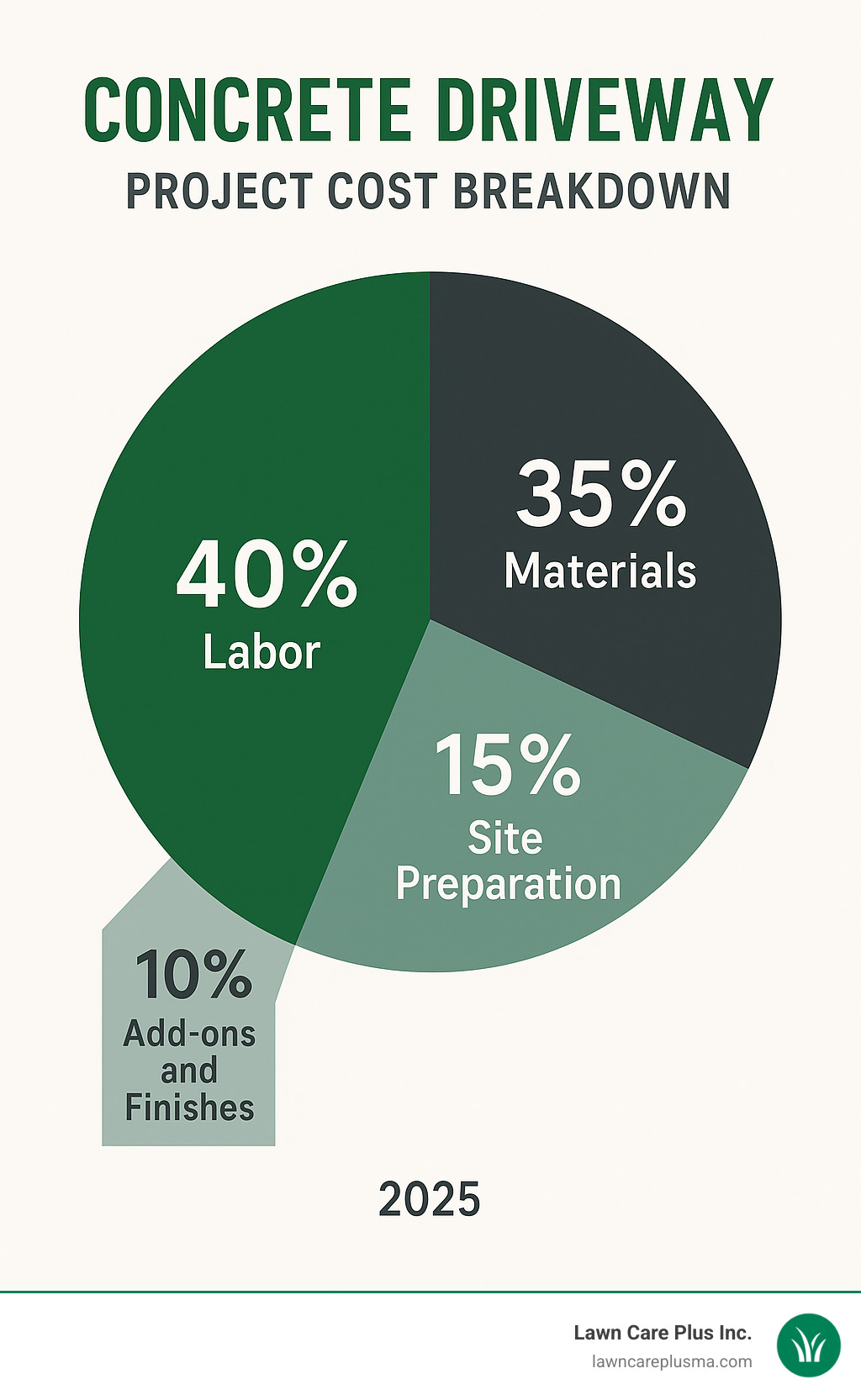
Most homes use a 4-inch slab. If you park heavy trucks or RVs, upgrading to 6 or 8 inches adds about 25-30 percent to the base cost but prevents costly failure later. Thicker concrete almost always goes hand-in-hand with rebar or wire mesh, a modest line-item that dramatically improves crack resistance.
Labor and Geographic Pricing
Labor often represents 40-60 percent of your total. The Boston Metro-West area commands higher wages than many parts of the country, but experienced finishers are worth every penny—concrete allows no do-overs once it starts to set. Regional variations in material delivery and disposal fees also affect the bottom line. Learn how pros build estimates at this overview of pricing systems.
Site Preparation, Grading, and Drainage
A strong driveway begins beneath the slab. Costs rise when crews must:
- Excavate rocky or clay soil
- Install a 4-6 inch compacted gravel base
- Correct poor drainage or steep slopes
Skimping here is false economy—repairs to a settled or cracked driveway dwarf the savings. Need a reliable crew? Visit our Driveway Replacement Contractors page.
Removing an Old Driveway
Demolishing and hauling away failed concrete, asphalt, or deep gravel can add meaningful dollars per square foot. Reinforced concrete costs the most to remove because it requires heavier equipment and separate recycling steps. Details on our process are in the Concrete Driveway Removal and Replacement guide.
All pricing references are national averages from online sources and are not quotes from Lawn Care Plus Inc.
Concrete Driveways: Cost, Durability, and Value
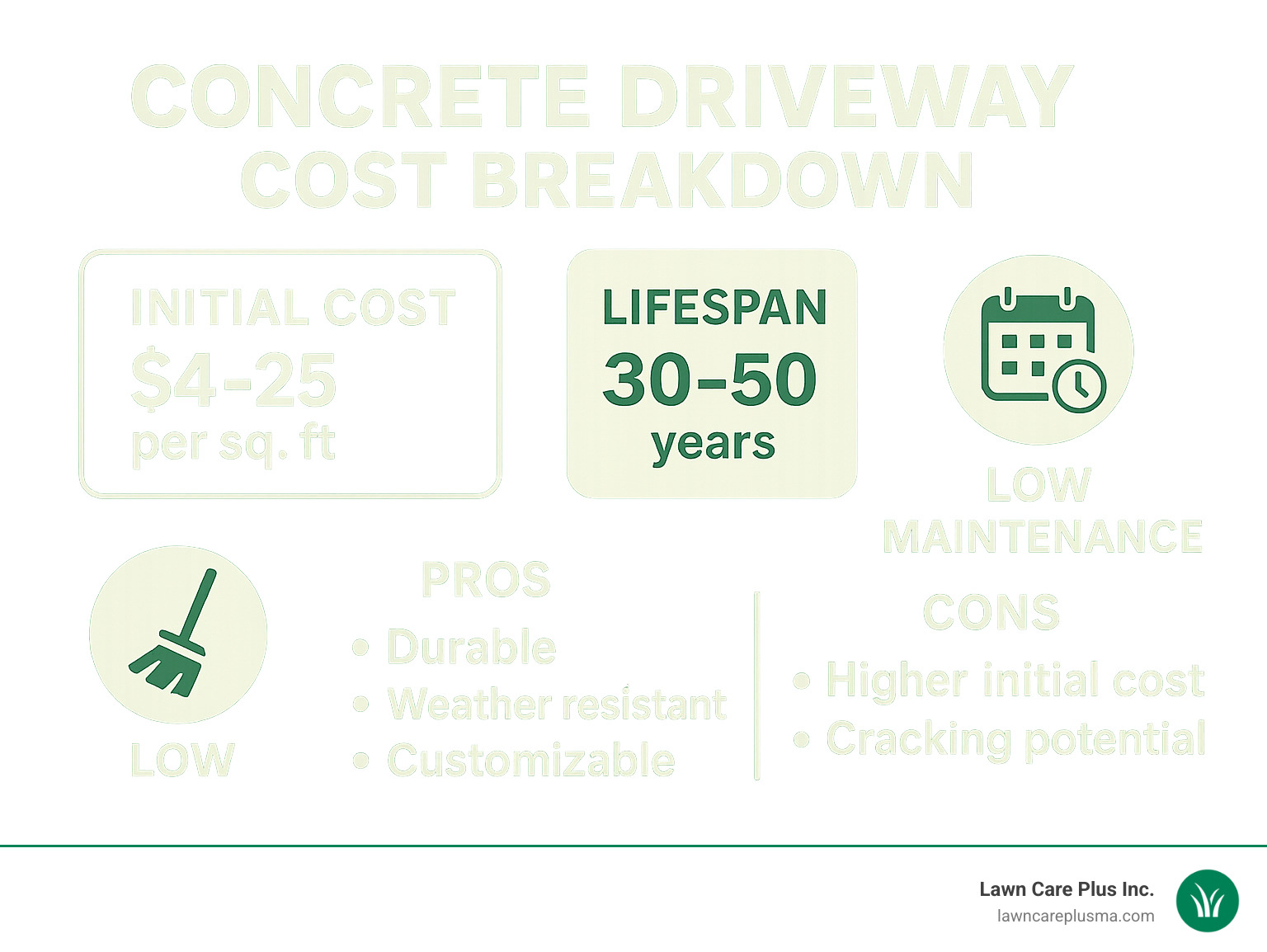
When homeowners ask us how much does a concrete driveway cost, they’re really asking about value—not just the upfront expense, but what they’ll get for their investment over the years. The answer is quite compelling when you look at the complete picture.
Concrete driveways offer an exceptional lifespan of 30-50 years when properly installed, making them one of the most cost-effective long-term solutions for your property. While the initial investment ranges from $4-25 per square foot based on national averages, this cost spreads over decades of reliable service.
These are average costs based on internet data and not actual costs for Lawn Care Plus.
The durability benefits of concrete shine through Massachusetts’ challenging climate. Our freeze-thaw cycles, heavy snow loads, and summer heat waves demand a material that can handle extreme conditions without failing. Concrete’s weather resistance makes it ideal for our region’s demanding seasons.
What makes concrete particularly attractive is its customizable nature. You’re not limited to plain gray slabs—decorative options like stamping, staining, and exposed aggregate let you create a driveway that complements your home’s architecture and your personal style.
The maintenance requirements are refreshingly minimal. Unlike other materials that need regular repairs or replacement, concrete driveways require only occasional cleaning, periodic sealing every 3-5 years, and prompt attention to any cracks that develop.
At Lawn Care Plus Inc., we specialize in concrete and hardscaping solutions throughout the Boston Metro-West area. Our experience with local soil conditions, municipal requirements, and climate challenges ensures your investment delivers maximum value and longevity. We understand that a properly engineered driveway system isn’t just about pouring concrete—it’s about creating a foundation that will serve your family for decades.
The higher initial cost compared to some alternatives is offset by the minimal ongoing expenses and the peace of mind that comes with a professionally installed concrete driveway. While cracking potential exists with any concrete installation, proper site preparation, quality materials, and skilled installation minimize this risk significantly.
For more information about your options, visit our Driveway Replacement Options page.
Is a Concrete Driveway a Good Investment?
If you’re wondering how much does a concrete driveway cost and whether it’s worth the investment, the answer is a resounding yes. Concrete driveways deliver exceptional long-term value that goes far beyond their initial price tag.
Think of it this way: while you might pay more upfront, you’re essentially buying decades of peace of mind. A properly installed concrete driveway can last 30-50 years with minimal fuss, while other materials might have you calling contractors every 10-20 years for replacements.
Durability is where concrete truly shines, especially here in Massachusetts. Our harsh winters, with their freeze-thaw cycles and heavy snow loads, can be brutal on driveways. Concrete takes this punishment in stride, maintaining its structural integrity year after year. No more worrying about potholes developing or surfaces crumbling under the weight of your family’s vehicles.
The low maintenance aspect makes concrete particularly appealing for busy homeowners. Beyond occasional cleaning and sealing every 3-5 years, your concrete driveway will quietly do its job without demanding constant attention or unexpected repair bills.
Boosting Curb Appeal and Increasing Home Value
Here’s something that might surprise you: a well-designed concrete driveway can boost your property value by 5-10%. That means your investment often pays for itself through increased home equity, making it one of the smartest home improvements you can make.
The return on investment becomes even more impressive when you factor in the durability we mentioned earlier. You’re not just adding value once – you’re adding lasting value that won’t disappear in a few years when the driveway needs replacement.
Improved curb appeal happens the moment your new driveway is finished. There’s something immediately satisfying about a smooth, well-maintained concrete surface that signals to everyone – including potential buyers – that this home has been cared for properly.
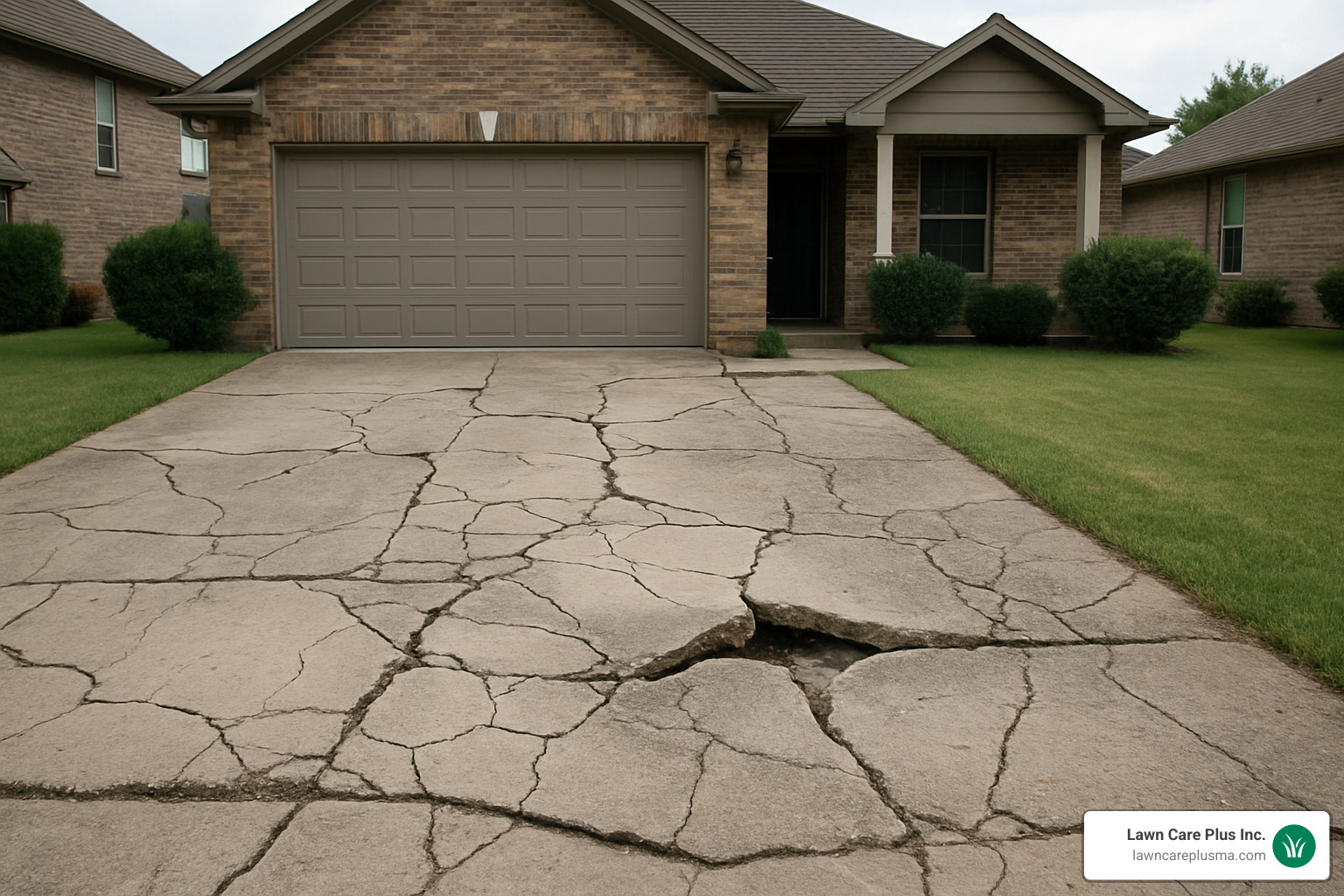
First impressions carry tremendous weight in real estate. A cracked, uneven driveway can make visitors question what other maintenance issues might be lurking, while a pristine concrete driveway suggests quality and attention to detail throughout the property.
For a detailed analysis of this topic, check out our article: Does Replacing Driveway a Good Investment?.
Lifespan, Maintenance, and Long-Term Repair Costs
The expected lifespan of 30-50 years makes concrete one of the most durable driveway materials available. With proper installation and quality materials, some concrete driveways can last even longer, becoming a permanent feature of your property.
Sealing requirements are refreshingly simple. Every 3-5 years, you’ll want to apply a protective coating to guard against moisture, stains, and surface wear. This preventive step is far less expensive and disruptive than the major repairs other materials often require.
When crack repair is needed, the costs remain surprisingly manageable. Small cracks can be addressed quickly and affordably, while even larger repairs typically cost just a few hundred dollars – a fraction of what you’d spend on major driveway reconstruction.
Resurfacing options give you flexibility down the road. If you want to refresh your driveway’s appearance after many years of service, resurfacing can give you a like-new look without the expense of complete replacement.
For comprehensive repair information, visit our Repair Concrete Driveway guide.
Optional Add-Ons and Their Cost Implications
Several popular add-ons can improve your concrete driveway’s functionality and appearance, though they do affect your overall investment.
Heated driveway systems represent the ultimate in winter convenience, automatically melting snow and ice. While they increase your initial investment significantly, many homeowners find the convenience and safety benefits worth every penny.
Decorative borders using brick or stone create beautiful visual definition and can tie your driveway into existing landscape features. These borders add modest cost per linear foot but create a custom, high-end appearance.
Rebar or wire mesh reinforcement provides extra structural strength, particularly valuable if you have heavy vehicles or challenging soil conditions. This addition costs relatively little but can prevent costly repairs later.
Driveway aprons create smooth transitions from street to driveway, especially important when dealing with elevation changes or meeting municipal requirements for proper drainage.
Sealing should be considered essential rather than optional. This protective treatment guards against stains, weather damage, and surface deterioration, making it one of the best investments you can make in your driveway’s longevity.
These are average costs based on internet data and not actual costs for Lawn Care Plus.
Smart Ways to Save on Your Driveway Installation
You can trim costs without sacrificing durability by focusing on items that matter most.
Gather at least three detailed quotes – Line-item estimates reveal where contractors differ and help you spot unrealistically low bids.
Schedule during the shoulder seasons – Late spring or early fall often means shorter wait times and, in some cases, modest labor discounts.
Simplify the design – A clean rectangular slab with a broom finish delivers the same structural strength as a winding stamped showpiece at a fraction of the price. Decorative treatments can be added later.
Combine projects with neighbors – When practical, joint scheduling can lower material delivery and mobilization fees for everyone.
DIY vs. Hiring a Professional
Concrete demands speed, precision, and specialized tools. Renting equipment plus the risk of replacement if things go wrong usually exceeds any DIY savings. Professionals also provide warranties and understand local soil and weather challenges.
Cost-Cutting Tactics That Still Protect Quality
- Do your own light demo or site clearing if you have the skill and proper safety gear.
- Move lawn décor, trim branches, and ensure clear truck access before crews arrive.
- Stick with standard gray concrete and invest savings in a solid gravel base and proper reinforcement—these are the features that keep repairs away.
A driveway that lasts 30-50 years is the ultimate bargain.
Frequently Asked Questions about Concrete Driveway Costs
How long does the project take?
Most residential installs need 1-3 days for forming, pouring, and finishing, plus a minimum 7-10 days before regular vehicle traffic. Full curing to maximum strength continues for 28 days, but light foot traffic is fine after 48 hours.
Will I need a permit?
Nearly every Metro-West town requires a permit for new or replacement driveways. Fees average $100-$200. Check with your local building department early to avoid fines or delays.
Best time of year to pour concrete?
Aim for stable temps 50-80 °F—typically late spring through early fall. Extreme heat accelerates set times; freezing temps slow curing and risk surface damage. More seasonal tips are in this guide on project timing.
All timeline and cost figures above are national averages from online data, not Lawn Care Plus quotes.
Your Next Steps to a New Driveway in Massachusetts
Understanding how much does a concrete driveway cost comes down to several key factors we’ve explored throughout this guide. Your project’s size and thickness requirements form the foundation of your budget, while finish options—from basic broom texture to decorative stamped patterns—can significantly impact your total investment.
Site preparation requirements often surprise homeowners, but they’re crucial for long-term success. Proper excavation, grading, and drainage work might add to your upfront costs, but they prevent expensive repairs down the road. A concrete driveway is only as good as the foundation beneath it.
The importance of hiring a qualified local contractor really can’t be stressed enough. You might save a few dollars with an out-of-area contractor, but local expertise pays dividends. A contractor familiar with Massachusetts soil conditions, municipal permit requirements, and our challenging freeze-thaw cycles will deliver results that last decades.
For homeowners throughout the Boston Metro-West area—from Newton and Needham to Brookline and beyond—Lawn Care Plus Inc. brings the specialized knowledge your project deserves. We understand that every property presents unique challenges, whether it’s working around mature trees, managing drainage on sloped lots, or navigating local building codes.
Our team has spent years perfecting concrete installation techniques that work specifically in New England’s climate. We know which concrete mixes perform best in our temperature swings, how to prepare sites for proper drainage, and what reinforcement strategies prevent cracking in our soil conditions.
Your new concrete driveway represents more than just a parking surface—it’s a long-term investment in your property’s functionality and curb appeal. With proper planning and professional installation, you’ll enjoy the benefits for 30-50 years with minimal maintenance.
Ready to move forward? Contact us for a professional consultation on your hardscaping project. We’ll visit your property, assess your specific needs, discuss design possibilities, and provide a detailed estimate custom to your situation and budget.
The journey to your new concrete driveway starts with understanding your options and ends with decades of reliable service. Let’s make sure you get there the right way.