Why Driveway Repair is Essential for Your Property
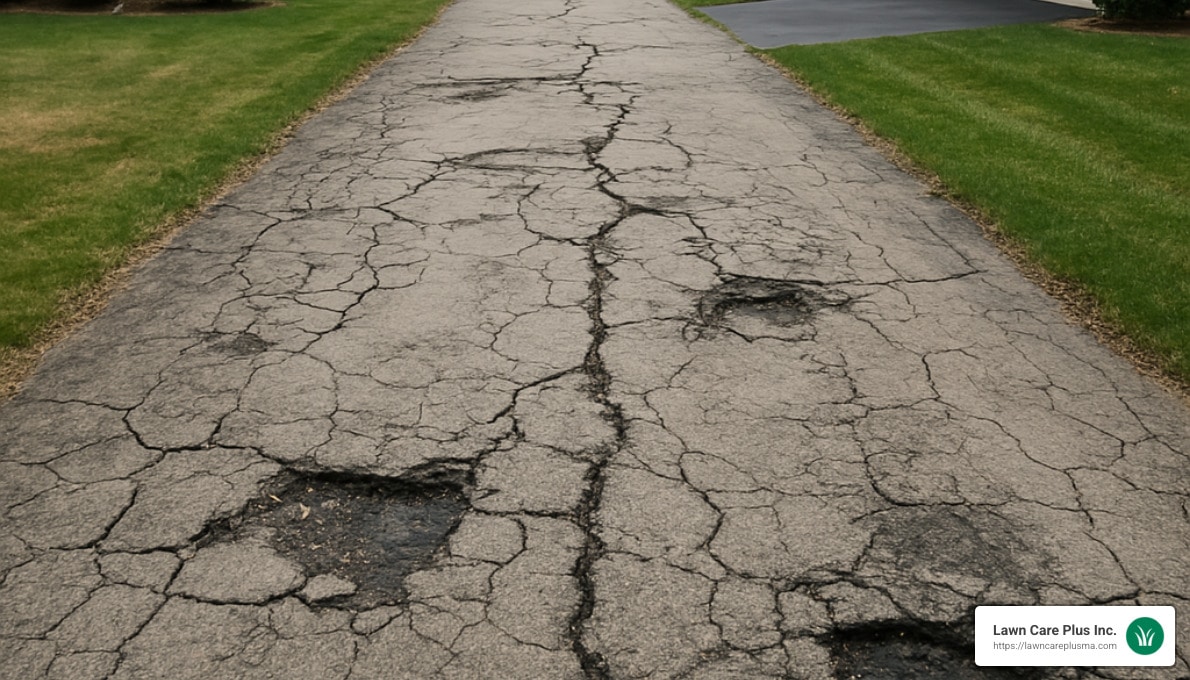
Driveway repair is crucial—not just for keeping your property looking sharp, but also for ensuring safety and preserving your home’s value. Whether you’re dealing with cracks, holes, or uneven spots, quick action can prevent minor issues from becoming expensive headaches.
If you’re pressed for time, here’s a fast look at your best driveway repair options to help you decide:
| Repair Method | When to Choose it | Pros | Cons |
|---|---|---|---|
| Patching | Minor cracks and potholes | Quick, cheap, DIY-friendly | Temporary (2-3 years) |
| Resurfacing | Moderate damage, surface wear | Durable, cost-effective | Not ideal for severe structural issues |
| Replacing | Extensive cracks, sinking slabs, structural issues | Long-term (15-20 years), boosts property value | Higher initial investment |
According to industry data, over 90% of driveways in the U.S. are asphalt or concrete, requiring regular upkeep to stay durable and attractive. As one expert puts it:
“Even small driveway repairs can prevent larger, more expensive problems down the line.”
We’ll outline the best driveway repair solutions available—so you can make informed decisions and keep your property in top shape.
Basic driveway repair glossary:
– asphalt driveway repair
– cement driveway repair
– repair concrete driveway
Understanding Driveway Damage
Before jumping right into driveway repair solutions, let’s first get clear on why driveways break down in the first place. At Lawn Care Plus Inc., we’ve seen just about every driveway issue imaginable across the Boston Metro-West area. While some driveways age gracefully, others seem to deteriorate faster than you can say “freeze-thaw cycle.” Knowing what causes driveway damage helps you spot issues early and choose the right repair method.
Common Causes of Driveway Damage
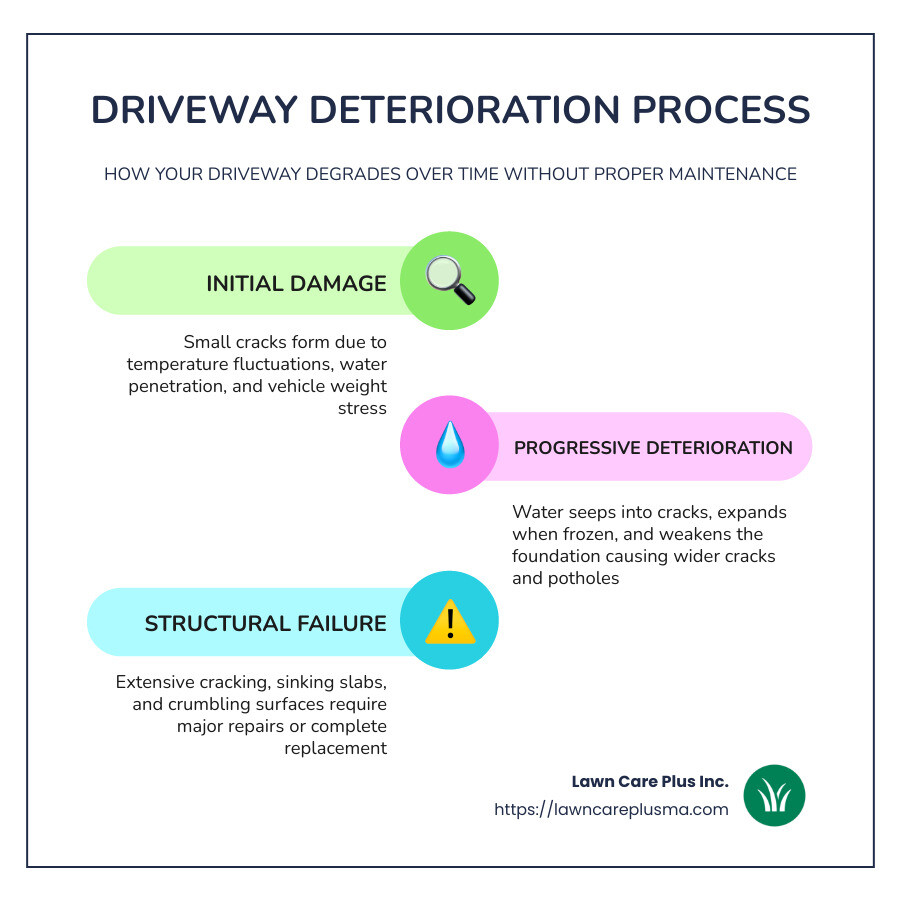
One of the biggest culprits behind driveway damage is simple weathering. Rain, snow, ice, and even the sun can wear down your driveway over time. For example, UV rays from sunlight can make asphalt materials brittle, causing cracks and deterioration. Rain and snow introduce another damaging factor—water infiltration. Water that sneaks into tiny cracks and freezes expands powerfully, exerting pressure strong enough (up to 30,000 psi!) to break apart asphalt or concrete surfaces. An industry expert sums it up well: “Freeze–thaw weathering is caused by water inside driveway cracks. When water freezes its volume expands, creating forces which crack and spall off the outer surface.”
But it’s not just the weather that’s after your driveway—sometimes the trouble starts underground. Tree roots near your driveway can slowly creep beneath it, pushing upwards and causing cracks or uneven surfaces. Your trusty driveway might also struggle under heavy loads. While it can typically handle passenger cars without issue, regularly parking heavy trucks, RVs, or construction equipment may put too much stress on the surface, leading to damage.
Occasionally, the cause of driveway damage is simply poor installation. If your driveway wasn’t built with a proper base, drainage solutions, or quality materials, it may deteriorate more quickly than expected. At Lawn Care Plus, we’ve often been called to repair driveways that didn’t get the right treatment from the beginning—which is why professional installation matters!
One of our happy customers, Leslie Cak, shared her experience: “I had cracks in my driveway that kept getting worse each winter. After Lawn Care Plus repaired it, it looks like a new driveway!”
Signs Your Driveway Needs Repair
Recognizing driveway issues early can save you a lot of headache (and money). The most common sign homeowners first notice are cracks. Small hairline cracks (under ¼ inch wide) might not seem like a big deal at first, but they can quickly grow wider, allowing more water to work its way beneath the surface. Medium cracks (¼ to ½ inch wide) and large cracks (over ½ inch wide) are even more urgent, as they often signal deeper structural issues.
Potholes are another obvious sign of driveway trouble. They happen when water seeps underneath the surface and wears away the foundation. During freeze-thaw cycles, trapped water expands, causing the road surface to collapse into those dreaded potholes.
Have you noticed your driveway slabs aren’t as even as they used to be? Sinking slabs or uneven surfaces often indicate problems with the foundation or erosion of the soil below. Similarly, if your once fresh-looking driveway has become faded or has noticeable discoloration, it likely means the binding agents in the cement or asphalt are breaking down.
Keep an eye out for pooling water, too. Proper drainage should allow water to flow off your driveway. If it’s pooling instead, that’s usually a sign that the slope is off or the structure beneath is compromised. Finally, crumbling edges along your driveway suggest that its structural integrity is wearing out—a clear signal to address the issue sooner rather than later.
Here’s a simple test we often recommend to our Boston-area clients: Pour a little water onto a well-used part of your driveway. If the water beads up, your driveway is still in pretty good shape. But if it quickly soaks in or forms puddles, you might want to start thinking about repairs.
By knowing the causes and early signs of driveway trouble, you’re already ahead of the game. Next, let’s explore specific solutions for driveway repair to get your driveway back to its best condition in no time.
Essential Driveway Repair Solutions
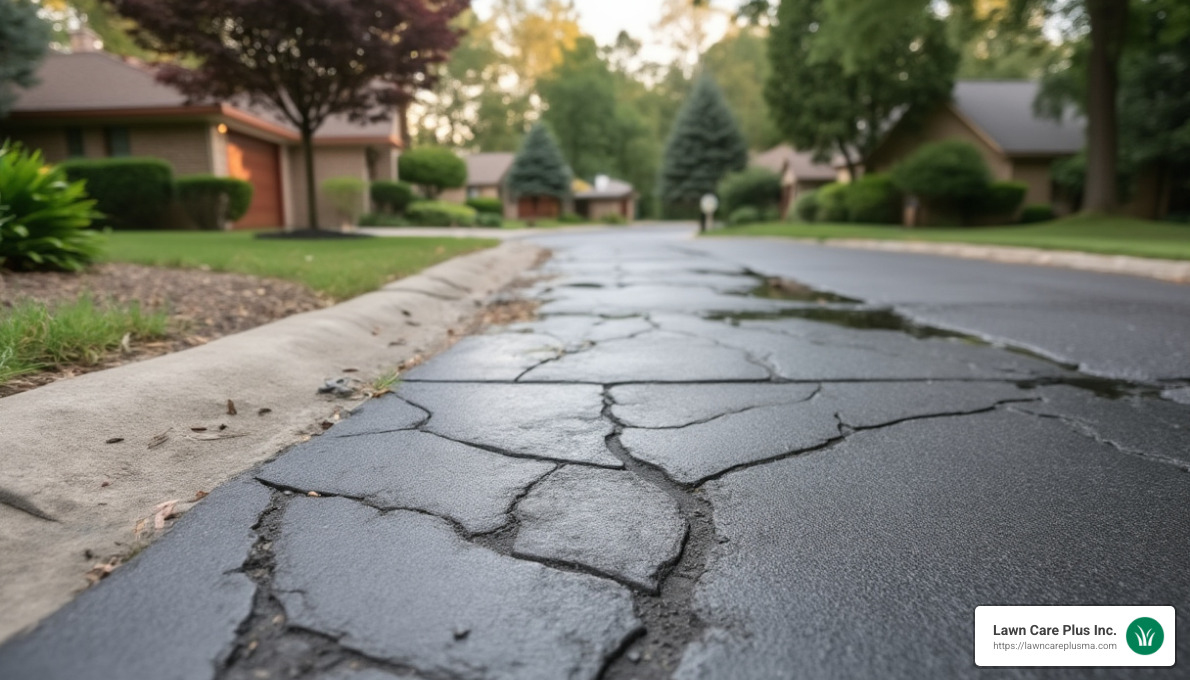
So, you’ve noticed those worrying cracks, potholes, or uneven spots on your driveway. Now what? At Lawn Care Plus Inc., we’ve helped countless homeowners throughout the Boston Metro-West area solve driveway troubles, and we’ve got you covered too. Let’s explore the essential driveway repair methods to identify the best solution for your situation.
Patching: Quick Fixes for Small Cracks
If you’re catching driveway damage early, patching can be your best friend. It’s perfect for minor issues—those small cracks, tiny potholes, or surface defects that aren’t too deep. Patching is affordable, quick, and can be DIY-friendly (though professional patching typically lasts longer).
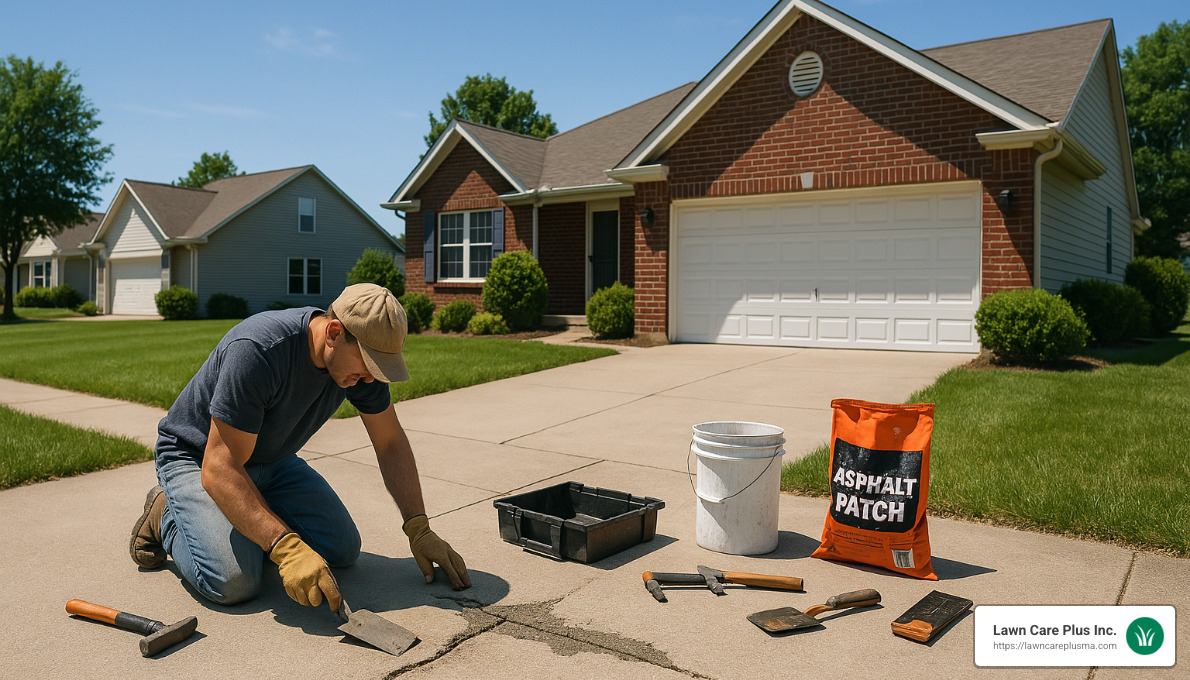
Here’s how patching works in a nutshell: first, the area is cleaned thoroughly. Then, the right filler material—liquid crack filler for hairline cracks or rubberized asphalt patch for wider gaps—is applied. After applying, the filler is compacted and allowed to cure properly.
Patching your driveway can keep problems at bay for a good two to three years if done correctly. It’s not a permanent fix, but it buys you time and prevents water from sneaking underneath to cause even more damage.
You can certainly give DIY patching a try—it’s a popular weekend project. However, there’s a catch. As one of our Newton, MA, clients finded after a few frustrating attempts: “DIY crack fillers didn’t last through winter. Lawn Care Plus Inc. patched it professionally, and it’s been good for two years now.” Professional patching ensures proper preparation, high-quality materials matched specifically to your driveway, and extends the life of the repair.
Resurfacing: Extending the Life of Your Driveway
When patching won’t quite cut it, but your driveway isn’t damaged enough for a total replacement, resurfacing is your sweet spot. Resurfacing your driveway is a cost-effective, long-lasting solution that can add another 5 to 10 years of life to an aging driveway. It’s ideal when the structure beneath the surface is still solid but the top layer has seen better days.
The process involves cleaning and preparing your current driveway surface, repairing cracks and potholes, applying a binding agent, and then overlaying it with a fresh layer of asphalt or concrete. After compacting and finishing, your driveway looks nearly brand new—and you haven’t broken the bank.
According to industry data, resurfacing costs around $2 per square foot on average—though remember, that’s just an internet average, not our Lawn Care Plus prices. Compare that to a full replacement, which can easily run three times higher or more, and it’s clear why many homeowners pick resurfacing.
But a quick heads-up: resurfacing only works well if the driveway’s base is solid. Structural problems underneath will eventually show through the new surface. If your driveway has severe structural issues, resurfacing might just delay an inevitable full replacement.
Replacing: Long-Term Solutions for Severe Damage
Sometimes your driveway has simply seen too many New England winters, too many heavy vehicles, or too many quick-fix patch-ups. When there’s extensive cracking (covering more than a quarter of your driveway), multiple potholes, severe drainage issues, or crumbling edges, it’s probably time for a full driveway replacement.
Replacing your driveway means removing the entire damaged surface and laying down new material—whether that’s asphalt, concrete, or another option. While replacement comes with a higher upfront cost (typically at least three times the cost of resurfacing and significantly pricier than patching), you get a driveway that’s built to last. Expect a well-installed driveway replacement to stay in excellent shape for 15 to 20 years or more.
The benefits of replacing your driveway go beyond just smoother parking. It dramatically revitalizes your home’s curb appeal, boosts property value, and lets you address underlying structural and drainage issues completely. Plus, replacement gives you the freedom to adjust your driveway’s design, layout, and even switch materials if you prefer something new.
Jeff Lacher, one of our Brookline customers, went through multiple rounds of patching before finally opting for a replacement. “After years of temporary fixes,” he said, “the Lawn Care Plus team replaced my driveway, and the results were amazing. I only wish I’d done it sooner!”
Whether you’re looking at patching, resurfacing, or replacing, our experts at Lawn Care Plus Inc. are here to help you choose the right driveway repair solution. You can also explore our dedicated resources on asphalt driveway repair and repair concrete driveway for more information.
Materials and Methods Used in Driveway Repair
A successful driveway repair depends greatly on choosing the right materials and methods custom to your particular needs. At Lawn Care Plus Inc., we’ve repaired countless driveways in the Boston Metro-West area, and we’ve seen how choosing the right material can make all the difference.
Driveways aren’t one-size-fits-all. Your choice of material can depend on factors like your budget, the appearance you prefer, maintenance needs, climate, and how you use your driveway. Let’s walk through the most popular driveway materials and explore their advantages and considerations.
Asphalt vs. Concrete: Choosing the Right Material
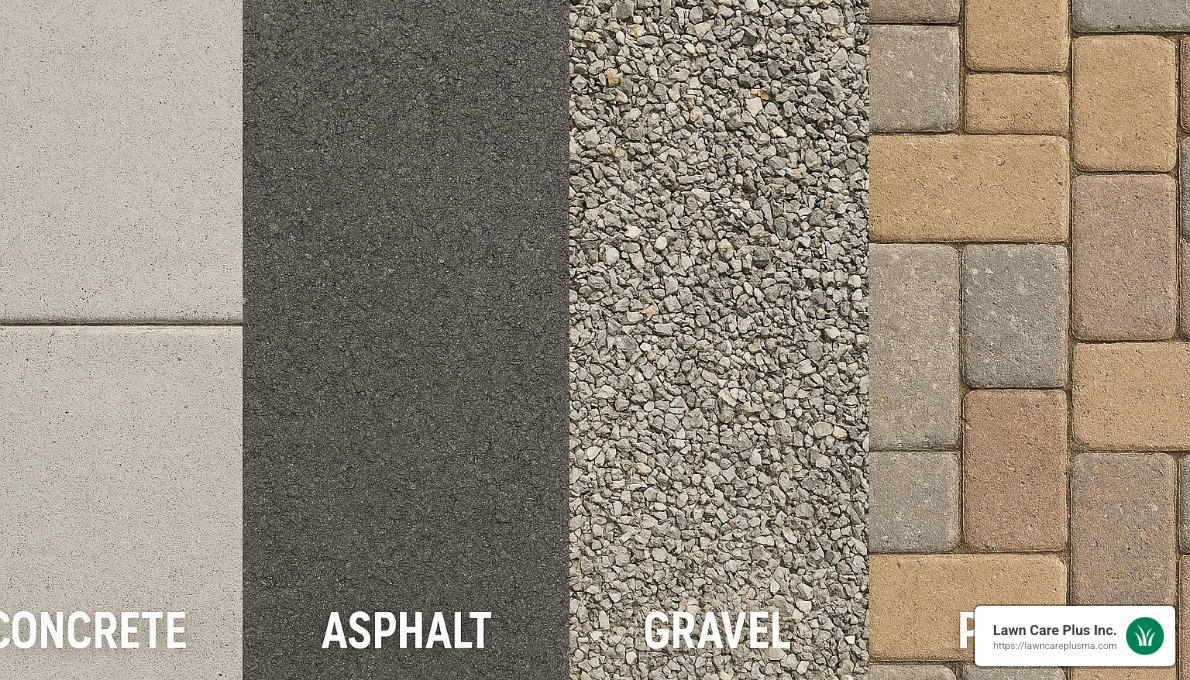
Asphalt and concrete dominate driveway construction in the U.S., and each has its own set of pros and cons.
Asphalt driveways are a common sight across Massachusetts neighborhoods—and for good reason. Asphalt is flexible, making it more resistant to cracks caused by New England’s harsh freeze-thaw cycles. It’s also typically less expensive than concrete upfront, making it budget-friendly.
Repairs to asphalt are generally easier, quicker, and more cost-effective. The darker color absorbs sunlight, speeding up snow and ice melt—a definite plus during our tough winters. However, asphalt driveways require resealing every 2–5 years to keep them in optimal condition. With proper care, you can expect your asphalt driveway to last about 15–20 years.
If you’re leaning toward asphalt, check out our dedicated page on Asphalt Driveway Repair for more detailed information.
On the other hand, concrete driveways offer their own unique advantages. Concrete tends to be more durable over the long haul, lasting 25 years or more with proper maintenance. It’s also available in various decorative options such as stamping, coloring, or even exposed aggregate, allowing you to showcase your personal style.
Concrete’s lighter color helps reflect sunlight, keeping your driveway cooler in summer months. However, repairs to concrete can be more noticeable and challenging, and concrete is more susceptible to staining from oil and other substances. The initial cost is usually higher, but this can sometimes balance out with lower lifetime maintenance.
Beyond these two mainstays, you do have some alternative materials worth considering, depending on your needs:
- Gravel is affordable and offers excellent drainage, but requires regular maintenance to keep it from shifting.
- Pavers are attractive, durable, and easy to repair individually if damaged—but they can cost more upfront. They’re great if style is a priority.
- Cobblestone gives your home a classic, timeless look with incredible durability, though it requires a more significant initial investment.
When we help clients choose the right driveway material, we consider their budget, design preferences, existing driveway condition, and local climate. We also factor in the style of their home and the neighborhood aesthetic.
Climate Considerations in Driveway Repair
Here in Massachusetts, climate has a huge impact on driveway longevity. We’ve seen our fair share of driveway damage caused by the constant freezing and thawing we experience each winter. This cycle of freeze–thaw is particularly hard on driveways because water expands when it freezes, creating pressure of up to 30,000 psi! That expansion can widen minor cracks into major headaches.
From our experience serving the Boston Metro-West area, we’ve learned the best ways to combat these climate challenges include:
- Proper Base Construction: A solid, compacted gravel base—usually 4–8 inches deep—is essential. It provides support and effective drainage to protect your driveway from water damage.
- Ensuring Adequate Drainage: Good drainage design directs water away from your driveway, preventing pooling and seepage that lead to cracks and potholes.
- Regular Sealing: This is especially important for asphalt driveways, sealing helps prevent water infiltration and slows deterioration.
- Mindful Snow Removal Practices: Using plastic shovels and safer de-icing products (like calcium chloride instead of rock salt) helps protect driveway surfaces from damage.
In fact, one of our Watertown clients shared: “Since Lawn Care Plus recommended switching from salt to calcium chloride for ice management, my driveway has shown noticeably less wear over the winter.”
To learn more about climate considerations and to compare driveway options, we recommend checking out Driveway Repair and Replacement Options & Costs.
DIY vs. Professional Driveway Repair
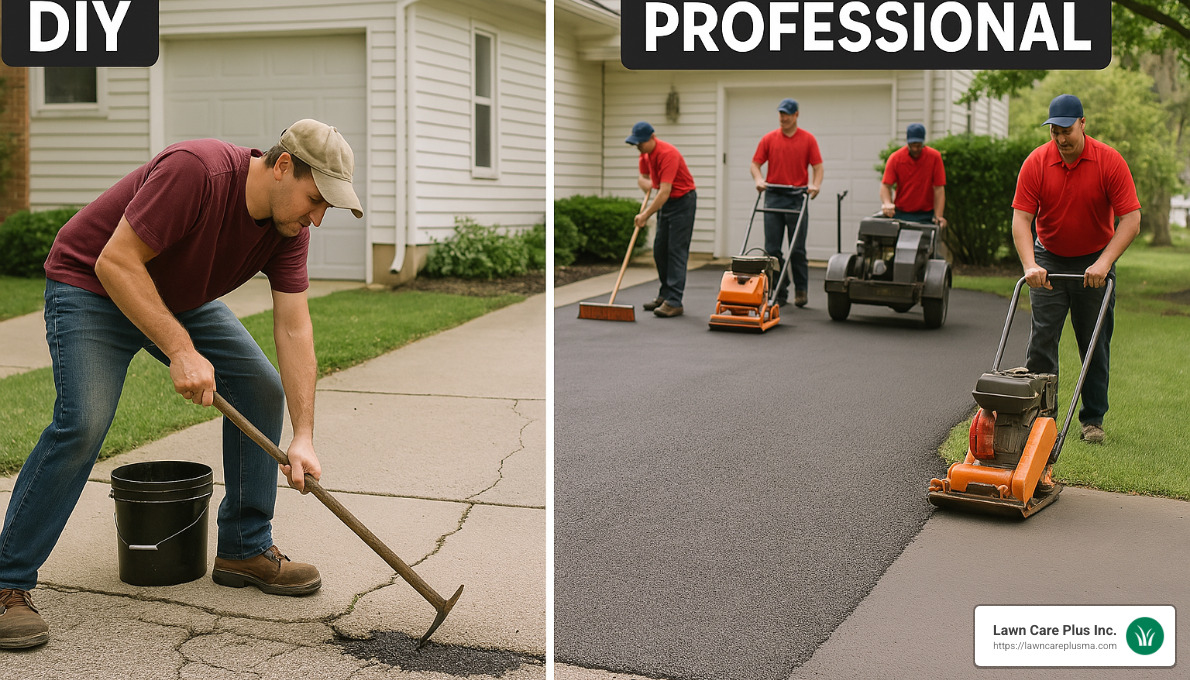
When your driveway shows signs of wear, it’s natural to wonder if you should roll up your sleeves and tackle the job yourself—or if calling in the pros is a smarter move. While a DIY driveway repair can be budget-friendly in some cases, a professional touch is often necessary for bigger, more complicated projects. Let’s take a friendly look at when each option makes sense.
When to DIY
Doing your own driveway repairs can certainly save money. But before you start mixing concrete or patching asphalt, it helps to know exactly what you’re getting into.
DIY driveway repair is best suited for smaller, manageable tasks. For instance, if you notice small cracks less than a quarter inch wide, these can usually be fixed with an inexpensive, commercially available crack filler. Similarly, minor potholes or surface damage can often be repaired with easy-to-use cold patch asphalt or concrete patching compounds.
Applying a protective asphalt sealcoat is another manageable weekend project. It helps protect your driveway from water infiltration, UV rays, and everyday wear and tear, extending its lifespan for several more years. The key here is preparation: you’ll want to thoroughly clean the surface, remove any weeds or debris, follow the manufacturer’s instructions closely, and ensure the temperature stays above 50°F for optimal results.
Before you grab your tools, keep in mind a few limitations to the DIY approach. Amateur repairs usually won’t look quite as neat or last as long as professional work. Plus, you typically won’t have access to the commercial-grade materials or specialized equipment that professionals use. This means your driveway repair might wear out more quickly, especially through harsh Massachusetts winters.
Still, many homeowners have found small DIY repairs to be rewarding. A customer from Jamaica Plain recently shared, “I used your DIY guide to fill some small cracks in my concrete driveway last fall. It was surprisingly easy, and the repairs have held up well through the winter.”
If the repair job feels simple, manageable, and within your comfort level, DIY could be a practical way to go—just don’t forget your gloves and safety goggles!
When to Hire a Professional
While DIY projects can be satisfying, there are plenty of driveway repair situations where calling in professionals is both safer and smarter. Significant driveway damage or structural issues often require specialized equipment, advanced techniques, and years of practice to handle properly.
If your driveway needs resurfacing, professional assistance is highly recommended. This process requires careful preparation, including crack filling and leveling, followed by applying an entirely new layer of asphalt or concrete. It’s not something you want to experiment with—it needs professional expertise to ensure lasting results and smooth appearance.
Likewise, extensive cracking, multiple potholes, structural issues like sinking slabs, or major drainage problems usually indicate serious underlying problems. In these cases, professional driveway repair technicians can evaluate the root cause of the issues and address them with long-lasting solutions.
Professionals also have access to commercial-grade tools and higher-quality materials, which means repairs will not only look better but withstand heavy use and harsh weather conditions. They’ll often complete the job more quickly and efficiently than would be possible on your own. Plus, reputable driveway repair companies typically offer guarantees or warranties, giving you peace of mind.
Concrete leveling—raising sunken driveway slabs—requires specialized equipment and careful expertise. Complete driveway replacements, meanwhile, involve extensive groundwork, proper base preparation, and precise installation methods. These are tasks best left to seasoned pros like our team here at Lawn Care Plus Inc.
One of our happy clients from Brookline, Jackie Brothers, shared her experience after hiring our team: “The best workers who provided a beautiful driveway recovering. In every way, one of the best companies I have ever used!”
If repairs feel overwhelming, complicated, or involve structural challenges, going with a professional makes sense. At Lawn Care Plus Inc., we offer free driveway inspections throughout the Boston Metro-West area and can help you decide the most cost-effective, practical repair solutions for your situation. For instance, if your concrete driveway requires specialized attention, visit our Repair Concrete Driveway service page for more details.
Whether you choose DIY or professional repair depends on your comfort level, available time, skill, and the complexity of the driveway damage. Small, surface-level fixes can make great DIY projects, while more substantial repairs are a smart investment in professional expertise and long-term peace of mind.
Cost Implications of Driveway Repair Solutions
Understanding the financial side of driveway repair can help ease your mind as you plan your project. Prices can vary widely depending on factors like the extent of the damage, materials chosen, and even the location of your driveway. Let’s break down the average costs (based on internet data and industry standards—not actual Lawn Care Plus Inc. rates) to help you budget effectively.
Patching Costs
When it comes to patching small cracks and potholes, you have two main options: DIY or professional help.
DIY crack fillers are the most wallet-friendly option, running anywhere from about $10 to $100, depending on the quality and quantity of the product. That DIY patches can be effective for minor issues but may not last as long as professional ones.
Professional crack filling, on the other hand, varies greatly depending on how many cracks you have and how severe they are. Generally speaking, professional patching can range widely—anywhere from around $100 up to $500 or more if you have numerous cracks or deeper damage.
Resurfacing Costs
If your driveway needs more than a quick patch but isn’t quite ready for full replacement, resurfacing is a smart, middle-ground choice. Asphalt resurfacing typically costs about one-third the price of a complete driveway replacement, making it a popular, cost-effective option.
Concrete resurfacing is a bit trickier to price out because it varies by the finish type you choose—plain concrete is the least expensive, while decorative options like coloring and stamped patterns can significantly increase your cost. Generally, you can expect concrete resurfacing to range from around $3 to over $10 per square foot depending on your decorative preferences and the complexity of the project.
That resurfacing costs can climb higher if your driveway needs a lot of prep work—such as crack filling, leveling sunken slabs, or addressing drainage issues—before applying the new surface.
Replacement Costs
When a driveway gets old or severely damaged, replacement may be your best option. Although this route is more expensive upfront, it provides a long-lasting, attractive solution. Replacement prices vary considerably based on driveway size, material choice, and complexity of the installation process.
Asphalt driveways typically cost about $2 to $5 per square foot, but prices can reach $10 or more per square foot for high-quality asphalt and more complex installations. Concrete driveways usually start at around $4 per square foot for basic finishes and can go well beyond $12 per square foot for decorative, stamped, or stained concrete.
If you’re thinking about alternative driveway materials, gravel tends to be the most economical choice, while premium materials like pavers or cobblestone can push costs dramatically higher—often costing three times (or more!) the price of standard asphalt or concrete.
Factors Affecting Cost
Several factors can impact how much your driveway repair project ultimately costs:
- Size of the driveway: Bigger driveways require more materials and more labor hours, naturally increasing costs.
- Type of material chosen: Asphalt usually costs less initially than concrete, though concrete can last longer and might provide better long-term value.
- Extent of the damage: More severe driveway problems, including deep potholes or widespread cracking, will be more expensive to fix.
- Accessibility: If your driveway is hard to reach with machinery or requires special equipment, expect an increase in labor costs.
- Base preparation and drainage issues: Poor drainage or a failing base layer underneath your driveway can mean additional costs for excavation, grading, or drainage installation.
- Regional location: Labor and materials often cost more or less depending on where you live. In the Boston Metro-West area, for instance, prices may differ from national averages.
Ways to Save Money on Driveway Repair
Thankfully, a few smart strategies can help you stretch your driveway repair dollars:
- Tackle small repairs immediately: Addressing minor cracks and potholes right away can prevent bigger, costlier problems later.
- Consider resurfacing instead of total replacement: If your driveway is structurally sound, resurfacing can give you a like-new appearance at a fraction of the replacement cost.
- Plan your project off-season: Scheduling driveway repair work during less busy times (late fall or early spring) may save you some money.
- Combine driveway repairs with other landscaping or hardscaping work: Doing multiple projects at once can often lower overall labor and equipment costs.
One of our Newton-area clients, Rachel Smith, shared her experience:
“I was able to get my quote and have the work completed in under a week! The price was reasonable for the quality of work provided.”
Return on Investment
Driveway repair isn’t just an expense—it’s also an investment in your home. A well-maintained driveway improves your property’s curb appeal, makes daily life easier, and can significantly boost your home’s market value. Many homeowners find that when it’s time to sell, they recover a substantial portion of what they’ve invested in driveway repairs or replacement.
So, while the initial cost may feel daunting, think of it as investing wisely in your home’s overall beauty, safety, and value. For a custom quote for your driveway repair project, reach out to our friendly team at Lawn Care Plus Inc.—we’re always here to help!
Frequently Asked Questions about Driveway Repair
What are the signs that indicate a driveway needs repair?
Knowing when your driveway needs some TLC can save you from more costly problems down the road. One of the first indicators you’ll notice are those pesky cracks, which can range from tiny, spiderweb-like alligator cracks to straight lines or even crumbling along the edges. Even small cracks can let water seep in, eventually causing bigger trouble beneath the surface.
Another common sign is the dreaded pothole—a hole or depression that forms when water sneaks under the driveway and erodes the foundation. If you frequently see water pooling in certain spots after rain, that’s a big red flag for drainage issues or uneven surfaces.
Speaking of uneven surfaces, if sections of your driveway are sinking or shifting, it’s more than a cosmetic issue. Uneven slabs create tripping hazards and usually point to underlying structural problems needing immediate attention.
You might also notice fading or discoloration, which hints that your driveway materials are deteriorating and losing their protective strength. Additionally, when you start seeing the surface breaking apart into small fragments—a sign known as raveling—your driveway is waving a white flag that it’s reached an advanced stage of deterioration.
One of our Brighton clients learned this lesson the hard way, sharing, “I ignored the small cracks in my driveway for years. By the time I called Lawn Care Plus, what could have been a simple repair had become a complete replacement project.” Don’t let that happen to you! Catching these signs early can mean the difference between a simple driveway repair and an expensive overhaul.
How does climate affect the choice of driveway repair method?
Here in Massachusetts, our New England weather puts driveways through a real workout. Choosing the right driveway repair method and materials depends significantly on our climate—especially those tough freeze-thaw cycles we experience each winter.
When temperatures swing above and below freezing, water trapped in cracks expands and contracts, causing significant stress. Asphalt, being more flexible, handles these freeze-thaw cycles a bit better than concrete. Concrete driveways in colder climates often need extra reinforcement or careful sealing to withstand these drastic seasonal changes.
Extreme heat during summer can also affect driveway materials. Asphalt tends to soften in hot weather, while concrete expands. In winter, asphalt can become brittle, and concrete contracts, causing stress that might lead to cracking if not installed properly.
Moisture management is another crucial factor. Heavy rains or snowmelt require your driveway to drain efficiently. Proper grading, permeable materials, or strategic drainage installations can reduce water damage and extend driveway lifespan.
At Lawn Care Plus Inc., we adapt our driveway repair techniques to the unique conditions of our Boston Metro-West area. We focus on thorough base preparation to avoid frost heave, carefully formulated sealants designed for New England winters, and specialized material mixes to ensure better durability.
Dennis from Mattapan told us, “What impressed me most was how Lawn Care Plus considered our neighborhood’s drainage issues and adapted their repair approach accordingly. The driveway has survived two harsh winters without any new cracks.” That’s exactly why we prioritize climate considerations during every driveway repair project.
How can homeowners maintain their driveways to extend their lifespan?
Extending your driveway’s lifespan doesn’t have to be complicated—just a little regular attention goes a long way. Start with regular inspections. A quick walk-around once or twice a year, especially after winter, helps catch small issues before they become major headaches. Keep an eye out for cracks, potholes, drainage problems, or oil stains.
Cleaning isn’t just good housekeeping—it’s essential for driveway health. Remove leaves, dirt, and debris often, and tackle oil stains promptly with driveway-safe cleaners or degreasers. An annual pressure wash can keep surfaces looking fresh and prevents dirt from embedding deeply.
If you have an asphalt driveway, remember the magic word: sealcoating. Applying a fresh sealant every 2-3 years keeps water out and dramatically extends your driveway’s life. Concrete driveways benefit from sealing too, typically every 2-5 years depending on your usage and exposure.
During winter, give your driveway special care. Opt for plastic snow shovels instead of metal ones, and choose pet-friendly, driveway-safe ice melt products to protect the surface. Avoid using salt, especially on concrete driveways, as it can accelerate deterioration.
And finally, be mindful of heavy vehicles or equipment on your driveway. If you must park heavier items (like an RV or construction equipment), consider placing plywood underneath to distribute weight evenly and avoid undue stress on the driveway surface.
One of our Dedham clients shared with a smile, “Following Lawn Care Plus’s maintenance schedule has kept my asphalt driveway looking almost new for seven years now. A quick annual checkup and occasional crack filling have prevented any major issues!” Regular maintenance truly makes a big difference.
Conclusion
Your driveway isn’t just a place to park your car—it’s the welcome mat to your home and a significant investment in your property. Throughout our journey exploring driveway repair options, we’ve seen how a well-maintained driveway improves safety, curb appeal, and property value.
Think of your driveway as the unsung hero of your property. It withstands harsh weather, heavy vehicles, and daily wear while silently contributing to your home’s overall impression. When you invest in proper repairs and maintenance, you’re not just fixing concrete or asphalt—you’re preserving your property’s value and preventing more costly issues down the road.
The most important lesson? Don’t wait until small problems become big headaches. Those tiny cracks you might be ignoring today could turn into expensive repairs tomorrow. As many of our clients have finded, timely intervention saves both money and stress in the long run.
Whether you’ve decided on a simple patching job for minor cracks, resurfacing to breathe new life into a worn driveway, or a complete replacement for severely damaged surfaces, the right choice depends on your specific situation, budget, and long-term goals. Quality materials and proper installation techniques make all the difference in durability and appearance.
“My only regret is waiting so long to fix my driveway,” shared Michael from Wellesley. “What could have been a simple repair three years ago ended up being a complete replacement. The Lawn Care Plus team did an amazing job, but I learned my lesson about procrastination!”
Regular maintenance is truly the secret to driveway longevity. Simple habits like seasonal inspections, prompt cleaning of spills, proper snow removal techniques, and periodic sealing can add years to your driveway’s life. These small efforts pay big dividends by preventing water infiltration and material breakdown.
At Lawn Care Plus Inc., we understand that every property in the Boston Metro-West area faces unique challenges. Our Massachusetts climate demands specific approaches to ensure your driveway stands up to freeze-thaw cycles, heavy snow loads, and summer heat. We’re proud to bring our expertise to every project, whether it’s a minor repair or a complete installation.
We believe in building relationships, not just driveways. That’s why we take the time to understand your specific needs, explain your options clearly, and deliver results that exceed expectations. Our team approaches each project with care and attention to detail, treating your property as if it were our own.
Ready to transform your cracked, worn, or damaged driveway into a smooth, attractive surface you can be proud of? For more information about our comprehensive range of hardscaping solutions, including patios, walkways, retaining walls, and more, visit our hardscaping services page.
Don’t let driveway damage diminish your property’s beauty or safety another day. Contact Lawn Care Plus Inc. for a free, no-pressure assessment and personalized recommendations custom to your specific needs. Together, we’ll find the perfect solution to keep your driveway looking great and performing well for years to come.