
Fall leaves clean up is a crucial task for homeowners and property managers in the Boston Metro-West area. As autumn paints the landscape in vibrant hues, these beautiful leaves inevitably end up carpeting yards and driveways. While a colorful sight, unchecked leaves can pose problems, such as pest infestations, mold growth, and damage to your turf.
Let’s explore why tackling fall leaf cleanup promptly is essential:
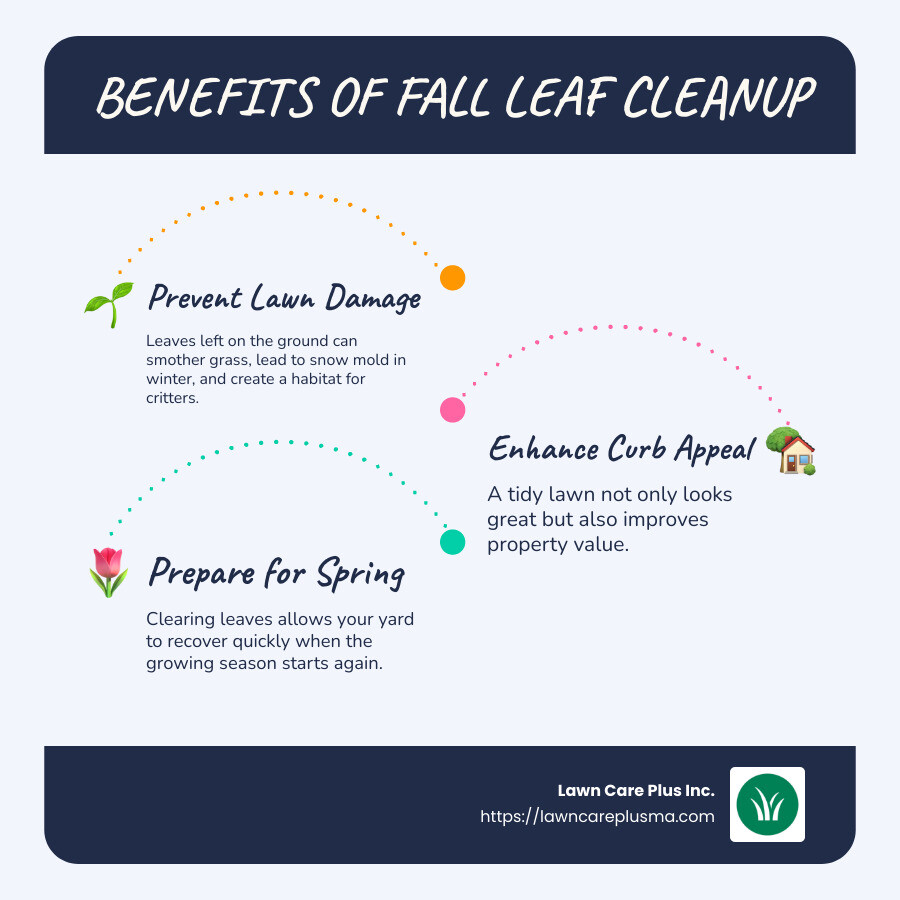
- Prevent Lawn Damage: Leaves left on the ground can smother grass, lead to snow mold in winter, and create a habitat for critters.
- Improve Curb Appeal: A tidy lawn not only looks great but also improves property value.
- Prepare for Spring: Clearing leaves allows your yard to recover quickly when the growing season starts again.
By managing fall leaves cleanup effectively, you ensure your landscape thrives year-round. If you’re short on time or resources, consider professional services like those offered by Lawn Care Plus Inc., to keep your yard in top shape.
Key terms for fall leaves clean up:
– need someone to clean up my backyard
– need yard clean up
– spring yard clean up services near me
Essential Tools for Fall Leaves Clean Up
When it comes to fall leaves clean up, having the right tools can make all the difference. Here’s a rundown of essential equipment that will help you tackle the autumn leaf apocalypse efficiently and effectively.
The Right Rake for the Job
Choose a large rake to make quick work of gathering leaves. Rakes up to 30 inches wide are available at most home centers. For those who dread the constant clogging, a “no-clog” rake is a great option. These rakes have tines that prevent leaves from getting stuck, saving you time and frustration.
Blower/Vacuum Combo
A blower/vacuum can be a game-changer for larger yards. Before using the vacuum feature, be sure to clear your yard of any twigs or rocks to avoid damaging the impeller. And remember, wear a dust mask when shredding dry leaves to protect yourself from dust.
Mulching Mower
For those with expansive lawns, a mulching mower is an efficient way to handle leaves. This tool shreds leaves finely, making them ideal for composting or using as mulch. It’s an environmentally friendly option that also saves you time.
Leaf Vacuum
A leaf vacuum is perfect for areas where precision is needed, such as flower beds. They suck up leaves and shred them, which is handy if you plan to compost. Just be cautious of rocks and larger debris that could damage the machine.
Lawn Sweeper
If raking isn’t your thing, consider using a lawn sweeper. This tool makes collecting leaves a breeze, especially over large areas. It operates like a giant broom, sweeping up leaves as you push it across your lawn.
Leaf Tarp
Instead of bagging leaves, use a leaf tarp. Simply rake the leaves onto the tarp, then drag it to your compost pile or curb. This method is especially helpful for moving large volumes of leaves at once.

Using these tools can transform your fall leaf cleanup from a daunting task into a manageable chore. Next, we’ll explore techniques for collecting leaves efficiently to further streamline your fall lawn care routine.
Techniques for Efficient Leaf Collection
When it comes to fall leaves clean up, using the right techniques can make the job much easier and faster. Let’s look at some effective methods.
Mower Leaf Collection
If you have a large yard, consider using your mower to collect leaves. Many mowers come with a bag attachment that allows you to mow and collect leaves simultaneously. This method not only saves time but also shreds the leaves into smaller pieces, making them perfect for composting or mulching.
Smarter Leaf Collection
For those with a lot of leaves, using a Bagster bag can be a smarter choice than traditional plastic bags. Simply rake the leaves into the Bagster, and when it’s full, you can easily transport it to a compost site. This method is efficient and reduces the need for multiple bags.
Tarp Beats Trailer
Instead of using a trailer to haul leaves, try a leaf tarp. Spread the tarp on the ground, rake leaves onto it, and then drag it to your desired location. This method is not only quicker but also requires less physical effort. Plus, it’s a great way to involve the kids in the cleanup!
Blower-Bag Bungle
Using a blower can be a quick way to gather leaves into piles, but if you’re using the vacuum feature to collect them, be cautious. Twigs and rocks can damage the impeller, so clear these items first. Also, remember to wear a dust mask when emptying the bag as leaf dust can be a nuisance.
These techniques can significantly reduce the time and effort required for leaf collection. By choosing the right method for your yard, you can make the process more efficient and even enjoyable. Next, we’ll dig into the environmental benefits of leaving some leaves behind.
Environmental Benefits of Leaving Leaves
When it comes to fall leaves clean up, it might surprise you to learn that leaving some leaves on the ground can actually be beneficial for your garden and the environment.
Decomposition and Nutrients
Leaves are nature’s way of returning nutrients to the soil. As they decompose, they break down into valuable organic matter, enriching the soil with essential nutrients like nitrogen, phosphorus, and potassium. This natural process can reduce the need for chemical fertilizers, promoting healthier plant growth.
Insights from Nebraska Extension
According to the Nebraska Extension, leaving a thin layer of leaves in your garden can improve soil health. The decomposed leaves improve soil structure, increase its water retention capacity, and support beneficial microorganisms. This can be particularly advantageous for vegetable gardens and flower beds.
Addressing Environmental Concerns
Leaving leaves in place can also have broader environmental benefits. By not bagging and disposing of all your leaves, you reduce waste sent to landfills. This helps lower methane emissions, a potent greenhouse gas produced when organic matter decomposes anaerobically in landfills.
Additionally, leaves provide habitat and insulation for beneficial insects and small wildlife during the winter months. By allowing leaves to remain in certain areas, you support local biodiversity and contribute to a healthier ecosystem.
Finding a Balance
While there are clear benefits to leaving some leaves, it’s important to strike a balance. Thick layers of leaves can smother your lawn, leading to issues like snow mold and critter damage. To avoid this, consider mulching leaves with a mower or collecting excess leaves for composting. This way, you can enjoy the environmental perks without compromising your lawn’s health.
In the next section, we’ll explore safety tips for fall leaf cleanup, ensuring you can tackle this task efficiently and safely.
Safety Tips for Fall Leaf Cleanup
Tackling fall leaves clean up can be a rewarding task, but it’s important to keep safety in mind. Here are some essential tips to ensure you stay safe while making your yard look great.
Leaf Blower Safety
Using a leaf blower can speed up your cleanup, but it requires caution. Always wear hearing protection to safeguard against noise damage. Dust respirators are a must when dealing with dry leaves, as they kick up a lot of dust. Before you start, scout your yard for twigs and rocks to prevent damage to the blower’s impeller.
Ergonomic Rake
Raking is hard work, but using the right rake can make a big difference. Opt for an ergonomic rake that minimizes strain on your back and wrists. Many people prefer “no-clog” rakes. These have tines designed to prevent leaves from getting stuck, reducing the need to stop and unclog frequently.
Weather Watch
Keep an eye on the weather forecast. Windy days can work in your favor, helping to gather leaves into piles naturally. On warm days, stay hydrated to prevent fatigue. If rain is on the horizon, plan to finish your work before it starts. Wet leaves are heavier and can be slippery, increasing the risk of accidents.
Assistance
Don’t hesitate to ask for help. Tasks like moving heavy leaf piles or handling equipment can be easier with an extra pair of hands. Whether it’s family, friends, or hiring professionals, getting assistance can make your leaf cleanup safer and more efficient.
By following these safety tips, you can enjoy a smooth and accident-free fall cleanup. In the next section, we’ll answer frequently asked questions about fall leaves clean up, providing more insights into lawn care best practices.
Frequently Asked Questions about Fall Leaves Clean Up
Should you clean up leaves in the fall?
Absolutely. Cleaning up leaves in the fall is crucial for lawn health. If leaves are left to accumulate, they can smother the grass, blocking sunlight and air. This creates a perfect environment for snow mold to develop over the winter. Snow mold is a fungal disease that can damage or kill the grass, leading to unsightly patches in your lawn come spring. Moreover, piles of leaves can attract critters like mice and voles, which may cause further critter damage to your yard.
What is the best way to remove fallen leaves?
The best method depends on your yard’s size and your personal preference. For smaller yards, a leaf rake can be effective and provides a good workout. If you want to save time and effort, consider using a lawn sweeper or a leaf blower. A lawn sweeper is excellent for efficiently gathering leaves into a collection bag, while a leaf blower can quickly move leaves into piles for easy disposal. Both tools can significantly reduce the time spent on fall leaves clean up.
What happens if you don’t rake your leaves in the fall?
Neglecting to rake your leaves can lead to several problems. Leaves left on the ground can cause grass smothering, preventing the turf from getting the air and sunlight it needs. This can lead to mold diseases, which thrive in the damp, dark environment created by the leaf layer. Over time, this can cause significant turf damage, making it difficult for your lawn to recover in the spring. By taking the time to clean up leaves in the fall, you can prevent these issues and keep your lawn healthy and vibrant.
Conclusion
At Lawn Care Plus Inc., we understand the importance of a thorough fall leaves clean up to maintain the health and beauty of your lawn. As the seasons change, our comprehensive services are designed to tackle all aspects of yard maintenance, ensuring your property remains pristine and ready for the winter months.
Serving the Boston Metro-West area, we offer a wide range of services custom to meet the unique needs of both residential and commercial clients. Whether it’s leaf removal, lawn maintenance, or complete landscape installations, our experienced team is equipped to handle it all.
We know that a proper fall cleanup is more than just aesthetics. It’s about preventing issues like snow mold and critter damage that can arise from neglected leaves. Our services go beyond just raking; we use the best tools and techniques to ensure your lawn is well-prepared for the colder months, setting the stage for a lush, healthy lawn come spring.
Choosing Lawn Care Plus Inc. means choosing a partner committed to excellence in yard care. We pride ourselves on delivering results that improve your property’s curb appeal and vitality.
Ready to transform your yard? Contact Lawn Care Plus Inc. for your spring and fall clean-up today!