Why Geotextile for French Drain Systems is the Key to Long-Lasting Protection
Geotextile for french drain installations isn’t just a nice-to-have—it’s the critical component that determines whether your drainage system works for decades or fails within a few years.
Quick Answer: Best Geotextile for French Drains
- Fabric Type: Non-woven geotextile (not woven)
- Weight: Medium-weight, 4-6 oz per square yard for most applications
- Material: Professional-grade polyester or polypropylene
- Key Feature: High permeability (water flow rate of 400+ liters per square meter per second)
- Durability: Rot-resistant with 25+ year warranty
If you have a soggy yard, foundation cracks, or water pooling on your property, a French drain is an effective solution—but only if built correctly. The secret to a long-lasting French drain is the geotextile fabric.
This specialized fabric wraps the drain’s gravel and pipe, acting as a filter that lets water in while keeping soil out. Without the right fabric, your drain will clog. Thin landscape fabrics biodegrade and fail quickly, leading to expensive problems. Professional-grade non-woven geotextile fabric is the solution. When installed correctly, it protects your property from foundation damage, soil erosion, and water intrusion for a lifetime.
Easy geotextile for french drain word list:
The Foundation of a Flawless French Drain: Understanding Its Components
If you’ve ever wondered why some drainage systems work flawlessly for decades while others fail within a few years, the answer lies in understanding what makes a French drain truly effective.
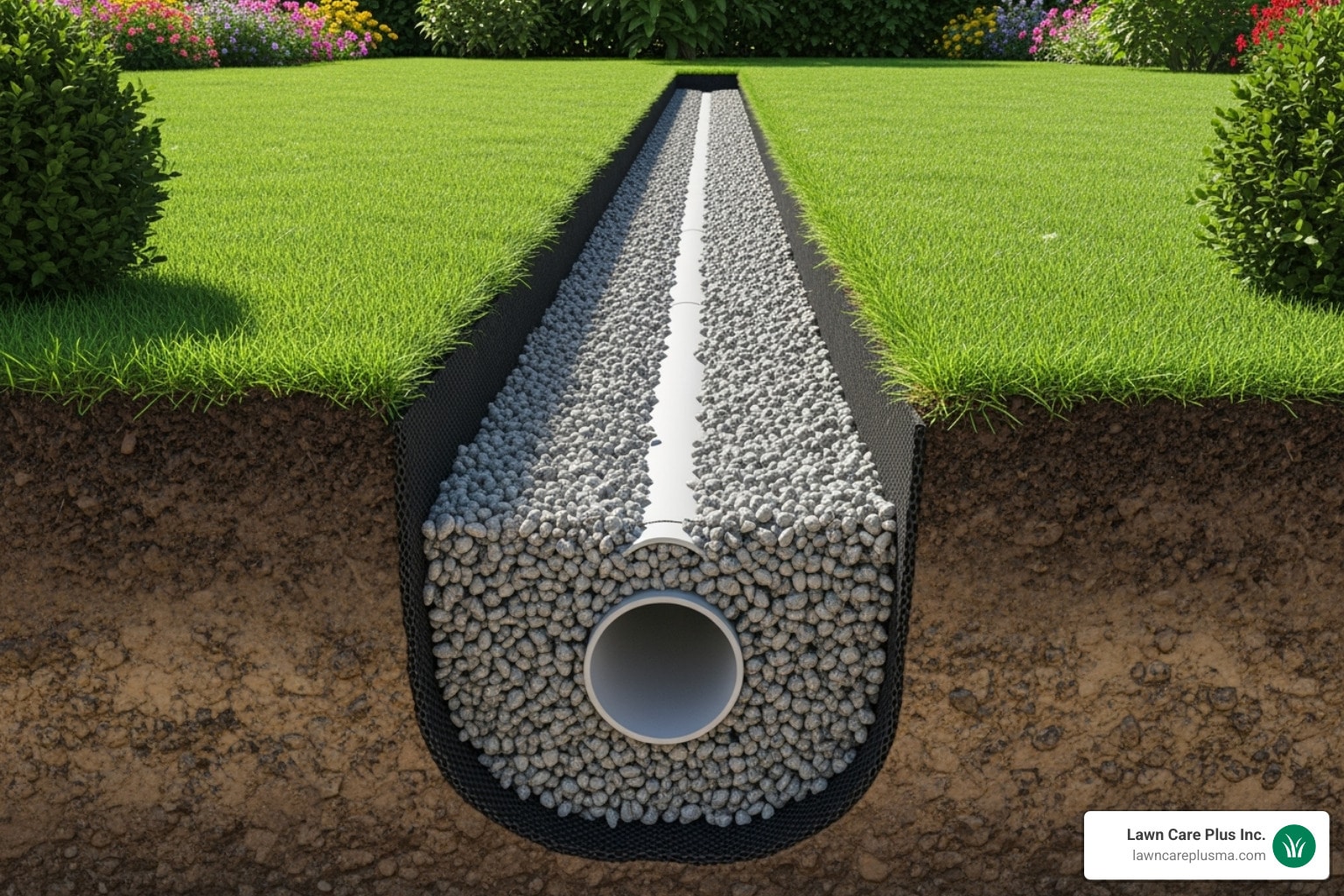
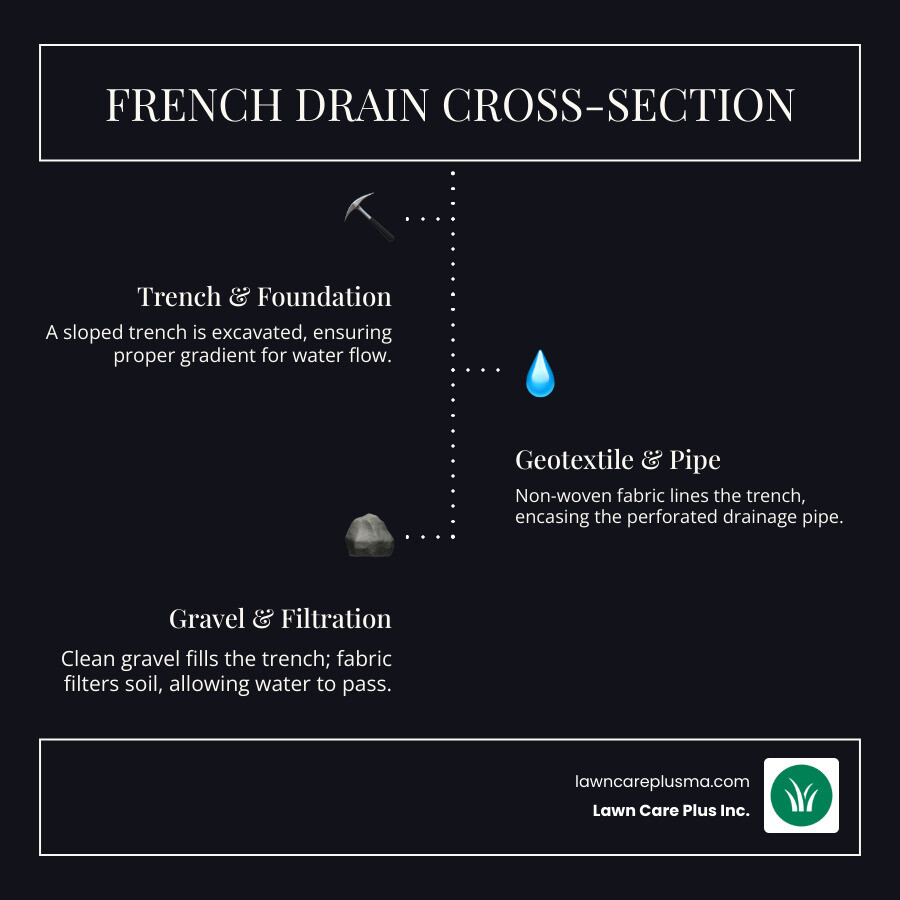
What is a French drain, exactly? Think of it as an underground highway for water. It’s a trench containing a perforated pipe and gravel aggregate, all wrapped in a protective geotextile for french drain fabric. As water enters the gravel and pipe, it’s channeled away to a safe discharge point using gravity. It’s a simple, electricity-free system that has protected properties for over a century.
Why does proper drainage matter so much? Uncontrolled water can cause significant damage to your property.
When water pools, it creates hydrostatic pressure against your foundation, leading to cracks, seepage, and costly structural damage. A French drain prevents this by moving water away from your home’s base before it can cause harm.
Uncontrolled runoff also causes soil erosion, washing away valuable topsoil. French drains intercept this water, guiding it away safely to preserve your landscape.
For properties with retaining walls, poor drainage can cause them to fail. Saturated soil multiplies the pressure behind the wall. A French drain relieves this hydrostatic pressure, extending the wall’s lifespan.
French drains also eliminate soggy spots in your yard, making your outdoor space usable again and reducing pests like mosquitoes.
The critical role of geotextile fabric in all of this can’t be overstated. This specialized fabric is what separates a long-lasting French drain from one that clogs in a few years.
The fabric serves three key functions: filtration (letting water in while blocking soil), separation (keeping gravel and soil apart), and clog prevention (protecting the pipe from sediment). Without geotextile for french drain protection, soil will migrate into the gravel and pipe. This clogs the system, slows water flow, and eventually causes the entire drain to fail.
Woven vs. Non-Woven Fabric: The Great Drainage Debate
When you’re choosing the right geotextile for french drain installations, you’ll find two main types: woven and non-woven. Their construction and performance are vastly different, and understanding which one to use for drainage is critical.
Woven Geotextile
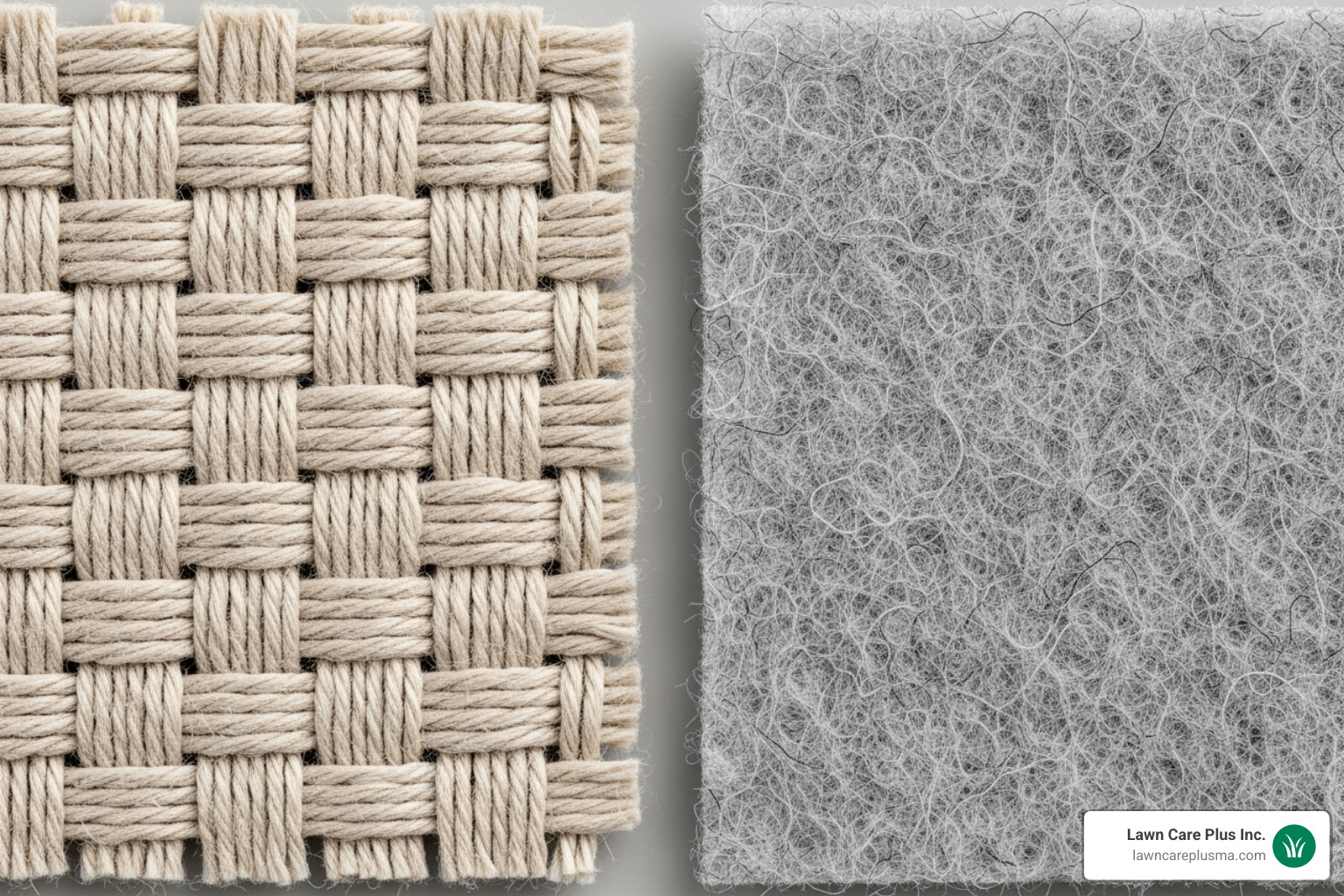
Woven geotextile is made by interlacing synthetic strands into a tight pattern, similar to a heavy-duty tarp. This gives it exceptional tensile strength, making it ideal for reinforcement and stabilization under driveways, roads, and patios. It acts as a strong separator for base materials.
However, the tight weave results in low permeability. Water cannot flow through it quickly enough for drainage applications, making it a poor choice for French drains. While excellent for stabilization, it’s the wrong tool for drainage.
Non-Woven Geotextile
Non-woven geotextile is made by bonding synthetic fibers together, typically through needle-punching, which creates a felt-like texture. This construction results in a fabric with a high water flow rate that also filters out soil particles. It allows water to pass through freely while blocking the debris that clogs drains.
The needle-punched fibers create a permeable, three-dimensional structure, making it the top choice for drainage. It performs exceptionally well in French drains, foundation protection, and behind retaining walls.
For French drains, non-woven geotextile for french drain systems keep water flowing while preventing fine soil particles from clogging your gravel and pipe. It’s the difference between a drain that works for decades and one that fails within a few years.
Here’s how these two fabrics stack up when it comes to drainage:
| Feature | Woven Geotextile | Non-Woven Geotextile |
|---|---|---|
| Permeability | Low (restricts water flow) | High (allows rapid water flow) |
| Strength | High tensile strength (good for reinforcement) | Moderate to high (good puncture resistance) |
| Primary Function | Separation, Stabilization, Reinforcement | Filtration, Separation, Drainage |
| Suitability for Drainage | Poor (clogs easily, impedes water flow) | Excellent (prevents clogging, promotes water flow) |
The bottom line? If you’re building a French drain or any kind of garden land drainage solution, non-woven geotextile is the only sensible choice. Save the woven fabric for your driveway base—your French drain needs fabric that can breathe.
How to Select the Best Geotextile for French Drain Longevity
Now that you know non-woven fabric is the correct choice, it’s time to select the right one. Not all non-woven geotextiles are the same, and choosing a professional-grade product is key for a long-lasting geotextile for french drain system.
When we install drainage systems, we look for specific characteristics that guarantee our work will protect your property for decades.
- Permeability: The fabric must let water pass through quickly. Look for a high water flow rate (e.g., 400+ liters per square meter per second) to ensure water moves through rapidly instead of pooling.
- Durability: The fabric must resist punctures from sharp gravel and soil pressure during and after installation. Cheap fabrics can tear easily, compromising the entire system.
- Fabric Weight: Measured in ounces per square yard (oz), weight indicates thickness and durability. It’s not about choosing the heaviest, but matching the weight to your soil conditions and flow requirements.
- UV Resistance: The fabric may be exposed to sunlight during installation. UV resistance prevents it from degrading before it’s buried.
- Material Composition: Professional fabrics are 100% polyester or polypropylene. These synthetic materials are engineered to resist rot, chemicals, and biological breakdown, ensuring longevity in wet soil.
For comprehensive Garden Land Drainage Solutions, we always select materials that meet these stringent standards.
Choosing the Right Weight for Your Geotextile for French Drain
Matching the fabric weight to your project is crucial. Here’s a simple guide:
Most residential French drains perform perfectly with a medium-weight fabric in the 4 to 6-ounce range. This weight offers an excellent balance of high permeability and effective filtration, making it ideal for typical yard drainage. In the Boston Metro-West area, a 4 to 6-ounce fabric handles most soil conditions and stands up to New England’s freeze-thaw cycles.
A heavy-weight fabric (8 ounces or higher) is recommended for properties with very fine silt or sand. The denser structure provides superior filtration, which is also beneficial in low-flow applications where preventing any sediment entry is the top priority.
Why Professional-Grade Geotextile for French Drain is a Must
Using standard landscape fabric is a common but costly mistake. It’s not designed for underground drainage and fails quickly, leading to expensive repairs.
Standard landscape fabric biodegrades quickly in wet soil, lacks puncture resistance, and tears easily during installation. As it breaks down, it allows silt to clog the gravel and pipe, causing the entire system to fail.
Professional-grade geotextile for french drain systems are made from rot-resistant polyester or polypropylene. These materials are engineered for long-term underground use, resisting moisture and microbes, and often come with 25-year warranties. When installed correctly, a high-quality non-woven geotextile can last a lifetime. This means no repeated digging or expenses—just reliable performance.
These advanced fabrics can also increase water permeability around the pipe by up to 300% due to their specialized structure, leading to a faster and more effective Land Drainage System. For any system we install, professional-grade materials are the foundation of a job done right.
Installation Best Practices and Common Mistakes
Even the best geotextile for french drain will fail if not installed correctly. Proper installation is just as crucial as selecting the right materials. Here are the steps we follow to ensure maximum longevity and efficiency.
Step 1: Trench Preparation
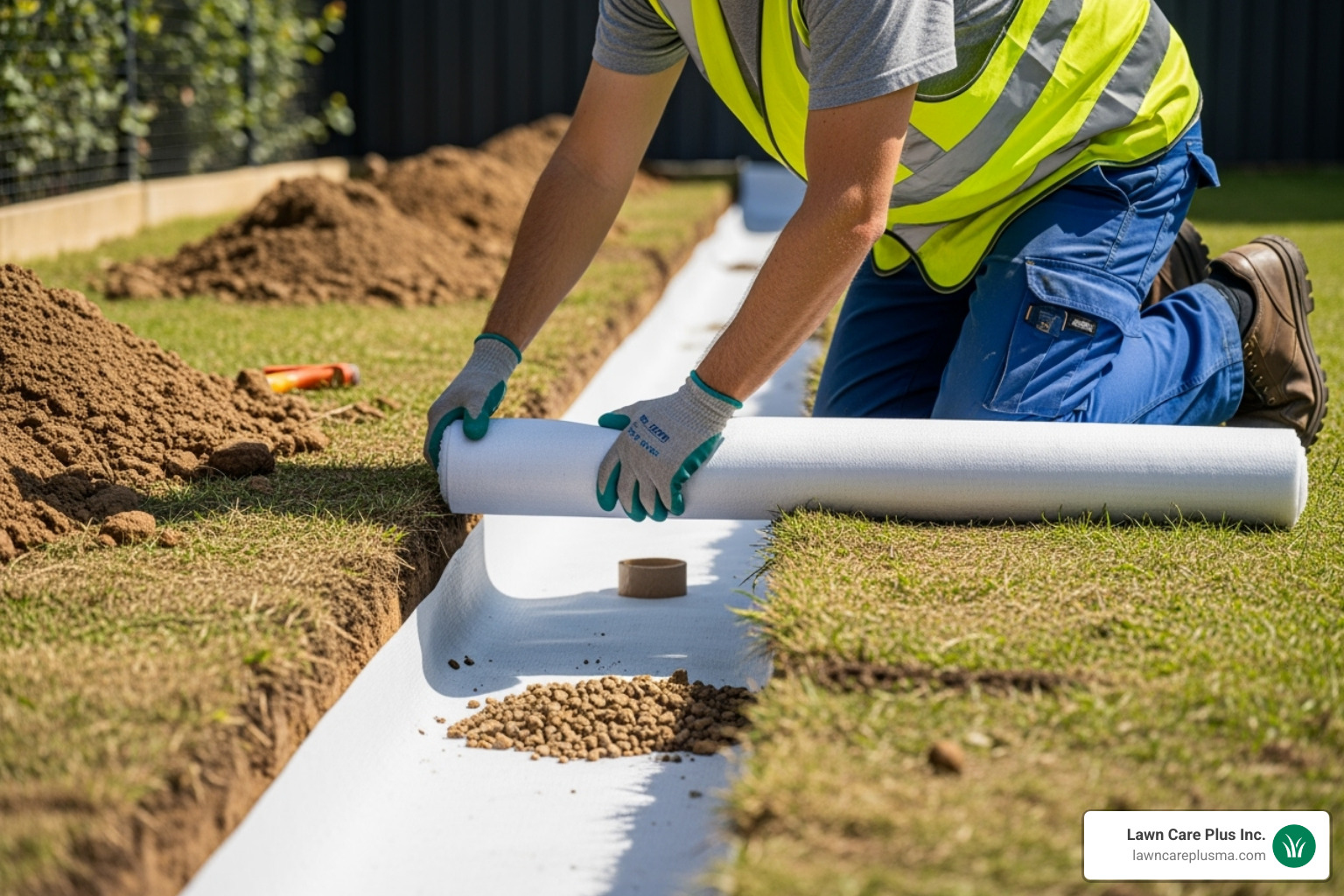
A successful installation starts with a properly prepared trench. It must be dug to the correct depth and width with a consistent slope of at least 1% (1 inch of drop per 10 feet) to ensure proper flow. The trench bottom should be smooth and clear of sharp objects that could puncture the fabric.
Step 2: Lining the Trench
Next, line the entire trench—bottom and sides—with non-woven geotextile fabric, leaving plenty of excess on both sides. If multiple pieces are needed, overlapping the fabric seams by 6-12 inches is critical to prevent soil intrusion. Fabric pins can help secure it in place.
Step 3: Building the Drainage System
Add a base layer of clean, washed gravel (typically 3/4-inch to 1-inch stone). Place the perforated pipe on this gravel bed with the holes facing down. Then, carefully add more gravel around and over the pipe until you are 4-6 inches from the surface.
Step 4: The “Burrito Wrap” Method
This is the most critical step. After filling the trench with gravel and pipe, take the excess fabric from the sides and fold it over the top layer of gravel. This “burrito wrap” completely encapsulates the pipe and gravel, protecting the system from soil infiltration from all sides. Once wrapped, backfill the trench with soil or decorative stone.
What Not to Do
Avoid these common installation mistakes:
- Using the wrong fabric type: Woven or cheap landscape fabric will clog.
- Not overlapping seams: Gaps allow soil to enter and clog the system.
- Stretching the fabric too tightly: This makes it vulnerable to tears.
- Leaving any gaps for soil entry: This defeats the purpose of the fabric.
- Not using enough gravel: The gravel layer is essential for water collection.
- Incorrect slope: A poor slope can cause water to stand still or flow backward.
Frequently Asked Questions about French Drain Fabric
We get a lot of questions about French drains and the fabric that makes them work. Here are answers to the most common ones.
How long does a French drain with high-quality geotextile last?
When built with professional-grade, non-woven geotextile for french drain applications and installed correctly, a French drain can last a lifetime. The key is using the right materials—rot-resistant polyester or polypropylene fabrics that are engineered for long-term underground use. These materials often carry warranties of 25 years or more. A properly built system provides decades of reliable protection without the need for costly repairs or replacements.
Can tree roots get into the drain?
Yes, it’s possible over a long period, but the geotextile for french drain fabric is a strong deterrent. The dense, non-woven material creates a physical barrier that is difficult for roots to penetrate. While aggressive roots from large trees might eventually find a way in, this is not a short-term concern. To minimize the risk, it’s best to place the drain away from large trees when possible. For installations near trees, specialized root-blocking fabrics can offer extra protection. For more on this, see our guide on Roots in French Drain.
Does the fabric go under or over the pipe?
The correct answer is both. The fabric must completely encapsulate the entire drainage system. First, you line the bottom and sides of the trench with the geotextile for french drain fabric, leaving extra material at the top. Then, you add a layer of gravel, the perforated pipe, and more gravel. Finally, you fold the excess fabric over the top of the gravel, creating a sealed “burrito.” This full encapsulation is critical because it protects the gravel and pipe from soil intrusion from all directions, preventing clogs and ensuring long-term function.
Protect Your Property with the Right Drainage Solution
When water threatens your property, a French drain is one of the most reliable solutions. However, its longevity depends entirely on the quality of the geotextile for french drain fabric and the installation.
Here are the key takeaways:
- Non-woven geotextile is essential for French drains. Its felt-like structure allows high water flow while filtering out soil. Woven fabrics restrict flow and are unsuitable for drainage.
- A medium-weight (4-6 oz) fabric is ideal for most residential projects, balancing flow and filtration. For very fine soils, a heavier 8 oz fabric offers superior filtration.
- Quality materials and expert installation are non-negotiable. Using cheap landscape fabric or improper techniques leads to premature failure and costly repairs. A professional-grade geotextile for french drain, installed using the “burrito wrap” method, ensures a system that can last a lifetime.
Think of your French drain as a long-term investment in your property’s health. It works quietly to protect your foundation, prevent soil erosion, support retaining walls, and make your yard usable again. A properly built drainage system adds value and saves you from the stress of water damage.
At Lawn Care Plus Inc., we’ve spent years perfecting French drain installations throughout the Boston Metro-West area. We understand Massachusetts soil conditions, we know which materials stand up to our climate, and we take pride in installations that our clients never have to worry about again. Whether you need comprehensive drainage solutions or any of our other Hardscaping Services, we bring the same attention to detail and commitment to quality.
Your property deserves drainage that works—not just this season, but for decades to come. Ready to protect your investment with a French drain system built to last? Contact us today, and let’s talk about keeping your property dry and beautiful.