
A land drainage system is an essential tool for changing waterlogged ground into a thriving landscape. If excess surface water is plaguing your property, hindering plant growth, or causing muddy spots, a well-designed land drainage system might be your answer. Here’s a quick summary of what you need to know:
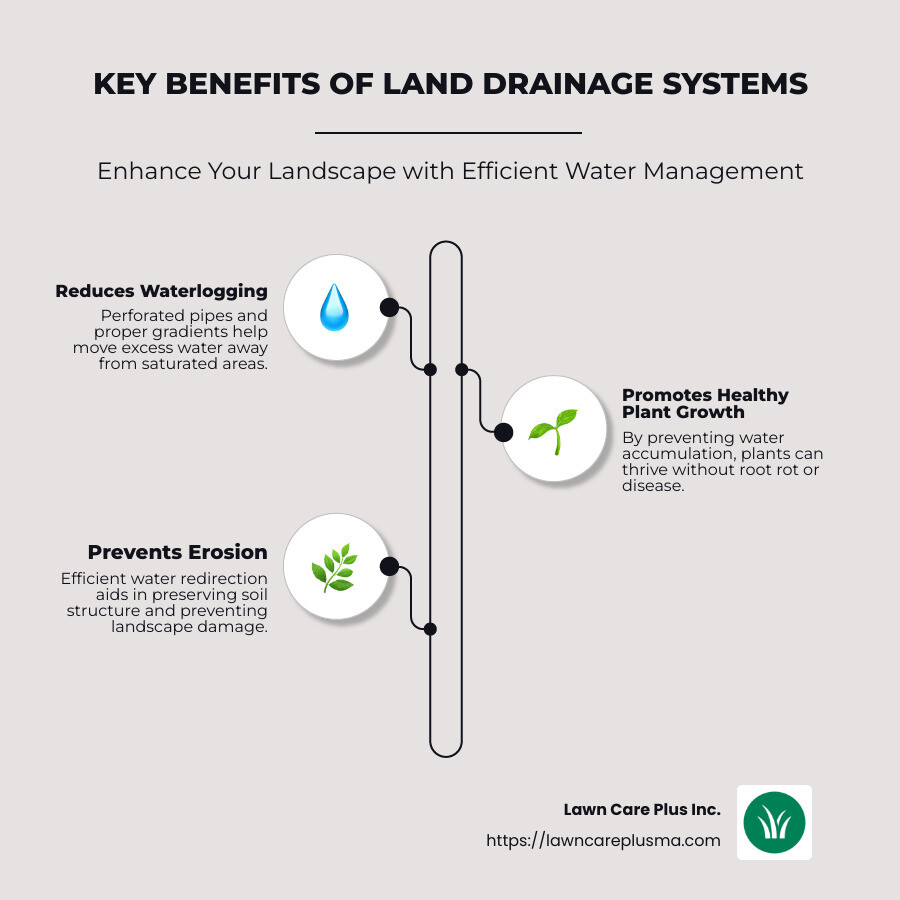
- Purpose: Moves excess water away from saturated areas.
- Components: Typically involves perforated pipes and proper gradients.
- Benefits: Reduces waterlogging, supports healthy plant growth, and prevents erosion.
Waterlogged ground can be a headache, especially in areas often drenched by heavy rain, like the Boston Metro-West region. Whether you’re a homeowner looking to improve the beauty and utility of your lawn or a property manager hoping to maintain a pristine garden, addressing surface water issues is key.
A land drainage system not only helps in keeping your garden dry and usable but also improves plant health and overall aesthetic appeal. By efficiently redirecting water, it aids in preventing damage to structures and landscapes. If you’re dealing with persistent puddles and soggy lawns, understanding these systems can turn your outdoor space from a quagmire to a paradise.
Land drainage system word list:
– domestic drainage system
– domestic rainwater drainage systems
– domestic surface water drainage systems
Installation of Land Drainage Systems
Installing a land drainage system can be a game-changer for your garden or yard. Let’s break down the essential tips and best practices to ensure a successful installation.
Trench Method
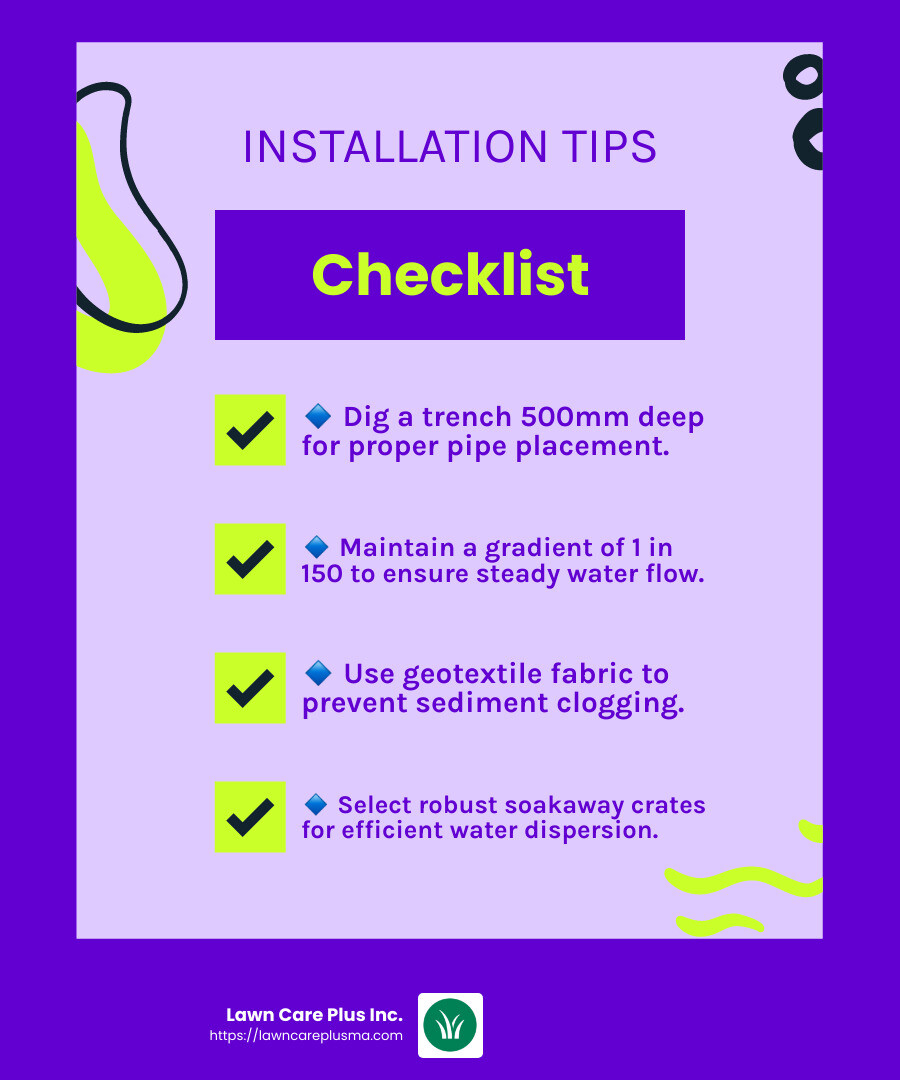
The first step in installing a land drainage system is to dig a trench. This trench should be wide and deep enough to accommodate the drainage pipe and a surrounding layer of aggregate. The depth can vary, but generally, trenches are about 500mm deep. This allows enough space for the pipe and the aggregate, which helps guide water into the pipe.
Gradient
The gradient of the trench is crucial. A recommended gradient is 1 in 150, meaning the trench should slope down 1 unit for every 150 units of length. This ensures that water flows smoothly through the pipe without being too fast or too slow. A gradient steeper than 1 in 100 can lead to water flowing too quickly, which might cause erosion or damage to the system.
Sediment Prevention
To prevent soil and sediment from clogging the drainage pipe, it’s important to use measures like a catch-pit or a non-woven geotextile. A catch-pit acts as a basin to collect debris before it enters the pipe. Alternatively, wrapping the pipe in a geotextile fabric can filter out sediment while allowing water to pass through.
Soakaway Crate
When directing water to a soakaway system, choosing the right soakaway crate is vital. Look for robust, plastic crates that can handle a constant flow of water. These crates help disperse water underground, allowing it to percolate into the soil without causing surface flooding.
By following these best practices, you can ensure that your land drainage system is effective and long-lasting. Proper installation not only prevents waterlogging but also protects your property from potential water damage.
Where to Install Land Drainage Systems
Choosing the right spot for your land drainage system is key to its success. Here’s how you can make the best decision.
Waterlogged Areas
First, identify areas in your yard or garden that tend to get waterlogged. These are spots where water pools after rain or where the ground feels squishy underfoot. Such areas are prime candidates for a drainage system. Waterlogging often occurs in places with clay soil, which doesn’t let water pass through easily.
Percolation Test
Before installing a drainage system, it’s smart to perform a percolation test. This test helps you understand how quickly water drains through your soil. You can do a simple DIY test by digging a hole, filling it with water, and timing how long it takes to drain. If the water drains slowly, a drainage system might be necessary. For larger areas or more precise measurements, consider hiring a professional to conduct the test.
Local Authority Approval
Before you start digging, it’s crucial to check with your local authority. They can provide guidance on where you can direct the water from your drainage system. Some watercourses are protected, and storm drains usually belong to local authorities. You’ll need permission to connect your drainage system to these outlets. Ignoring these rules can lead to hefty fines, so it’s best to get approval first.
By carefully selecting the location and following these steps, you can ensure your land drainage system works efficiently and complies with local regulations. This not only prevents waterlogging but also protects your property and the environment.
Frequently Asked Questions about Land Drainage Systems
What are the four types of drainage systems?
- Surface Drainage: This system involves the removal of excess water from the surface of the land. It uses shallow ditches and channels to guide water away from waterlogged areas. Think of it as a network of small streams on your property.
- Subsurface Drainage: Also known as tile drainage, this system uses underground pipes to remove water from the soil. It’s perfect for areas with poor soil drainage, like clay-heavy soils. By installing a land drainage system below ground, you help the soil dry out faster, which is great for plant growth.
- Slope Drainage: This method uses pipes to direct water down a slope. It’s particularly useful for hilly areas. The pipes are anchored into the slope, ensuring that water is transported safely down without causing erosion.
- Downspout Systems: These systems connect directly to your home’s gutters. They help manage rainwater by directing it away from your home’s foundation, preventing basement flooding and soil erosion around the house.
How deep should a land drain be?
The depth of a land drainage system depends on several factors, including the type of soil and the area you’re draining. Generally, the trench should be deep enough to allow for a layer of bedding below the pipe and enough cover above it. For a common 100mm pipe, a trench depth of about 750mm is typical. However, always consider the specific requirements of your project and consult with a professional if unsure.
Lateral drains, which branch off from a main line, can vary in depth. Typically, they should be at least 600mm deep to ensure effective drainage, but this can vary based on local conditions and regulations.
Can I connect a land drain to a sewer?
Connecting a land drainage system directly to a sewer is generally not advisable and often not permitted. Instead, water from a land drain is typically directed to a storm drain or a soakaway system.
If you’re considering a connection, a catch pit can be used. This is a chamber that collects sediment and debris before the water enters the main drainage system. It helps prevent blockages and keeps the system running smoothly.
Always check with your local authority for guidance and permission before making any connections. Direct connections to sewers without approval can lead to fines and legal issues, as well as potential flooding problems.
Conclusion
At Lawn Care Plus Inc., we’re passionate about changing waterlogged areas into beautiful, usable spaces. Our comprehensive services cover everything from lawn maintenance to the installation of effective land drainage systems. We pride ourselves on our expertise and commitment to quality, ensuring that each project meets the highest standards.
Serving the Boston Metro-West area, we understand the unique challenges of local landscapes. Whether you’re dealing with persistent puddles or planning a new garden paradise, our team is here to help. With our wide range of services, including hardscaping, patios, walls, and walkways, we offer solutions custom to your needs.
Our experienced professionals are ready to guide you through every step of the process, from design to installation. We believe that a well-drained yard is the foundation of a healthy, thriving landscape. By choosing Lawn Care Plus Inc., you’re investing in a future where your outdoor space can be enjoyed in all weather conditions.
To learn more about how we can help with your drainage and landscaping needs, visit our Hardscape and Landscape Services page. Let’s turn those puddles into paradise together!
