
Why Boston Winters Demand Immediate Ice Dam Action
Ice dam removal Boston is a critical winter service that protects your property from thousands of dollars in water damage, structural problems, and safety hazards caused by ice buildup on your roof.
If you need ice dam removal in Boston right now:
- Call a professional ice dam removal company that uses steam (the only safe method)
- Look for licensed, bonded, and insured contractors with workers’ compensation coverage
- Expect same-day or next-day service during emergencies
- Average costs range from $500 to over $3,000 depending on severity and roof size
- Prevention is key: Regular roof snow removal eliminates the source of ice dams before they form
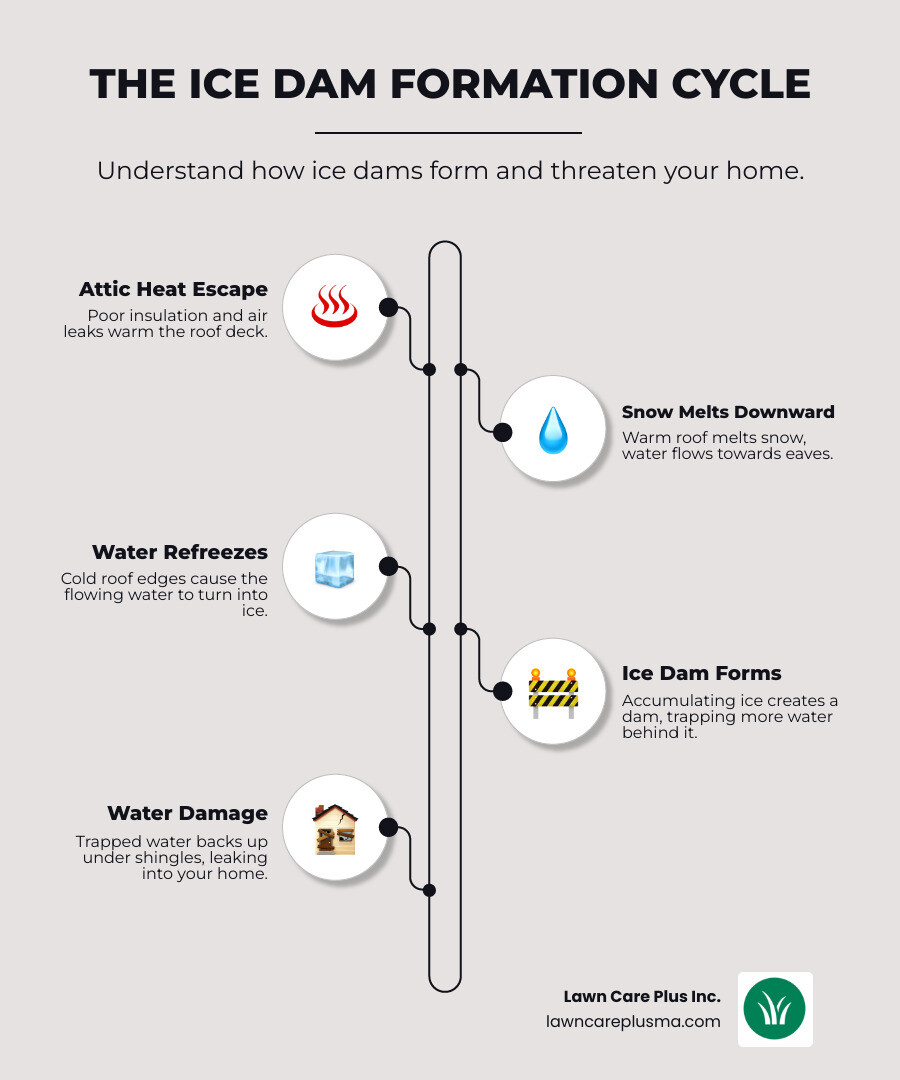
Boston’s brutal winters create perfect conditions for ice dams. When heat escapes from your attic, it melts the snow on your roof. That water trickles down to the cold eaves and refreezes, creating a wall of ice that traps water behind it. Eventually, that trapped water finds its way under your shingles and into your home—ruining ceilings, walls, insulation, and flooring.
During the record-breaking winter of 2015, ice dams became so severe across Massachusetts that specialized removal teams had to deploy dozens of technicians to handle the crisis. Some roofs accumulated five feet of solid ice. Water poured into homes through ceilings and windows, causing catastrophic damage.
The cascade of problems doesn’t stop at water damage. Ice dams tear gutters off buildings, crack shingles, rot roof decking, and create dangerous icicles that can injure people below. If left untreated, the moisture trapped in your walls and insulation becomes a breeding ground for mold.
I’m Tim DiAngelis, owner of Lawn Care Plus, Inc., and for over a decade, our team has protected residential and commercial properties throughout Greater Boston and Metro-West from winter’s harshest challenges, including professional ice dam removal Boston services and comprehensive snow management. Here’s everything you need to know about protecting your property this winter.
Ice dam removal Boston terms to remember:
What Are Ice Dams and Why Do They Threaten Boston Homes?
Ice dams are essentially frozen barriers that form at the edge of your roof, preventing melting snow from draining properly. They are a common, yet often underestimated, nemesis for homeowners and businesses across Boston and the Metro-West area during our typically harsh winters. When these icy obstructions form, they force water to pool up behind them, creating a miniature lake on your roof that has nowhere to go but under your shingles and into your property. This can lead to significant and costly damage.
Boston’s unique architectural landscape, with its charming Victorian, Queen Anne, Tudor Revival, and Italianate homes, often presents particular challenges. These older homes, while beautiful, may have insulation and ventilation systems that aren’t optimized for modern energy efficiency, making them particularly susceptible to ice dam formation. For commercial properties, large flat roofs or complex designs can also create prime conditions for these wintertime headaches.
The Science Behind Ice Dam Formation
The formation of an ice dam is a fascinating, albeit unwelcome, display of winter physics. It all starts with a blanket of snow on your roof. While the outside temperature might be freezing, the roof directly above your heated living space or attic can be much warmer. This warmth, often due to inadequate insulation or air leaks, causes the snow on the main part of the roof to melt.
This melted water then trickles down the roof slope, between the layer of snow and the shingles, until it reaches the colder eaves or overhangs of your roof. These areas are typically unheated and remain at or below freezing temperatures. When the flowing water hits this cold zone, it refreezes, forming a small ridge of ice. As more snow melts and flows down, this ice ridge grows, layer by layer, gradually becoming a formidable “dam.”
This growing ice barrier then traps subsequent melting water behind it. This trapped water, unable to drain off the roof, begins to back up under your shingles. Since shingles are designed to shed water downwards, not hold it back, this standing water can easily seep beneath them, through your roof decking, and into your attic, walls, and ceilings. This entire process is exacerbated by Boston’s frequent freeze-thaw cycles, where temperatures fluctuate around freezing, constantly melting and refreezing snow.
The Cascade of Damage Caused by Ice Dams
The moment that trapped water breaches your roof’s defenses, the cascade of damage begins, and it can be both extensive and expensive. We’ve seen how quickly a seemingly minor ice dam can turn into a major headache for our clients in Boston, Dedham, Newton, and beyond.
One of the first casualties is often your gutters. The sheer weight of a large ice dam can be immense, often thousands of pounds, causing gutters to bend, pull away from the fascia, or even tear completely off the building. This not only destroys your gutters but can also damage the roof edge and fascia itself.
Beneath the ice, your roof structure is under attack. Water backing up under shingles can lift, crack, or split them, compromising the integrity of your entire roof system. This can lead to rotting of the roof decking, fascia boards, and even structural components like rafters and trusses.
Inside your home, the damage can be even more insidious. Water seeping into your attic will soak insulation, drastically reducing its effectiveness and making it a prime breeding ground for mold and mildew. From the attic, water travels down into ceilings and walls, causing unsightly water stains, peeling paint, and ruined sheetrock. We’ve heard countless stories from homeowners who finded active leaks with water pouring into their bathrooms, sunrooms, or over windows, causing damage to new floors and interior finishes. In severe cases, prolonged water intrusion can lead to ceilings collapsing.
Beyond structural and aesthetic damage, ice dams pose safety hazards. Large, heavy icicles hanging from eaves can fall unexpectedly, posing a serious threat to anyone below, including family members, pedestrians, or even parked cars. They can also create slippery conditions around your property’s perimeter.
For commercial properties in areas like Brighton or Norwood, ice dam damage can lead to operational disruptions, inventory damage, and significant repair costs. Protecting your business from these winter threats is just as crucial as residential property maintenance, and we offer comprehensive Commercial Property Maintenance solutions to address these needs.
Identifying and Removing Ice Dams Safely
Recognizing the early warning signs of an ice dam can save you a world of trouble and expense. Boston’s winters are notorious for creating perfect conditions for these unwelcome formations, so being vigilant is key. Once identified, safe and effective removal is paramount to prevent further damage.

Signs You Need Ice Dam Removal in Boston
It’s not always obvious that an ice dam is forming until it’s too late. However, there are several telltale indicators that your Boston property might be developing an ice dam problem:
- Large Icicles: While a few small icicles might seem charming, large, heavy icicles forming along your roof’s edge or behind your gutters are a primary sign. They indicate that water is melting off your roof and refreezing before it can drain.
- Ice on Soffits or Fascia: If you see ice building up on the soffits (the underside of your roof’s overhang) or on the fascia board, it’s a strong sign that water is escaping from your attic and refreezing.
- Water Inside Your Home: This is the most alarming and definite sign. Water stains on your ceilings or walls, peeling paint, or actual drips of water coming from light fixtures, windows, or ceilings mean the ice dam has already caused a breach. Water can travel through insulation, air ducts, and drywall before it becomes visible, so by the time you see it, damage has already begun.
- Ice Under Shingles: Though harder to spot without a professional inspection, ice can form directly under your shingles, lifting them and allowing water to penetrate.
- Gutters Full of Ice: Gutters that are completely packed with ice, especially if they are sagging or pulling away from the house, signify an ice dam that has fully blocked the drainage system. Frozen downspouts also point to this issue.
- Sagging Gutters or Roofline: The immense weight of ice and snow can cause physical stress on your roof structure and gutters. If you notice any sagging, it’s time to act.
If you observe any of these signs on your property in Belmont, Brookline, Canton, or any of our other service areas, it’s crucial to address the issue promptly.
Comparing Removal Methods: Why Steam Is the Only Safe Choice
When faced with an ice dam, the temptation to tackle it yourself can be strong. However, DIY ice dam removal is a dangerous affair that often leads to more harm than good, both to your property and yourself. We strongly advise against using any method other than professional steam removal.
Here’s a look at common, but dangerous, ice dam removal methods and why steam is the “gold standard”:
- Blunt Force (Hammers, Axes, Chisels): This is perhaps the most damaging approach. Hacking away at ice with tools like hammers, axes, or chisels almost guarantees damage to your shingles, gutters, and potentially the underlying roof structure. You risk cracking or puncturing your roof, leading to even worse leaks once the ice is gone. This method is also incredibly dangerous due to the risk of falling from the roof.
- Salt and Chemical Risks: While some products like calcium chloride are available, using rock salt (sodium chloride) or other harsh chemicals directly on your roof is a big no-no. Rock salt is corrosive and can severely damage roofing materials, gutters, and even kill landscaping below as the salty water runs off. While calcium chloride is less harsh, it’s still not a long-term solution and can be difficult to apply effectively to a large ice dam.
- Hot Water Pressure Washers: Some companies might use hot water pressure washers, but this method carries significant risks. The high pressure (often 4000 PSI) can cut into shingles, causing irreversible damage. While it melts ice, it does so aggressively and without the gentle touch required to protect your roof. As one source noted, a true steamer operates at less than 300 PSI and much higher temperatures (250-300 degrees Fahrenheit), making it far safer.
Why Steam Is Best:
Steam is overwhelmingly considered the safest and most effective method for ice dam removal Boston has to offer. Here’s why we advocate for it:
- Gentle Melting: Steam works by gently melting the ice from the bottom up and creating channels for water to flow. It doesn’t involve chipping or prying, which can damage your roof.
- No Impact Damage: Unlike blunt force methods, steam causes no physical impact damage to your shingles, underlayment, or gutters.
- Precision Removal: Experienced technicians can precisely direct the steam to carve channels through the ice dam, allowing the trapped water to drain without needing to remove the entire dam at once. This minimizes the risk of collateral damage.
- Environmentally Friendly: Steam uses only water, leaving no chemical residues that could harm your property or the environment.
- Safe for All Roof Types: Steam is safe for a wide variety of roofing materials, including asphalt shingles, metal roofs, and even delicate slate, clay tile, and copper roofs, which are common in our service areas like Chestnut Hill and Milton.
For more detailed information on preventing and removing ice dams, you can consult well-regarded resources such as the University of Minnesota Extension guide on preventing and removing ice dams and the Energy Star overview of ice dam causes and prevention.
Professional Ice Dam Removal Boston: Your Best Course of Action
When ice dams strike, especially with active leaks, professional intervention is not just recommended—it’s essential. Our team at Lawn Care Plus, Inc. is equipped to handle these challenging situations across Boston and its surrounding communities.
How to Choose a Reputable Boston Ice Dam Removal Company
Choosing the right professional for ice dam removal Boston can make all the difference between a damaged roof and a successful, safe resolution. Here’s what we believe you should look for, drawing from our own standards and industry best practices:
- Proper Insurance and Licensing: This is non-negotiable. Ensure the company is fully licensed, bonded, and carries comprehensive general liability insurance. Crucially, verify they have workers’ compensation insurance for their employees. Many contractors use subcontractors, which can leave you liable if an accident occurs on your property. Our technicians are our employees, providing you with peace of mind.
- Steam Removal Equipment: As discussed, steam is the safest method. Ask prospective companies about their equipment. A true steamer uses low pressure (under 300 PSI) and high temperatures (250-300°F) to gently melt ice. Be wary of those using high-pressure hot water washers, as these can easily damage your roof.
- Local Experience and Reputation: Look for a company with a proven track record in the Boston area. They should understand the unique climate challenges and architectural styles of homes in places like Jamaica Plain, West Roxbury, and Watertown. Check online reviews on platforms like Google and Yelp, and look for accreditations such as an A+ rating with the BBB. Our long-standing presence in the area means we’re familiar with the nuances of Boston’s winter demands.
- Clear Communication and Pricing: A reputable company will provide a clear explanation of their process, what to expect, and transparent pricing. They should be responsive to your inquiries, especially during an emergency.
- Commitment to Safety: The safety of their crew and your property should be a top priority. This includes using proper safety gear, working from the ground whenever possible, and taking precautions to protect sensitive roof materials.
For comprehensive winter solutions, including ice dam prevention and removal, we encourage you to explore our Snow Management Boston MA services.
What Does Ice Dam Removal Cost in Boston?
The cost of ice dam removal Boston can vary significantly depending on several factors. It’s important to understand these variables when seeking a quote.
Factors influencing the cost include:
- Severity and Size of the Ice Dam: Larger, thicker, or more extensive ice dams naturally require more time and effort to remove. Some roofs in 2015 had five feet of solid ice, which is a much bigger job than a smaller, newer formation.
- Roof Accessibility: Steep roofs, multi-level roofs, or properties with difficult access points will increase the complexity and time required for the job, impacting the cost.
- Amount of Snow Present: Often, technicians need to remove a significant amount of snow before they can even access the ice dam, adding to the overall labor.
- Current Demand: During peak winter storms or record-breaking cold snaps, demand for ice dam removal services can skyrocket, potentially affecting pricing and availability.
Based on online data, average costs for an ice dam removal service in the Boston area can range from $500 to over $3,000. This wide range reflects the varying complexities of ice dam situations and the different service providers available. Please note that these are average costs observed across the internet and are not actual pricing for Lawn Care Plus, Inc. We provide customized quotes based on a thorough assessment of your specific needs.
Emergency Response for Active Leaks
When water is actively leaking into your home or business, it’s an emergency. Every hour that passes means more potential damage to your property. That’s why quick response times are crucial for ice dam removal Boston.
Many reputable companies, including our own, strive to offer same-day or next-day service for emergency situations involving active leaks. This responsiveness can significantly mitigate the extent of interior damage. We understand the urgency when you’re experiencing water pouring into your living space, and our goal is to get a team to your property in Mattapan, Needham, or Wellesley as quickly and safely as possible to stop the water intrusion. Our commitment to prompt service helps protect your property and provides immediate peace of mind during stressful winter events.
For businesses, especially, minimizing downtime due to water damage is paramount. Our Commercial Snow Removal services are designed to ensure your operations remain uninterrupted, even in the face of severe winter weather challenges.
A Proactive Approach: How to Prevent Ice Dams
While professional ice dam removal is crucial when problems arise, the best strategy is always prevention. Taking proactive steps can significantly reduce the risk of ice dams forming on your Boston property in the first place. Think of it as building an invisible shield against winter’s icy onslaught!
The First Line of Defense: Professional Roof Snow Removal
The simplest truth about ice dams is this: no snow, no dam. If there’s no snow on your roof to melt, there’s no water to refreeze and form an ice dam. This makes professional roof snow removal your absolute first line of defense.
Heavy snow loads on your roof can also pose a structural risk, especially on older Boston homes. Removing excessive snow not only prevents ice dams but also alleviates this dangerous weight. While some homeowners might attempt roof raking themselves, it’s a task fraught with danger and potential for roof damage. We’ve seen homeowners inadvertently damage shingles or gutters with improper tools or techniques.
Professional roof snow removal teams use specialized tools like long roof rakes with poly-edged blades and plastic shovels to gently clear snow without damaging your roof’s surface. They know how to safely remove snow from the critical areas, particularly the bottom 3-4 feet along the eave edge, which is where ice dams typically start. This careful approach is essential for protecting your roof’s integrity. For safe and efficient snow removal from your roof, especially on sensitive materials like slate or copper, explore our dedicated services for Snow Removal Roofs Boston MA.
Long-Term Prevention: The Role of Insulation and Ventilation
While snow removal is an immediate preventative measure, addressing the root cause of ice dams involves a more fundamental approach: creating a “cold roof system” through proper attic insulation and ventilation. This powerful duo can prevent up to 90% of ice dam problems.
The primary cause of ice dams is heat escaping from your living space into your attic, warming the roof deck from below. Here’s how insulation and ventilation work together:
- Attic Insulation: Adequate insulation in your attic floor acts as a thermal barrier, keeping the heat inside your home where it belongs and preventing it from rising into the attic and warming the roof. This ensures that the underside of your roof stays cold, ideally at the same temperature as the outside air.
- Sealing Air Leaks (Attic Bypasses): Even with good insulation, warm air can sneak into your attic through small gaps and cracks. These “attic bypasses” are sneaky openings around light fixtures, exhaust fans, chimneys, plumbing stacks, and attic hatches. Sealing these leaks with caulk or expanding foam is critical to prevent warm air from reaching the roof deck.
- Proper Ventilation: A well-designed attic ventilation system ensures a continuous flow of cold outside air through the attic space. This typically involves:
- Soffit Vents: Located under the eaves, these allow cool air to enter the attic.
- Ridge Vents: Located along the peak of the roof, these allow warm, moist air to escape.
- Proper Airflow: This system works to flush out any warm air that does make it into the attic, keeping the entire roof deck uniformly cold. Without proper ventilation, warm air can get trapped, leading to uneven roof temperatures.
By investing in proper insulation and ventilation, you minimize the melting and refreezing cycle that fuels ice dam formation, providing a long-term solution for your property in Readville, Roslindale, or Walpole.
Your Winter Maintenance Checklist
Being prepared for Boston’s winter means more than just having a good shovel. Here’s a comprehensive checklist for property owners to minimize the risk of ice dams:
- Clean Gutters in Fall: Before winter sets in, ensure your gutters and downspouts are completely clear of leaves, sticks, and other debris. Clogged gutters prevent proper drainage and can become packed with ice, exacerbating ice dam issues.
- Inspect Attic Insulation: Have your attic insulation inspected to ensure it meets current R-value recommendations for our climate. Upgrade if necessary.
- Seal Attic Bypasses: Identify and seal any air leaks in your attic floor, especially around penetrations for wiring, plumbing, and light fixtures.
- Ensure Proper Ventilation: Check that your soffit and ridge vents are clear and functioning correctly. If you don’t have adequate ventilation, consider consulting a professional about installing or improving your system.
- Trim Overhanging Branches: In addition to ice dams, removing branches that overhang your roof can reduce snow accumulation in shaded areas and prevent damage from falling limbs during heavy snow or ice storms.
- Arrange a Professional Snow Removal Plan: Proactively arrange for professional roof snow removal and ice dam removal Boston services before the winter season begins. Having a plan in place, especially a Commercial Snow Removal Contract, ensures prompt service when you need it most.
Conclusion
Boston’s winters are beautiful, but they demand respect for the challenges they present. Ice dams are a significant threat to homes and businesses across our service areas, from Belmont to Canton, capable of causing extensive and costly damage to roofs, gutters, and interiors. The danger isn’t just to your property’s structure but also to safety, with falling ice posing a serious risk.
Steam is the safest and most effective method for ice dam removal Boston has to offer, protecting your roof from damage while efficiently clearing ice. While professional removal is key for existing problems, prevention is truly your best friend. By prioritizing regular roof snow removal, ensuring your attic has proper insulation and ventilation, and maintaining clear gutters, you can significantly reduce your risk.
Don’t wait for water stains on your ceiling or sagging gutters to signal a problem. Be proactive, stay vigilant, and partner with a trusted professional like Lawn Care Plus, Inc. We’re here to help you steer the winter safely, ensuring your property remains protected and clear.
Contact us for professional snow and ice management today and keep your Boston property clear and safe all winter long!
