
The Critical Role of Parking Lot Plowing
To effectively plow a parking lot, focus on these key steps:
- Know your lot’s layout, obstacles, and designated snow piling areas. Planning ahead is crucial.
- Plow with the storm for greater efficiency. Don’t wait for all the snow to fall.
- Start by back dragging snow away from buildings and tight spaces. Protect your property.
- Use efficient windrowing techniques to move snow to designated zones. This saves time and effort.
- Perform final cleanup for a safe, clear surface. Attention to detail matters.
Effective Parking Lot Plowing is more than just moving snow; it’s about ensuring safety, maintaining accessibility, and keeping businesses running smoothly during winter. For any commercial property, a clear parking lot is essential. It lets customers and employees access your building safely.
Think about a busy morning after a heavy snowfall. A well-plowed lot means business as usual. A poorly cleared one can lead to slips, falls, and lost revenue. It can even become a liability risk.
This guide will walk you through the best practices. We’ll cover everything from preparing before the snow flies to managing snow piles. You’ll learn how to master the art of parking lot snow removal.
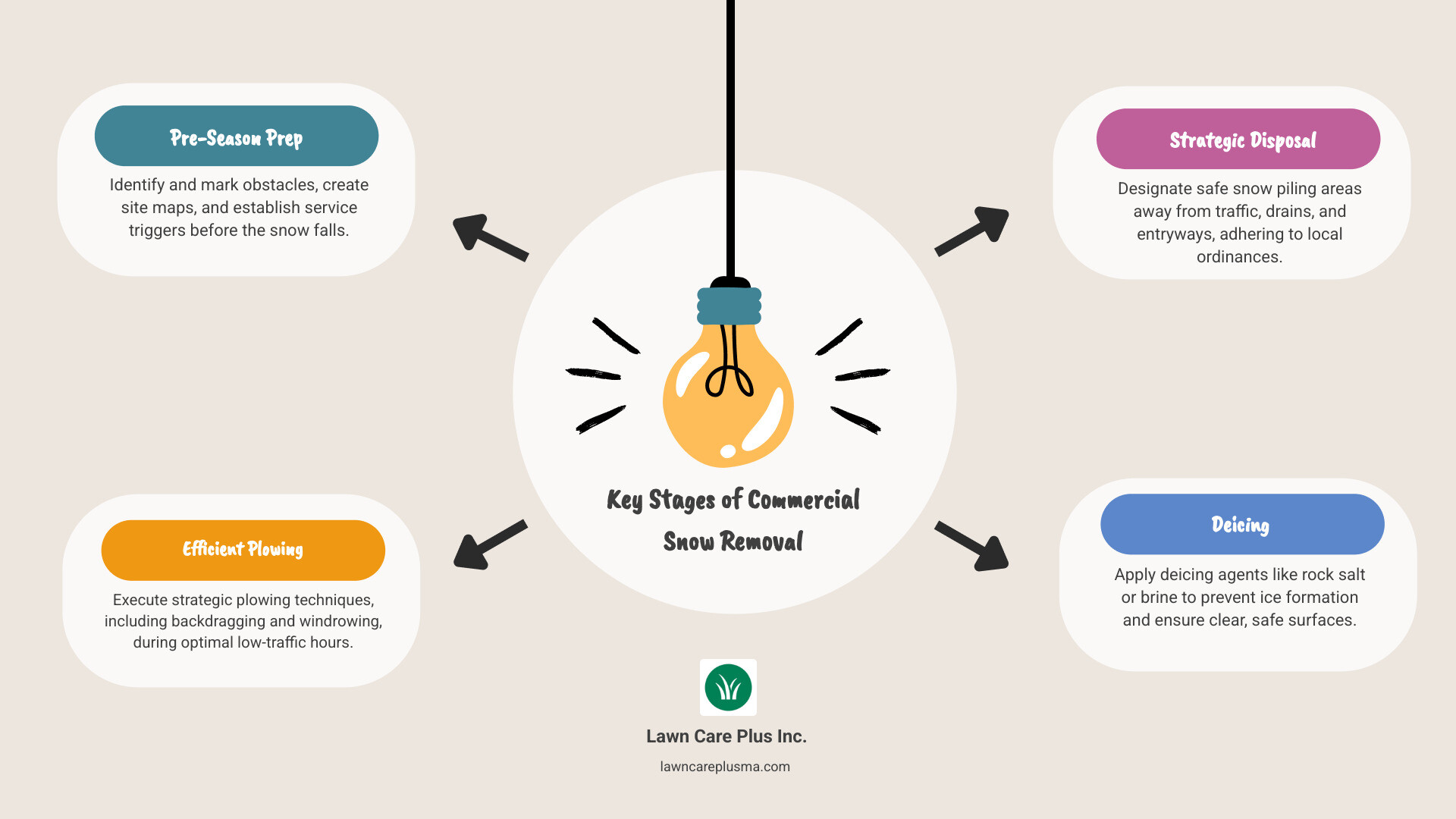
Must-know Parking Lot Plowing terms:
Pre-Plowing Prep: Setting the Stage for a Successful Clear
The best Parking Lot Plowing jobs start long before the first snowflake falls. Think of it like preparing for a dinner party – you wouldn’t wait until guests arrive to figure out where the plates are! The same logic applies to snow removal. Proper preparation makes all the difference between a smooth operation and a winter nightmare.
Know the Lot Before the Snow Falls
Every parking lot tells a story, and we need to learn that story before winter arrives. What looks like a simple stretch of asphalt to most people is actually a complex landscape full of hidden challenges and opportunities.
Our pre-season site inspection is where the magic happens. We walk every square foot of your property, creating a detailed mental map of obstacles, curbs, drains, catch basins, and landscaping features. We note where the property lines are and identify potential trouble spots that could cause problems during a storm.
Those innocent-looking light poles, dumpsters, and landscape beds become major players in our plowing strategy. But it’s the sneaky hazards that really matter – like low curbs that disappear under snow or delicate shrubs that could get damaged by a plow blade.
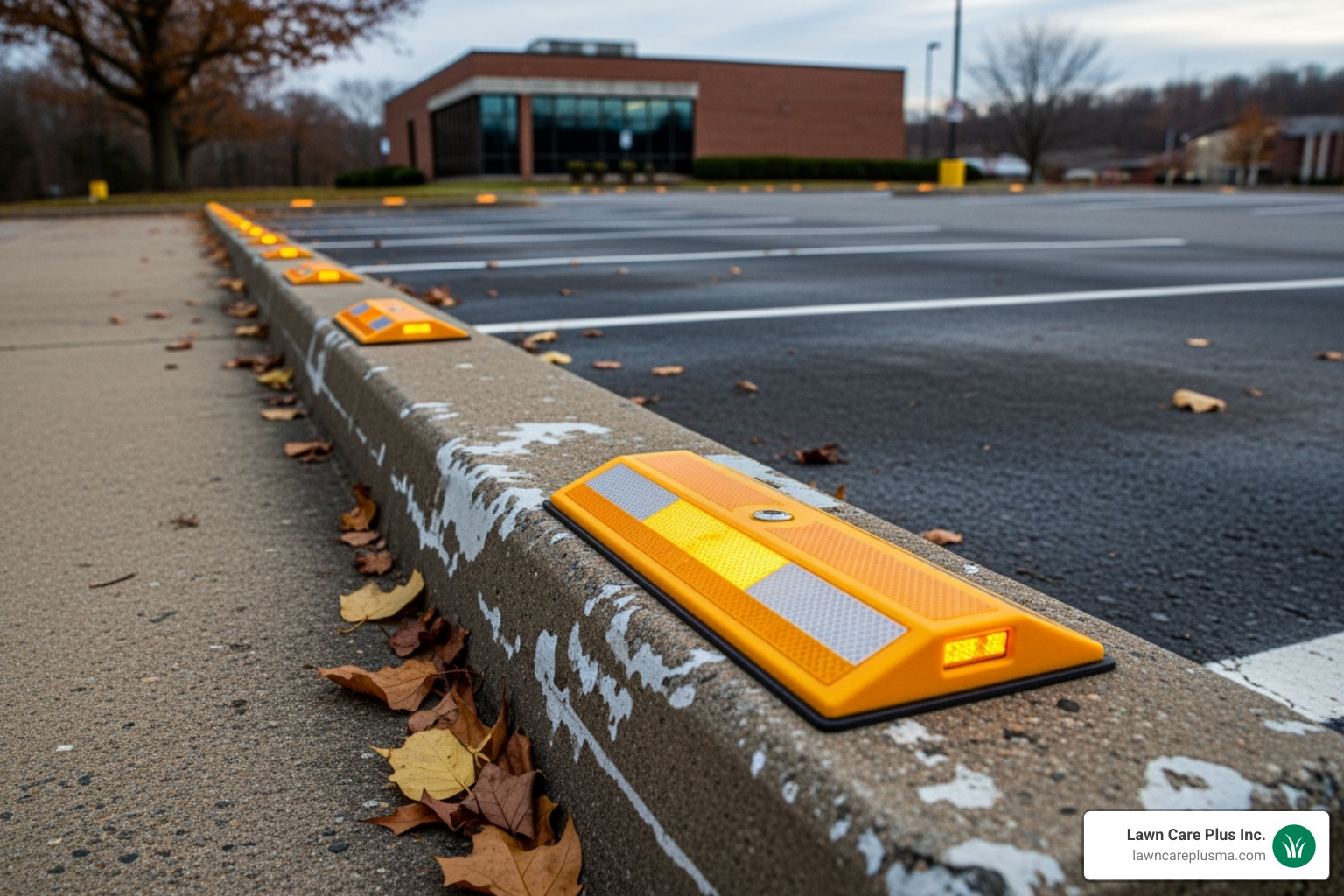
That’s where our reflective markers come in. We place these bright markers along curbs and near hazards so our operators can see them even during a blizzard at 3 AM. It’s a simple step that prevents costly property damage and keeps everyone safe.
We also communicate closely with property managers during this phase. They know their buildings better than anyone and can point out specific concerns or requirements we might not notice during our walkthrough.
For businesses looking to maintain their properties year-round, our Commercial Property Maintenance services can help keep everything in top shape.
Establishing Service Triggers and Scope
Here’s where we get down to the nitty-gritty of your snow removal plan. The big question is: when should we spring into action? Most commercial properties use a 2-inch trigger depth as their standard. Once snow reaches that depth, our crews roll out.
But every business is different. Maybe you run a medical facility where even an inch of snow creates safety concerns. Or perhaps you manage a warehouse where operations can continue with a bit more snow on the ground. We customize trigger depths to match your specific needs.
Some clients need a zero-tolerance policy where sidewalks and entryways stay completely clear during business hours. Others are comfortable waiting until snow reaches 3 inches before we start plowing. There’s no right or wrong answer – just what works best for your business.
We also map out exactly which areas need clearing. Parking lots are obvious, but what about sidewalks leading to employee entrances? Loading docks where deliveries happen? Those front steps that customers use every day? We cover all the critical zones that keep your business running smoothly.
Getting all these details spelled out in your Commercial Plowing Contract prevents confusion when the snow starts flying. Everyone knows exactly what to expect, and there are no surprises on either side.
The time we spend on this prep work pays huge dividends when winter storms hit. Your property gets cleared efficiently and safely, and you can focus on running your business instead of worrying about the parking lot.
The Right Tools for the Job: Essential Snow Removal Equipment
Having the right equipment is fundamental to efficient and safe Parking Lot Plowing. Just like a chef needs the right knives, we need the right plows and machinery to tackle various snow conditions and property layouts. Our fleet includes a range of specialized tools, each designed for a specific purpose.
The most common tools for commercial snow removal include:
- Plow Trucks: The workhorses of our operation, equipped with various plow types.
- Skid Steers/Loaders: Agile machines perfect for intricate work, snow stacking, and moving large volumes.
- Salt Spreaders: Essential for deicing and preventing ice buildup.
Choosing Equipment for Maximum Efficiency
The type of plow we use depends heavily on the parking lot’s size, its specific obstacles, and even the snow type (light and fluffy vs. heavy and wet).
- Straight-Blade Plows: Good for basic pushing, but less efficient for wide areas.
- V-Plows: Excellent for cutting through deep snow and creating initial passes.
- Angle Plows with Wings: These are our champions for efficiency in large parking lots. Research shows that angle plowing with wings clears about 30 percent more snow per pass than wingless plowing. Even more impressively, it’s 50 percent more efficient than a standard, rubber-edged pusher! This means we can clear your lot faster, with fewer passes, saving time and fuel.
- Snow Pushers: Ideal for containing large volumes of snow and moving it to designated areas, especially in open lots.
- Skid Steers and Loaders: These machines are invaluable for backdragging around buildings, navigating tight turns, and stacking snow high in designated areas. Their versatility allows us to handle complex layouts and large snow volumes with precision.
The concept of “angle plowing with wings” is a game-changer. It allows for “full bites” on every pass, meaning we’re constantly moving snow to the side without leaving trails behind or needing to “back-clean” areas. This uninterrupted flow significantly boosts efficiency. For a visual demonstration of how efficient angle plowing can be, you can watch an Animated video demonstrating plow efficiency.
Choosing the right equipment for each job translates directly into faster, more thorough, and more cost-effective Parking Lot Plowing for our clients across the Boston Metro-West area.
Mastering Parking Lot Plowing Techniques for Maximum Efficiency
Once the snow starts falling, it’s time for our trained operators to shine. Effective Parking Lot Plowing isn’t just about driving a truck; it’s an art form that combines strategy, precision, and efficiency. We prioritize plowing with the storm when significant snowfall is expected, rather than waiting for it all to accumulate. This prevents snow from packing down, makes it easier on our equipment, and keeps your property more accessible throughout the storm.
We also prefer to plow during low-traffic hours, typically overnight or very early morning. This ensures maximum safety for everyone and allows our team to work without the constant interruption of cars and pedestrians. Additionally, keeping the wind direction in mind helps us strategically pile snow downwind, minimizing future drifting back onto cleared areas. And of course, operator safety is paramount. Our team is well-rested and alert, as tired operators work slower and are more prone to accidents.
Step 1: Back Dragging Away from Buildings and Obstacles
The first critical step in plowing a parking lot is to clear snow away from buildings and other structures. This technique, known as “back dragging,” involves using the powerful reverse gears of our trucks to pull snow away from entryways, loading docks, overhead doors, and garage access points.
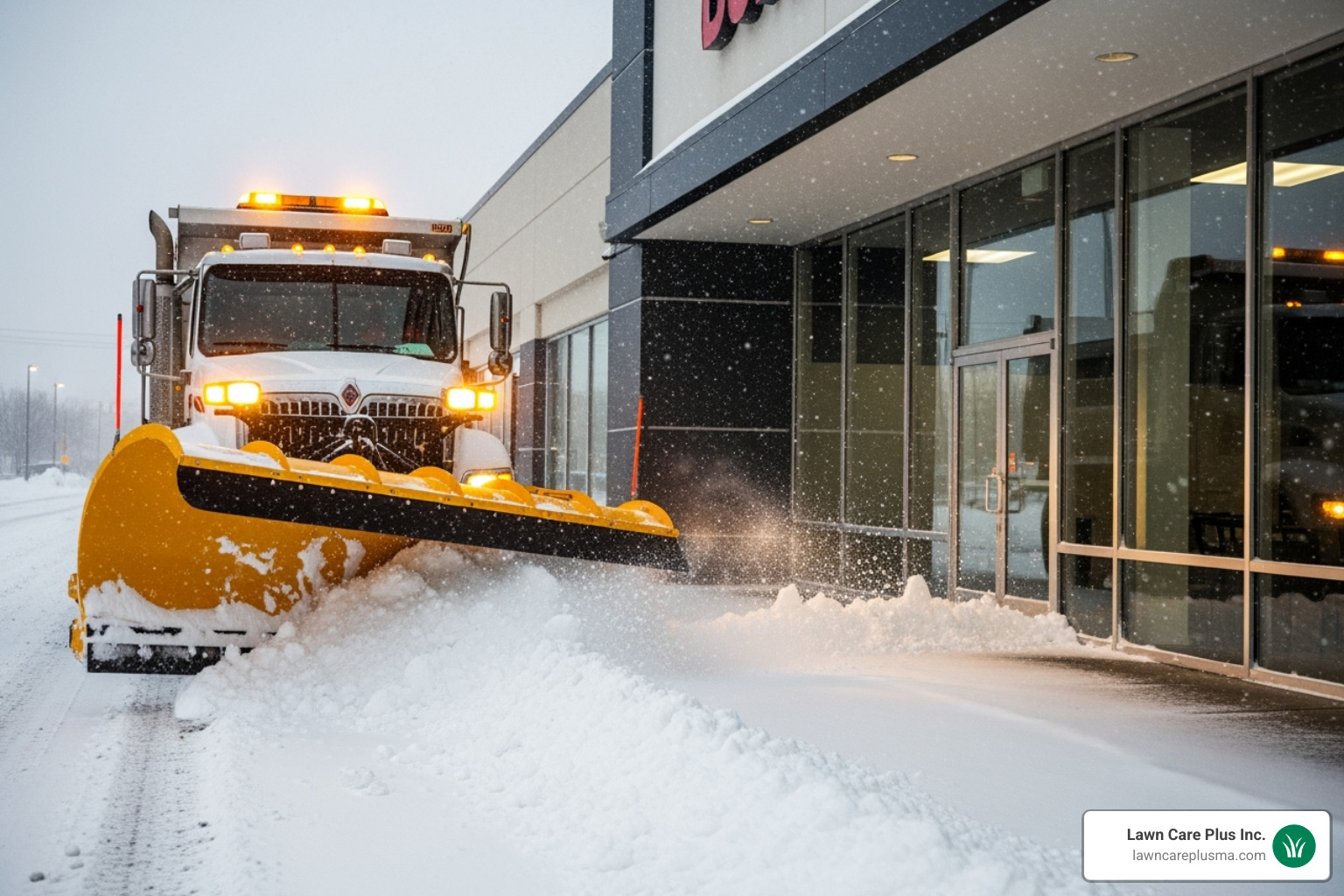
Why is this so important? Pushing snow towards a building can cause significant damage to foundations, doors, and even landscaping. It can also lead to water infiltration problems when the snow melts, potentially causing costly repairs down the line. By back dragging, we create a safe zone around your structures, ensuring clear access for employees and customers right from the start. This also helps prevent damage to your property, which is always a top priority for us.
Step 2: The Art of Windrowing for Efficient Parking Lot Plowing
Once the building perimeters are clear, we move on to the main body of the parking lot. This is where “windrowing” comes into play, a highly efficient method for moving large volumes of snow. We start by making a pass down the center of the lot, then work outwards, pushing the snow into long, continuous rows (or “windrows”) towards the outer edges or designated snow piling areas.
For large lots, angle plowing with wings is our preferred method for windrowing, as it allows us to take wide, uninterrupted passes, moving snow quickly and efficiently. We aim for straight passes whenever possible, as this leads to greater efficiency. Overlapping passes ensure no snow is left behind, creating a uniformly clear surface. For properties in the Boston Metro-West area, where snow can come down fast and heavy, this technique allows us to manage even significant accumulation effectively.
When it comes to finding reliable Commercial Snow Plowing Near Me, our methodical approach ensures your lot is cleared thoroughly and quickly.
Step 3: Finishing Touches for a Clean and Safe Lot
The job isn’t done until the finishing touches are applied. After the main plowing is complete, our team focuses on refining the cleared areas to ensure maximum safety and aesthetic appeal. This includes:
- Clearing Curbs: Plowing right up to the curbs ensures all parking spaces are fully accessible.
- Squaring off Corners: We make sure the edges and corners of the lot are neatly squared off, leaving no stray snow trails.
- Eliminating Snow Trails: A thorough final pass cleans up any residual snow left by the main plows, creating a smooth, even surface.
- Final Cleanup: This might involve using smaller equipment or shovels for areas too tight for a plow, such as pedestrian walkways or around light poles.
Attention to detail in these final steps makes a significant difference, ensuring a professional, safe, and completely clear parking lot for your business. It’s about delivering a result that not only looks good but also minimizes slip-and-fall risks.
Strategic Snow Piling and Disposal: The Final Step
Once the snow is moved, where does it all go? Strategic snow piling and disposal are just as crucial as the Parking Lot Plowing itself. If snow isn’t placed carefully, it can create new hazards, take up valuable parking spots, or even lead to sticky legal situations. Our main goal is to manage snow in a way that’s safe, efficient, and considerate of your property and everyone around it.
Where to Pile Snow: A Key Part of Parking Lot Plowing
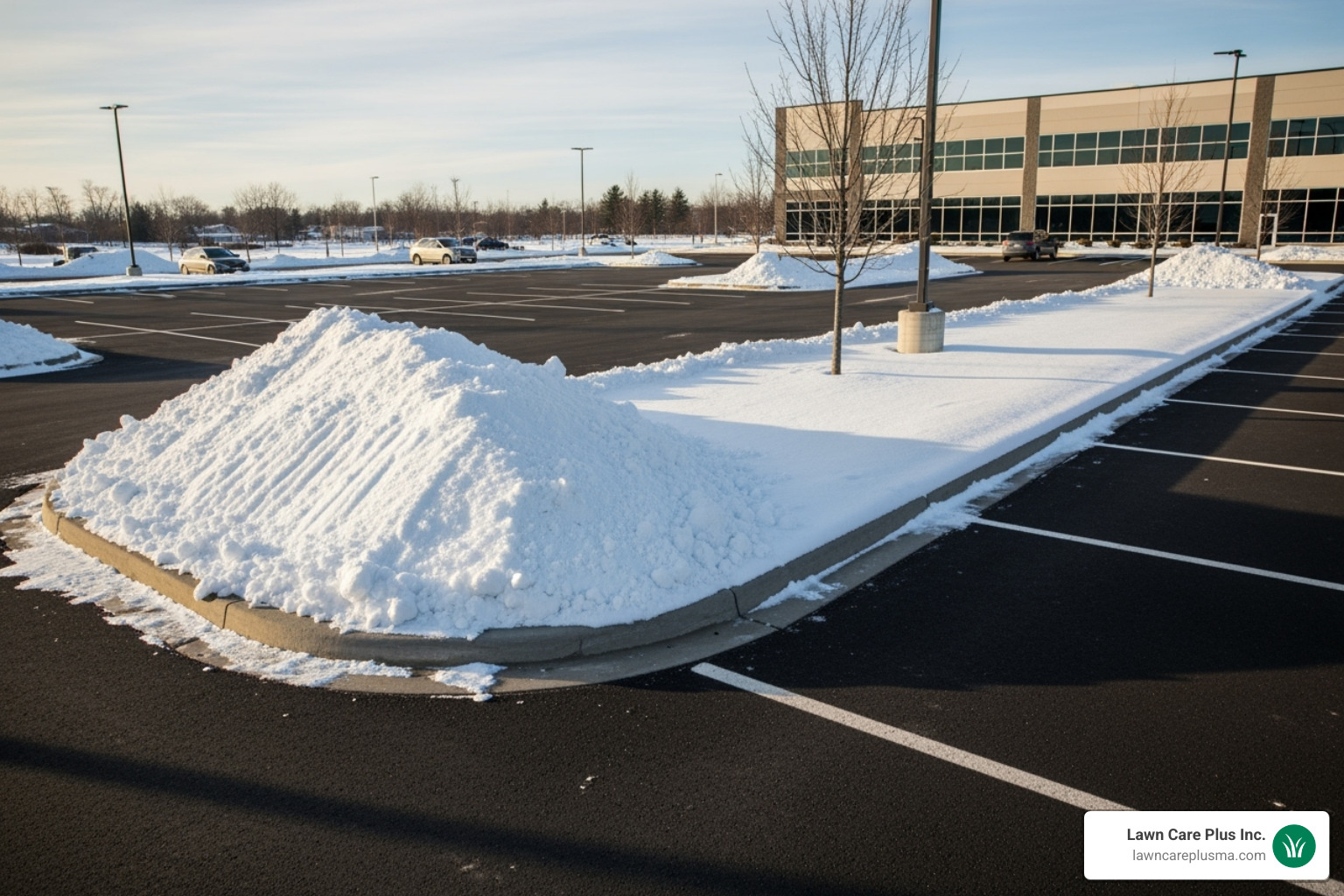
Before winter even begins, we work closely with our clients to pick out the best spots for snow piles. This isn’t just a random choice; it’s a careful plan that keeps several important things in mind.
First, we always prioritize maintaining visibility. Snow piles should never block the view for drivers entering or leaving your lot, or for people walking by. That means we steer clear of corners and areas near intersections where visibility is key. Second, it’s super important to avoid drains and catch basins. Piling snow over these spots can cause big problems when it melts, leading to flooding or dangerous ice patches. We also make sure to keep snow clear of fire hydrants so emergency services can always get to them if needed. And of course, we are incredibly careful to never cover or block handicapped spaces or access ramps. ADA compliance is something we take very seriously.
We also make sure to pile snow away from buildings. Piling snow directly against your building can lead to moisture damage, leaks, and even ice dams. If we can, we’ll even pile snow downwind to help prevent it from drifting back onto your freshly cleared lot. Our aim is to create neat, consolidated piles that minimize their impact on your business operations, helping you maximize your parking spaces. As a “good neighbor,” we understand that 90 percent of facilities managers want their snow removal company to be mindful of how and where snow is piled. We also think about where the melting snow will naturally drain so it doesn’t create new slip-and-fall dangers.
Legal and Ethical Snow Disposal
It might seem easy to just push snow from your parking lot onto the street or a neighbor’s property. But hold on a minute – this is a big no-no and can cause some serious headaches! In most towns, especially here in the Boston Metro-West area, it’s actually illegal to push or dump snow from a private property onto public roads, sidewalks, or someone else’s land without their permission. Why? Because it creates a public safety hazard, blocking traffic, clogging drains, and potentially causing accidents.
Did you know that cities often own a strip of land, usually between 5 to 15 feet wide (or even more!), on each side of the street? This means even a little push onto what looks like the “shoulder” could be on public land. We are very careful to follow all local rules and make sure all snow from your Parking Lot Plowing is disposed of legally and ethically. This means keeping it within your property’s boundaries or, if there’s just no room, hauling it off-site. For example, understanding Boston snow emergency rules is super important for staying compliant in busy urban areas.
We also keep environmental concerns in mind, making sure that snow containing deicing agents is handled responsibly. This helps prevent runoff from getting into sensitive natural areas.
Beyond the Plow: The Critical Role of Deicing
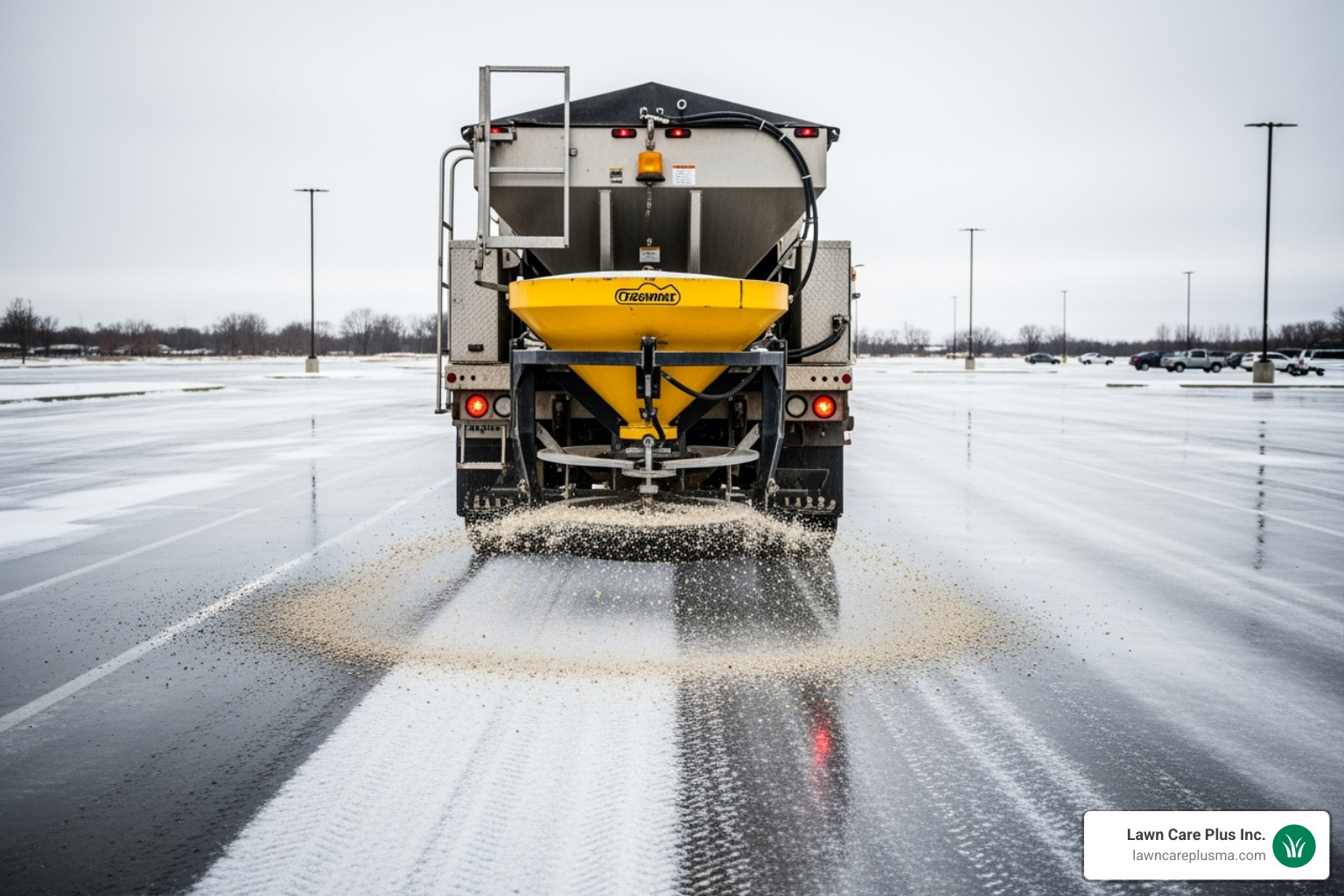
Now, Parking Lot Plowing does a fantastic job of removing the bulk of the snow, getting it out of the way. But let’s be honest, that’s only half the battle! The real sneaky culprit, the one that can cause the most trouble, is often the invisible threat: ice. Those slick patches can be incredibly dangerous. This is precisely where deicing becomes absolutely essential. It’s the critical service that works hand-in-hand with snow removal, stopping ice from forming and melting away what’s already there. This makes your property much safer and significantly reduces any liability risks.
Pre-Treating vs. Post-Treating Surfaces
We offer a couple of smart approaches to deicing, depending on what the weather is doing. We can apply our treatments either before a storm even begins to fall, or after we’ve finished clearing away the snow. Both methods are incredibly effective, just in different ways!
Think of pre-treating like getting a head start. We apply a special liquid deicer or a brine solution to your paved surfaces before the snow or ice arrives. This proactive step creates a barrier, stopping the snow and ice from bonding tightly to the pavement. It’s almost like putting a non-stick coating on your pan before you cook! This makes our Parking Lot Plowing much easier and quicker when the storm hits. It’s also super effective at preventing new ice from forming, especially during those tricky freezing rain events or light dustings of snow.
Then there’s post-treatment. Once we’ve done our plowing and cleared away the snow, we apply granular deicers. This could be rock salt or more specialized ice melt products, like calcium chloride. Calcium chloride, for example, works wonders even when temperatures drop really low, often better than traditional salt. This step melts any lingering ice patches and stops surfaces from refreezing. It literally breaks that stubborn ice bond, making your parking lots and walkways safe for everyone – your customers, your employees, and their vehicles.
We also pay close attention to the type of deicing agent we use. While regular rock salt is common, we can choose products that are gentler on your concrete and landscaping. We always keep your property’s specific needs and any environmental concerns in mind. Our main goal is simple: to make sure your parking lot and walkways are always safe and easy to steer, even when winter throws its worst at us.
For more details on how we expertly handle all sorts of winter conditions, be sure to check out our dedicated Snow Management page.
Frequently Asked Questions about Parking Lot Plowing
We totally get it – when winter weather rolls in, you’ve got questions about keeping your business safe and accessible. We often hear similar inquiries about our Parking Lot Plowing services, and we’re always happy to shed some light. Here are some of the most common questions we get, and our answers to help you understand how we tackle the snow!
What’s the most efficient way to plow a large parking lot?
Plowing a large parking lot efficiently is all about strategy and the right tools. Think of it like a well-choreographed dance, not just pushing snow around! We start by focusing on creating immediate access and protecting your property. That means we’ll first back drag snow away from your buildings, storefronts, and other key access points. This clears entryways quickly and helps prevent any snow from building up against your property, which can cause damage later.
Once the perimeters are clear, we move onto the main body of the lot. For maximum efficiency, especially on those big lots, we use a technique called windrowing. We typically start by making a pass down the center, then work our way outwards, pushing the snow into long, continuous rows towards the designated piling areas. This systematic approach ensures no spot is missed and snow is moved quickly.
Our secret weapon here? An angle plow with wings! This specialized equipment can increase efficiency by up to 50% compared to a standard pusher. It means we clear more snow per pass, getting your lot safe and open faster. And, whenever possible, we aim to plow during low-traffic hours – usually overnight or very early morning – to make sure our team can work quickly and safely without cars or pedestrians in the way.
How can I avoid damaging curbs and landscaping when plowing?
Avoiding damage to your property is a top priority, and it really starts before the first snowflake even falls! Our approach is all about proactive planning. Before winter hits, we conduct a thorough pre-season site walk-through of your property. We’re looking for everything: curbs, drains, catch basins, light poles, and any delicate landscaping features. Think of it like drawing a detailed map of your lot’s hidden treasures and potential pitfalls.
Once we’ve identified these critical areas, we mark them clearly with reflective markers. These little guides are super important because they stand tall even when heavy snow covers everything else, acting as clear warnings for our operators. During plowing, our experienced team always works with a controlled speed and exercises extra caution, especially near these marked zones. And, as we mentioned earlier, our technique of back dragging snow away from buildings and structures also plays a huge role in preventing damage to foundations and entryways. It’s all about protecting your investment while getting the job done right.
Is it illegal to push snow from my parking lot onto the street?
This is a really important question, and the answer is a resounding yes, it is illegal in most municipalities, including those here in the Boston Metro-West area! While it might seem like an easy way to get rid of snow, pushing or dumping snow from your private parking lot onto public roads, sidewalks, or even another person’s property without their permission is a big no-no.
Why is it illegal? Because it creates serious public safety hazards. Imagine a sudden mound of snow blocking traffic lanes, obscuring a driver’s view at an intersection, covering a fire hydrant (crucial for emergencies!), or creating dangerous icy patches when it melts and refreezes. Cities and towns have strict ordinances against this to keep everyone safe. Violations can lead to hefty fines, and nobody wants that! We always adhere to all local regulations, ensuring that snow from your property is either contained safely within your property’s boundaries or, if space is limited, properly hauled off-site. We keep it clean and compliant, so you don’t have to worry.
Your Partner for a Safe and Accessible Winter
As we’ve explored, mastering Parking Lot Plowing truly blends meticulous preparation, proper technique, and professional equipment. But it’s so much more than just moving snow! It’s about ensuring your customers and employees stay safe, maintaining business accessibility, and minimizing winter liability. From pre-season site mapping and establishing clear service triggers to employing efficient plowing techniques and strategic deicing, every step plays a vital role in keeping your property running smoothly.
Here at Lawn Care Plus Inc., we deeply understand the unique challenges faced by commercial properties in Massachusetts, particularly in the Boston Metro-West area. Our experienced team is dedicated to providing comprehensive and reliable winter services. This means we let you focus on your business, not the snow! We pride ourselves on our attention to detail, our commitment to safety, and our ability to deliver a clear, accessible property every time.
For comprehensive and reliable winter services that keep your business running smoothly, trust a professional team. Contact us for your Boston snow management needs.