
Why Above Ground Drainage Solutions Are Essential for Boston Homeowners
Above ground drainage solutions are surface-level systems designed to capture, redirect, and manage rainwater before it causes damage to your yard, foundation, or landscaping.
Here are the most effective options available to homeowners:
| Solution | Best For | DIY Friendly? |
|---|---|---|
| Dry creek beds | Slopes, natural runoff paths | Yes |
| Swales | Large open yards, erosion control | Yes |
| Channel drains | Driveways, patios, hardscapes | Moderate |
| Rain gardens | Low-lying areas, runoff absorption | Yes |
| Permeable pavers | Driveways, walkways | Moderate |
| Gravel surfaces | Wet areas near structures | Yes |
| Downspout extensions | Foundation protection | Yes |
Greater Boston receives around 45 inches of rain per year — and that’s before accounting for snowmelt. For homeowners in the Metro-West area, that means saturated soil, pooling water, and erosion are not occasional problems. They’re seasonal facts of life.
Unlike underground systems, above-ground solutions are visible, easier to maintain, and often more affordable to install. Many can also be designed to look great in your landscape — not just function well.
I’m Tim DiAngelis, owner of Lawn Care Plus, Inc., and over the past decade I’ve helped residential and commercial clients across Greater Boston implement above ground drainage solutions that protect their properties while keeping their outdoor spaces looking sharp. In this guide, I’ll walk you through the best options, how to install them, and what to watch for along the way.
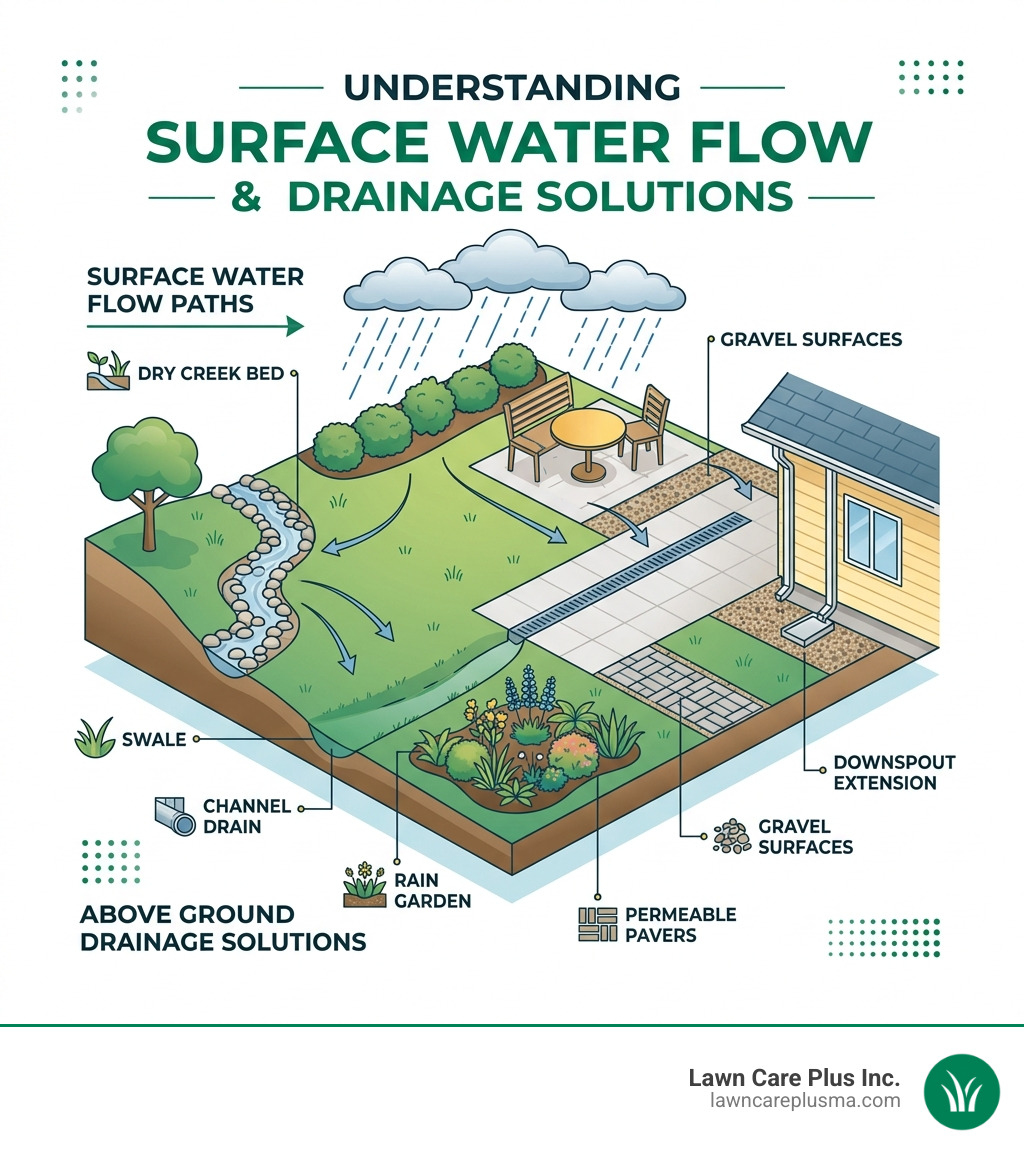
Essential above ground drainage solutions terms:
Understanding Above Ground Drainage Solutions vs. Underground Systems
When we talk about fixing a soggy yard in places like Newton or Milton, homeowners often jump straight to the idea of burying pipes. While subsurface systems have their place, above ground drainage solutions offer a unique set of benefits that often make them a smarter first choice.
The primary difference lies in visibility and physics. Underground systems, such as a small French drain, rely on water percolating through the soil to reach a buried pipe. In the heavy clay soils common across the Boston Metro-West area, this percolation can be slow. Above-ground systems, however, deal with water where it is most destructive: on the surface.
Surface vs. Subsurface Comparison
| Feature | Above Ground (Surface) | Underground (Subsurface) |
|---|---|---|
| Visibility | High (can be an aesthetic feature) | Hidden |
| Maintenance | Easy to spot and clear debris | Requires cleanouts or cameras |
| Installation | Less excavation required | Significant trenching/digging |
| Primary Goal | Directing active runoff | Lowering the water table |
By keeping water visible, we prevent common “out of sight, out of mind” failures. Products like StormDrain Plus allow us to create highly efficient surface channels that are easy to inspect after a heavy Nor’easter. Furthermore, visible systems help prevent “cross-connection” errors where rainwater is accidentally diverted into local sewage lines—a major environmental no-no.
In our region, the urgency for these solutions is growing. Climate projections suggest extreme precipitation intensities could increase by 25% to 108% by the end of the century. As we see more “100-year storms” happening every few years, having a robust domestic surface water drainage system that can handle high-volume runoff is no longer optional.
Top Above Ground Drainage Solutions for Residential Backyards
If you are tired of your backyard looking like a moat every time it rains in Brookline or Belmont, it is time to look at creative surface options. We often recommend a combination of these methods to create a comprehensive land drainage system.
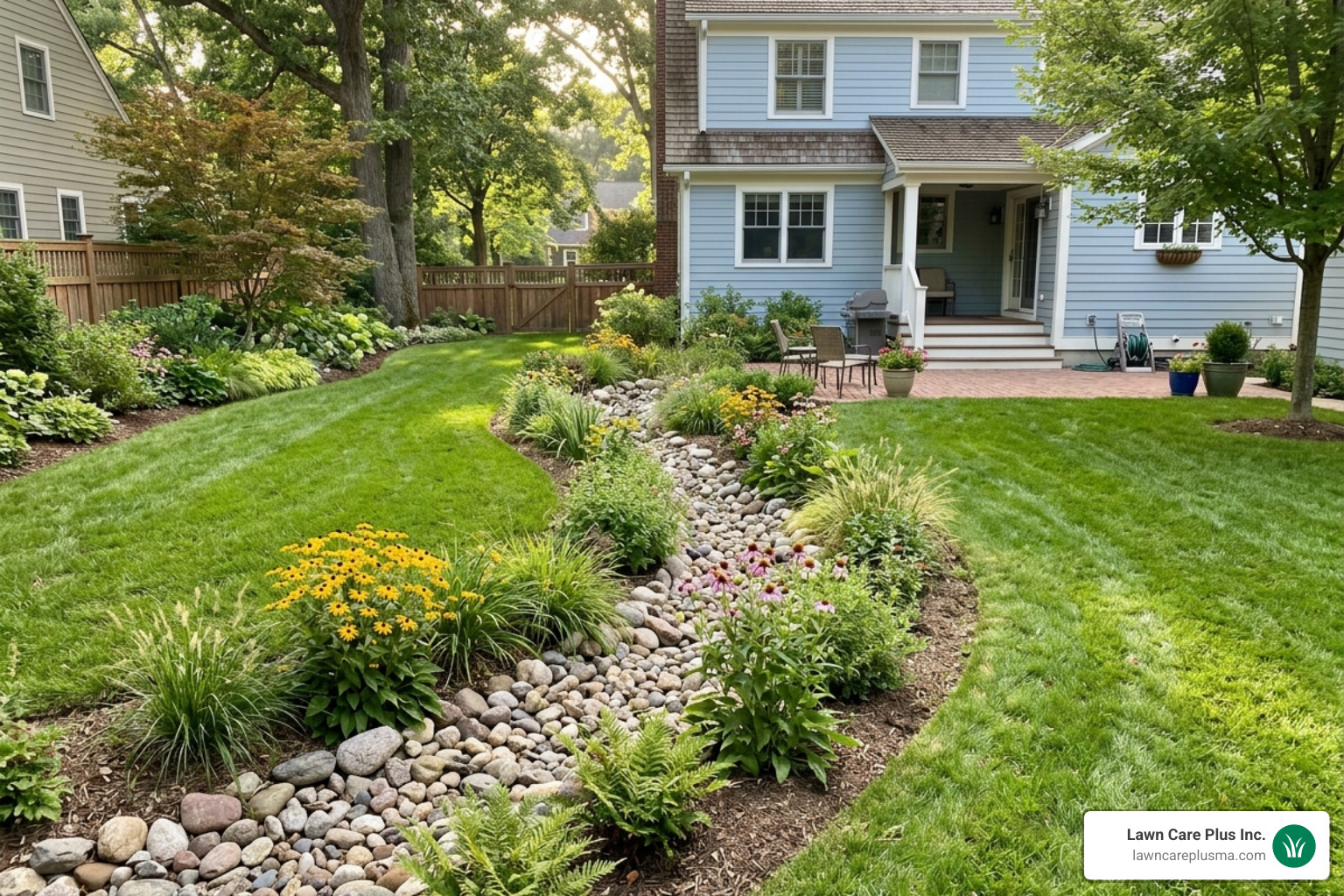
Dry Creek Beds
A dry creek bed is essentially a functional rock garden. It follows the natural “path of least resistance” where water already flows during a storm. By lining this path with landscape fabric and various sizes of stone, you create a beautiful feature that prevents soil from washing away while slowing down the water.
Swales and Rain Gardens
A swale is a shallow, wide ditch lined with grass or hardy plants. It acts like a natural gutter for your lawn. Often, we direct these swales toward a rain garden—a sunken area filled with water-hungry native plants. This is an excellent garden land drainage solution because it doesn’t just move the water; it helps the earth absorb it.
Permeable Surfaces and Aeration
Sometimes the best drainage solution is simply making your ground more “thirsty.” Replacing a solid concrete walkway with permeable pavers or decorative gravel allows water to soak directly into the ground. For lawns, regular aeration is key. By punching small holes in the soil, we break up the compaction caused by our local clay, allowing water to reach the roots rather than pooling on top.
Designing a Dry Creek Bed for Above Ground Drainage Solutions
Designing a dry creek bed is where engineering meets art. You aren’t just dumping rocks in a line; you’re mimicking a natural stream.
- Map the Flow: Wait for a heavy rain and see where the water naturally gathers. This is your “river” bed.
- Dig and Shape: Create a meandering path rather than a straight line. Straight lines look man-made; curves look natural and help slow water velocity.
- Protect the Soil: Always lay a heavy-duty geotextile or landscape fabric first. This prevents the rocks from sinking into the mud and keeps weeds from taking over.
- Layer Your Stones: Use large boulders at the “bends” of your creek to anchor the design. Use medium-sized river rocks for the bed and smaller pea gravel to fill the gaps.
This is one of the most effective drainage solutions for sloping land because the heavy rocks stay put even when the water is rushing down a hill in a town like Waltham or Needham.
Using Channel Drains as Above Ground Drainage Solutions
For hardscapes like driveways and patios, channel drainage systems are the gold standard. If your garage floods during every summer thunderstorm, a channel drain (also called a trench drain) acts as a perimeter defense.
We often use high-quality modular systems like the HexaLine Drain or Tuf-Tite Trench Drains. These systems feature a long, narrow grate that sits flush with your pavement.
Key considerations for channel drains include:
- Load Rating: In a driveway, you need a system like the DrainLine 100 that can handle the weight of a vehicle.
- Grate Selection: From plastic to decorative metal, choose a grate that matches your home’s aesthetic.
- Maintenance: These are great because you can simply pop the grate off and scoop out any leaves or sediment.
Step-by-Step Guide to Installing Surface Water Features
Whether you are building a rain garden in Dedham or a swale in Norwood, the physics of water remains the same. Here is how we approach a professional-grade installation.
1. Site Evaluation and Grading
Before you pick up a shovel, you must know where the water is going. The golden rule of drainage is a slope of at least 1 inch for every 8 feet of distance. Without this “fall,” water will simply sit in your new feature and become a mosquito breeding ground. We use laser levels to ensure the grade is perfect before any stone or plants go in.
2. Managing the Flow
For features like swales, you want to ensure the soil is compacted enough to hold its shape but porous enough to breathe. If you are dealing with a steep hill, we might use erosion mats or retaining wall drainage techniques to ensure the “banks” of your swale don’t collapse.
3. Selecting the Right Plants
A rain garden is only as good as its inhabitants. In the Boston area, we look for native species with deep root systems that can survive being “wet” for 24 hours and “dry” during a mid-August heatwave.
- Willows and Dogwoods: Great for the center of the garden where it stays wettest.
- Sedges and Ferns: Perfect for the sloping sides.
- Native Grasses: Provide structural support and help filter pollutants from domestic rainwater drainage.
Maintenance and Cost Considerations for Homeowners
One of the reasons we love above ground drainage solutions is that they are relatively low-maintenance, but they aren’t “no-maintenance.”
Seasonal To-Do List
- Spring: Clear out any winter debris, leaves, or trash that may have blown into your dry creek bed or channel grates.
- Fall: Ensure gutters are clean. If your gutters are clogged, water will overshoot your drainage systems and fall directly next to your foundation.
- Annual: Perform lawn aeration. Compacted soil is the enemy of drainage.
Understanding the Investment
When planning your budget, keep in mind that these figures are internet averages and can vary wildly based on the specific terrain of your Metro-West property.
Note: All listed service prices are average costs based on internet data and not actual costs for professional services at Lawn Care Plus Inc.
- Dry Creek Bed Installation: DIYers might spend $3 to $5 per square foot on rocks and fabric. Professional installations, which include grading and heavy boulder placement, typically range from $3 to $15 per square foot.
- Rain Garden Materials: If you are doing the planting yourself, expect to pay around $5 per square foot for plants and mulch. Total project costs often range from $5 to $20 per square foot.
- Catch Basins and Dry Wells: For heavy-duty water storage, professional installation of a dry well or large catch basin can range from $1,500 to $5,000, depending on the depth and soil conditions.
While DIY is feasible for small swales or mulch-based rain gardens, we always recommend a professional consultation for anything involving foundation protection or complex grading. A mistake in your slope can actually send more water toward your home!
Frequently Asked Questions about Above Ground Drainage
How can I prevent erosion in my backyard?
The key to stopping erosion is slowing the water down. Use ground covers like creeping thyme or clover to anchor the soil. For steeper slopes, sidewalk drainage solutions or small retaining walls can break the water’s momentum. Mulch layering is also helpful, but make sure to use “double-shredded” mulch, as it knits together and is less likely to wash away than large wood chips.
What plants are best for absorbing excess water?
In our Massachusetts climate, we recommend “water-hungry” natives. Willows, Joe Pye Weed, Swamp Milkweed, and various Sedges are champions at absorbing water. These plants have deep root systems that act like sponges, pulling moisture deep into the aquifer and away from your lawn’s surface.
Can I divert water without affecting neighbors?
This is a critical legal consideration. You cannot simply pipe your problems onto the person next door. The goal of a good land drainage system is to encourage infiltration (soaking into the ground) or directing water to a legal discharge point like a dry well or rain barrel. Always check with your local conservation commission, especially if you live near wetlands in towns like Wayland or Concord.
Conclusion
Managing water in the Greater Boston area is a constant battle against heavy rain and stubborn clay soils. However, by moving “beyond the trench” and embracing creative above ground drainage solutions, you can protect your home while actually improving the look of your yard.
Whether it’s a meandering dry creek bed that adds a touch of nature to your landscape or a sleek channel drain that keeps your driveway dry, these systems are the invisible framework that keeps a property healthy. At Lawn Care Plus Inc., we’ve spent years perfecting these installations across the Boston Metro-West region, from Newton to Walpole.
Don’t wait for the next big storm to see where the puddles form. Contact our team for a professional drainage consultation today, and let’s make sure your yard is ready for whatever the New England weather throws our way!
