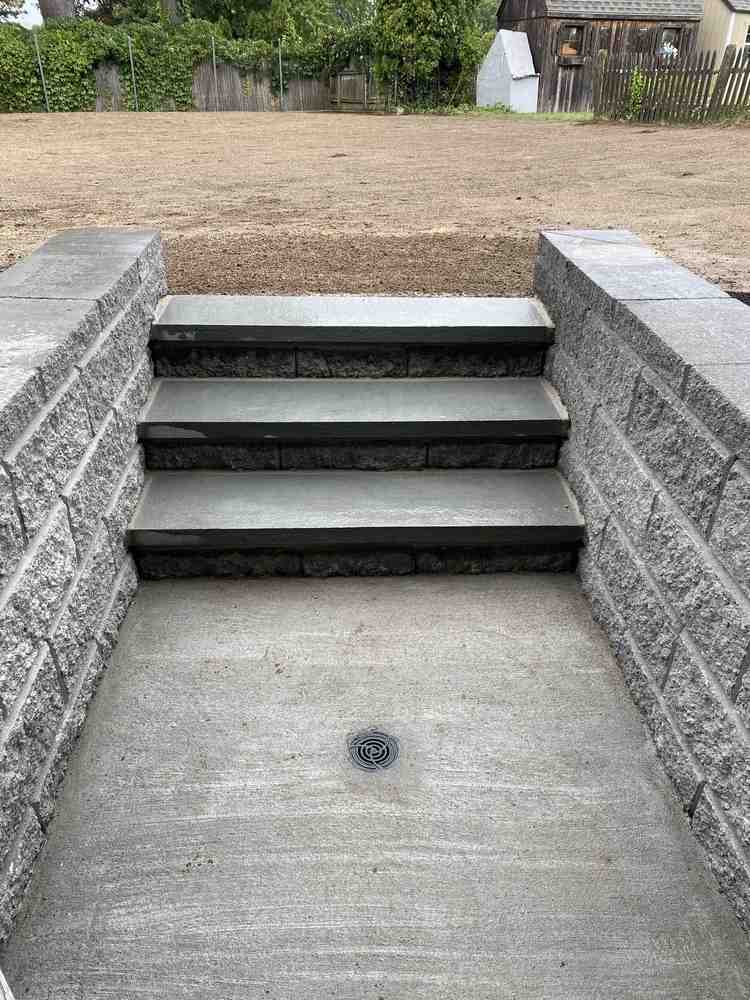
Why Proper Drainage Matters for Your Yard
Channel drains for yards are linear systems installed at ground level to collect and redirect surface water. They are most effective on hardscapes like driveways, patios, and walkways where water cannot soak into the ground.
Quick Overview: Channel Drains vs. Other Drainage Solutions
| Drainage Type | Best For | Water Type | Complexity |
|---|---|---|---|
| Channel Drains | Hardscapes, pools | Surface runoff | Moderate |
| French Drains | Soggy lawns | Subsurface | Moderate/High |
| Swales | Sloped yards | Surface flow | Low/Moderate |
| Area Drains | Low spots | Standing water | Low |
Without proper drainage, standing water can turn walkways into hazards, create mosquito breeding grounds, and erode the soil around your foundation. Managing where water goes is the key to a healthy landscape. Channel drains capture water immediately from the surface and move it away before damage occurs.
Why channel drains work so well:
- They collect water immediately before it pools.
- They blend into hardscape designs.
- They connect easily to existing pipes or catch basins.
- They require minimal yard disruption.
- They come in various materials to match your aesthetic.
I’m Tim DiAngelis, owner of Lawn Care Plus, Inc. For over a decade, I’ve installed channel drains for yards throughout the Boston Metro-West area to solve persistent water problems. Whether protecting a new patio or preventing foundation damage, proper drainage design is essential.
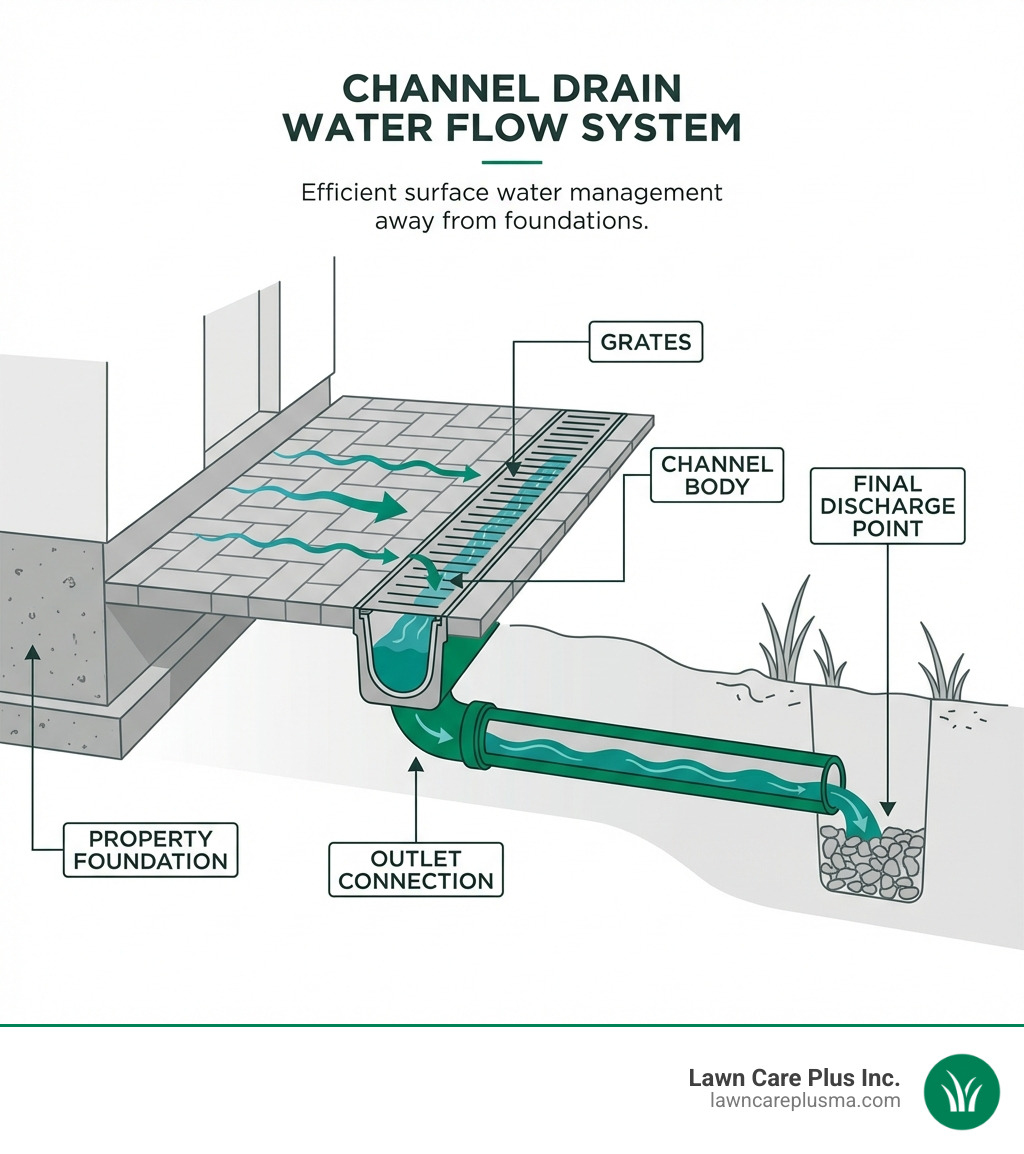
Channel drains for yards terms simplified:
Understanding Channel Drains for Yards
Channel drains, or trench drains, are linear systems designed to capture surface water efficiently. Imagine a discreet, grated channel acting as a miniature river across your hardscape. In the Boston Metro-West area, where heavy rain and snowmelt are common, these systems are essential for managing runoff.
Water flows across a surface, enters the channel through a grate, and is guided by gravity to an outlet. This outlet connects to a drainage pipe, a catch basin, or a storm sewer. They are a foolproof choice for protecting lawns, pools, and garages from water damage.
Choosing the Right Channel Drains for Yards
Placement is critical. Based on our experience in Massachusetts, these are the most effective installation spots:
- Patios: Prevents slippery surfaces and water pooling on pavers or concrete.
- Driveways: Stops water from pooling around vehicles and prevents potholes.
- Walkways: Ensures safe passage and prevents erosion along pedestrian paths.
- Pool Areas: Manages splash-over and rainwater to maintain safety.
The Spee-D® Channel Drain, 4-3/4 in. wide X 10 ft. long is a durable PVC option ideal for collecting moderate runoff in these residential settings.
Load-Bearing Capacities and Materials
Selecting the right material ensures your drain can withstand the weight of foot or vehicle traffic:
- PVC: Lightweight, corrosion-resistant, and ideal for patios and pool areas.
- Galvanized/Stainless Steel: Offers superior strength and a modern aesthetic for high-traffic areas.
- Polymer/Plastic: Robust designs often feature reinforced walls for better support.
Load Classes:
- Class A: Pedestrian traffic and light non-motorized vehicles.
- Class B: Residential driveways (cars and light trucks).
- Class C-F: Commercial and heavy industrial use.
For most residential channel drains for yards in our service area, Class A or B provides the necessary durability and safety.
Primary Benefits of Surface Water Management
Effective surface water management protects your property and improves its value. When we address drainage in towns like Belmont, Newton, or Canton, we focus on preventing long-term damage.
- Foundation Protection: Diverting water prevents cracks, leaks, and basement flooding. See our foundation repair projects for examples.
- Erosion Control: Capturing runoff prevents topsoil and mulch from washing away.
- Mosquito Control: Eliminating standing water removes pest breeding grounds.
- Safety: Rapidly removing water prevents slippery hazards on walkways and patios.
- Plant Health: Prevents root rot by ensuring soil doesn’t become waterlogged.
Preventing Standing Water and Erosion
Standing water is a symptom of poor drainage. For homeowners in Brookline or Wellesley, channel drains for yards act as a first line of defense. By intercepting water at the surface, they stop puddles from forming and prevent the destructive force of runoff that causes erosion.
Persistent water also leads to soil compaction, which makes it harder for your yard to absorb moisture. By keeping surfaces dry, channel drains preserve your landscape’s structure. For sloped areas, you may also want to review our guide on retaining wall drainage.
Aesthetic Integration with Landscaping
Modern drainage should improve your yard’s beauty. Channel drains offer various grate options to match your style:
- Materials: Choose from plastic, galvanized steel, or sleek stainless steel.
- Colors: Grates come in black, gray, sand, white, and even green to blend with pavers or grass.
- Patterns: Decorative patterns can turn a utility feature into a design element.
We ensure your drainage is both effective and visually appealing, whether matching a retaining wall design or blending into a driveway.
Comparing Channel Drains to Other Drainage Solutions
Understanding the differences between drainage systems is key to choosing the right one for your Massachusetts property.
| Type | Function | Best For | Aesthetic |
|---|---|---|---|
| Channel Drains | Surface runoff | Driveways, patios | Discrete |
| French Drains | Subsurface water | Soggy lawns | Hidden |
| Swales | Guided flow | Sloped lawns | Natural |
| Dry Wells | Infiltration | Downspout runoff | Underground |
When to Choose Channel Drains Over French Drains
Channel Drains are best for impermeable surfaces like concrete or pavers. They provide rapid collection and are easier to clean because the grates are accessible. They are perfect for pool perimeters and garage entrances.
French Drains are better for groundwater issues and soggy lawns. They use a perforated pipe in a gravel trench to manage water that has already soaked into the ground. Learn more about installing a French drain for gutters. Often, a comprehensive domestic rainwater drainage system uses both.
Integrating Swales and Dry Wells
Swales are shallow, vegetated depressions that slow down water and promote natural filtration. They are excellent for hilly landscapes where you want to guide water naturally.
Dry Wells are underground chambers that store excess water and allow it to slowly soak into the soil. They are environmentally friendly and help recharge groundwater. Combining these with channel drains creates a resilient land drainage system that manages water from collection to final infiltration.
Design, Materials, and Installation Best Practices
Installing channel drains for yards requires precision. The process involves:
- Site Assessment: Identifying topography and soil type.
- Trenching: Digging a trench with a consistent slope (1/8 to 1/4 inch per foot).
- Laying the Channel: Connecting sections with watertight sealants.
- Connecting Outlets: Linking the system to a catch basin or storm sewer.
- Finishing: Placing grates and backfilling so the drain sits flush with the surface.
You can view options for trench drains for driveways to see the types of systems we install.
Professional Installation and Maintenance
We recommend professional installation to ensure the correct grade and secure sewer connections. Our team at Lawn Care Plus provides expert drainage solutions custom to the specific needs of Dedham and Medford homeowners.
Long-Term Maintenance Tips:
- Regular Inspection: Check for debris twice a year.
- Debris Removal: Remove grates and clear out leaves or soil.
- Leaf Guards: Use guards if the drain is near trees.
- Flushing: Periodically flush the channel with a garden hose to clear small particles.
Consistent care ensures your investment protects your property for years.
Frequently Asked Questions about Yard Drainage
How much does it cost to install channel drains?
The cost to install channel drains for yards varies based on length, material, and installation complexity. Based on internet data, average costs range from $150 to $4,500 or more per project. A simple 10-foot plastic drain is on the lower end, while a long, heavy-duty steel system requiring concrete removal and new piping will be on the higher end. These are average costs based on internet data and not actual costs for Lawn Care Plus, Inc.
Can channel drains handle heavy vehicle traffic?
Yes, provided you choose the correct load class. For residential driveways, a Class B drain (rated for approximately 5 tons) is standard. For commercial areas with delivery trucks, a Class C or D drain is required. We ensure the right load rating is selected for your specific driveway application.
How do I prevent my channel drain from clogging?
- Clean Seasonally: Remove grates and clear debris.
- Use Debris Guards: Install sediment traps or leaf guards in high-risk areas.
- Grate Choice: Select grates with narrower slots to block larger debris.
- Maintain the Yard: Keep mulch and loose soil away from the drain edges.
Proactive maintenance keeps your system flowing freely.
Conclusion
Channel drains for yards are essential for protecting your property from water damage, erosion, and foundation issues. At Lawn Care Plus, Inc., we have spent over a decade providing integrated drainage and hardscape and landscape services to the Boston Metro-West area.
From Brighton to Watertown and Milton to Needham, we help residential and commercial clients create resilient outdoor spaces. If you are dealing with standing water or planning a new project, our team is ready to design a solution that stands the test of time. Contact us today to safeguard your landscape.