Changing Your Outdoor Space: Landscape Design in Norwood, MA
When it comes to landscape design Norwood MA, creating a beautiful and functional outdoor space is easier than you might think. Lawn Care Plus Inc. specializes in changing dull yards into stunning landscapes that take your breath away. Whether you’re a homeowner looking to spruce up your backyard or a commercial property manager wanting to impress clients, our expertise is second to none.
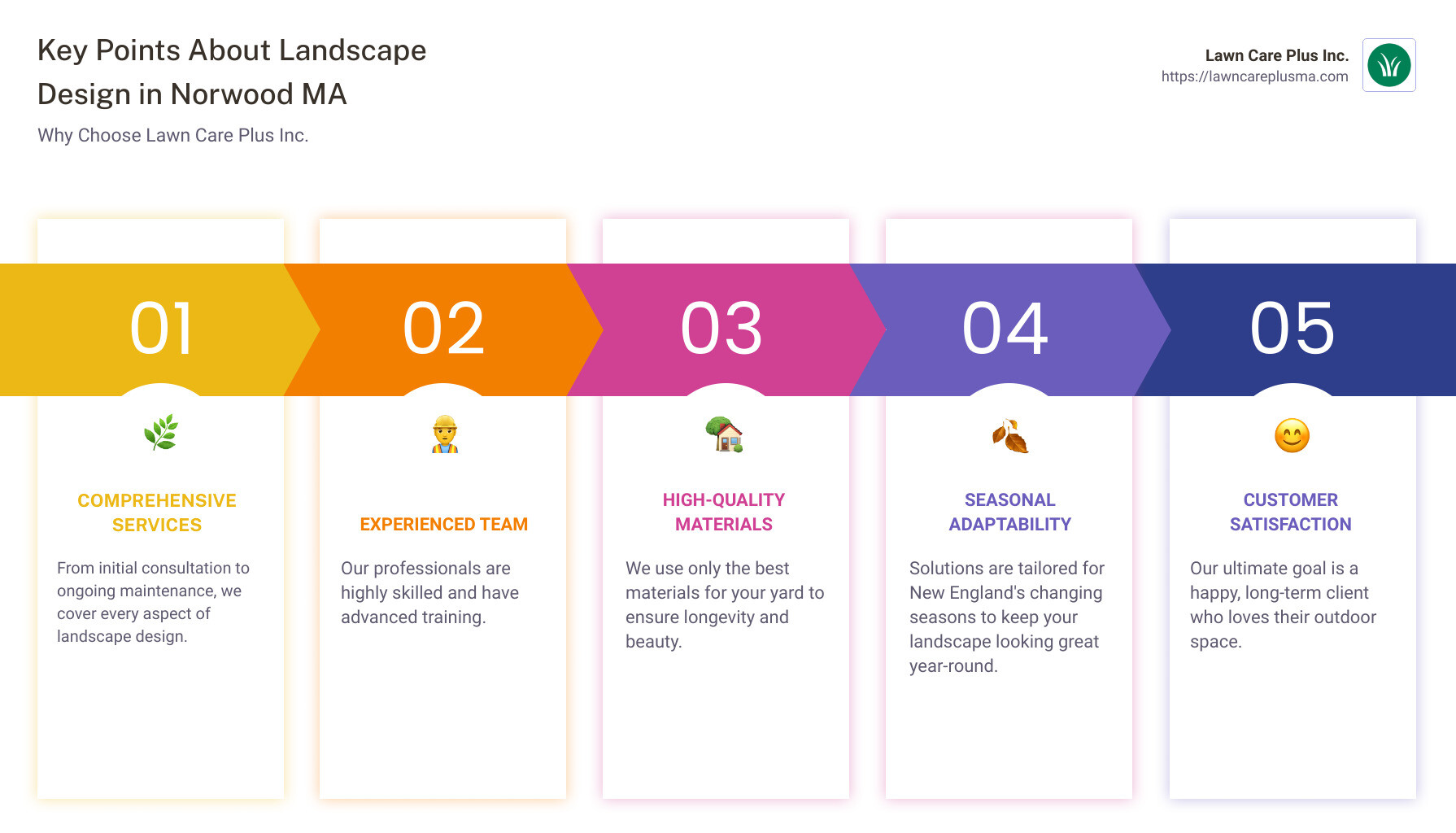
Key Points About Landscape Design Norwood MA:
1. Comprehensive Services: From initial consultation to ongoing maintenance.
2. Experienced Team: Skilled professionals with advanced training.
3. High-Quality Materials: Only the best for your yard.
4. Seasonal Adaptability: Solutions custom for New England’s changing seasons.
5. Customer Satisfaction: Our ultimate goal is a happy, long-term client.
Lawn Care Plus Inc. brings over 30 years of experience in horticultural sciences and landscape design, ensuring you get the highest quality service. We’ll help you create a yard that is not only visually appealing but also sustainable and easy to maintain.
Understanding Landscape Design
When diving into landscape design in Norwood, MA, it’s important to understand the roles of the professionals involved and the technical aspects that go into creating a beautiful and functional outdoor space.
Landscape Designer vs. Landscaper
A landscape designer typically focuses on the aesthetic and horticultural aspects of your yard. They have training in plant selection, garden design, and creating visually appealing spaces. Their primary goal is to maximize the beauty and utility of your outdoor area.
On the other hand, a landscaper is more involved in the physical labor of installing and maintaining the landscape. They handle tasks like planting, trimming, and installing hardscapes (like patios and walkways). While they may have design input, their main role is execution.
Landscape Architect vs. Designer
A landscape architect holds advanced degrees and has extensive training in both the structural and aesthetic aspects of landscape design. They are skilled in creating comprehensive plans that include hardscapes, drainage, and water features. Landscape architects are ideal for large-scale projects that require detailed planning and technical expertise.
A landscape designer, however, might not have the same level of formal education but can still offer excellent design services. They focus more on the visual and plant-related elements of your yard.
Technical Knowledge
Creating a beautiful landscape isn’t just about picking pretty plants. It involves a deep understanding of:
- Soil Conditions: Knowing what plants will thrive in your soil type.
- Drainage: Ensuring water flows correctly to avoid flooding.
- Climate: Selecting plants that can withstand Norwood’s seasonal changes.
Plant Selection
Choosing the right plants is crucial. A good landscape designer will select plants that are:
- Native to the Region: These plants are more likely to thrive and require less maintenance.
- Seasonally Appropriate: Ensuring your yard looks great year-round.
- Complementary: Plants that work well together in terms of color, size, and growth habits.
Aesthetics
The visual appeal of your yard is what makes it special. Designers use various elements to create a cohesive and attractive space:
- Balance: Ensuring the landscape feels harmonious.
- Contrast: Using different textures and colors to add interest.
- Unity: All elements should work together to create a unified look.
Landscape Design in Norwood, MA is more than just planting flowers. It’s about creating a space that is both beautiful and functional, custom to your specific needs and the unique conditions of your property.

Next, we’ll explore the key elements of landscape design and how they contribute to creating a stunning outdoor space.
Key Elements of Landscape Design
Creating a stunning outdoor space involves several key elements. Each component plays a vital role in bringing your landscape design to life. Let’s explore the essential elements that make up a beautiful and functional landscape.
Hardscapes
Hardscapes are the non-plant elements of your landscape. They add structure and functionality to your yard. Common hardscapes include:
- Patios: Great for outdoor seating and dining.
- Walkways: Connect different areas of your yard and add a sense of flow.
- Retaining Walls: Help manage soil erosion and create level planting areas.
Fine Gardening
Fine gardening focuses on the detailed care of plants. It includes:
- Plant Selection: Choosing the right plants for your soil and climate.
- Pruning: Keeping plants healthy and looking their best.
- Weed Control: Ensuring your garden stays lush and free of invasive species.
Exterior Lighting
Exterior lighting transforms your outdoor space into a magical place after dark. It includes:
- Pathway Lights: Illuminate walkways and improve safety.
- Accent Lighting: Highlight specific plants or architectural features.
- Security Lighting: Deter intruders and add a layer of safety.
Outdoor Kitchens
Outdoor kitchens extend your living space and make entertaining easier. Key features include:
- Grill Islands: Central cooking areas.
- Bar Islands: Perfect for serving drinks and snacks.
- Dining Areas: Create a comfortable space for guests to gather.
Fire Features
Fire features add warmth and ambiance. Options include:
- Fire Pits: Great for casual gatherings and roasting marshmallows.
- Fireplaces: Provide a focal point and add a touch of elegance.
- Pizza Ovens: Perfect for outdoor cooking enthusiasts.
Water Features
Water features bring tranquility and beauty to your garden. Popular choices include:
- Fountains: Add a soothing sound and visual appeal.
- Ponds: Create a natural habitat for fish and plants.
- Streams: Offer a dynamic and calming element.
Grading
Grading is crucial for the overall layout and drainage of your yard. Proper grading ensures:
- Water Flow: Prevents water from pooling and causing damage.
- Level Areas: Creates flat spaces for planting and hardscapes.
Lawn Installation
A lush lawn is the foundation of many landscapes. Lawn installation can include:
- Sod: Provides an instant green carpet.
- Seed: More cost-effective but takes longer to establish.
- Turf Grass: Ideal for high-traffic areas.
Fencing
Fencing adds privacy and defines your property. Options range from:
- Wood: Classic and versatile.
- Vinyl: Low-maintenance and durable.
- Metal: Strong and long-lasting.
Irrigation
Irrigation systems ensure your plants get the water they need. Types of systems include:
- Sprinklers: Good for lawns and large areas.
- Drip Irrigation: Efficient for garden beds and individual plants.
Drainage
Proper drainage prevents water-related issues in your yard. Solutions include:
- French Drains: Redirect water away from problem areas.
- Dry Wells: Collect and disperse excess water.
- Swales: Shallow channels that guide water flow.
By incorporating these key elements, you can create a landscape that is both beautiful and functional. Next, we’ll explore how to maximize small spaces to make the most of your yard.
Tips for Maximizing Small Spaces
Changing a small yard into a beautiful, functional space can be challenging but incredibly rewarding. Here are some practical tips to maximize your limited outdoor area.
Space Utilization
Effective space utilization is crucial when dealing with smaller yards. Think vertically and horizontally:
- Vertical Gardens: Use walls and fences for climbing plants or create a living wall with vertical planters. This not only saves ground space but also adds a lush, green backdrop.
- Layered Planting: Plant taller shrubs or trees at the back, medium-sized plants in the middle, and shorter plants or groundcovers at the front. This technique adds depth and makes the space feel larger.
- Multi-Functional Features: Integrate benches that double as storage or raised planters that can also serve as seating areas.
Conceptual Drawings
Before starting any landscaping project, conceptual drawings can help visualize the end result. These drawings provide a clear layout of your space, showing where each element will be placed. They are essential for:
- Planning: Ensures that all elements fit well within the space.
- Budgeting: Helps you understand costs upfront and avoid unexpected expenses.
- Execution: Provides a roadmap for landscapers to follow, ensuring your vision is realized accurately.
Site Development
Site development involves preparing your yard for the landscaping project. This includes:
- Clearing the Area: Remove any debris, old plants, or structures that won’t be part of the new design.
- Soil Preparation: Test and amend the soil to ensure it’s suitable for the plants you plan to introduce.
- Initial Layout: Mark out the areas for different elements like patios, garden beds, and pathways.
Grading and Drainage
Proper grading and drainage are essential for maintaining the health and longevity of your landscape. Poor drainage can lead to water pooling, which can damage plants and structures. Key steps include:
- Slope Adjustment: Ensure that the yard slopes away from your home to prevent water damage.
- French Drains: Install French drains to redirect water away from problem areas.
- Swales: Create shallow channels that guide water flow to designated drainage areas.
Custom Features
Adding custom features can make your small space unique and functional. Consider:
- Water Features: A small fountain or pond can add a sense of tranquility and visual interest.
- Fire Pits: Compact fire pits provide warmth and a cozy gathering spot without taking up too much space.
- Mirrors: Strategically placed mirrors can make your garden appear larger by reflecting light and greenery.
By implementing these tips, you can make the most of your small yard, turning it into a beautiful and functional outdoor space.
Next, let’s explore the importance of seasonal landscape maintenance to keep your yard looking its best year-round.
Seasonal Landscape Maintenance
Keeping your landscape in top shape throughout the year requires consistent effort and knowledge of seasonal needs. Here are some key maintenance tasks to consider for each season to ensure your landscape design in Norwood, MA remains vibrant and healthy.
Spring/Fall Clean-Up
Spring and fall clean-ups are essential for preparing your yard for the changing seasons. These tasks include:
- Debris Removal: Clear fallen leaves, branches, and other debris to prevent mold and pests.
- Bed Maintenance: Refresh garden beds by removing old mulch and adding a new layer to protect plant roots and retain moisture.
- Soil Preparation: Test soil pH and add necessary amendments to promote healthy plant growth.
Lawn Mowing
Regular lawn mowing is crucial for maintaining a healthy and attractive lawn. Tips for effective mowing include:
- Mowing Height: Keep grass at about 3 inches to shade the soil, reduce water evaporation, and discourage weed growth.
- Frequency: Mow frequently enough to avoid cutting more than one-third of the grass height at a time.
Fertilization
Proper fertilization provides essential nutrients that promote lush, green growth. Key points include:
- Timing: Apply fertilizer in early spring and late fall for best results.
- Type: Use a balanced, slow-release fertilizer to provide steady nutrition over time.
Weed Control
Weeds can quickly overtake your landscape if not managed properly. Effective weed control strategies include:
- Pre-Emergent Herbicides: Apply in early spring to prevent weed seeds from germinating.
- Manual Removal: Regularly pull weeds by hand to prevent them from spreading.
Pruning
Pruning helps maintain the shape and health of your plants. Essential pruning tips:
- Timing: Prune in late winter or early spring before new growth starts.
- Techniques: Remove dead or diseased branches first, then thin out overcrowded areas to improve air circulation.
Mulching
Applying mulch around plants offers several benefits:
- Moisture Retention: Helps soil retain moisture, reducing the need for frequent watering.
- Weed Suppression: Prevents weed growth by blocking sunlight.
- Temperature Regulation: Keeps soil temperatures stable, protecting plant roots from extreme heat or cold.
Bed Maintenance
Regular bed maintenance ensures your flower beds remain attractive and healthy. Tasks include:
- Edging: Create clean edges around beds to define spaces and prevent grass encroachment.
- Plant Care: Deadhead spent flowers and remove any dead or diseased plants.
Mosquito Control Spraying
Mosquito control spraying is crucial for enjoying your outdoor space without the nuisance of biting insects. Options include:
- One-Time Sprays: Ideal for parties or events.
- Season-Long Programs: Comprehensive treatments to keep mosquitoes at bay throughout the summer.
By staying on top of these seasonal maintenance tasks, you can ensure your Norwood, MA landscape remains beautiful and functional all year round. Next, let’s address some frequently asked questions about landscape design in Norwood, MA.
Frequently Asked Questions about Landscape Design in Norwood, MA
What is the difference between a landscaper and a landscape designer?
A landscaper typically focuses on the physical work involved in maintaining and constructing outdoor spaces. This includes tasks like mowing lawns, planting flowers, and installing irrigation systems. Landscapers often gain their skills through on-the-job training and practical experience.
A landscape designer, on the other hand, combines aesthetic and technical training to create detailed plans for outdoor spaces. They analyze your yard and architecture to produce a design that maximizes both beauty and functionality. Landscape designers may have formal education in horticulture or landscape architecture and are skilled in selecting plants, trees, and materials that will thrive in your specific region.
Why is landscape design so expensive?
Landscape design can be a significant investment, and several factors contribute to its cost:
- Material Costs: High-quality materials like natural stone and hardwood lumber can be pricey but are essential for creating durable and beautiful features.
- Labor: Skilled labor is required to execute complex designs, and this expertise comes at a premium.
- Design Complexity: Custom features such as water elements, outdoor kitchens, and intricate plant arrangements require detailed planning and execution, which can drive up costs.
A well-designed landscape not only improves your property’s curb appeal but also increases its value and usability.
Is there a free app to design landscape?
Yes, there are free apps that can help you with landscape design. One popular option is Plan-a-Garden. This app offers drag-and-drop functionality that makes it easy to visualize your design ideas. You can choose from a variety of plants, trees, and structures to see how they fit together in your space.
While these apps can be useful for brainstorming and initial planning, it’s always a good idea to consult with a professional for more complex projects. They can provide expert advice on plant selection and other technical aspects to ensure your landscape thrives.
Conclusion
At Lawn Care Plus Inc., we pride ourselves on offering comprehensive landscaping services that cater to both residential and commercial clients in Norwood, MA, and the surrounding Boston Metro-West area. Our experienced team is dedicated to changing your outdoor spaces into beautiful, functional areas that you can enjoy year-round.
Whether you need landscape design, lawn maintenance, or seasonal clean-ups, our experts are here to help. We understand the unique challenges and opportunities that come with landscaping in Norwood, and we use this knowledge to deliver exceptional results every time.
Our services include everything from lawn installation and tree planting to more intricate projects like outdoor kitchens and water features. We also offer specialized maintenance services to keep your landscape looking its best throughout the year.
For more information about landscape design Norwood MA, visit our landscaping services page and request an estimate today.