
Why Local Hydroseeding Companies Are Changing Lawns Faster Than Ever
Local hydroseeding companies deliver a faster, more affordable path to a healthy lawn than either broadcast seed or pricey sod. If you are comparing options in the Boston Metro-West area, start with this snapshot:
Quick Reference for Finding Local Hydroseeding Companies:
- Service radius: 30-50 mi from contractor’s yard
- Pro-grade equipment: Finn T120 or similar
- Minimum area: ~2,000 sq ft for best pricing
- Timeline: Sprouts 1-2 weeks; fill-in 2-3 weeks
- Best seasons: Late summer–early fall or moist spring
- Look for: Proper licensing, insurance & hydroseeding track record
A licensed crew mixes seed, wood-fiber mulch, fertilizer and water into a green slurry that’s sprayed evenly across prepared soil. The mulch locks in moisture, curbs erosion, and speeds germination. Most homeowners see blades of grass in about a week.
Use the guide below to spot the best contractors, ask smarter questions, and avoid the hit-and-run outfits that give hydroseeding a bad name.
How Hydroseeding Works & Why It Beats Sod
Instead of laying hundreds of sod rolls or scattering dry seed, local hydroseeding companies spray a pre-mixed slurry that covers every inch of soil in minutes. Because seed and starter fertilizer arrive surrounded by moisture-holding mulch, germination accelerates and roots grow straight into your native soil—no transplant shock.
Key advantages over sod and broadcast seed:
- Uniform seed distribution = consistent growth
- Sprouts in 1-3 weeks, roots establish deeper than sod
- Roughly one-quarter the cost of sod installation
- Mulch blanket reduces erosion and keeps seeds moist
For a deeper dive, visit what is hydroseeding.
Scientific Breakdown of the Slurry
- Custom seed varieties matched to sun, shade and traffic
- 100 % wood-fiber mulch (superior water retention to paper)
- Balanced slow-release fertilizer (e.g., 23-11-11) already in the mix
- Tackifiers “glue” everything to soil, even on gentle slopes
- Green dye helps crews see coverage—nothing artificial stays in the lawn
| Hydroseeding | Sod | Broadcast Seeding |
|---|---|---|
| Uniform growth, sprouts 1-3 wks, ~25 % cost of sod, great moisture retention | Instant green but 3-4× cost, transplant shock, limited varieties | Cheapest materials but uneven spread, birds & washouts, straw cleanup |
Average Hydroseeding Costs & Pricing Factors
Internet research shows residential hydroseeding ranging from $0.06 to $0.50 per sq ft, with most Boston-area jobs clustering around $0.10–$0.18 per sq ft. (All figures are averages from public sources—not exact quotes from Lawn Care Plus.)
Pricing drivers:
- Lawn size – bigger areas spread equipment set-up costs more efficiently; most crews require ~2,000 sq ft minimum.
- Seed blend – simple rye mixes cost less than drought-tolerant or shade-tolerant blends.
- Site prep – grading, debris removal, or extra topsoil often represents 30-50 % of the total.
- Accessibility – long hose runs, steep slopes or tight gates add labor time.
For more detail, see our Hydroseeding Cost Per Square Foot guide or this nationwide pricing roundup.
Seasonal tip: Late summer through early fall usually brings the best combination of warm soil, mild air temps and occasional rain—so contractors may offer better rates than during peak spring demand.
Choosing Local Hydroseeding Companies: 6-Point Checklist
Finding the right local hydroseeding companies can feel overwhelming when you’re staring at a bare yard that needs help. The good news? A little detective work upfront saves you from headaches later.
Think of hiring a hydroseeding contractor like choosing a doctor – you want someone with the right equipment, proven experience, and a track record of happy customers. Here’s how to separate the pros from the weekend warriors.
Service radius matters more than you might think. Some companies will travel anywhere for the right price, but you want contractors who regularly work in your area. They understand local soil conditions, weather patterns, and municipal requirements. Plus, if something goes wrong during establishment, you don’t want to wait weeks for a callback from someone three counties away.
Equipment quality separates professional operations from fly-by-night services. Ask what type of hydroseeder they use and how they maintain it. Professional-grade units can handle larger loads and reach further distances, which means more efficient application and better results for your lawn.
Experience in hydroseeding specifically makes a huge difference. General landscaping experience is nice, but hydroseeding requires specialized knowledge about seed varieties, mulch ratios, and application techniques. Look for contractors who’ve been doing this work for several years, not someone who just bought equipment last month.
Custom seed mixes show a contractor really knows their stuff. Cookie-cutter approaches rarely work well because every yard has different sun exposure, soil conditions, and intended use. Quality companies ask detailed questions about your property and recommend specific grass varieties that will thrive in your conditions.
Warranties and guarantees reveal how confident contractors are in their work. Reputable companies stand behind their results with germination guarantees and will return to address any issues during the critical establishment period. If someone won’t warranty their work, that’s a red flag.
Reviews and references tell the real story. Online ratings are helpful, but also ask for recent local references you can contact directly. A quick phone call to a previous customer often reveals more than a dozen online reviews.
The best local hydroseeding companies excel in all these areas and view each project as a long-term relationship, not just a one-time transaction.
1. Verify Specialized Equipment
When you’re evaluating local hydroseeding companies, the equipment they use tells you everything about their professionalism and capability.
The gold standard in the industry is the Finn T120 or equivalent professional hydroseeder. This isn’t some weekend warrior setup – it’s a serious piece of machinery that can handle large residential and commercial projects with ease. The jet agitation system keeps that slurry perfectly mixed throughout the entire application, ensuring your grass seed gets distributed evenly.
Hose reach matters more than you might think. Professional units should handle at least 200 feet from where the truck is parked. This means they can reach your backyard without driving heavy equipment across your existing landscaping or newly prepared soil.
Load capacity is another telltale sign of professional equipment. Quality hydroseeders can cover up to one-third of an acre per mixed load. This efficiency means fewer interruptions, more consistent application, and better results.
Here’s a question most homeowners never think to ask: “When was your equipment last serviced?” Well-maintained equipment produces consistent spray patterns and proper mixing ratios. Companies that can show you maintenance logs are serious about their craft.
Red flag alert: Be wary of contractors showing up with small, trailer-mounted units for large jobs. While these might work for tiny areas, they’ll struggle with bigger projects and often produce inconsistent results.
Don’t be shy about asking specific questions about their equipment. Legitimate professionals are proud of their gear and happy to explain how it works.
2. Demand Customized Seed Mixes
Every yard is different. Quality local hydroseeding companies tailor the seed to your micro-climate instead of spraying the same blend on every property.
What pros evaluate:
- Sun vs. shade patterns
- Soil type & drainage
- Intended traffic (kids, pets, sports)
- Water restrictions or drought concerns
Popular choices include quick-sprouting perennial rye for sun, fine fescues for shade, and tall fescue for deep-rooted drought tolerance. Have a special request such as clover or wildflowers? Ask for a custom blend.
Skip contractors who never step off the truck or who push a single “standard” mix. For local grass recommendations, visit Hydro Grass Seeding Near Me.
3. Compare Guarantees & Customer Reviews
The best local hydroseeding companies don’t just spray and walk away – they guarantee their work and have happy customers to prove it. This is where you separate the pros from the weekend warriors with borrowed equipment.
Germination warranties are your safety net. Look for companies that promise at least 90% germination within 30 days under normal growing conditions. The key phrase here is “in writing” – verbal promises don’t mean much when you’re staring at bare patches six weeks later. Quality contractors know their process works and aren’t afraid to back it up with real guarantees.
Some companies go the extra mile with erosion control add-ons included in their warranty coverage. If you have slopes or areas prone to washout, ask whether they’ll install straw blankets or coir matting at no extra charge if the initial application doesn’t hold. This shows they’re thinking beyond just getting grass to grow – they want it to stay put.
The follow-up game matters too. Professional hydroseeding contractors return during the establishment period to check their work. They’ll spot thin areas, address any washout problems, and make sure you’re on track for the lush lawn you paid for. Companies that disappear after application day are red flags.
Online ratings tell part of the story, but don’t stop there. Newer companies might not have hundreds of reviews yet, and that’s okay if everything else checks out. Look for consistent themes in the feedback rather than just counting stars. Do customers mention good communication? Clean job sites? Grass that actually grew as promised?
Here’s the real test: ask for recent local references and actually call them. Most people are happy to share their experience, especially if it was positive. Ask about timeliness, how well they cleaned up afterward, whether the grass grew as expected, and if the company responded to any concerns. These conversations give you insights no online review can match.
The cheapest bid often comes from contractors who can’t afford to guarantee their work. Invest in a company that stands behind what they do.
Top Property Types & Pro-Grade Gear
From compact front lawns to commercial campuses, local hydroseeding companies adapt techniques to suit the project:
- Residential lawns – curb-appeal focus, minimal mess
- Commercial sites – fast coverage without disrupting business
- Sports fields – wear-tolerant mixes and laser-level surfaces
- Slopes/embankments – extra tackifier and erosion blankets
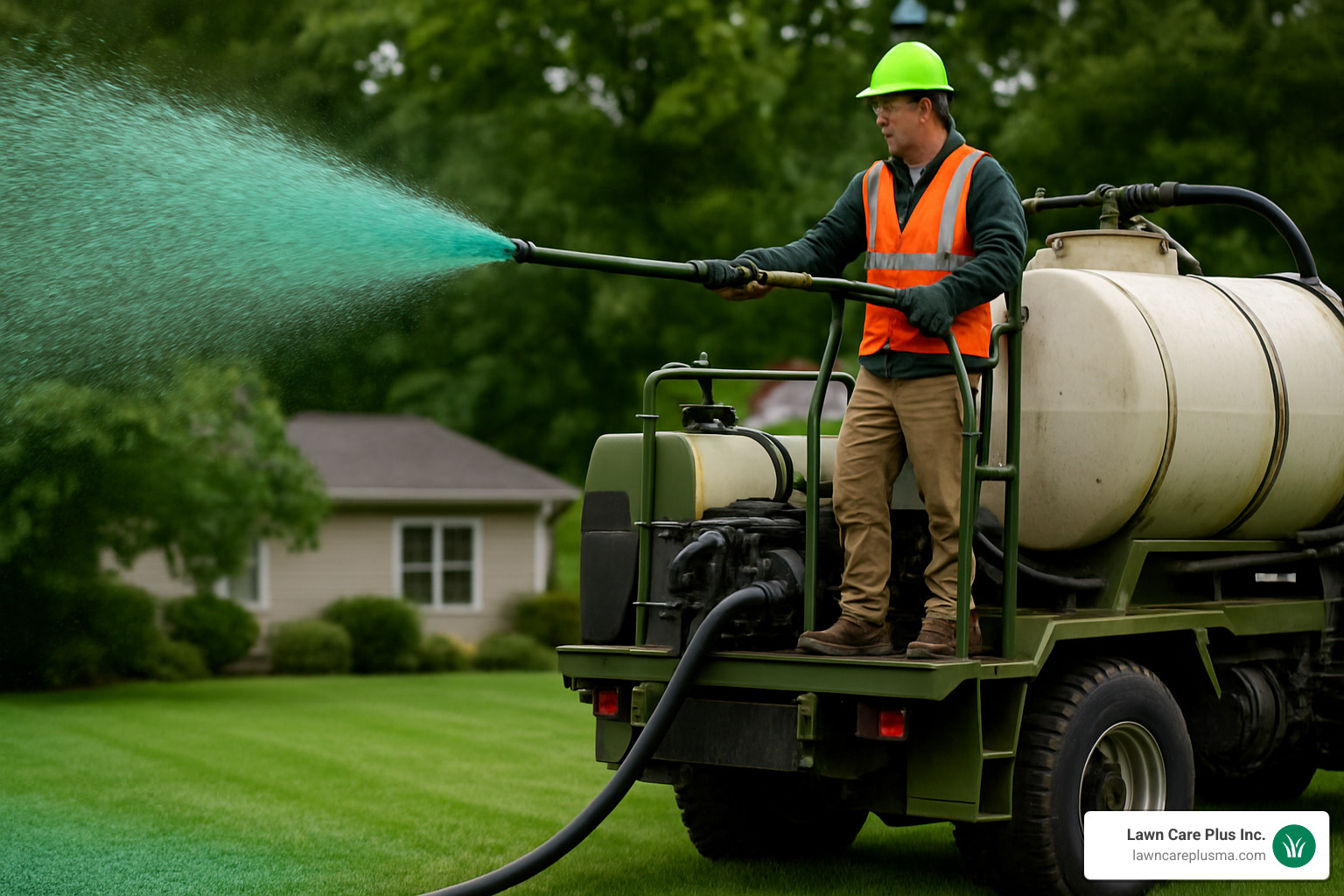
Why the gear matters:
- Boom guns throw slurry 50 ft+ for speed and even coverage
- Jet-agitated tanks keep seed, mulch and fertilizer uniformly mixed
Tackling Challenging Slopes
Steep grades need stronger tackifiers plus straw or coir blankets stapled over the slurry. These biodegradable mats protect seed until roots knit the soil together.
Knowing local regulations is just as important. Reputable contractors pull any required runoff permits and follow regional fertilizer restrictions (phosphorus limits are common in Massachusetts).
Post-Hydroseeding Care & Maintenance Blueprint
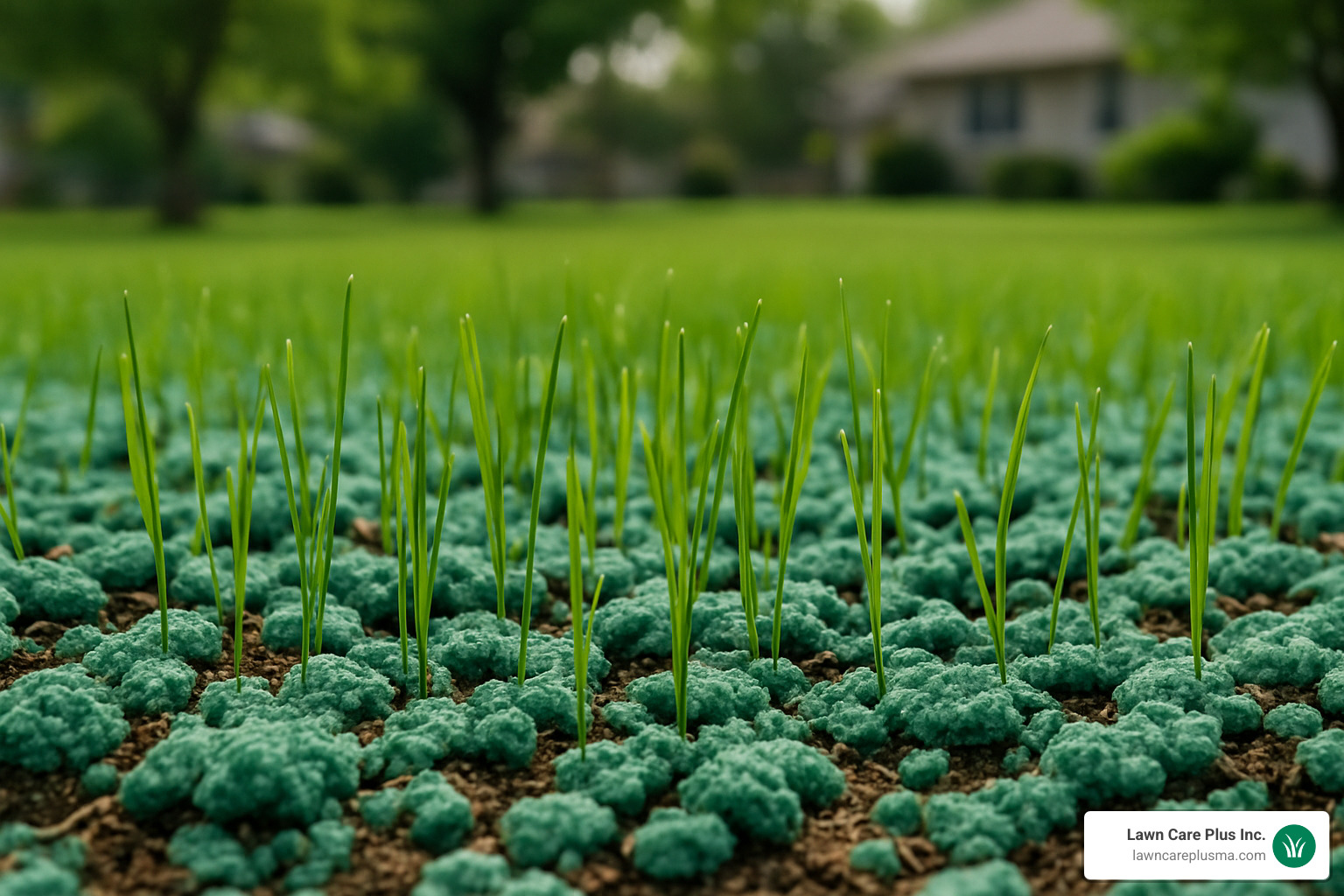
Your beautiful new lawn starts showing its potential the moment those first green sprouts appear, but the real magic happens in how you care for it during those critical first few weeks.
Watering becomes your most important job during the establishment period. For the first 5-7 days, keep that seeded area consistently moist but never waterlogged. This usually means light, frequent watering sessions 2-3 times daily during dry conditions.
Your first mowing milestone arrives when grass reaches that magical 3-4 inch height. Wait for this full height before cutting, then follow the golden rule of never removing more than one-third of the blade length. Sharp mower blades are essential because dull blades can actually pull up those tender young seedlings.
Four weeks after germination, your grass is ready for its first feeding with balanced fertilizer. This timing supports continued growth just as the initial slow-release fertilizer from the hydroseeding mix begins to fade.
Weed control requires careful timing during this establishment phase. Pre-emergent herbicides can prevent crabgrass, but they must be applied at exactly the right moment to avoid interfering with your grass germination.
Traffic restrictions might feel inconvenient, but avoiding foot traffic on newly seeded areas for at least 4-6 weeks prevents soil compaction and protects those delicate seedlings.
For comprehensive maintenance guidance beyond the establishment period, visit our Lawn Care and Maintenance resource.
Troubleshooting Common Issues
Even when local hydroseeding companies do everything perfectly, Mother Nature sometimes has other plans.
Dry patches usually indicate either inadequate irrigation reaching that area or poor seed-to-soil contact during application. The fix involves increasing irrigation frequency in those specific zones and possibly overseeding thin areas.
Washout problems become obvious after heavy rains when you see displaced seed and mulch creating bare spots. Professional contractors should return to repair significant washout at no charge during the warranty period.
Crabgrass invasion frustrates many homeowners because this opportunistic annual weed absolutely loves disturbed soil. Prevention through proper timing and pre-emergent applications works much better than trying to control crabgrass after it’s established.
Uneven germination shows up as thick patches next to thin spots. This usually results from inconsistent slurry application, varying soil conditions, or irrigation problems that create wet and dry zones.
Frequently Asked Questions about Local Hydroseeding Companies
When homeowners start researching local hydroseeding companies, they often have the same burning questions. Let’s tackle the most common ones so you can make an informed decision about your lawn project.
How long before I see green?
This is probably the question we hear most! The good news is that hydroseeding delivers results much faster than traditional seeding methods. You’ll typically see those first exciting green sprouts popping up within 1-2 weeks under normal conditions, with full germination happening in about 2-3 weeks.
But here’s the thing – Mother Nature doesn’t always stick to our schedules. Several factors can speed up or slow down your grass germination timeline.
Grass variety plays a huge role in timing. Perennial ryegrass is like the sprinter of the grass world, often showing green in just 5-10 days. Tall fescue, on the other hand, takes its sweet time at 10-14 days but rewards your patience with incredibly durable turf.
Weather conditions can make or break your timeline. Warm soil temperatures combined with adequate moisture create the perfect germination environment. Cool, wet springs might slow things down, while hot, dry summers can stress new seedlings if irrigation isn’t consistent.
Season matters too. Spring and fall conditions generally give you the fastest, most reliable results. Summer hydroseeding works but requires more intensive watering to keep those tender new shoots happy.
The quality of soil preparation also impacts how quickly you’ll see results. Well-prepared, loose soil allows seeds to establish faster than compacted or poorly graded areas.
Is hydroseeding cost-effective for small yards?
Here’s where we need to be honest with you. Hydroseeding really shines when you have larger areas to cover – typically 2,000 square feet or more. Below that threshold, the setup and mobilization costs can make other seeding methods more economical for your wallet.
Think of it like ordering pizza delivery. The delivery fee makes sense when you’re feeding a crowd, but it’s pretty steep for just one slice.
For smaller yards, you might want to consider traditional seeding methods. Yes, they’re more labor-intensive and require multiple steps, but the total cost often works out better for compact areas. You could also look at sod installation for small, high-visibility spots where you want instant results.
Some homeowners get creative with a combination approach – hydroseeding the large back yard area while using sod for the small front entrance area that guests see first. This gives you the best of both worlds without breaking the budget.
The sweet spot for hydroseeding cost-effectiveness really starts around that 2,000 square foot mark, where the efficiencies of professional equipment and bulk materials start working in your favor.
Can the mix include clover or wildflowers?
Absolutely! This is where working with experienced local hydroseeding companies really pays off. Professional contractors can create custom seed blends that go way beyond basic grass.
White clover is a popular addition that brings some serious benefits to your lawn. It naturally fixes nitrogen in the soil, which means less fertilizer needed over time. Plus, it stays green during dry spells when your grass might be looking a little crispy around the edges.
Wildflower mixes are becoming increasingly popular, especially for homeowners who want to support local pollinators. Native wildflowers create beautiful naturalized areas that butterflies and bees absolutely love. Just keep in mind that wildflower areas look different from traditional lawns – they’re meant to be a bit wilder and more natural.
Conservation blends work great for erosion control on slopes or areas where you need tough, deep-rooted plants. These mixes often include legumes and native plants that can handle challenging conditions better than traditional turf grass.
The key is having that conversation with your contractor during the planning phase. Professional companies can create custom formulations custom to your specific goals, whether that’s a low-maintenance lawn, pollinator habitat, or erosion control solution.
Don’t be shy about sharing your vision – experienced contractors have probably worked with similar requests and can guide you toward realistic options that will thrive in your specific conditions.
Conclusion
Choosing the right local hydroseeding companies can transform your patchy, problematic lawn into the lush green space you’ve always wanted. The difference between a successful project and a disappointing one often comes down to finding contractors who combine professional equipment with genuine expertise and a commitment to standing behind their work.
After reading this guide, you now know what separates the pros from the pretenders. Look for companies using professional-grade hydroseeders like the Finn T120, offering customized seed mixes for your specific conditions, and providing meaningful warranties they’ll actually honor. These aren’t just nice-to-haves – they’re essential for getting results that last.
At Lawn Care Plus Inc., we’ve seen how proper lawn establishment sets the foundation for years of beautiful turf. That’s why we partner with carefully vetted local hydroseeding companies throughout the Boston Metro-West area. Our experience working in communities from Newton to Needham, Brookline to Belmont, has taught us that local knowledge matters just as much as professional equipment.
Every property tells a different story. Maybe you’re dealing with a steep slope that washes out every spring, or perhaps you’re tired of trying to grow grass in that shady back corner of your yard. The beauty of working with experienced hydroseeding professionals is their ability to create custom solutions that actually work in your specific situation.
The investment in professional hydroseeding pays dividends for years to come. You’ll spend less time fighting weeds, watering struggling patches, and reseeding bare spots. Instead, you’ll have a thick, healthy lawn with deep roots that can handle whatever New England weather throws at it.
Ready to stop dreaming about a perfect lawn and start enjoying one? We’d love to discuss your project and connect you with the right professionals to make it happen. Our comprehensive approach ensures every detail is handled properly, from initial site preparation through long-term maintenance planning.
For more information about our complete range of services, visit Lawn Care Services to see how we can help with all your landscaping needs.
