
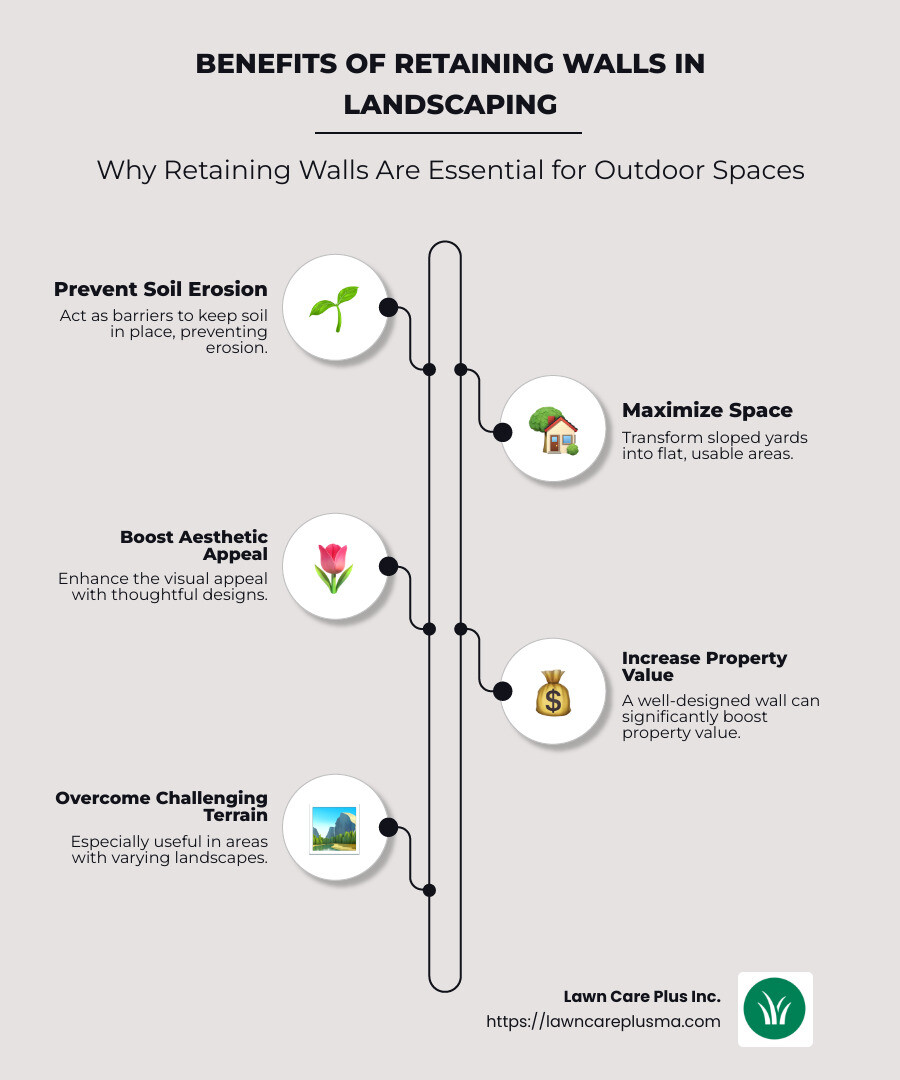
Retaining walls and landscaping go hand-in-hand when it comes to creating functional and beautiful outdoor spaces. They not only hold soil in place but also transform tricky, sloped yards into usable and appealing areas. Here’s why they are essential:
- Prevent Soil Erosion: Retaining walls are excellent barriers against soil erosion, keeping your yard tidy and safe.
- Maximize Space: They allow you to convert sloped yards into flat, usable spaces for gardens or patios.
- Boost Aesthetic Appeal: With the right design, retaining walls can improve the visual appeal of any landscape.
- Increase Property Value: A well-designed landscape with retaining walls can significantly boost your property’s value.
In Massachusetts, where the landscape can often be a challenge due to varying terrain, integrating retaining walls into your landscape design is a strategic way to maintain property aesthetics and functionality simultaneously.
Find more about retaining walls and landscaping:
– Landscape Wall
– block wall
– concrete block retaining wall
Understanding Retaining Walls
Retaining walls play a crucial role in landscaping by managing soil pressure and controlling erosion. They are more than just functional barriers; they are essential landscape features that can transform unruly terrains into structured and visually appealing spaces.
Landscape Features
Retaining walls are a versatile addition to any landscape. They can create distinct levels in a garden, offering a canvas for diverse plant arrangements. These levels can turn a steep, unusable slope into a series of terraced gardens, each with its own unique character. By integrating retaining walls, homeowners can craft outdoor spaces that are both functional and beautiful.
Soil Pressure
One of the primary functions of a retaining wall is to manage soil pressure. When soil is stacked at an angle, it naturally exerts pressure due to gravity. This can lead to landslides or soil erosion if not properly managed. Retaining walls counteract this pressure by providing sturdy support, keeping the soil in place, and preventing potential damage to the landscape.
Erosion Control
Soil erosion is a common issue, especially in areas with heavy rainfall or steep slopes. Retaining walls act as a frontline defense against erosion by stabilizing the soil and redirecting water flow. This not only protects the landscape but also reduces maintenance needs. By controlling erosion, retaining walls help maintain the integrity and health of your garden beds and lawns.
Incorporating retaining walls into your landscape design offers both practical and aesthetic benefits. They are a testament to how thoughtful design can solve functional challenges while enhancing the beauty of your outdoor space.
Types of Retaining Walls
When it comes to retaining walls and landscaping, there are several types to consider. Each type serves a specific purpose and offers unique benefits. Let’s explore four common types: gravity walls, cantilever walls, reinforced soil walls, and embedded walls.
Gravity Walls
Gravity walls rely on their sheer weight to hold back soil. Made from heavy materials like concrete, stone, or large boulders, these walls are simple yet effective. They are ideal for shorter walls and can add a rustic charm to any landscape.
Advantages:
– Simple construction
– Requires minimal engineering
– Offers a natural aesthetic
Considerations:
– Not suitable for very tall walls
– Requires a stable foundation
Cantilever Walls
Cantilever walls are a bit more complex. They use a reinforced base slab and a thin stem, forming an L-shape. This design leverages the weight of the soil above the base to provide stability.
Advantages:
– Efficient use of materials
– Suitable for medium to tall walls
– Can support significant soil pressure
Considerations:
– Requires professional engineering
– More expensive to build
Reinforced Soil Walls
Reinforced soil walls combine soil with reinforcing elements like geogrids or steel strips. This method improves the wall’s strength and stability.
Advantages:
– Flexible design options
– Cost-effective for large projects
– Suitable for various soil types
Considerations:
– Requires careful installation
– Needs regular maintenance
Embedded Walls
Embedded walls are built by driving steel or concrete piles deep into the ground. They are often used in urban environments where space is limited.
Advantages:
– Minimal space requirement
– High strength and stability
– Suitable for deep excavations
Considerations:
– Requires specialized equipment
– Can be expensive
Choosing the right type of retaining wall depends on your landscape’s specific needs, soil conditions, and aesthetic preferences. Each type offers distinct advantages, making it essential to consider your goals and consult with professionals to ensure a successful project.
Retaining Walls and Landscaping
Retaining walls are more than just functional structures—they are key elements in landscape design that can transform your outdoor space into a beautiful and practical haven. Whether you want to create garden beds, improve visual appeal, or simply manage sloped terrain, retaining walls offer versatile solutions.
Landscape Design with Retaining Walls
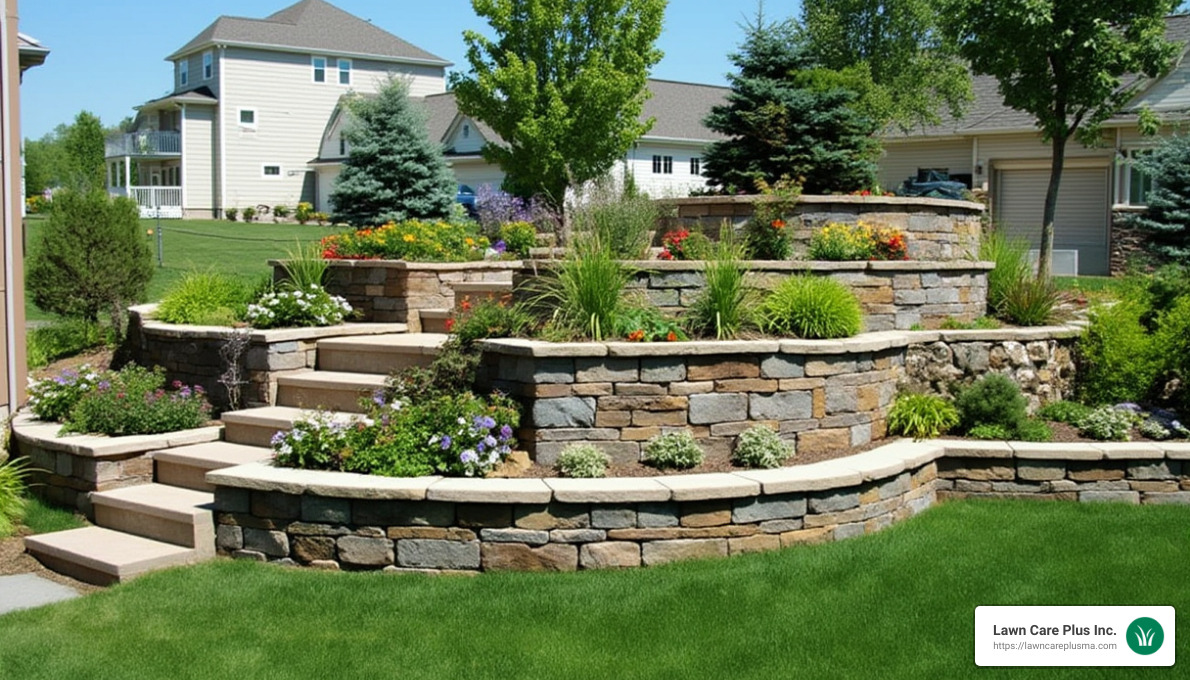
Incorporating retaining walls into your landscape design can redefine the layout of your yard. They allow you to create different levels, which can be used to showcase various plants and flowers. This terracing effect not only improves the aesthetic appeal but also maximizes usable space in sloped areas.
Benefits of Retaining Walls in Landscape Design:
- Soil Erosion Control: Retaining walls hold soil in place, preventing erosion and maintaining the integrity of your landscape.
- Increased Usable Space: By creating flat areas, retaining walls make it possible to use steep slopes for gardens, patios, or play areas.
- Aesthetic Improvement: With options like natural stone, concrete, or treated wood, retaining walls can complement your home’s style and add curb appeal.
Creating Stunning Garden Beds
Retaining walls can be used to build raised garden beds, which are perfect for showcasing your favorite plants. These liftd beds provide better drainage, improved soil quality, and easier access for planting and maintenance. They also allow for a variety of plants to be grown, from colorful flowers to fresh vegetables.
Tips for Designing Garden Beds with Retaining Walls:
- Choose the Right Materials: Natural stone or brick can give a classic look, while concrete blocks offer a modern touch.
- Layer Your Plants: Use taller plants at the back and shorter ones at the front to create depth and interest.
- Incorporate Pathways: Add paths between beds for easy access and a polished look.
Enhancing Visual Appeal
Retaining walls are not just about functionality; they also significantly boost the visual appeal of your landscape. By creating defined lines and structured spaces, they bring order and elegance to any garden.
Consider these ideas to improve visual appeal with retaining walls:
- Add Water Features: Integrate a waterfall or fountain to create a tranquil ambiance.
- Use Contrasting Colors and Textures: Mix different materials or plant types to add visual interest.
- Install Lighting: Highlight the beauty of your retaining walls at night with strategically placed lights.
Retaining walls are a powerful tool in landscape design, offering both practical benefits and aesthetic improvements. Whether you’re looking to control soil erosion, create dynamic garden beds, or simply boost your yard’s visual appeal, retaining walls can help you achieve your landscaping goals.
Top Retaining Wall Ideas
Retaining walls are versatile structures that can transform any outdoor space. Beyond their functional role in stabilizing slopes and preventing erosion, they offer endless possibilities for creative landscaping. Here are some of the top retaining wall ideas to inspire your next project:
Terraced Gardens
Imagine turning a steep, unusable slope into a series of beautiful terraced gardens. By using retaining walls to create multiple levels, you can plant a variety of flowers, herbs, or even vegetables. Each terrace acts as its own micro-garden, offering better drainage and soil conditions. This not only maximizes your gardening space but also creates a stunning visual effect.
Tips for Terraced Gardens:
- Select Complementary Plants: Use a mix of perennials and annuals for year-round interest.
- Incorporate Pathways: Ensure easy access to each level with steps or pathways.
Stairways
Retaining walls can be cleverly integrated into your landscape to form stairways, connecting different levels of your yard. This is especially useful if your property has significant elevation changes. A stairway can lead to a hidden garden, a cozy fire pit, or a serene meditation area.
Designing Stairways with Retaining Walls:
- Choose Durable Materials: Opt for stone or concrete for longevity.
- Add Handrails: For safety, especially on steeper slopes.
Living Walls
A living wall is a breathtaking way to incorporate greenery directly into your retaining wall. By creating pockets within the wall, you can plant cascading flowers or vines, turning the wall itself into a vertical garden. This not only improves the beauty of your space but also promotes biodiversity.
Creating a Living Wall:
- Use Suitable Plants: Opt for hardy, drought-resistant varieties.
- Ensure Proper Drainage: Prevent waterlogging by using well-draining soil.
Tree Rings
Protect and highlight your favorite trees with tree rings. By building a low retaining wall around the base of a tree, you create a focal point in your landscape. This not only protects the tree’s roots but also provides a neat area for mulch or decorative stones.
Enhancing Tree Rings:
- Add Lighting: Illuminate the tree at night for a dramatic effect.
- Include Seating: Turn the ring into a bench for a functional addition.
Water Features
Incorporating water features into your retaining walls can add a serene and soothing element to your landscape. Whether it’s a cascading waterfall or a small pond, water features can create a peaceful ambiance and become the highlight of your garden.
Integrating Water Features:
- Plan for Water Flow: Ensure that the water circulates properly to avoid stagnation.
- Use Natural Materials: Stone or boulders can blend seamlessly with the water.
These retaining wall ideas not only improve the functionality of your landscape but also lift its beauty. Whether you’re aiming for a lush terraced garden or a tranquil water feature, retaining walls can help you achieve your dream outdoor space.
How to Build a Retaining Wall
Building a retaining wall can be a rewarding DIY project that improves both the beauty and functionality of your landscape. Here’s a simple guide to help you get started, focusing on using concrete blocks, ensuring proper drainage, and keeping safety in mind.
Materials and Tools Needed
Before you begin, gather the necessary materials and tools:
- Concrete retaining wall blocks: These are sturdy and easy to work with.
- Gravel or sand: For backfilling and drainage.
- Landscape fabric: To prevent soil erosion.
- Shovel and level: Essential for digging and ensuring a stable base.
- Broom: To keep blocks free of debris.
- Safety gear: Gloves and eye protection.
Step-by-Step Guide
1. Plan and Mark the Area
Start by planning the location of your retaining wall. Mark the area with stakes and string to outline where the wall will be built. This helps ensure your wall is straight and follows the desired path.
2. Dig a Trench
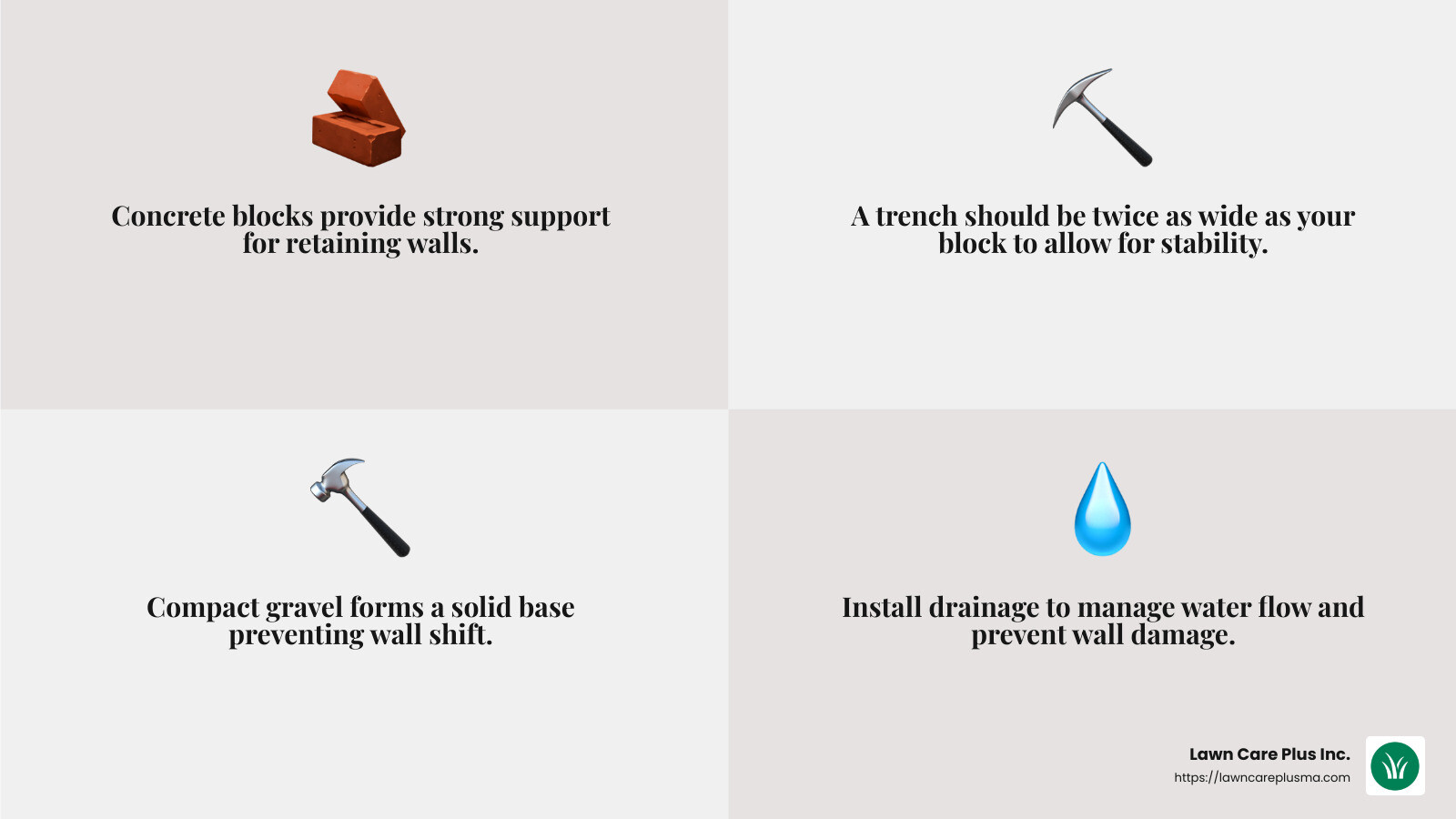
Dig a trench that is deep enough to hold the first layer of blocks and allow for a gravel base. Generally, the trench should be about 6 inches deep and twice as wide as the blocks. This provides stability and room for drainage materials.
3. Prepare the Base
Pour a layer of gravel into the trench and compact it using a tamper. This forms a solid base that helps with drainage and prevents the wall from shifting.
4. Lay the First Course of Blocks
Place the first row of concrete blocks on the gravel base. Use a level to ensure they are even. This is crucial because any unevenness will affect the stability of the entire wall.
5. Install Drainage
If your area experiences heavy rain, consider installing a drainage pipe behind the wall. Use a perforated pipe covered with a drain sleeve to keep sediment out. Cover the pipe with gravel to facilitate water flow away from the wall.
6. Build Up the Wall
Continue laying blocks, ensuring each layer is staggered for stability. Check for levelness frequently and make adjustments as needed. For additional security, you can use landscape adhesive between rows, especially for cap blocks.
7. Backfill the Wall
As you build, backfill the space behind the wall with gravel or sand. This helps with drainage and provides support. If using sand, cover the backside with landscape fabric to prevent it from seeping through the blocks.
8. Finish with Capstones
Complete your wall with a layer of capstones, securing them with construction adhesive. The capstones should slightly overhang the retaining blocks, creating a polished look.
Safety Tips
- Wear protective gear: Gloves and eye protection are a must when handling heavy materials.
- Avoid overexertion: Retaining wall projects can be labor-intensive. Take breaks and seek help when lifting heavy blocks.
- Check local regulations: Some areas may require permits for retaining walls over a certain height.
By following these steps, you can create a durable and attractive retaining wall that improves your landscape. Whether you’re looking to prevent soil erosion or add visual appeal, this project is a great way to improve your outdoor space.
Frequently Asked Questions about Retaining Walls
Is a retaining wall considered landscaping?
Yes, a retaining wall is indeed considered a part of landscaping. It serves both functional and aesthetic purposes in landscape design. Retaining walls help manage soil pressure and prevent erosion, especially in sloped areas. They also offer opportunities to improve the visual appeal of your garden by creating levels and defined spaces for planting.
What is the cheapest type of retaining wall?
The cost of a retaining wall can vary based on materials and design. However, some of the more affordable options include:
- Poured Concrete: This is a cost-effective choice that provides a clean and modern look. It’s durable and can be molded into various shapes.
- Pressure-Treated Pine: Wood options like pressure-treated pine are generally less expensive. They offer a natural appearance but may require more maintenance over time.
- Granite: While natural stone like granite can be pricier, using smaller, more accessible granite pieces can help keep costs down. Granite offers a traditional look and is extremely durable.
How do you landscape over a retaining wall?
Landscaping over a retaining wall can transform your outdoor space into a vibrant and inviting area. Here are some ideas:
- Flowers: Use colorful flowers to add visual interest. Consider planting perennials that come back year after year, reducing maintenance.
- Shrubs: Planting shrubs along the top or base of your wall can add structure and greenery. Choose varieties that thrive in your climate for the best results.
- Trees: Small trees can be planted strategically to create shade and add height to your landscape. Make sure to select species with root systems that won’t interfere with the wall’s stability.
By incorporating these elements, your retaining wall can become a beautiful focal point in your garden, blending seamlessly with the rest of your landscape.
Conclusion
At Lawn Care Plus Inc., we believe that retaining walls are more than just functional structures; they are the secret to creating beautiful and dynamic landscapes. Whether you’re looking to manage soil erosion or simply improve the visual appeal of your property, retaining walls offer a versatile solution that can transform any outdoor space.
Landscape Change: Retaining walls can dramatically change the layout of your yard. They allow for the creation of terraced gardens, which not only look stunning but also maximize the use of sloped areas. By incorporating different levels, you can create distinct zones for various activities and plantings, turning your yard into a multi-functional haven.
Functional Beauty: Beyond their aesthetic benefits, retaining walls serve a crucial role in landscape management. They provide essential support to prevent soil erosion, especially in hilly or sloped areas. This ensures that your garden remains intact and beautiful, even after heavy rains. Plus, with the right design and materials, retaining walls can seamlessly blend with your existing landscape features, adding to the overall beauty of your property.
If you’re ready to explore how retaining walls can improve your landscape, we invite you to learn more about our services at Lawn Care Plus Inc. Our team is dedicated to helping you achieve the perfect balance of function and beauty in your outdoor space. Whether you’re in Boston, Newton, or any of the surrounding areas, we’re here to assist you every step of the way.
