
Spring Lawn Care Essentials
Spring lawn care is the foundation for a healthy, vibrant yard all season long. After winter’s dormancy, your lawn needs specific attention to thrive again.
Quick Spring Lawn Care Checklist:
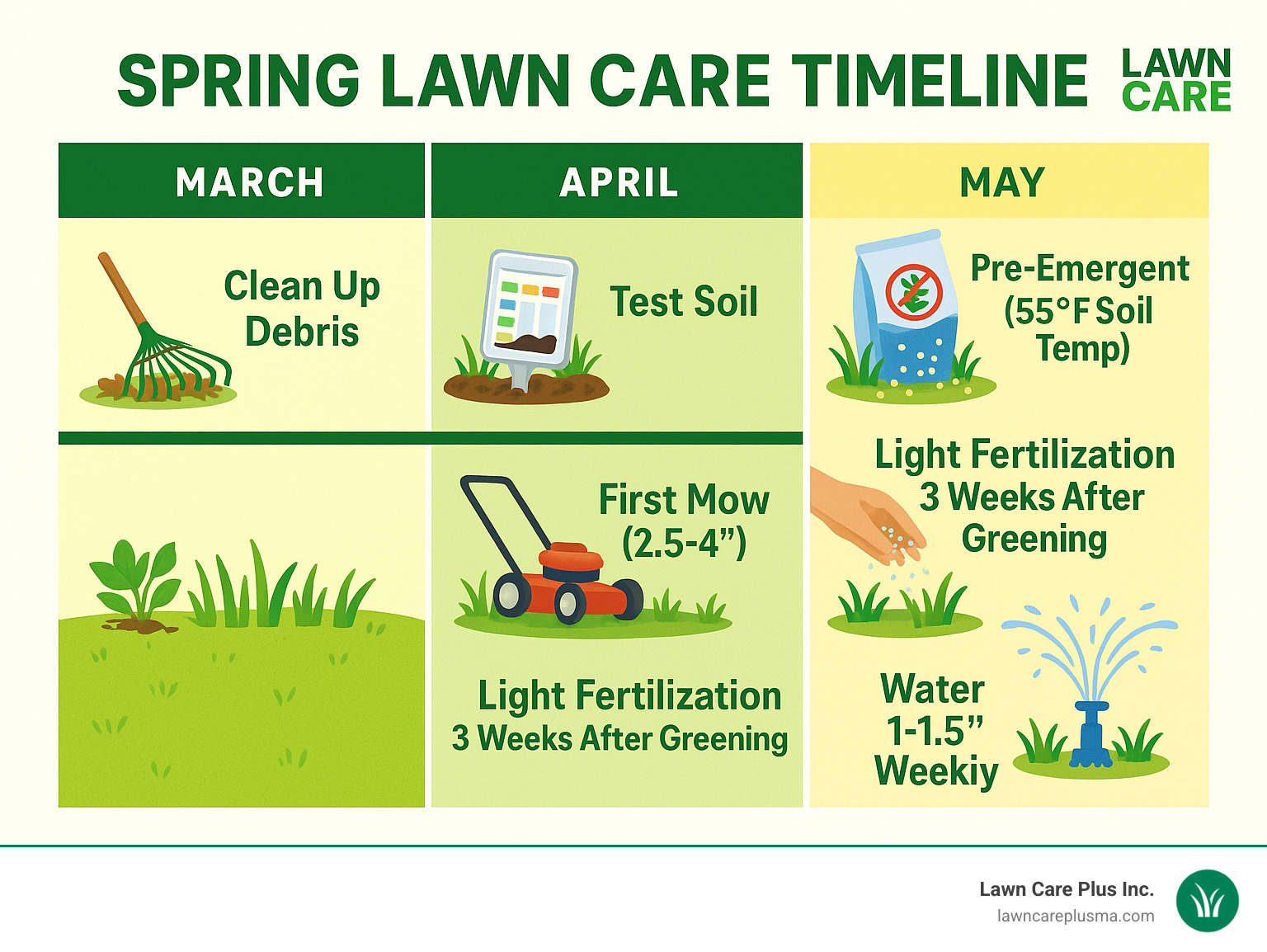
- Clean up debris when soil is no longer muddy (late March-April)
- Test soil pH and nutrients (aim for pH 5.8-7.2; learn more about soil pH)
- Apply fertilizer lightly, 3 weeks after grass greens up
- Mow high (2.5-4 inches depending on grass type)
- Control weeds with pre-emergent when soil reaches 55°F
- Overseed bare patches (cool-season grasses only)
- Water deeply but infrequently (1-1.5 inches per week)
As the cherry blossoms reach peak bloom in Massachusetts, it’s time to bring out your rake, mower, and fertilizer from storage. That winter blanket of snow has retreated, and now your lawn needs help to recover and prepare for the growing season ahead.
“Winter has had its turn — now it’s time for your lawn to shine,” as lawn care professionals often say. The steps you take in spring set the stage for a lush, green summer lawn that will be the envy of your neighborhood.
Spring lawn care isn’t just about aesthetics—it’s about building a resilient, healthy turf that can withstand summer heat, resist pests and disease, and require less intervention later in the season. A properly maintained lawn also contributes to your property’s value and creates an inviting outdoor space for family activities.
Whether you’re a busy property manager or a homeowner in the Boston Metro-West area, understanding the essential techniques for spring lawn revival will help you achieve better results with less effort.
Spring lawn care terms explained:
– spring yard clean up checklist
– spring yard clean up safety tips
– spring yard clean up ideas
A Step-by-Step Spring Lawn Care Calendar
The dance of spring lawn care follows nature’s rhythm, not the calendar. Here in Massachusetts, our unique climate demands patience and perfect timing. Let me walk you through exactly when to start waking up your lawn from its winter slumber.
When Should You Start Spring Lawn Care?
Mother Nature gives us clear signals when it’s time to begin. That eager-beaver impulse to start at the first warm day? Resist it!
Your soil needs to completely thaw and dry out first—typically by late March in most Boston Metro-West communities. When soil temperatures consistently reach 50°F and above, that’s your green light. Take a casual walk around your property first; if your footsteps leave impressions or feel squishy, give it another week. Working on soggy soil compacts it and damages delicate grass roots.
“I always tell my clients to look for the crocuses,” says our lawn care specialist. “When those little purple flowers pop up, nature is telling you it’s safe to start your spring lawn care routine.”
Early-Spring Yard Clean-Up Essentials
Once the ground has firmed up, it’s time for the first phase of lawn revival:
Begin with a gentle raking to remove fallen branches, matted leaves, and winter debris. This prevents your lawn from suffocating and reduces disease risk. Use a flexible garden rake with plastic tines—not a stiff metal dethatcher—to avoid damaging tender new growth.
Don’t forget those areas where snow piled up! These spots often harbor snow mold and need extra attention. And yes, it’s finally time to pick up all that pet waste that accumulated during those “too cold to bend down” winter months.
Our Spring Yard Clean Ups service can handle this labor-intensive first step if you’d rather save your back. And please wear sturdy gloves—winter often leaves behind sharp surprises hiding in the grass.
Late-Spring Fine-Tuning
As April warms into May, your lawn care shifts from revival to refinement:
Now’s the perfect time to refresh your garden beds with 2-3 inches of fresh mulch. This simple step dramatically reduces summer weeding while keeping soil moisture consistent. Wait until soil has properly warmed to avoid trapping cold around your plants.
Edge your beds to create those crisp, professional lines between lawn and garden areas. A half-moon edger cutting a 2-3 inch V-shaped trench not only looks fantastic but also creates a natural barrier that keeps grass from invading your gardens.
Don’t forget to shape those shrubs! Once spring-flowering bushes finish their show, give them a light trimming to remove winter damage and maintain their form.
“The difference between lawns that receive proper spring lawn care and those that don’t becomes painfully obvious by July,” notes our team leader. “The work you do now—or have us do for you—pays dividends all summer long.”
Soil Health, Thatch & Aeration: The Science Beneath Your Grass
The foundation of effective spring lawn care lies beneath the surface. Understanding your soil’s health, managing thatch, and addressing compaction through aeration are critical for a thriving lawn.
Assessing Soil pH and Nutrients
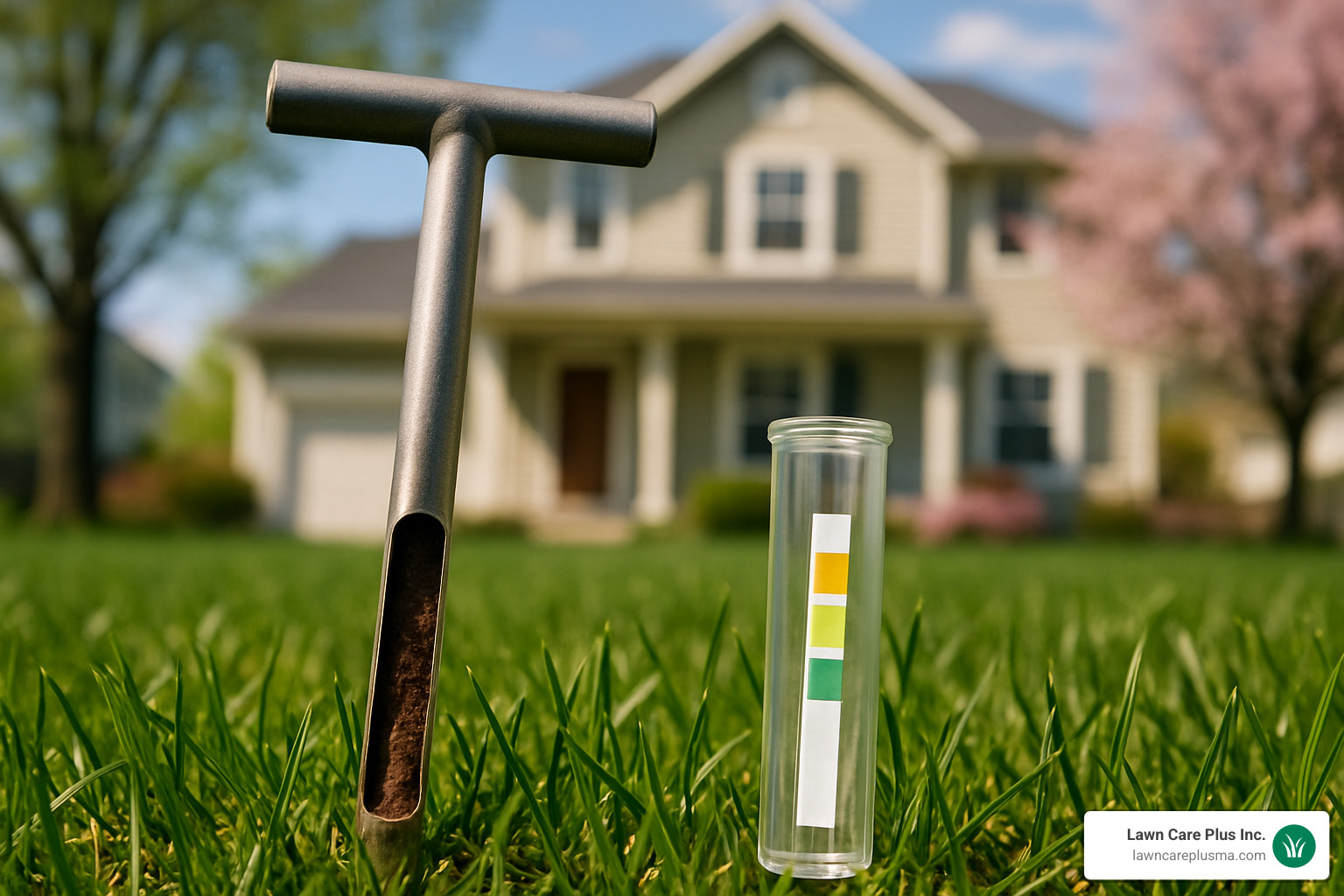
Think of soil pH as your lawn’s comfort zone. Most grass varieties thrive when soil pH sits between 5.8 and 7.2. When your soil strays outside this range, your grass becomes like a picky eater who refuses to touch their dinner – even if nutrients are present, the grass simply can’t access them.
Getting to know your soil is surprisingly simple. Pick up a home test kit from your local garden center or, for the most accurate results, send samples to your local extension service. These tests reveal not just pH but also key nutrient levels including nitrogen, phosphorus, and potassium – the three numbers you see on every fertilizer bag.
“Throwing fertilizer on your lawn without a soil test is like taking random medications without seeing a doctor,” jokes our turf specialist. “You might get lucky, but you’ll probably waste money and could make things worse!”
For acidic soil (below 5.8), lime applications can bring the pH up to the sweet spot. If your soil is too alkaline (above 7.2), sulfur helps bring it back down. Once you understand what your lawn is hungry for, check out how to fertilize your turf for detailed guidance on feeding schedules.
Detecting & Removing Thatch
That spongy layer between your grass blades and soil? That’s thatch – a mix of dead and living plant material that can be both friend and foe to your lawn. A thin layer (under ½ inch) actually protects your soil and roots. But when thatch gets too thick, it becomes like a raincoat your lawn can’t take off – blocking water, nutrients, and air from reaching the roots.
To check your thatch situation, cut a small, triangular plug from your lawn about 3 inches deep. Look at the brown, spongy layer between the green grass and the soil. If it’s thicker than your pinky finger (½ inch), it’s time to take action.
For mild thatch buildup, a vigorous session with a dethatching rake might do the trick. For thicker layers, power dethatchers or vertical mowers slice through and pull up excess thatch. Many Boston-area homeowners find this task particularly challenging, which is where our equipment and expertise come in handy.
Regular core aeration helps prevent thatch buildup by introducing oxygen and beneficial microorganisms that naturally decompose thatch. It’s like inviting nature’s cleanup crew to your lawn party.
Spring Lawn Care Aeration Timing
Here’s a surprising truth that many Massachusetts homeowners don’t realize: spring isn’t always the ideal time for lawn aeration in our region. For our cool-season grasses, fall aeration often brings better results.
So when should you aerate in spring? Only if your soil is severely compacted or if you missed the fall window. How can you tell if your lawn is compacted? Try the “screwdriver test” – grab a regular screwdriver and try to push it into your lawn. If it feels like you’re trying to pierce a tire, your soil is compacted and crying for help.
Clay soils (common in many Boston suburbs) and high-traffic areas benefit from annual aeration. If you have sandier soil or a less-trampled lawn, every 2-3 years might be sufficient.
“Your lawn needs recovery time after aeration,” explains our lawn care specialist. “It’s like scheduling surgery – you want to do it when the patient is strongest and has optimal healing conditions. For Massachusetts lawns, that’s typically fall when cool-season grasses are in their prime growing phase.”
When we do recommend spring aeration, we time it carefully – after the soil has dried adequately but before the intense heat of summer puts additional stress on your lawn. This sweet spot gives your grass the best chance to recover and thrive.
Seeding, Fertilizing & Watering for Emerald-Green Results
The foundation work is done—now it’s time for the magic that transforms your lawn from merely surviving to absolutely thriving. Spring lawn care success hinges on knowing exactly when and how to seed, fertilize, and water your lawn for that picture-perfect emerald green.
Repairing Bare or Thin Patches
Massachusetts winters can be brutal on lawns, leaving behind unsightly bare spots from salt damage, snow mold, or where furry friends have left their mark. Here’s how to bring those patches back to life:
Start by gently scratching up the soil surface with a garden rake—this creates that critical seed-to-soil contact that grass seeds need to germinate. Choose grass seed that matches your existing lawn (no odd patches, please!) and is appropriate for your specific conditions.
“Those dog spots need extra love,” our lawn technician often jokes. “Not only do they need seed, but sometimes a little soil amendment to neutralize what Fido left behind.”
After spreading seed evenly, add just a whisper-thin layer of compost or topsoil—about ¼ inch is perfect. Then comes the most crucial part: keeping that area consistently moist until those baby grass blades emerge, usually within 7-21 days.
For bigger renovation projects, our detailed guide on How to Install a New Lawn from Seed walks you through every step.
Overseeding & Spring Lawn Care Success
Think of overseeding as adding reinforcements to your lawn’s army of grass plants. While Massachusetts homeowners with cool-season grasses ideally should overseed in fall, spring overseeding can work if you act early—typically late March to early April before temperatures climb too high.
Here’s the tricky part about spring overseeding: you’ll face a timing dilemma. You can’t apply crabgrass preventer and grass seed at the same time because pre-emergent herbicides don’t discriminate between weed seeds and grass seeds—they stop them all from growing.
“I always tell homeowners to choose their battle,” says our turf specialist. “If your lawn is thin but doesn’t have much crabgrass, prioritize overseeding. If crabgrass was your nemesis last year, focus on pre-emergent and save overseeding for fall.”
For best results, use a thoughtful blend of compatible grass varieties rather than a single type—this creates a lawn that’s more resilient against disease, drought, and wear.
The Smart Way to Fertilize in Spring
When it comes to spring lawn care, fertilizing is where many homeowners go wrong—either applying too much or too soon. The golden rule? Wait until your grass is actively growing, typically about three weeks after it starts greening up (or after you’ve mowed 2-3 times).
Opt for a slow-release nitrogen fertilizer that provides steady nutrition rather than a quick burst that promotes excessive top growth. Spring applications should be lighter than fall ones—think of it as offering your lawn a sensible breakfast rather than a Thanksgiving feast.
“The best time to fertilize is right before a gentle rain,” our turf team often advises. “Mother Nature will water it in for you, but avoid applying before heavy downpours that might wash everything into storm drains.”
Based on internet data, average fertilizer costs range from $35 for basic formulas to $120 for premium slow-release products that cover a typical yard. These are average costs based on internet data and not actual costs for Lawn Care Plus.
Water-Wise Irrigation Practices
Watering seems simple, but it’s actually the most commonly mishandled aspect of lawn care. The secret to success? Deep but infrequent watering that encourages grass roots to grow downward in search of moisture.
Aim for 1 to 1.5 inches of water per week, including rainfall. Early morning (before 10 a.m.) is ideal watering time—you’ll lose less to evaporation and reduce disease risk by giving grass blades time to dry before evening.
Want a simple way to check if your lawn needs water? Try the “step test”—walk across your lawn and look back. If the grass springs back up, you’re good. If footprints remain visible, it’s thirsty.
For newly seeded areas, the rules change slightly. Water lightly 2-3 times daily until germination, then gradually transition to deeper, less frequent watering as seedlings establish strong roots.
Don’t forget to check your sprinkler system for proper coverage and efficiency—watering driveways and sidewalks doesn’t help your grass! For more comprehensive guidance on preparing your lawn for the growing season, our Spring Yard Clean Up Checklist covers everything you need to know.
Mowing, Weed Control, Pests & Equipment Tune-Up
The visible aspects of spring lawn care – mowing height, weed management, pest control, and equipment maintenance – can make or break your lawn’s appearance and health.

Spring Lawn Care Mowing Best Practices
Proper mowing isn’t just about keeping your lawn neat – it’s one of the most powerful tools in your spring lawn care arsenal. For Massachusetts lawns, keep your mower deck between 2.5-4 inches high. Taller grass develops deeper roots that can better withstand summer drought and heat stress.
Remember the golden one-third rule: never remove more than one-third of the grass blade in a single mowing. Cut more than that, and you’ll stress your lawn, making it more vulnerable to weeds and disease.
“I always tell my clients that mowing high is like giving your lawn a superpower,” says our lawn care manager with a smile. “Those extra inches above ground mean extra inches of roots below ground, reaching deeper for moisture when summer gets tough.”
Sharp mower blades make a world of difference too. Dull blades tear grass instead of cutting cleanly, leaving ragged edges that turn brown and create entry points for disease. Most homeowners should sharpen blades at least twice per season.
Don’t forget to mix up your mowing pattern each time. Mowing in the same direction repeatedly trains grass to lean one way and creates compacted ruts. And please, leave those clippings right where they fall! This natural “grasscycling” returns valuable nutrients and moisture to your soil.
For more guidance on timing that all-important first spring cut, check out our Spring Yard Clean Up Tips.
Winning the War on Weeds
The secret to effective weed control isn’t fighting them after they appear – it’s preventing them from gaining a foothold in the first place. Timing is everything when it comes to spring lawn care and weed prevention.
Pre-emergent herbicides work by creating a barrier that prevents weed seeds from sprouting. The magic number to remember is 55°F – that’s when soil temperatures become warm enough for crabgrass and other annual weeds to germinate. For most Boston-area lawns, this typically happens in early to mid-April.
For weeds that are already growing, post-emergent herbicides work best when weeds are young and actively growing. Spot-treating individual weeds rather than broadcasting chemicals across your entire lawn is both environmentally friendly and more effective.
Those pesky dandelions popping up everywhere? Rather than pulling them (which often leaves root fragments that regrow), spot-treat with a liquid broadleaf weed control product. Just be careful on windy days – you don’t want herbicide drifting onto your prized petunias!
“The healthier your lawn, the fewer weeds you’ll see,” our weed specialist often reminds clients. “A thick, lush lawn naturally crowds out weeds by competing for light, water and nutrients.”
Common Spring Pests and Diseases
As snow retreats in Massachusetts, it sometimes leaves unwelcome surprises behind. Snow mold appears as matted, straw-colored patches when snow melts. Don’t panic – a gentle raking to improve air circulation is usually all that’s needed to help your lawn recover.
Grubs – those white, C-shaped beetle larvae – feast on grass roots and can cause significant damage. Early spring is the perfect time to inspect for them. Gently pull back a square foot of turf in several locations. Finding 5-10 grubs per square foot means treatment is warranted.
Keep an eye out for dollar spot (small, straw-colored spots about the size of a silver dollar) and red thread (pinkish-red threads visible on grass blades). Both are common in cool, wet spring conditions and often signal your lawn needs a nitrogen boost.
“Most spring lawn diseases are moisture-related,” explains our plant health specialist. “Improving drainage and avoiding evening watering can dramatically reduce problems. And remember – early detection is key to preventing spread.”
Pre-Season Equipment Maintenance
Nothing ruins the first beautiful spring weekend like a mower that won’t start! Before the mowing season begins in earnest, give your equipment some TLC.
Start with fresh oil – it’s like a blood transfusion for your mower engine. Most manufacturers recommend changing oil annually or every 25-50 hours of operation. While you’re at it, replace that dirty air filter to improve engine performance and fuel efficiency.
Check your spark plug – if the electrode looks worn or damaged, a new one costs just a few dollars but can make starting much easier. And don’t forget about that mower blade! A sharp blade cuts grass cleanly, while a dull one tears and shreds, increasing disease risk.
“Here’s a quirky trick that works like magic,” shares our equipment specialist with a wink. “If your mower’s being stubborn on those cool spring mornings, try warming the engine by placing it in the sun under a dark trash bag for 20 minutes before starting.”
For electric mower owners, ensure batteries are fully charged and were stored at proper temperatures over winter. Cold garages can significantly reduce battery capacity and lifespan.
Proper spring lawn care equipment maintenance not only extends the life of your tools but also ensures they’ll perform when you need them most. A well-maintained mower cuts more efficiently, uses less fuel, and provides a cleaner cut for healthier grass.
Tailoring Spring Strategies to Grass Type & Avoiding Rookie Mistakes
Not all grass is created equal, and spring lawn care should be custom to your specific grass type. In Massachusetts, we primarily deal with cool-season grasses, but understanding the differences helps ensure your lawn gets exactly what it needs when it needs it.
Cool-Season vs Warm-Season Spring Lawn Care
The Boston Metro-West area is firmly in cool-season grass territory, though you might occasionally spot warm-season varieties in specific sunny microclimates around your property.
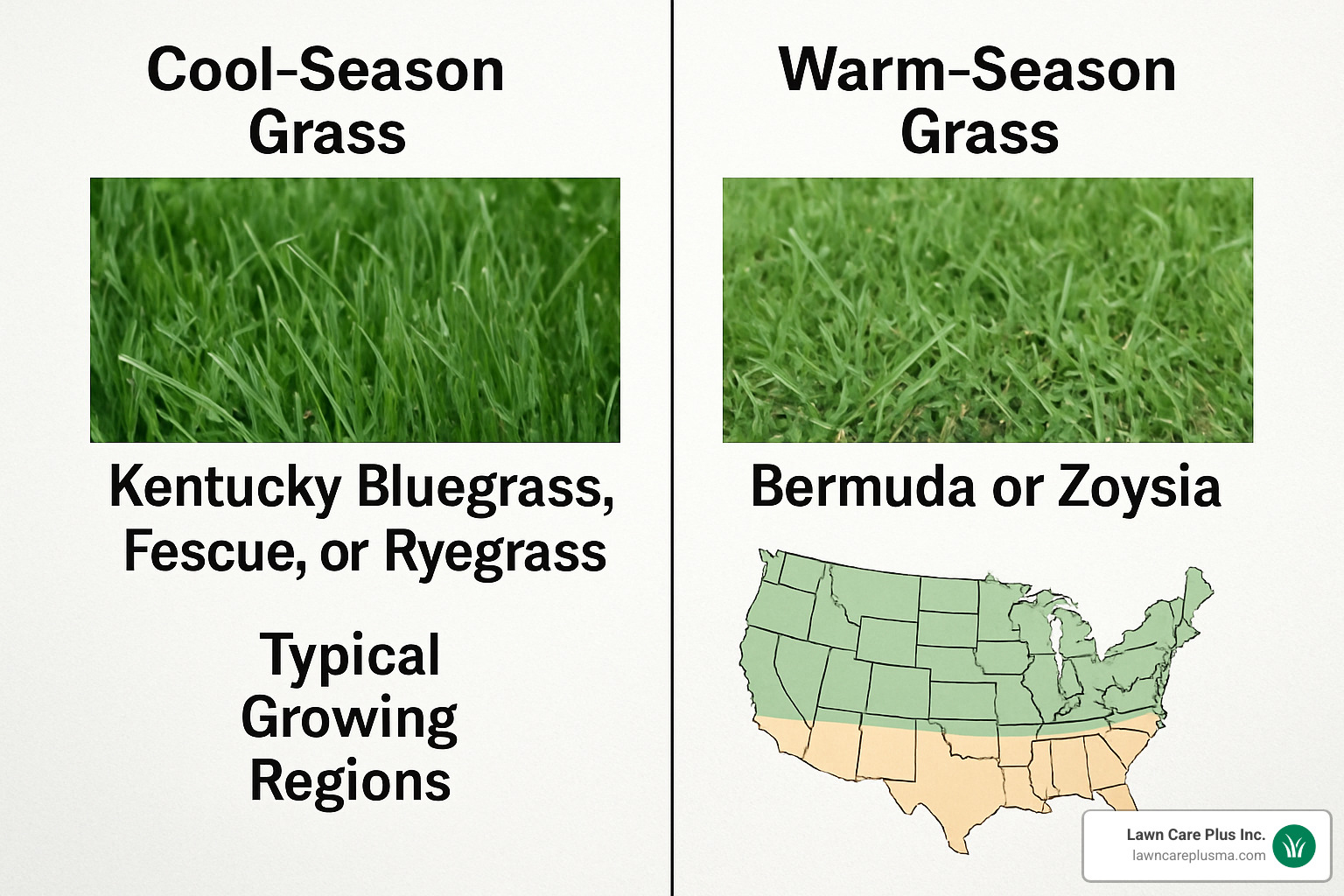
Cool-Season Grasses (Kentucky Bluegrass, Perennial Ryegrass, Fescues) wake up earlier in spring, beginning their growth cycle when soil temperatures consistently hit 45-55°F. These Massachusetts favorites benefit from early spring dethatching and a light fertilizer application to kickstart their growing season.
“In Massachusetts, spring lawn care for our predominantly cool-season grasses means starting a bit later than southern regions but working quickly to establish strong roots before summer heat arrives,” explains our regional turf specialist.
When mowing these cool-season varieties, keep your deck height between 2.5-4 inches – and err on the higher side as summer approaches. While you can overseed bare patches in spring, fall is truly the gold-standard time for major overseeding projects in our region. As for weed control timing, nature gives us a helpful signal – apply pre-emergent herbicides when you see those bright yellow forsythia bushes blooming in your neighborhood.
Warm-Season Grasses (Bermuda, Zoysia, Centipede) are the late risers of the grass world, only beginning active growth when soil temperatures climb to 60-65°F. If you happen to have these varieties, you’ll want to delay dethatching and aerating until late spring when they’re actively growing. These grasses prefer a shorter haircut, with ideal mowing heights between 1.5-2.5 inches.
Unlike their cool-season cousins, spring is actually the perfect time to overseed warm-season lawns. Just remember that their pre-emergent herbicide timeline shifts earlier – apply about three weeks before you would for cool-season lawns.
“I always tell my clients with mixed grass types to watch their lawn, not the calendar,” says our lawn care technician. “The grass will tell you when it’s ready for spring attention – look for consistent greening across the lawn.”
Top 5 Spring Lawn Care Mistakes to Avoid
Even well-intentioned homeowners make these common mistakes that can derail their spring lawn care efforts:
Starting too early is perhaps the most common misstep we see. That first warm day in March can be so tempting! But working on frozen or soggy soil causes compaction and root damage that can haunt your lawn all season. Instead, be patient and wait until soil is fully thawed and relatively dry. Your grass roots will thank you.
Scalping the lawn – cutting grass extremely short – is another springtime error that leaves lawns vulnerable. “Scalping can be harmful to lawns by stressing grass and encouraging weeds,” warns our lawn maintenance supervisor. “It’s a common mistake homeowners make thinking it will give their lawn a ‘clean start’ for spring.” Instead, maintain proper mowing height (2.5-4 inches for cool-season grasses) to promote deeper root growth.
Skipping soil testing is like baking without measuring ingredients – you’re just guessing! Applying fertilizer without knowing what your soil actually needs wastes money and can harm your lawn. We recommend testing soil every 2-3 years and amending based on results, not assumptions.
Ignoring thatch creates an invisible barrier between your care efforts and your grass roots. Excessive thatch blocks water and nutrients from reaching roots, essentially suffocating your lawn from above. Check thatch depth annually and dethatch if it exceeds ½ inch.
Using the wrong herbicides at the wrong time is like showing up to a party a day late – ineffective and potentially embarrassing. Applying post-emergent herbicides to dormant weeds or pre-emergents after weeds have germinated wastes both product and effort. Time herbicide applications based on weed life cycles and soil temperature for maximum effectiveness.
“I once had a client who scalped his lawn, applied heavy nitrogen fertilizer, then wondered why crabgrass took over by June,” our turf specialist recalls with a chuckle. “Sometimes what feels like the right thing is actually setting you back. That’s why we’re here to guide you through the seasonal transitions.”
Frequently Asked Questions About Spring Lawn Care
How do I know if my lawn needs dethatching?
That layer of brownish stuff between your green grass and the soil? That’s thatch, and it can be either your lawn’s cozy blanket or its suffocating nemesis, depending on how thick it gets.
Here’s a simple “lawn surgery” technique to check your thatch level:
Take a garden trowel and cut a small, 2-3 inch deep wedge from your lawn (don’t worry, it’ll heal!). Look at the cross-section and measure that spongy brown layer sitting between the green grass blades and the actual soil. If it’s thicker than your pinky finger (½ inch), your lawn is crying out for some dethatching help.
“Thatch is like cholesterol for your lawn,” our turf specialist likes to joke. “A little bit protects the system, but too much blocks the flow of everything good!”
When thatch gets too thick, it creates a barrier that prevents water, nutrients, and air from reaching the roots. It also creates the perfect hideout for insects and lawn diseases to plot their attack on your grass.
For Boston-area lawns, late spring is the sweet spot for dethatching. Your grass is actively growing then and can bounce back quickly from the stress of the process – kind of like how we recover faster from a workout when we’re already in good shape.
Can I overseed and use pre-emergent at the same time?
Oh, how we wish these two spring lawn care practices could peacefully coexist! Unfortunately, they’re like oil and water – they just don’t mix.
Pre-emergent herbicides work by creating an invisible barrier at the soil surface that prevents seeds from sprouting. The problem? This barrier doesn’t have a “VIP list” – it stops all seeds, including the expensive grass seed you just spread across your lawn.
If you’re determined to overseed in spring (though fall is better for Massachusetts lawns), you’ll need to choose your battle:
Choose grass seed: Skip the pre-emergent in areas you’re overseeding and be prepared to fight weeds manually or with selective post-emergent herbicides after your new grass is established (usually about 60 days).
Choose weed prevention: Apply pre-emergent and postpone overseeding until fall when natural weed pressure is lower.
“We see this dilemma every spring,” shares our lawn technician. “For most Boston-area homeowners, if crabgrass was your lawn’s arch-nemesis last year, prioritize the pre-emergent and save your overseeding for football season.”
How often should I sharpen my mower blade?
A dull mower blade doesn’t cut your grass – it beats it up. Those torn, ragged grass tips aren’t just unsightly; they’re also entry points for disease and water loss.
For most homeowners in the Boston Metro-West area, we recommend this blade-sharpening schedule:
Early spring: Start the season right with a freshly sharpened blade (April)
Mid-summer: Sharpen again when you’re about halfway through the mowing season (June/July)
As needed: If you mow frequently or have a large property, you might need a third sharpening
You’ll know it’s time to sharpen when your lawn looks slightly frayed after mowing or takes on a whitish cast. Your mower might also seem to pull or struggle more than usual – that’s your grass resisting being torn rather than sliced.
“Having a spare blade is one of those lawn care hacks that makes life so much easier,” our equipment manager often tells clients. “You can keep mowing with your sharp spare while your dull blade is being sharpened – no downtime, no excuses!”
Pro tip: A sharp blade doesn’t just make your lawn look better – it actually reduces the strain on your mower engine, saving fuel and extending the life of your equipment. It’s a win-win for both your lawn and your wallet!
Conclusion
The journey of spring lawn care is a bit like preparing for a marathon – the effort you put in at the beginning determines how well you’ll perform throughout the race. By following the comprehensive approach we’ve outlined in this guide, you’re setting your Massachusetts lawn up for season-long success.
Think about it – from timing your first spring cleanup perfectly to understanding your soil’s unique needs, from mowing at the right height to watering wisely – each step builds upon the last to create a resilient, vibrant lawn that can withstand whatever summer throws its way.
“The secret to a gorgeous lawn isn’t magic – it’s methodical care at exactly the right time,” as our head landscaper often tells clients in Newton and Belmont. And he’s absolutely right. The attention you give your lawn in spring directly translates to fewer weeds, reduced pest problems, and less intensive maintenance when summer temperatures soar.
For many busy homeowners throughout the Boston Metro-West area, finding time to implement all these spring lawn care practices can feel overwhelming. Between work commitments, family activities, and the ever-unpredictable New England weather, getting everything done at the optimal time can be challenging.
That’s precisely where we come in. Our experienced team at Lawn Care Plus Inc. has been helping Massachusetts homeowners reclaim their weekends while still enjoying pristine lawns. We understand the unique challenges of our local climate and soil conditions, and we’ve fine-tuned our approach to deliver exceptional results.
From that crucial first spring cleanup to regular maintenance throughout the growing season, we handle the heavy lifting so you can simply enjoy your outdoor space. Our comprehensive approach ensures nothing gets overlooked – from soil testing and aeration to proper fertilization and mowing techniques.
Want to learn more about how we can transform your property this spring? Visit our detailed page on More info about seasonal clean-up services to see exactly how we can help your specific situation.
Whether you decide to tackle spring lawn care as a DIY project or partner with our professional team, consistency is key. Your lawn doesn’t need perfection – it simply needs regular attention and care custom to our unique Massachusetts growing conditions.
The reward for your spring efforts? Stepping out onto lush, emerald-green grass all summer long, creating the perfect backdrop for family barbecues, games with the kids, or simply unwinding after a long day. Now that’s worth celebrating!