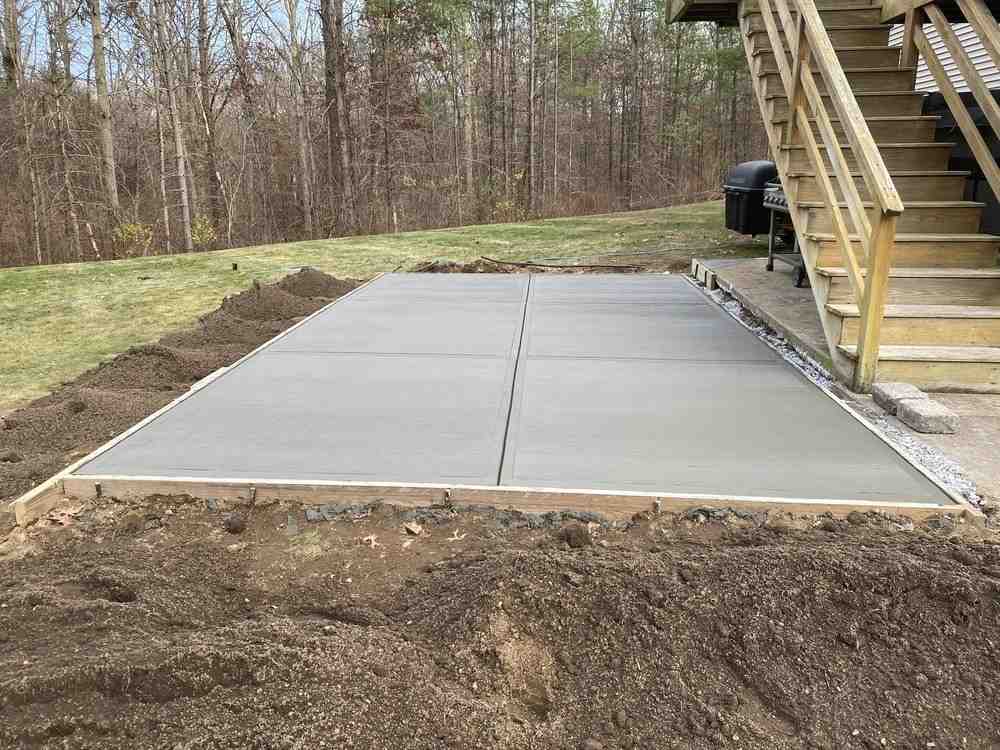
Why Finding the Right Concrete Patio Installer Matters
Finding a qualified concrete patio installer can transform your outdoor space into a durable, low-maintenance area perfect for entertaining and relaxing. Here’s what to look for:
Key Qualities of a Reliable Concrete Patio Installer:
- Experience: Look for contractors with 10+ years in concrete work
- Portfolio: Review photos of completed patios and stamped concrete projects
- References: Ask for recent customer contacts and check reviews
- Licensing & Insurance: Verify proper credentials and liability coverage
- Written Estimates: Get detailed quotes that include materials, labor, and timeline
- Warranty: Ensure they offer labor warranties (typically 6 months minimum)
A concrete patio is one of the best investments you can make for your property. Whether you’re creating an outdoor dining area, a space for summer gatherings, or simply upgrading an old, cracked surface, the quality of your installation depends entirely on choosing the right contractor.
Poor installation can lead to cracking within the first year, drainage problems that pool water against your home’s foundation, and uneven surfaces that become safety hazards. Professional installers know how to properly excavate, create the right slope for drainage, reinforce the concrete, and apply finishes that last for decades—even through New England’s harsh freeze-thaw cycles.
The difference between a patio that lasts 5 years and one that lasts 30 years comes down to expertise in site preparation, material selection, and installation technique. From understanding soil conditions to knowing when to cut control joints, experienced contractors bring technical knowledge that protects your investment.
I’m Tim DiAngelis, owner of Lawn Care Plus, Inc., and for over a decade I’ve worked with homeowners throughout Greater Boston and Metro-West on hardscaping projects including concrete patio installations, walkways, and custom outdoor living spaces. Our team focuses on proper site preparation and quality materials to ensure every concrete project withstands New England weather year after year.
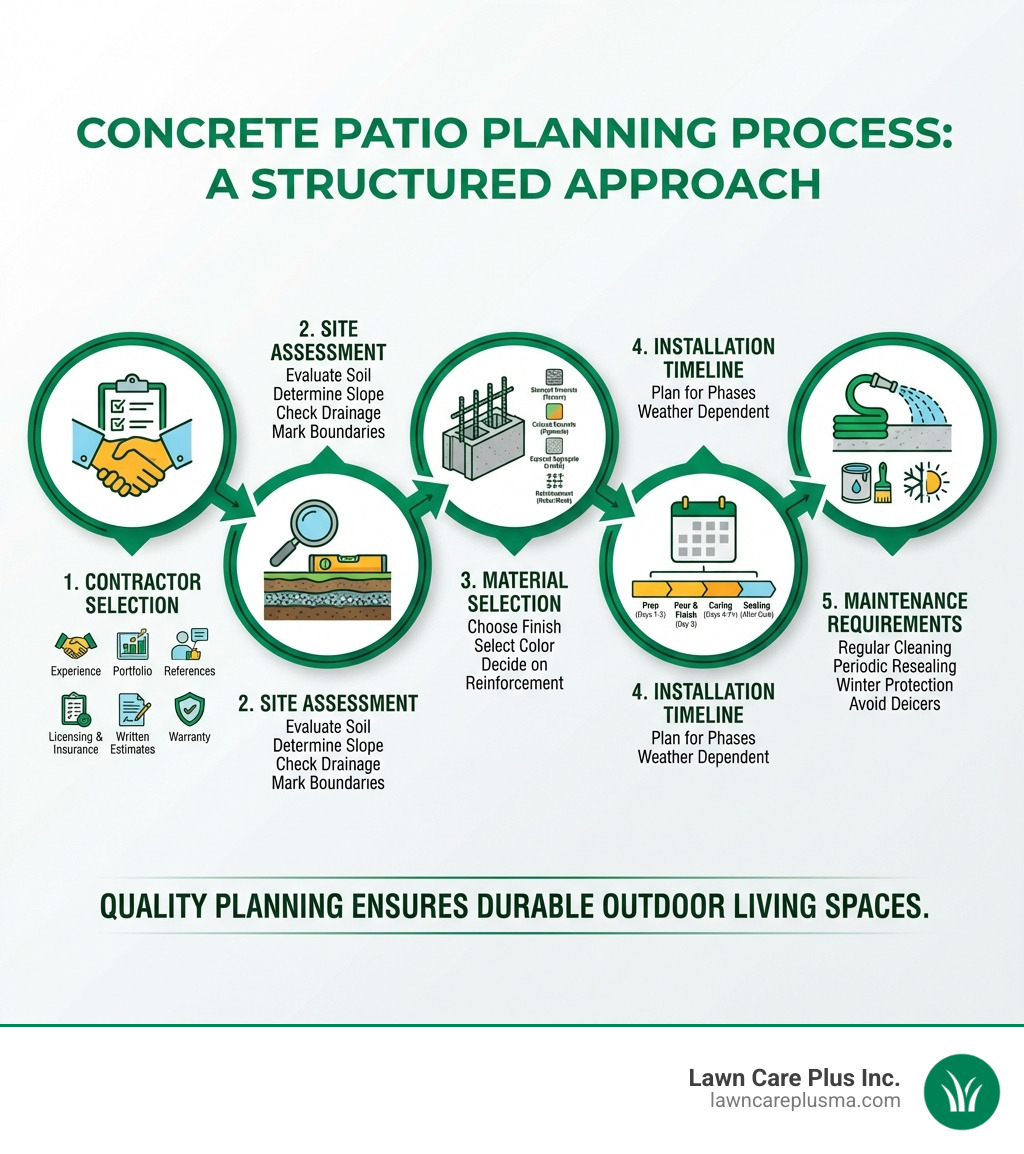
Concrete patio installer terms explained:
Why Hire a Professional Concrete Patio Installer?
When you decide to add a patio to your home in Newton or Milton, you might be tempted to watch a few videos and try to pour the slab yourself. We love the “can-do” spirit, but concrete is a fickle beast. Once that truck arrives and starts pouring, the clock is ticking. You have a very limited window to spread, level, and finish the surface before it turns into a permanent, lumpy rock in your backyard.
Hiring a professional concrete patio installer ensures that your project has the structural integrity to survive a Massachusetts winter. We don’t just “dump and run.” A professional team understands the science behind the mix, adhering to industry standards for compressive strength and durability. We ensure the concrete is poured at the right thickness—usually 4 inches for residential patios—and that it is reinforced to handle the weight of your patio furniture and the movement of the ground.
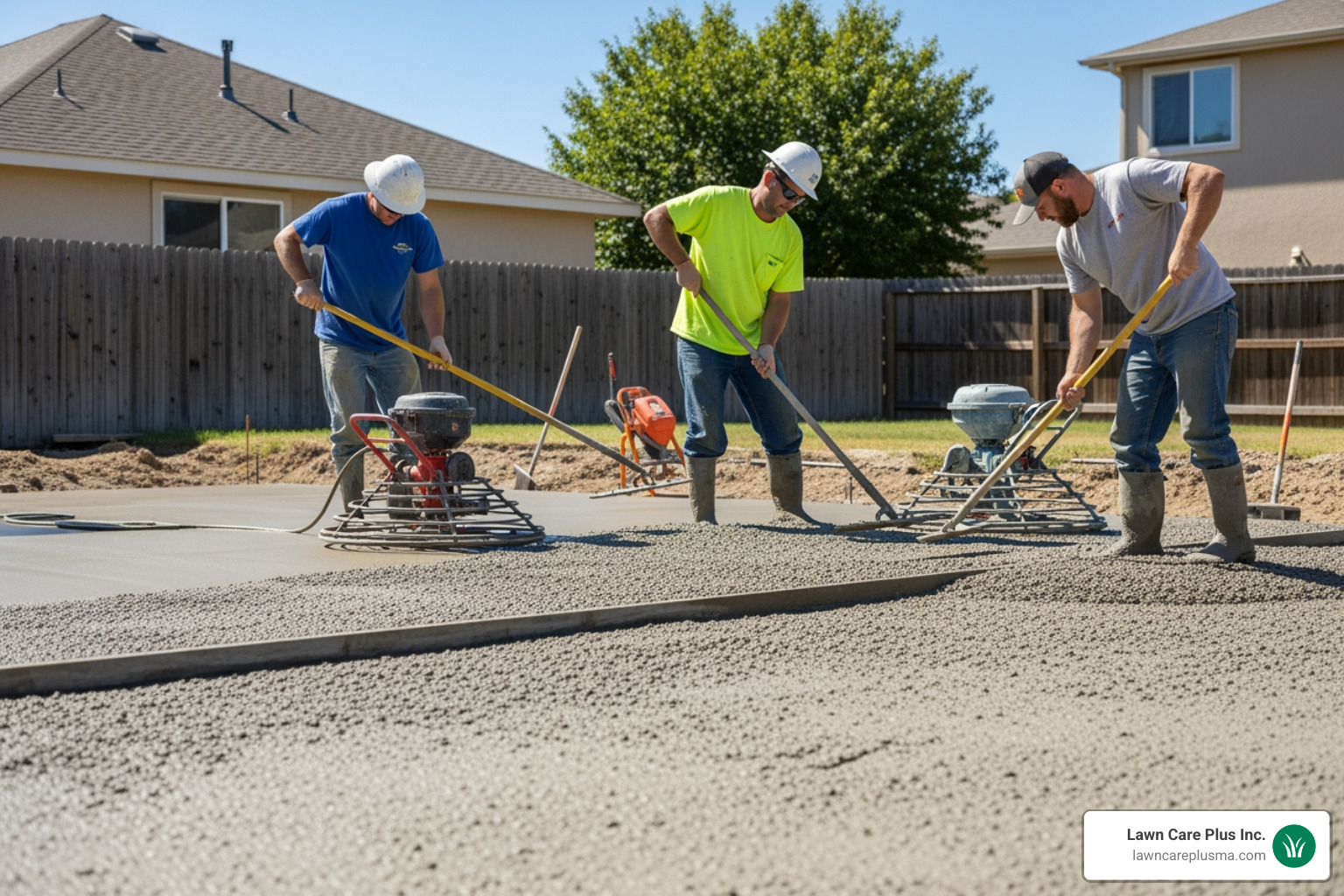
Furthermore, a pro brings the right tools. You probably don’t have a power trowel, a bull float, or an edging tool sitting in your garage. We use these specialized tools to create a surface that is not only level but also aesthetically pleasing. Professional installation also means you get access to hardscaping services that can integrate your patio with the rest of your landscape, like adding stone walls or custom walkways that match your new outdoor space.
Average Pricing for a Concrete Patio Installer
We know that budget is a huge part of your decision-making process. While we can’t give you a final quote without seeing your property in person, we can look at some industry data to give you a ballpark idea of what to expect.
Please note: These are average costs based on internet data and not actual costs for Lawn Care Plus Inc. Every project is unique based on accessibility, soil conditions, and design choices.
For a standard 280-square-foot patio, the average cost is around $3,800. However, the range is quite broad. Depending on the complexity of your design and the materials used, you might see projects ranging from $2,400 all the way up to $22,500 or more for large, high-end custom installations.
Factors that influence this price include:
- Size: A small 60-square-foot landing is much more affordable than a sprawling 900-square-foot entertainment area.
- Design Complexity: A simple broomed-finish rectangle is the most cost-effective. If you want curved edges, multi-level tiers, or intricate stamped patterns, the labor costs will increase.
- Site Prep: If we have to remove an old wooden deck, dig through heavy clay, or regrade a steep slope in Brookline, those extra labor hours will impact the total.
- Materials: Special color hardeners, acid stains, and high-strength fiber reinforcement add to the material bill but provide a superior finish.
Benefits of Concrete Patios
Why choose concrete over wood or pavers? In the Boston area, durability is king. Here are a few reasons why we often recommend concrete to our clients:
- Longevity: A well-installed concrete patio can last 30 years or more. Unlike wood decks that rot or require staining every two years, concrete stands the test of time.
- Weed Prevention: Unlike pavers, where weeds can eventually find their way into the sand joints, a solid poured slab is a continuous surface. No more spending your Saturday afternoons pulling grass out of your patio cracks.
- Cost-Effectiveness: Generally, poured concrete is more affordable per square foot than high-end natural stone or complex paver patterns.
- Weather Resistance: Concrete is heavy and solid. It won’t warp in the humidity of a Massachusetts summer, and it won’t be damaged by the heavy snow loads we see in towns like Walpole or Norwood.
| Feature | Poured Concrete | Wood Deck | Pavers |
|---|---|---|---|
| Maintenance | Low | High | Medium |
| Lifespan | 30+ Years | 10-15 Years | 25+ Years |
| Weed Growth | None | N/A | Possible |
| Initial Cost | Affordable | Moderate | High |
Different Types of Concrete Finishes and Designs
Gone are the days when concrete meant a boring, gray sidewalk. Today, your concrete patio installer can offer a variety of finishes that make your backyard look like a luxury resort.
Stamped Concrete
This is the most popular choice for homeowners who want the look of expensive stone or brick without the price tag. We use large rubber mats to “stamp” patterns into the wet concrete. You can choose patterns that look like slate, flagstone, or even wood planks. When combined with color, it’s hard to tell the difference from the real thing.
Broom Finish
This is the classic, slip-resistant finish. After the concrete is leveled, we pull a specialized broom across the surface to create tiny ridges. This provides excellent traction, which is vital if your patio is near a pool or if you’re worried about icy patches in the winter.
Exposed Aggregate
This finish involves stripping away the top layer of “cream” from the concrete to reveal the stones (aggregate) underneath. It creates a beautiful, pebbled texture that is incredibly durable and hides dirt very well.
Acid Staining and Color Hardeners
We can add color to your concrete in two ways. We can mix the pigment directly into the concrete (integral color) so it goes all the way through, or we can use acid stains and color hardeners on the surface. Stains create a marbled, translucent look that is very sophisticated and unique to every pour.
Slip-Resistance
Safety is a priority. For any finish we apply, we can include slip-resistant additives. This is especially important for our clients in places like Dedham and Needham who want to ensure their outdoor spaces are safe for children and seniors during our wet New England springs.
What to Expect from Your Concrete Patio Installer
When you work with a professional team, the process should be transparent. Here is how we typically handle a project:
- Design Consultation: We sit down with you to discuss how you plan to use the space. Do you need room for a grill? A fire pit? A large dining table?
- Site Assessment: We look at the “lay of the land.” We check for underground utilities, drainage issues, and the type of soil we’re working with.
- Material Selection: We help you choose the right finish and color that complements your home’s siding and existing landscape.
- Project Timeline: We give you a clear start date and an estimated completion date. Most patios take a few days to prep and pour, plus a few days to cure before you can host your first BBQ.
- Clear Communication: You should never be left wondering when the crew is showing up. We pride ourselves on keeping our clients in the loop.
The Professional Installation Process: From Site Prep to Finishing
A great patio is built from the ground up. If the foundation is bad, the surface won’t last. That’s why we put so much emphasis on the “invisible” parts of the job.
When we start a job, we use masonry services techniques to ensure everything is square and level. We use batterboards and mason’s lines to mark the exact perimeter. This isn’t just for looks; it ensures that the patio is perfectly positioned relative to your back door or stairs.
Key Steps in Site Preparation
- Sod Removal: We don’t just pour over grass. We remove the organic material to get down to stable soil.
- Excavation: We typically dig down about 8 inches. This allows space for a 4-inch base of compacted gravel and 4 inches of concrete.
- The 3-4-5 Squaring Method: To make sure your patio isn’t “cattywampus,” we use this geometric trick derived from the Pythagorean theorem. We measure 3 feet on one side and 4 feet on the other; if the diagonal is exactly 5 feet, we know the corner is a perfect 90 degrees.
- Slope Measurement: This is the most critical step. A patio must slope away from your house at a rate of 1/8 to 1/4 inch per foot. If it’s flat, water will pool against your foundation, leading to basement leaks.
- Gravel Subbase: We use a compactible gravel (often called “crusher run”) and use a plate compactor to make it rock-solid. This provides drainage and prevents the concrete from settling and cracking.
- Isolation Joints: We place a thin buffer between the new patio and your house foundation. This allows the two structures to move independently as the ground freezes and thaws.
Pouring and Reinforcement Techniques
Once the forms are built and the gravel is packed, it’s time for the concrete. But first, we add the “skeleton.”
- Wire Mesh: We lay out heavy-duty wire mesh on small supports (called “chairs”) so the metal sits in the middle of the concrete slab, not at the bottom. This gives the concrete “pulling” strength.
- Fiber Reinforcement: For extra durability, we often use concrete mixed with tiny synthetic fibers. Think of it like thousands of tiny hairs holding the concrete together from the inside.
- Screeding: This is the workout portion of the job. Two people use a long straight board to “saw” back and forth across the forms, pulling the excess concrete and leveling the surface.
- Bull Floating: We use a large, long-handled tool to push down the aggregate and bring the “cream” to the top, creating a smooth surface.
- Control Joints: We cut deep lines into the concrete every 8 to 10 feet. Why? Because concrete will crack eventually. Control joints tell the concrete where to crack, hiding the movement in a straight line that looks like a design choice.
- Curing Process: Concrete doesn’t “dry”; it cures through a chemical reaction. We may cover it with plastic or apply a curing compound to keep the moisture in, ensuring the slab reaches its full strength.
Maintenance and Longevity in Harsh Climates
Living in the Boston Metro-West area means our patios have to endure everything from 95-degree humidity to 10-degree blizzards. The freeze-thaw cycle is the biggest enemy of concrete. When water gets into the pores of the concrete and freezes, it expands, which can cause “spalling” or surface flaking.
To prevent this, we recommend:
- Protective Sealants: You should have your patio sealed every 2-3 years. A good sealer acts like a raincoat for your concrete, keeping water and salt out.
- Proper Snow Management: Be careful with what you put on your patio in the winter. Avoid using harsh rock salt (sodium chloride) on new concrete, as it can eat away at the finish. Use sand for traction or a concrete-safe ice melt. If you need help with the heavy lifting, our snow management team can help keep your surfaces clear without damaging them.
- Prompt Cleaning: If you spill grease from the grill or wine from a party, clean it up quickly. Even sealed concrete can stain if liquids are left to sit.
Resurfacing vs. Replacement
If you have an old patio that is looking a bit tired but is still structurally sound (meaning no huge, deep cracks or sinking sections), you might be a candidate for resurfacing. We can apply a thin decorative overlay that makes the old slab look brand new for a fraction of the cost of a full replacement. However, if the slab is crumbling or has “heaved” due to tree roots, replacement is usually the only long-term fix.
Frequently Asked Questions about Concrete Patios
How long does a concrete patio typically last?
With proper installation and maintenance, a concrete patio in Massachusetts can easily last 30 to 50 years. The key is the initial site preparation and ensuring it is sealed regularly to protect it from the freeze-thaw cycle.
When should I consider resurfacing instead of replacement?
Consider resurfacing if the damage is purely cosmetic—like surface scaling, small hairline cracks, or discoloration. If the patio is sinking, has large cracks wider than a pencil, or is sloping toward your house, you likely need a full replacement to fix the underlying foundation issues.
What should I look for when choosing a contractor?
Beyond the basics of price, look for a contractor who understands the local soil. A concrete patio installer in Canton or Newton needs to know how to handle the specific drainage needs of our region. Always check that they are insured and ask for local references. A good contractor will be happy to show off their previous work in your neighborhood!
Conclusion
A concrete patio is more than just a place to put your chairs; it’s an extension of your home. Whether you’re in Belmont, Brighton, or Watertown, a professionally installed patio increases your property value and provides a beautiful backdrop for years of family memories.
At Lawn Care Plus Inc., we take pride in our expert craftsmanship and our deep roots in the Boston Metro-West community. We don’t just pour concrete; we build lasting outdoor spaces with a satisfaction guarantee. From the first shovel in the ground to the final coat of sealer, our team is dedicated to getting the job done right.
Ready to transform your backyard? Contact us for a free estimate today, and let’s start planning the outdoor space you’ve always wanted!