
Bluestone walkway installation adds an undeniable charm to any outdoor space. With its natural beauty and rich tones, bluestone improves landscapes, creating neat and timeless paths that complement various architectural styles. Whether you’re a homeowner wanting a serene garden pathway or a property manager aiming to boost curb appeal, bluestone proves to be an ideal choice.
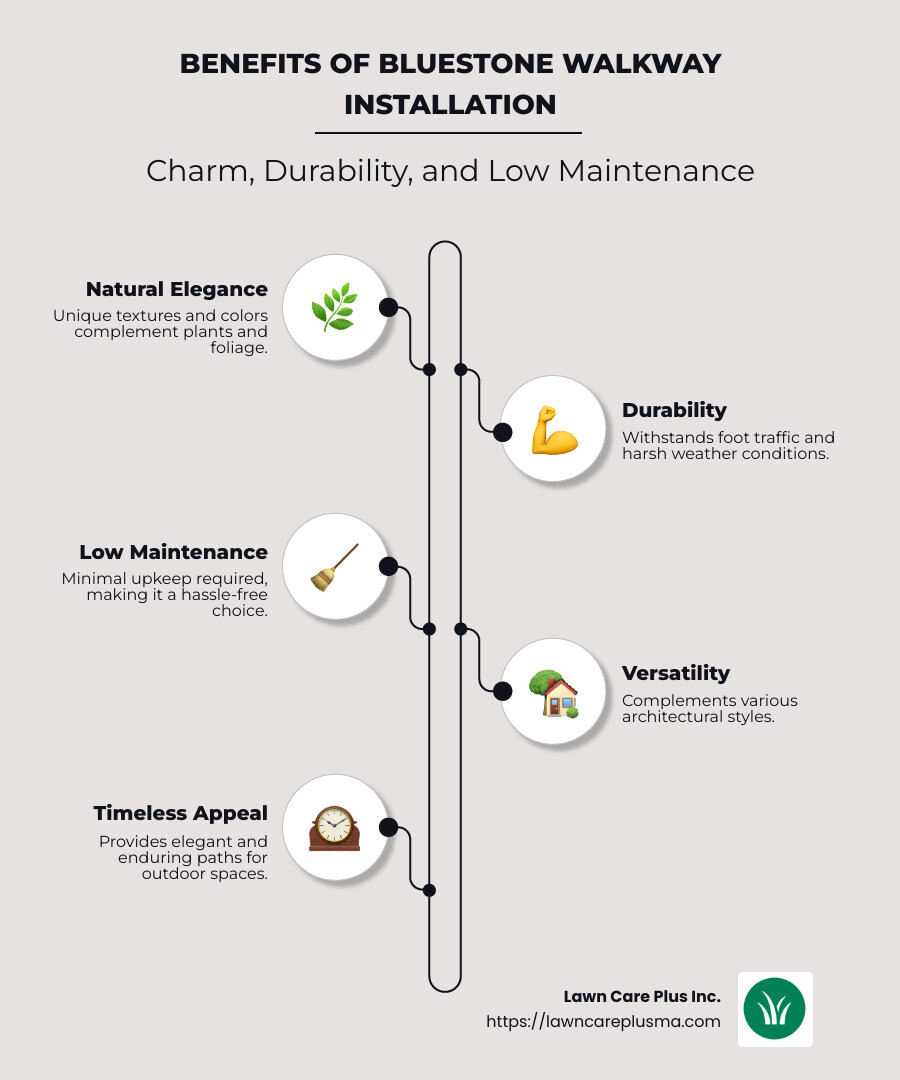
- Natural Elegance: Bluestone’s unique textures and colors make it a standout feature in yards, blending seamlessly with plants and foliage.
- Durability: Known for its strength, bluestone withstands foot traffic and harsh weather, ensuring a long-lasting pathway.
- Low Maintenance: Easier to maintain than many materials, bluestone requires minimal upkeep, allowing you to enjoy its aesthetic benefits without the hassle.
By understanding the appeal and practicality of bluestone walkways, you can make informed decisions to improve the beauty and functionality of your outdoor spaces.
Bluestone walkway installation terms to remember:
– brick walkway installers near me
– concrete walkway installers near me
– walkway installation near me
Preparing the Base for Bluestone Walkway Installation
Creating a sturdy base is crucial for bluestone walkway installation. A well-prepared base ensures your walkway remains level and stable over time. Let’s explore the essential steps and materials needed to set the foundation right.
Choosing the Right Base Material
The right base material provides stability and drainage, preventing issues like shifting or settling.
- Crushed Stone: A popular choice, 3/4-inch crushed stone offers excellent drainage and a solid foundation. Spread a 3-inch layer over the excavated area.
- Sand: While less common for heavy-duty walkways, sand can be used to fill gaps and provide a smooth surface for the bluestone slabs.
- Gravel: Provides good drainage and can be used in conjunction with crushed stone for added stability.
A combination of these materials can be used to create a robust foundation that supports the weight of the bluestone and withstands environmental conditions.
Tools Needed for Base Preparation
Having the right tools makes the process smoother and more efficient.
- Plate Compactor: Essential for compacting the crushed stone, ensuring a firm base that won’t settle over time.
- Garden Rake: Use this to evenly spread the crushed stone and sand, creating a level surface.
- Hand Tamper: Ideal for smaller areas or edges where a plate compactor can’t reach, the hand tamper helps in achieving a compact base.
Excavation and Soil Compaction
Proper excavation and soil compaction are foundational steps in preparing for bluestone walkway installation.
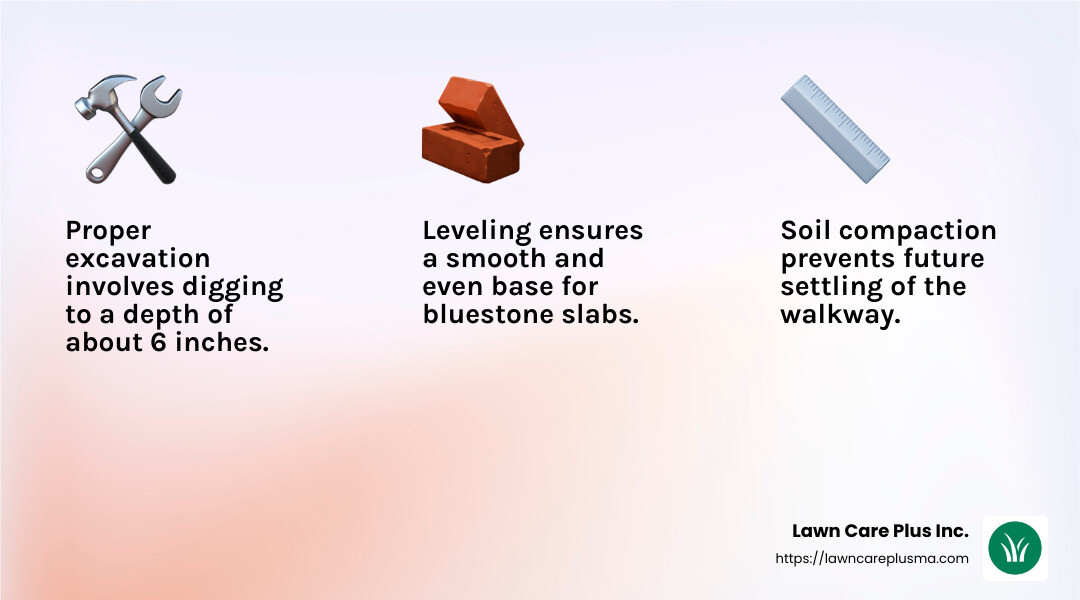
- Excavation: Dig out the marked area to a depth of about 6 inches. This allows room for the base materials and the bluestone slabs.
- Soil Compaction: Before adding base materials, ensure the soil is compacted. This prevents future settling and provides a stable starting point.
- Leveling: Make sure the bottom of the excavated area is level. This uniformity helps in laying a smooth and even walkway.
By focusing on these crucial steps, you’re setting up your bluestone walkway for long-lasting success. Next, we’ll explore the process of laying the bluestone slabs themselves, ensuring proper alignment and leveling for a beautiful finish.
Laying the Bluestone
With the base ready, it’s time to focus on the art of bluestone walkway installation. This involves setting the bluestone slabs in a way that ensures durability and aesthetic appeal. Let’s break down this process step-by-step.
Step-by-Step Guide to Setting Bluestone
Alignment and Patterning
- Mark the Path: Use a mason’s line to define the edges of your walkway. This helps maintain straight lines and ensures a well-aligned path.
- Plan the Pattern: Decide on the pattern for laying the bluestone. Options include straight rows, staggered, or a more random, natural look. This planning phase is crucial for visual coherence.
- Position the Slabs: Begin at one end of the walkway. Set each bluestone slab about 4 inches from the edge, allowing for edging materials.
Leveling
- Create the Setting Bed: Spread a layer of stone dust mixed with water to form a mortar-like slurry. This acts as the setting bed for the bluestone slabs.
- Place and Level the Slabs: Lay each slab onto the setting bed. Use a rubber mallet to gently tap and level each stone. Check alignment with a long level to ensure a flat surface.
- Adjust as Needed: If a slab isn’t level, adjust the stone dust beneath it until it sits correctly.
Ensuring Proper Drainage
Proper drainage is key to preventing water accumulation and prolonging the lifespan of your walkway.
Slope Creation
- Establish a Slope: Ensure the walkway has a slight slope (about 1/4 inch per foot) to direct water away from the path. This prevents pooling and potential damage.
- Check the Slope: Use a long level to confirm the slope is consistent along the entire length of the walkway.
Joint Spacing and Water Flow Management
- Space the Joints: Leave small gaps between the bluestone slabs. This not only adds a natural look but also allows for water to flow through.
- Fill the Gaps: Use 3/4-inch gravel to fill the joints. This helps lock the stones in place and facilitates water drainage.
By following these steps, you’re not only creating a visually appealing bluestone walkway but also ensuring its functionality and longevity. Next, we’ll explore how to cut and fit bluestone precisely for those perfect finishing touches.
Cutting and Fitting Bluestone for Walkways
Once you’ve laid the groundwork for your bluestone walkway installation, it’s time to focus on cutting and fitting the bluestone slabs. Precision is key here, and the right techniques can make all the difference. Let’s explore the details.
Techniques for Precise Cuts
Marking Stones
Before making any cuts, it’s crucial to mark the stones accurately. Use a chalk line or a pencil to outline where the cuts need to be. This ensures you have a clear guide to follow, reducing the risk of mistakes.
Masonry Saw
A masonry saw is essential for cutting bluestone. It provides the power and precision needed to slice through the dense material. Make sure to choose a saw with a diamond blade, as this type is specifically designed to handle hard stone.
Safety Gear
Safety should always be a priority. When cutting bluestone, wear safety goggles to protect your eyes from dust and debris. Additionally, use ear protection to guard against the noise, and wear gloves to protect your hands.
Incision Methods
There are a few methods for making precise incisions in bluestone:
- Score and Snap: For thinner stones, score along the marked line with a chisel and hammer, then apply pressure to snap the stone along the score line.
- Full Cut: For thicker stones, a full cut with the masonry saw is necessary. This method provides a clean, straight edge.
Blade Settings
Adjust the blade settings on your masonry saw to match the thickness of the bluestone. Set the blade depth to just slightly deeper than the stone to ensure a complete cut without damaging the underlying surface.
Cutting Depth
When cutting, maintain a steady hand and apply consistent pressure. Make sure the cutting depth is appropriate for the stone’s thickness. This will help achieve a clean cut and minimize the risk of chipping.
By mastering these cutting and fitting techniques, you’ll ensure that each piece of bluestone fits seamlessly into your walkway design. This precision not only improves the walkway’s appearance but also contributes to its structural integrity.
Next, we’ll discuss the finishing touches and maintenance tips to keep your bluestone walkway looking its best.
Finishing Touches and Maintenance
Once your bluestone walkway is laid out, it’s time to add those final details that make it shine. These finishing touches not only improve the aesthetic appeal but also ensure the longevity of your path.
Edging and Filling Joints
Edging: To keep your walkway neat and tidy, consider adding steel edging. This helps prevent dirt from encroaching onto the path and maintains a clear boundary. Position the edging about 6 inches from the bluestone slabs and secure it with steel stakes. Make sure it’s level and follows the walkway’s contours.
Filling Joints: Once the stones are in place, fill the joints with sand or a fine gravel. This stabilizes the stones and prevents them from shifting. Sweep the material into the gaps, then lightly mist with water to help it settle.
Cleaning and Maintenance
To keep your walkway looking fresh, regular cleaning is essential. Start by sweeping away loose debris. Then, use a garden hose to rinse the surface thoroughly. Allow the walkway to dry completely before walking on it. For added protection, consider sealing the bluestone. A high-quality stone sealant will shield the surface from the elements and maintain its natural beauty.
Using Gravel and Moss for Aesthetic Improvements
Gravel Types: For a decorative touch, consider adding gravel around the walkway. Options like pea gravel or bluestone gravel can complement the walkway and add texture to your landscape. Choose a color that contrasts nicely with the bluestone for a striking effect.
Moss Installation: If you prefer a more natural look, moss is an excellent choice. It can be planted between the stones to create a soft, green carpet. Moss thrives in shady, damp areas and adds a charming, rustic feel to the walkway.
Aesthetic Benefits
Adding gravel or moss not only improves the visual appeal of your walkway but also offers practical benefits. Gravel can improve drainage around the path, while moss can help cool the surface and provide a non-slip texture. These elements transform a simple walkway into an inviting and cohesive part of your outdoor space.
By focusing on these finishing touches and maintenance techniques, your bluestone walkway will not only look fantastic but also stand the test of time. Now, let’s move on to some frequently asked questions about bluestone walkway installation.
Bluestone Walkway Installation FAQs
When starting on a bluestone walkway installation, questions often arise about the best practices and materials. Here, we address some common queries to help ensure your project is successful.
What to Put Under Bluestone?
For a stable and durable walkway, the foundation is key. Underneath your bluestone, you’ll want to create a solid base. Typically, a layer of crushed stone is recommended. Here’s how to prepare it:
- Crushed Stone: Spread a 3-inch layer of 3/4-inch crushed stone over the excavated area. This provides a firm foundation and excellent drainage.
- Compaction: Use a plate compactor or hand tamper to compact the crushed stone firmly. This prevents future settling and keeps your walkway level.
Best Base for Bluestone Pavers?
Selecting the right base material is crucial for the longevity of your walkway. The best base for bluestone pavers combines several elements:
- Crushed Stone Layer: As mentioned, a 3-inch layer of crushed stone is ideal.
- Setting Bed: On top of the crushed stone, create a setting bed using a mixture of stone dust and water. This slurry acts like mortar, filling gaps and leveling the surface.
- Compaction and Leveling: Ensure both layers are well-compacted and level for a stable base that supports the pavers.
How to Properly Lay Bluestone?
Laying bluestone requires precision to ensure a smooth, even walkway. Follow these steps for best results:
- Alignment: Use a mason’s line to guide the placement of each slab. This helps keep your walkway straight.
- Setting Bed: Place each bluestone slab onto the setting bed, maintaining a small gap between each for a natural look.
- Leveling: Use a rubber mallet to tap the slabs into place, checking for alignment with a long level. Adjust the stone dust beneath as needed to achieve perfect leveling.
By following these guidelines, your bluestone walkway will not only be beautiful but also durable and functional.
Next, let’s explore the conclusion of our guide, where we’ll discuss the overall benefits of a bluestone walkway and how Lawn Care Plus Inc. can assist with your installation needs.
Conclusion
A bluestone walkway installation is not just about creating a path; it’s about enhancing the beauty and value of your home. Bluestone, with its natural elegance and durability, offers a timeless appeal that can transform any outdoor space.
Durability is one of the standout features of bluestone. This material is known for its strength and ability to withstand the elements. Unlike some other materials, bluestone doesn’t crack or chip easily, ensuring your walkway remains intact and beautiful for years to come. With regular maintenance, such as sealing every few years, you can extend its lifespan even further.
In terms of visual appeal, bluestone offers a unique, natural look that complements a variety of home styles. Its rich color palette, ranging from deep blues to earthy grays, can improve the aesthetic of any landscape. Adding elements like gravel or moss between the stones can further lift the walkway’s beauty, creating a cohesive and inviting outdoor space.
At Lawn Care Plus Inc., we specialize in creating stunning walkways that blend functionality with aesthetic charm. Our team of experienced professionals is ready to assist you with every step of your bluestone walkway project, from base preparation to the final touches. We serve the Boston Metro-West area, providing comprehensive landscaping and hardscaping services custom to your needs.
If you’re ready to improve your outdoor space with a beautiful bluestone walkway, contact us today. Let’s make your vision a reality with our expert services and commitment to quality.
