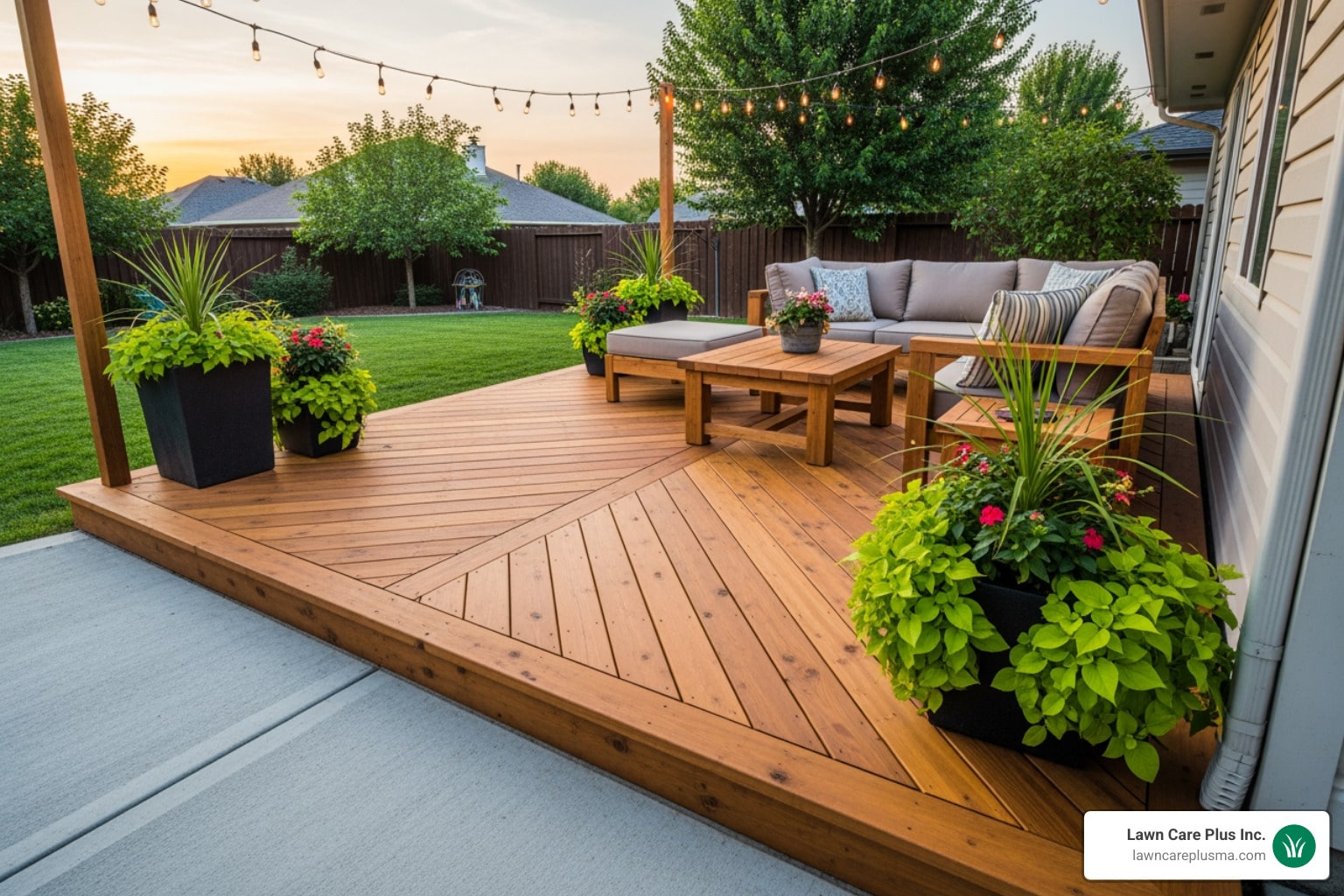
Transform Your Old Concrete Patio Into a Beautiful Deck
How to install deck over concrete patio is simpler than you might think, and it doesn’t require demolishing your existing slab. Here’s the quick answer:
Basic Installation Steps:
- Inspect your concrete slab for major cracks, settling, or drainage issues
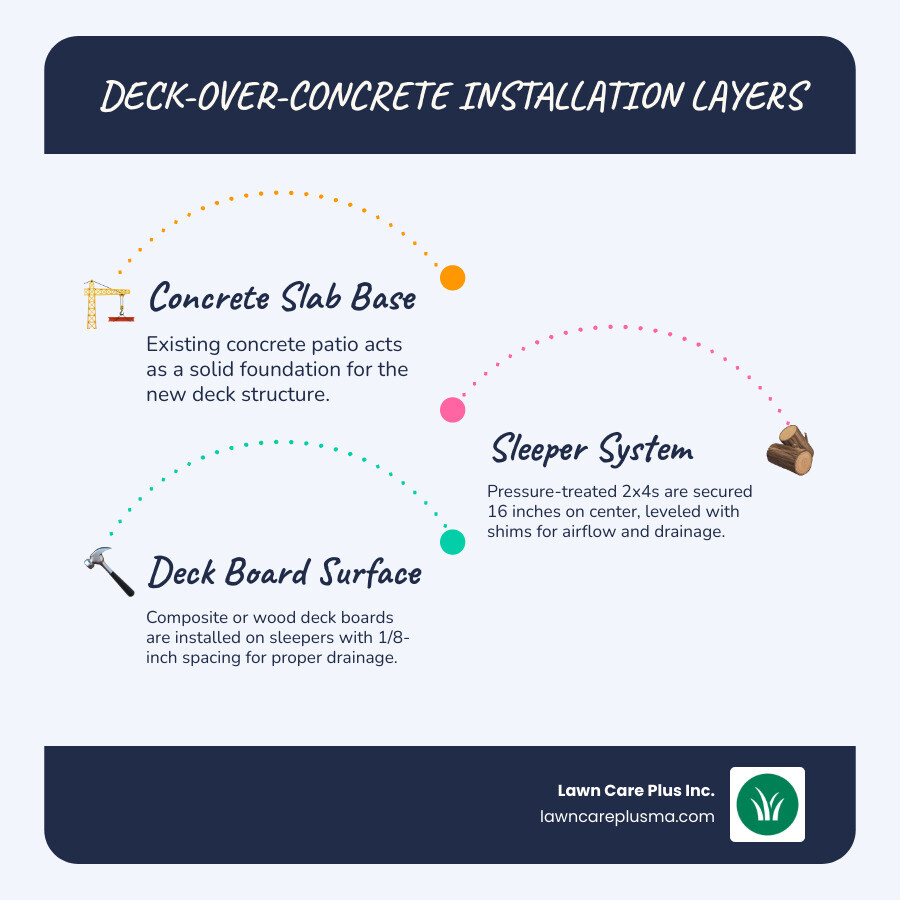
- Install sleepers (pressure-treated 2x4s) on top of the concrete, spaced 16 inches apart
- Secure sleepers to the concrete using concrete screws
- Level the sleeper frame with plastic shims where needed
- Attach deck boards (composite or wood) to the sleepers
- Maintain spacing of at least 1/8 inch between boards for drainage
Has your concrete patio seen better days? Is it cratered, stained, cracked and sunken? You’re not alone. Many homeowners in the Boston Metro-West area face this exact problem.
The good news: you don’t need to jackhammer that concrete. You can build right over it.
This method saves you the cost and backbreaking labor of concrete removal. According to the research, disposing of large amounts of concrete can be costly and labor-intensive. Plus, DIY demolition and concrete pours are big jobs that most homeowners would rather avoid.
Why this method works: The key is creating a buffer between the concrete and your new deck boards. This buffer allows water to drain, prevents moisture damage, and accommodates the different expansion rates of concrete and decking materials.
This project raises your patio level by about 2.5 to 3.5 inches, so you’ll need to check door thresholds before you start. But for most patios in decent structural shape, this is a cost-effective way to transform your outdoor space in just a few days.
Key terms for how to install deck over concrete patio:
- average cost of concrete patio installation
- concrete patio contractors near me
- cost to have stamped concrete patio installed
Before You Begin: Planning Your Deck-Over-Patio Project
While the installation for a deck over concrete is straightforward, proper planning is where you’ll prevent most problems. After years of hardscaping work throughout Massachusetts, from Belmont to Canton, we’ve learned that a thorough upfront assessment makes all the difference. You need to know what you’re working with before you commit.
Assessing Your Concrete Slab
Before buying materials, give your concrete patio a thorough inspection.
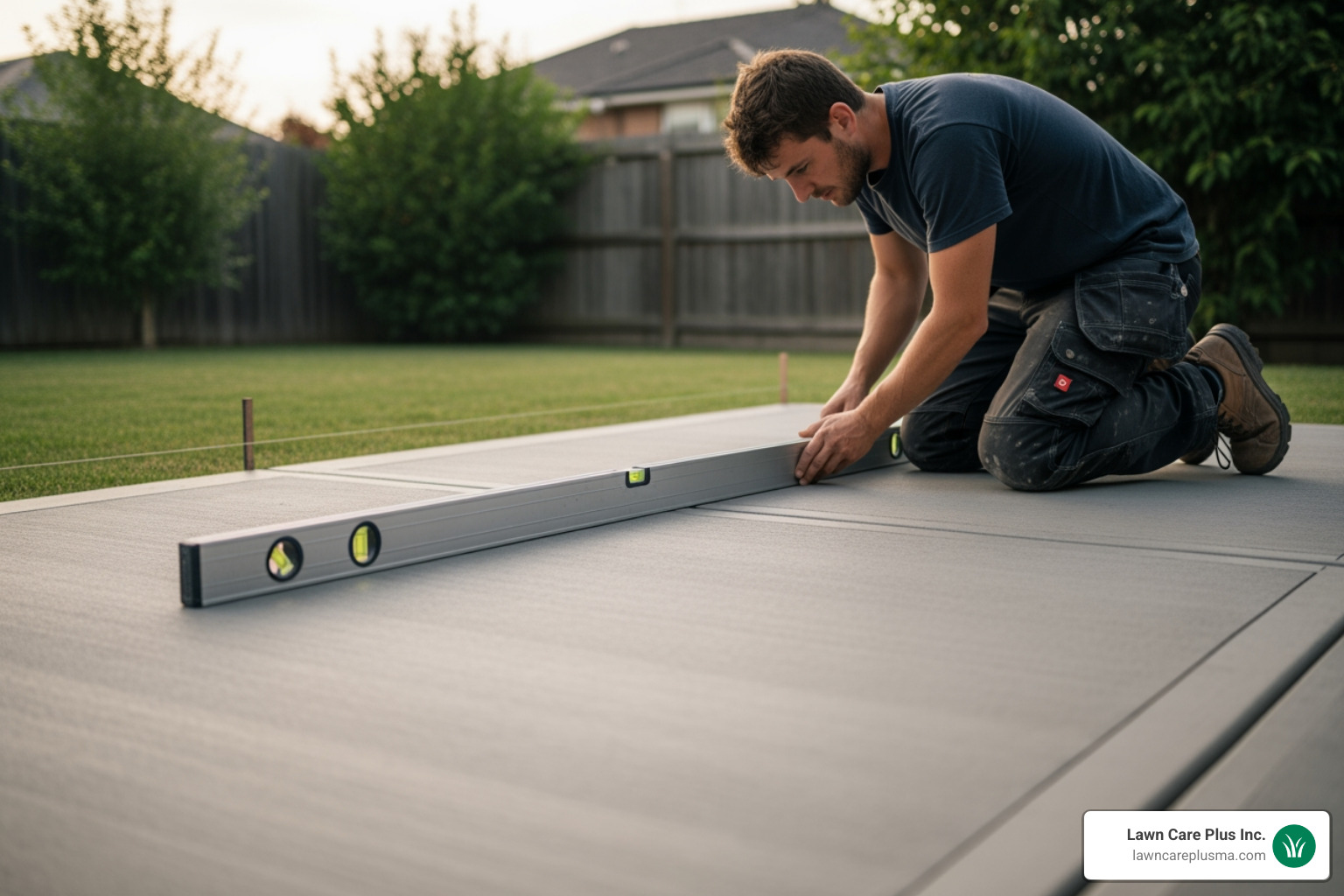
Walk-through inspection: Walk the entire patio. Do you feel dips, rises, or unstable spots underfoot?
Cracks and spalling: Hairline cracks are normal and can be patched. However, deep or wide cracks, crumbling edges, or a flaking surface (spalling) indicate larger structural problems that a new deck won’t fix.
Unevenness: Use a long level or a straight 2×4 to check the surface. According to the 1/8-inch rule, any dips or rises greater than 1/8 inch should be marked. A few can be fixed with shims, but widespread unevenness will make the project difficult.
Sunken areas: Look for corners that are noticeably lower or sections pulling away from your house foundation. If the patio is actively settling, the ground underneath is unstable and needs to be addressed first.
Water drainage: After it rains, see where water goes. The slab should slope about 1/4 inch per foot away from your house. If water pools, it’s manageable. If it slopes toward your house, that’s a major red flag that can lead to moisture damage.
Door threshold clearance: This is critical. You’ll be adding 2.5 to 3.5 inches of height. Measure every door that opens onto the patio. If you don’t have at least 3.5 inches of clearance, you risk blocking the door or creating a trip hazard.
A sturdy, relatively level patio with good drainage is an excellent foundation. Be honest about its condition before you start.
Pros and Cons of Building Over Concrete
Building over concrete isn’t always the right answer, but when it works, the benefits are significant.
The advantages are compelling. You eliminate demolition—no jackhammering, hauling concrete, or disposal fees. The project is faster because you have a solid base to work from, with no need to dig footings. It’s usually more budget-friendly than starting from scratch and effectively covers an ugly, stained slab.
However, there are challenges. The added height of 2.5 to 3.5 inches can create issues with doors and stairs, requiring careful planning. Most importantly, without proper airflow between the concrete and deck boards, you create a moisture trap. This leads to rot, mold, and mildew, causing the deck to deteriorate quickly. The sleeper system is essential, not optional.
Your concrete slab must be relatively stable. Minor cracks are fine, but a slab that’s actively settling or severely damaged is not a suitable foundation. The underlying issues will eventually compromise your new deck. You’re also limited to the existing patio’s footprint, and you must account for the different expansion and contraction rates of concrete and decking.
For a patio in decent shape with good drainage and door clearance, this is a fantastic project. If you’re facing major issues, it’s better to address those first.
When to Call a Professional for Your Patio Project
While many aspects of this project are DIY-friendly, some situations require professional expertise. Consider calling a team like ours at Lawn Care Plus Inc. in these cases:
If your slab is in rough shape: For severe cracking, sinking, or surface deterioration, a professional can tell you if repair is realistic or if the slab needs to be replaced.
Major settling issues: If your patio is moving, there’s likely a soil problem underneath. Professionals can investigate and fix the root cause, not just cover it up.
Door threshold and stair problems: Low door clearances or connections to existing stairs require custom solutions and knowledge of building codes to ensure safety and accessibility.
Complex designs: Multi-level decks or intricate layouts require precise calculations that are best left to experienced builders.
Lack of tools or experience: This project requires a hammer drill, miter saw, and other power tools. If you’re not comfortable or properly equipped, hiring a pro is a safer bet.
Permits and building codes: Municipalities like Brookline and Newton have specific codes for deck construction. A professional contractor knows these rules and handles the permitting process, ensuring your project is compliant.
Sometimes, the peace of mind from a professional installation is worth the investment. If you’re unsure, check out our hardscaping services to see how we can help.
How to Install a Deck Over a Concrete Patio: A Step-by-Step Guide
Now comes the exciting part. You’ve inspected your concrete patio, weighed the pros and cons, and you’re ready to transform that tired slab into a beautiful outdoor living space. This guide will walk you through exactly how to install a deck over concrete patio, from gathering your materials to laying down those final boards.
The process is straightforward, but attention to detail is what separates a deck that lasts decades from one that shows problems in a few years.
Step 1: Gather Your Tools and Materials
Before you start, gather everything you’ll need to avoid mid-project interruptions.
For tools, you’ll need a hammer drill for concrete, an impact driver for screws, a circular saw and miter saw for cuts, and a 4-foot level. Also have a tape measure, chalk line, straight edge, and safety gear (glasses, ear protection, and gloves).
For materials, get pressure-treated 2x4s (rated for ground contact) for the sleeper system. You’ll need composite or wood decking boards, specialty concrete screws (like Tapcons), and ACQ-approved or galvanized deck screws. You will also need plastic shims for leveling, joist tape to protect the sleepers, and possibly concrete leveling compound for surface repairs.
Step 2: Prepare the Concrete Surface
A clean, smooth starting point is essential for success. Start by giving your concrete a thorough cleaning. A good power washing works wonders to remove accumulated dirt and grime.
Next, tackle any minor cracks or spalling with a concrete repair patch. If you have low spots where water puddles, address them with a self-leveling compound. This extra step will save you hours of shimming later.
Finally, double-check your drainage. Ensure the concrete slopes away from your house at about 1/4 inch per foot. Correcting any drainage issues now will prevent major moisture damage down the road.
Step 3: Install the Sleeper System
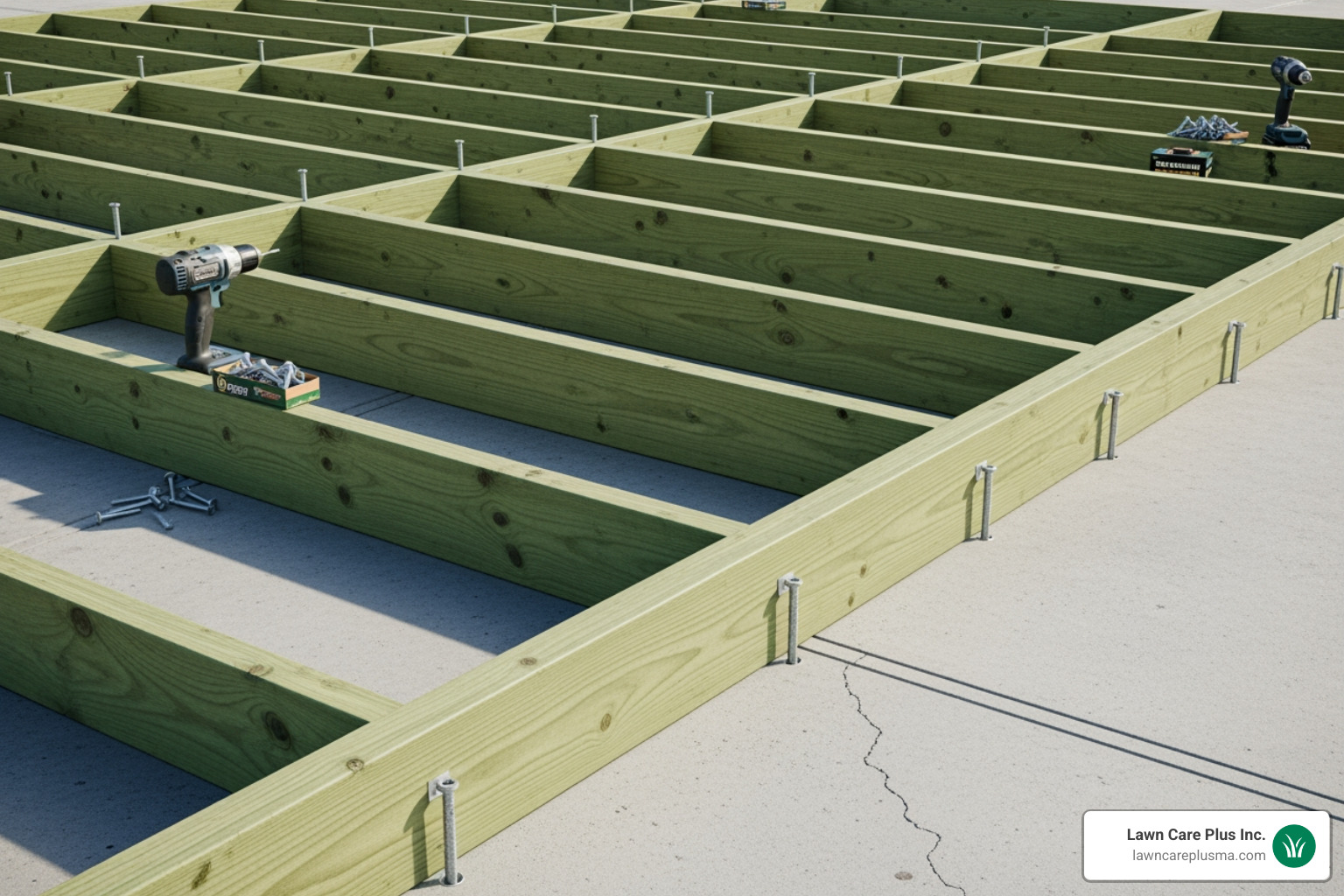
The sleeper system makes building a deck over concrete patio possible without creating a mess of rot and mold. Sleepers are pressure-treated 2x4s that create a crucial air gap for water drainage and ventilation.
Start by planning your layout. Sleepers should run perpendicular to your deck boards and, ideally, follow the concrete’s drainage slope. Space your sleepers 16 inches on center for standard decking. If sleepers must run parallel to the house, use 1/2-inch thick PVC trim board sections as spacers underneath to allow water to flow.
Lay out your 2x4s and use your 4-foot level to find high and low spots. Use plastic shims under the sleepers to create a perfectly flat plane. A level deck is a stable deck, so take your time with this step.
Once everything is level, predrill holes for your concrete screws, going about 1/4 to 1/2 inch deeper than the screw length. Secure each sleeper with concrete screws, making sure they penetrate at least one inch into the concrete.
The final touch is to apply joist tape or flashing tape to the top of each sleeper. This waterproof barrier is cheap insurance against rot and seals the screw holes from moisture.
For a detailed visual walkthrough of this process, check out Family Handyman’s guide on how to build a deck over concrete.
Step 4: Install the Deck Boards
This is where your new deck takes shape. Whether you’ve chosen composite or wood decking, always follow your specific manufacturer’s guidelines.
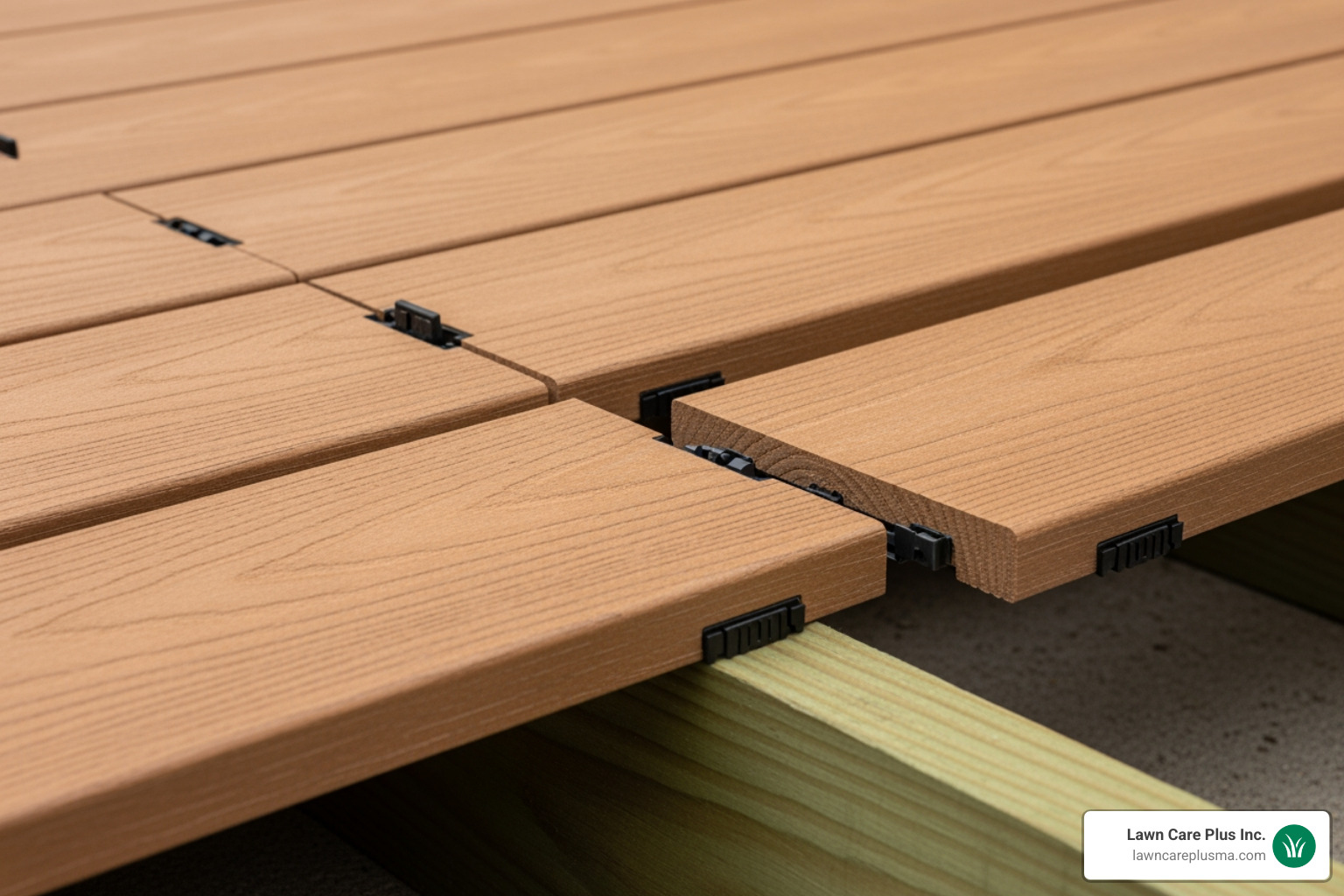
First, plan your board layout. Stagger the butt joints (where boards meet) for both strength and a better appearance. Critically, deck boards should never touch concrete directly; they attach only to the sleepers.
For a clean, professional look, use hidden fasteners. They clip into the sides of grooved boards, creating consistent spacing without visible screw heads. If you prefer traditional face screws, always predrill your holes to prevent splitting. Use two screws per sleeper for each board.
Spacing between boards is essential. For composite decking, maintain at least a 1/8-inch gap for drainage and expansion. Use the same spacing for dried pressure-treated wood. For non-dried treated wood, you can butt boards tightly together, as they will shrink while drying.
Finish the project by installing a fascia board around the perimeter. This trim piece hides the cut ends of your sleepers and gives your deck a polished, professional look.
Frequently Asked Questions about Installing Decks Over Concrete
We often receive questions from homeowners in Newton, Dedham, and other areas we serve about the specifics of how to install deck over concrete patio. Here are some of the most common inquiries we hear.
Can you install decking directly onto a concrete patio without sleepers?
No. You should never install decking directly onto concrete without a proper sleeper system. This is a critical mistake that will cost you in the long run.
Placing deck boards directly on concrete traps moisture with nowhere to go. This perpetually damp environment leads to rapid rot, mold, and mildew growth, even for pressure-treated lumber. Furthermore, concrete and decking materials expand and contract at different rates, which causes warping, cupping, and cracking without a buffer system.
A substructure like a sleeper system is essential because it creates a vital air gap for circulation and drainage. It’s the difference between a deck that lasts for decades and one that fails in just a few years.
How much height does installing a deck over a concrete patio add?
When you install deck over concrete patio, you’ll add approximately 2.5 to 3.5 inches to your existing surface height.
This breaks down to about 1.5 inches for the sleeper thickness (the actual dimension of a 2×4) and another inch for the deck board thickness. Shims or thicker materials can increase this height.
This is why checking your door threshold clearance during the planning phase is so important. You don’t want to finish your deck only to find you can’t open a door or have created a water intrusion issue.
How much does it cost to install a deck over a concrete patio?
The cost to install deck over concrete patio varies widely based on materials, patio size, and whether it’s a DIY project or a professional installation.
Based on internet data we’ve reviewed, average costs can range dramatically: Wood decking typically runs between $5 to $70+ per square foot, while composite decking generally falls in the $55 to $70+ per square foot range. Please note that these are average costs found online and are not actual costs for Lawn Care Plus Inc.
Several factors affecting cost include your choice between composite versus wood, with composite costing more upfront but requiring less maintenance. The condition of your concrete also plays a role; a slab needing extensive repairs will increase costs. Finally, DIY versus professional installation creates a large price difference, as labor can be a significant portion of the total project cost.
For more information on our patio installation services, we’re here to help you explore your options.
Ready to Upgrade Your Patio?
You’ve walked through the entire process, from that first careful inspection of your concrete slab to the final satisfying moment of installing your last deck board. How to install deck over concrete patio doesn’t have to be an intimidating project. With the right preparation, materials, and a methodical approach, you can transform that cracked, stained eyesore into a beautiful outdoor retreat where your family will create lasting memories.
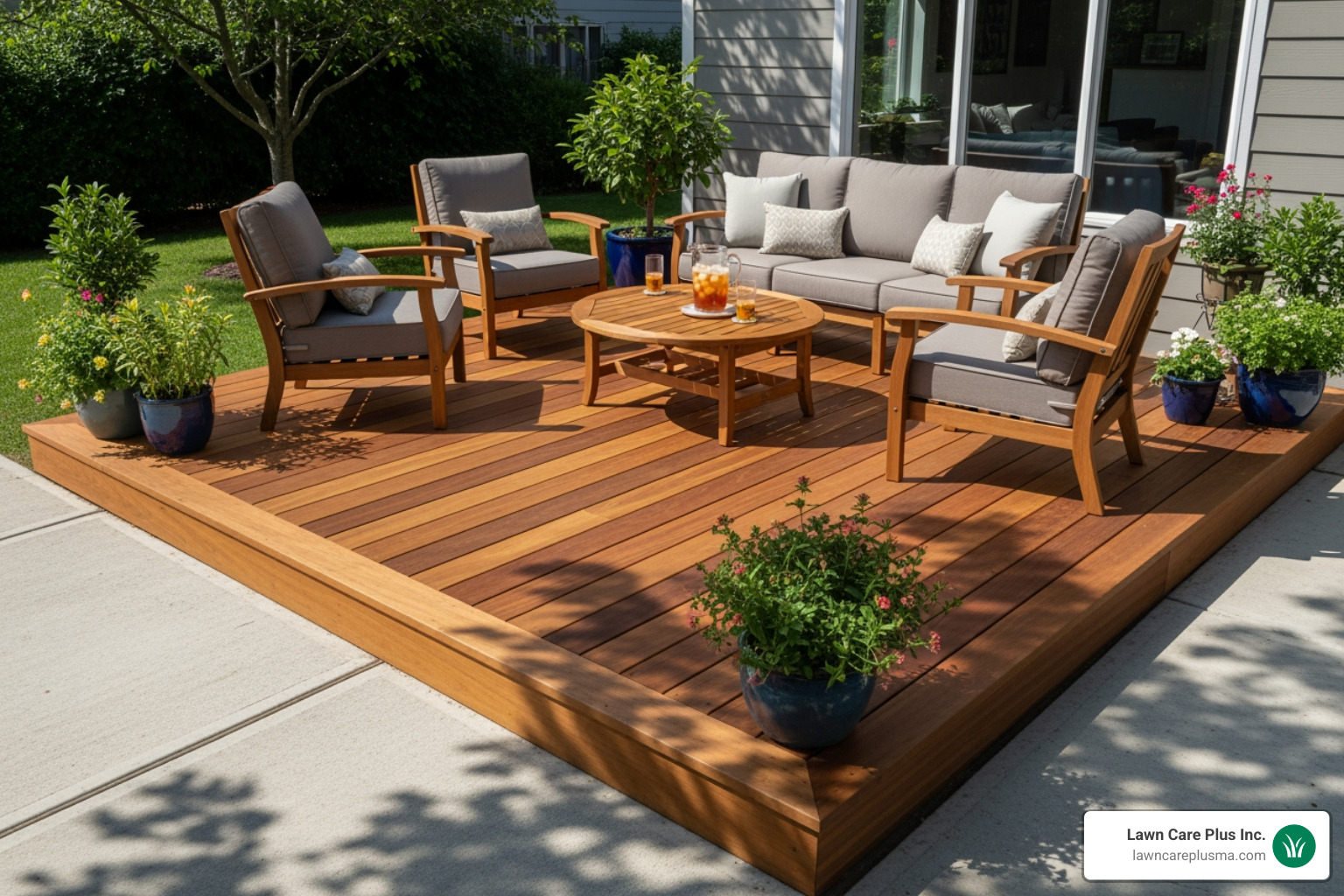
The beauty of this project is that it meets you where you are. If you’re handy with tools and love the satisfaction of DIY work, you can tackle this yourself over a few weekends. There’s something deeply rewarding about stepping back and admiring a deck you built with your own hands. On the other hand, if you’d rather skip the learning curve, the shimming, and the hours of drilling into concrete, bringing in professionals ensures the job is done right the first time, with proper attention to building codes and long-term durability.
Either way, you’re making a smart investment in your home. This upgrade does more than just cover up old concrete. It creates a welcoming space for morning coffee, family barbecues, and quiet evenings watching the sunset. It’s where your kids will play, where you’ll host friends, and where you’ll enjoy countless hours of outdoor living throughout the Massachusetts seasons.
At Lawn Care Plus Inc., we’ve transformed outdoor spaces throughout the Boston Metro-West area for years. From Belmont to Canton, Brookline to Westwood, we understand the unique challenges and opportunities that come with hardscaping projects in our region. Our team brings both technical expertise and a genuine commitment to making your vision a reality. We’ve seen how a well-executed patio or deck project can completely change how homeowners use and enjoy their outdoor spaces.
Whether you’re ready to start planning your deck-over-concrete project, exploring other hardscaping options, or simply want to discuss what’s possible for your backyard, we’d love to hear from you. Contact us for your hardscaping project today, and let’s talk about turning your patio dreams into something you can walk on, sit on, and enjoy for years to come.