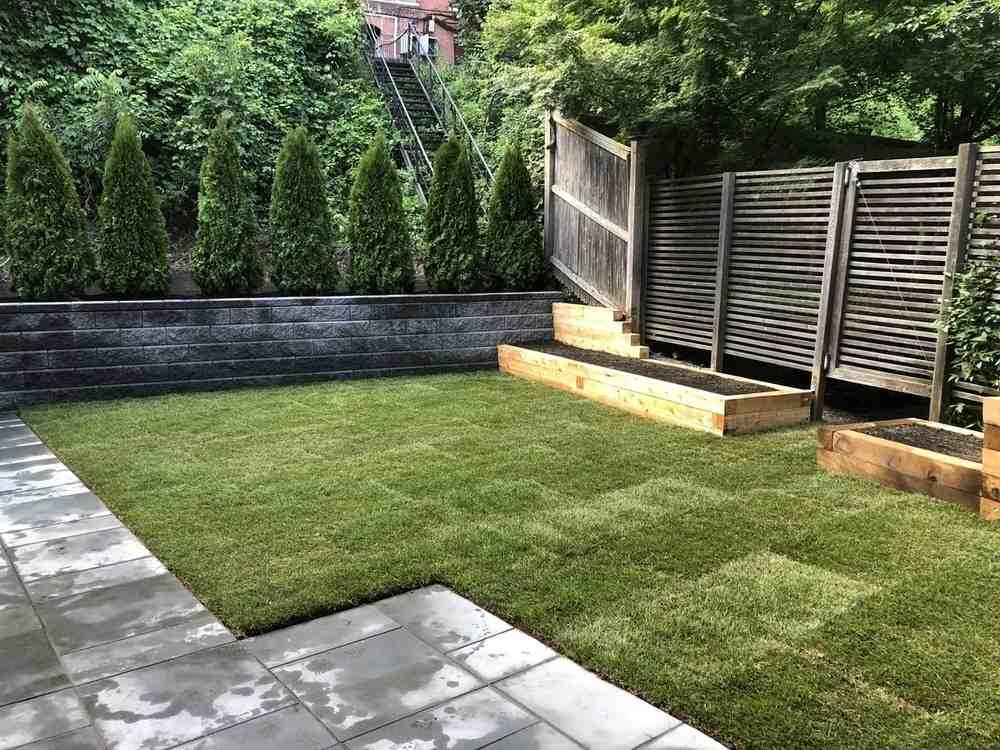
Understanding the Power and Purpose of Retaining Walls
Building retaining walls transforms sloped or uneven yards into usable, beautiful outdoor spaces. A well-built retaining wall can solve erosion, create level patios, and add visual interest, enhancing your property’s curb appeal.
Quick Answer: Key Steps for Building Retaining Walls
- Plan and Design – Assess your site, choose materials, and check local codes (permits often required for walls over 4 feet)
- Prepare the Foundation – Excavate a trench and install a compacted gravel base
- Install Drainage – Add perforated pipe and gravel backfill to prevent water pressure buildup
- Lay the Blocks – Level the first course, then stack subsequent rows with staggered joints
- Backfill and Compact – Fill behind the wall in layers, compacting as you go
- Reinforce if Needed – Use geogrid fabric for walls over 4 feet tall
- Finish with Capstones – Secure the top course with adhesive for a polished look
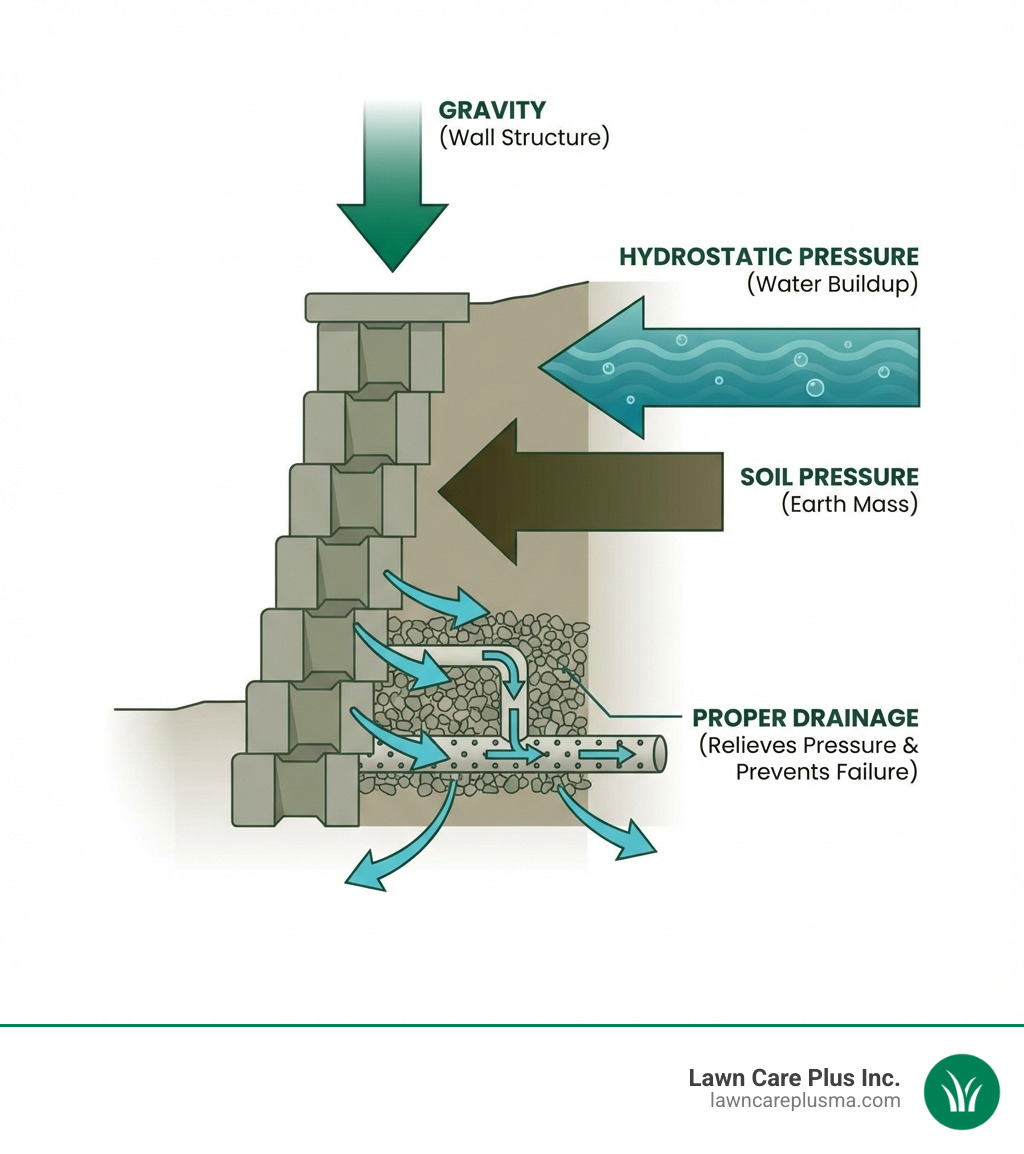
Retaining walls resist the lateral pressure of soil, holding back earth on slopes to prevent erosion and create flat, functional areas. A well-designed wall works with gravity and soil pressure through proper engineering, drainage, and construction techniques.
Beyond function, retaining walls add dimension, define outdoor spaces, and can significantly increase property value. Properly built concrete and stone walls can last 50-100 years, while wood walls typically provide 20-40 years of service.
Crucially, what happens behind and below the wall determines its lifespan. Poor drainage is the number one cause of retaining wall failure. Water buildup creates immense pressure that can topple even well-built walls. Similarly, an inadequate foundation or improper backfilling can doom a project from the start.
This guide covers everything you need to know about building retaining walls—from understanding soil pressure and choosing materials to the step-by-step construction process. Whether you’re planning a small decorative wall or a major structural project, you’ll learn the principles that separate walls that last from those that fail.
I’m Tim DiAngelis, owner of Lawn Care Plus, Inc. For over a decade, our team has helped Greater Boston and Metro-West property owners transform their landscapes with professional hardscaping services, including building retaining walls engineered to last. We’ve seen what works and what doesn’t when it comes to these critical landscape structures.
Quick building retaining walls terms:
The Foundation of Knowledge: Retaining Wall Basics
A retaining wall’s primary purpose is to hold back soil on sloped yards, a common feature in Massachusetts’ varied topography. By resisting the lateral pressure of soil and water, it prevents erosion and landslides, creating level, usable space.
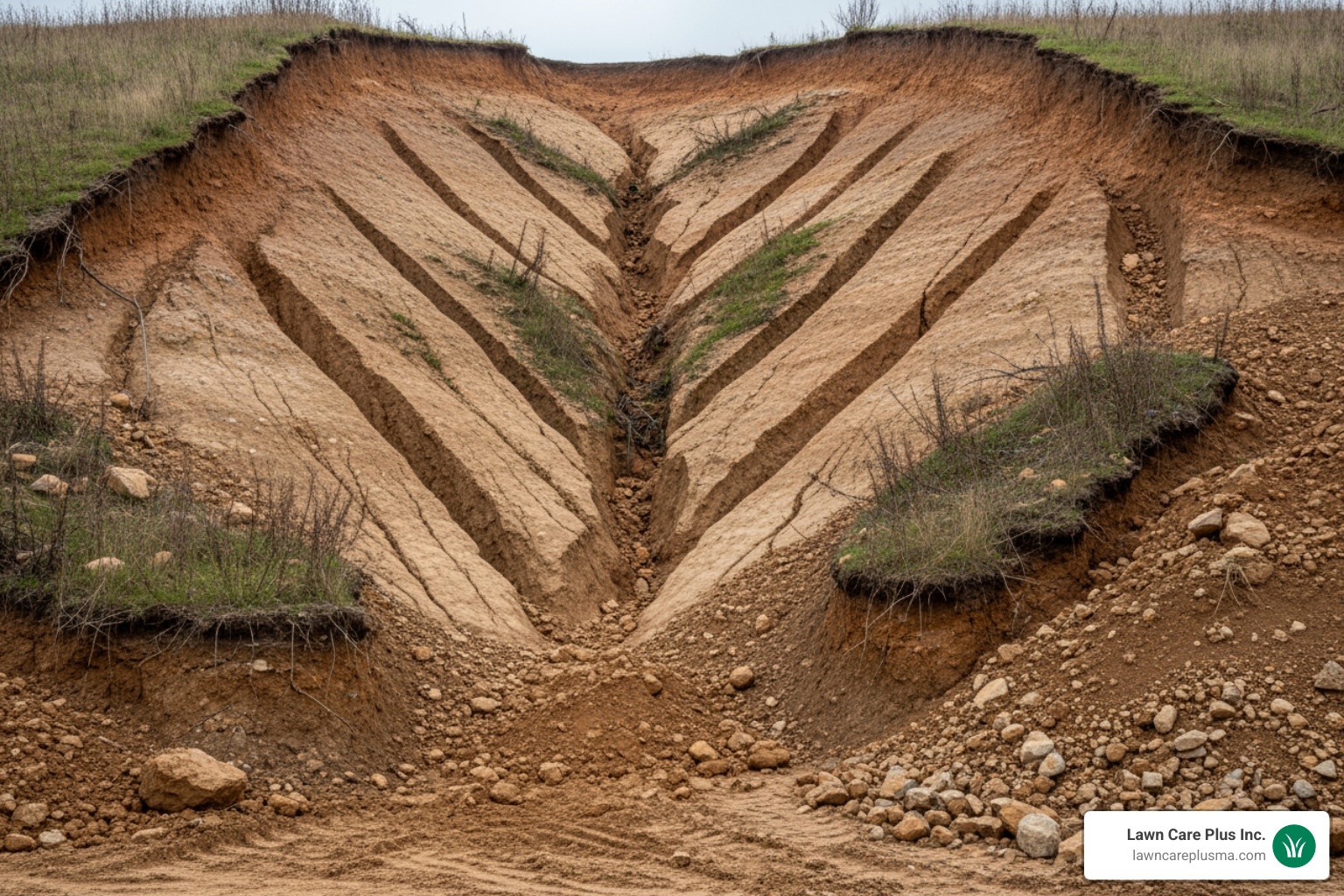
These structures create flat areas for patios or gardens and add significant aesthetic and property value. For more insights into how these structures can transform your property, explore our guide on landscape retaining walls.
Common Types of Retaining Walls
When considering building retaining walls, it’s helpful to understand the different types available.
- Gravity Walls: Rely on their mass (stone, concrete blocks) to resist soil pressure. They are wider at the base and simpler to build, ideal for DIY walls up to 3-4 feet high.
- Cantilevered Walls: Use an “L” or “T” shaped footing and a thinner, reinforced concrete stem. They can be taller than gravity walls but require professional engineering.
- Sheet Piling Walls: Constructed by driving thin sheets (steel, vinyl, wood) into the ground. Best for soft soils and tight spaces, like waterfronts.
- Anchored Walls: Use cables or rods anchored in the earth behind the wall for extra support, allowing for taller or thinner walls. Often used in large-scale projects.
- Gabion Walls: Wire mesh cages filled with rocks. Their permeability makes them excellent for managing drainage, and they offer a rustic look.
Understanding these types is crucial for selecting the right approach. Dive deeper into design considerations with our comprehensive guide on retaining wall design.
Choosing Your Materials: Pros and Cons
The material you choose impacts your wall’s aesthetic, durability, cost, and installation.
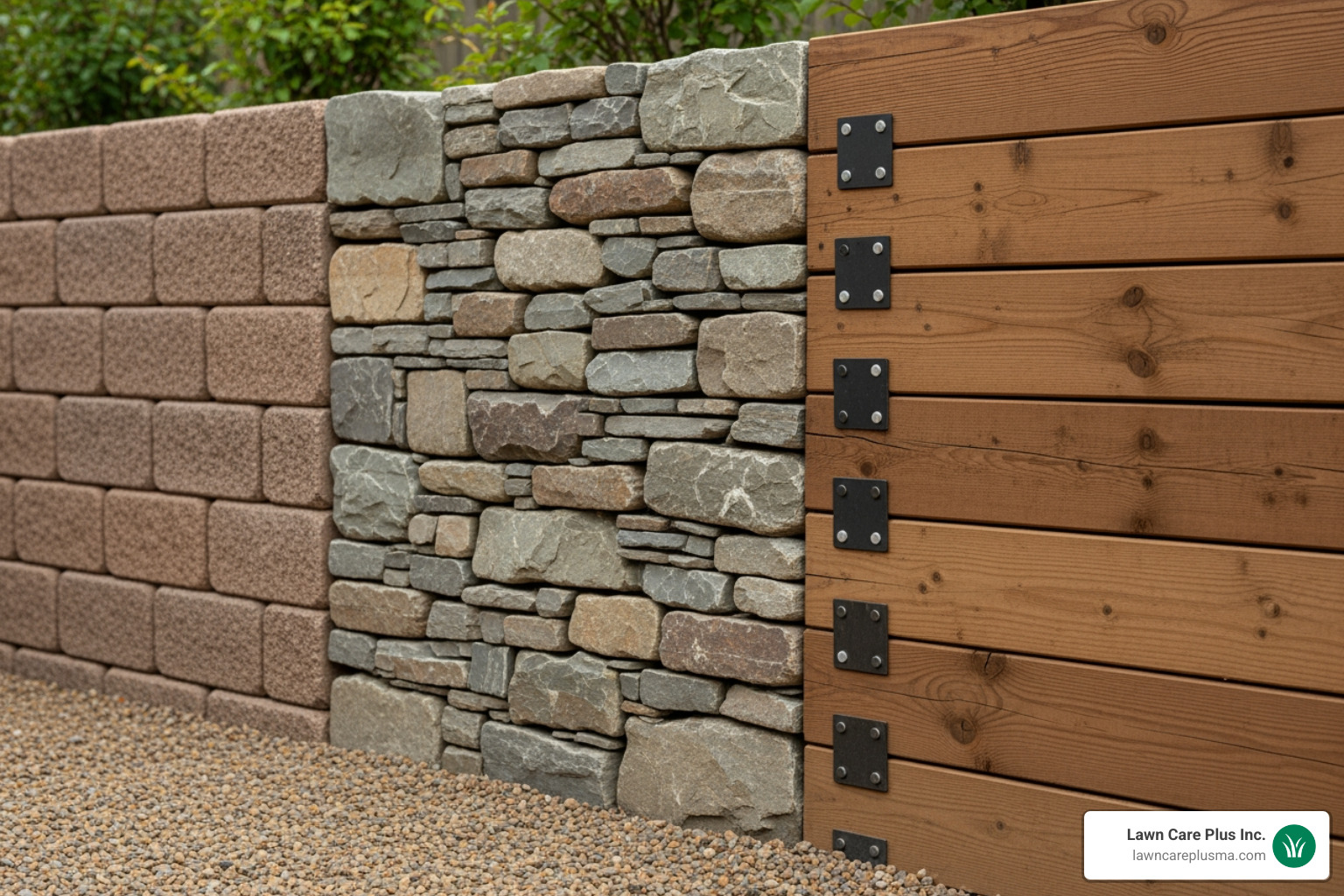
- Concrete Blocks: A popular, durable, and versatile choice. Interlocking blocks are easy to install and come in many styles, offering better longevity than wood.
- Poured Concrete: Offers superior, reinforced strength and can be formed into any shape. Requires professional installation and formwork.
- Natural Stone: Provides a timeless, high-end look that increases property value. It’s often the most expensive option and requires skilled masonry.
- Wood Timbers: An affordable DIY option, but with a shorter lifespan (20-40 years) due to susceptibility to rot and insects. Often requires “dead men” anchors for stability.
- Brick: Offers a classic look and is durable, but requires a solid foundation and skilled labor. Excellent drainage is critical to prevent moisture damage.
Material choice affects lifespan: concrete and stone can last 50-100 years, while wood typically lasts 20-40 years. For more on material choices, refer to The Ultimate Guide to Retaining Walls: Types, Materials, and Design. You can also learn more about specific options like concrete block retaining wall solutions.
Planning and Designing for a Stable Wall
Proper planning and design are paramount for a stable retaining wall. A thorough site assessment is the first step, examining topography, soil type, existing structures, and utilities.
Soil type is critical; clay soils in Massachusetts expand and exert immense pressure, while sandy soils drain well but may need more reinforcement. The site’s slope dictates the wall’s dimensions and structural needs.
In Massachusetts, checking local building codes is crucial. Walls over 4 feet in height typically require a permit and a design from a licensed engineer. Ignoring these rules can lead to costly failures and legal issues. Our team can assist with hardscape design services, ensuring all local requirements are met.
Key Design Principles for Durability
A retaining wall’s longevity hinges on these fundamental design principles:
- Solid Foundation: A stable, compacted base extending below the frost line is essential to prevent settling and frost heave. Our guide on retaining wall foundation provides more details.
- Batter or Setback: A slight backward slope, or “batter,” uses gravity to increase stability by leaning into the retained soil.
- Proper Drainage: This is the most critical factor. Proper drainage prevents hydrostatic pressure buildup, the leading cause of wall failure.
- Reinforcement with Geogrid: Walls over 3-4 feet require geogrid reinforcement. This mesh is layered within the wall and extends into the backfill, tying the structure to the earth to prevent tipping.
For a deeper dive into building durable structures, consult resources like Build a Durable and Attractive Retaining Wall with Allan Block.
Budgeting Your Project: Understanding the Costs
Retaining wall costs vary based on materials, labor, and site complexity. The following are general industry averages based on internet data, not a quote from Lawn Care Plus.
According to Angi, retaining walls typically cost between $3,202 and $9,203, with an average of $6,065. However, costs can range from $1,000 to over $20,000 for large or complex projects.
Factors influencing cost include:
- Material Costs: Materials range from $15-$30/sq ft for wood to $30-$50/sq ft for concrete blocks and $20-$100+/sq ft for natural stone.
- Labor Costs: Professional labor in Massachusetts typically costs $50 to $100 per hour and can increase by 50% or more for difficult sites. DIY saves on this cost.
- Site Preparation Fees: Site prep, including land clearing, grading ($900-$3,000), or tree removal, adds to the total cost.
- Permit Fees and Engineering: Permits and engineering fees (typically $350-$750+) are necessary for walls over 4 feet.
These are average costs and not actual quotes. For an accurate estimate for your project in the Boston Metro-West area, we recommend contacting our team. For more information on expenses, check out our guide on retaining wall cost.
A Step-by-Step Guide to Building Retaining Walls
Building a robust retaining wall requires careful execution of these critical steps.
Step 1: Preparing the Base and Foundation
A stable foundation is non-negotiable; shortcuts here will compromise the entire wall.
- Marking the Layout: Mark the wall’s path with stakes and string for straight lines or a hose and paint for curves.
- Excavating the Trench: Excavate a trench, removing all topsoil and organic material. For walls under 4 ft., the trench should be about 18 in. wide; for taller walls, 24 in. wide. The depth must accommodate a gravel base and the buried portion of the first course. As a rule of thumb, bury at least one-tenth of the wall’s total height to prevent blowout.
- Compacting the Soil: Thoroughly compact the native soil in the trench base with a plate compactor. Replace any soft soil with compacted granular material.
- Adding and Leveling Gravel Base: Add a 4-8 inch layer of compacted, angular crushed gravel to the trench. This creates a stable, draining base. It must be perfectly level, as any imperfection will be magnified up the wall.
For professional assistance with your site preparation and foundation work, our hardscape construction service can ensure it’s done right.
Step 2: The Importance of Proper Retaining Wall Drainage
Poor drainage is the #1 cause of wall failure. Trapped water creates immense hydrostatic pressure, which is amplified by Massachusetts’ freeze-thaw cycles, leading to bulging or collapse.
To achieve proper drainage:
- Perforated Drain Pipe: Place a perforated drain pipe wrapped in geotextile fabric behind the first course. Slope it to drain to daylight, carrying water away from the foundation.
- Gravel Backfill: Backfill with at least 12 inches of free-draining gravel (e.g., ¾-inch crushed stone) directly behind the wall. This allows water to reach the drain pipe.
- Weep Holes: For solid concrete or stone walls, include weep holes at the base to let water escape.
- Geotextile Fabric: Place geotextile fabric between the gravel backfill and native soil to prevent clogging.
- Impervious Soil Layer and Grading: Cap the gravel backfill with a layer of less permeable soil (like clay) and grade the final surface away from the wall to divert runoff.
Proper drainage is non-negotiable for a wall that lasts. Learn more about its importance in our detailed guide on retaining wall drainage.
Step 3: Laying Courses and Reinforcing Your Wall
With the foundation and drainage prepared, you can start laying the blocks.
- Laying the First Course: The first course is the most critical. Set the blocks on the level gravel base, ensuring each is perfectly level in all directions using a rubber mallet for adjustments. Precision here is key.
- Staggering Joints: Stagger the joints on subsequent courses, like a brick pattern. This running bond interlocks the blocks and distributes pressure evenly.
- Using Construction Adhesive: Secure the final course of capstones with masonry construction adhesive on a clean, dry surface.
- Backfilling in Lifts: Backfill behind each course as you go. Use granular material in 3-4 inch layers (lifts), compacting each lift thoroughly. Never use topsoil as backfill.
- Installing Geogrid for Taller Walls: For walls over 4 feet, install geogrid reinforcement as specified by the manufacturer. Lay it between courses and extend it back into the compacted soil to anchor the wall face.
For details on selecting and laying your wall materials, refer to our information on blocks for retaining wall.
Common Mistakes and How to Avoid Them
Even well-intentioned projects can fail if critical steps are missed. Understanding common pitfalls is key to building a wall that lasts.
Why Retaining Walls Fail and How to Prevent It
- Poor Drainage: The #1 cause of failure. Water pressure builds behind the wall, causing it to bulge and collapse.
- Prevention: Always install a perforated drain pipe, use gravel backfill, and ensure surface grading directs water away. Consider weep holes for solid walls.
- Inadequate Foundation: A weak or unlevel base causes the wall to settle and become unstable.
- Prevention: Ensure the trench is properly excavated, compacted, and filled with a deep, level, compacted gravel base that extends below the frost line in Massachusetts.
- Forgetting Reinforcement: Taller walls (over 4 ft.) require geogrid reinforcement to handle immense soil pressure.
- Prevention: Use geogrid fabric for walls over 4 feet, as specified by engineering plans.
- Wrong Materials: Materials unsuited for the load or climate will deteriorate prematurely.
- Prevention: Choose durable, weather-resistant materials appropriate for your wall’s purpose and our local conditions.
- Ignoring Soil Pressure: The design must account for the pressure of the soil wedge behind the wall.
- Prevention: Ensure proper batter/setback and adequate reinforcement for the soil load.
- Material Deterioration: Wood rot and concrete cracking compromise the wall’s integrity.
- Prevention: Use pressure-treated wood or naturally resistant varieties; apply sealants to concrete; choose high-quality stone.
- Vegetation Growth: Aggressive tree roots can damage a wall over time.
- Prevention: Choose plants with non-invasive root systems near the wall, or install root barriers.
- Inadequate Design: A design that doesn’t account for all loads (soil, water, driveways) is doomed to fail.
- Prevention: Consult with a landscape architect or engineer for complex or taller walls.
- Frost Heave: In our climate, trapped water freezes and expands, pushing the wall outward.
- Prevention: Extend footings below the frost line and ensure superior drainage to reduce water content in the soil.
If you notice signs of failure, it’s crucial to address them promptly. For concerns or retaining wall repair near me in the Boston Metro-West area, contact our team.
Essential Dos and Don’ts of Building Retaining Walls
Here are the essential dos and don’ts for building retaining walls:
The DOs:
- DO Check Local Codes and Get Permits: This is mandatory in Massachusetts for walls over 4 feet.
- DO Build a Solid, Level, and Compacted Base: This is the most important factor for stability.
- DO Install Comprehensive Drainage: A drain pipe, gravel backfill, and proper grading are non-negotiable.
- DO Use Reinforcement When Needed: Geogrid is vital for taller walls.
- DO Backfill Properly: Use granular material, compacting in lifts after each course.
- DO Stagger Blocks: Offset joints for maximum structural integrity.
- DO Ensure the First Course is Perfectly Level: Errors here will be amplified.
- DO Use a Batter/Setback: Angle blocks backward for stability.
The DON’Ts:
- DON’T Skip the Foundation.
- DON’T Ignore Water: Trapped water is a wall’s worst enemy.
- DON’T Build Too High Without an Engineer.
- DON’T Use Topsoil for Backfill.
- DON’T Rush the Process, especially the base and first course.
- DON’T Forget Compaction.
Following these guidelines, as outlined by experts from How to Build a Retaining Wall, will significantly increase your wall’s lifespan.
Long-Term Maintenance for Your Retaining Wall
Regular maintenance ensures your wall’s longevity.
- Regular Inspection: Periodically inspect for cracks, bulges, or leaning. Early detection prevents major repairs.
- Cleaning Weep Holes/Drainage: Keep weep holes and drain outlets clear of debris to prevent water buildup.
- Checking for Cracks or Bulges: Fill small cracks with sealant. Large cracks, bulges, or leaning indicate a structural problem requiring professional assessment.
- Managing Vegetation: Avoid planting trees with aggressive roots near the wall. Keep vegetation trimmed back.
Proactive maintenance can extend the life of your wall. For any hardscape restoration needs, our team offers specialized hardscape restoration services.
DIY vs. Hiring a Professional Retaining Wall Contractor
The decision to DIY or hire a pro for building retaining walls depends on project complexity, your skills, and local codes.
| Factor | DIY Approach | Professional Approach |
|---|---|---|
| Cost | Saves on labor costs ($15-$50/sq ft) | Higher upfront cost, but long-term savings from durability |
| Time | Significant time commitment, often longer | Efficient, faster completion |
| Quality | Varies based on skill and experience | High-quality, engineered for longevity |
| Safety | Potential for injury due to heavy lifting, machinery | Professionals have expertise and safety equipment |
| Liability | Homeowner responsible for errors/failures | Contractor responsible, often insured/bonded |
When to Tackle Building Retaining Walls Yourself
A DIY approach works well for:
- Small, decorative walls under 3-4 feet that aren’t holding back a major slope.
- Simple, straight designs without complex curves.
- You have or can rent the proper tools (plate compactor, levels, etc.).
- You have some previous construction or landscaping experience.
- You can commit the necessary time and physical effort.
For more on the pros and cons of DIY hardscaping in our region, see our guide on diy hardscaping pros and cons in massachusetts.
When to Call a Professional
For most projects, especially in the Boston Metro-West area, we recommend hiring a professional for:
- Walls over 4 feet tall, which require permits and engineering in Massachusetts.
- Complex tiered walls or those with intricate curves.
- Sites with poor soil conditions, like expansive clay.
- Walls built near foundations, driveways, or other critical structures.
- Any project requiring permits and engineering.
- Walls supporting heavy loads like a driveway or patio.
Hiring a professional ensures your wall is designed and built correctly, preventing costly failures. Learn more about the benefits of hiring a professional for your retaining wall installation.
Creative Landscaping with Retaining Walls
Beyond function, retaining walls offer incredible landscaping opportunities to transform your yard.
- Tiered Gardens: On sloped properties, a series of terraced retaining walls creates flat planting beds at different elevations. This not only prevents erosion but also allows for diverse plant selections and stunning visual effects.
- Raised Patios: Retaining walls can create level platforms for inviting patios, extending your outdoor living space even on uneven terrain.
- Integrated Seating Walls: Design your retaining wall to double as built-in seating around a patio or fire pit. This adds functional elements without needing extra furniture. Explore ideas for patio fire pits.
- Defining Outdoor Rooms: Use retaining walls to create distinct “rooms” within your landscape, separating a dining area from a garden or a play space.
- Water Features: Incorporate a cascading waterfall or a gentle stream directly into your retaining wall design for soothing sounds and visual interest.
For more inspiration, check out our retaining wall design ideas for every style of home.
Conclusion
Building retaining walls is a significant investment that pays dividends in functionality, aesthetics, and property value. As we’ve explored, the keys to a successful project lie in meticulous planning, a robust foundation, comprehensive drainage, and appropriate reinforcement. Understanding these principles is crucial, whether you’re starting on a DIY project or entrusting it to professionals.
For smaller, decorative walls, a DIY approach might be feasible. However, for any wall over 4 feet, or projects involving complex designs, challenging soil, or proximity to structures, the expertise of a professional retaining wall contractor is invaluable. In Massachusetts, regulatory requirements for taller walls underscore the importance of professional engineering and permits.
At Lawn Care Plus, Inc., we specialize in designing and building retaining walls that are not only beautiful but also structurally sound and built to last in our New England climate. Our experienced team serves homeowners and businesses across the Boston Metro-West area, changing landscapes with precision and care.
Ready to transform your landscape and add lasting value to your home? Explore our landscape retaining walls services to get started on your project today. We’re here to help you turn dirt into design.