The Strategic Benefits of Commercial Hardscape Solutions
Commercial hardscape solutions are the non-living, built elements of a property’s outdoor space — think stone walkways, concrete pavers, retaining walls, patios, and decorative masonry. Here’s a quick overview of what they include and why they matter for commercial properties:
- What they are: Durable structures made from stone, brick, concrete, wood, or metal that define the layout and usability of outdoor spaces
- What they’re not: Plants, grass, or soil (those are “softscapes”)
- Why businesses use them: To improve curb appeal, guide foot traffic, meet safety codes, manage stormwater, and create lasting first impressions
- Who needs them: Office parks, retail centers, hotels, medical campuses, and multi-family properties
Your outdoor space forms an opinion in a visitor’s mind before they ever walk through the door. A well-designed hardscape signals professionalism, care, and credibility — without saying a word.
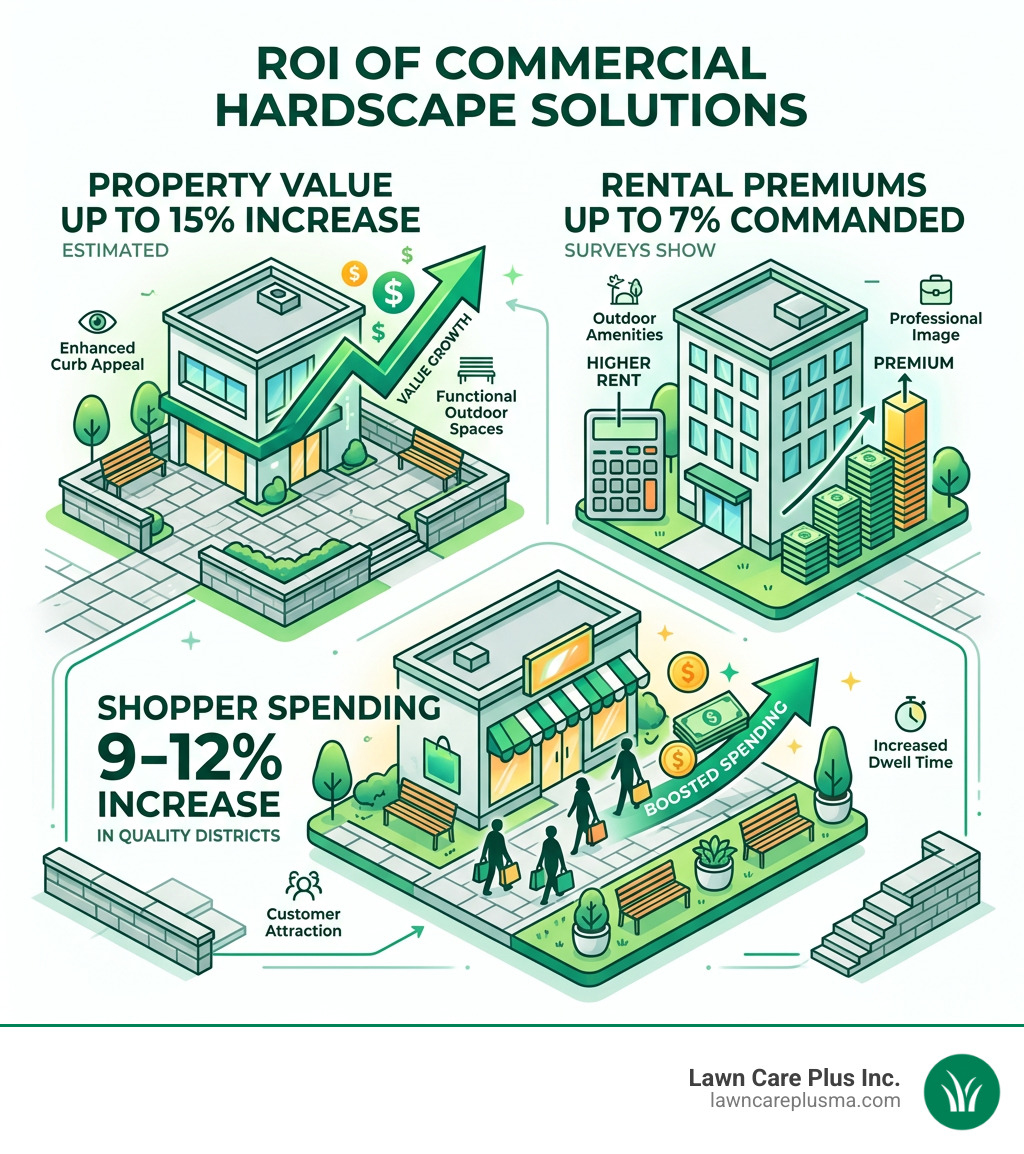
And the numbers back this up. Research shows that shoppers spend 9–12% more in business districts with quality landscaping, and that workplaces with superior landscapes command rental premiums of up to 7%. That’s not just curb appeal — that’s measurable return on investment.
I’m Tim DiAngelis, owner of Lawn Care Plus, Inc., and I’ve spent over a decade designing and installing commercial hardscape solutions for property owners and managers across Greater Boston and Metro-West Massachusetts. In this guide, I’ll walk you through everything you need to know — from choosing the right materials to understanding long-term ROI.
Simple Commercial hardscape solutions glossary:
When we talk about Commercial hardscape solutions, we aren’t just talking about aesthetics. We are talking about a strategic business asset. In the competitive markets of Boston, Newton, and Brookline, the exterior of your building acts as a silent salesperson. If your “salesperson” looks disheveled with cracked sidewalks and muddy patches, your brand takes a hit.
Curb Appeal and Brand Identity
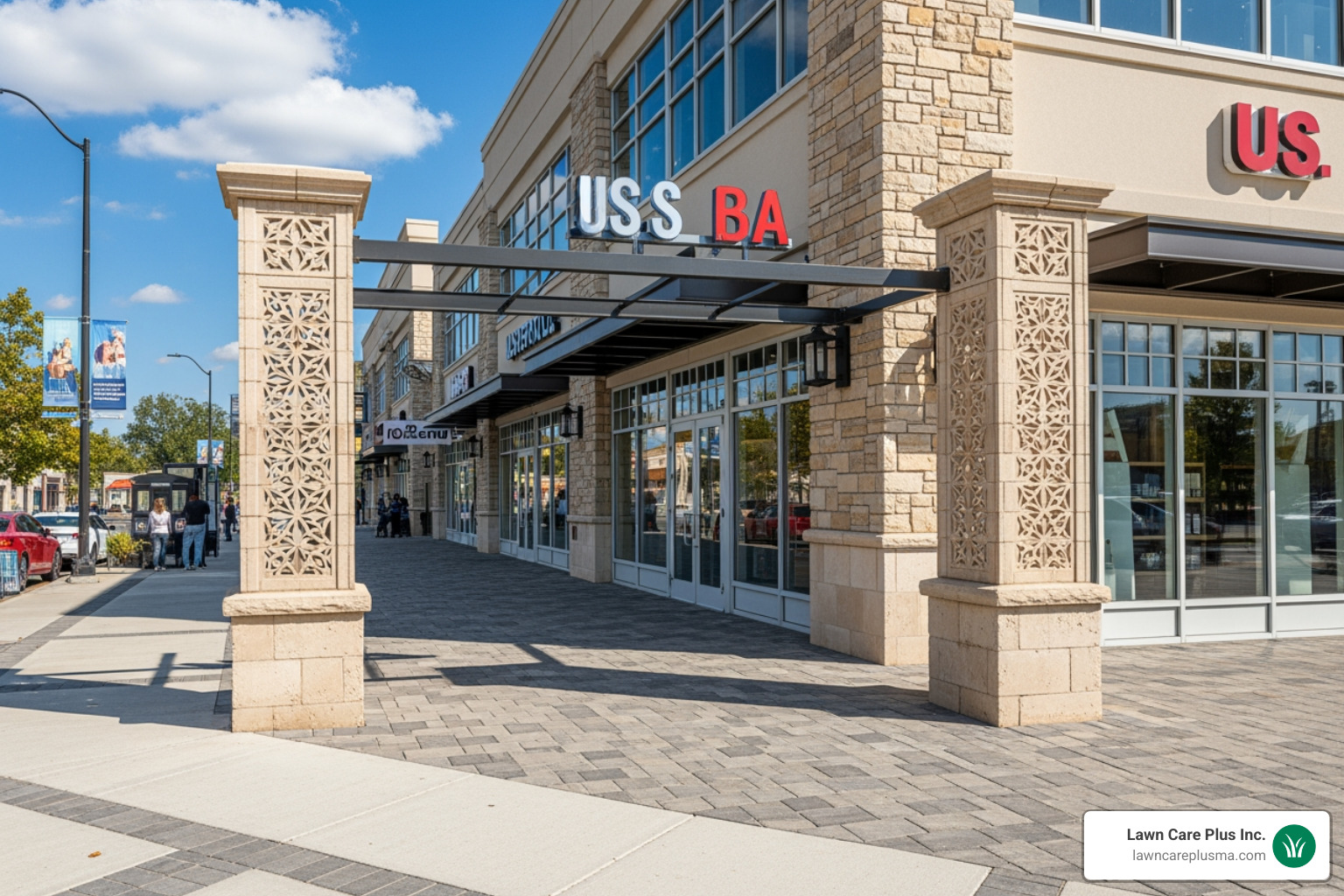
First impressions are everything. A high-end retail storefront in Chestnut Hill or a corporate office in Needham needs to project an image of stability and success. Decorative masonry, stone pillars, and perfectly leveled plazas tell your customers that you pay attention to detail. This visual “handshake” builds trust before a client even speaks to your staff.
Increasing Property Value and Rental Rates
For property managers, the math is simple: better landscapes equal higher rents. According to industry data, workplaces with superior landscapes command up to 7% higher rental rates. By investing in commercial landscaping, you aren’t just spending money; you’re increasing the equity of the asset. A well-designed courtyard or an outdoor employee break area makes a building far more attractive to high-quality tenants who want to provide a better environment for their employees.
Customer Dwell Time
In retail and hospitality settings, the goal is to keep people on-site. If a shopping center in Watertown has uncomfortable, narrow concrete paths, people leave quickly. However, if you incorporate wide, attractive patios with seating and water features, shoppers stay longer. Statistics show that shoppers spend 9-12% more in business districts with quality landscaping. The longer they “dwell,” the more they spend.
Enhancing Safety and ADA Compliance with Commercial Hardscape Solutions
In the commercial world, safety isn’t just a “nice to have”—it’s a legal and financial necessity. One of the primary roles of Commercial hardscape solutions is to enhance safety and security in commercial spaces.
- Pedestrian Traffic Flow: Well-designed walkways regulate the flow of traffic, keeping people away from dangerous areas and ensuring they reach entrances efficiently.
- Slip Resistance: In Massachusetts, we deal with rain, sleet, and snow. Choosing the right textures for your pavers is critical to prevent slip-and-fall accidents.
- ADA Compliance: Commercial properties must meet strict Americans with Disabilities Act (ADA) standards. This includes specific slope requirements for ramps, tactile warning strips, and minimum widths for paths.
- Lighting and Visibility: A dark parking lot or walkway is a liability. Professional hardscape lighting design ensures that your property is safe 24/7. Quality lighting makes your workplace more secure by eliminating hiding spots and highlighting potential trip hazards.
- Security Bollards: We often integrate decorative bollards into our hardscape designs. These aren’t just for looks; they provide a physical barrier between vehicle traffic and pedestrian zones, protecting your building and your people.
Sustainable Commercial Hardscape Solutions and Stormwater Management
Modern businesses are increasingly focused on eco-friendly practices, and hardscaping plays a surprisingly large role in this.
- Permeable Pavers: Traditional concrete sends rainwater rushing into the sewer system, often carrying pollutants. Permeable pavers allow water to filter through the joints and back into the ground. This is vital for erosion control in landscaping and helps replenish groundwater.
- Heat Island Mitigation: Large expanses of black asphalt absorb heat, making the surrounding area much hotter. Using materials with a high Solar Reflective Index (SRI) helps keep your property cooler, which can actually reduce your building’s cooling costs in the summer.
- Stormwater Management: Many municipalities in the Greater Boston area now charge “stormwater fees” based on the amount of non-porous surface on your property. By switching to permeable systems, businesses can often reduce these fees significantly.
- Xeriscaping and Drought Resistance: Hardscapes reduce the need for thirsty turf grass. By integrating stone elements with drought-resistant plants, you create a beautiful landscape that requires minimal water and maintenance.
Popular Elements and Modern Trends in Design
The world of commercial design is moving away from “plain gray concrete.” Today’s businesses want outdoor spaces that feel like extensions of their indoor offices.
Patios and Courtyards
The “outdoor office” is a huge trend. We are seeing more demand for expansive patios where employees can take meetings or eat lunch. These areas often feature built-in seating and high-quality hardscape installation services to ensure they can withstand heavy daily use.
Retaining Walls
Retaining walls are the workhorses of the hardscape world. They aren’t just for holding back dirt; they create level space on sloped lots, which is common in areas like Belmont and Waltham. We work as expert retaining wall installers to build walls that are both structural and decorative, often doubling as “seat walls” for extra outdoor capacity.
Walkways and Stairs
Functional beauty is the goal here. Whether it’s a grand entrance to a hotel in Boston or a network of paths in a Dedham office park, stairs and walkways installations must be durable. We often use natural stone or high-strength concrete pavers to ensure these high-traffic areas don’t crack or settle over time.
Modern Trends to Watch
- Gabion Walls: These are wire cages filled with stone. They offer a rugged, industrial look that is incredibly popular in modern architecture. They are also excellent for drainage.
- Biophilic Design: This is the practice of connecting people with nature. We do this by blending hard surfaces with “pockets” of greenery, water features, and natural wood elements like pergolas.
- Paver Art: Using different colors and shapes of pavers to create logos, geometric patterns, or “carpets” in the middle of a plaza. It’s a great way to reinforce brand identity.
- Terraced Slopes: Instead of one giant, ugly wall, we create several smaller, terraced levels with plantings in between. This softens the look of the property while managing steep grades.
Planning, Costs, and ROI for Business Owners
Success in hardscaping starts long before the first stone is laid. It begins with a comprehensive site analysis. We look at soil conditions, drainage patterns, and how people currently move through the space.
Material Selection: Durability vs. Cost
Choosing the right material is a balancing act. You want something that looks great but won’t require a full replacement in five years.
| Material | Durability | Maintenance | Cost Level | Best Use |
|---|---|---|---|---|
| Poured Concrete | Moderate | Moderate | Low | Basic sidewalks, utility areas |
| Concrete Pavers | High | Low | Moderate | Plazas, high-traffic walkways |
| Natural Stone | Very High | Low | High | High-end entrances, focal points |
| Permeable Pavers | High | Moderate | Moderate-High | Parking lots, eco-friendly zones |
If your existing hardscape is looking tired, you might not need a full replacement. We offer hardscape restoration services that can clean, seal, and repair pavers to bring them back to life at a fraction of the cost of new installation.
Budgeting for Your Project
Budgeting for Commercial hardscape solutions requires a clear understanding of the scope. While every project is unique, we can look at some industry averages to get a ballpark figure.
Important Note: The following figures are average costs based on internet data and are not actual costs for Lawn Care Plus Inc. Every site in the Boston Metro-West area has unique soil and access challenges that affect final pricing.
For commercial projects, you can expect a wide range of pricing based on material and complexity:
- Basic Concrete Work: $15 – $35 per square foot.
- Interlocking Pavers: $25 – $75 per square foot.
- Premium Natural Stone (Granite/Bluestone): $60 – $180+ per square foot.
The high end of the scale often includes complex patterns, significant excavation, or the use of rare materials. While the initial investment might seem high, the ROI is significant. Most commercial properties see a 100-200% return on their investment within five years through increased property value and reduced maintenance costs. For a deeper dive into these numbers, check out our hardscaping services complete guide.
Frequently Asked Questions about Commercial Hardscaping
How do commercial hardscapes differ from residential ones?
The biggest difference is scale and load. A residential patio might only need to hold a grill and a few people. A commercial plaza in a city like Boston needs to withstand thousands of footsteps a day, heavy maintenance equipment, and potentially even emergency vehicles.
Commercial projects also have much stricter requirements for ADA compliance and liability. Every slope, edge, and joint must be perfect to prevent lawsuits. Finally, the materials used in commercial settings are often thicker and have higher “compressive strength” than what you would find in a typical backyard. For more on this, see our guide on hardscaping vs landscaping.
What are the best low-maintenance materials for businesses?
If you want to “set it and forget it,” high-quality concrete pavers are the way to go. They don’t crack like poured concrete because they can move slightly with the freeze-thaw cycles we get here in Massachusetts. If one paver gets stained or damaged, you can simply pop it out and replace it—you don’t have to jackhammer the whole sidewalk.
Natural stone like granite is also incredibly low maintenance because it is virtually indestructible. While it costs more upfront, it will literally last a lifetime. Our hardscape company team can help you select the material that fits your specific maintenance budget.
How soon will a business see a return on investment?
Some benefits are immediate. The day a project is finished, your property value increases. If you are looking to sell or refinance, that’s an instant win. If you are looking for tenants, a beautiful exterior allows you to hike rental rates immediately.
Energy savings from smart tree placement and heat-reflective hardscapes usually take a few seasons to show up on the utility bills. Most of our clients find that their hardscape project pays for itself entirely within 3 to 5 years when you combine all these factors. You can read more about this in our commercial building landscape guide.
Conclusion
Investing in Commercial hardscape solutions is one of the smartest moves a property owner can make. It solves practical problems like drainage and safety while simultaneously boosting the financial performance of the business.
At Lawn Care Plus Inc., we take pride in being the premier hardscape and masonry team for the Boston Metro-West area. From the historic streets of Jamaica Plain to the modern office parks of Norwood and Walpole, we understand the local climate, the local soil, and the local regulations.
Whether you need a simple walkway repair in Roslindale or a full-scale courtyard redesign in Newton, our team has the experience and the equipment to get the job done right the first time. We don’t just lay stones; we build the foundation for your business’s outdoor success.
Ready to transform your property? We serve a wide range of locations including Belmont, Brighton, Canton, Dedham, Hyde Park, Mattapan, Medfield, Milton, Randolph, Readville, and beyond.
Contact us for a commercial hardscape consultation today, and let’s build something that lasts.