
Why AC Drainage Solutions Matter for Your Property
AC drainage solutions are essential for protecting your home from water damage, maintaining HVAC efficiency, and keeping your yard healthy. Here’s what you need to know:
Quick Overview of AC Drainage Solutions:
- For Clogged Drain Lines: Use a wet/dry vacuum or vinegar flush to clear blockages inside the condensate pipe
- For Yard Runoff Issues: Install extension pipes, French drains, dry wells, or catch basins to manage outdoor water flow
- For Prevention: Perform monthly vinegar flushes and annual HVAC tune-ups to avoid clogs before they start
- Professional Help: Call an HVAC technician for persistent clogs or a landscaping contractor for permanent yard drainage fixes
Your air conditioning unit doesn’t just cool your home—it pulls moisture from the air and produces gallons of water every day. That water has to go somewhere. When it doesn’t drain properly, you’re looking at potential water damage to floors, ceilings, and drywall. Insurance companies cite AC drain line failure as one of their highest claims by volume.
A clogged drain line is one of the most common causes of AC malfunction. When the condensate can’t escape, it backs up into your system, triggers safety switches, and can shut down your entire unit. Outside your home, AC runoff can create boggy soil, kill plants, and turn parts of your yard into a muddy mess.
The good news? Most drainage problems have straightforward solutions—whether you need to clear a simple clog yourself or install a permanent drainage system in your yard.
I’m Tim DiAngelis, owner of Lawn Care Plus, Inc., and over the past decade, I’ve helped countless property owners in Greater Boston solve both indoor AC drainage clogs and outdoor landscape drainage challenges caused by condensate runoff. Our team specializes in AC drainage solutions for yards, from simple rerouting to professional French drain installations.
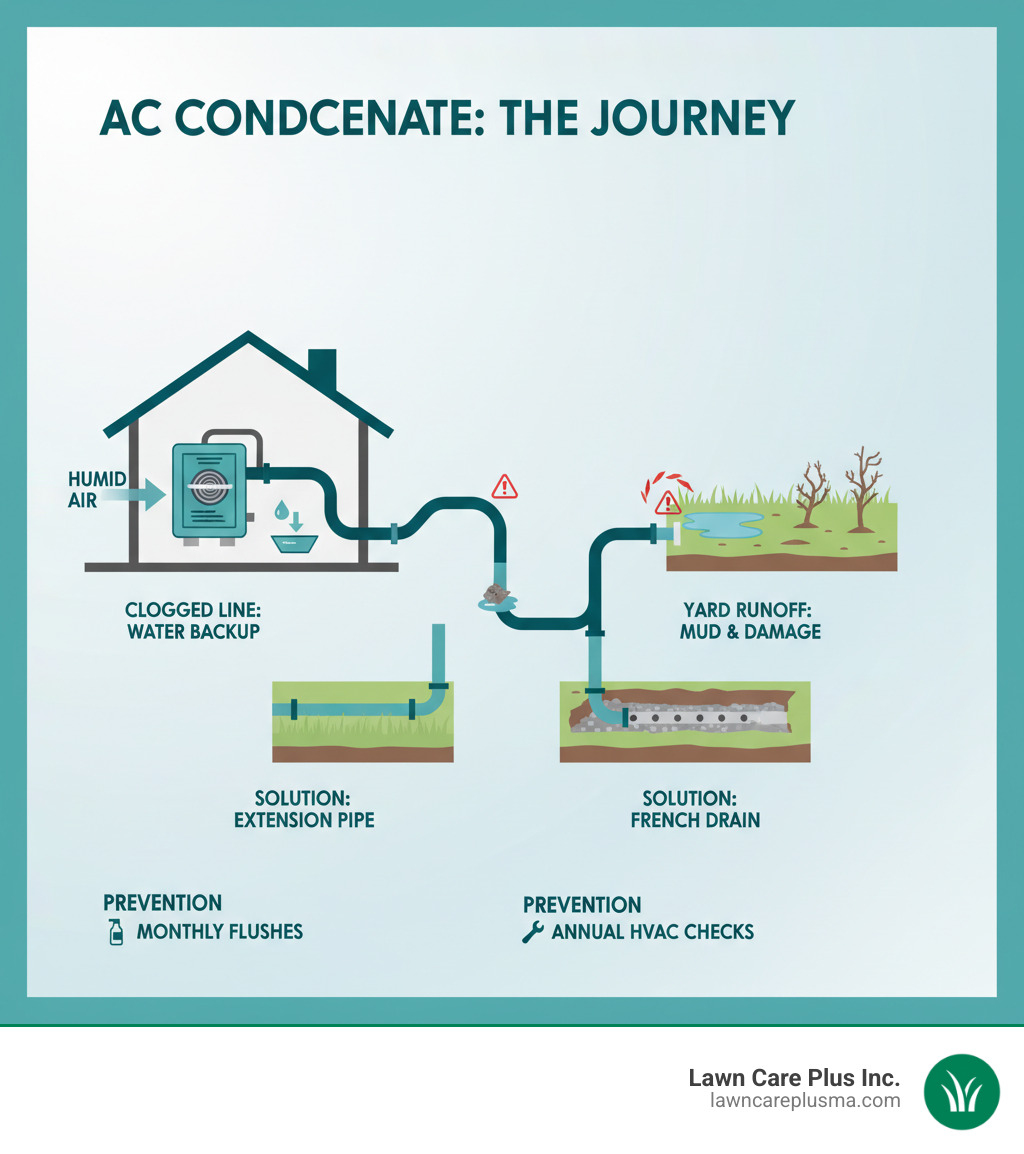
Simple guide to ac drainage solutions:
Understanding Your AC Condensate Drain Line
When your air conditioner runs, it removes humidity from your home’s air. This happens at the indoor unit’s evaporator coil. As warm, humid air passes over the cold coil, moisture condenses and drips into a drain pan located beneath it.
From the drain pan, the condensate flows through a PVC pipe known as the AC condensate drain line. This pipe, typically 3/4 to 1 inch in diameter, uses gravity to carry water out of your home, usually terminating outdoors near the condenser unit. The proper function of this drain line is crucial. It impacts HVAC efficiency by allowing the system to effectively remove humidity, and it protects internal components from rust and corrosion, contributing to the system’s longevity.
Why a Clear Drain Line is Non-Negotiable
A clogged AC drain line is a serious threat to your home. When condensate can’t flow freely, it backs up into the drain pan. Many modern AC units have a safety switch (or float switch) that automatically shuts down the system when the water level gets too high, preventing an overflow but leaving you without cooling.
If your system lacks a functioning safety switch, the overflowing water can cause significant damage to ceilings, walls, and flooring. This is why insurance companies report AC drain line failure as a high-volume claim. The excess moisture also creates a perfect breeding ground for mold and mildew, leading to musty odors and poor indoor air quality that can pose health risks. Maintaining a clear drain line isn’t just about keeping your AC running; it’s about safeguarding your home.
Spotting the Problem: Signs of a Clogged AC Drain Line
Your AC system usually gives warning signs before a minor clog becomes a major disaster. Knowing what to look for can save you from costly repairs.
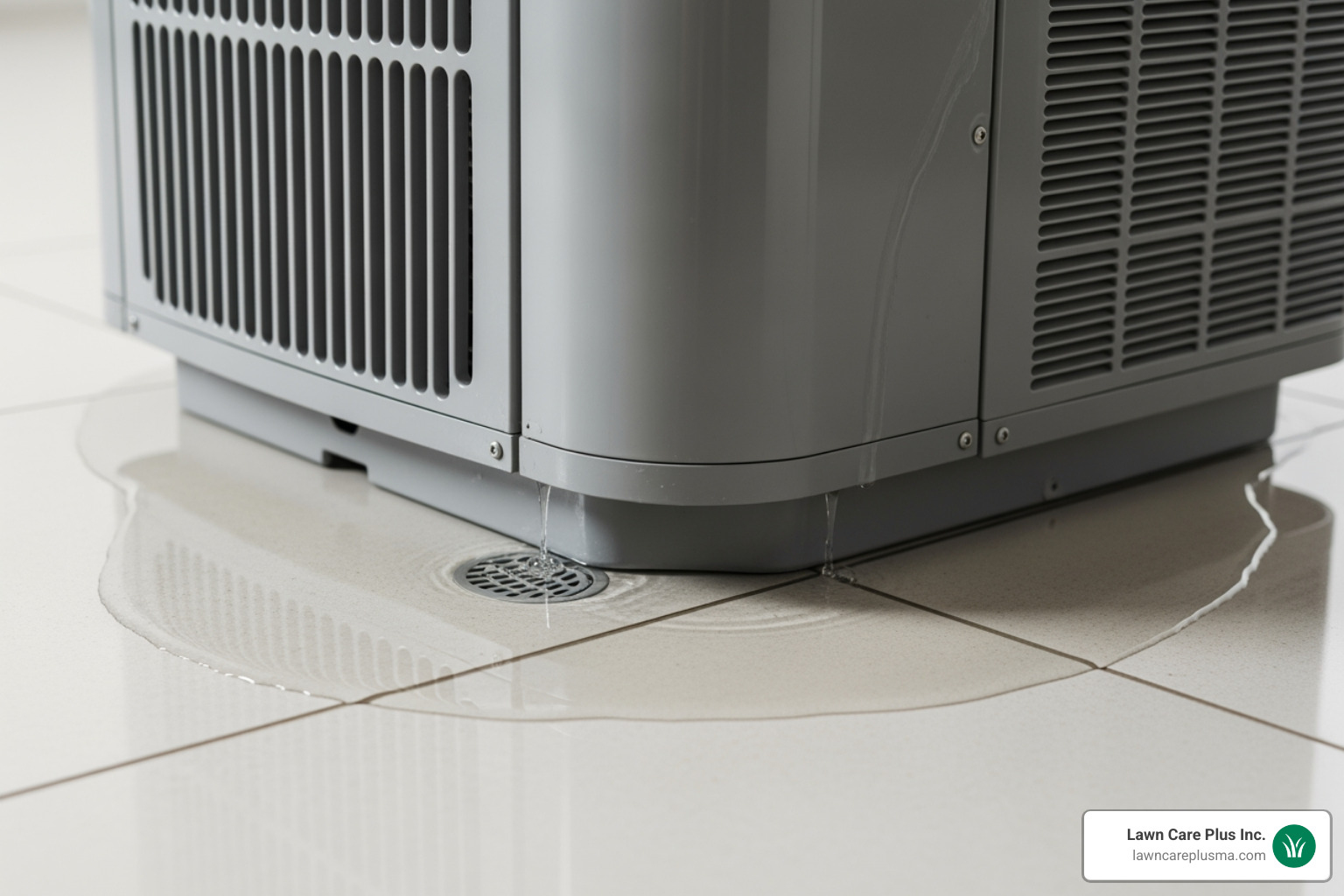
The most obvious sign is visible water damage or puddles near your indoor air handler, which is often in a closet, attic, or basement. If you see water pooling or damp stains on ceilings or walls, your condensate pan has likely overflowed.
If you can safely access it, check the condensate pan itself. A full pan of water indicates a blockage in the drain line.
Also, pay attention to a musty or moldy smell from your vents. This odor means standing water has allowed mold and mildew to grow, and spores may be circulating through your home’s air.
Other signs include your AC not cooling effectively because it can’t remove humidity, or the system shutting down unexpectedly. The latter is often the safety switch doing its job to prevent an overflow. Catching these signs early is key to effective ac drainage solutions.
What Causes Persistent Clogs?
The main culprits are algae, mold, and mildew that thrive in the dark, damp drain line. This organic growth forms a gooey buildup often called “white slime,” which traps dust, pet dander, and other debris floating in your air.
The constant moisture from the evaporator coil feeds this growth, a problem exacerbated by the high humidity in Massachusetts summers. Sometimes, improper installation is to blame. If a drain line lacks an adequate downward slope, water sits in the pipe, encouraging biological growth. We’ve seen many cases where recurring clogs were due to an underlying installation issue that was never addressed. Effective ac drainage solutions must tackle both the immediate clog and the conditions that cause it.
Comprehensive AC Drainage Solutions for Your Yard
Even if your AC works perfectly, the discharged water can cause problems outside. Soggy lawns, struggling plants, and muddy spots are common issues for homeowners in Belmont, Newton, and the Boston Metro-West area. The good news is that proven AC drainage solutions can keep your yard healthy and dry.
Simple Rerouting and Repurposing Methods
Sometimes, a simple adjustment is all you need if your drain line is dumping water in the wrong spot.
- Attach an extension pipe or garden hose to direct water away from your home’s foundation toward an area that can handle the moisture.
- Direct water to flower beds or a garden. AC condensate is essentially distilled water and is great for plants. It provides free irrigation during dry summer weeks. For ideas, see this guide on AC condensation drain runoff. Just ensure your garden has adequate drainage; our Garden Land Drainage Solutions can help.
- Collect condensate in a rain barrel. Capturing the gallons of water your AC produces daily is a great way to reduce your water bill and reuse a valuable resource.
Advanced AC Drainage Solutions for Runoff
When simple rerouting isn’t enough, or if you have clay soil, it’s time for more robust solutions. These are the permanent fixes we install for properties with persistent drainage challenges.
| Drainage Solution | Typical Installation Difficulty | Effectiveness | Primary Use Case |
|---|---|---|---|
| French Drain | Moderate to High | High | Diverting widespread pooling water away from foundations |
| Dry Well | Moderate | Moderate | Dispersing collected water underground in a localized area |
| Catch Basin | Low to Moderate | High | Collecting surface water from specific low spots or paved areas |
A French drain is one of our most popular AC drainage solutions. We dig a trench, install a perforated pipe surrounded by gravel, and channel surface and subsurface water to a proper discharge point. It’s the same principle we use when Installing a French Drain for Gutters, and it works beautifully for AC runoff.
Dry wells are underground pits filled with gravel that allow collected water to slowly disperse into the surrounding soil. This works well when you need to manage water in a specific area but lack a discharge point for a French drain.
Catch basins are ideal for water that pools in specific spots like patios or walkways. These grated drains capture surface water and channel it into an underground pipe system. They are often combined with other strategies, as covered in our Surface Drainage System Ultimate Guide.
Sometimes the issue is the property’s grade. Lot re-grading is often the most effective long-term solution. We reshape your yard to create gentle slopes that naturally guide water away from your foundation. This is critical for properties on hills, as explained on our Drainage Solutions for Sloping Land page.
Improving Your Yard’s Natural Drainage
Beyond installations, improving your soil’s health is a great defense against water problems.
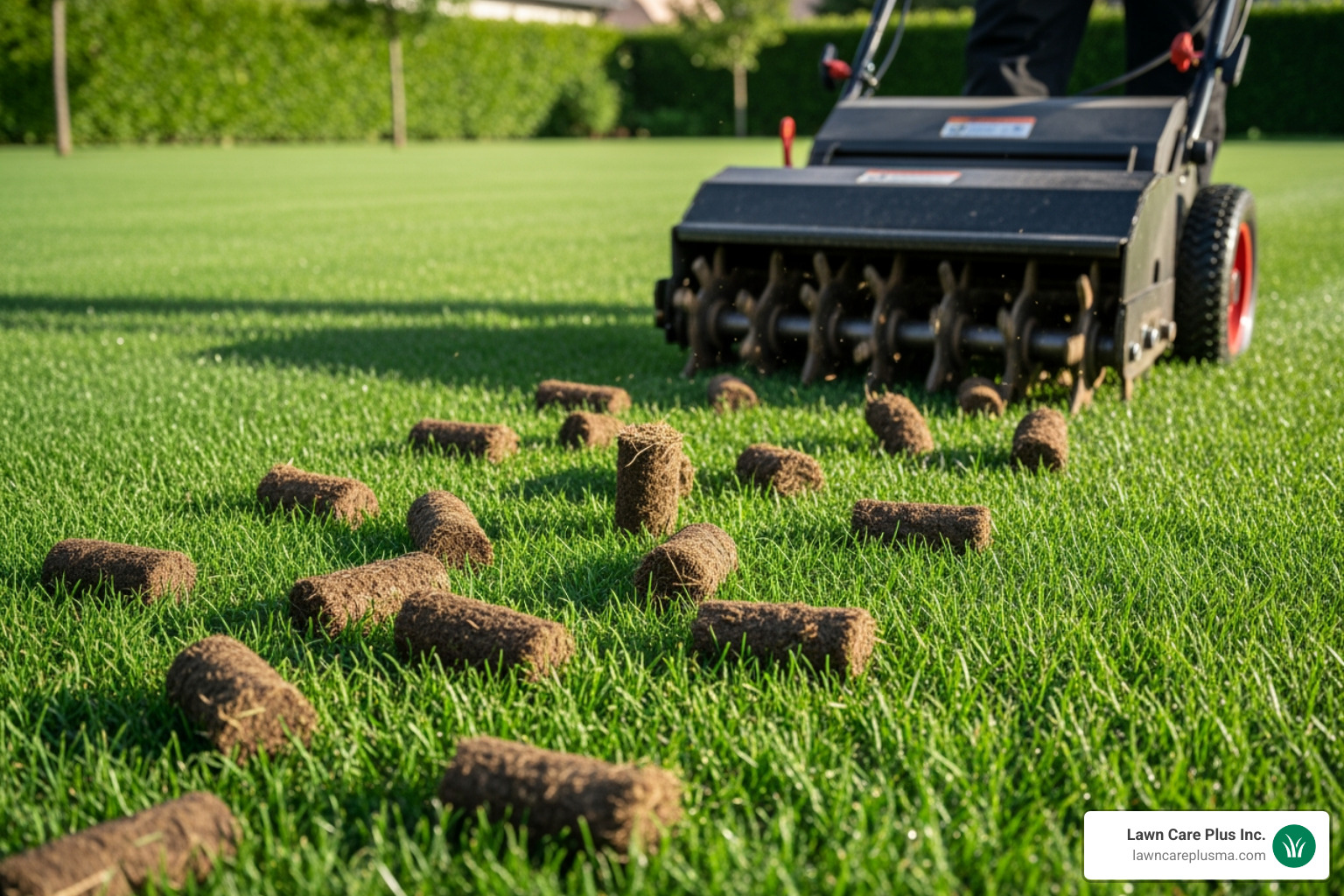
- A soil percolation test (digging a hole and timing how fast water drains) can reveal your soil’s natural drainage capacity.
- Core aeration reduces compaction in lawns, allowing water and air to penetrate deeper.
- Top-dressing with organic compost improves soil structure and its ability to absorb water.
- Planting water-loving species, such as swamp-adapted plants, can turn a damp area into a landscape feature.
- Thinning dense trees and shrubs increases sunlight and airflow, helping wet ground dry faster.
Clearing and Maintaining Your AC Drain Line
While Lawn Care Plus Inc. solves outdoor drainage challenges, we know effective AC drainage solutions begin inside. A clear condensate line is the foundation for a properly functioning AC and a dry home.
DIY vs. Professional AC Drainage Solutions for Clogs
Many clogs are manageable with basic tools, but some situations require a professional.
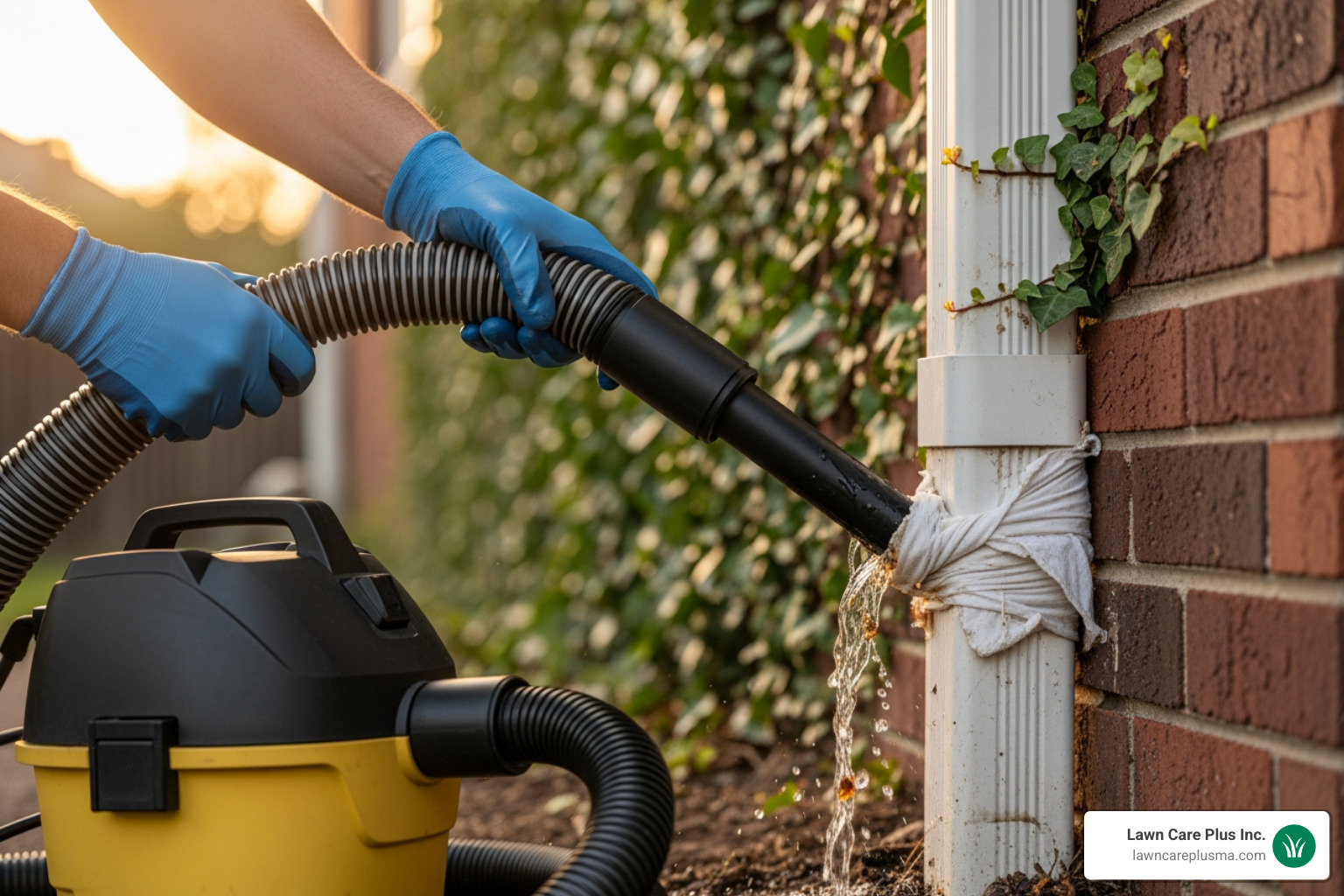
For simple clogs, a vinegar flush is a great first step. Turn off your AC at the breaker, then find the access point on your condensate line (a vertical PVC pipe with a cap). Pour a quarter cup of distilled white vinegar into the opening, let it sit for 30-60 minutes to dissolve buildup, and then flush with a gallon of water.
If that doesn’t work, a wet/dry vacuum is a powerful tool. With the AC off, go outside and attach the vacuum hose to the end of the drain line, creating a tight seal (duct tape helps). Run the vacuum for a minute or two to pull the blockage out.
However, you should call an HVAC technician if DIY methods fail, if you’re not comfortable working on your system, or if you suspect a more serious issue. Professionals have specialized equipment to tackle stubborn clogs. Carrier provides a helpful guide on How to Fix a Clogged AC Drain Line for more detailed instructions.
Proactive Maintenance to Prevent Future Problems
Preventing clogs is far easier than fixing them. A little regular maintenance goes a long way.
- Perform a monthly vinegar flush during the cooling season to stop algae and mildew from forming.
- Change your air filters regularly (typically every 1-3 months) to keep dust and debris from washing into the drain line.
- Consider in-line treatment devices for continuous protection against biological growth, especially if you’ve had recurring clogs.
- Schedule an annual HVAC tune-up. A licensed technician will inspect and clean your drain line as part of their routine service.
- Check your drain pan occasionally. A dry pan means everything is working correctly; standing water signals a problem.
What Do Professional Services Cost?
Since we focus on landscaping at Lawn Care Plus Inc., we don’t handle HVAC repairs. However, based on industry standards across Massachusetts, professional AC drain line cleaning typically ranges from $75 to $500 or more. The final cost depends on the clog’s severity, accessibility, and whether you need emergency service. These are average costs based on internet data and not actual costs for Lawn Care Plus.
When you compare this fee to the potential expense of ignoring a clog—which can include thousands in water damage repairs and mold remediation—preventative maintenance or a timely service call is a wise investment in your home.
Frequently Asked Questions about AC Drainage
Our team at Lawn Care Plus Inc. often fields questions from homeowners in the Boston Metro-West area about AC drainage. While we specialize in outdoor solutions, understanding the full picture is key. Here are the most common questions we hear:
How often should I clean my AC drain line?
For preventative maintenance, we recommend a cleaning at least once a month during the cooling season (May-September in Massachusetts). A simple vinegar flush is usually sufficient. If your area is very humid, your AC runs constantly, or you’ve had clogs before, consider cleaning it every few weeks.
Beyond DIY maintenance, an annual professional HVAC tune-up is essential. A technician will thoroughly inspect and clean the drain line, catching issues you might miss.
Can I use bleach to clean my AC drain line?
We strongly advise against using bleach. While it kills organic growth, bleach is highly corrosive and can damage PVC pipes and other AC system components over time, potentially creating leaks. The fumes can also circulate through your ductwork.
Distilled white vinegar is the best choice. It’s a milder acid that effectively breaks down algae and mold without the risks associated with bleach. It’s safer for your pipes and your home’s air quality.
Is the water from my AC drain safe for my plants?
Yes, AC condensate water is generally excellent for plants. It’s essentially distilled water, free from the chlorine and minerals found in tap water. Many gardeners prefer it for its purity.
That condensate contains no nutrients, so your plants will still need fertilizer. It can also be slightly acidic, which is fine for most plants. If you’re growing something particularly pH-sensitive, you may want to test your soil. After cleaning a heavily clogged line, wait until it runs clear before using the water. Otherwise, directing this runoff to water-thirsty plants is one of the simplest and most sustainable AC drainage solutions.
Protect Your Home and Yard with the Right Drainage Solution
We’ve covered a lot of ground here—from understanding how your AC creates condensate water to spotting the warning signs of a clogged drain line, and from simple DIY fixes to professional-grade outdoor drainage installations. The bottom line? AC drainage solutions aren’t optional; they’re essential for protecting both your home’s interior and your landscape.
Inside your home, a clogged condensate line can trigger system shutdowns, cause water damage to floors and ceilings, and create the perfect environment for mold growth. Outside, unchecked AC runoff can turn sections of your beautiful Massachusetts yard into muddy, waterlogged patches that kill plants and create eyesores. Neither scenario is something any homeowner wants to deal with, especially during the peak of summer.
The good news is that most of these problems are preventable. A simple monthly vinegar flush takes just a few minutes and can keep your drain line flowing freely all season long. Changing your air filters regularly and scheduling an annual HVAC tune-up will catch potential issues before they become expensive emergencies. These small habits pay big dividends.
When it comes to your yard, sometimes all you need is a length of extension pipe to redirect that AC runoff to a thirsty flower bed or rain barrel. But if you’re dealing with persistent pooling, soil that stays perpetually boggy, or water creeping toward your foundation, it’s time to think bigger. That’s where permanent solutions like French drains, dry wells, catch basins, or proper lot grading come into play.
At Lawn Care Plus Inc., we’ve helped countless homeowners across Belmont, Newton, and the greater Boston Metro-West area transform problematic yards into healthy, well-draining landscapes. Whether your AC condensate is just one piece of a larger drainage puzzle or the main culprit behind your soggy lawn, our team has the experience and equipment to design and install a solution that lasts.
Don’t let AC drainage problems chip away at your home’s value or your peace of mind. With the right maintenance routine and professional help when you need it, you can keep your AC running efficiently, your home protected, and your yard looking its best.
For advanced yard drainage and hardscaping solutions like French drains or lot re-grading in Massachusetts, the expert team at Lawn Care Plus Inc. can design and install a permanent fix for your property. Contact us for hardscaping and landscaping services to discuss how we can help you solve your drainage challenges for good.
