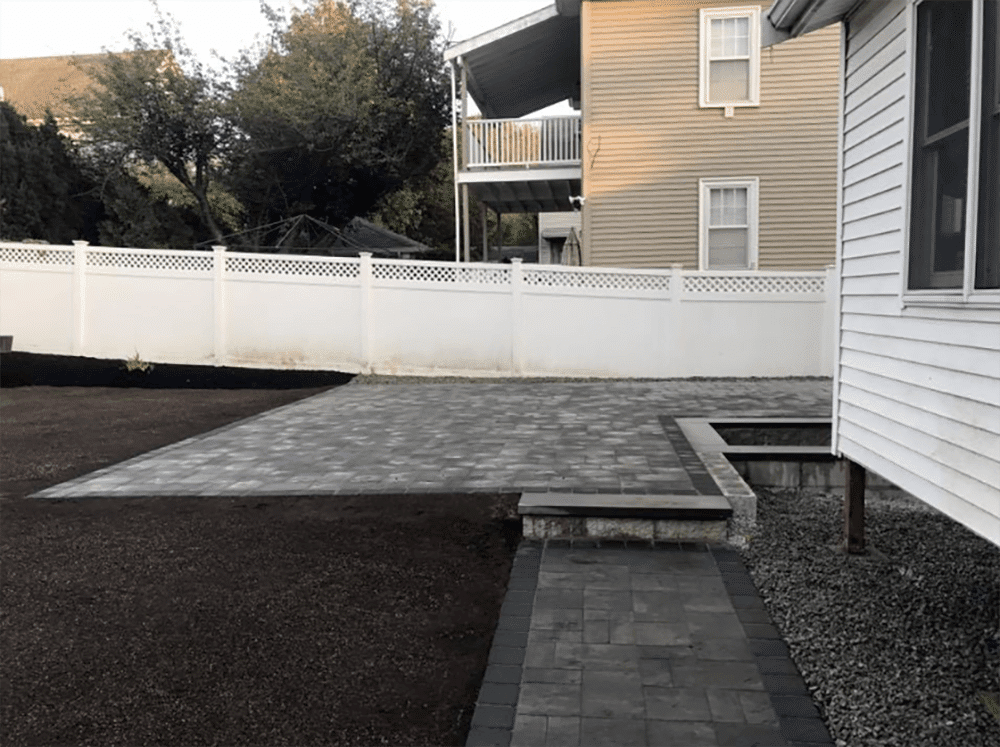
Transform Your Outdoor Space with a Beautiful Paver Walkway
A pavers walkway is a rewarding DIY project that boosts curb appeal and property value. This guide provides everything you need to design and install your first paver walkway, offering superior durability, style, and value compared to poured concrete or asphalt.
Quick Guide to Paver Walkway Installation:
- Plan: Choose materials, determine width (36-48 inches), and map your layout.
- Prepare: Excavate 7-9 inches deep and grade for proper drainage.
- Build Foundation: Install a weed barrier, add a 4-6 inch compacted gravel base, and top with 1 inch of leveling sand.
- Lay Pavers: Install edge restraints, place pavers in your chosen pattern, and cut as needed.
- Finish: Apply polymeric sand to joints, compact, and mist with water to set.
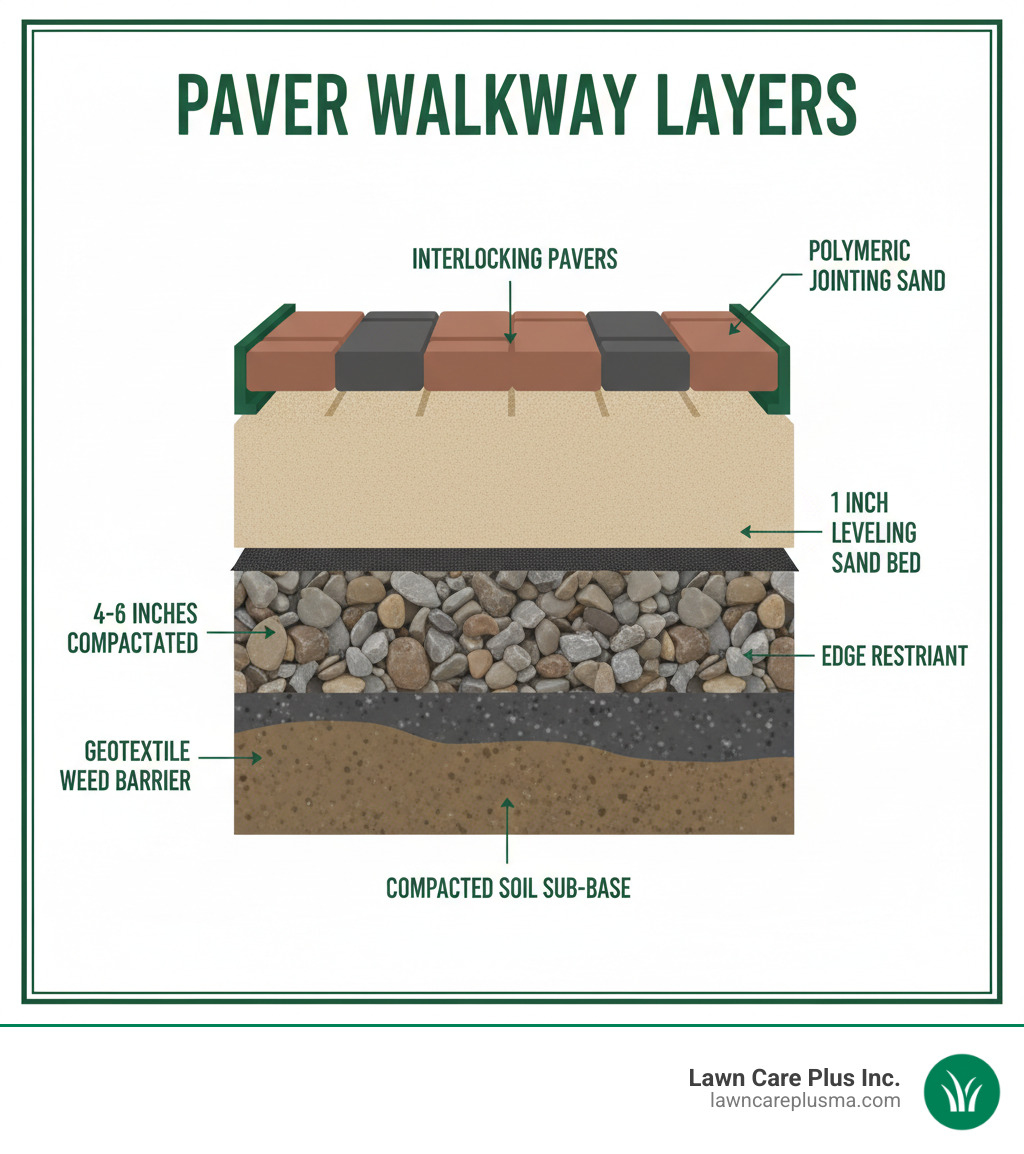
A properly installed paver walkway is a system of layers: compacted soil, geotextile fabric, a gravel base for drainage, a sand bed for leveling, the pavers themselves, edge restraints to prevent shifting, and polymeric jointing sand to lock it all together.
This guide, written by Tim DiAngelis, owner of Lawn Care Plus Inc., draws on over a decade of professional hardscape installation experience in the Boston Metro-West area. It provides the expert knowledge you need to make informed decisions, whether you’re doing it yourself or hiring a pro.
Simple guide to pavers walkway:
Planning and Designing Your Paver Walkway
The secret to a long-lasting pavers walkway is in the planning. Before you dig, create a detailed plan that considers aesthetics, function, and your property’s layout. Think about how the path will be used—is it a main entrance, a garden path, or a connection between spaces? This will guide your decisions on width, materials, and pattern.
Key design considerations:
- Walkway Width: A 36-inch width is standard for single-file traffic. A 48-inch width feels more welcoming and allows two people to walk side-by-side. Maintain a 36-inch minimum for wheelchair accessibility.
- Path Shape: Straight paths are formal and efficient, ideal for direct routes. Curved paths feel more organic and can make a space seem larger. Use a garden hose to visualize curves before you excavate.
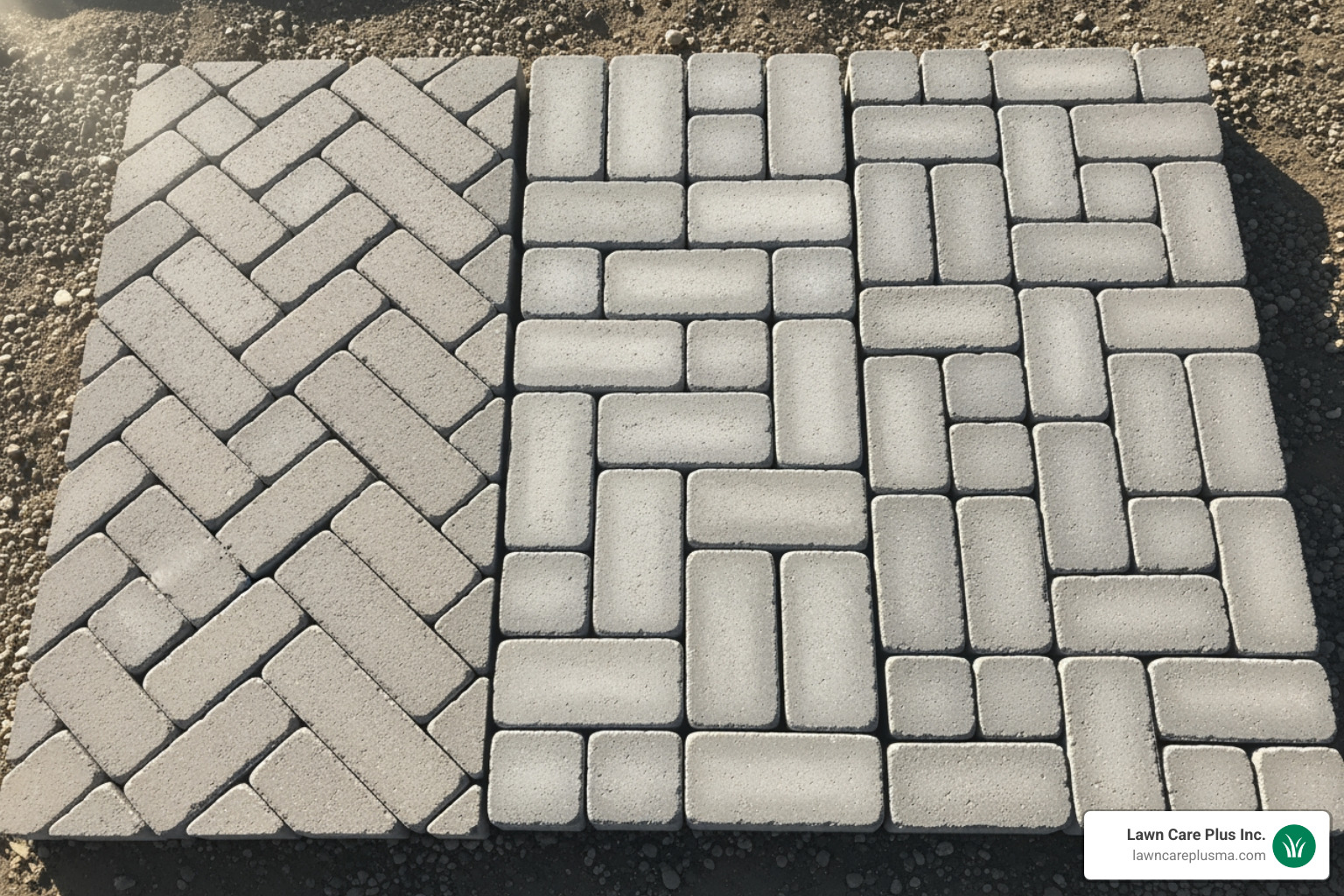
- Paver Pattern: The pattern affects both appearance and strength. Running bond is simple and great for beginners. Herringbone offers a strong, interlocking design. Basketweave creates a textured, decorative look.
- Color and Texture: Choose colors that complement your home’s exterior. Lighter colors can brighten shady areas, while textured surfaces provide better traction in wet or icy conditions.
Before starting, calculate your walkway’s square footage and order about 5% extra material for cuts and mistakes. Crucially, check with your local building department for permit requirements and call 811 a few days before you dig. This free service marks underground utility lines to ensure safety.
Choosing Your Paver Material
The material you choose defines your walkway’s style, durability, and cost. Here’s a comparison of popular options:
| Paver Type | Durability | Cost | Maintenance | Aesthetics |
|---|---|---|---|---|
| Concrete Pavers | High, resistant to cracking, versatile | Affordable | Low, easy to clean | Wide range of colors, shapes, textures; modern or classic |
| Brick Pavers | High, classic and charming, can wear over time | Moderate | Low, can be prone to moss/weeds | Traditional, rustic, warm hues |
| Natural Stone | Very High, varies by stone (granite strongest) | High | Moderate, some require sealing | Unique, organic, luxurious; diverse colors/textures |
| Porcelain Pavers | Very High, stain/fade resistant, non-porous | Moderate to High | Low, color retention, easy to clean | Modern, sleek, can mimic wood/stone |
Concrete pavers are a popular, versatile choice, offering excellent durability at an affordable price. They come in a vast range of styles, some mimicking natural stone or brick, and hold up well in Massachusetts freeze-thaw cycles.
Brick pavers provide a timeless, classic New England look with warm, earthy tones. While durable, they can wear faster than concrete in high-traffic areas and may be prone to moss in shady spots.
Natural stone pavers like flagstone, bluestone, or granite offer unique character and luxury. Each stone is one-of-a-kind, creating a truly custom walkway. Our masonry services team specializes in natural stone installations.
Porcelain pavers are a modern, low-maintenance option. They are extremely tough, non-porous, and resistant to staining, fading, and scratching, making them easy to clean.
Permeable pavers are an innovative solution for the Massachusetts climate. They allow water to drain through the surface, reducing runoff, preventing puddles, and minimizing ice formation.
Need ideas? View our project gallery for inspiration to see real walkways we’ve installed in the Boston Metro-West area.
Gathering Your Tools and Materials
Proper preparation prevents poor performance. Before you break ground on your pavers walkway, gather all the necessary tools and materials. Having everything on hand will make the installation process much smoother. Many specialty items, like a plate compactor, can be rented.
Essential Tools:
- Safety Gear: Safety glasses, work gloves, dust mask, knee pads, hearing protection.
- Layout & Excavation: Shovel, wheelbarrow, tape measure, stakes and string, spray paint or marking chalk.
- Base Preparation: Plate compactor (recommended), hand tamper, long and short levels, garden rake, screed board (2×4), and metal pipes for guides.
- Paver Setting & Cutting: Rubber mallet, masonry saw (wet saw is ideal), or a mason’s chisel and sledgehammer.
Required Materials:
- Pavers: Your chosen material (concrete, brick, stone, etc.).
- Geotextile Fabric: A weed barrier to place between the soil and gravel base.
- Paver Base: 3/4-inch crushed stone or gravel for a 4-6 inch compacted layer.
- Leveling Sand: Concrete sand or paver sand for a 1-inch leveling bed.
- Edge Restraints: Plastic or metal edging to hold pavers in place, secured with long spikes.
- Polymeric Jointing Sand: Fills the gaps between pavers and hardens to lock them together, resisting weeds and erosion.
Step-by-Step Pavers Walkway Installation Guide
This is where your pavers walkway comes to life. Follow these steps carefully for a professional result that will last for decades.
Step 1: Site Preparation and Excavation
The quality of your walkway is determined by the quality of its foundation. Do not rush this step.
- Mark the Layout: Use stakes and string for straight lines and a garden hose for curves. Trace the final outline with spray paint.
- Call 811: Before digging, have underground utilities marked.
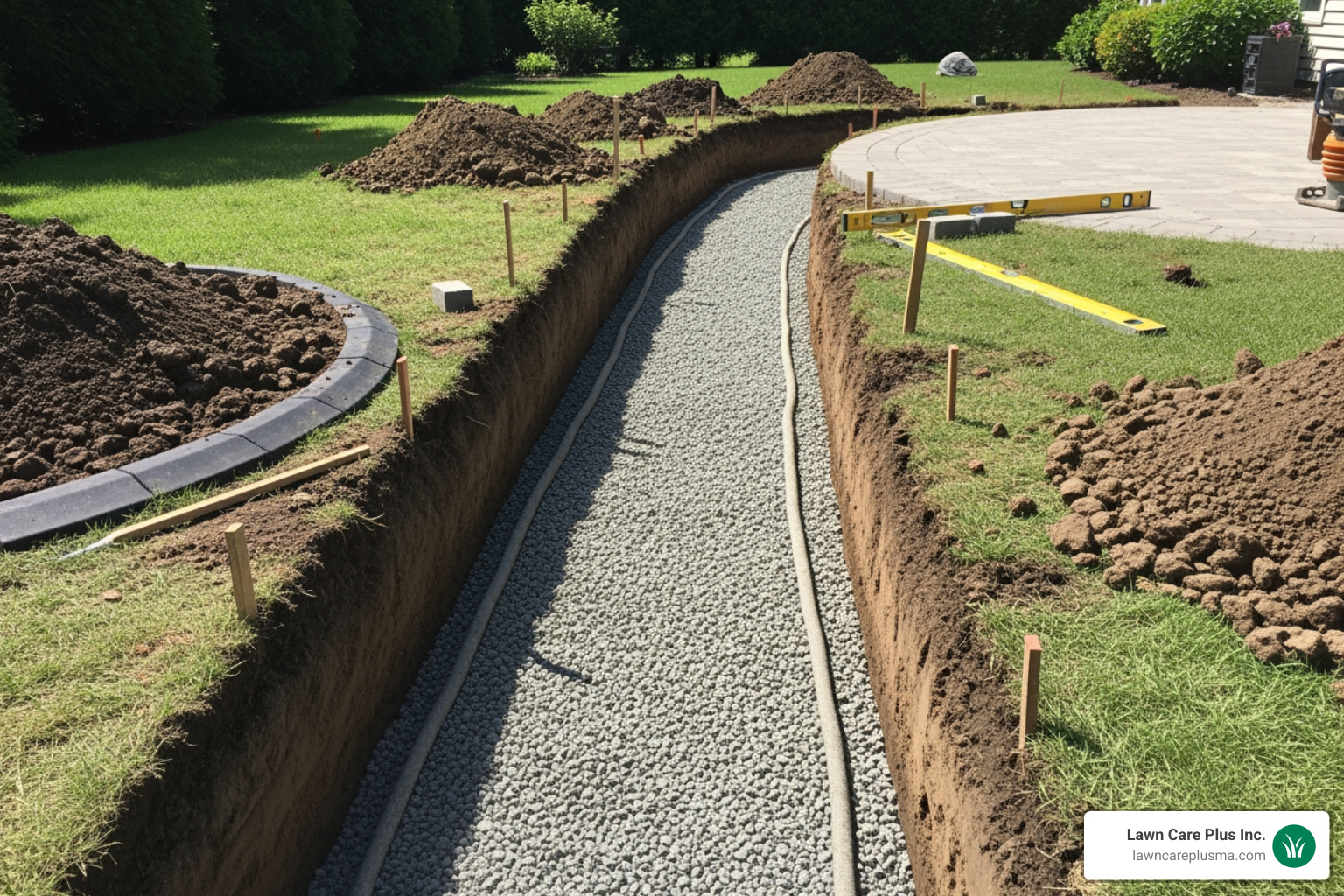
- Excavate: Dig a trench 7-9 inches deep, which allows room for the base materials and pavers. Remove all topsoil, clay, and large roots.
- Grade for Drainage: Slope the excavated area away from your house foundation at a rate of 1/4 inch per foot to ensure proper water runoff.
- Compact the Sub-base: Use a plate compactor to create a firm, stable soil base. This is critical to prevent future settling.
Step 2: Building a Solid Foundation
A solid base is essential for a durable pavers walkway, especially in a climate with freeze-thaw cycles. The traditional gravel base method is crucial for longevity.
- Install Weed Barrier: Lay geotextile fabric over the compacted soil, overlapping seams by 6 inches. This separates the soil from the gravel and blocks weeds.
- Add Paver Base: Spread a 4-6 inch layer of paver base (3/4-inch crushed stone). Lightly mist with water and compact it thoroughly with the plate compactor in 2-inch lifts until solid.
- Create the Sand Bed: Place two parallel metal pipes (screed guides) on the compacted gravel. Spread 1 inch of leveling sand over the base.
- Screed the Sand: Drag a straight 2×4 (screed board) across the pipes to create a perfectly smooth, level sand bed. Remove the pipes and carefully fill in the gaps.
Step 3: Laying and Cutting Your Pavers
With the foundation prepared, it’s time for the most satisfying part of the project.
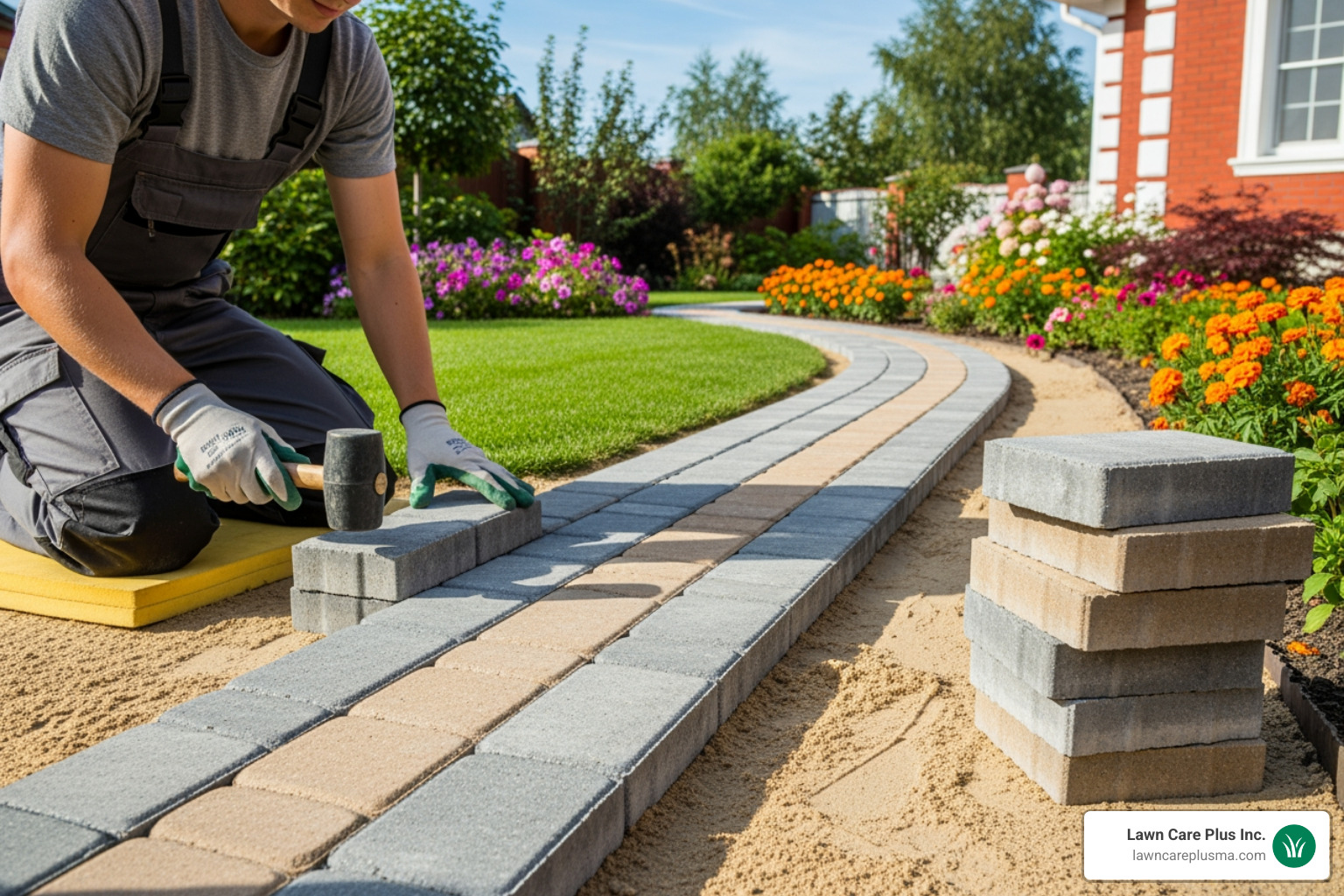
- Install Edge Restraints: Secure plastic or metal edging along the sides of the walkway with spikes. This prevents pavers from shifting over time.
- Lay the Pavers: Start from a corner and work outward, placing pavers directly onto the sand bed. Avoid kneeling on the unscreened sand. Follow your chosen pattern.
- Maintain Joint Spacing: Keep a consistent gap of about 1/4 inch between pavers. Many pavers have built-in spacer nubs to help with this.
- Cut Pavers as Needed: Use a wet saw or masonry saw for clean cuts around edges and curves. Always wear safety glasses and a dust mask.
- Check for Level: Use a rubber mallet to gently tap high pavers down. Lift low pavers and add a small amount of sand underneath to bring them up to level.
Step 4: Finishing with Jointing Sand
This final step locks the pavers together and gives your walkway a finished look.
- Ensure Pavers are Dry: Polymeric sand will stain damp surfaces. Wait for a dry day and make sure the pavers are completely dry.
- Sweep Sand into Joints: Pour polymeric sand over the walkway and use a stiff broom to sweep it into all the joints until they are full.
- Compact the Pavers: Run the plate compactor over the entire surface. This settles the pavers and works the sand deep into the joints. Sweep in more sand and repeat if necessary.
- Remove Excess Sand: Use a leaf blower and a soft broom to remove every grain of excess sand from the paver surfaces. This is critical to prevent staining.
- Activate the Sand: Gently mist the walkway with a garden hose to activate the binding agents in the sand. Avoid washing the sand out of the joints.
- Allow to Cure: Let the walkway cure for 24-48 hours (check product instructions) before walking on it.
Finishing Touches and Common Mistakes
Your pavers walkway is installed, but a few finishing touches can lift it from good to great. It’s also wise to be aware of common pitfalls that can compromise your hard work.
Enhancing Your Walkway with Landscaping
A walkway is part of a larger landscape. Integrating it with its surroundings creates a cohesive, professional look.
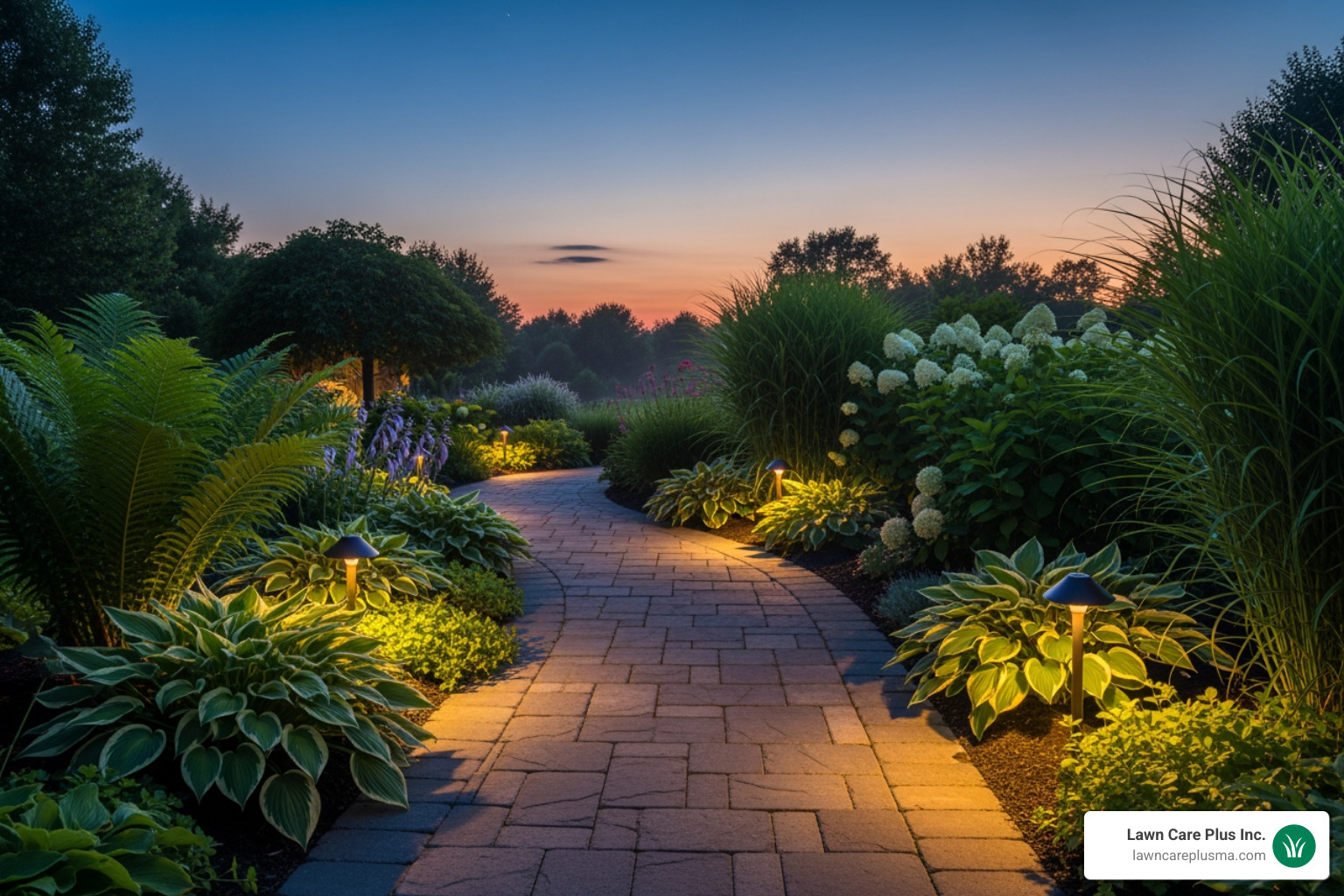
- Landscape Lighting: Low-voltage path lights improve safety after dark and create a warm, inviting ambiance, highlighting the texture of your pavers.
- Garden Borders: Planting low-growing flowers, shrubs, or ornamental grasses along the edges softens the transition from the hardscape to your lawn. Fresh mulch in these beds provides a clean, finished appearance.
To keep your landscape looking its best, consider professional maintenance. Our comprehensive landscaping services and Spring and fall yard cleanups ensure your property remains pristine year-round.
Common Pavers Walkway Installation Mistakes to Avoid
Learning from common errors can save you significant time and money. Avoid these frequent missteps:
- Inadequate Base Preparation: This is the #1 cause of failure. A shallow or poorly compacted base will lead to sinking and shifting pavers. Take the time to excavate deeply and compact thoroughly.
- Poor Drainage: A flat walkway will pool water, leading to ice in winter and potential foundation issues. Always slope the walkway 1/4 inch per foot away from structures.
- Forgetting Edge Restraints: Without edging, the outer pavers will spread apart over time, ruining the walkway’s lines and integrity.
- Inconsistent Joint Spacing: Uneven gaps look unprofessional and can lead to weak spots where weeds can grow.
- Staining with Polymeric Sand: Always remove every grain of excess polymeric sand from the paver surfaces before misting with water. Otherwise, it will bond to the surface and create a permanent haze.
- Skipping Safety Steps: Forgetting to call 811 to mark utility lines is a dangerous and potentially costly mistake.
Frequently Asked Questions about Paver Walkways
Here are answers to the most common questions we receive about installing a pavers walkway in the Boston Metro-West area.
What is the average cost to install a paver walkway?
The cost for a professionally installed pavers walkway can vary widely. National averages suggest a range of $20 to $50 per square foot. However, simple projects with basic concrete pavers might be as low as $15 per square foot, while complex designs using premium natural stone can exceed $75 per square foot.
Factors influencing the price include paver material, design complexity, site accessibility, and local labor rates. A curved path with many cuts will cost more than a simple, straight one.
Please note: These figures are national averages from internet data and do not represent a quote from Lawn Care Plus Inc. For an accurate estimate for your project, please contact us for a personalized consultation.
How deep should the base for a paver walkway be?
For a standard pedestrian walkway, the compacted gravel base should be 4 to 6 inches deep. This depth is essential for providing structural support and ensuring proper drainage, which prevents pavers from settling and protects against frost heave in Massachusetts winters. This is topped with a 1-inch sand bed.
How do you prevent weeds from growing between pavers?
Preventing weeds in your pavers walkway is a multi-step process built into the installation:
- Geotextile Fabric: A weed barrier is laid over the soil sub-base to block weeds from growing up from below.
- Proper Base: A deep, compacted base of gravel and sand creates an environment where weeds cannot easily take root.
- Polymeric Sand: This is the most critical step. When activated with water, polymeric sand hardens in the joints, creating a strong barrier that locks out weeds and resists erosion.
Regular sweeping to keep the joints free of organic debris will also help prevent any opportunistic weeds from sprouting on the surface.
Conclusion
You now have a complete guide to creating a beautiful and durable pavers walkway. From planning and excavation to laying pavers and finishing the joints, you’re equipped with the knowledge to tackle this rewarding project. A well-built walkway improves curb appeal, adds property value, and provides years of enjoyment.
While a DIY approach can be satisfying, a professional installation guarantees flawless results, especially for complex designs or challenging properties. If you prefer to leave the heavy lifting to experts, we’re here to help.
At Lawn Care Plus Inc., we have over a decade of experience creating stunning hardscapes throughout the Boston Metro-West area. Our expert team is dedicated to bringing your vision to life with precision and care. We proudly serve communities including Belmont, Boston, Brighton, Brookline, Canton, Chestnut Hill, Dedham, Hyde Park, Jamaica Plain, Mattapan, Medfield, Milton, Needham, Newton, Norwood, Randolph, Readville, Roslindale, Walpole, and Watertown.
Ready to transform your outdoor space? Explore our walkway installation services for a professional quote!