
Why Small Retaining Walls Make a Big Difference in Your Yard
Building a small retaining wall is a practical and rewarding DIY project. Whether you’re managing a slight slope, stopping soil erosion, or creating a raised garden bed, a well-built retaining wall adds both function and curb appeal.
Here’s what you need to know to get started:
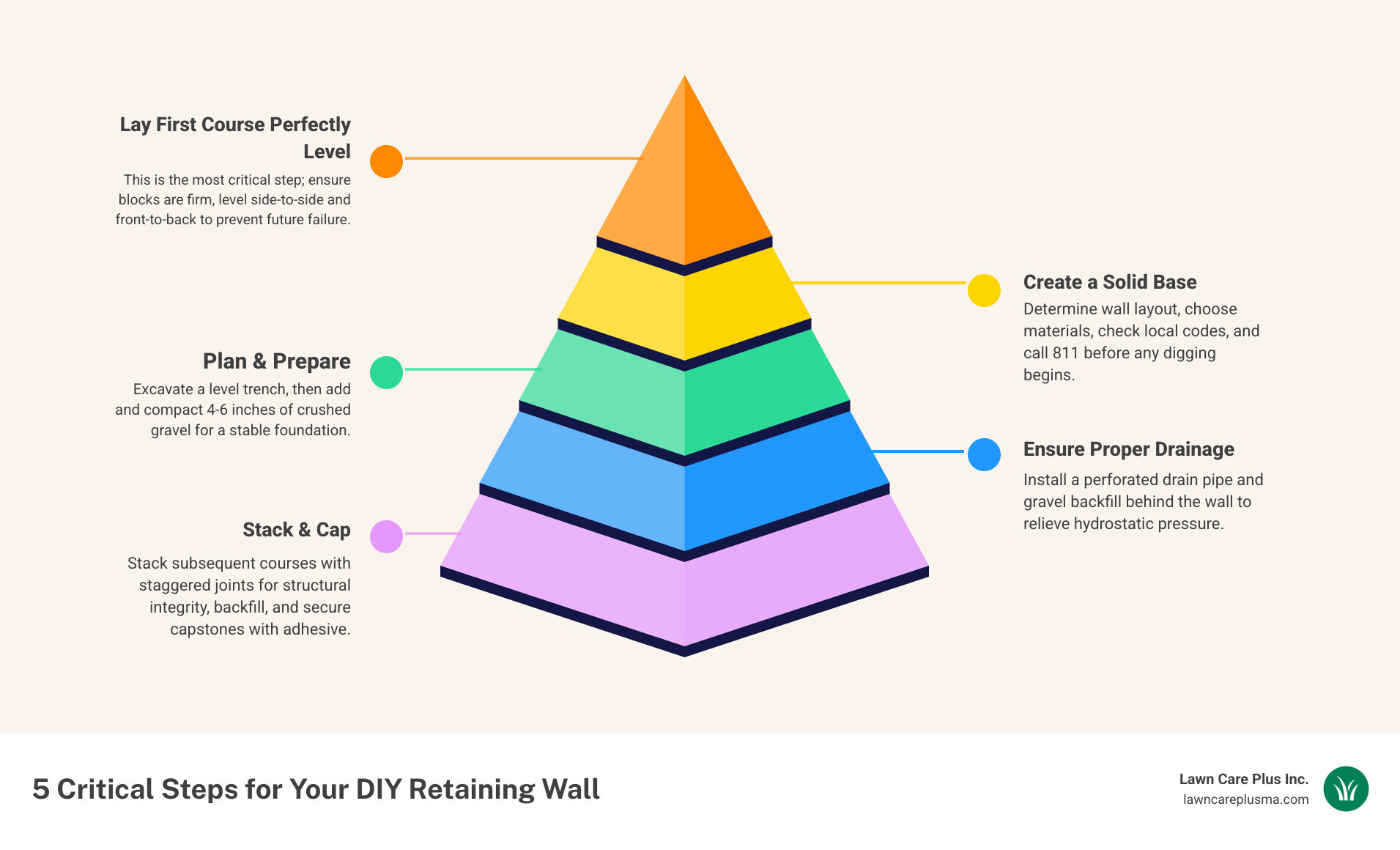
- Plan your wall – Determine height, length, and check local building codes
- Choose your materials – Interlocking concrete blocks are the easiest for DIY
- Dig a level trench – Bury at least the first course of blocks
- Build a solid base – Use 4-6 inches of compacted crushed gravel
- Lay the first course perfectly level – This is the most critical step
- Add proper drainage – Install perforated pipe and gravel backfill
- Stack and cap – Stagger blocks and finish with capstones
You don’t need to be an expert mason to build a sturdy, attractive retaining wall. With the right materials and attention to critical steps—like the first course and drainage—you can create a professional-looking structure that lasts for decades. The key to success is a level base, proper drainage, and patience. One DIYer reported building their small retaining wall in just 6 hours for about $150, proving this project is both achievable and affordable.
Situations like walls over 4 feet tall, steep slopes, or poor soil conditions often require professional help, permits, and engineering expertise. But for most small residential projects, this is a project you can handle. Understanding the basics of hardscaping 101 everything you need to know will give you the confidence to start.
I’m Tim DiAngelis, owner of Lawn Care Plus Inc. My team and I have installed countless retaining walls in the Boston Metro-West area. While we specialize in professional installations, I’ve also helped many homeowners understand the fundamentals for their own DIY projects. Let’s walk through how to do it right.
Quick building a small retaining wall definitions:
Before You Dig: Planning Your Retaining Wall Project
Careful planning is the bedrock of a successful building a small retaining wall project. This initial phase helps avoid common pitfalls and ensures your hard work results in a durable, beautiful landscape feature.
Why Build a Retaining Wall?
Retaining walls have both practical and aesthetic benefits. They are built to hold back soil on a slope, preventing erosion and supporting grade changes. This is especially useful for landscape retaining walls in areas with varied topography like the Boston Metro-West region.
A well-placed wall can create more usable space by turning a slope into a functional area for a garden, patio, or play area—a process known as terracing. Walls also define landscape areas, create raised garden beds, improve drainage, and add curb appeal. A retaining wall is a versatile structure that brings order and beauty to your outdoor space, all part of a thoughtful retaining wall design.
Choosing the Right Materials for a Small Retaining Wall
Selecting the right material is key to a successful DIY project. For small walls under 2-3 feet, we recommend materials that are easy for DIYers to handle.
For DIYers, interlocking concrete retaining wall blocks are the easiest choice. They fit together securely, are durable, and can be used for walls up to 24-36 inches high. We often use blocks for retaining wall projects due to their versatility and strength.
While interlocking blocks are our go-to for DIY, here are other common materials:
| Material Type | DIY-Friendliness | Average Cost (per square face foot installed)* | Lifespan |
|---|---|---|---|
| Interlocking Concrete Blocks | High | $45 – $270 | Decades (properly constructed) |
| Pressure-Treated Timber | Medium | $15 – $30 | 15-20 years (less long-lived, susceptible) |
| Natural Stone | Low-Medium | $20 – $100 | Decades (if properly mortared or dry stacked) |
| Brick | Low-Medium | $20 – $25 | Decades (if properly mortared) |
*These are average costs based on internet data and not actual costs for Lawn Care Plus. Pricing can range widely, from as low as $15 per square foot to over $100 per square foot depending on materials and complexity.
Important Note on Timber: While timber is inexpensive, we advise caution. Wood walls are susceptible to the elements, splintering, and fading. They also require complex “deadmen” tiebacks for support, making them less ideal for DIY projects.
For this guide, we’ll focus on building a small retaining wall with interlocking concrete blocks, as they offer the best balance of DIY-friendliness, durability, and appeal.
Check Local Codes and Mark Your Layout
Before digging, consult your local Massachusetts building department (e.g., Belmont, Boston, Newton) about codes and permits. Small walls often don’t need permits, but walls over four feet or those supporting a load (like a driveway) usually do. Massachusetts law requires an architect for any retaining wall design over four feet. A quick call can prevent major headaches.
Next, call 811 before digging to locate underground utility lines. This free service prevents dangerous and costly damage.
Once cleared, mark the wall’s location using stakes and string for straight walls or a garden hose for curves. Spray paint can also mark the outline. Allow for the block width plus space for drainage material behind the wall. The Building a landscape retaining wall guide emphasizes planning as a critical first step.
The Foundation of Success: Site Prep and Base Construction
A retaining wall is only as strong as its foundation. The base is the most critical component for stability and longevity, preventing settling, shifting, and wall failure.
Step 1: Excavate the Trench
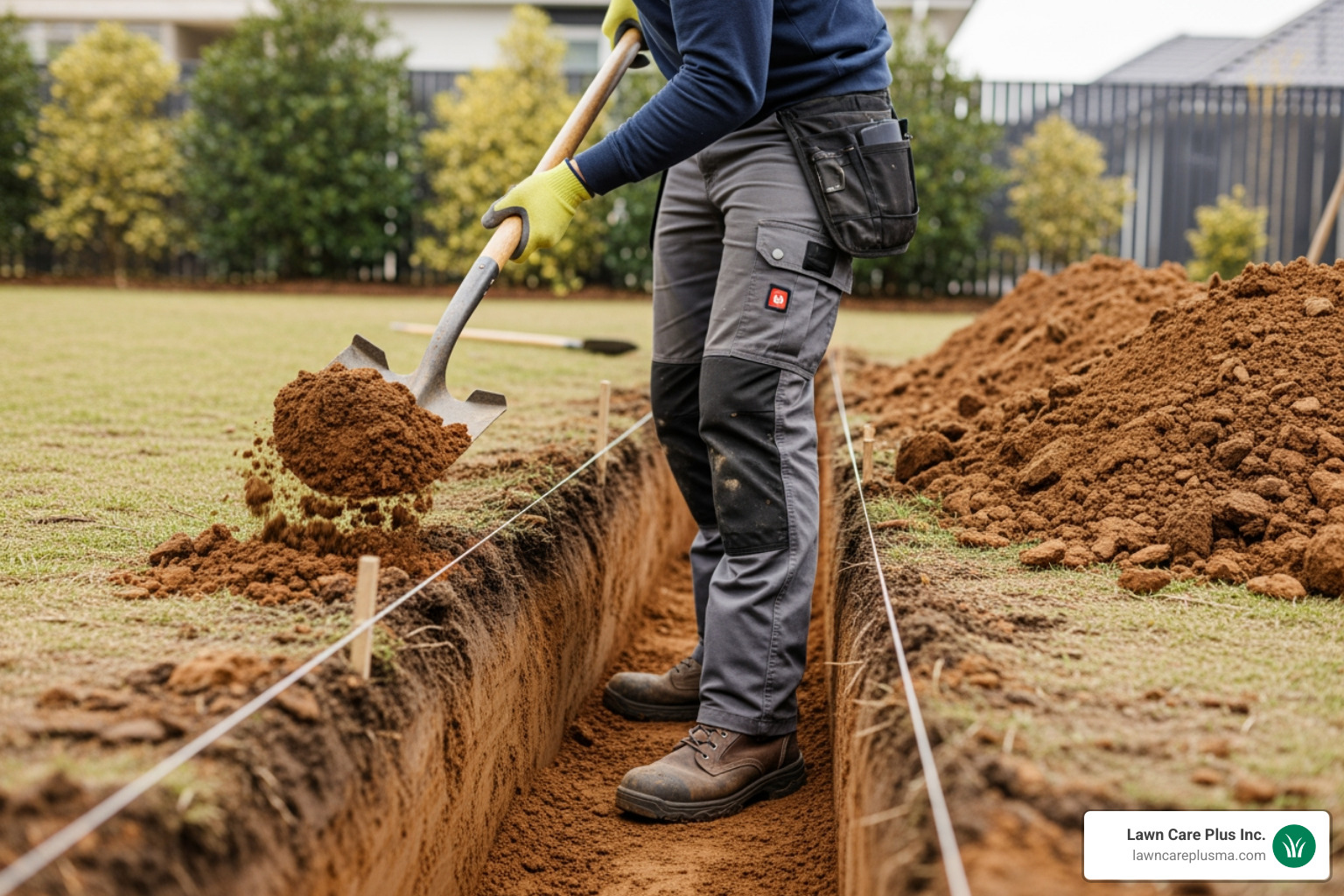
With the layout marked, it’s time to dig. You’ll need a shovel, spade, and possibly a pickaxe for the dense, rocky soil common in Massachusetts.
The trench must be deep and wide enough to support the wall. A good rule is to bury at least half the height of the first course of blocks. For a small wall, this means a trench 4 to 8 inches deep, plus 3 inches for the paver base. For walls over 3 feet, a full block should be buried. The trench should be about twice the block’s width (typically 12 inches) to allow room for backfill.
When building a small retaining wall on a slope, create a “stepped” trench by digging a series of level sections that step down with the grade. This ensures the entire base is level, which is critical for a long-lasting wall.
Step 2: Create a Solid, Level Base
After excavating, create a solid, level base. Any imperfections here will be magnified as the wall gets taller.
Start by adding a 4 to 6-inch layer of crushed gravel or paver base (e.g., ¾-inch minus gravel). This angular material compacts well. Avoid round rocks like pea gravel, which can shift and compromise stability.
Next, compact the gravel thoroughly. A hand tamper works for small projects, but a rented plate compactor is more efficient. Compact the material in 3-4 inch layers, making several passes until it’s firm and doesn’t shift when walked on.
Finally, use a long level to ensure the compacted base is perfectly flat, adding or removing small amounts of gravel and re-compacting as needed. This meticulous work on the retaining wall foundation is paramount. If the soil is heavy clay or wet, you may need to replace it with granular material, compacted in 8-inch lifts or less.
Step-by-Step Guide to Building a Small Retaining Wall
With the groundwork prepared, you’re ready to build the wall. Precision remains key.
Step 3: Laying the Crucial First Course
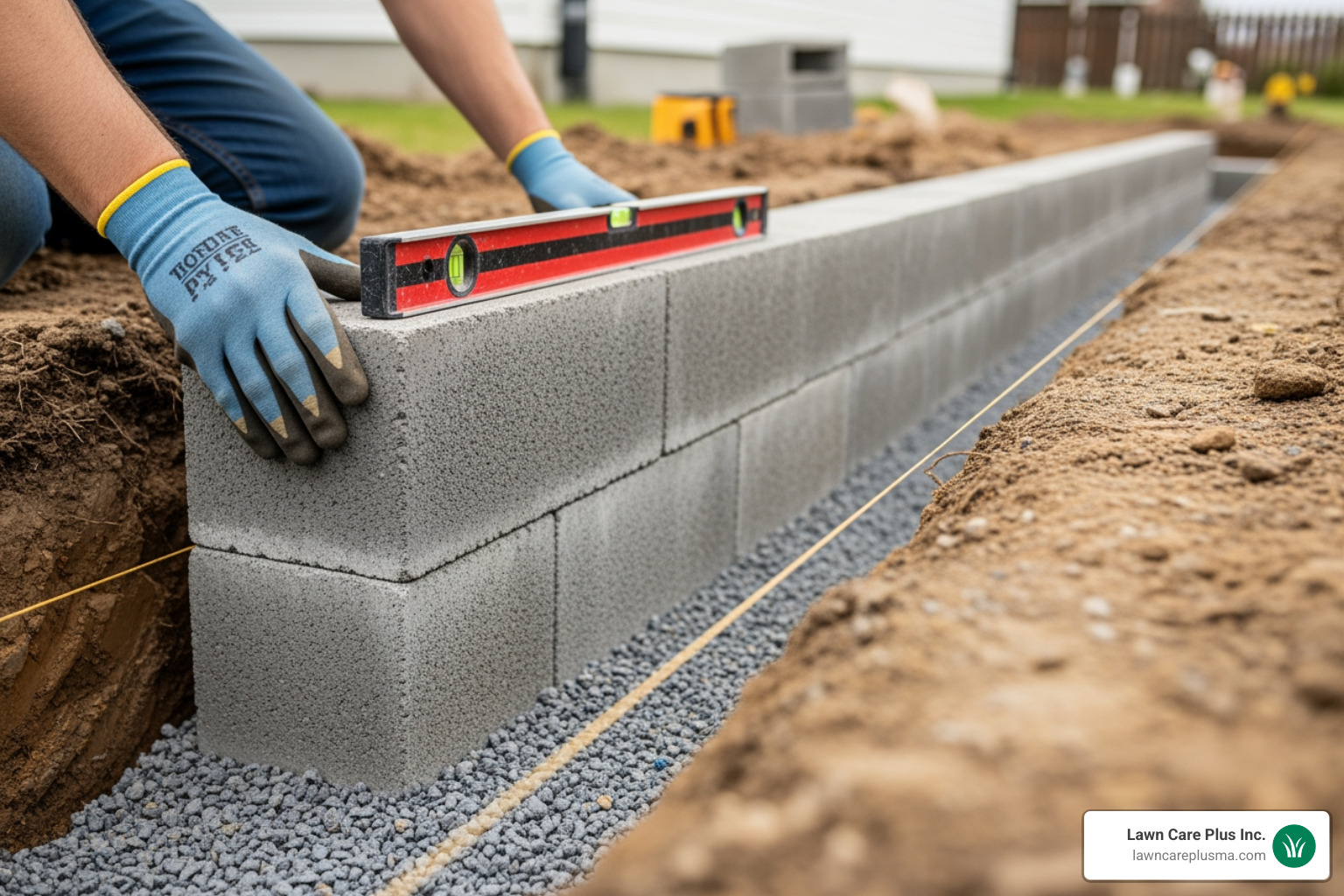
Laying the first course of blocks is the single most important step in building a small retaining wall. A level first row is the difference between a wall that lasts for decades and one that fails, as an uneven base leads to structural failure.
Start laying blocks at the lowest point. Check each block for level from front-to-back and side-to-side with a torpedo level. Use a longer level across several blocks to ensure they are aligned. If a block is too high, tap it down with a rubber mallet. If it’s too low, lift it, add a small amount of paver base or coarse sand (up to 0.5 inches), and re-level it. Ensure each block is firmly set into the base. Don’t rush this step; irregularities here become bigger problems later.
Step 4: Build Subsequent Courses and Stagger Joints
Once the first course is level, start building up by staggering the blocks in a running bond pattern, like bricklaying. Each block in a new course should straddle the joint between the two blocks below it. This offsets the seams so they don’t line up vertically, creating a robust, interlocking system that distributes pressure. This is crucial for the integrity of your concrete retaining wall block wall.
To create this pattern, you may need to cut blocks, especially at the ends. A masonry chisel and hammer work for simple cuts, but a rented wet masonry saw provides cleaner results. Always wear safety glasses, gloves, and a respirator mask when cutting.
As you lay each course, check for level and sweep debris off the blocks below. For interlocking blocks with a lip, ensure it’s pressed against the block below. For pin systems, insert pins as directed. Some systems recommend construction adhesive between courses for extra stability, especially near the top.
Step 5: The Secret to Longevity: Mastering Retaining Wall Drainage
Proper drainage is the secret to a long-lasting retaining wall. Without it, water builds up, creating hydrostatic pressure that can cause the wall to bulge, lean, and collapse.
To prevent this, implement an effective drainage system:
- Perforated Drain Pipe: For walls over two feet high, install a 4-inch perforated drain pipe behind the bottom row. Lay it with a slight slope (1 inch per 10 feet) to an outlet where water can drain away to daylight. The pipe must be vented to daylight every 50 feet.
- Gravel Backfill: Create a gravel layer at least 12 inches deep behind the wall and around the pipe, using well-draining gravel (like river rock or ¾-inch minus). Fill the hollow cores of the blocks with gravel as well. Add and compact the gravel backfill in 8-inch layers before adding the next course to relieve pressure.
- Landscape Fabric: Install porous landscape fabric between the gravel and the native soil to prevent clogging. The fabric lets water through but keeps soil out.
These drainage elements are a critical aspect of retaining wall drainage and will protect your investment.
Finishing Touches and Pro Tips
With the main structure of your building a small retaining wall in place, it’s time for the finishing touches to ensure stability and a polished look.
Step 6: Capping the Wall and Backfilling
Capstones give the wall a clean, finished look and protect the blocks below. Secure them with high-quality construction adhesive, ensuring they overhang the wall by about 1 to 1.5 inches for a professional appearance. The adhesive prevents the caps from shifting. Small cracks that appear later can be filled with masonry caulk.
Once the capstones are set, fill the remaining space behind the wall (above the gravel) with topsoil for your garden beds or lawn. Grade the soil to slope away from the wall, directing rainwater away and preventing it from pooling. This step helps integrate the wall into your overall retaining walls and landscaping plan.
Step 7: Common Mistakes to Avoid
Being aware of common pitfalls ensures your retaining wall stands strong. Here are the top errors to avoid:
- Uneven Base: An uneven first course is the most common reason for wall failure. Take your time and make sure it’s perfectly level.
- Improper Drainage: Forgetting a drain pipe and gravel backfill allows hydrostatic pressure to build up and destroy the wall.
- Not Staggering Joints: Stacking blocks directly on top of each other creates weak vertical seams. Always use a running bond pattern.
- Ignoring Local Codes: Failing to check codes or get permits for walls over 3-4 feet can lead to fines and forced removal.
- Improper Backfill: Using topsoil instead of gravel directly behind the wall retains water and adds pressure.
- Insufficient Compaction: Poorly compacted base or backfill material will settle over time, leading to an unstable wall.
- Building Too Tall Without Reinforcement: Walls over 3-4 feet often require geogrid reinforcement to prevent failure.
When to Call a Professional
Building a small retaining wall can be a rewarding DIY project, but some situations require professional help for safety and longevity. At Lawn Care Plus Inc., ensuring clients have durable, safe hardscapes is our priority.
Consider hiring a professional if:
- The wall exceeds 4 feet: Massachusetts law requires an architect for walls over four feet, which face immense soil pressure and require engineering.
- The site is complex: Steep slopes or poor soil conditions (like expansive clay or a high water table) require professional analysis and design.
- The wall supports a heavy load: If the wall supports a driveway or foundation, an engineer is needed to calculate load requirements.
- The project is large-scale: Multiple tiered walls or extensive landscape changes benefit from professional execution.
- You prefer an expert touch: If the project seems daunting, calling a professional ensures peace of mind with a warrantied structure.
Walls taller than 3-4 feet often need reinforcement, a job for an experienced retaining wall contractor. Our team specializes in these projects, and the benefits of hiring a professional for your retaining wall installation often outweigh DIY savings for complex jobs.
Frequently Asked Questions about Building a Retaining Wall
How long does a properly built retaining wall last?
A properly built retaining wall using quality materials and incorporating proper drainage can last for decades with minimal maintenance. The keys are a solid foundation, effective water management, and correct installation. If these are overlooked, a wall can fail within a few years.
What is the most important step when building a retaining wall?
The most critical step is creating a solid, perfectly level base and laying the first course of blocks. An uneven first row is the primary cause of premature wall failure. A perfect foundation is the best prevention.
How much does a small DIY retaining wall cost?
The cost of building a small retaining wall varies based on materials, size, and location. A small DIY project can be affordable; one DIYer reported spending about $150 for a 6-hour project. This typically covers basic blocks, paver base, and gravel.
For professionally installed walls, costs are higher. These are average costs based on internet data and not actual costs for Lawn Care Plus. Pricing can range widely, from as low as $15 per square foot for basic timber to over $100 per square foot for high-end systems. For example, timber walls might cost $15-$30 per square foot, stone walls $20-$100, and interlocking block systems $45-$270 per square foot installed. These figures highlight the importance of budgeting for your project’s scope.
Your Partner for Perfect Hardscapes
Building a small retaining wall is a rewarding DIY project that adds immense value and beauty to your property. By following these steps—from careful planning and base preparation to proper drainage and finishing—you can build a structure that is both durable and attractive. However, if your project feels too large, or you’d prefer an expert touch, Lawn Care Plus Inc. offers professional masonry services and hardscape construction throughout the Boston Metro-West area. For a flawless retaining wall that stands the test of time, explore our hardscaping services.
