
Why Channel Drainage Systems Matter for Your Property
A channel drainage system is a linear surface water management solution that captures and directs runoff through a long, narrow channel topped with a removable grate. Here’s what you need to know:
Key Components:
– Channel body – U-shaped or V-shaped trough (plastic, concrete, or metal)
– Grate – Removable cover that allows water in while keeping debris out
– Outlet – Connection point to main drainage system
– End caps – Seal the channel ends
How It Works:
1. Surface water flows into the channel through the grate
2. Water travels along the channel using gravity
3. Runoff exits through the outlet to storm drains or safe discharge areas
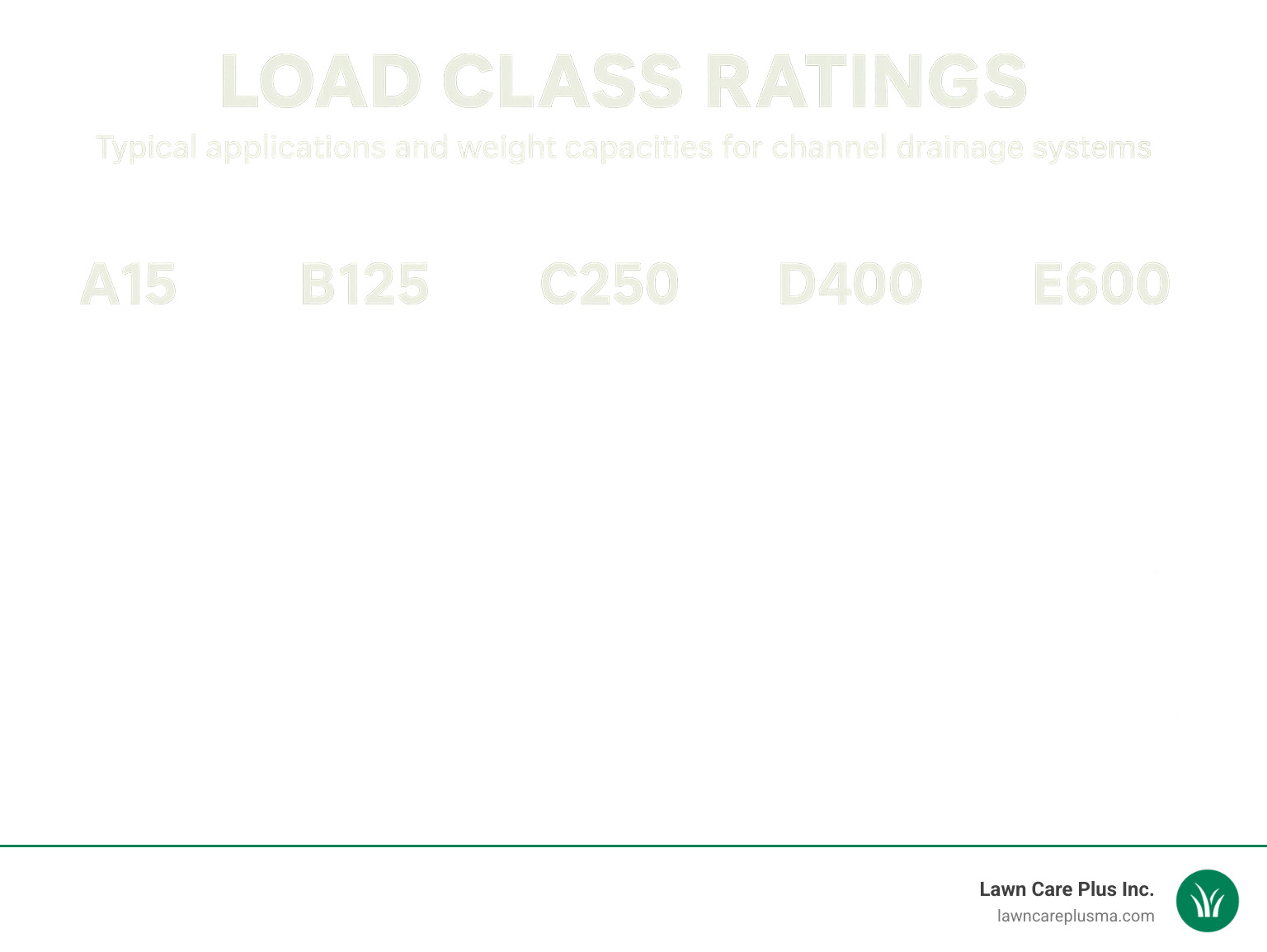
Load Classes: Range from A15 (1.5 tonnes for pedestrians) to F900 (90 tonnes for airports)
Standing water on your driveway, patio, or walkway creates slip hazards, damages hardscape, and can lead to expensive foundation problems. Without proper drainage, heavy downpours turn outdoor spaces into temporary ponds.
Channel drains solve this by creating a continuous collection point along slopes or low areas. Unlike point drains that only capture water at specific spots, these systems work like underground gutters – gathering runoff along their entire length.
A half-inch slot opening can handle approximately 11 gallons of water per minute, making these drains incredibly efficient for most residential and commercial applications.
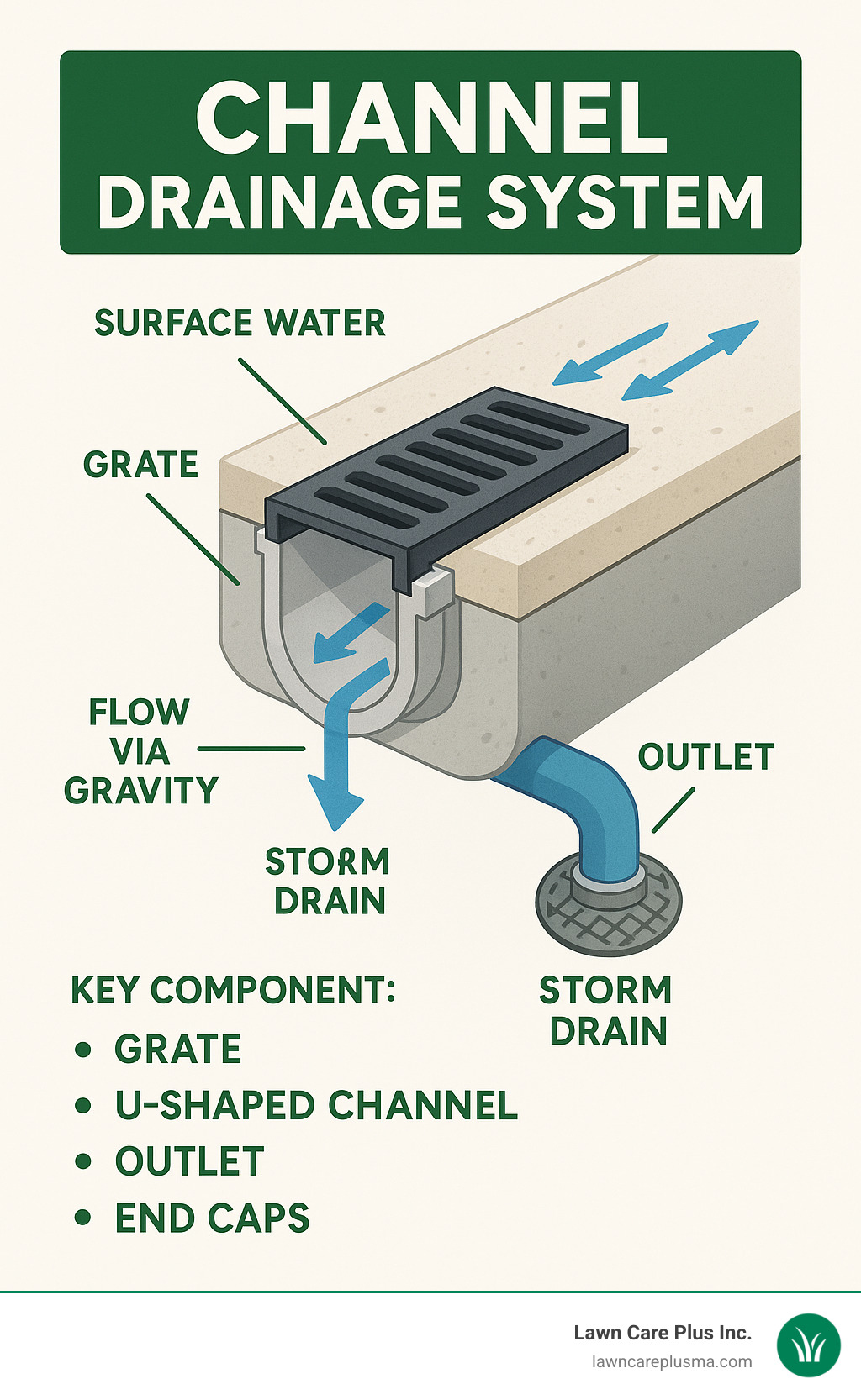
Simple guide to channel drainage system:
– sidewalk drainage solutions
– domestic surface water drainage systems
– land drainage system
Understanding the Channel Drainage System Basics
A channel drainage system works like a super-efficient underground gutter that collects water along a continuous line rather than at single drain points. Also called linear drainage or trench drains, these systems handle sheet flow from driveways, patios, and walkways more effectively than traditional point drains.
Modern channel drains use modular design with standard 1-meter channel sections and 500mm grate segments. This allows perfect customization for any installation size.
Load classes matter more than most realize. The EN-1433 certification rates drains from Class A15 (1.5 tonnes for pedestrians) to Class F900 (90 tonnes for airports). Most homes need Class A15 or B125, while commercial driveways typically require C250 rating.
Pre-sloped versus neutral channels offer different advantages. Pre-sloped channels have built-in gradient ensuring proper water flow even with imperfect site grading. Neutral channels maintain consistent depth and cost less but require precise installation.
How a Channel Drainage System Works
The system uses simple gravity flow – no pumps or electricity needed. Water enters through grate openings and travels along the V-shaped or U-shaped channel toward the outlet connection.
A ½-inch slot opening handles approximately 11 gallons per minute – more than adequate for most residential storm events. Wider channels with larger grate openings manage significantly higher volumes.
The sump connection at the outlet provides extra storage during heavy downpours and traps sediment before it reaches underground pipes, acting like a built-in filter system.
Proper installation is critical. The channel must be anchored securely during concrete pours, and surrounding concrete provides structural support needed to maintain precise grade for optimal flow.
Main Components You’ll Meet
Every channel drainage system uses the same basic components. The channel body forms the foundation – that U-shaped or V-shaped trough that moves water. Options include polypropylene, polymer concrete, and stainless steel.
Grates control water entry while keeping debris out, provide safe walking surfaces, and can improve hardscape appearance. The removable design makes maintenance simple.
End caps seal channel terminations with gaskets preventing water escape and debris entry. Outlets connect to existing drainage using standard 4-inch pipe sizes, often including debris baskets to prevent downstream blockages.
Expansion joints are essential for longer installations, especially in Massachusetts where freeze-thaw cycles are common. These flexible connections allow movement without cracking, extending system life by decades.
Types of Channel Drainage Systems & Grates
When shopping for a channel drainage system, understanding the main categories makes selection much clearer.
Pre-sloped systems have built-in gradient, eliminating guesswork about water flow. These work well for large flat areas like parking lots where creating perfect slope during installation can be challenging.
Neutral channel systems give complete control over your project. Since they maintain consistent depth, you can create custom layouts with turns while controlling water direction through excavation work.
Modular systems are versatile because individual sections snap together like building blocks, creating runs of any length. Damaged sections can be replaced individually rather than replacing entire systems.
Slot drains are minimalist with openings often just ½ inch wide. They practically disappear into hardscape while handling impressive water volumes – perfect for patios or pool decks.
Traditional trench drains with wider grates handle heavy debris loads without constant maintenance.
Material choice affects long-term performance. Polypropylene plastic systems resist chemicals while staying lightweight and budget-friendly. Polymer concrete provides concrete strength with better chemical resistance, ideal for freeze-thaw cycles. Stainless steel systems offer premium strength, corrosion resistance, and professional appearance.
Latest research on channel drain varieties confirms pre-sloped systems’ growing popularity.
Choosing the Right Channel Drainage System
Traffic load determines system selection. Class A15 handles pedestrians (1.5 tonnes), Class B125 works for residential driveways, and commercial properties often need Class C250 or higher.
Hydraulic capacity matches your system to expected water volume based on catchment area size, local rainfall data, and surface types.
Aesthetics matter significantly. Decorative grates complement architectural styles, while slot drains virtually disappear. Some systems offer color-matched components blending with existing hardscape.
| Material | Pros | Cons |
|---|---|---|
| Polypropylene | Lightweight, chemical resistant, affordable | Lower load capacity, potential UV degradation |
| Polymer Concrete | High strength, freeze-thaw resistant, durable | Heavier installation, higher cost |
| Stainless Steel | Premium appearance, maximum strength, corrosion resistant | Highest cost, specialized installation |
Grate Material & Pattern Options
Ductile iron grates handle vehicle traffic with strength that bounces back from impacts. Galvanized steel provides good strength at lower cost than stainless steel.
Plastic grates work well for walkways and patios while resisting chemicals that damage metal options.
ADA compliance requires grate patterns preventing wheelchair casters from getting caught. Heel-safe designs prevent shoes from sticking in high-traffic areas. Anti-slip features improve traction around pool decks and commercial entrances.
Selecting, Sizing & Installing Your Channel Drain
Getting your channel drainage system sized correctly depends on understanding your property’s water management needs. Consider the drainage area size, surface types, and local rainfall intensity.
Here in Massachusetts, we experience everything from gentle spring showers to intense summer downpours. Your system must handle both extremes reliably.
Slope requirements follow a proven rule: for every 200 units of length, you need 1 unit of drop – about a quarter-inch fall per foot of channel. This gentle slope moves water without creating erosion or excessive noise.
Pre-sloped channels make achieving proper gradient easier since manufacturers build in the correct angle.
Concrete work is critical for success. Your channel drainage system needs complete concrete surround extending below the frost line. In Massachusetts, that means going down at least 30 inches to prevent freeze-thaw damage.
Average costs based on internet data range from $15-$120 per linear foot for materials and installation, with complex installations reaching three times the average cost. These are average costs based on internet data and not actual costs for Lawn Care Plus services.
More info about Domestic Surface Water Drainage Systems provides additional residential application details.
Choosing the Right Channel Drainage System for Your Project
Proper site survey reveals where water naturally flows, obstacles encountered, and how your system can work with nature.
Soil type plays a major role. Clay soils hold water and can create frost heaving problems. Sandy soils drain well but might need extra support to prevent settling.
Freeze-thaw cycles are constant in New England from November through March. Systems not designed for this reality often develop cracks within a few seasons.
Chemical exposure varies by location – pools see chlorine, driveways get road salt, gardens have fertilizers. Choose materials handling your specific chemical environment.
Step-by-Step Installation Essentials
Excavation sets the foundation for everything following. Trench width must accommodate the channel plus concrete surround – too narrow lacks adequate coverage, too wide wastes effort.
Depth calculations account for channel height, bedding material, and proper cover. In Massachusetts, dig below frost line to prevent winter heaving.
Bedding material creates stable foundation using compacted sand for residential applications or concrete base for heavy-duty installations.
Anchoring systems prevent lightweight channels from floating during concrete pours. The concrete pour requires protecting channel interior while ensuring complete fill around the outside.
Curing time varies with conditions, but plan at least three days before allowing vehicle traffic.

Maintenance, Troubleshooting & Common Mistakes
Regular maintenance keeps your channel drainage system functioning efficiently for decades. The modular design makes most tasks straightforward.
Debris clearing should happen monthly during heavy leaf-fall and quarterly otherwise. Removable grates make this simple – lift out sections and remove accumulated debris.
Seasonal inspection identifies problems before they become expensive repairs. Check for loose grates, damaged sections, or settling affecting drainage performance.
Pressure washing annually removes built-up sediment. Use moderate pressure to avoid damaging finishes.
Root intrusion can occur if trees are planted too close. More info about Roots in French Drain discusses similar subsurface drainage issues.
Ponding usually traces to insufficient slope, blockages, or undersized systems.
Easy Maintenance Routine
Monthly visual checks take minutes but prevent major problems. Look for standing water, debris accumulation, or damage signs.
Quarterly clean-out involves removing grates and clearing channel debris while inspecting for damage.
Winter salt precautions help protect components from corrosion. Replacement timeline varies – plastic systems last 15-20 years, concrete systems 30-50 years with proper maintenance.
Common Channel Drain Errors to Avoid
Insufficient slope represents the most common installation error, allowing water to pond and creating mosquito breeding grounds.
Wrong load class selection can cause catastrophic failure under traffic. Always specify systems rated for heaviest expected loads.
Shallow embedment allows frost action to displace systems. Missing expansion joints in long runs cause cracking during thermal cycling.

Comparing Channel Drains to Other Drainage Solutions
When facing drainage challenges, understanding different solutions helps you choose the most effective option for your situation.
Channel drains excel at capturing water flowing across surfaces like driveways, patios, or walkways. They intercept sheet flow before it causes problems, particularly effective along sloped area edges.
French drains work underground to intercept subsurface water and groundwater. While channel drains handle surface water, French drains address below-ground issues like soggy yards or basement moisture.
Point drains work like individual catch basins at specific low spots but can’t match channel systems’ collection efficiency across large paved areas.
Dry wells provide eco-friendly water handling through soil infiltration, working well combined with channel systems when storm drain connections aren’t available.
Cost-wise, channel systems provide excellent value for linear applications. Maintenance advantages include visibility, easy access, and cleaning without special equipment.
When a Channel Drainage System Shines
Hardscape applications represent channel drainage’s sweet spot. Patios that flood after storms or driveways that threaten garages benefit tremendously from these systems.
Sloped driveways particularly benefit from channel drains at garage thresholds, preventing thousands in water damage.
Pool decks need effective drainage without trip hazards. Narrow slot drains capture splash while maintaining clean sight lines.
Commercial entries demand robust, professional-looking solutions handling heavy foot traffic.
Where Alternatives Might Win
Deep groundwater issues require subsurface solutions channel drains can’t address. Turf areas often work better with buried systems that don’t interfere with lawn maintenance.
Natural landscaped areas where aesthetics matter benefit from invisible drainage preserving natural appearance.
The key is matching solutions to specific situations. At Lawn Care Plus, we evaluate each property individually for the most effective approach.
Frequently Asked Questions About Channel Drainage Systems
When we meet with homeowners about channel drainage system installations, certain questions come up repeatedly. Here are the answers that help our clients make confident decisions.
What load class rating do I need?
Load class depends on what will pass over your drain. For walkways and patios with only pedestrians and bicycles, Class A15 handles up to 1.5 tonnes perfectly.
Most residential driveways need Class B125, supporting cars and light trucks up to 12.5 tonnes, covering family vehicles plus occasional delivery trucks.
Commercial applications typically require Class C250 for delivery trucks and heavier vehicles up to 25 tonnes.
Key insight: always consider the heaviest vehicle that might occasionally use the area – garbage trucks, moving vans, or emergency vehicles need safe passage without damaging your system.
How deep should my trench be?
Trench depth isn’t just about fitting the channel – it’s about creating stable, frost-resistant installation.
Start with channel height plus 4 inches for bedding material underneath. In Massachusetts, consider frost protection – concrete surround bottom should extend below the frost line, typically 4 feet deep.
Trench width needs to accommodate the channel plus concrete surround on both sides – typically 6-8 inches wider than the channel.
Most residential installations end up 12-18 inches deep for the channel, with deeper concrete footings for frost protection.
Can I connect a channel drain to existing stormwater pipes?
Absolutely! Most channel drainage systems connect to existing drainage through standard 4-inch outlets, often providing the most effective and economical solution.
Connection requires proper grading ensuring water flows toward existing systems rather than backing up. We verify existing system capacity for additional flow and handle any required permits for municipal storm system connections.
Conclusion
When standing water turns your driveway into a temporary lake or creates slip hazards on your patio, a channel drainage system offers the reliable solution you need. Throughout our years serving the Boston Metro-West area, we’ve seen how these systems transform problematic outdoor spaces into safe, functional areas homeowners can enjoy year-round.
Channel drainage works with natural water flow to protect your property. The linear collection capability captures runoff before it causes damage, while modular design allows customization for any space.
Water safety becomes especially critical during New England winters, where freeze-thaw cycles create unpredictable conditions. Properly installed channel drainage prevents ice dams and eliminates ponding that creates dangerous slip hazards while preserving your hardscape investment.
Property owners consistently tell us that effective drainage provides immediate peace of mind – no more worrying about water seeping into garages or avoiding patio areas after storms. Professional channel drain installation actually improves curb appeal while solving practical problems.
At Lawn Care Plus Inc., our experience throughout Belmont, Newton, Brookline, and surrounding communities has taught us that every property faces unique drainage challenges. Whether dealing with clay soils or slopes directing water toward foundations, we understand how local conditions affect system performance.
The investment in proper surface water management pays dividends for years. Beyond preventing immediate water damage, these systems reduce long-term maintenance costs and liability concerns while improving property functionality.
More info about Land Drainage System provides additional resources for comprehensive property drainage planning.
Ready to solve your water management challenges? Our team brings decades of experience in both technical and aesthetic aspects of channel drainage system design and installation. We’d love to show you how proper drainage can transform your outdoor spaces and protect your property investment.
Contact us today to discuss your specific situation – because every property deserves effective water management that works as hard as you do.
