
Why Choosing the Right Fertilizer for Grass Growth Changes Everything
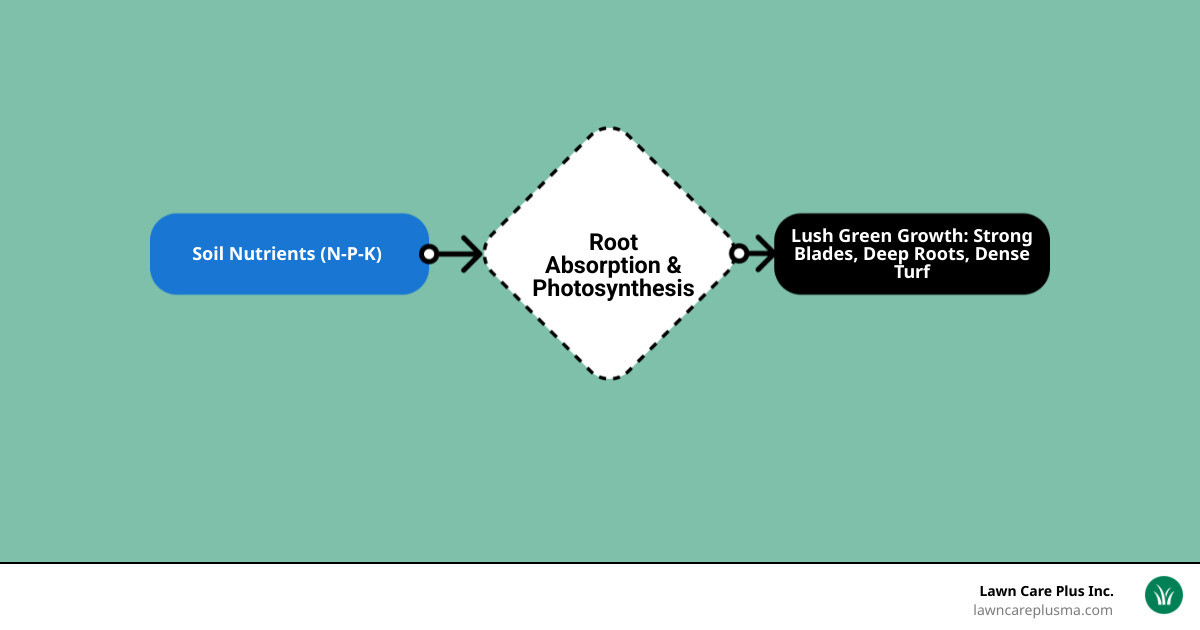
Fertilizer for grass growth works by delivering three core nutrients — nitrogen, phosphorus, and potassium — directly to your soil, where grass roots absorb them to build stronger blades, deeper roots, and a denser, greener lawn.
Here’s a quick look at what the right fertilizer actually does:
| Nutrient | What It Does for Your Grass |
|---|---|
| Nitrogen (N) | Drives leaf and blade growth; gives grass its deep green color |
| Phosphorus (P) | Supports root development, especially in new or stressed lawns |
| Potassium (K) | Builds stress and disease resistance; helps grass survive drought and cold |
Most homeowners in the Boston Metro-West area are growing cool-season grasses like Kentucky Bluegrass, Tall Fescue, or Perennial Ryegrass. These grass types have specific nutrient needs and feeding windows — and using the wrong fertilizer, at the wrong time, can do more harm than good.
Getting it right matters more than most people think. A healthy, well-fed lawn naturally crowds out weeds, recovers faster from foot traffic, and holds up through New England’s unpredictable seasons. Get it wrong — apply too much, too early, or with the wrong formula — and you risk burning your grass, wasting money, or polluting local waterways.
This guide walks you through everything you need to know: nutrients, ratios, timing, application, and soil testing — all tailored to the Massachusetts climate.
I’m Tim DiAngelis, owner of Lawn Care Plus, Inc., a full-service landscaping company based in Roslindale serving Greater Boston and Metro-West residential and commercial clients. Over more than a decade of hands-on lawn care in New England, I’ve seen how the right fertilizer for grass growth can transform a patchy, struggling lawn into something genuinely impressive. Let’s get into the details so you can make the best decision for your property.
The Science of Fertilizer for Grass Growth
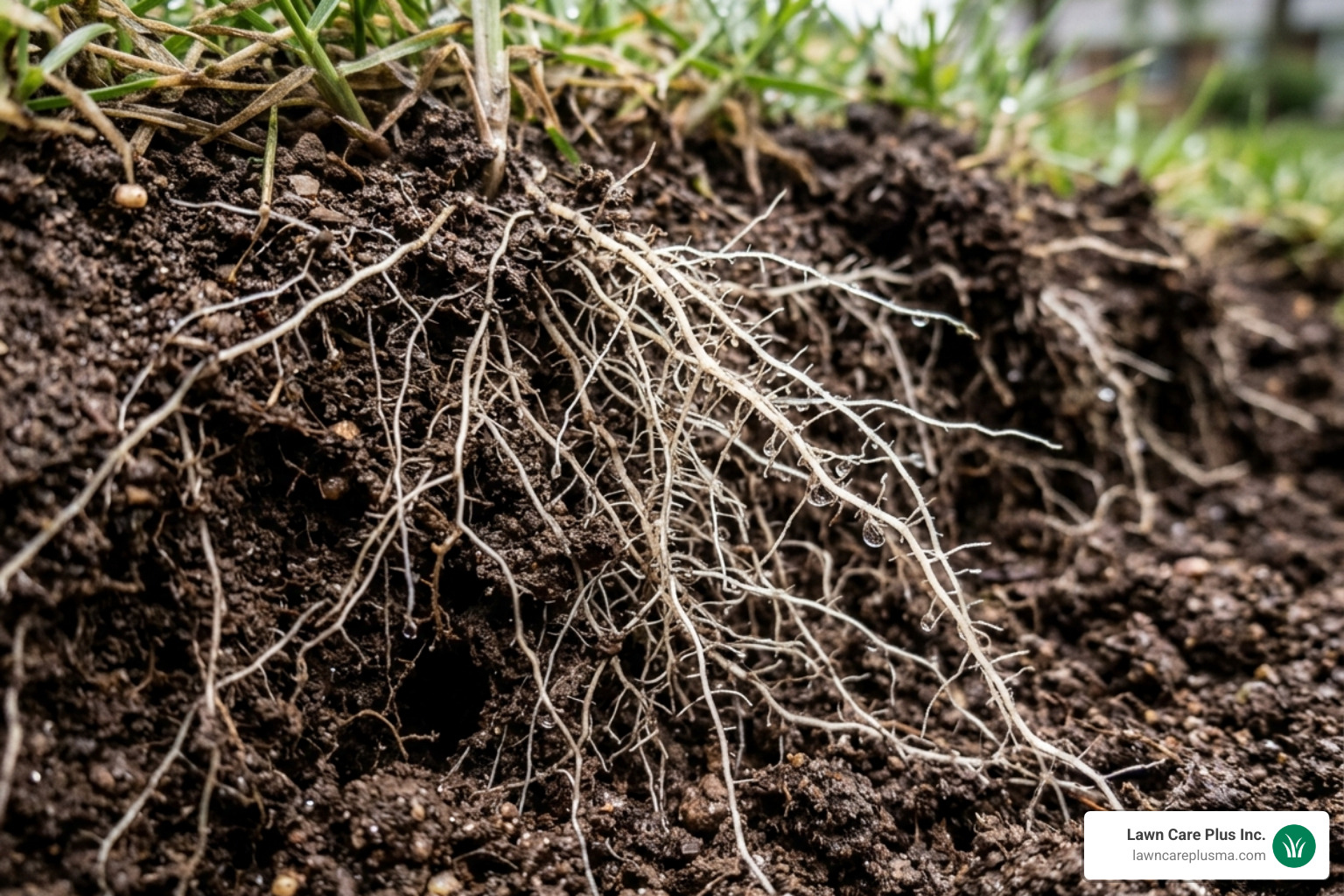
To understand how to get the best out of your yard, we have to look below the surface. Grass isn’t just “eating” dirt; it’s performing a complex chemical dance. When we apply fertilizer for grass growth, we are essentially providing the raw materials for photosynthesis and cellular repair.
In our neck of the woods—from Milton to Medfield—the soil often struggles to keep up with the demands of high-traffic residential lawns. Professional-grade turf food differs from the stuff you might find at a generic hardware store because it often uses higher-quality nitrogen sources and better delivery systems. For instance, many pros know that Why 16 0 8 Fertilizer Is The Secret To Professional Turf lies in its balance. It provides enough nitrogen for that “wow” green factor while delivering a healthy dose of potassium for the “New England tough” durability we need for our winters.
Understanding the N-P-K Ratio
If you’ve ever looked at a bag of fertilizer, you’ve seen three big numbers like 32-0-5 or 10-10-10. These are the N-P-K ratios, representing the percentage by weight of Nitrogen, Phosphorus, and Potassium.
- The First Number (Nitrogen): This is the gas pedal. It makes the grass go green and grow fast.
- The Second Number (Phosphorus): This is the anchor. It builds the roots. In Massachusetts, many established lawns don’t actually need much added phosphorus, which is why you’ll often see a “0” in the middle of maintenance fertilizers.
- The Third Number (Potassium): This is the immune system. It helps the grass regulate water and survive the stress of a hot July in Boston or a freezing January in Newton.
Essential Micronutrients for Grass Growth
While N-P-K are the “Big Three,” grass also needs a “multivitamin” of micronutrients. One of the most important for our area is Iron. If you want that deep, dark “golf course green” without forcing the grass to grow six inches every three days, iron is your best friend.
Products like Scotts Green Max Lawn Food contain 5% iron, which can provide a visible green-up in as little as three days. Magnesium and sulfur are also vital, helping the plant process other nutrients and maintain soil acidity levels that are just right for cool-season grasses.
The Role of Nitrogen in Leaf Development
Nitrogen is the primary engine behind chlorophyll production. Without enough of it, your lawn will look pale, yellowish, and thin. High-nitrogen fertilizers like Scotts Turf Builder Lawn Food 30-0-3 are designed to maximize shoot density. When your grass is dense, there’s no room for crabgrass or dandelions to take hold. It’s the best natural weed defense we have.
Choosing the Right Fertilizer for Your Lawn Type
Not all grass is created equal. If you are working with Fertilizer For New Sod, your needs are vastly different than someone maintaining a 20-year-old lawn in Brookline. New sod or a lawn you’re trying to How To Install A New Lawn From Seed requires more phosphorus to get those tiny roots moving.
Synthetic vs. Organic Fertilizer for Grass Growth
This is a classic debate in the Boston Metro-West area.
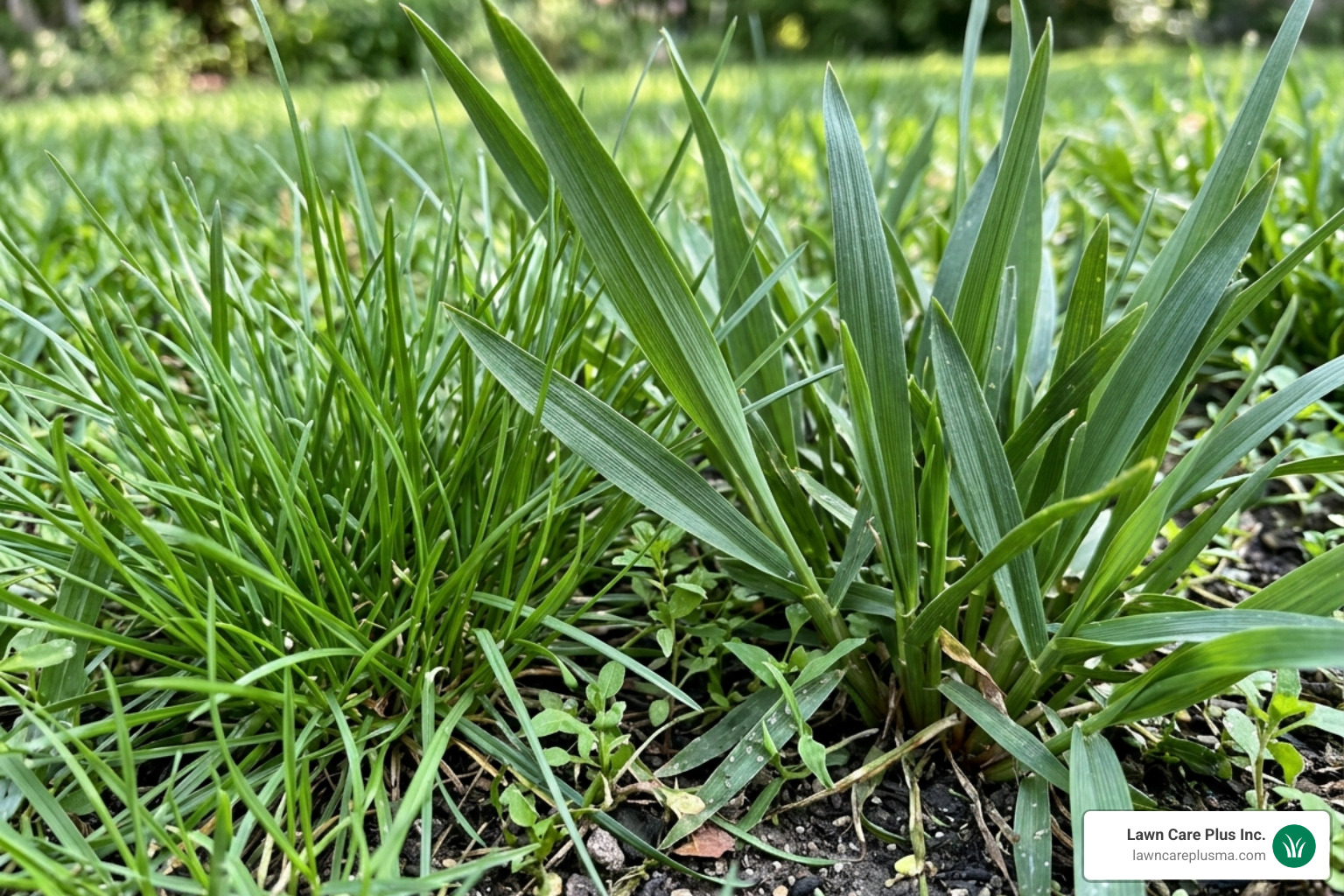
- Synthetic fertilizers are like a protein shake. They are fast-acting, highly concentrated, and give you immediate results. They are great for a quick recovery or a massive green-up before a backyard party.
- Organic fertilizers, like Espoma Lawn Food 15-0-5, are more like a healthy, balanced diet. They use natural ingredients that feed the soil microbes first. These microbes then break down the nutrients for the grass.
Organic options improve soil structure over time and are often preferred by our clients in places like Watertown or Belmont who are looking for a more “biological” approach to lawn health.
Fast-Release vs. Slow-Release Formulas
Fast-release nitrogen is water-soluble. It hits the grass hard and fast. The downside? If it rains too much, it can leach out into our local aquifers, or if it’s too hot, it can burn the blades.
Slow-release formulas, such as Pennington Full Season Lawn Fertilizer 32-0-5, use technologies like polymer-coated urea. This acts like a time-release capsule, feeding your lawn steadily for up to four months. This is much safer for the environment and prevents the “roller coaster” growth of a lawn that’s super long one week and starving the next.
Specialty Blends: Starters and Winterizers
Throughout the year, your lawn’s “career goals” change.
- Starter Fertilizers: Used for new installations. Check out our Complete Lawn Installation Guide for more on this. These have higher phosphorus to jumpstart root growth.
- Winterizers: Applied in late fall (usually October in Massachusetts). These are high in potassium to help the grass store carbohydrates for the winter. It’s like a bear bulking up for hibernation.
How to Apply Fertilizer Without Burning Your Grass
We’ve all seen it—the neighbor who has bright green stripes followed by brown, dead patches. That’s a “fertilizer burn.” It happens when the salt concentration in the fertilizer is so high that it actually sucks the moisture out of the grass roots.
Proper Spring Lawn Care starts with the right equipment. Always use a calibrated spreader. Whether it’s a broadcast spreader for large yards in Walpole or a drop spreader for tighter spaces in Brighton, the key is even distribution.
Calculating Coverage and Application Rates
Don’t guess! A 37.5 lb bag of Scotts Turf Builder covers 15,000 sq. ft., but if you dump that whole bag on a 5,000 sq. ft. yard in Dedham, you’re going to have a bad time.
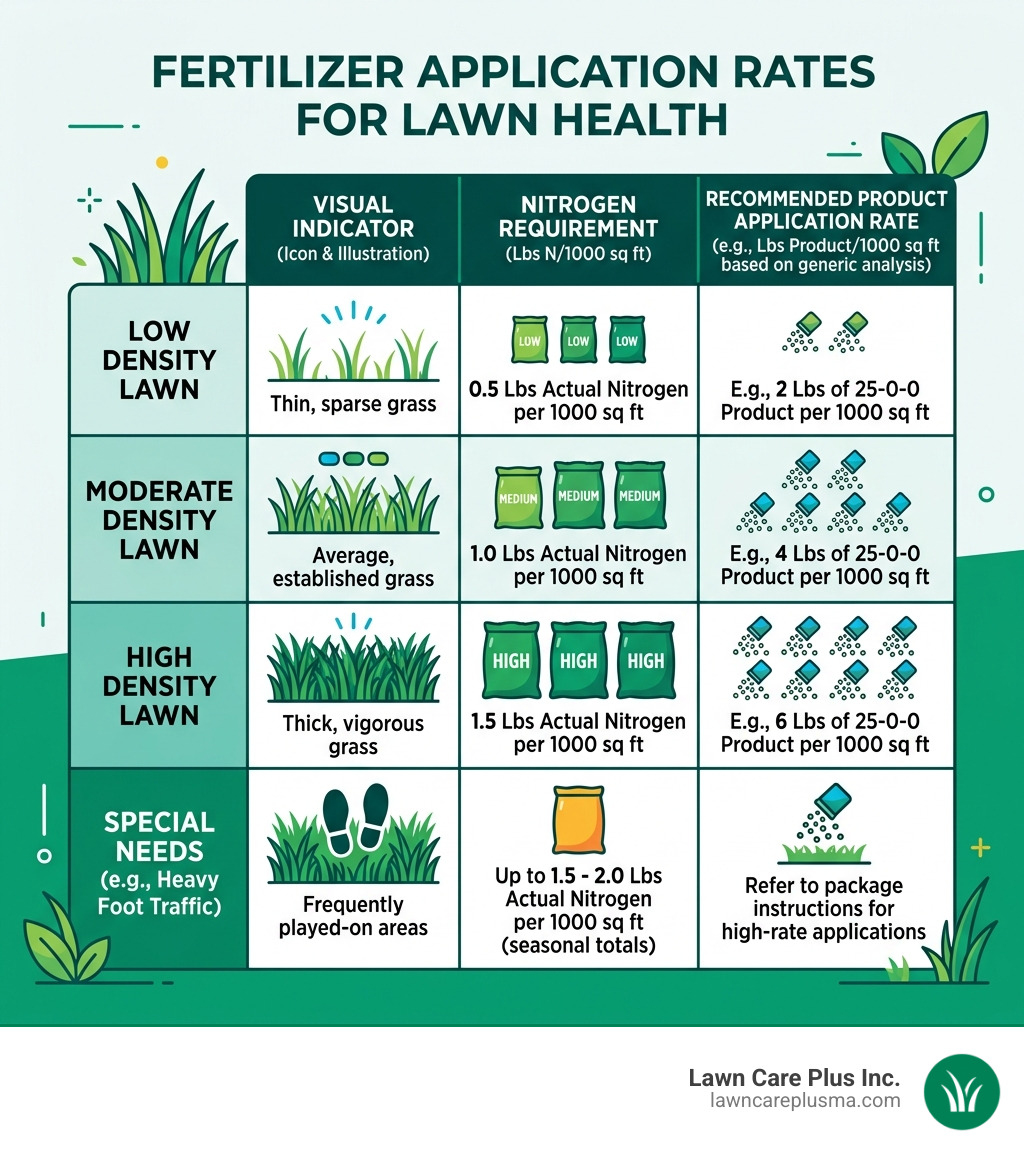
Most experts, including those at various university extensions, recommend applying about 1 pound of actual nitrogen per 1,000 square feet per application. For a 30-0-3 fertilizer, that means you need about 3.3 lbs of product for every 1,000 square feet of grass.
Seasonal Timing for Massachusetts Lawns
In Massachusetts, we live and die by the seasons.
- Late April: First feeding. Wait until the grass is actually growing. Fertilizing dormant grass in Roslindale during a late March frost is a waste of money.
- Early June: Pre-summer boost to help the lawn handle the upcoming heat.
- Late August/Early September: The most important feeding of the year. This is when cool-season grasses recover from summer stress. It’s also the best time to learn How To Care For New Sod if you’ve recently renovated.
- Late October: The “Winterizer” application.
Avoiding Common Fertilization Mistakes
The biggest mistake? “More is better.” It isn’t. Over-fertilizing leads to excessive top growth, weak roots, and disease. Another common error is fertilizing right before a Nor’easter. While you want to water the fertilizer in, a heavy downpour will just wash your investment into the street.
Also, pay attention to When To Mow New Sod—never fertilize a lawn that is already under drought stress or hasn’t been mowed in weeks.
Why Soil Testing is the First Step to Success
Imagine trying to bake a cake without knowing if you already have flour in the bowl. That’s what fertilizing without a soil test is like. A soil test tells you the pH of your soil and what nutrients are already there.
In Massachusetts, our soil tends to be acidic. If your pH is too low (below 6.0), the grass can’t actually “unlock” the nutrients in the fertilizer. You could put down the most expensive fertilizer for grass growth in the world, and it won’t do a thing if your soil needs lime. Learning How To Prepare Ground For Sod always starts with a lab report.
Interpreting Your Soil Test Results
A soil test will give you a roadmap. If your phosphorus levels are high (common in established Boston-area lawns), you should use a phosphorus-free fertilizer to protect our local ponds and rivers. If your potassium is low, you’ll want a blend like a 16-0-8 to beef up the lawn’s stress resistance.
Environmental Safety and Runoff Prevention
We love our Massachusetts waterways. Irresponsible fertilization leads to nitrogen and phosphorus runoff, which causes algae blooms in our lakes.
- Sweep it up: Always sweep granules off your driveway and back onto the grass.
- Buffer zones: Don’t fertilize within 20 feet of a waterway.
- Pet safety: Most modern fertilizers, like Turf Builder Lawn Food, are safe for pets and children once they have been watered in and the grass is dry.
Average Costs of Professional Fertilization
While many homeowners enjoy the DIY route, many of our clients in Needham and Chestnut Hill prefer the precision and “done-for-you” nature of professional services.
Based on general internet data, professional lawn fertilization services can vary widely depending on the size of your property and the complexity of the treatment plan.
Understanding Service Pricing
Note: These are average costs based on internet data and not actual costs for Lawn Care Plus Inc.
For a standard residential lot in the Metro-West area, you might see a wide range of pricing. A basic single application for a small yard might start around $50, while a comprehensive, multi-step program for a large estate or commercial property with specialty organic blends and soil amendments could reach $750+ per application.
Factors that influence the price include:
- Acreage: The more ground to cover, the more product and time required.
- Treatment Type: Organic programs often cost more for the raw materials than synthetic ones.
- Frequency: Most healthy lawns in our area require 4 to 7 visits per year to stay in peak condition.
For a tailored plan for your specific home, we recommend checking out our Lawn Care Services page.
Frequently Asked Questions about Fertilizer
Is lawn fertilizer safe for my pets and children?
Yes, when used correctly. For most granular products, we recommend keeping kids and pets off the lawn until the fertilizer has been watered in and the grass has completely dried. This usually takes about 24 hours. If you are particularly concerned, organic fertilizers are a fantastic, biodegradable option that offers extra peace of mind for families in communities like Jamaica Plain and Hyde Park.
How often should I fertilize my lawn in New England?
For a professional-looking lawn, we generally recommend a 4-to-6-step program. Because our growing season is relatively short (April to October), the grass needs to make the most of those months. A single application in the spring isn’t enough to carry the lawn through the summer heat and the winter freeze.
Can I apply fertilizer and weed killer at the same time?
“Weed-and-feed” products are popular because they save time, but they aren’t always the most effective. Often, the best time to kill a weed isn’t the best time to feed the grass. For example, crabgrass preventer needs to go down in early spring before the seeds germinate, while the best time for a heavy feeding is often later in the season. We usually recommend separate applications or professional “spot-treating” for weeds to get the best results without over-applying chemicals.
Conclusion
At Lawn Care Plus Inc., we believe your lawn should be the backdrop for your best memories—whether that’s a summer BBQ in Norwood or a game of catch in Canton. Choosing the right fertilizer for grass growth isn’t just about making the grass green; it’s about building a sustainable, healthy ecosystem right in your backyard.
New England weather is “chaotic,” to put it mildly. Between the late spring frosts and the humid July heat, your grass has a tough job. Don’t let it down by feeding it the wrong nutrients. Whether you’re looking for a synthetic boost or a long-term organic program, we have the expertise to help your lawn thrive in the Massachusetts climate.
Ready to take the guesswork out of your yard? More info about lawn care services is just a click away. Let us help you build a lawn that’s the envy of the neighborhood.