
Choosing Your Perfect Driveway: An Introduction to Replacement Options
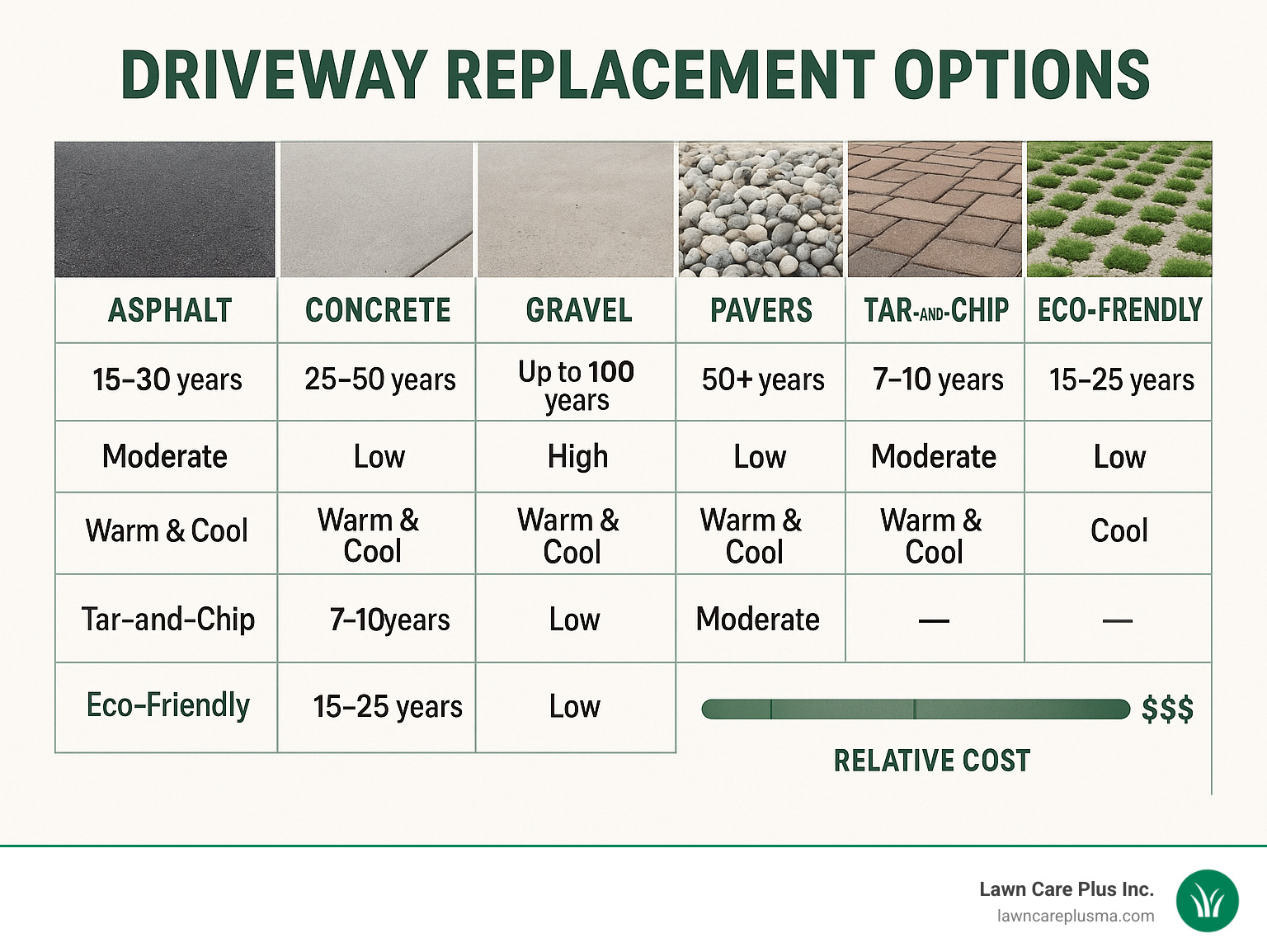
Driveway replacement options typically include:
- Asphalt: Flexible, cost-effective, lasts 15-30 years
- Concrete: Durable, customizable, lasts 25-50 years
- Gravel: Budget-friendly, permeable, lasts up to 100 years with maintenance
- Pavers/Brick: Premium look, easy repairs, lasts 50+ years
- Tar-and-Chip: Middle-ground option with natural look, lasts 7-10 years
- Rubber/Permeable: Eco-friendly alternatives, lasts 15-25 years
“Driveways aren’t just for cars—many double as play areas and convenient workspaces, but most are showing signs of distress and need repair or replacement,” notes a home maintenance expert. Your driveway creates the first impression of your home, impacts drainage around your property, and can significantly affect your curb appeal.
When considering driveway replacement options, you’re making a decision that will affect your property for decades. The right choice depends on your climate, budget, maintenance tolerance, and aesthetic preferences. In New England’s freeze-thaw climate, materials like asphalt offer flexibility that helps prevent cracking, while concrete provides exceptional durability when properly installed.
Beyond traditional materials, innovative options like recycled rubber paving and permeable systems are gaining popularity for their environmental benefits and unique characteristics. These alternatives can reduce runoff, lower heat absorption, and use recycled materials.
Whether you’re replacing a crumbling concrete slab or upgrading from a gravel drive, understanding the full spectrum of options will help you make an informed decision that balances upfront costs with long-term value.
Relevant articles related to driveway replacement options:
– asphalt driveway repair
– cement driveway repair
– driveway crack repair
Comparing Popular Driveway Replacement Options at a Glance
Looking at a cracked, worn driveway every day can be disheartening. When it’s time for a fresh start, understanding your driveway replacement options helps you make a choice you’ll be happy with for decades. Let’s explore what each material brings to the table, especially for our New England neighbors dealing with those challenging Massachusetts winters.
| Material | Lifespan | Cost Per Sq Ft | Maintenance Frequency | Curb Appeal Impact | ROI | Frost Resistance |
|---|---|---|---|---|---|---|
| Asphalt | 15-30 years | $4-$15 | Every 3-5 years | Good | Moderate | Excellent (flexible) |
| Concrete | 25-50 years | $4-$20 | Every 2-3 years | Excellent | High | Good with proper installation |
| Gravel | Up to 100 years with maintenance | $1-$5 | Annual regrading | Rustic charm | Low | Good (allows drainage) |
| Pavers/Brick | 50-100 years | $10-$50 | Occasional joint sand refill | Premium | High | Excellent (individual units move) |
| Tar-and-Chip | 7-15 years | $5-$10 | Very low | Natural, textured | Moderate | Good |
| Eco-Alternatives | 15-25 years | $7-$30 | Low | Modern, distinctive | Varies | Excellent |
Understanding driveway replacement options costs
When budgeting for your new driveway, several factors affect the bottom line beyond just the material cost. Removal of your existing driveway can add significantly to the project, especially with concrete that requires heavy equipment to break up and haul away.
Labor rates in our Boston Metro-West region tend to be higher than national averages, reflecting our skilled workforce and higher cost of living. While we don’t provide specific pricing here at Lawn Care Plus Inc., understanding these components helps you prepare for your investment:
“Most homeowners focus only on material costs, but site preparation often accounts for 30-50% of a quality driveway installation,” explains one of our project managers. “That proper foundation is what gives you those extra years of service life.”
Any pricing you find online represents averages based on internet data, not actual costs for our services. These figures can vary widely depending on your specific property conditions and current material costs, which have seen significant inflation in recent years.
Choosing driveway replacement options for your climate
New England weather isn’t for the faint of heart—or the poorly constructed driveway! Our freeze-thaw cycles can be brutal on hardscaping, with temperatures swinging dramatically throughout winter and spring.
Asphalt driveways shine in our climate because they flex slightly during those freeze-thaw periods rather than cracking. Their dark surface also absorbs sunlight, helping snow melt faster—a welcome feature during our long winters.
Concrete driveways can perform well too, but require proper installation with reinforcement and control joints that accommodate movement. Without these features, they’re more prone to cracking in our climate.
Gravel drives provide excellent drainage, preventing ice buildup, but require more maintenance after snow plowing season ends.
The foundation beneath your driveway is just as important as the surface material. Proper subgrade preparation with adequate base materials prevents frost heave—that annoying seasonal lifting that creates bumps and cracks.
“We recommend a minimum 8-12 inch base for most installations in Massachusetts,” notes our hardscaping team. “It’s better to invest in proper drainage solutions upfront than to replace a failed driveway prematurely.”
Speaking of drainage, this is critical to any successful driveway in our region. Water that pools or flows improperly across your driveway will dramatically shorten its lifespan. Our team often incorporates subtle crowning, drainage channels, or permeable designs to manage water effectively. Learn more about our approach to drainage solutions that protect your investment.
At Lawn Care Plus Inc., we’ve seen how the right driveway replacement options paired with proper installation techniques can stand up to Massachusetts weather for decades, providing both function and beauty for your home.
Gravel Driveways: Budget-Friendly Workhorse

There’s something charmingly rustic about a well-maintained gravel driveway crunching beneath your tires as you arrive home. As one of the most economical driveway replacement options available to Boston Metro-West homeowners, gravel continues to earn its reputation as the budget-friendly workhorse of driveway materials.
“Gravel driveways can last up to 100 years with a solid foundation and regular upkeep,” notes an industry expert. This remarkable longevity might surprise you, especially considering the modest upfront investment compared to other materials.
The secret to a lasting gravel driveway lies in proper layering. Think of it like a layer cake, where each level serves a specific purpose. The base layer uses larger #4 stones (about golf ball to baseball sized) to create a stable foundation. The middle layer features medium-sized #57 stones that provide excellent drainage capabilities. The top layer – the one you’ll see and drive on – can be customized to your aesthetic preferences while maintaining functionality.
Your top layer options include angular crushed stone #411 that locks together beautifully, quarry process with stone dust for firm compaction, decorative pea gravel (though you’ll need good edging to keep it in place), golden Jersey Shore gravel, bright reflective marble chips, or dramatic dark Blackstar rock. Each brings its own character to your property’s entrance.
Pros, Cons & Costs
When considering gravel, you’ll appreciate its outstanding permeability – those heavy New England rainstorms will drain right through instead of pooling on your driveway surface. The installation process is straightforward enough that ambitious DIYers can tackle it themselves, and you can drive on it immediately after installation – no waiting for curing times.
Repairs couldn’t be simpler – just add more gravel where needed. For homeowners with longer driveways where paving costs might make you faint, gravel offers a practical alternative that complements rural and semi-rural settings beautifully.
Of course, gravel isn’t perfect for everyone. It does require more regular maintenance than paved surfaces. Those picturesque country lanes can develop ruts over time, especially after heavy rains. Dust can become an issue during dry summer months, and winter snow removal requires a careful touch to avoid scraping away your surface material.
Without proper edging, you might find gravel migrating onto your lawn (much to the dismay of your mower). And if your property features steep slopes (over 7%), you’ll likely want to consider other options, as gravel tends to wash downhill during heavy rains.
Based on industry data, gravel driveways typically range from $1-$5 per square foot, making them significantly more affordable upfront than other driveway replacement options. Remember though, the ongoing maintenance will require some investment of time and resources over the years.
Maintenance & DIY Tips
Keeping your gravel driveway in top condition isn’t complicated, but it does require consistency. Regular regrading with a box blade or even a sturdy rake helps maintain a level surface and eliminates those annoying ruts that can develop after heavy use or rainfall.
Weed control becomes essential, particularly in our Massachusetts climate where seemingly everything wants to grow. Many homeowners apply occasional weed killer, but the pros recommend installing geotextile fabric beneath the gravel during initial installation – a step that pays dividends for years by preventing both weeds and the mixing of gravel with underlying soil.
Containing your gravel is another important consideration. Installing landscape edging, railroad ties, or concrete curbing creates clear boundaries that prevent your investment from gradually disappearing into surrounding lawn areas.
Plan to add a fresh layer of surface gravel every 1-2 years to maintain both appearance and function. This “topping off” process refreshs the driveway’s appearance and replaces material that inevitably gets displaced over time.
A Newton homeowner recently shared her experience: “We installed a crushed limestone driveway with proper edging five years ago. It’s held up beautifully with just annual raking and occasional new stone. The key was laying down quality geotextile fabric first to prevent weeds and mud mixing.”
For Boston-area homeowners with longer driveways or those seeking a natural aesthetic that complements our New England landscape, gravel offers an appealing blend of affordability, functionality, and charm – especially when installed with the expertise that comes from local experience.
Asphalt Driveways: Flexible Classic
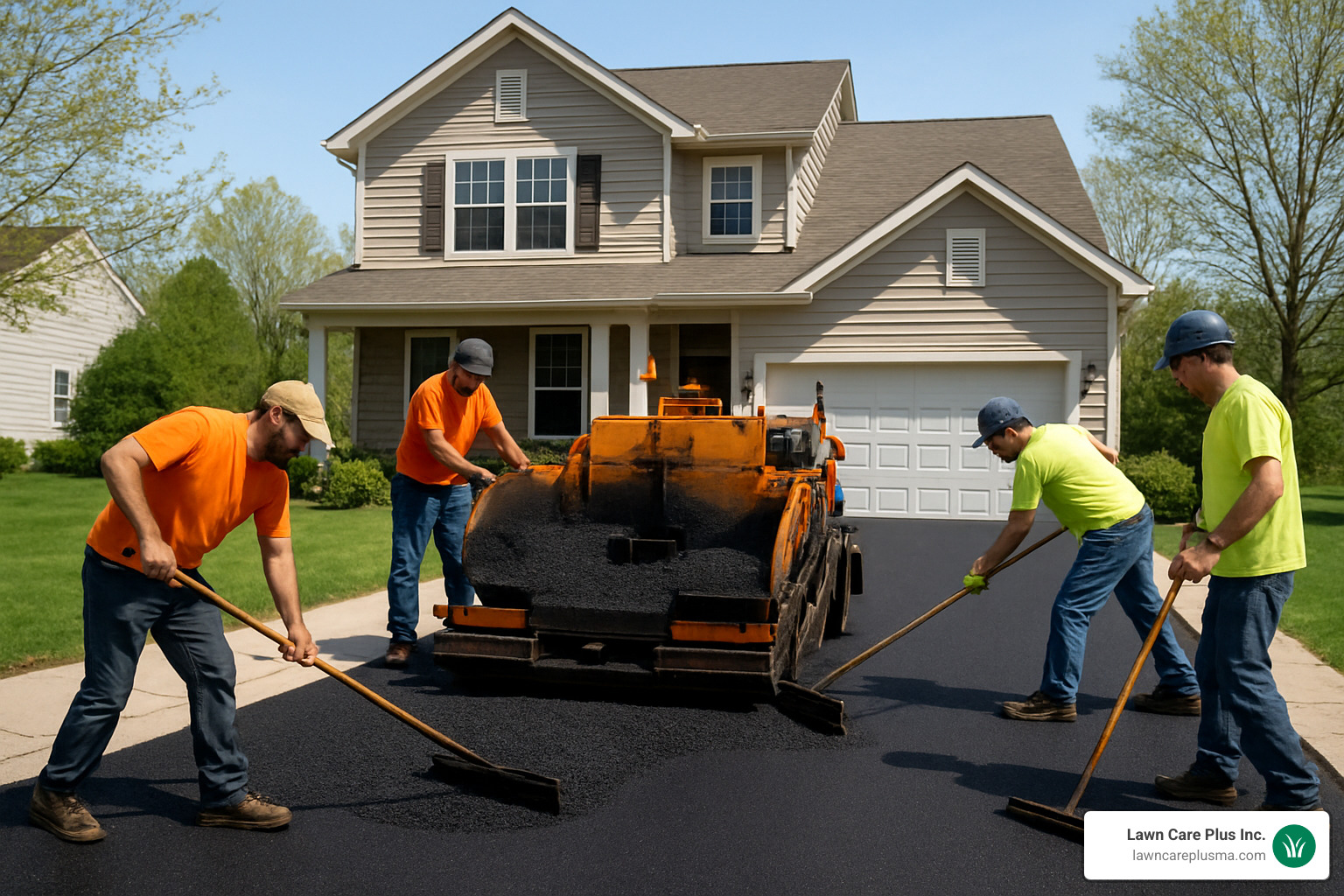
There’s something reassuringly familiar about the smooth black surface of a freshly paved asphalt driveway. As one of the most popular driveway replacement options in Massachusetts, asphalt has earned its reputation as the go-to choice for our temperamental New England climate.
“I tell my clients that asphalt is like a good winter coat – flexible enough to move with you but tough enough to handle whatever Mother Nature throws its way,” says our lead installation specialist at Lawn Care Plus Inc. That flexibility is crucial during our notorious freeze-thaw cycles when rigid materials tend to crack under pressure.
Did you know that asphalt is actually America’s most recycled product? It’s true! When we remove old asphalt, it doesn’t end up in landfills – it gets crushed and mixed into new pavements, creating a more resilient surface with improved rut resistance. This sustainability factor makes many of our environmentally conscious Metro-West clients smile.
Our Asphalt Driveway Replacement service has become something of a specialty for us over the years. We’ve paved our way through Wellesley, Weston, Newton, and beyond, with each project beginning with meticulous base preparation – the unsung hero of long-lasting asphalt driveways.
Pros, Cons & Costs
When you’re weighing your driveway replacement options, asphalt brings some compelling advantages to the table. The installation process is relatively quick (typically just 1-2 days), and you’ll be able to drive on your new surface within 24-48 hours – a real blessing when you’re juggling busy family schedules.
That dark color that defines asphalt isn’t just for looks – it’s functional too. During our snowy winters, asphalt absorbs whatever sunlight it can get, helping melt snow faster than lighter surfaces. And when the ground shifts during seasonal changes, asphalt’s natural flexibility allows it to adapt rather than crack.
Of course, no driveway material is perfect. Asphalt requires regular maintenance, including sealcoating every 3-5 years to protect against water infiltration and UV damage. During summer heatwaves, the surface can get quite hot (something to consider if you have little ones who play barefoot). And while asphalt offers a clean, uniform look, it doesn’t provide the same design versatility as pavers or stamped concrete.
According to industry data, asphalt driveways typically range from $4-$15 per square foot. This wide range reflects differences in asphalt thickness, base preparation quality, and finishing techniques. When it’s time for replacement, you’ll have two main options:
Full replacement gives you a fresh start with complete removal of existing material, new base installation, and fresh asphalt. This is often the best long-term solution, especially if your current driveway has significant structural issues.
Overlay (sometimes called a “cap”) adds a new layer of asphalt over your existing driveway, provided the base is still structurally sound. While this can be more economical, it’s not suitable for driveways with serious damage or drainage problems.
“I always tell homeowners to be wary of unusually low quotes,” shares our project manager. “Proper base preparation accounts for about 70% of your driveway’s longevity, but it’s the part nobody sees. Some contractors cut corners there to offer lower prices, but you’ll pay for it in premature repairs.”
Longevity & Upkeep
With proper installation and care, your asphalt driveway can be a faithful companion for 15-30 years in our Boston area climate. The key to maximizing that lifespan is consistent maintenance.
Sealcoating is your driveway’s first line of defense. This protective layer shields against water infiltration, UV damage, and chemical spills. We typically recommend applying a fresh coat every 3-5 years, though heavily used driveways might benefit from more frequent treatment.
Spring inspections are crucial after winter’s harsh conditions. This is the perfect time to address any small cracks before they become major problems. A tube of quality crack filler is one of the best investments you can make in your driveway’s future!
Edge support often gets overlooked, but it’s essential for preventing the crumbling that often starts at driveway borders. Proper installation should include reinforced edges, and any signs of deterioration should be addressed promptly.
One of our longtime clients in Brookline recently shared her experience: “We’ve had our asphalt driveway for over two decades now. Every spring, my husband and I do a thorough inspection and take care of any small cracks. We’ve had it professionally sealcoated every four years, and honestly, it still looks great despite all the snow plowing and temperature swings. The maintenance is so worth it when you consider what replacement would cost.”
The dark surface of asphalt also offers a practical winter advantage that many of our clients appreciate: snow removal is generally easier because the dark color absorbs heat and helps melt snow faster than lighter surfaces. It’s one of those small benefits that makes a big difference during those February blizzards we all know too well.
Concrete Driveways: Long-Lasting Canvas
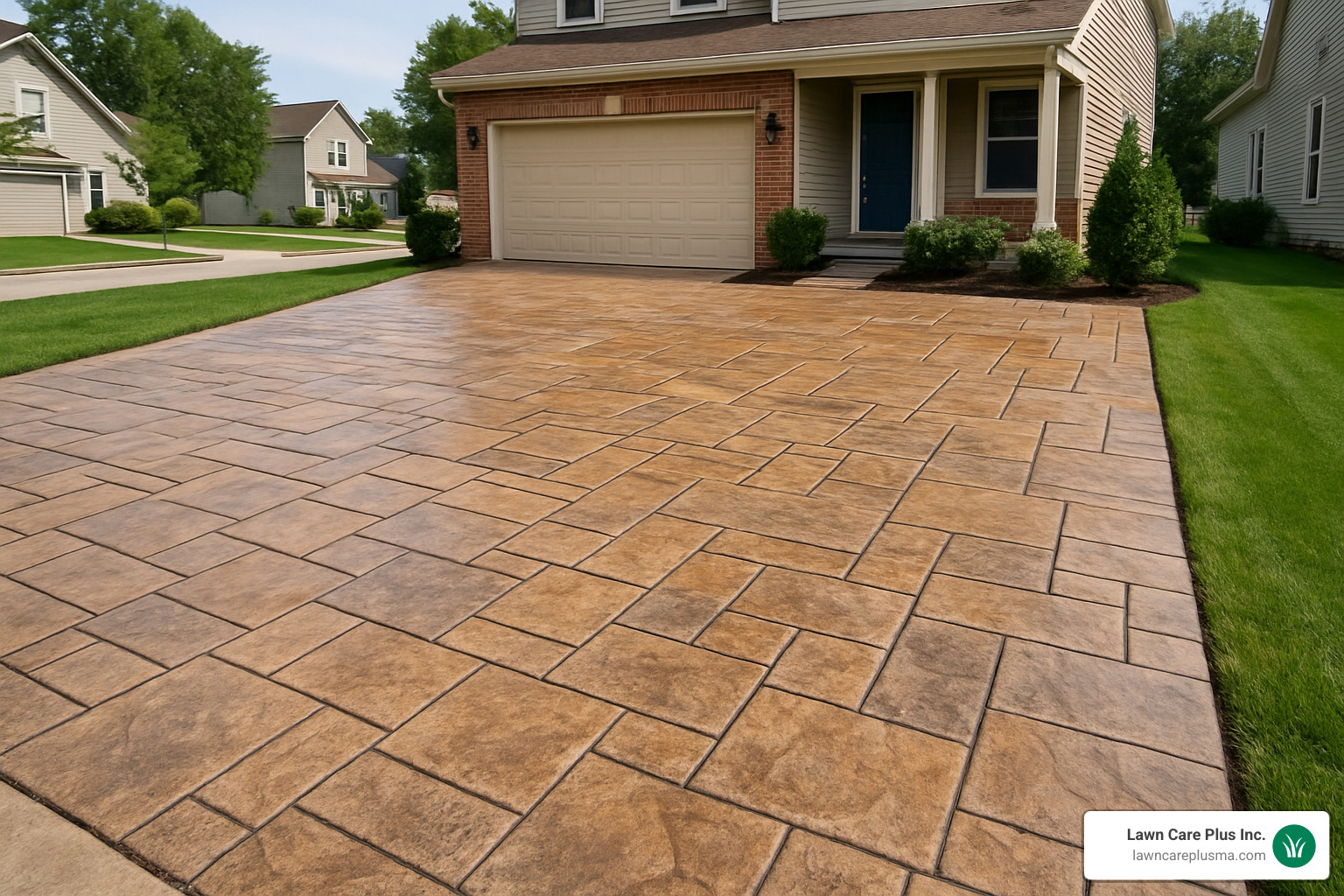
When it comes to driveway replacement options, concrete stands out as the marathon runner of materials. It’s not just a driveway—it’s a blank canvas waiting for your personal touch, offering both exceptional durability and creative possibilities for Boston Metro-West homeowners.
“The maintenance on concrete is very minimal, which includes regular surface cleaning, crack and joint filling, and top coat sealing,” explains industry expert Courtney Harmon. This low-fuss nature makes concrete particularly appealing for busy homeowners who want a “set it and mostly forget it” solution.
At Lawn Care Plus Inc., we’ve seen concrete driveways transform properties throughout Newton, Wellesley, and surrounding towns. Our Concrete Driveway Removal and Replacement service includes proper reinforcement techniques specifically designed to withstand New England’s challenging freeze-thaw cycles.
Pros, Cons & Costs
Concrete driveways shine when it comes to longevity, typically lasting 25-50 years or more when properly installed. Their high load-bearing capacity makes them ideal for homes with heavy vehicles or RVs. The light color stays cooler in summer (your bare feet will thank you!), and the design versatility is best—from smooth contemporary finishes to stamped patterns mimicking cobblestone or brick.
Of course, no material is perfect. Concrete requires a longer curing time than asphalt—typically 7+ days before you can drive on it. The initial investment is higher than some alternatives, and winter salt can cause surface pitting if not properly sealed. While concrete can handle our Massachusetts winters, it requires proper installation with control joints that allow for inevitable ground movement.
Based on industry data, concrete driveways typically range from $4-$20 per square foot, with the higher end reflecting decorative options like stamping, staining, or exposed aggregate finishes. The price variation isn’t just cosmetic—it also reflects quality differences in thickness, reinforcement, and concrete mix design.
A properly installed concrete driveway isn’t just a surface—it’s a structural system. Professional installation includes a minimum 5-inch thickness, 4,000 psi strength concrete with air entrainment (tiny bubbles that allow for freeze-thaw expansion), proper reinforcement, and an adequate subbase of 8-10 inches of compacted gravel.
Repair or Resurface?
One of concrete’s hidden superpowers is its ability to be refreshed without complete replacement. When your driveway begins showing its age but remains structurally sound, resurfacing can give it new life at a fraction of replacement costs.
The Concrete Driveway Resurfacing Guide outlines several approaches to rejuvenation. Concrete overlays apply a thin new surface layer, while stamped overlays can completely transform the look with decorative patterns. For minor refreshes, staining or coloring can change the appearance without structural modifications, and microtoppings provide ultra-thin repair for minor surface issues.
For everyday maintenance, sealing hairline cracks promptly prevents water infiltration and further damage. Regular cleaning with a pressure washer keeps your concrete looking fresh, while applying concrete sealer every 2-3 years provides ongoing protection. We always advise our clients to avoid deicing salts during the first winter after installation to allow proper curing.
A Newton homeowner recently told us about their 15-year-old stamped concrete driveway: “It mimics cobblestone and has been almost maintenance-free—just occasional cleaning and resealing every few years. It still looks fantastic and has definitely boosted our property value. The initial investment has paid for itself many times over in compliments alone!”
With proper installation and minimal maintenance, a concrete driveway offers that rare combination of beauty, function, and longevity that makes it a standout among driveway replacement options for Massachusetts homes.
Brick & Paver Driveways: Premium Puzzle Pieces

When it comes to making a lasting impression, few driveway replacement options can match the timeless elegance of brick and concrete pavers. These individually placed pieces create a stunning entrance to your home that combines classic charm with modern durability – like a beautiful puzzle that gets better with age.
I’ve seen countless homeowners in Newton and Brookline fall in love with their paver driveways, even years after installation. What makes them special? As one industry expert puts it, “Concrete pavers offer seamless spot replacement, unlike poured-in-place concrete.” This repairability is a huge advantage – if a section gets damaged, you can simply replace those few pieces rather than redoing the entire driveway.
The design possibilities with pavers are virtually endless. At Lawn Care Plus Inc., we help homeowners create unique driveways through various patterns like herringbone (my personal favorite for its structural strength), basketweave, or running bond. You can choose from a rainbow of colors from earthy browns to sophisticated grays, and textures ranging from smooth modern finishes to tumbled stones that look centuries old.
Pros, Cons & Costs
The benefits of choosing pavers are substantial. Exceptional longevity is perhaps the biggest selling point – a properly installed paver driveway can last 50-100 years, potentially outlasting your home itself! The flexible surface naturally adapts to ground movement and freeze-thaw cycles without cracking, a huge advantage in our Massachusetts winters.
Unlike concrete, there’s no waiting period – you can drive on your new pavers immediately after installation. Many of our clients also appreciate the high-end appearance that instantly boosts curb appeal and property value. Some even comment that their paver driveway becomes the neighborhood conversation piece!
Of course, there are considerations to weigh. The initial investment is higher than asphalt or concrete, reflecting the premium materials and labor-intensive installation. The spaces between pavers can potentially allow weed growth, though proper installation with polymeric sand significantly reduces this issue. You’ll also need to be a bit more careful with snow removal to avoid catching plow edges on the pavers.
According to industry data, brick and paver driveways typically range from $10-$50 per square foot, depending on materials, pattern complexity, and site conditions. While this represents a significant upfront cost, many homeowners find the value proposition compelling when they consider the decades of service and minimal maintenance requirements.
As Brian Ramirez, a paver installation expert, explains: “The cost of installing pavers tends to be higher than stamped and colored concrete. However, the long-term value of pavers is realized in their variety of design and color, ease of spot replacement or repair, and resistance to cracking.”
Installation & Disruption
Installing a paver driveway is a bit like building a layer cake – each layer serves an important purpose. First comes excavation, typically 10-12 inches deep to make room for a proper foundation. Next, we add 8-12 inches of compacted crushed stone that provides drainage and structural support.
The magic happens with a precisely leveled 1-inch bedding layer of coarse sand, followed by carefully placing each paver by hand in your chosen pattern. We secure the edges with special restraints to prevent shifting, then sweep polymeric sand between the pavers before activating it with water to create solid, weed-resistant joints.
The final step involves compacting the entire surface to settle the pavers firmly into place. While this process is more involved than pouring asphalt or concrete, the payoff is immediate usability – you can park on your new driveway the same day we finish!
“It will last for decades,” notes Ramirez. “The bed of aggregate beneath the driveway is strong yet flexible. In addition, the joints between the concrete pavers provide the best of both worlds: strength and flexibility. These driveways will not crack due to freezing or thawing.”
At Lawn Care Plus Inc., we’ve installed countless paver driveways throughout the Boston Metro-West area. Our clients particularly love how their new driveway complements other hardscape elements like walkways and patios, creating a cohesive outdoor living space that feels both welcoming and sophisticated.
Want to explore how pavers could transform your home’s entrance? Check out more inspiration at Driveway Pavers or contact us to discuss your project!
Tar-and-Chip (Oil & Stone): Rural Charm, Urban Comeback
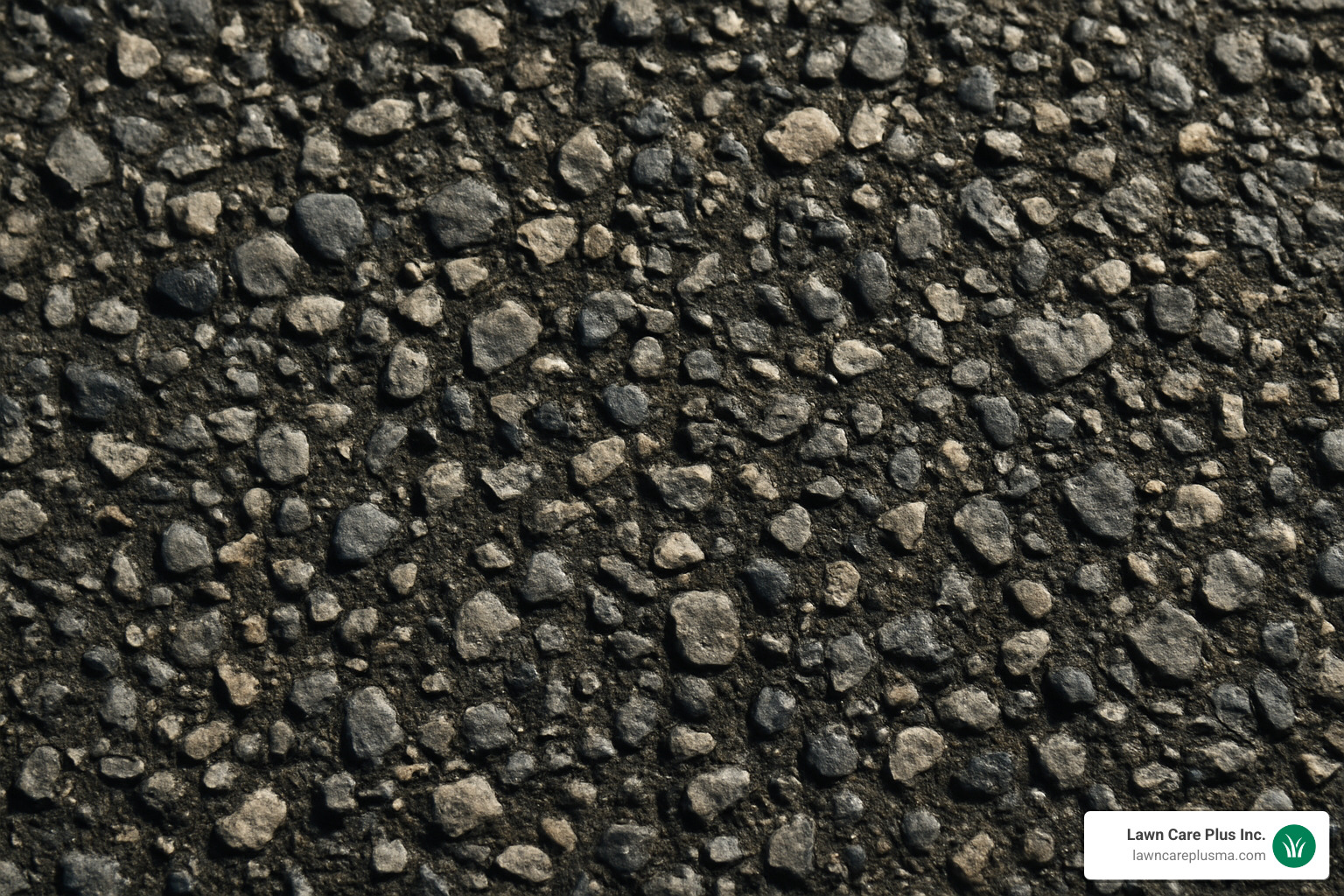
Remember those charming country lanes with their natural-looking surfaces? That’s tar-and-chip – and it’s making a surprising comeback in suburban settings across Massachusetts. Also known as “oil and stone” or “chip seal,” this distinctive driveway replacement option bridges the gap between basic gravel and conventional asphalt.
I’ve watched many homeowners’ eyes light up when they find tar-and-chip during our consultations. There’s something about its textured, rustic appearance that feels both timeless and fresh. The installation process is fascinating to watch: we start with a solid gravel base, then apply hot liquid asphalt before embedding a layer of loose stone aggregate. The surface is then compacted, creating a textured finish that looks natural but performs like a more durable surface.
“I love recommending tar-and-chip for clients who want something different,” shares one of our installation experts at Lawn Care Plus. “It gives you that natural, countryside feel with much better durability than plain gravel. Plus, the textured surface provides excellent grip during our New England winters.”
Pros, Cons & Costs
The charm of tar-and-chip goes beyond appearances. Its textured surface offers significantly better traction than smooth pavements, especially when wet or icy – a genuine advantage during Massachusetts winters. Unlike asphalt driveways that need regular sealcoating, tar-and-chip requires minimal maintenance over its lifetime.
The material also stays cooler in summer than dark asphalt and doesn’t develop the characteristic cracks of concrete. Many of our Metro-West clients appreciate how the embedded stone creates visual interest while providing practical benefits.
Of course, every driveway replacement option has its drawbacks. Tar-and-chip typically doesn’t last as long as premium materials like concrete or pavers, with most installations serving 7-15 years before needing attention. The surface stones may loosen over time, particularly at the edges, and color options are limited to the natural stone varieties available.
Snow removal requires a bit more care – we always remind our clients to set their plow blade slightly higher than normal to avoid scraping away the surface stones. And while we’ve mastered the installation process at Lawn Care Plus, it’s worth noting that fewer contractors specialize in this method compared to standard asphalt or concrete.
According to industry data, tar-and-chip driveways typically fall in the middle of the price spectrum. The average cost ranges from $5-$10 per square foot, positioning it between economical gravel and more expensive asphalt or concrete options. This attractive price point makes it worth considering for many homeowners seeking something distinctive without breaking the bank.
Best Use Cases
Through our years of installing driveways across the Boston Metro-West area, we’ve identified several situations where tar-and-chip truly shines.
It’s particularly wonderful for rural and semi-rural properties where the natural, textured appearance complements wooded or pastoral settings. The material feels right at home alongside stone walls, traditional New England architecture, and naturalistic landscaping.
Longer driveways benefit tremendously from tar-and-chip. When you’re paving a significant area, the cost savings compared to premium materials can be substantial without sacrificing appearance or functionality. I’ve seen many clients opt for tar-and-chip for their 200-foot country lanes when asphalt or concrete would have stretched their budget too thin.
The improved traction makes it ideal for properties in snowbelt areas or on gentle slopes. The textured surface helps prevent the slippery conditions that can make smooth pavements treacherous during winter months.
Tar-and-chip also works beautifully as an overlay application on existing asphalt driveways that have minor cosmetic issues but remain structurally sound. This approach can refresh the appearance while adding years of service life without the expense of complete removal and replacement.
One of our Weston clients recently shared: “After researching all our options, we chose tar-and-chip for our circular driveway. We wanted something that would complement our 1800s farmhouse without looking too modern. Two years in, we couldn’t be happier with how it’s performing through the seasons – and our visitors always comment on how unique and attractive it looks.”
For more detailed information about various driveway surfaces, the resource Asphalt Driveways – All About Driveways offers excellent comparisons.
At Lawn Care Plus Inc., we’re seeing growing interest in this distinctive surface throughout the communities we serve. It strikes that perfect balance between practical performance, visual appeal, and reasonable cost – exactly what many homeowners are seeking in today’s market.
Eco & Innovative Alternatives: Going Green and Beyond
The driveway world is changing, friends. As more of us become environmentally conscious, exciting new driveway replacement options are gaining traction among Boston-area homeowners. These alternatives aren’t just good for the planet—they offer unique benefits that traditional materials simply can’t match.
“I’ve watched homeowners’ faces light up when they see how beautiful sustainable driveways can be,” says Maria Chen, an eco-hardscaping specialist. “They come in expecting compromise, but leave realizing they’re getting something better than conventional options in many ways.”
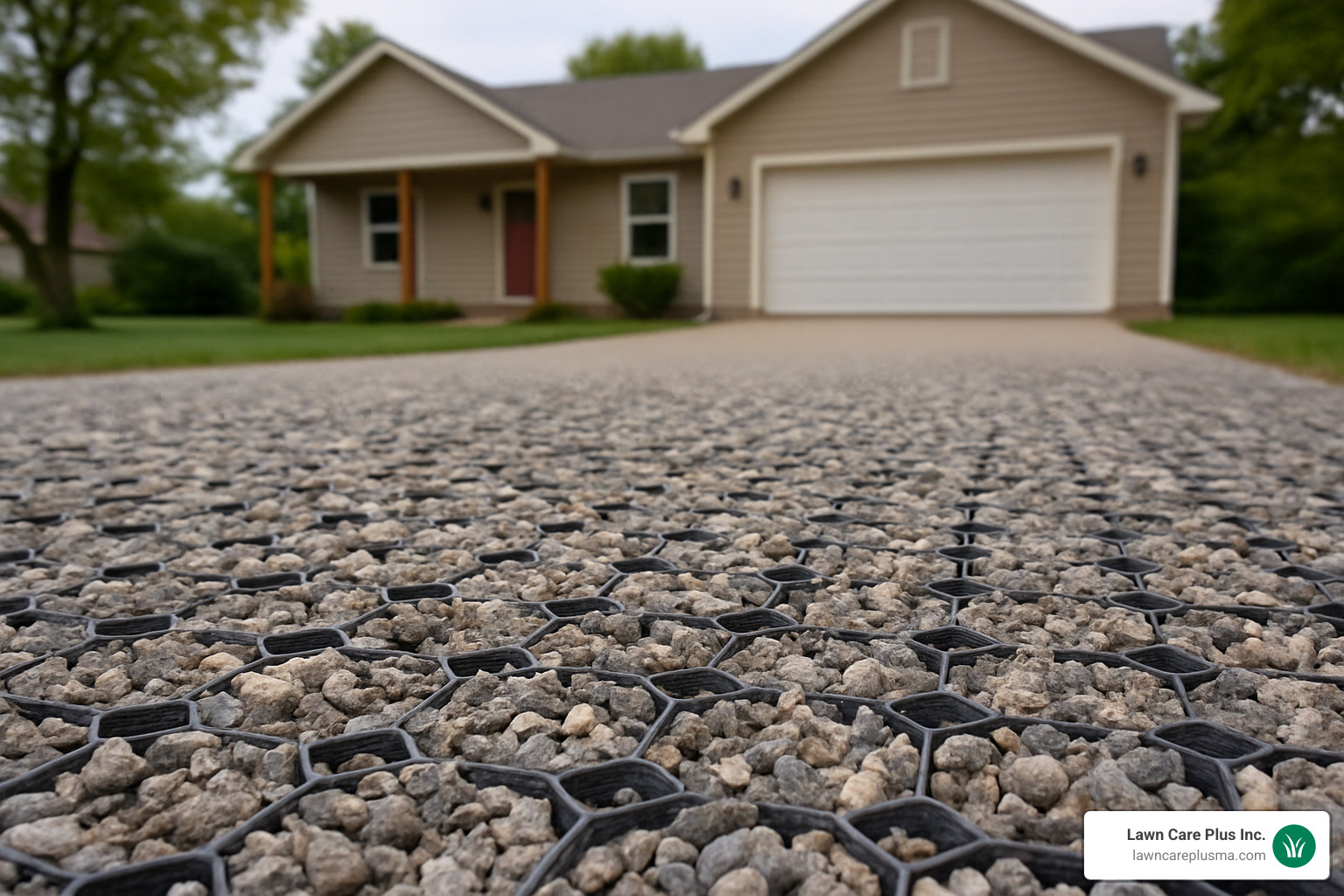
At Lawn Care Plus Inc., we’ve helped dozens of Metro-West families transition to greener driveways. The options have expanded dramatically in recent years, with innovations like permeable grid systems that provide structure while allowing water to pass through, turf-stone pavers that blend concrete strength with living grass, and recycled rubber paving that gives old tires new purpose.
Other exciting options include epoxy-stone surfaces that combine natural stone beauty with environmentally friendly binders, and specially formulated permeable concrete or asphalt engineered to let rainwater filter through rather than run off.
Permeable & Rubber Surfaces
When it rains on a traditional driveway, water sheets off, carrying oils and pollutants straight to storm drains and eventually into our waterways. Permeable surfaces flip this script entirely.
“The first heavy rain after installing my permeable driveway was almost magical,” shares Lexington homeowner Jamal Washington. “Water simply disappeared instead of forming those huge puddles that used to splash my car and flood my garage entrance.”
This water management isn’t just convenient—it’s environmentally crucial. Permeable driveways help recharge our groundwater supply, reduce neighborhood flooding, and naturally filter out pollutants before water rejoins the ecosystem. They also stay cooler in summer, helping combat the urban heat island effect that makes our cities unnecessarily hot.
Rubber paving brings its own impressive benefits to the table. Made from up to 95% recycled materials (primarily old tires), these surfaces are remarkably resilient in our harsh New England climate. They flex rather than crack during freeze-thaw cycles, provide excellent slip resistance even when wet, and significantly reduce noise when you drive over them. Many homeowners are surprised by how attractive modern rubber surfaces can be, with options ranging from earthy tones to vibrant colors.
According to industry data, eco-friendly alternatives typically range from $7-$30 per square foot depending on materials and complexity. While this may represent a higher initial investment than some traditional options, many homeowners find the environmental benefits, reduced maintenance, and unique aesthetics well worth it.
Sustainability & Regulations
Going green with your driveway isn’t just personally satisfying—it might actually be required. Many Boston-area municipalities now have strict regulations about impervious surface coverage and stormwater management on residential properties.
“We’re seeing more clients come to us because they need to meet local requirements,” explains our hardscaping team leader at Lawn Care Plus Inc. “But they end up loving these sustainable options for reasons that go far beyond compliance.”
Before choosing an eco-friendly driveway, it’s worth checking several important factors:
Local building codes often specify how much of your property can be covered with impervious surfaces. Permeable options may be exempt from these calculations, allowing you more flexibility in your overall landscape design.
HOA guidelines should be reviewed carefully, as some have specific requirements about driveway appearances. The good news is that many modern eco-friendly options can be designed to complement traditional neighborhood aesthetics.
Stormwater permits might be easier to obtain with permeable surfaces, potentially saving you time and money during the approval process.
Incentive programs exist in several local communities, offering rebates or reduced fees for installing permeable surfaces. Our team can help identify if your project qualifies for any such programs.
These green alternatives align perfectly with our commitment at Lawn Care Plus Inc. to sustainable landscaping practices throughout the Boston Metro-West region. We believe beautiful outdoor spaces can coexist with environmental responsibility—your driveway included.
If you’re curious about exploring eco-friendly driveway replacement options for your property, we’d be happy to discuss which solutions might work best for your specific needs, aesthetic preferences, and budget. The planet will thank you, and you might be surprised how much you love the results.
Frequently Asked Questions about Driveway Replacement
How do I know my driveway needs full replacement instead of repair?
After decades of helping Boston-area homeowners with their driveways, I’ve seen countless property owners struggle with this exact question. The line between repair and replacement isn’t always clear, but there are some telltale signs that it’s time for a fresh start.
Alligator cracking is perhaps the most obvious red flag. When your driveway starts resembling reptile skin with interconnected cracks spreading across the surface, it’s not just a cosmetic issue – it signals that the base beneath your driveway is failing. This pattern is essentially your driveway waving a white surrender flag.
Widespread heaving or settling throughout your driveway indicates serious structural problems underneath. As one Wellesley homeowner told me with a laugh, “My driveway had so many hills and valleys, I considered installing a miniature ski lift!” These uneven surfaces aren’t just annoying – they’re dangerous and will only worsen over time.
When potholes and large holes start appearing, your driveway is literally disappearing before your eyes. These aren’t minor blemishes but rather signs of advanced deterioration that patching can no longer address effectively.
Drainage problems might seem like a separate issue, but standing water is a driveway’s worst enemy. Water that pools rather than runs off will eventually undermine your driveway’s foundation, especially during our harsh New England freeze-thaw cycles.
Age is another consideration – nothing lasts forever, especially in our climate. If your asphalt driveway is pushing 20+ years or your concrete one is beyond 30, you’re living on borrowed time, regardless of appearance.
“You’ll never give more thought to tree roots until you’re ready for a driveway replacement,” a Newton client recently told me. Those majestic oaks and maples that provide beautiful shade can wreak havoc beneath your driveway, creating pressure that cracks and heaves the surface in ways that can’t be permanently fixed without addressing the root cause (pun intended).
Can I DIY my new driveway?
I admire the DIY spirit – there’s something deeply satisfying about completing a project with your own two hands. But when it comes to driveway replacement options, the honest answer is: it depends.
Gravel driveways are the most DIY-friendly option. With proper preparation and equipment rental, motivated homeowners can successfully install a basic gravel driveway. The materials are relatively straightforward to work with, and mistakes are easier to correct.
However, asphalt and concrete installations require specialized equipment, precise timing, and technical expertise that most homeowners simply don’t possess. The margin for error is slim, and mistakes can be costly and virtually impossible to fix without starting over.
Base preparation and proper grading are critical regardless of material choice. Water needs somewhere to go, and a driveway that doesn’t account for proper drainage is doomed from the start. This aspect alone requires knowledge that takes professionals years to master.
I’ll never forget the Dedham homeowner who called us in desperation: “I tried to save money by installing my own gravel driveway. Within a year, it developed ruts and drainage issues. I ended up hiring professionals to fix it, which cost more than if I’d hired them initially.” His experience isn’t unusual – we regularly rescue DIY driveway projects gone wrong.
At Lawn Care Plus Inc., we bring decades of experience to ensure your driveway is installed correctly the first time. Our team understands the unique challenges of New England soils and climate, and we have the specialized equipment to complete the job efficiently and effectively.
Will a new driveway raise my home’s value?
In a word: absolutely. A quality driveway replacement can significantly impact your property’s value and appeal in several meaningful ways.
Your driveway creates the critical first impression of your home. As one Boston-area realtor explained to me, “A crumbling driveway immediately signals deferred maintenance to potential buyers. They start wondering what else hasn’t been maintained.” Conversely, a beautiful new driveway sets a positive tone before visitors even reach your front door.
The functional improvement can’t be overstated either. A smooth, well-designed driveway improves accessibility and usability year-round – particularly important during our challenging New England winters. Buyers notice and appreciate these practical benefits.
When it comes time to sell, a new driveway eliminates potential red flags during home inspections. Industry data suggests a new driveway can add $10,000 to $20,000 to a property’s value, making it one of the better exterior investments you can make.
The value impact does vary by material choice. Premium materials like pavers or decorative concrete generally offer the highest ROI, while asphalt provides a solid middle-ground return. Even basic gravel, when properly installed and maintained, can significantly improve appeal over a deteriorated surface.
I recently heard from a Brookline homeowner who shared: “When we listed our home, our realtor specifically mentioned our new paver driveway in the listing as a selling point. We had three offers in the first weekend, and I’m convinced the curb appeal played a major role.”
Beyond just dollars and cents, there’s also the daily joy of pulling up to a home that looks well-cared for and reflects your pride of ownership. As one of our Newton clients put it, “Every time I come home to my new driveway, it makes me smile. I should have done this years ago instead of wincing at the cracks and patches.”
Conclusion
Choosing the perfect driveway replacement option feels a bit like finding the right pair of shoes – it needs to fit your specific needs, look great, and stand up to whatever life throws at it. For those of us in the Boston Metro-West area, our unique New England weather patterns add another layer to the decision-making process.
After exploring all these options, you might be wondering which material is truly right for your home. The answer, as with most home improvement decisions, depends on your specific situation.
Gravel offers that charming, budget-friendly approach that works beautifully for longer driveways and rural settings. I’ve seen homeowners delight in the natural look and appreciate the DIY possibilities, even if it means a bit more maintenance over time.
Asphalt continues to be our New England standby, with its flexibility handling our freeze-thaw cycles remarkably well. Many of our customers appreciate its reasonable cost and proven track record in our climate.
Concrete delivers that exceptional durability with nearly endless customization options. While it requires careful installation to prevent winter damage, the results can be stunning and long-lasting.
Pavers and brick create that wow-factor curb appeal that makes neighbors take notice. Yes, they’re an investment, but the ability to replace individual pieces and their century-long lifespan make them worth considering for your forever home.
Tar-and-chip offers that middle path between formal and rustic, with natural beauty and surprisingly good traction during our snowy months. It’s an option more homeowners are refinding.
Eco-alternatives like permeable systems are gaining traction as environmental awareness grows. These innovative options address stormwater concerns while still providing the functionality you need.
Before scheduling your driveway replacement, remember to:
- Check local building codes and secure any necessary permits
- Review your HOA guidelines if applicable
- Think about how water flows across your property and plan drainage accordingly
- Consider how much maintenance you’re willing to commit to
- Choose a contractor who specializes in your preferred material
At Lawn Care Plus Inc., we’ve been helping homeowners throughout Belmont, Boston, Brighton, Brookline, Newton and neighboring communities transform their driveways for years. Our team understands the unique challenges of New England weather and soil conditions, ensuring your new driveway isn’t just beautiful, but built to last.
What sets us apart is our comprehensive approach – we handle everything from removing your old driveway to installing the new surface and enhancing the surrounding landscape. For a closer look at all our hardscaping capabilities, visit our hardscaping services page.
Your driveway does more than just provide a place to park – it welcomes you home every day and creates that crucial first impression for visitors and potential buyers. Understanding all your driveway replacement options empowers you to make a choice you’ll be happy with for decades to come.
