
Why Fertilizing New Sod Correctly Makes All The Difference
Fertilizing fertilizer for new sod is completely different from feeding an established lawn. New grass has shallow roots and specific nutrient needs, making it vulnerable to damage from the wrong products or timing.
Quick Answer for New Sod Fertilization:
- Wait 4-6 weeks after installation before the first application.
- Use balanced fertilizers like 15-15-15 or starter formulas like 10-20-20.
- Apply at half the recommended rate to prevent burning.
- Water thoroughly after fertilizing to help nutrients penetrate the soil.
- Focus on phosphorus and potassium for root development, not just blade growth.
New sod arrives from the farm pre-fertilized and needs time to establish roots before it can absorb more nutrients. Fertilizing too soon can cause yellowing, burning, or poor root growth.
Patience is key. New sod benefits most from phosphorus for root growth and potassium for stress resistance. Too much nitrogen early on promotes weak leaf growth instead of the essential root system your lawn needs to establish.
Most lawn fertilizers deliver 0.9 to 1.0 pounds of nitrogen per 1,000 sq. ft., but new sod should initially get half that rate. This gentle approach provides necessary nutrients without overwhelming the developing roots.
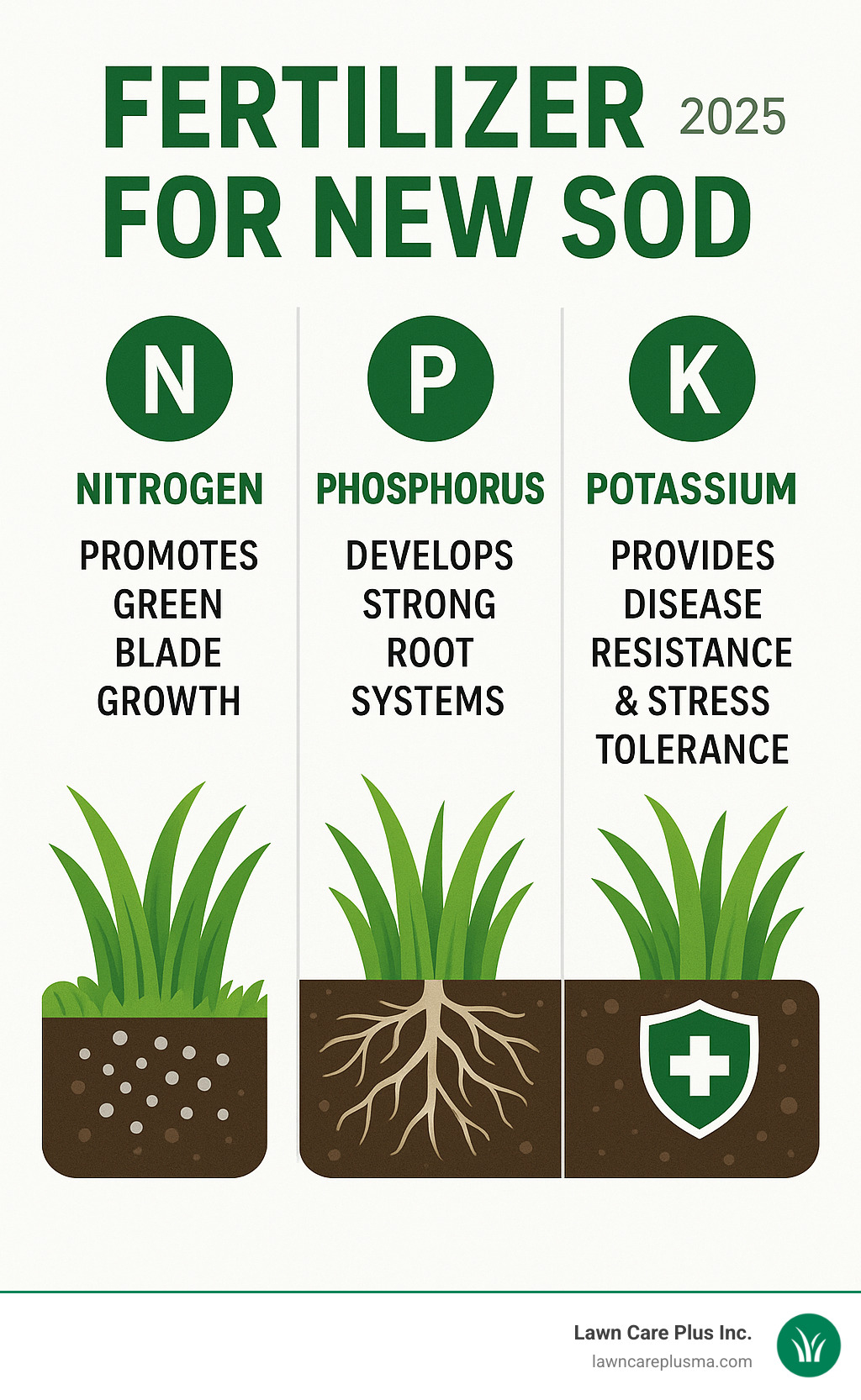
Simple fertilizer for new sod glossary:
Why Proper Fertilization is Key to Your New Sod’s Success
Your new sod looks great, but underneath it’s experiencing significant sod stress from being transplanted. This transition period is critical for root establishment and creating a vital soil connection.
During the first few weeks, your sod’s nutrient absorption is limited because its root system is shallow. This is why avoiding high-nitrogen fertilizers is so important; you don’t want to overwhelm a system that’s already working hard to survive.
The secret to success is promoting root growth over blade growth. A strong foundation underground is what matters for long-term health. Most sod farms fertilize their grass before harvest, so your new lawn already has some nutrients. Adding more fertilizer for new sod too quickly can cause problems.
For expert guidance on getting your new lawn started right, check out our lawn installation services in the Boston Metro-West area.
The Critical Role of Phosphorus and Potassium
While nitrogen makes grass green, phosphorus and potassium are the most valuable players for fertilizer for new sod.
Phosphorus is essential for a strong root system. It facilitates energy transfer within the plant, helping your sod send down crucial new roots and connect with the soil.
Potassium acts as your lawn’s bodyguard, providing disease prevention, drought resistance, and cold tolerance. This is especially important in Massachusetts, where weather can be unpredictable. Potassium strengthens cell walls and helps your grass handle stress.
Together, these nutrients create a resilient lawn. You can learn more in scientific research on turfgrass nutrition.
Signs Your New Sod Needs Fertilizer
After the initial 4-6 week waiting period, watch for these signals that your sod needs nutrients:
- Yellowing Grass Blades: While some yellowing from transplant shock is normal, persistent or spreading yellow color after a few weeks indicates a nutrient deficiency.
- Slow Root Development: Use the tug test. Gently lift a corner of sod. If it comes up easily, the roots haven’t established. Well-rooted sod will resist your pull.
- Patchy or Stunted Growth: If some areas are thriving while others seem stuck, uneven nutrient availability is a likely cause. A dull, lackluster color also suggests a lack of healthy chlorophyll production.
Choosing the Best Fertilizer for New Sod
When choosing fertilizer for new sod, look for a gentle, nutritious product specifically designed for new lawns. These are often labeled “starter fertilizer” and focus on building strong roots rather than pushing dramatic green growth.
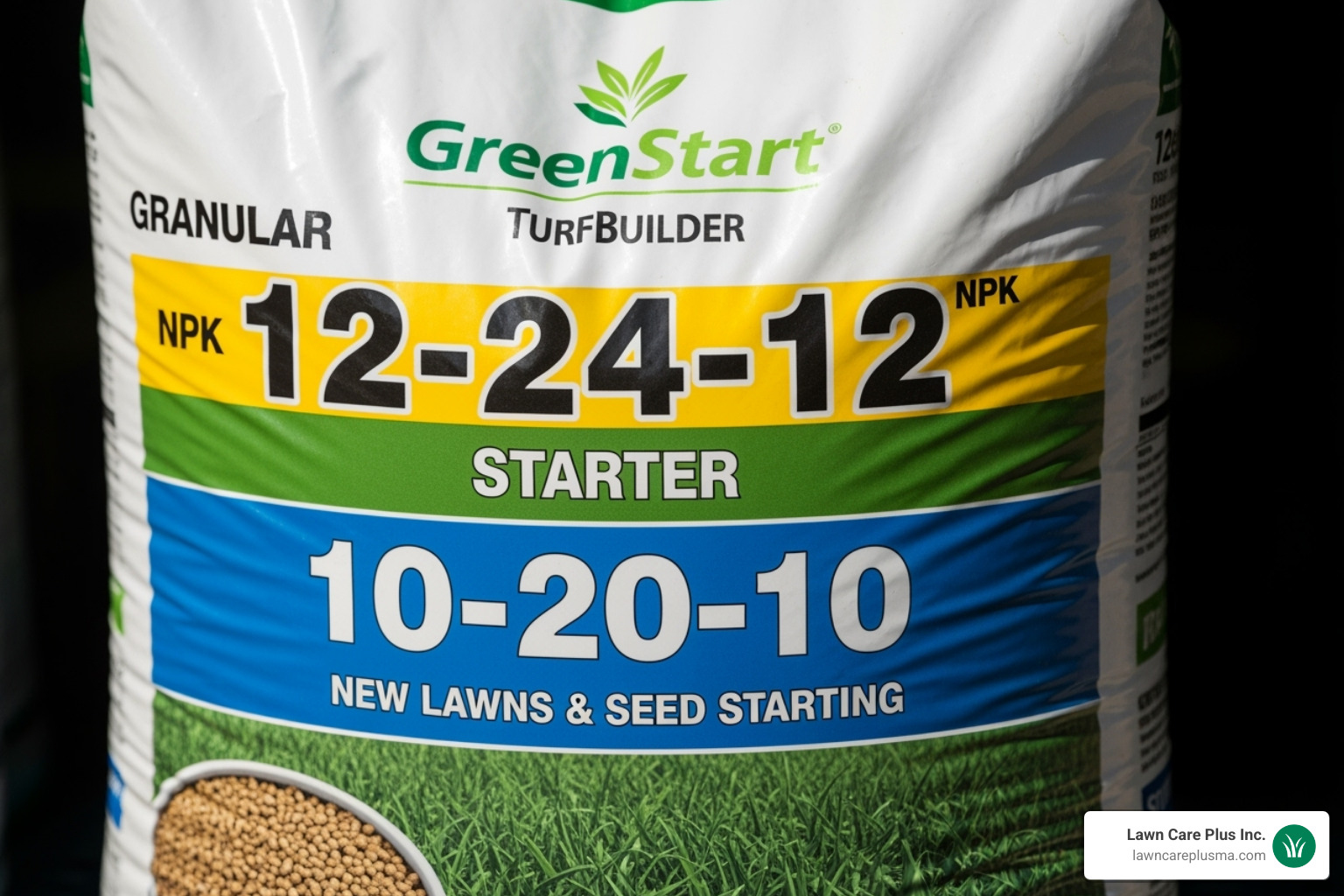
Slow-release nutrients are ideal. They feed your grass gradually over several weeks, reducing the risk of burning your new lawn while providing steady nutrition as it establishes. Bags clearly labeled “starter fertilizer” or “new lawn fertilizer” take the guesswork out of choosing the right nutrient balance.
Understanding NPK Ratios for New Sod
Every fertilizer bag displays an NPK ratio, representing the percentage by weight of the three main nutrients:
- Nitrogen (N): Promotes green, leafy growth.
- Phosphorus (P): Crucial for strong root development.
- Potassium (K): Boosts overall plant health, disease resistance, and stress tolerance.
For new sod, focus on phosphorus. Too much nitrogen too soon can harm your new lawn by directing energy to blades instead of roots.
Balanced ratios like 15-15-15 (a 1-1-1 ratio) work well, providing equal support. Even better are starter fertilizer ratios like 10-20-10 (a 1-2-1 ratio), which are specifically designed to encourage root growth. Avoid high-nitrogen fertilizers like 40-0-0 on new sod.
Organic vs. Synthetic Fertilizers
When choosing fertilizer for new sod, you’ll decide between organic and synthetic options. Both can be effective, but they work differently.
| Feature | Organic Fertilizers | Synthetic Fertilizers |
|---|---|---|
| Source | Derived from natural, living materials (manure, compost, bone meal, plant extracts) | Chemically manufactured from inorganic compounds |
| Nutrient Release | Slow-release; nutrients become available as microbes break down the material | Fast-acting; nutrients are immediately available to the plant |
| Soil Impact | Improves soil structure and long-term soil health | Primarily feeds the plant; less direct benefit to soil health |
| Burn Risk | Lower risk of burning the lawn due to slow release | Higher risk of burning if over-applied or not watered in |
Organic fertilizers feed soil microbes, which slowly release nutrients. This process improves soil health and has a lower burn risk, making it a great choice for delicate new sod.
Synthetic fertilizers deliver nutrients that grass can absorb immediately. This offers faster results but also carries a higher burn risk, requiring careful application on vulnerable new sod.
For new sod, many prefer the gentle approach of organic or slow-release synthetic starter fertilizers.
Granular vs. Liquid Fertilizer for New Sod
Your final choice is between granular and liquid fertilizer for new sod.
Granular fertilizers are pellets applied with a spreader. Most are slow-release, providing steady nutrition over weeks, which is ideal for new sod. The main challenge is achieving even distribution to avoid patchy growth. Always water thoroughly after application to activate the fertilizer and prevent burn.
Liquid fertilizers are applied with a hose-end sprayer, making even distribution easy. Nutrients are immediately available, leading to faster absorption. However, this rapid absorption means less room for error, as over-application can quickly lead to fertilizer burn. Follow dilution instructions carefully.
A Step-by-Step Guide to Fertilizing New Sod
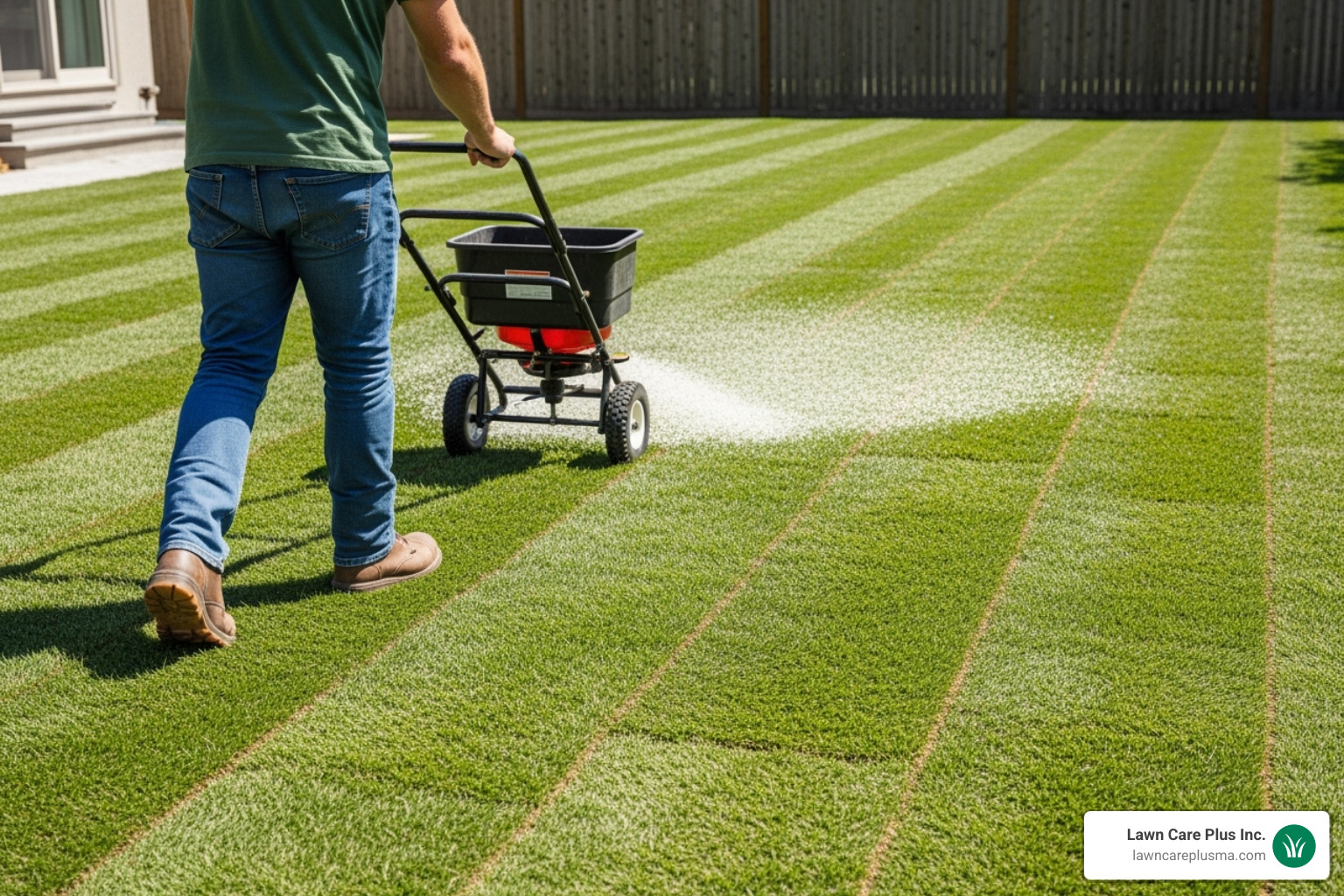
Proper application is as important as choosing the right fertilizer for new sod. Even distribution is key to avoiding fertilizer burn, to which new sod’s shallow root system is especially vulnerable.
When is the Optimal Time to Fertilize?
Patience is essential. The best time to apply fertilizer for new sod is 4-6 weeks after installation. Rushing this process can set your sod back.
This waiting period is crucial because sod farms typically fertilize grass before harvest, so it arrives with an initial supply of nutrients. During the first few weeks, the sod is focused entirely on root establishment, and its short roots can’t absorb extra fertilizer effectively. Applying it too early wastes nutrients and can harm the grass.
Seasonal timing also matters. For sod installed in spring or summer, stick to the 4-6 week timeline. If you laid sod in the fall, it’s often best to wait until the following spring when the grass is actively growing again. For homeowners in Massachusetts, understanding our variable seasons is critical. Our seasonal yard cleanups show how seasons affect grass growth.
How to Apply Fertilizer for Best Results
Follow these steps for a successful application:
- Read the Label: Every product has specific instructions for application rates and spreader settings. Trust the manufacturer’s recommendations.
- Calibrate Your Spreader: An uncalibrated spreader will cause uneven application. Follow the spreader and fertilizer instructions for proper setup.
- Apply at Half Rate: For the first application on new sod, use half the recommended rate. This gentle approach prevents overwhelming the new roots.
- Ensure Even Coverage: Apply to a dry lawn to prevent granules from sticking to wet blades. Walk at a steady pace, slightly overlapping each pass.
- Avoid Windy Days: Wind can blow fertilizer onto sidewalks and driveways. Sweep any stray granules back onto the lawn.
- Water Thoroughly: This is the most critical step. Water immediately after application to wash the fertilizer into the soil and prevent burn.
The Recommended Watering Schedule After Fertilizing
Water acts as the delivery system for nutrients. Without it, fertilizer for new sod can be harmful.
Immediately after applying fertilizer, water thoroughly with about 1-1.5 inches of water. This washes granules off the blades and carries nutrients to the roots.
- First 2 Weeks After Fertilizing: Water once or twice daily to keep the top few inches of soil consistently moist but not soggy.
- After 2-3 Weeks: Transition to a mature watering schedule. Gradually reduce frequency while increasing duration, watering every 2-3 days. This encourages roots to grow deeper.
Watering in the morning between 6-8 am is ideal. It allows the grass to absorb moisture and lets the blades dry before nightfall, reducing the risk of fungal diseases. For help with irrigation, explore our landscaping services.
Long-Term Care and Maintenance
Once your new sod is established, your care routine will gradually shift from intensive monitoring to a regular maintenance schedule. This involves consistent mowing, seasonal fertilization, and adjusted watering.
The first mow can happen when the grass reaches about 3 inches in height, typically a week or so after installation. First, perform a gentle tug test to ensure the sod is anchored. For the initial cuts, set your mowing height to 3 inches and never remove more than one-third of the grass blade at a time. This encourages strong root development.
Subsequent fertilization will follow a predictable seasonal rhythm. You’ll transition from starter fertilizers to a feeding schedule that supports an established lawn’s needs throughout the year.
For homeowners who want to take the guesswork out of this transition, our comprehensive lawn care programs handle everything from the first mow to seasonal fertilization.
Your Ongoing Fertilization Schedule
Once your lawn is established, plan on fertilizing 3-4 times per year to provide the right nutrients at the right time.
- Spring (around Memorial Day): A balanced fertilizer promotes green-up and replenishes nutrients used over winter.
- Summer: Use a light application or a fertilizer higher in potassium for drought resistance. Heavy nitrogen can stress the lawn in high heat.
- Fall (Labor Day & Halloween): This is the most important feeding. Use a fertilizer with lower nitrogen and higher phosphorus and potassium to strengthen roots and prepare the lawn for winter.
- Late Fall/Winter Prep: A final nitrogen boost can be stored by the grass for a quick green-up the following spring.
A soil test every few years can help you tailor this schedule to your lawn’s specific needs.
Transitioning to an Established Lawn Routine
As your lawn matures over several months, your maintenance routine will evolve.
- Watering: Shift from daily watering to deep, infrequent watering (about once a week). A deep soak that penetrates 6 inches encourages strong, drought-resistant roots.
- Mowing: Settle into a regular schedule of mowing every 7-14 days during the growing season, maintaining a 3-inch cutting height with a sharp blade.
- Weed Control: A thick, healthy lawn is the best defense against weeds. Avoid “Weed and Feed” products for at least 3 months after installation. Spot-treat individual weeds as needed.
- Pest Management & Aeration: A healthy lawn naturally resists pests. Annual aeration, especially in high-traffic or clay soil areas, relieves compaction and improves air, water, and nutrient flow to the roots.
Frequently Asked Questions about Fertilizing New Sod
Homeowners often have questions about fertilizer for new sod. Getting the timing and approach wrong can set your new lawn back. Here are answers to the most common concerns.
How soon is too soon to fertilize new sod?
Wait at least 4-6 weeks after installation. Sod arrives pre-fertilized from the farm. Fertilizing immediately can burn the new, shallow roots before they have a chance to establish in your soil. The waiting period gives the roots time to grow and begin absorbing nutrients effectively.
What happens if I use a high-nitrogen fertilizer on my new sod?
Using a high-nitrogen fertilizer on new sod forces rapid blade growth at the expense of root development. This creates a weak lawn on the surface that is more vulnerable to drought, disease, and stress because the roots haven’t established a strong connection with the soil. You want to build a strong foundation first.
Can I walk on the new sod after fertilizing and watering?
It’s best to limit foot traffic on new sod for the first 2-3 weeks to allow the roots to knit into the soil without being disturbed. After you fertilize and water, stay off the lawn for at least 24 hours. This allows the nutrients to absorb properly and prevents you from pressing granules into the grass blades, which can cause burn spots.
Conclusion
Creating a beautiful lawn with fresh sod provides instant gratification, but long-term success depends on proper care, especially when it comes to fertilizer for new sod. Nurturing your new lawn from its first vulnerable weeks to a thriving, established turf is a rewarding process.
Success comes down to a few key principles:
- Patience is Crucial: Give your sod 4-6 weeks to settle in and develop roots before the first feeding. It arrives from the farm with enough nutrients to get started.
- The Right Product Matters: Choose a balanced starter fertilizer (e.g., 15-15-15) or a phosphorus-rich formula (e.g., 10-20-10) to support root development. Save high-nitrogen products for later.
- Proper Application Ensures Success: Start with half the recommended rate to avoid burning the new grass. Use a spreader for even distribution and water thoroughly immediately after application.
By following these guidelines, you are setting up your lawn for years of health and resilience. A properly established sod lawn requires less maintenance over time and develops the thick, lush appearance that improves any property.
For homeowners throughout the Boston Metro-West area who want professional support, the experienced team at Lawn Care Plus Inc. understands what it takes to establish sod successfully in our local climate. We know the soil, the seasonal challenges, and the specific care new sod needs.

Whether you’re tackling this project yourself or looking for expert guidance, contact us for expert lawn care services and let us help you achieve that picture-perfect lawn.
