
Addressing Sidewalk Water Issues with a French Drain
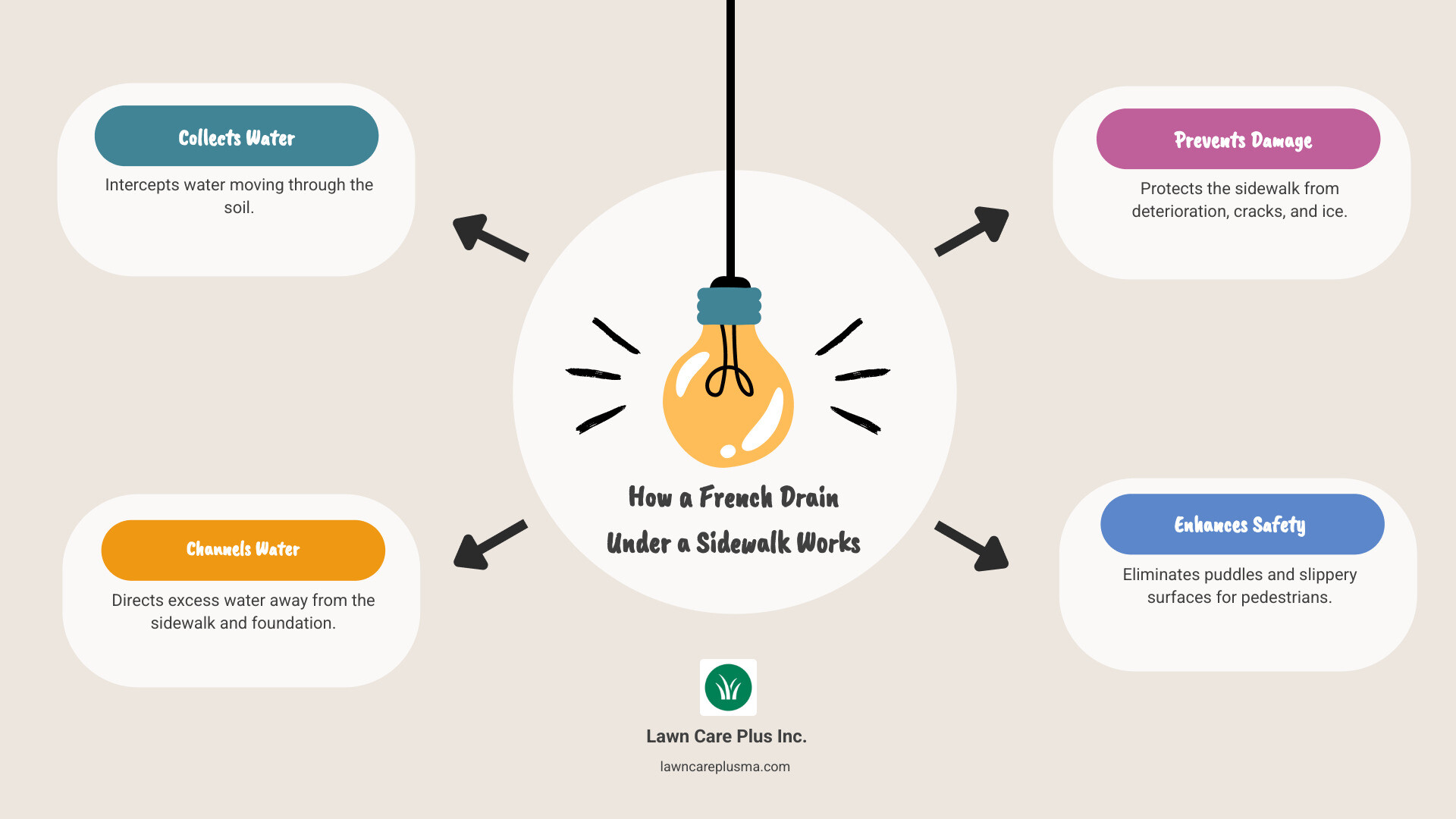
A french drain under sidewalk is a subsurface drainage system that solves common water problems by collecting and channeling excess water away from walkways and foundations. This prevents sidewalk deterioration, cracks, and dangerous ice patches, while eliminating puddles and slippery surfaces for pedestrians.
Standing water turns safe sidewalks into hazards. Puddles can hide uneven surfaces, leading to trips and falls, and become treacherous ice slicks in winter. Over time, this water leads to cracks and potholes that worsen without proper drainage.
A French drain is a smart, reliable solution to manage water and keep your sidewalks dry and safe. This guide will show you how to install one.
Explore more about french drain under sidewalk:
- sidewalk drainage solutions
- installing a french drain for gutters
- domestic surface water drainage systems
Why Your Sidewalk Needs a Drainage Solution
When a downpour turns your sidewalk into a river, it’s more than an annoyance—it’s a safety concern. Standing water obscures hidden damage or uneven spots that can cause falls. In winter, these puddles become dangerous ice patches, making slips a serious risk.
Beyond immediate safety, standing water is a menace to your sidewalk’s health. It causes concrete to break down, leading to cracks and potholes. These structural weak points worsen without proper drainage, creating larger puddles in a frustrating cycle of decay.
A smart drainage solution, like a french drain under sidewalk, makes all the difference. It directs runoff into a hidden channel, keeping your sidewalk dry, safe, and structurally sound. By preventing water damage, you extend your sidewalk’s life and avoid costly repairs, investing in both safety and property value. For more ideas, explore various sidewalk drainage solutions.
Good drainage also safeguards your home’s foundation. Water pooling near your sidewalk can seep into the soil, creating hydrostatic pressure against your foundation that may lead to cracks and leaks. A French drain is crucial for managing water from downspouts or sloping yards, intercepting it before it can damage your home.
Planning Your Under-Sidewalk Drainage Project
Before digging, a successful french drain under sidewalk project requires meticulous planning. This involves understanding your landscape, anticipating water flow, and ensuring safety.
First, perform a site assessment. Observe where water pools, its source (downspouts, slopes), and its natural path. Sketch a preliminary route for your drain, ensuring it follows a downward slope. Critically, you must call 811 before any digging. This “Call Before You Dig” service notifies utility companies to mark underground lines (gas, water, electric), preventing dangerous and costly accidents.
Choosing the Right Drainage System
Understanding whether you have surface or subsurface water issues will guide your choice of drainage system.
| System Type | Primary Function | Appearance | Application |
|---|---|---|---|
| French Drain | Manages subsurface water and collects surface runoff. | Invisible once installed, covered by soil/landscaping. | Ideal for soggy lawns, preventing foundation issues, diverting groundwater. |
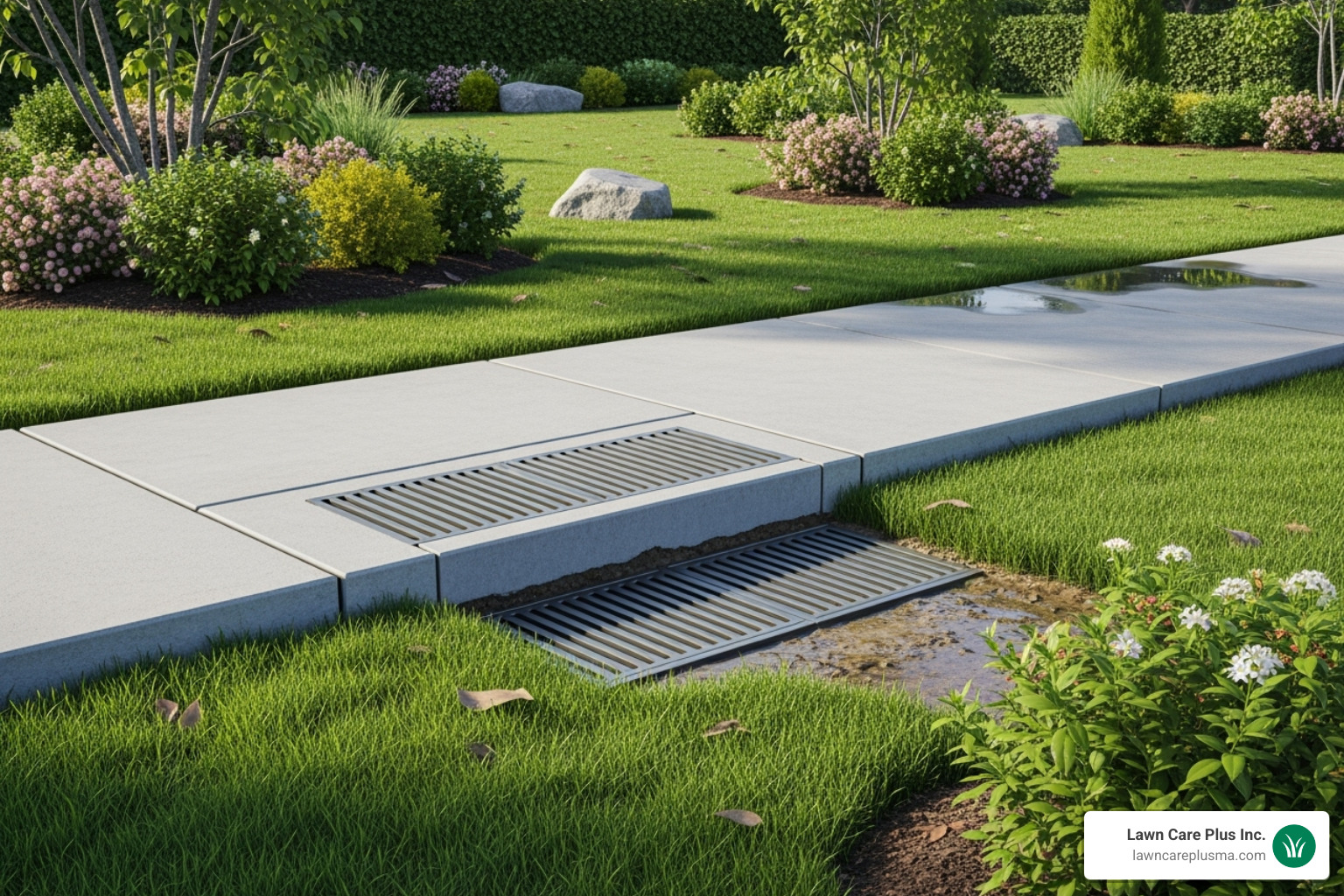
| Trench Drain | Collects surface water in a channel. | Visible grate across a channel. | High-traffic areas, driveways, patios, large paved surfaces. |
| Slot Drain | Collects surface water through a narrow slot. | Minimalist, almost invisible slot. | Modern landscapes, architectural designs, where aesthetics are paramount. |
While trench and slot drains excel at capturing surface water, a french drain under sidewalk is ideal for addressing soggy lawns or groundwater affecting your walkway. It intercepts water in the soil before it reaches the sidewalk. For direct surface runoff, a channel drains can be very effective.
Essential Components and Materials for a French Drain Under Sidewalk
A French drain is a system of components working together. Here’s what you’ll need:
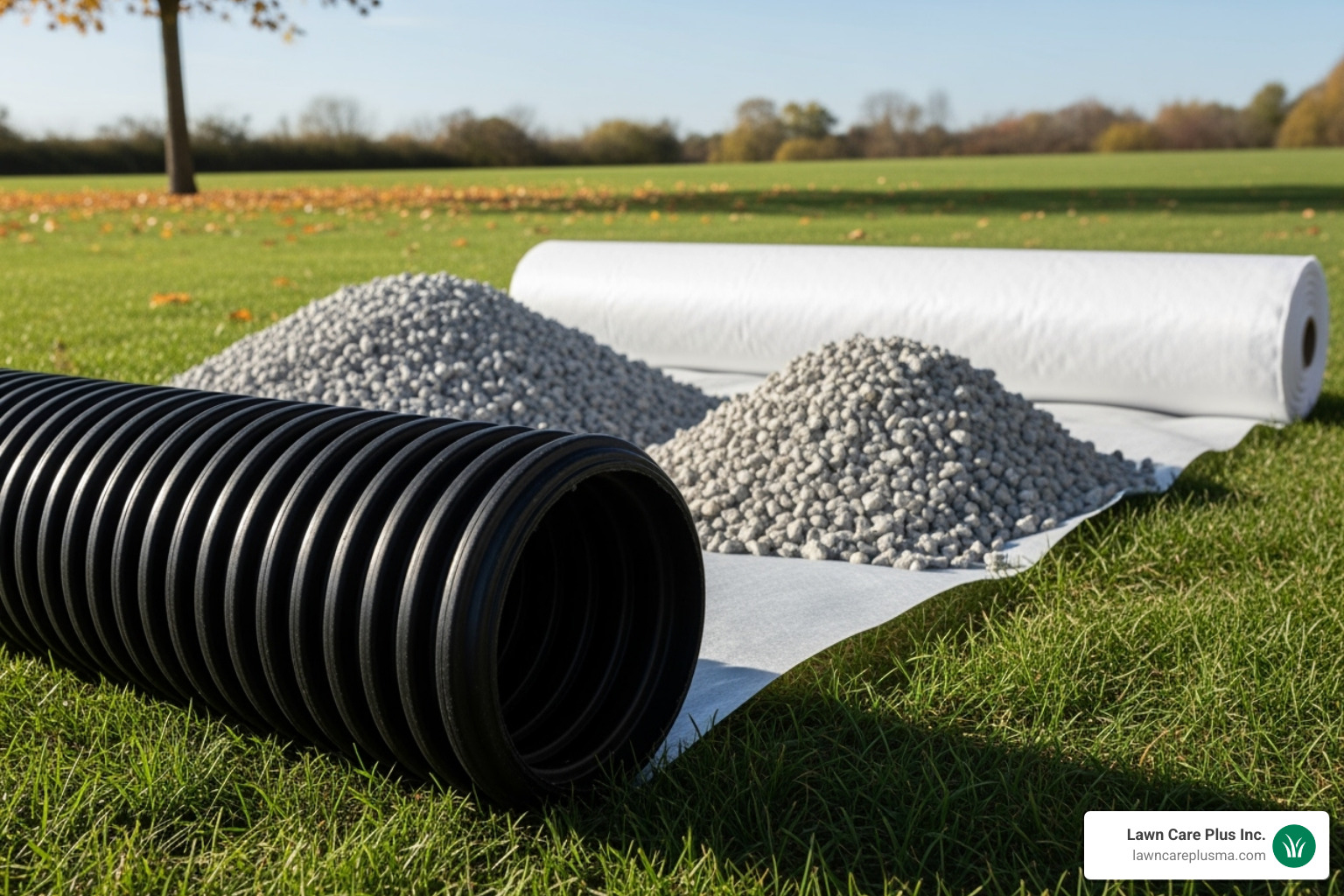
- Perforated Pipe: The heart of the drain. We recommend rigid Schedule 40 PVC for its durability under a sidewalk, over more flexible corrugated pipe. If using solid PVC, you’ll need to drill holes.
- Non-Woven Geotextile Filter Fabric: This is critical. It lines the trench to separate gravel from soil, preventing silt from clogging your system.
- Drainage Gravel (#57 Stone): Use clean, angular, 1-inch washed gravel. Its voids allow water to flow freely. Avoid pea gravel, which compacts and reduces drainage.
- Catch Basin: A quality catch basin can be installed at key points (like downspouts) to collect larger debris before it enters the main line.
- Pop-up Emitter: A discreet, buried device at the discharge point that pops open to release water and closes when drainage is complete.
Designing for Success: Slope, Depth, and Location
Proper design is crucial for a functional french drain under sidewalk.
- Ensuring a Proper Slope: This is non-negotiable. The drain needs a minimum 1% slope (a one-inch drop for every 10 feet of pipe) to keep water moving and flush out debris. For more advice, see our resources on sloping land.
- Calculating Trench Depth and Width: A typical trench is 10-18 inches deep and 9-12 inches wide. This is usually sufficient for sidewalk applications, as most water moves through the upper 24 inches of soil.
- Planning the Discharge Point: The collected water must exit at a lower elevation than the start of the drain. Options include daylighting to a sloped area, a dry well, or connecting to a storm sewer (check local regulations). Never drain water onto a neighbor’s property.
- Avoiding U-Shapes: When tunneling under a sidewalk, it’s critical to maintain a consistent downward slope. A “belly” or U-shape will trap debris and cause blockages.
How to Install a French Drain Under a Sidewalk: A Step-by-Step Guide
With planning complete, it’s time to build. Installing a french drain under sidewalk is a manageable project if you take your time and prioritize safety with gloves and eye protection. You’ll need a shovel, trenching spade, wheelbarrow, level, measuring tape, utility knife, tamper, and a hose for testing.
Step 1: Trenching and Tunneling
This is often the most challenging part. Start by marking your drain path with landscape paint on both sides of the sidewalk to guide your digging.
Next, dig the trench to your planned depth (10-18 inches) and width (9-12 inches). Use a tarp or wheelbarrow for the excavated soil to keep the area tidy.
Now, bore under the sidewalk. You have two main options:
- Water-jetting: Uses a high-pressure water stream from a hose attached to a rigid pipe to wash away soil. Be careful not to create voids that could cause the sidewalk to settle and crack. If you use this method, you must fill any gaps with compacted material.
- Manual tunneling: Push a slightly larger “sleeve” pipe (e.g., 4-inch PVC for a 3-inch drain pipe) under the sidewalk, clearing soil from inside it as you go. This method offers more control over soil displacement.
Regardless of the method, it is critical to maintain a consistent downward slope through the tunnel to prevent debris traps.
Step 2: Assembling the French Drain Under Sidewalk
With the trench and tunnel complete, build the drainage system.
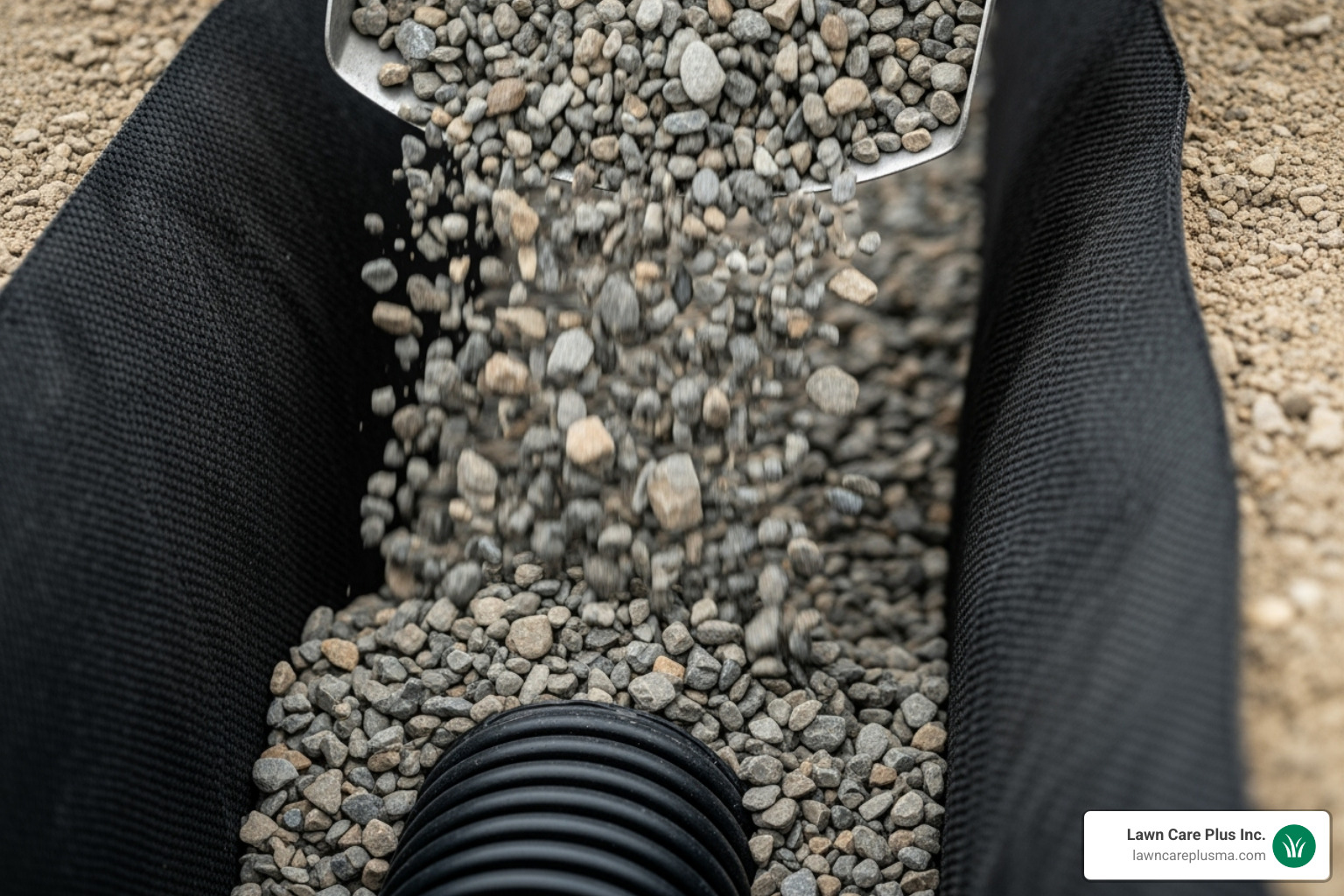
First, line the entire trench and tunnel with filter fabric. Roll the non-woven geotextile fabric along the bottom and up the sides, running it through the tunnel. Leave plenty of excess fabric to wrap over the top later.
Next, add a 2-3 inch base layer of #57 drainage gravel onto the fabric and tamp it lightly to create a stable bed for the pipe.
Now, place your perforated pipe. The drainage holes must face downward. This allows the pipe to collect water that has filtered to the bottom of the trench. Connect pipe sections with proper couplers. If tying in downspouts, use solid, non-perforated pipe for those sections. For more on connecting gutters to your drainage system, we have detailed guidance.
Step 3: Backfilling and Finishing Touches
Now, finish the installation and restore your landscape.
Cover the pipe with more #57 gravel, filling the trench to within 2-4 inches of the surface. Ensure the pipe is completely surrounded. Aim for at least 5 inches of gravel above the pipe for optimal water capture.
Next, wrap the filter fabric over the top of the gravel, completely encasing the system to prevent soil from mixing in.
Backfill with your excavated topsoil, spreading it over the wrapped fabric to bring the area back to grade.
Finally, restore your landscape by laying sod or spreading grass seed. Once complete, your french drain under sidewalk will work invisibly to keep your walkway dry and safe.
Maintaining Your Sidewalk Drainage System
Regular maintenance is key to the longevity of your french drain under sidewalk. A few simple checks will ensure it performs beautifully for years.
Perform regular inspections, especially in spring and fall. Check the drain’s outlet point and clear any accumulated leaves, twigs, or debris to ensure water can flow freely. Keep an eye on vegetation growing near the drain’s path, as roots can cause clogs.
If your system includes a catch basin, clean it regularly. Simply remove the grate, lift out the strainer basket, and empty any collected debris. Quality catch basins, like those from Landscape Drains, are designed for easy maintenance.
Once a year, flush the entire system with a garden hose. Insert the hose into the highest point of the drain (like a downspout connection or inspection port) and let the water run for several minutes. This helps dislodge any accumulated silt and keeps the line clear.
The clearest sign of a clog is pooling water on your sidewalk or in your yard long after rain has stopped. If you suspect a blockage, check the outlet and clean any catch basins first. For persistent issues, you may need professional help. We have more information on dealing with roots in drains.
Frequently Asked Questions about French Drains Under Sidewalks
Here are answers to common questions about installing a french drain under sidewalk.
How much does it cost to install a french drain under a sidewalk?
The cost to install a french drain under sidewalk varies based on factors like drain length, installation complexity, soil type, and labor rates. For a DIY project, costs are limited to materials and tool rentals.
For professional installation, average costs can vary widely. Based on industry data from across the internet, this can range from $20 to over $100 per linear foot. Please note this is an average range and not an actual quote from Lawn Care Plus Inc. We provide a detailed, customized estimate after a site assessment.
Can I connect my downspouts to the sidewalk drain?
Yes, connecting downspouts is a best practice for managing roof runoff. However, you must use solid, non-perforated pipe for the downspout lines to convey water directly to the main drain or discharge point without it seeping into the ground prematurely. We also recommend installing a downspout filter or cleanout to capture leaves and debris, preventing clogs in the main line. For more comprehensive solutions, explore domestic rainwater drainage systems.
Do I need a permit to install a french drain under a public sidewalk?
This is a critical question. Before starting any project involving a public sidewalk, you must check with your local municipality (and HOA, if applicable). Regulations for water discharge and work on public property vary by location, including in our service areas like Belmont, Boston, Brookline, Newton, and the surrounding towns.
Understand the difference between a private sidewalk (on your property) and a public sidewalk (in a public right-of-way). Work on public sidewalks almost always requires permits and may require licensed contractors. A golden rule is to never direct water onto a neighbor’s property, as this can lead to legal issues. Always check with local authorities before digging.
Conclusion: Protect Your Property with Professional Drainage Solutions
Installing a french drain under sidewalk is a powerful way to transform a puddle-prone area into a safe, dry pathway. These systems prevent slip-and-fall accidents, protect concrete from water damage, and shield your home’s foundation from moisture.
While the concept is simple, successful installation requires attention to detail, from site assessment and material selection to maintaining a proper slope, especially when tunneling beneath an existing sidewalk. This can be a challenging task for even a skilled DIYer. Once installed, simple maintenance like annual flushing and keeping the outlet clear will ensure your drain provides years of trouble-free service.
For homeowners in the Boston Metro-West area who prefer a professional solution, the experienced team at Lawn Care Plus Inc. offers expert drainage and hardscaping services. We understand local soil conditions, regulations, and the challenges of New England weather. Whether you need a simple drain or a comprehensive hardscape renovation with integrated drainage, we ensure the project is done right the first time.
Contact Lawn Care Plus Inc. for a consultation on your hardscape and landscape drainage needs!
