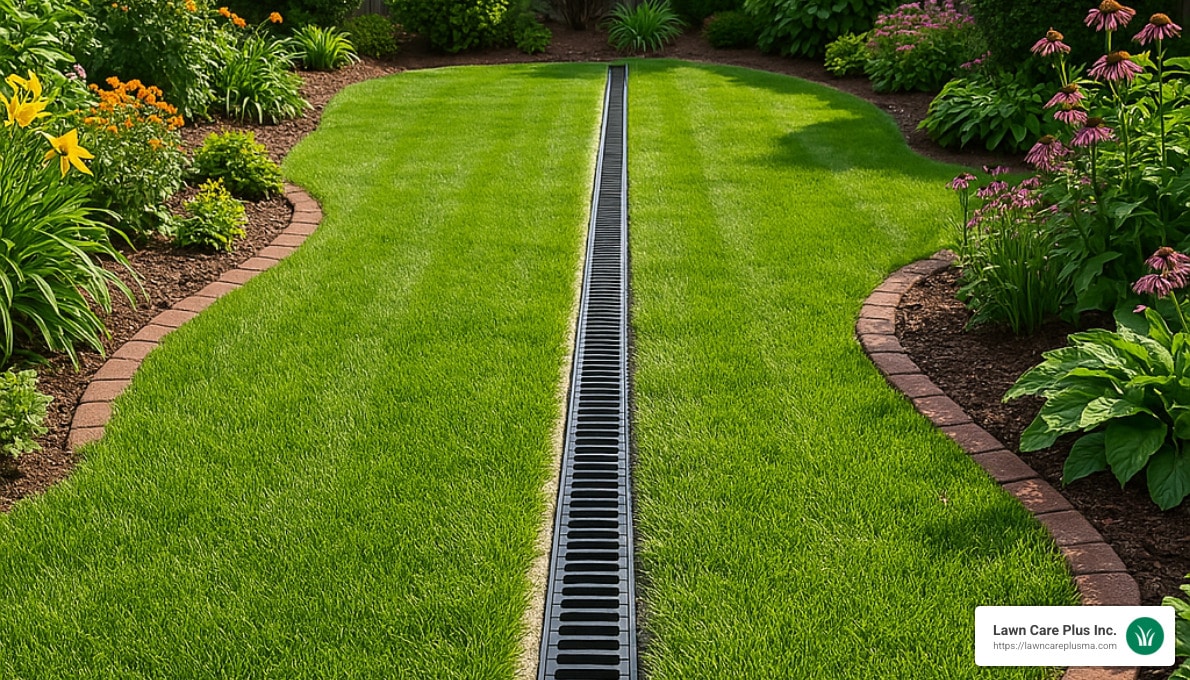
Why Garden Land Drainage Solutions Are Essential for a Healthy, Beautiful Yard
Garden land drainage solutions are crucial to fixing waterlogged, swampy areas in your yard. Good drainage keeps your lawn usable, plants healthy, and property free from water-related damage.
If you need a quick, concise answer to your garden drainage issues, here’s a short summary:
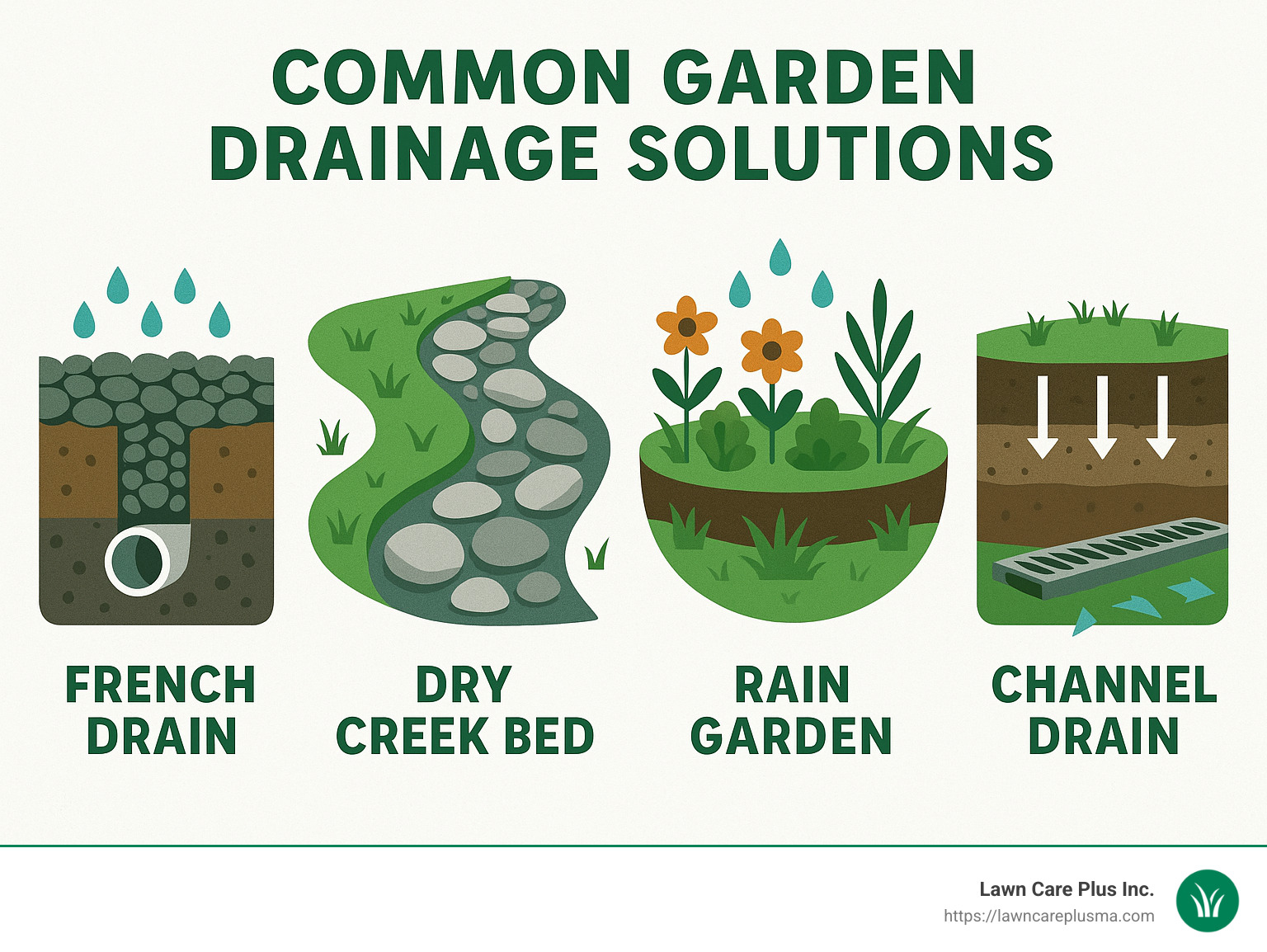
Common garden land drainage solutions:
– French Drains: Gravel-filled trenches with perforated pipes that move water away.
– Dry Creek Beds: Shallow, landscaped trenches using stones to direct surface runoff.
– Soil Amendments: Adding organic matter to improve water absorption.
– Rain Gardens: Planted areas designed to collect and filter excess water naturally.
– Channel Drains: Installed on slopes to quickly move large amounts of water away.
Without proper drainage, standing water can damage your plants, create breeding grounds for mosquitoes, and even harm the foundation of your home. Like gardening expert Kim Toscano says,
“When it comes to drainage, clay soil can be incredibly problematic.”
Changing your backyard from swampy to stunning doesn’t have to be complicated. With the right solutions, you can create a lush, welcoming sanctuary free from flooding.
Garden land drainage solutions terms to remember:
– drainage solutions for sloping land
– land drainage system
– sidewalk drainage solutions
Understanding Garden Drainage Problems
Water is the lifeline of any garden, but too much can quickly turn your lush yard into a soggy mess. If the water in your garden doesn’t drain properly, it can lead to issues like plant roots drowning (yes, ironically, plants can drown!), essential nutrients washing away, and an ideal habitat for pests and fungal diseases. Understanding the causes behind your drainage problems is key to finding effective garden land drainage solutions that will keep your yard healthy and beautiful for years to come.
Common Causes of Poor Drainage
Poor drainage in your garden can result from a variety of factors. One of the most common culprits, especially in the Boston Metro-West area including communities like Brookline and Newton, is clay soil. Clay soils have tiny, compact particles that cling together, leaving virtually no room for water to move through. Gardening expert Kim Toscano sums it up neatly: “When it comes to drainage, clay soil can be incredibly problematic.”
Another issue can be a high water table, often found in low-lying areas or near bodies of water. In these cases, the groundwater level is naturally closer to the surface, leaving the soil easily saturated and unable to absorb additional rainfall.
Then there’s the problem of soil compaction. This typically happens over time from frequent foot traffic, construction activity, or regular lawn maintenance equipment. Compacted soil has fewer air pockets, restricting the movement of water through the ground. This scenario is especially common in newer housing developments, where heavy machinery compacts the soil during construction.
Sometimes the cause can be as simple as improper grading. Ideally, your yard should gently slope away from your home, guiding water safely off your property. But if the slope directs water toward your home’s foundation, you could face flooding and structural issues down the line—even from a slight slope in the wrong direction.
Lastly, many homeowners overlook drainage when adding patios, driveways, or walkways. Hardscaping without proper planning can unintentionally funnel large amounts of water into areas that aren’t prepared to handle it. One of our experts from Lawn Care Plus Inc. shared a recent experience in Needham:
“We visited a property where the homeowner had installed a beautiful patio but hadn’t considered where the runoff would go. After a heavy rain, their garden turned into a mini-lake. We quickly resolved the issue by installing a simple channel drain system to divert water away from the patio and garden.”
If you’re seeing some of these issues in your own yard, don’t worry—we’ve put together a handy DIY lawn and garden drainage guide to help you take action.
Signs Your Garden Needs Drainage Solutions
So, how can you tell if your garden is suffering from poor drainage? Fortunately, the symptoms are typically easy to spot once you know what to look for.
One of the clearest signs is standing water. If puddles or pools remain for more than a day after rainfall, chances are good you’re facing drainage issues. You might also notice soggy, spongy soil that continues feeling wet days after rain has stopped.
Funny enough, plants can sometimes trick us. Yellowing or wilting plants might look thirsty, but these symptoms can also indicate drowning roots that aren’t getting enough oxygen. Excess moisture also creates ideal conditions for moss growth, especially in shady areas.
Another common indicator is soil erosion. If water can’t seep into the earth, it’ll run off, potentially carrying valuable topsoil along with it. Keep an eye out for visible patches of soil erosion that seem to get worse after each rainfall.
Ever notice water stains on your home’s foundation? That’s another clear sign that water isn’t draining away correctly. Left untreated, this issue could cause structural damage and costly repairs.
And let’s not forget pests—specifically insects, like mosquitoes, which absolutely love areas with standing water. If you find yourself slapping at buzzing pests more than usual, poor drainage could be to blame.
One of our clients in Milton humorously described their drainage nightmare to us:
“Every time it rained, our backyard turned into ‘Lake Milton.’ We couldn’t even step outside without getting muddy shoes, and our kid’s play area was basically useless for days. The final straw came when we noticed mosquitoes breeding in the standing water—that’s when we knew we needed professional garden land drainage solutions.”
If you’re experiencing similar issues, it’s important to take action quickly. By identifying drainage problems early, you can avoid bigger headaches down the line and turn your swampy yard into a beautiful, usable space again.
Assessing Your Garden’s Drainage Needs
Before you jump right into installing garden land drainage solutions, it’s important to take a step back and carefully assess your current landscape. A proper assessment helps pinpoint exact issues and reveals the best way forward for your yard’s unique conditions. Plus, it’ll save you from spending money and effort on drainage methods that just won’t do the trick.
That your garden might have different drainage rates in various spots. It’s totally normal—yards can be as quirky as the people who own them! That’s why testing and observing different areas helps you develop an accurate picture of your drainage needs.
How to Test Soil Drainage
Testing your soil’s drainage capacity isn’t complicated, and it’s something most homeowners can handle themselves with just a shovel and a little patience. Here’s a simple guide to help you get started:
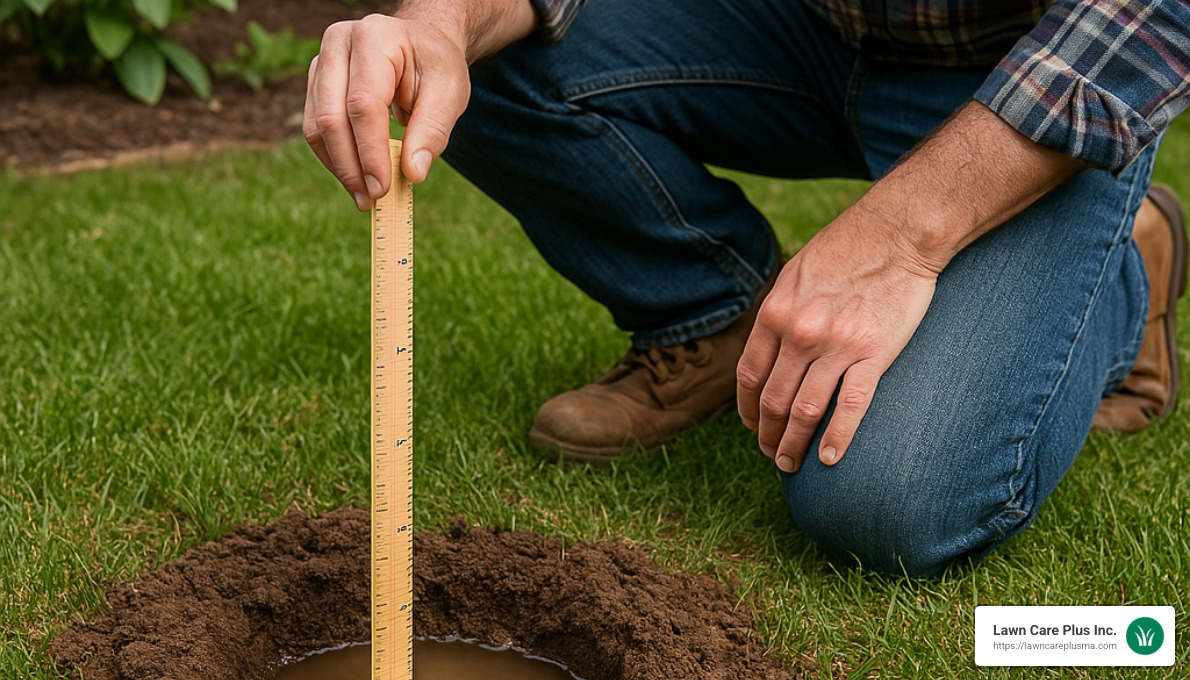
First, grab your shovel or a post-hole digger and dig a test hole about 12 inches wide and roughly 18 to 24 inches deep. If your yard is pretty big, or you suspect drainage varies from spot to spot, dig a few holes around your property for comparison.
Next, fill your hole to the top with water. Let all the water drain completely—this initial soak saturates the surrounding soil and gives you more reliable results.
Once the hole is empty, refill it again. This time, measure and mark the water level with a ruler or stick. Be sure to note the exact time you refill.
Check back after about 1 hour, and measure how far the water level has dropped. If there’s still water, check again at the 4-hour mark. Your goal is to see how quickly the water is absorbed into the surrounding soil.
Here’s how to interpret the results:
- Less than 1 inch per hour: You probably have significant drainage issues. Don’t worry, many gardens around the Boston Metro-West area face similar problems. You’ll want to plan some effective garden land drainage solutions.
- Between 1 to 3 inches per hour: Your drainage isn’t terrible, but it could still use some improvements to keep your plants happy and healthy.
- More than 3 inches per hour: Lucky you! Your soil is draining well—maybe even too quickly for certain plants that like moisture.
One of our Lawn Care Plus team members had a similar experience at a home in Watertown: “We performed this test on a client’s garden that was constantly soggy. After four hours, barely any water drained away, which confirmed our suspicion of heavy clay soil. Using this info, we designed a custom drainage plan including both French drains and soil amendments.”
Beyond the percolation test, it’s also helpful to simply watch your garden closely during and after rainfall. Notice where water pools first. Check how long these areas stay wet—are they still soggy after a day or two? Pay attention to low points or dips where water naturally gathers.
Keep an eye out for runoff coming from neighbors’ properties, too. Sometimes your drainage issues might originate outside your own yard. Snapping a few photos after a heavy rain can also be super useful later, whether you’re planning DIY improvements or calling in professional help.
Finally, creating a simple map of your yard highlighting drainage trouble spots, slopes, and nearby structures (like patios or houses) can give you clear visuals to guide your drainage planning. If you’re looking for more DIY tips, check out this helpful resource: How to Install Lawn Drainage.
The whole assessment process doesn’t take long. But it can make a huge difference in ensuring the garden land drainage solutions you choose are spot-on, effective, and perfect for your yard.
Effective Garden Land Drainage Solutions
You’ve identified your garden’s drainage issues, tested your soil, and now you’re ready for solutions. At Lawn Care Plus Inc., we’ve helped many homeowners across the Boston Metro-West area—from Belmont to Walpole—transform their waterlogged yards into lush, welcoming retreats. Let’s explore some of the most effective garden land drainage solutions we’ve seen work wonders.
French Drains: A Garden Land Drainage Solution
French drains are one of our favorite garden land drainage solutions—not just because they sound fancy, but because they’re incredibly effective! In fact, French drains have a success rate of over 90% in preventing water pooling problems.
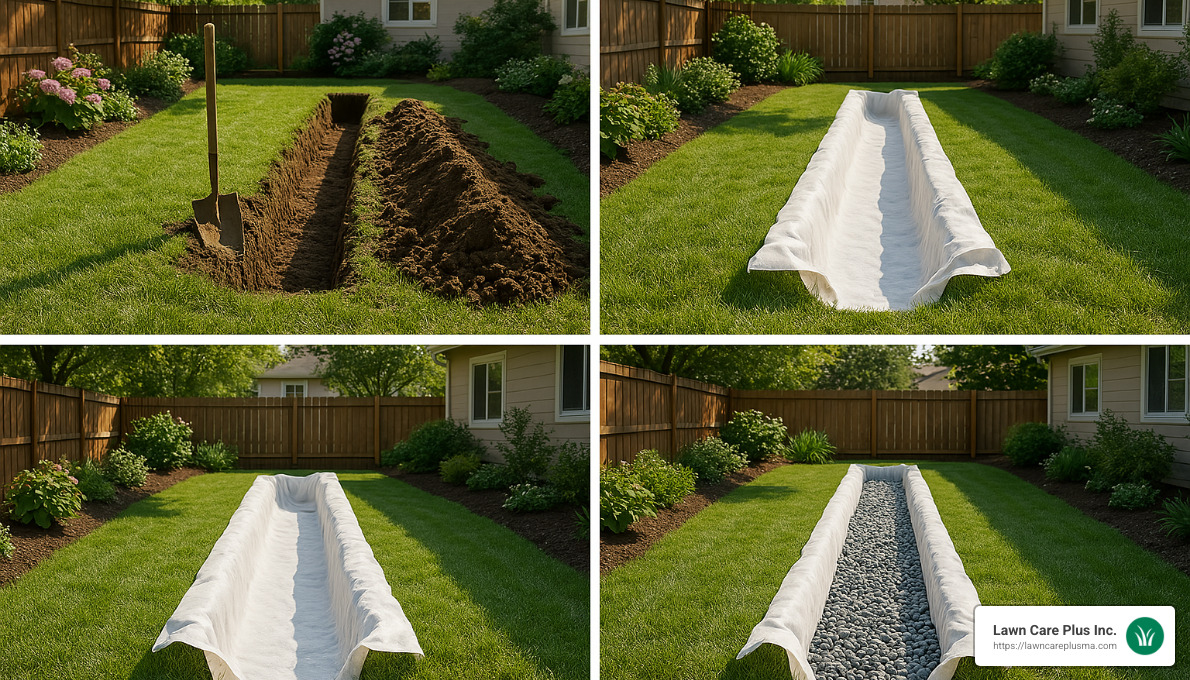
Here’s how they work: A French drain is essentially a trench filled with gravel and a perforated pipe. This clever setup creates an easy, underground route for excess water to flow away from your yard. Water enters through the gravel into the pipe and then gently moves away from soggy spots, safely draining it elsewhere.
Installing a French drain involves choosing a good route that slopes gently (about 1 inch drop per 10 feet), digging a trench, lining it with landscape fabric to keep soil out, adding a gravel base, laying down the perforated pipe, and finally covering it with gravel. You can then top it off with soil and grass for a neat finish.
One of our Lawn Care Plus specialists recalls: “We worked with a family in Jamaica Plain whose basement and garden turned into a swimming pool after heavy rains. Installing a French drain system eliminated their water problems completely, giving them back their beautiful, dry backyard.”
For more on French drains, check out this helpful article on French Drain Inside Basement.
Dry Creek Beds as Garden Land Drainage Solutions
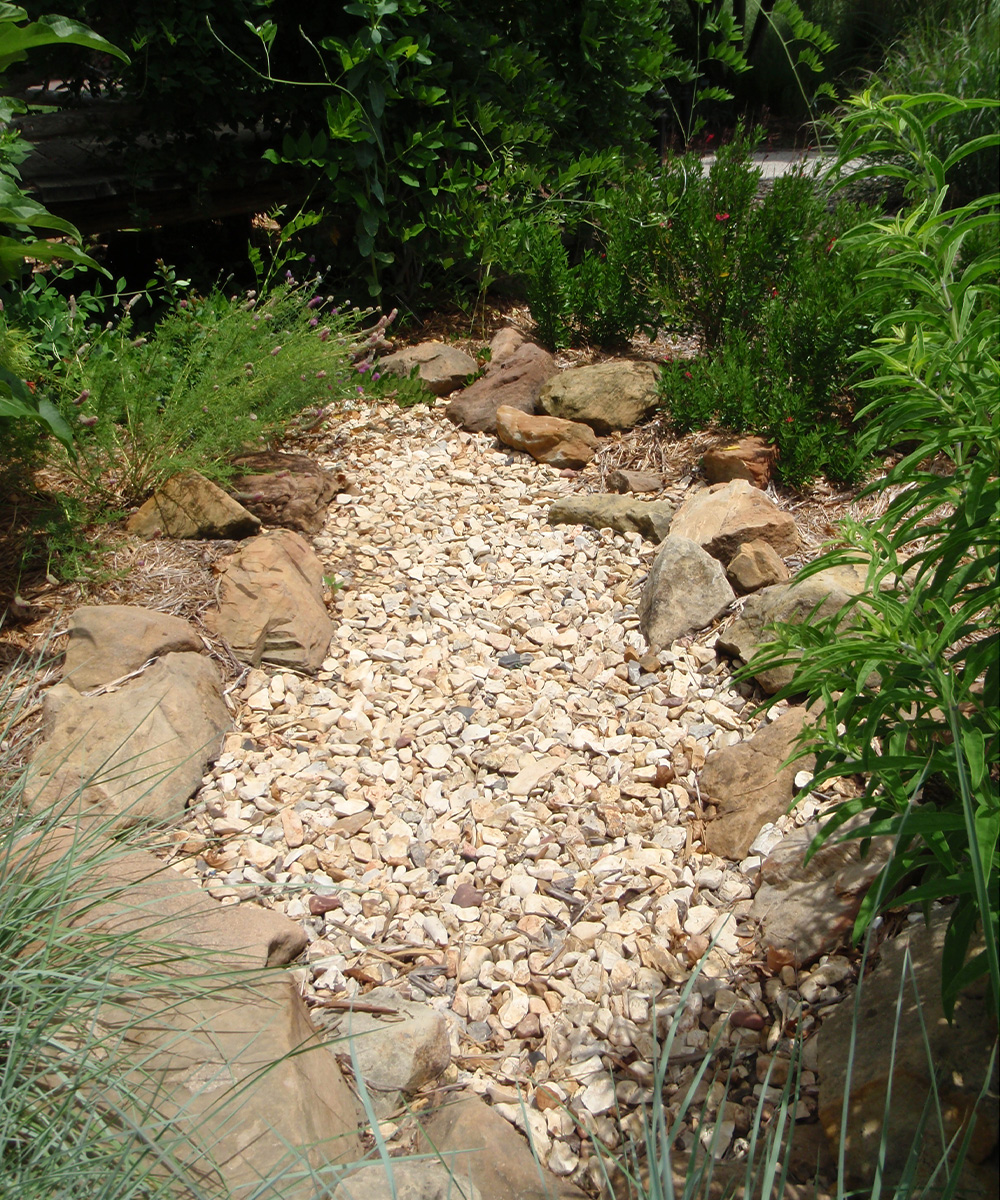
Want to solve your drainage problems while adding charm to your landscape? Dry creek beds are both beautiful and practical. Designed as natural-looking channels filled with river rocks and stones, dry creek beds can reduce surface runoff by up to 50% and prevent erosion in your garden.
Creating a dry creek bed involves mapping out the natural water flow in your yard, excavating a gently curving channel, lining it with landscape fabric, and filling it with attractive stones and rocks. Adding clusters of native plants along the edges turns this practical solution into a stunning focal point.
One of our landscape designers shares: “We installed a dry creek bed at a Chestnut Hill home where heavy rains were washing away the garden. Today, that same problem area is everyone’s favorite spot, filled with native plants and buzzing with wildlife.”
Amending Soil with Organic Matter
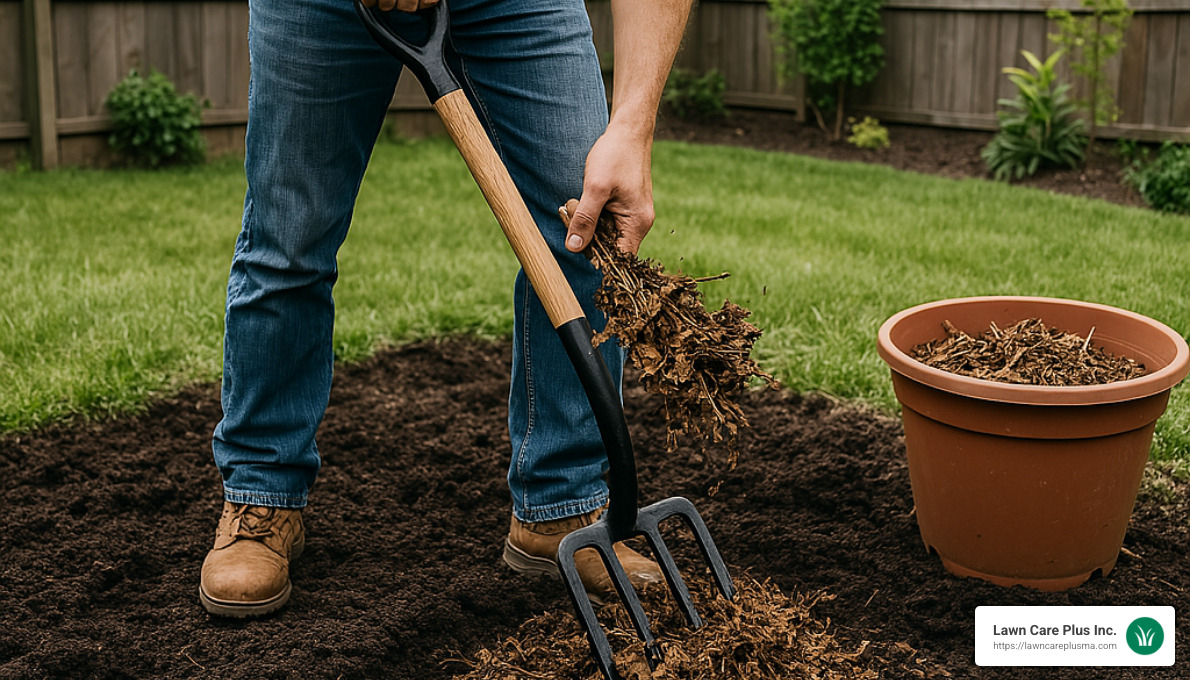
If heavy clay soil is your problem, amending it with plenty of organic matter can be a real game-changer. Adding compost, leaf mold, or well-aged manure helps open your soil structure, allowing water to soak in rather than pool on the surface.
Studies show that amending clay soil can improve water absorption rates by up to 60%! To get started, simply spread 3-4 inches of compost or other organic amendments and then mix thoroughly into the top 8-12 inches of your soil. Repeat this annually, and you’ll notice significant improvements.
One homeowner from Brookline told us, “We used to call our yard ‘the swamp.’ But after working compost into our heavy clay soil over a couple of years, our yard finally drains properly. Now we just call it ‘beautiful.'”
Planting Water-Loving Plants for Drainage Solutions
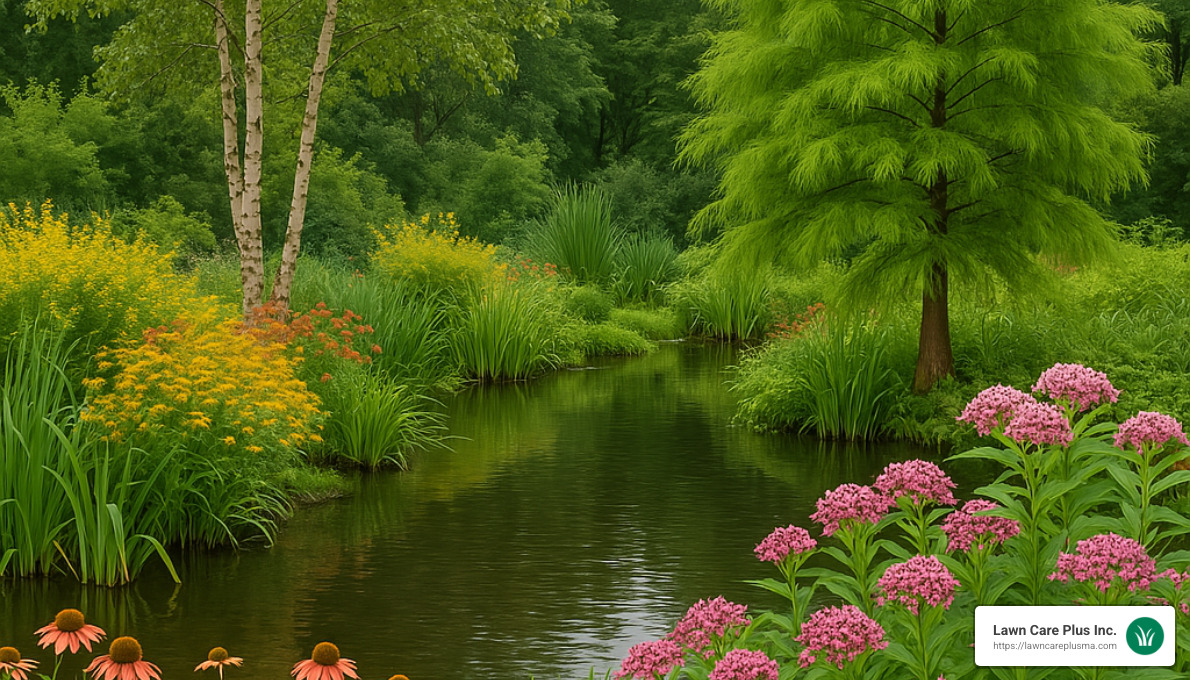
Why fight nature when you can harness it? Planting water-loving species in those soggy spots makes your drainage issues disappear naturally. These plants happily soak up excess moisture, reducing waterlogging by as much as 30%.
In Massachusetts, excellent choices include swamp milkweed, blue flag iris, Joe-Pye weed, river birch, and sedges. These plants not only solve drainage issues—they provide wonderful wildlife habitats and add visual interest to your yard.
A delighted client in Newton said, “Our once swampy corner is now a butterfly paradise, thanks to swamp milkweed. What used to be an eyesore has become a favorite spot for relaxing.”
Installing Channel Drains
For properties that see heavy runoff, especially on slopes, channel drains (also known as trench drains) are an excellent solution. These durable drains quickly collect and redirect up to 100 gallons of water per minute, protecting your driveway, patio, or lawn from flooding and erosion.
Installing channel drains involves cutting a shallow trench, preparing a stable base, positioning the drain sections, and connecting them to a safe drainage outlet. You can even choose decorative grate covers that blend beautifully into your landscape.
A Watertown homeowner shared, “Our driveway would flood every time it rained, creating ice hazards in winter. Lawn Care Plus installed a discreet channel drain, and now we have no flooding at all—even after heavy storms.”
To learn more, take a look at these 5 Drainage Techniques for Sloped Landscaping.
Building a Rain Garden
Rain gardens are eco-friendly and efficient garden land drainage solutions that capture runoff naturally. These shallow planted depressions allow water from roofs, patios, or driveways to gently filter into the ground, reducing flooding and protecting local waterways.
To build a rain garden, select a spot at least 10 feet from your home, excavate a shallow basin, enrich the soil with compost, and select native plants to fill it. Include an entry point for runoff and an overflow path for extra-heavy rains.
One of our favorite rain garden projects was in Jamaica Plain, where a vibrant rain garden not only solved the client’s drainage issue but also attracted butterflies and birds, bringing their yard to life.
Utilizing Dry Wells
Dry wells are a discreet, underground solution perfect for properties where surface drainage options aren’t feasible. These underground basins temporarily store excess water, letting it slowly seep into the surrounding soil.
Dry wells involve digging a sizeable hole, lining it with landscape fabric, filling it with gravel or a prefabricated container, connecting an inlet pipe, and covering it invisibly with soil and grass.
One Dedham homeowner told us, “Our sump pump used to flood our yard every time it kicked in. Lawn Care Plus installed a dry well underground, and now the water just disappears. It’s like magic.”
For more information, see this helpful guide on Domestic Surface Water Drainage Systems.
With these effective garden land drainage solutions, your soggy lawn can soon be a distant memory. Whether you choose French drains, dry creek beds, rain gardens, or a combination of solutions, Lawn Care Plus Inc. is here to help you reclaim your yard and turn your drainage dilemmas into a delightful outdoor space.
Maintaining Your Garden Drainage System
Once you’ve installed those wonderful garden land drainage solutions, your work isn’t quite done. Think of your drainage system like a car – regular maintenance keeps it running smoothly and prevents costly breakdowns. At Lawn Care Plus Inc., we’ve seen many beautiful drainage systems fail simply because they were forgotten after installation.
Regular Inspections are your first line of defense. Mark your calendar for spring and fall check-ups – these are the perfect times to catch issues before they become problems. Take a slow walk around your property after a heavy rain (bring your rubber boots!) and look for any spots where water still pools. These wet patches are telling you something isn’t working quite right.
“I always tell my clients to become drainage detectives,” says one of our maintenance specialists. “If you notice water standing where it shouldn’t be, follow it upstream to find where the system might be clogged or overwhelmed.”
Clearing Debris is perhaps the most important maintenance task you can perform. Nature is constantly trying to fill your carefully designed drainage systems with leaves, twigs, soil, and other materials. Those channel drain grates? They love to collect leaves in fall. French drain outlets? Perfect spots for spiders to build homes and catch debris.
Take time each season to clear visible drainage components. A garden hose can be your best friend here – once a year, flush your French drains by running water through them to push out accumulated sediment. And don’t forget about your gutters! They’re actually your home’s first drainage system, and if they’re clogged, they’ll overwhelm everything downstream.
Your drainage system will last longer if you take some Preventative Measures. Maintain a thick, healthy lawn that absorbs rainfall effectively. Continue your good habits of adding organic matter to garden beds each year. Be mindful about soil compaction – avoid driving or walking repeatedly over buried drainage components, especially when the ground is wet.
“One client in Wellesley had a beautiful French drain system that stopped working,” recalls our maintenance team leader. “When we investigated, we found they’d been parking cars over it during parties, compacting the soil and crushing parts of the pipe. A simple adjustment to their parking arrangement solved the problem.”
Different seasons bring different Seasonal Considerations for your drainage maintenance:
In winter, ensure all systems are clear before the first freeze to prevent ice blockages that can crack pipes. Spring is time to check for frost heave damage and repair any shifted components. Summer brings weed growth in dry creek beds and rain gardens that needs management. And fall, of course, is all about keeping fallen leaves from clogging every drainage surface in sight.
For homeowners with complex systems, we recommend professional maintenance visits. Our Lawn Care Plus team can perform thorough inspections and cleanings that spot potential issues before they become expensive problems. We’ve saved many clients thousands in repair costs through simple preventative maintenance.
The few hours you spend maintaining your garden land drainage solutions each year will reward you with decades of dry, usable outdoor space. Your future self (with dry feet) will thank you!
Frequently Asked Questions about Garden Land Drainage Solutions
How do I know if my garden has a drainage problem?
Wondering if your yard might be suffering from poor drainage? A few telltale signs can help you identify if you need to consider garden land drainage solutions.
First, standing water is a clear red flag. If puddles stick around more than 24 hours after a rainstorm, that’s a strong indicator. Similarly, soil that stays soggy or spongy several days after rainfall could mean water isn’t draining properly.
Plants can also offer important clues. Leaves turning yellow, wilting despite ample rainfall, or persistent root rot often signal roots drowning in excess water. Moss thriving in your lawn might look cozy, but it typically points to overly wet conditions beneath your grass.
Keep an eye out for water stains along your home’s foundation or basement walls, as these are often overlooked signs of drainage issues. Erosion or soil washing away during heavy rain can also hint at poor water management. And let’s not forget mosquitoes—if your yard suddenly becomes a buzzing hot spot, you might have hidden standing water serving as an insect nursery.
As one of our drainage experts at Lawn Care Plus Inc. humorously puts it:
“If your walk across the lawn feels like trudging through a sponge or your flower beds look like mini swimming pools after a drizzle, it’s time to explore some proper drainage solutions.”
Can I install a French drain myself?
Yes, installing a French drain is definitely doable as a DIY project—if you’re handy, physically fit, and up for a bit of digging. However, there are several factors to carefully consider before grabbing your shovel.
First, be aware this project involves significant physical labor: digging trenches, hauling gravel, and working with drainage pipe. Proper grading—the slope needed to carry water away—is critical to a successful French drain. Without it, you might end up with the same problems you started with. You’ll also need a clear idea of where the water should drain, ensuring it’s away from foundations and won’t impact neighbors.
Importantly, before you break ground, always call 811 to locate underground utilities. Accidentally cutting through a buried cable or pipe isn’t the kind of surprise you want on a Saturday afternoon!
If your drainage issue is complicated or severe, involves working near your home’s foundation, or if you’re unsure how to properly grade the area, calling in professionals is strongly recommended. Clay soils common in the Boston Metro-West area can be especially challenging and may require additional drainage solutions like soil amendments or dry wells.
At Lawn Care Plus Inc., we frequently assist homeowners who’ve started DIY French drain installations but have hit unexpected snags. Sometimes, professional guidance from the beginning can save you headaches (and backaches) down the road.
What are the average costs of garden drainage solutions?
Budgeting for garden land drainage solutions can feel challenging due to the wide range of options and variables involved. Costs depend greatly on the type of drainage solution, complexity of your yard’s issues, accessibility, soil conditions, and whether you undertake it as a DIY project or hire professionals.
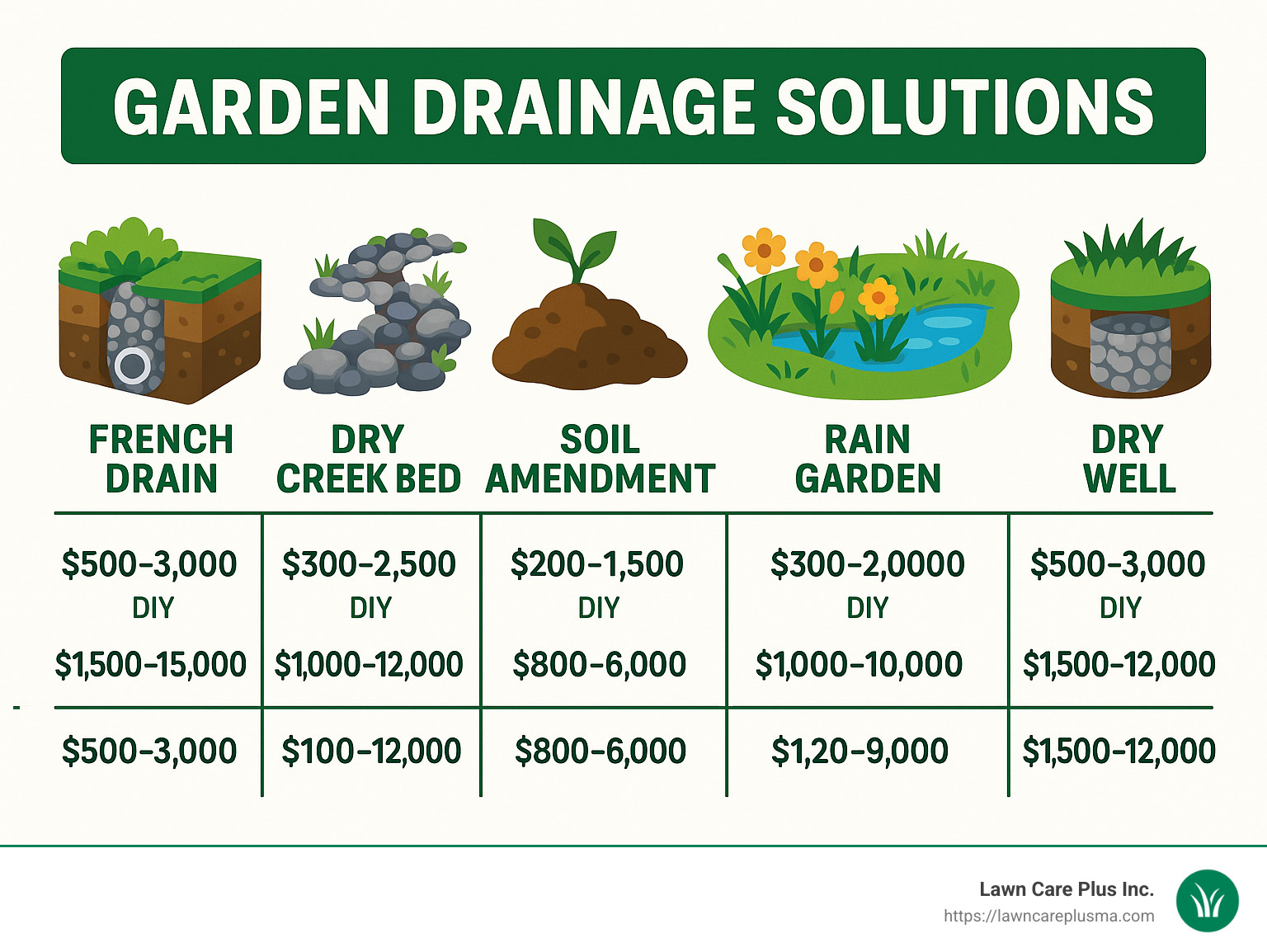
Based on average internet data (please note, these are not specific prices for Lawn Care Plus Inc.’s services), here’s a general idea of what you could expect to pay:
- French Drains: Typically range from about $500–$3,000 for DIY installations, with professional installations ranging anywhere from around $1,500 up to $15,000 or more, depending on complexity, trench length, and materials.
- Dry Creek Beds: Can run around $300–$2,500 for DIY projects. Professionally designed and installed dry creek beds often range from $1,000 to as high as $12,000, depending on landscape design, materials, and plantings.
- Soil Amendment: Incorporating organic matter yourself ranges roughly from $200–$1,500, while professional services to improve large garden areas or significantly amend heavy clay soils could cost anywhere from $800 to $6,000.
- Rain Gardens: DIY rain gardens typically cost between $300 and $2,000. Professional rain garden installations, including design and native plant selections, may range from around $1,000 up to $10,000 or more.
- Channel Drains: DIY setups usually range from $400–$2,500. Professionally installed channel drains can run approximately $1,200–$9,000, especially if extensive hardscaping adjustments are needed.
- Dry Wells: DIY installations fall roughly between $500 and $3,000. Professional installations generally range from $1,500 to about $12,000, depending on size, depth, and specific drainage requirements.
As you can see, drainage systems vary widely because every yard has unique challenges. According to one of our estimators at Lawn Care Plus Inc.:
“Every property is unique, and drainage solutions must be custom specifically to each site’s conditions. That’s why our team provides detailed assessments and quotes, so you understand exactly what’s involved and why.”
If you want the most accurate idea of what your drainage solutions would cost, contact Lawn Care Plus Inc. for a personalized consultation. Our experienced team proudly serves the Boston Metro-West area, including communities like Belmont, Brighton, Brookline, Newton, and beyond. We’d love to help you reclaim your garden and enjoy a healthy, beautiful landscape once again!
Conclusion
Turning your waterlogged yard into a lush, inviting sanctuary is not only possible but completely within reach. With the right garden land drainage solutions, you can say goodbye to standing water, struggling plants, and muddy messes—and hello to a beautiful, functional outdoor space you and your family will truly enjoy.
Throughout this guide, we’ve explored a variety of effective solutions, each designed to tackle specific drainage challenges. Whether it’s installing reliable French drains to divert water away from foundations, creating charming dry creek beds to handle runoff neatly, or simply improving your soil’s structure with organic amendments, each method brings its own benefits and can often be combined for optimal results.
You’ve learned how strategic landscaping approaches such as rain gardens and planting moisture-loving plants like swamp milkweed and sedges not only address drainage but improve your garden’s biodiversity and visual appeal. We’ve also seen how practical installations like channel drains and underground solutions like dry wells can effectively manage heavy rainfall and sloped landscapes.
At Lawn Care Plus Inc., we’ve had the pleasure of helping homeowners across the Boston Metro-West area tackle their drainage issues head-on. From clay-heavy soils in Brookline and Newton’s challenging slopes to Watertown’s flooded driveways, we’ve seen it all—and we know how proper drainage can transform a yard.
Good drainage goes beyond merely solving a technical issue. It’s about creating the kind of garden you genuinely enjoy spending time in, where plants thrive, play areas stay usable, and foundations remain dry and safe. As a happy Lawn Care Plus customer from Milton recently told us, “Our backyard went from ‘Lake Milton’ to our favorite spot for cookouts. We finally have a dry, healthy yard we’re proud to show off!”
If you suspect your garden has poor drainage, we encourage you to act sooner rather than later. Small problems can grow into bigger headaches over time—causing foundation issues, landscape erosion, and damaged plants. Regular maintenance including keeping drains clear, inspecting after storms, and monitoring soil conditions will ensure your drainage system remains effective for years.
Still unsure what solutions are best for your yard? While we’ve shared average pricing based on internet data, actual costs can vary widely depending on your property’s specific needs. That’s why Lawn Care Plus Inc. offers personalized assessments and detailed quotes for your particular situation. You can explore our full range of hardscape and landscape services or reach out directly to schedule a consultation.
You don’t have to live with a swampy, soggy yard. With effective garden land drainage solutions, thoughtful planning, and expert help, your backyard can be the beautiful, usable, and welcoming space you’ve always dreamed of—rain or shine.