
Massachusetts Snow Removal Law: Top 5 Compliance Tips 2024
Understanding Massachusetts Snow Removal Regulations
Massachusetts snow removal law is essential for anyone owning property in the state. Whether you’re a homeowner or a commercial property manager, know your responsibilities to avoid fines and legal issues.
Here’s a quick overview:
- You must clear sidewalks in front of your property.
- Landlords have the primary responsibility for snow removal, except in specific cases.
- Failure to comply can result in fines and increased liability.
In 2010, a significant legal change made it mandatory for all property owners in Massachusetts to keep their premises clear of snow and ice. This includes both natural and unnatural accumulations. Not adhering to this law can lead to severe consequences, impacting the safety of your visitors and your finances.
Keeping your property safe and compliant isn’t just about avoiding penalties; it’s about ensuring that everyone who visits or passes by your property can do so without the risk of slipping and injuring themselves.
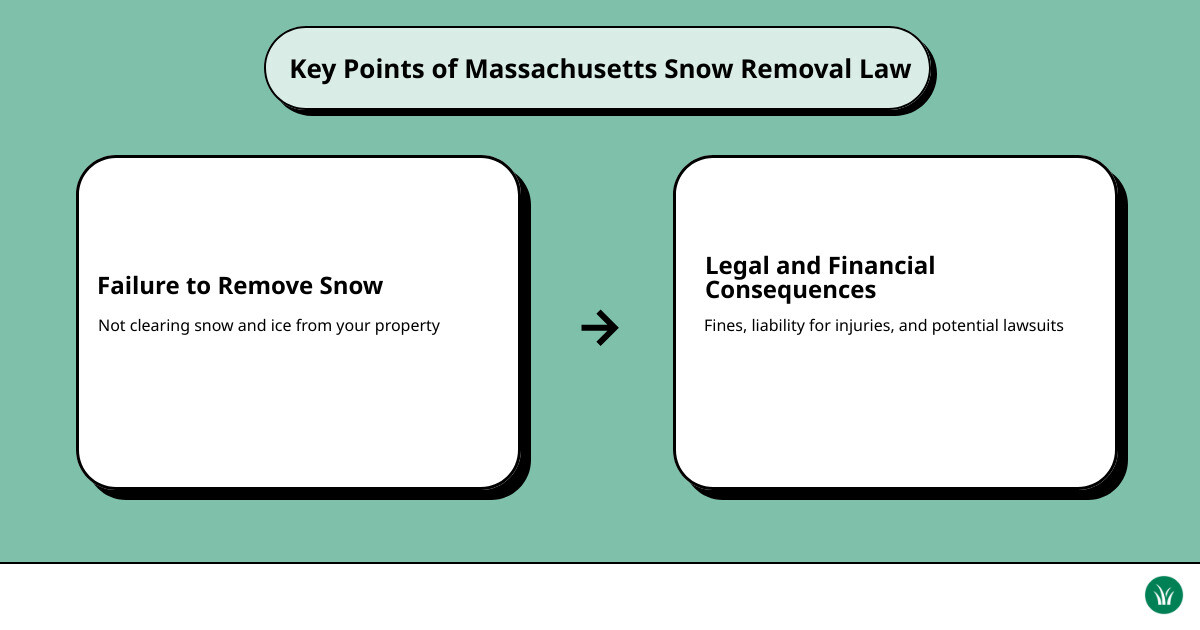
Massachusetts Snow Removal Law
Responsibilities of Property Owners
In Massachusetts, property owners have a legal obligation to remove snow and ice from their premises. This requirement stems from a landmark 2010 Supreme Judicial Court ruling that abolished the distinction between natural and unnatural accumulations of snow. Now, all property owners—whether residential, commercial, or rental—must keep their properties safe for visitors and passersby.
Residential Properties
Homeowners must ensure that all means of egress, including exterior stairways and fire escapes, are free from snow and ice. If someone slips and falls, the homeowner could be held liable.
Commercial Properties
Businesses have similar responsibilities but often face stricter time limits for snow removal. For example, in Boston, businesses must clear snow within three hours of a storm’s end. Failure to comply can result in fines and increased liability.
Rental Properties
Landlords are primarily responsible for snow removal in rental properties. This responsibility cannot be transferred to tenants through lease agreements, except in single-unit properties with their own egress. Even then, landlords remain liable for common areas and overall safety.
Specific Requirements by Town
Local ordinances further define snow removal responsibilities and set specific time limits for clearing snow. These regulations can vary significantly from one town to another.
Boston
– Businesses: Must clear snow within 3 hours.
– Residents: Must clear snow within 6 hours.
– Fines: Non-compliance can result in fines.
Worcester
– All Property Owners: Must clear snow within 12 hours.
– Fines: Similar to Boston, non-compliance can lead to penalties.
Other Towns
– Chelsea: Snow must be removed within 24 hours.
– Winthrop: Snow must be cleared within 6 hours if it falls between sunrise and sunset.
– Everett: Sidewalks must be clear of snow by noon on the day following a snowfall.
– Lynn: Commercial properties must clear snow within 3 hours; residential properties have up to 10 hours.
Each town may have additional rules, such as prohibiting the dumping of snow into streets or public areas. Violating these local ordinances can result in fines and other penalties.
Understanding these specific requirements is crucial for staying compliant and avoiding fines. Make sure to check your local ordinances to know the exact rules in your area.
By adhering to these regulations, you not only stay compliant but also ensure the safety of everyone who visits or passes by your property.
Snow Removal for Landlords and Tenants
Landlord Responsibilities
In Massachusetts, landlords bear the primary responsibility for snow and ice removal on rental properties. This responsibility is non-negotiable and cannot be shifted to tenants through lease agreements, except under very specific conditions.
Primary Responsibility
Landlords must ensure that all means of egress, including exterior stairways, fire escapes, and common areas, are free from snow and ice. The law is clear: landlords must maintain safe conditions to prevent slips and falls. This includes:
- Clearing all exits: Landlords must ensure that all exits are unobstructed.
- Maintaining common areas: Any shared spaces, such as hallways and driveways, must be kept clear.
- Adhering to local ordinances: Each city or town may have specific time limits and fines for snow removal. For instance, in Boston, landlords must clear snow within six hours of a storm’s end.
Liability
If someone slips and falls due to uncleared snow or ice, the landlord can be held liable. This liability extends to any fines incurred due to non-compliance with local snow removal ordinances. It’s crucial for landlords to stay on top of snow removal to avoid these legal and financial repercussions.
Tenant Responsibilities
While landlords hold the primary responsibility, tenants may have some obligations, especially if specified in their lease agreements.
Lease Provisions
Some landlords include snow and ice removal duties in the lease agreement, transferring this responsibility to tenants. Tenants must read their lease agreements carefully to understand their obligations. However, even with such provisions, the landlord remains liable for common areas and overall safety.
Single-Unit Properties
The only exception where landlords can legally require tenants to handle snow removal is in single-unit properties with an independent entrance and exit used exclusively by the tenant. In these cases, the tenant must:
- Clear their entrance and exit pathways: This includes walkways and steps leading directly to their unit.
- Comply with local ordinances: Tenants must follow the same local rules and timelines for snow removal as property owners.
Shared Entrances
In properties with shared entrances or common areas, landlords cannot transfer the snow removal responsibility to tenants. This includes townhouses or divided homes where multiple tenants share the same entryway.
While landlords are primarily liable, tenants could still face fines or legal action if they fail to comply with their lease provisions regarding snow removal. It’s essential for tenants to understand and fulfill their responsibilities to avoid potential issues.
By understanding and adhering to these responsibilities, both landlords and tenants can ensure safety and compliance with Massachusetts snow removal laws. Regular and timely snow removal is not just about avoiding fines—it’s about preventing accidents and ensuring a safe living environment for everyone.
Consequences of Non-Compliance
Fines and Penalties
Failing to remove snow and ice from your property in Massachusetts can lead to hefty fines. Local ordinances dictate specific time limits for snow removal, and each town may have different rules. For instance, in Boston, residents have up to six hours after a storm to clear their sidewalks, while businesses have only three hours.
Types of Fines:
- Residential Properties: Fines can vary depending on the amount of snow and the property type.
- Commercial Properties: Businesses may face higher fines due to the higher foot traffic and potential risk.
- Improper Removal: Shoveling snow into the street or blocking a curb can also result in fines.

Legal and Insurance Implications
Liability Coverage
If someone slips and falls on snow or ice on your property, you could be held liable for their injuries. This liability can cover medical bills, lost wages, and even pain and suffering.
Homeowners insurance typically includes liability coverage for such incidents, but it’s crucial to ensure your policy is adequate. Commercial property owners should also review their insurance policies to confirm they have sufficient coverage.
Lawsuits
Neglecting snow removal can lead to lawsuits. If someone is injured because you didn’t clear your property, they can sue you for damages. This can result in significant legal fees and compensation costs.
Case Study: Papadopoulos v. Target Corp.
In Papadopoulos v. Target Corp., the Massachusetts Supreme Judicial Court abolished the distinction between natural and unnatural accumulation of snow and ice. This ruling means property owners are now responsible for all snow and ice on their property, regardless of how it accumulated.
Insurance Implications
Homeowners Insurance
Most homeowners insurance policies cover liability for slip and fall accidents. However, verify the specifics of your coverage. You might want to consider an umbrella policy for extra protection.
Commercial Insurance
For businesses, commercial insurance policies generally include liability coverage for accidents on the property. Given the higher risk associated with commercial properties, having adequate coverage is crucial.
Key Points to Check:
- Coverage Limits: Ensure your policy covers the potential costs of a lawsuit.
- Exclusions: Check for any exclusions related to snow and ice removal.
- Umbrella Policies: Consider additional coverage to protect against large claims.
By understanding the consequences of non-compliance, property owners can take the necessary steps to ensure they’re not only following the law but also protecting themselves from financial and legal repercussions. Regular and timely snow removal is essential to avoid fines, lawsuits, and insurance complications.
Now, let’s explore the best practices for snow removal to stay compliant and keep your property safe.
Best Practices for Snow Removal
Tools and Techniques
Timely Removal
Clearing snow and ice as soon as possible is crucial. Delays can lead to ice formation, making removal harder and increasing slip risks. In places like Boston, businesses have only 3 hours to clear snow, while residents have 6 hours. Worcester allows up to 12 hours.
- Shovels: Use a shovel with a curved handle to reduce back strain. Keep one hand close to the blade for better leverage.
- Snow Blowers: These are effective for large areas. Follow the manufacturer’s instructions for safe operation.
- Salt and Sand: Salt melts ice, while sand provides traction. Apply generously to walkways and steps.
Safety Tips
Preventing Slips
- Use Salt or Sand: Spread salt or sand on icy areas to prevent slips.
- Clear Down to the Pavement: Remove snow completely to avoid hidden ice patches.
Proper Attire
- Wear Boots with Good Traction: Non-slip soles can prevent falls.
- Dress in Layers: Stay warm but avoid bulky clothing that restricts movement.
Avoiding Overexertion
- Lift with Your Legs, Not Your Back: Bend your knees and keep your back straight to avoid injuries.
- Take Frequent Breaks: Shoveling can be strenuous. Rest often to avoid overexertion.
Avoiding Fines
- Follow Local Ordinances: Each town has specific rules. For example, in Boston, shoveling snow into the street is a fineable offense.
- Clear All Required Areas: Ensure sidewalks, driveways, and egresses are free from snow and ice.
By following these best practices, you can stay compliant with Massachusetts snow removal laws, avoid fines, and keep your property safe. Next, we’ll address some frequently asked questions about these regulations.
Frequently Asked Questions about Massachusetts Snow Removal Law
Are landlords required to remove snow in Massachusetts?
Yes, landlords are generally required to remove snow from rental properties in Massachusetts. According to Massachusetts General Laws, landlords must ensure that all exits are unobstructed, and exterior stairways, fire escapes, and egress balconies are clear of snow and ice. However, there is an exception for single-unit properties where the lease can stipulate that tenants handle snow removal for their exclusive entrance. Despite this, landlords retain liability for any slip-and-fall accidents on the property.
Is it illegal to leave snow on your car in Massachusetts?
Yes, it is illegal to leave snow on your car in Massachusetts. The law requires drivers to clear snow and ice from their vehicles before driving. This is to prevent snow from dislodging while driving, which can cause hazardous conditions for other motorists. Failure to do so can result in fines and penalties, as it poses a significant safety risk on the roads.
What is the sanitary code for snow removal in Massachusetts?
The State Sanitary Code mandates that property owners must maintain all means of egress in a safe and operable condition. This includes keeping exterior stairways, fire escapes, and egress balconies free of snow and ice. The code ensures that tenants and occupants have safe access to and from the property at all times. Non-compliance can lead to fines and legal liability, particularly if someone is injured due to uncleared snow or ice.
By understanding these frequently asked questions, property owners and tenants can better steer the responsibilities and legal requirements of snow removal in Massachusetts. For more detailed information, always refer to local ordinances and consult with legal experts if needed.
Conclusion
Understanding and complying with Massachusetts snow removal law is crucial for all property owners, whether residential, commercial, or rental. The Supreme Judicial Court ruling in 2010 made it clear that everyone has a legal obligation to keep their property free of snow and ice. This ensures the safety of visitors, tenants, and guests, and helps prevent accidents and legal issues.
Compliance is more than just a legal requirement; it’s about community safety. Slippery sidewalks and driveways can lead to serious injuries, which can result in costly lawsuits and increased insurance premiums. Therefore, timely and proper snow removal is not only a legal duty but also a moral one.
Lawn Care Plus Inc. is here to help you stay compliant with Massachusetts snow removal regulations. Our team of professionals is equipped with the best tools and techniques to ensure your property is safe and accessible all winter long. From snow plowing to de-icing and sanding, we offer comprehensive snow management services custom to your needs.
For reliable and efficient snow management in Boston, MA, trust Lawn Care Plus Inc. to keep your property safe and compliant. Contact us today to learn more about our services or to request an estimate.
By staying informed and proactive, you can steer the winter season smoothly and keep your property safe and legally compliant.
