The Essentials of Patio Installation Costs
Are you wondering about the patio installation cost and what to consider before diving into this home improvement project?
Here’s a quick breakdown:
- Patios improve outdoor living spaces, offering places to relax and entertain.
- Costs can vary significantly based on size, materials, and design complexity.
- Common materials include gravel, poured concrete, and various types of pavers.
Creating a patio is a brilliant way to extend your living space into the great outdoors. A well-designed patio serves as a perfect venue for gatherings or a quiet retreat at home. However, before you grab a shovel, it’s important to understand the factors affecting the cost of adding this valuable feature to your property.
Factors affecting costs
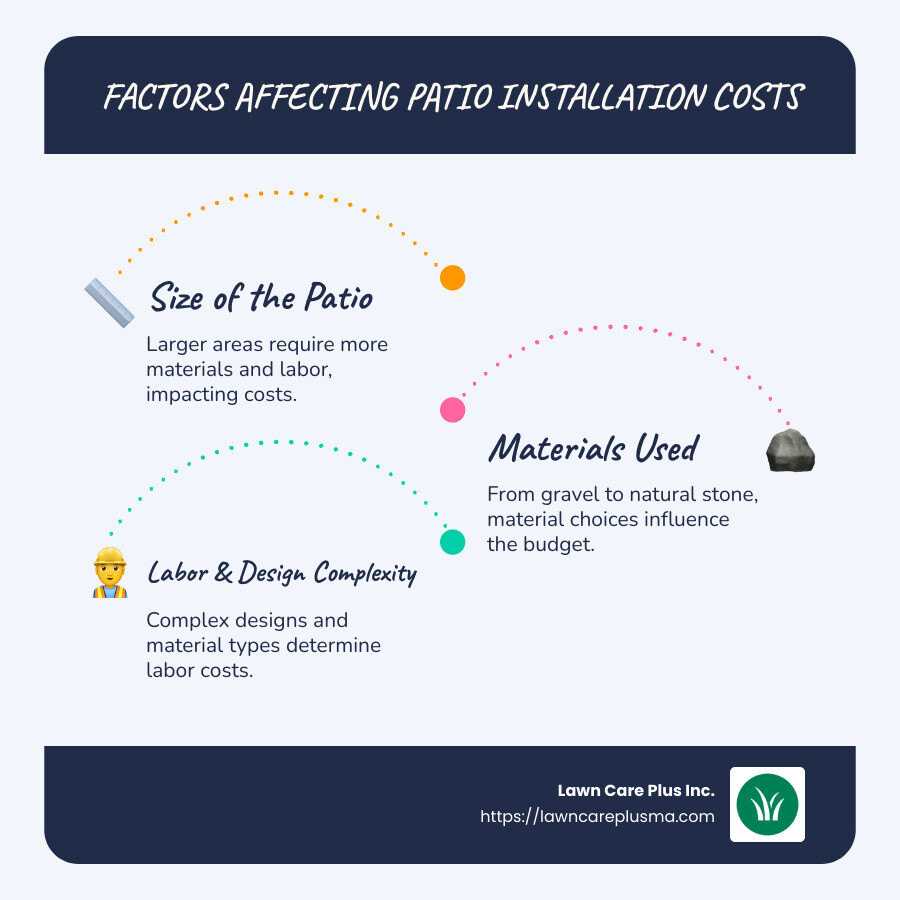
- Size of the Patio: Larger areas naturally require more materials and labor, impacting the overall expense.
- Materials Used: From affordable gravel to luxurious natural stone, the choice of materials greatly influences the budget.
- Labor: The complexity of your patio design and chosen materials will determine the labor requirements and costs.
- Location and Site Conditions: Access to the site, soil conditions, and the need for groundwork or leveling can affect installation costs.
- Design Complexity: Simple patios may keep costs lower, while intricate designs can lift both aesthetics and expenses.
Understanding these elements will help you plan effectively, ensuring that your patio project is a dream rather than a financial nightmare. By knowing what to expect, you’ll be better prepared to create a delightful outdoor area that’s both functional and stylish.
Patio installation cost vocab to learn:
– affordable patios
– patio construction
– paver patio contractors
Average Patio Installation Costs
When planning for a patio, understanding the average patio installation costs can help you budget effectively. Let’s break it down.
National Average
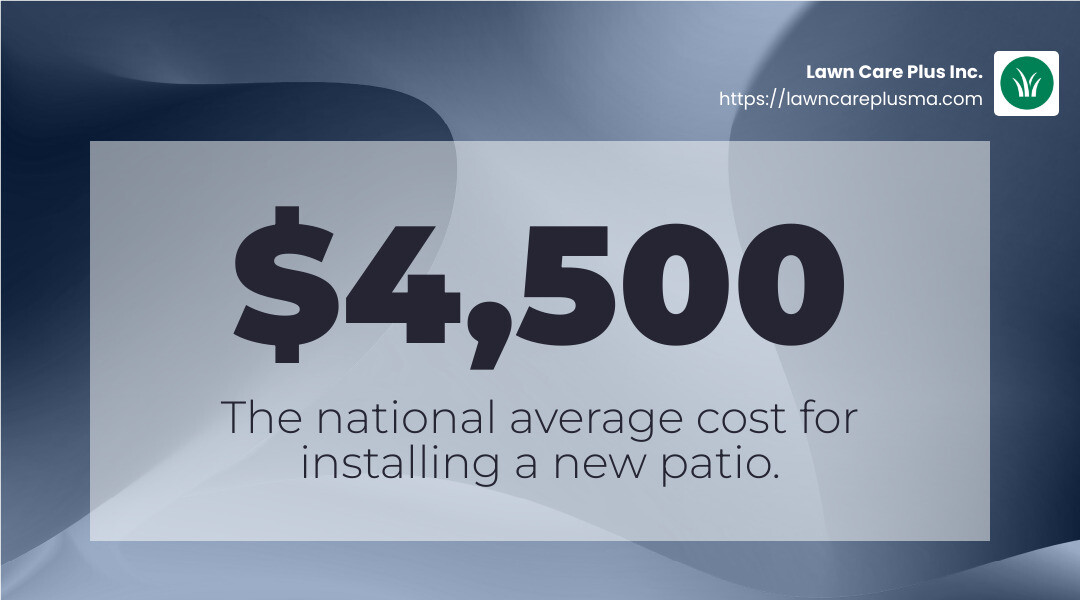
The national average cost for laying a new patio is around $4,500. This figure serves as a good benchmark for what homeowners can expect to spend on a typical patio project.
Typical Price Range
The cost of installing a patio usually falls between $2,290 and $6,420. This range covers most standard projects, from small, simple patios to more elaborate designs. It provides flexibility for different budgets and preferences.
Extreme Low/High End
For those on a tight budget, a small bistro patio might cost as little as $820. On the other hand, if you’re dreaming big, a large, custom-designed patio can reach up to $17,335. These figures illustrate the wide spectrum of possibilities, depending on your vision and resources.
Understanding these average costs can guide your planning process. Whether you’re aiming for a cozy nook or a grand outdoor space, knowing the cost landscape helps in making informed decisions.
Next, we’ll explore how the size of your patio influences these costs.
Cost Estimator by Size
The size of your patio is a key factor in determining the overall patio installation cost. Here’s how different sizes can impact your budget:
Small Patios
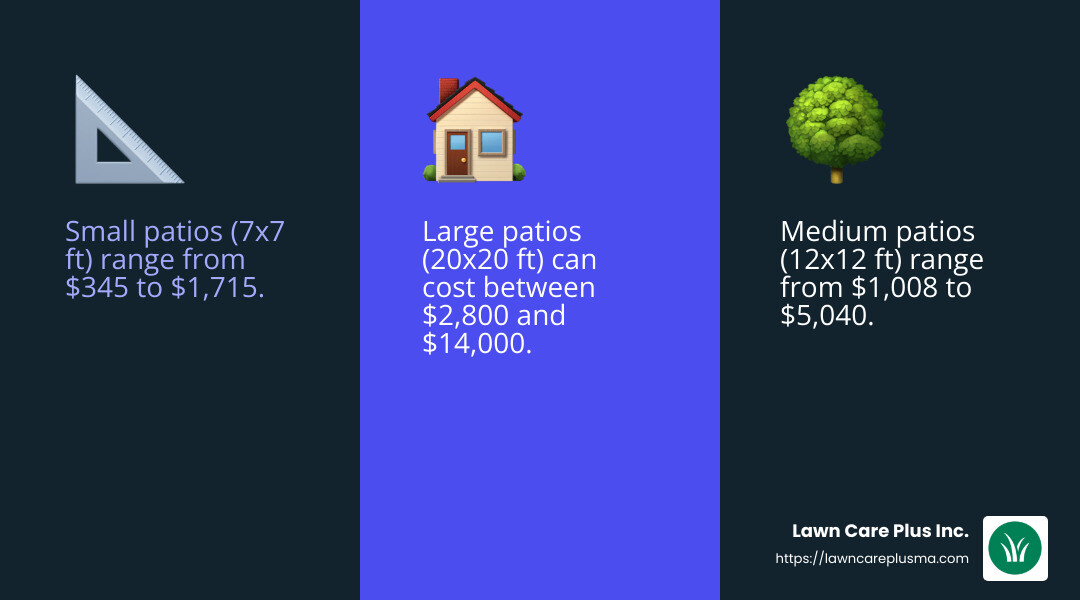
Small patios, like a 7×7-foot space, are perfect for cozy setups. They can cost anywhere from $345 to $1,715. These compact areas are ideal for bistro sets or a couple of lounge chairs. If you’re working with limited space or budget, a small patio can still offer a stylish and functional outdoor retreat.
Medium Patios
A medium-sized patio, such as a 12×12-foot area, typically ranges from $1,008 to $5,040. This size accommodates a dining table for four to eight people, making it a versatile choice for families or those who like to entertain. It strikes a balance between space and cost, providing ample room without breaking the bank.
Large Patios
For those who desire a more expansive outdoor living area, large patios like a 20×20-foot space can cost between $2,800 and $14,000. These patios offer plenty of room for outdoor kitchens, multiple seating areas, or even a fire pit. If you have the space and budget, a large patio can transform your backyard into a luxurious gathering spot.
Considering the size of your patio is crucial in planning your project. It not only affects the initial installation cost but also influences future maintenance and potential add-ons. Up next, we’ll dive into how the choice of materials can further impact your patio’s cost.
Cost by Material
The choice of material is another significant factor affecting the overall patio installation cost. Different materials not only vary in price but also in durability, maintenance needs, and aesthetics. Let’s explore some popular options:
Gravel
Gravel is the most budget-friendly option for patio surfaces. It’s easy to install and provides good drainage. However, it may not be the best choice for high-traffic areas as it can shift over time. Ideal for those looking for a rustic charm without breaking the bank, gravel patios are also easy to modify or expand.
Concrete Pavers
Concrete pavers offer a versatile and durable option. They come in various shapes, sizes, and colors, allowing for creative designs. These pavers are easy to replace if damaged, making them a practical choice for many homeowners. The cost is moderate, providing a good balance between affordability and longevity.
Poured Concrete
Poured concrete is a classic choice for patios. It provides a smooth, clean look and can be customized with different finishes or colors. While it’s generally more affordable than natural stone, poured concrete can crack over time, especially in areas with freeze-thaw cycles. Regular maintenance, like sealing, can help extend its lifespan.
Brick Pavers
Brick pavers bring a timeless and traditional aesthetic to any patio. They are durable and can withstand various weather conditions. However, brick can be more expensive than concrete options. The installation process is labor-intensive, and costs can add up if you opt for intricate patterns or designs.
Flagstone
Flagstone patios are known for their natural beauty and unique, irregular shapes. Each piece is distinct, offering a one-of-a-kind look. However, flagstone is on the higher end of the cost spectrum due to its natural origin and the labor required for installation. It’s a great choice for those seeking an upscale, neat patio.
Stamped Concrete
Stamped concrete mimics the appearance of other materials like brick or stone. It’s a popular choice for those who want the look of high-end materials without the hefty price tag. While it offers aesthetic flexibility, stamped concrete can be prone to cracking and may require more maintenance to keep its appearance over time.
Each material offers its own set of benefits and drawbacks. Your choice will depend on your budget, style preferences, and how you plan to use your patio. Next, we’ll look into other factors that can influence the cost of your patio installation, including labor and location.
Other Factors That Affect Cost
When planning your patio installation, it’s important to consider several factors beyond just materials. These elements can significantly impact the overall patio installation cost.
Labor
Labor costs can vary widely based on the complexity of your project. Simple, ground-level patios might require less time and expertise, while raised or intricately shaped patios demand more skilled labor and time. Labor charges typically range from $40 to $80 per hour. That if your project requires specialized work, like electrical or plumbing installations, it might involve additional fees for tradespeople.
Location
Where you live can also affect your patio costs. Areas with a high cost of living often have higher labor rates. Additionally, if you choose materials that aren’t locally available, shipping costs can add up. It’s wise to consult with local experts who understand regional pricing nuances.
Shape
The shape of your patio can influence both material and labor costs. Simple shapes like squares or rectangles are generally more affordable. More complex designs require additional planning and cutting of materials, which can increase both material waste and labor time.
Permits
Before you start building, check if you need any permits. Some cities require permits for patio installations, especially if they involve alterations to utilities or significant changes to your property. Permit fees vary by location and can add unexpected costs to your project. Always consult your local government for specific requirements.
Raised Patios
Raised patios are a beautiful addition to any home, offering elegance and functionality. However, they come with higher costs due to the need for retaining walls and additional structural support. These patios require more materials and labor, making them more expensive than ground-level options. But for homes on slopes or those needing a level transition from the house, a raised patio can be the perfect solution.
Understanding these factors will help you plan your budget more effectively and avoid surprises along the way. Next, we’ll explore the costs associated with maintaining your new patio.
Patio Maintenance Costs
A well-maintained patio not only looks great but also extends its lifespan. Here’s what you need to know about patio maintenance costs to keep your outdoor space in top shape.
Cleaning
Regular cleaning is essential for keeping your patio pristine. The cost of cleaning can vary depending on the size and material of your patio. For smaller patios, a simple cleaning with a stiff-bristle brush and broom costs around $50. Larger areas might require a professional cleaning service, which can increase costs.
Resealing
Resealing is crucial for protecting your patio from the elements. It’s recommended every two to three years. The cost of resealing services ranges from $1 to $3 per square foot. This process helps prevent cracks and stains, ensuring your patio stays looking new.
Power Washing
Power washing is an effective way to remove stubborn stains and dirt. Renting a power washer can cost between $100 and $650, depending on the size of your patio. If you prefer to hire a professional, expect to pay between $0.35 to $0.77 per square foot. Power washing is also a necessary step before resealing your patio.
Resurfacing
If your patio is looking worn out, resurfacing can give it a fresh look without a full replacement. Resurfacing costs range from $3 to $7 per square foot. For decorative or stamped concrete, it can go up to $20 per square foot. This process involves applying a durable overlay to your existing patio surface.
Repairs
Patio repairs are occasionally necessary to address issues like cracks, sinking, or potholes. Repair costs vary widely, from $700 to $2,250, depending on the extent of the damage. Regular inspections and timely repairs can prevent minor issues from becoming major problems.
By investing in regular maintenance, you can improve the durability and appearance of your patio, ensuring it remains a valuable asset to your home. Next, we’ll explore common patio installation add-ons that can improve your outdoor living experience.
Common Patio Installation Add-Ons
Enhancing your patio with add-ons can transform your outdoor space into a versatile and inviting area. Here are some popular options:
Fire Pits
A fire pit is a fantastic focal point for any patio, creating a cozy atmosphere for gatherings. They range from simple above-ground designs to more elaborate built-in structures. A fire pit not only provides warmth but also extends the usability of your patio into cooler seasons. Whether you choose a gas or wood-burning option, a fire pit can add a touch of magic to your evenings outdoors.
Patio Roofs
Adding a roof to your patio offers protection from the elements and creates a comfortable, shaded area. Patio roofs come in various materials, including vinyl, aluminum, and wood. Each material has its own benefits, with vinyl being a budget-friendly choice and wood offering a classic look. A roof can make your patio usable even during rain, further enhancing your outdoor living space.
Outdoor Kitchens
For those who love to cook and entertain, an outdoor kitchen is a dream come true. It allows you to prepare meals while enjoying the fresh air and company of your guests. Designs can range from basic setups with a grill and countertop to full kitchens with sinks, refrigerators, and storage. While the initial investment can be significant, the convenience and enjoyment an outdoor kitchen provides are best.
Landscaping
Landscaping around your patio adds beauty and integration with your garden. Professional landscaping can include seasonal flowers, shrubs, and even water features. Costs vary depending on the complexity and size of the project. A well-designed landscape not only improves the visual appeal of your patio but also increases your property value.
Lighting
Proper lighting extends the usability of your patio into the night and adds ambiance. Options include string lights, lanterns, or built-in fixtures. While solar lights are an eco-friendly choice, electric lights provide more consistent brightness. Strategically placed lighting improves safety, especially around steps or uneven areas, and creates a warm, inviting atmosphere.
Each of these add-ons offers unique benefits, allowing you to customize your patio to fit your lifestyle and preferences. Whether it’s hosting summer barbecues or enjoying a quiet evening by the fire, these improvements can significantly improve your outdoor experience.
Next, we’ll dig into the costs and considerations of building your own patio versus hiring professionals.
Cost of a DIY Patio
Building your own patio can be a rewarding experience, but weigh the costs and benefits. Let’s break down what you need to consider.
Materials
The materials you choose for your DIY patio will significantly impact the overall cost. Here’s a quick overview:
- Gravel: One of the most affordable options, costing between $1.50 and $4 per square foot. It’s easy to install but requires regular maintenance to keep it level.
- Concrete Pavers: These range from $0.50 to $10 per square foot. They are durable and come in various styles, making them a popular choice.
- Poured Concrete: Costs $4 to $8 per square foot. It offers a smooth, modern finish but requires experience to pour and finish correctly.
- Brick Pavers: These can cost between $0.50 and $10 per square foot. They provide a classic look and are relatively easy to install.
- Flagstone: A more luxurious option, priced between $11 and $30 per square foot. It offers a natural, neat appearance.
- Stamped Concrete: This is a decorative option that costs more than standard concrete but provides a high-end look.
Equipment
For a DIY patio, you’ll need some basic equipment. Here’s a list of essentials:
- Eye and Ear Protection: Safety first! These are crucial when using power tools.
- Tape Measure and Level: Ensures your patio is the right size and level.
- Hammer and Rubber Mallet: Useful for setting pavers or stones in place.
- Gloves and Trowel: Protect your hands and help with precise work.
- Safety Mask: Important if you’re working with dust-producing materials.
- Diamond Blade and Saw: Necessary for cutting pavers or stones.
Renting additional equipment like a bobcat for heavy lifting or a cordless circular saw for cutting can add to your costs. A bobcat rental, for example, can cost around $215 per hour.
DIY vs. Professional Service
Choosing between DIY and professional installation depends on several factors:
- Cost Savings: DIY can save you about 50% of the labor costs. However, mistakes can be costly if you need to hire a professional to fix them later.
- Skill Level: Simple projects like gravel or basic paver patios are more DIY-friendly. More complex designs, especially those requiring leveling or intricate patterns, might be best left to professionals.
- Time Commitment: A DIY project can take significantly longer, especially if you’re unfamiliar with the process. Professionals can complete a patio in 30 to 50 hours, while DIY might take much longer.
- Quality: Professionals bring expertise and experience, ensuring a high-quality finish that’s built to last. They also handle necessary ground preparation, which is crucial for preventing future issues like settling or drainage problems.
If you decide to go the DIY route, prepare thoroughly and consider consulting with a professional for advice on materials and techniques. This can help you avoid common pitfalls and ensure a successful project.
Next, we’ll answer some frequently asked questions about patio installation costs.
Frequently Asked Questions about Patio Installation Cost
How long does it take to install a patio?
The time it takes to install a patio varies based on size, materials, and complexity. For a basic 200-square-foot paved patio without any walls or roofing, expect the installation to take 2 to 4 days. However, you’ll need to account for additional time if site preparation is required, like excavation and grading, which can extend the project to 1 week or more.
For poured concrete patios, after installation, the concrete needs 7 to 10 days to cure before it’s ready for use. So, while the physical installation might be quick, the entire process, including curing, can take longer.
How many companies should you consider for estimates?
When planning your patio installation, it’s wise to gather estimates from at least three different contractors. This allows you to compare not just prices, but also the scope of work, materials, and warranties offered. Be cautious of bids that are significantly lower than others, as they might indicate lower quality work.
Reading reviews and ensuring the contractors are licensed, bonded, and insured can also help you make a more informed decision. As a rule of thumb, choose a contractor with a solid reputation and at least 5+ years of experience in patio installation.
How long will a paver patio last?
A well-installed paver patio can last 25 to 50 years or even longer with proper maintenance. High-quality materials like brick pavers or natural stone can extend the lifespan to nearly 100 years. Regular maintenance, such as resealing every 2 to 3 years and ensuring the patio is installed on a well-draining base, can significantly improve its durability and longevity.
Next, we’ll explore some common patio installation add-ons that can improve your outdoor living space.
Conclusion
At Lawn Care Plus Inc., we understand that a patio is more than just an outdoor space—it’s an extension of your home where you can relax, entertain, and enjoy the beauty of your surroundings. Our team of experienced professionals is dedicated to delivering high-quality patio installations that meet your unique needs and preferences.
Summary
When considering a patio installation, it’s important to factor in various elements such as size, material, and additional features like fire pits or outdoor kitchens. These elements can significantly impact the overall patio installation cost. Whether you prefer the affordability of a gravel surface or the timeless elegance of brick pavers, we offer a wide range of options to suit your budget and style.
Final Thoughts
Choosing the right contractor is crucial to ensuring your patio is built to last. At Lawn Care Plus Inc., we pride ourselves on our commitment to quality workmanship and customer satisfaction. We recommend obtaining multiple estimates and thoroughly vetting potential contractors to ensure you receive the best value for your investment.
If you’re ready to transform your outdoor space with a beautiful, durable patio, we invite you to explore our hardscaping services. Let us help you create the patio of your dreams, adding both value and enjoyment to your home.