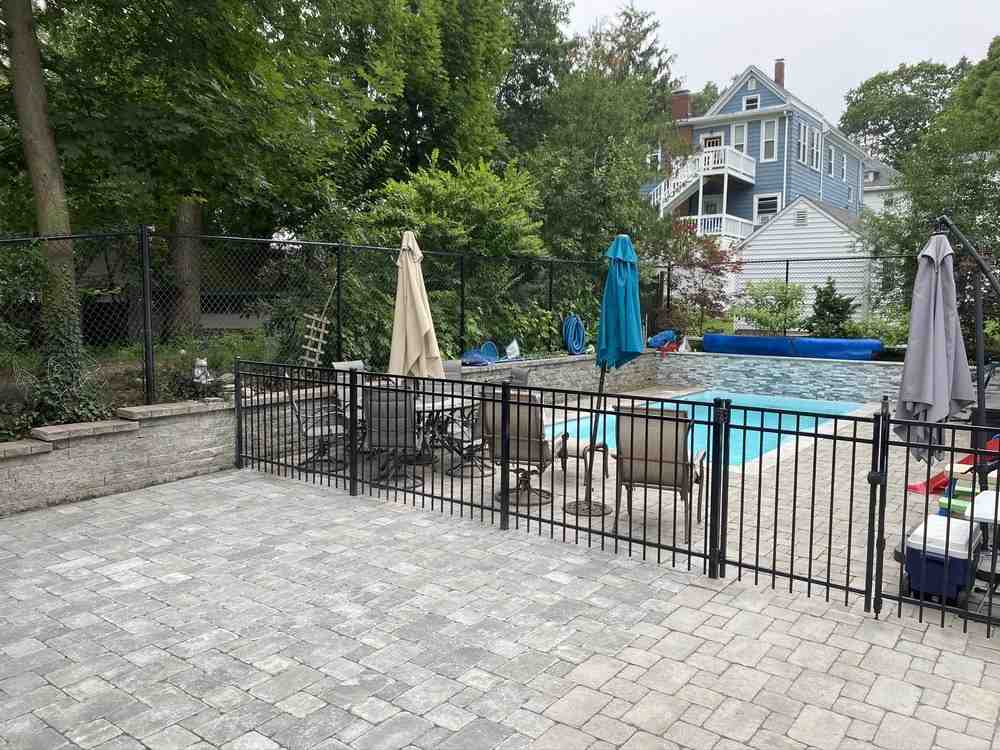
Why Paver Walkways Transform Your Property
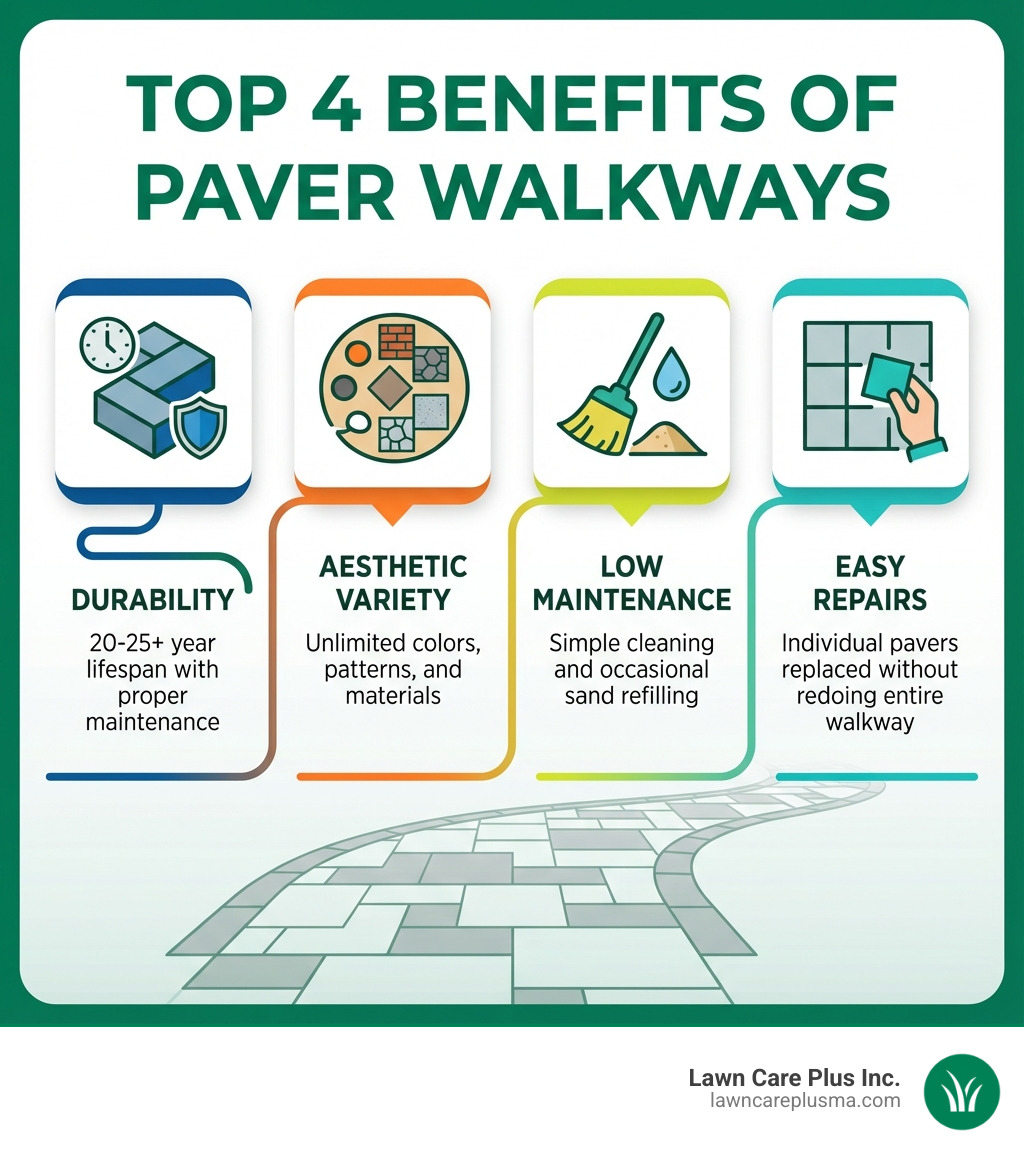
A paver walkway is an attractive, durable path made from individual units of brick, concrete, or natural stone set on a prepared base. Here’s what makes them a smart choice:
- Durability: Pavers last 20-25 years or more and handle freeze-thaw cycles without cracking.
- Easy Repairs: Individual pavers can be replaced without redoing the entire walkway.
- Design Flexibility: Available in countless colors, shapes, and patterns.
- Low Maintenance: Simple cleaning and occasional sand refilling keeps them looking great.
- Added Value: Professional paver installations increase property value and curb appeal.
Unlike poured concrete that can crack, pavers flex with ground movement and are simple to repair. While some homeowners tackle this as a DIY project, professional installation ensures long-lasting results.
I’m Tim DiAngelis, owner of Lawn Care Plus Inc. For over a decade, my team has created beautiful, functional paver walkway installations for hundreds of clients throughout Greater Boston and Metro-West. We specialize in custom hardscaping that dramatically improves curb appeal.
Simple paver walkway glossary:
At Lawn Care Plus Inc., we understand that a paver walkway is an extension of your home. Our hardscaping services are designed to improve your property’s functionality and aesthetic appeal. Learn more about our hardscaping services.
Best Aesthetic Appeal
One of the most compelling reasons to choose a paver walkway is the unparalleled aesthetic appeal. The design possibilities are virtually endless, allowing for custom designs that perfectly complement your home’s architecture. With a vast range of colors, textures (smooth, tumbled), shapes (rectangular, hexagonal), and intricate patterns (herringbone, basketweave), we can turn a simple path into a work of art. Natural stone pavers like bluestone bring a sophisticated look, while wood-look pavers offer rustic charm with the durability of stone.
Superior Durability and Maintenance
Paver walkways are celebrated for their durability and low maintenance. Unlike solid concrete, individual pavers flex with ground movement and freeze-thaw cycles, preventing the large cracks common in slabs. A properly installed paver walkway can last 20 to 25 years or even longer, making it a sound long-term investment.
Maintenance is straightforward, usually requiring only sweeping and occasional rinsing. If a paver gets damaged, it can be replaced individually, saving the time and expense of redoing an entire section—a major advantage over other materials.
Paver Walkway vs. Other Materials
When considering a new walkway, you have several material options. Here’s how a paver walkway stacks up against common alternatives:
| Criteria | Paver Walkway | Poured Concrete Walkway | Asphalt Walkway | Pea Gravel Walkway |
|---|---|---|---|---|
| Initial Cost | Moderate to High | Moderate | Moderate to Low | Low |
| Lifespan | 20-100+ years (with proper maintenance) | 20-30 years (prone to cracking) | 15-20 years (requires resealing) | 5-10 years (requires replenishment) |
| Repairability | Easy (individual paver replacement) | Difficult (patching stands out, full replacement needed) | Moderate (patching may be visible) | Easy (add more gravel) |
| Maintenance | Low (sweeping, occasional joint sand refill, sealing) | Low (sweeping, crack repair) | Moderate (periodic resealing, crack repair) | Moderate (raking, weed control, replenishment) |
| Design Options | Excellent (colors, shapes, patterns, textures) | Limited (can be stamped/stained, but less versatile) | Very Limited (black, utilitarian) | Limited (natural, informal look) |
Note: For informational purposes only. Lawn Care Plus Inc. specializes in paver walkways and related hardscaping solutions and does not offer poured concrete or asphalt walkway installations.
While the initial cost of a paver walkway might be higher, its superior durability, easy repairability, and extensive design versatility often make it a more cost-effective and aesthetically pleasing choice in the long run. Pavers offer a premium balance of beauty, strength, and ease of maintenance.
Planning and Designing Your Perfect Paver Walkway
Before we even think about moving dirt, the most crucial step for any successful paver walkway project is thorough planning and design. This section outlines the critical first steps before any ground is broken, ensuring your project is a success from the start.
Choosing Your Paver Material
The type of paver material you select will significantly impact the look, feel, and longevity of your walkway. We offer a wide variety of options, each with its own unique characteristics:
- Concrete Pavers: The most versatile and budget-friendly option, available in an incredible array of colors, shapes, and sizes, including those that mimic natural stone or brick.
- Pros: Highly customizable, durable, affordable.
- Cons: Colors can fade over time if not sealed. Concrete brick pavers typically cost between $8 and $15 per square foot, including installation.
- Clay Brick Pavers: Offering a classic, timeless appeal, brick pavers are known for their rich, earthy tones and excellent color retention.
- Pros: Extremely durable, classic aesthetic.
- Cons: Limited color palette compared to concrete, can be more expensive. Clay brick pavers usually cost between $10 and $20 per square foot, including installation.
- Natural Stone Pavers: For a truly luxurious and organic feel, natural stone is an excellent choice. Options include flagstone, bluestone, granite, and travertine, each offering a unique look.
- Pros: Unique, natural beauty; exceptional durability; high-end aesthetic.
- Cons: Can be significantly more expensive; installation can be more challenging. Natural stone pavers typically range from $12 to $50 per square foot, including installation.
- Specialty Pavers: Modern materials offer unique benefits. Porcelain pavers are sleek and stain-resistant, while permeable pavers are an eco-friendly option that reduces water runoff. Wood-look pavers provide the aesthetic of wood with the durability of stone.
Each material has its own charm and practical considerations. We can help you steer these choices to find the perfect paver for your project.
Designing the Layout and Style of your paver walkway
Once you’ve chosen your paver material, the next step is to design the layout and style of your paver walkway. This involves functionality, aesthetics, and how the walkway integrates with your landscape.

Consider the walkway width: a standard walkway is 36 inches wide. For two people to walk side-by-side, we recommend a 48-inch width. A wheelchair needs a pathway that’s at least 36 inches wide, with a 60-inch-wide turnaround area.
Next, think about the path itself: do you envision a straight, formal path or a gently curving, organic one? Curves add visual interest, while straight paths offer a clean, modern look. We can use a garden hose to visualize the flow before any digging begins.
The laying patterns are another exciting design element. Popular options include:
- Running Bond: A classic, simple pattern where pavers are laid in offset rows.
- Herringbone: A strong, interlocking pattern excellent for stability.
- Basketweave: Creates a woven look with alternating paver pairs.
- Jack-on-Jack: A simple grid pattern for a very uniform look.
For more inspiration, you can explore various paver walkway designs on manufacturer websites like Belgard.
Checking Local Regulations and Permits
Before you break ground, check with your local authorities regarding any necessary permits or regulations. This step can save you from potential headaches, fines, or having to redo your work.
Many towns have specific building codes, and a permit is almost certainly required if your walkway connects to a public sidewalk. Homeowners’ associations (HOA) might also have their own rules. Permit costs can vary, from a few hundred dollars to over a thousand.
We strongly advise contacting your local town or city hall to understand the requirements specific to your area in Massachusetts. For example, residents in areas like Brookline, MA, Canton, or Newton should always verify local regulations. Our team at Lawn Care Plus Inc. is familiar with the permitting processes in the Boston Metro-West area and can guide you through this step.
The Complete DIY Paver Walkway Installation Guide
For the ambitious homeowner looking to tackle a paver walkway project, this guide provides a step-by-step process. While we recommend professional installation for the best results, this is a manageable but physically demanding project.
Essential Tools & Materials
Gather all your tools and materials before you begin. Here’s what you’ll need:
- Safety Gear: Safety goggles, hearing protection, gloves, kneepads.
- Measuring & Layout: Tape measure, pencil, string, stakes, garden hose (for curves).
- Excavation & Grading: Shovel, wheelbarrow, garden rake, level.
- Base Preparation: Hand tamper or plate compactor (rental recommended), 2×4 lumber.
- Paver Installation: Rubber mallet, masonry saw with a diamond blade, chisel and hammer, push broom.
- Materials:
- Pavers (plus 5% extra for cuts)
- Permeable landscape fabric (weed barrier)
- Crushed stone (gravel) for the base
- Leveling sand (concrete sand)
- Edge restraints and spikes
- Jointing sand (polymeric sand recommended)
- Water hose
Step 1: Site Preparation and Excavation
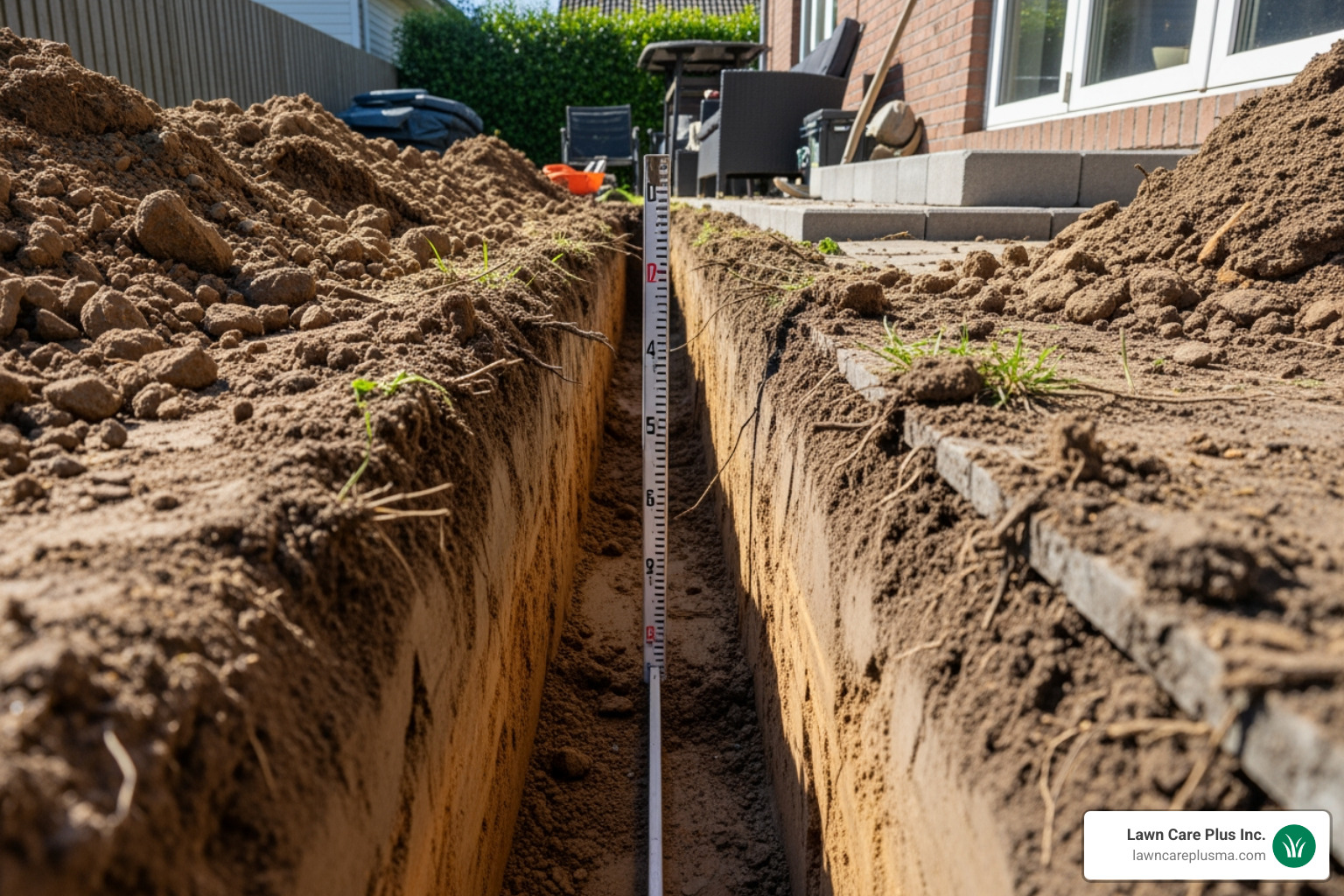
- Mark the Layout: Use stakes and string (or a garden hose for curves) to outline your walkway.
- Call 811: Before digging, call 811 a few days in advance to have underground utilities marked.
- Calculate Excavation Depth: Dig down about 7-8 inches to accommodate a 4-6 inch gravel base, a 1-inch sand bed, and the paver height.
- Ensure Proper Slope: Create a slight slope (about a 1/4-inch drop per foot) running away from your house for proper drainage.
- Excavate and Clear: Dig out the marked area, removing all soil, rocks, and roots.
- Tamp the Subgrade: Use a hand tamper or plate compactor to create a firm, stable subgrade at the bottom of the trench.
Step 2: Installing the Foundation
- Lay Permeable Landscape Fabric: Roll out landscape fabric over the tamped area to prevent weeds and keep base materials separate from the soil.
- Install the Gravel Base: Spread a 4- to 6-inch thick layer of crushed stone (gravel).
- Compact the Gravel: Thoroughly compact the gravel layer using a plate compactor, moistening it slightly for optimal compaction.
- Add the Leveling Sand Layer: Spread a 1-inch layer of leveling sand over the compacted gravel. Do not compact this layer.
- Screeding the Sand: Use two 1-inch diameter pipes and a straight 2×4 board to drag across and level the sand. Remove the pipes and smooth over the grooves. This Old House offers a detailed guide on laying pavers that further illustrates this process.
Step 3: Laying and Cutting the Pavers
- Start Laying Pavers: Begin from a fixed edge (like your house), placing pavers gently onto the sand bed. Do not slide them.
- Maintain Consistent Gaps: Keep joint spacing consistent (about 1/8 to 1/4 inch) between pavers.
- Check for Level: Periodically check that pavers are level. Adjust by adding or removing small amounts of sand underneath and tapping with a rubber mallet.
- Create Your Pattern: Continue laying pavers in your chosen pattern, staggering joints for stability.
- Cutting Pavers: You will need to cut pavers to fit edges and curves. A masonry saw with a diamond blade is essential for precise cuts. Always wear safety gear.
Step 4: Finishing Touches
- Install Edge Restraints: Secure plastic or metal edge restraints along all open edges with long spikes to prevent pavers from shifting.
- Sweep in Jointing Sand: Spread polymeric sand over the walkway. Its additives create a strong bond when wet, which significantly reduces weed growth and insects compared to regular sand.
- Fill the Joints: Use a push broom to sweep the sand into all the joints until they are completely filled.
- Compact and Refill: Run a plate compactor over the walkway to settle the pavers and sand. Sweep more sand into any joints that are no longer full.
- Activate Polymeric Sand: Lightly mist the entire walkway with a water hose to activate the polymers. Avoid a strong stream that could wash out the sand. Keep traffic off the walkway for 24-48 hours while it cures. For more detailed instructions, Angi offers useful guides on setting and leveling your paving stone walkway.
Cost, Maintenance, and Enhancing Your Walkway
Understanding the long-term investment and care required for your new paver walkway is just as important as the installation process itself.
Understanding the Cost of a Paver Walkway
Please note: The costs mentioned here are national averages based on publicly available data and are for informational purposes only. They do not reflect exact pricing. For a precise quote, it’s best to request an estimate.
The cost of a paver walkway varies, but homeowners typically spend between $1,430 and $3,530, with an average around $2,480. This translates to about $9 to $20 per square foot. A simple walkway might cost around $1,400, while a large, complex project with high-end materials can range from $3,500 to over $10,000.
Key factors influencing the cost include:
- Material Choice: Concrete pavers are more affordable ($8-$15/sq ft), while natural stone like bluestone is more expensive ($12-$50/sq ft).
- Project Size: Larger walkways require more materials and labor.
- Design Complexity: Intricate patterns, curves, or integrated lighting increase costs.
- Labor Costs: Professional installation costs vary by region and complexity. While DIY saves on labor, renting tools and potential mistakes can increase costs.
- Site Preparation: Significant grading or excavation adds to the cost.
- Permits: Local permits can add several hundred dollars or more to your budget.
A paver walkway is a long-term investment. While a simple DIY project might cost around $1,400, professionally installed walkways with premium materials can range from $3,500 to over $10,000, ensuring a high-quality, durable result.
Long-Term Maintenance and Care
A little routine care will keep your paver walkway looking pristine for decades.
- Routine Cleaning: Sweep or blow off debris regularly. Rinse with a hose for a deeper clean.
- Weed Prevention: While polymeric sand helps, pull any weeds that sprout promptly. A correct foundation with landscape fabric is your best defense.
- Stain Removal: Tackle stains quickly. Use kitty litter for fresh oil spills and a degreaser for set-in stains. Use specialized removers for rust.
- Topping Off Jointing Sand: Inspect joints periodically and sweep in fresh polymeric sand as needed.
- Sealing: Seal your walkway every 1-2 years to protect from UV fading, improve color, and resist stains.
- Winter Care: In Massachusetts, avoid excessive use of rock salt, which can degrade some pavers. Consider safer alternatives.
- Seasonal Tasks: Integrate walkway care into your yard maintenance. Seasonal fall clean-ups keep your walkway clear of staining debris.
Enhancing Your Walkway
Lift your walkway from a path to a focal point with these improvements.
- Landscape Lighting: Low-voltage landscape lighting improves safety and creates a warm ambiance after dusk. Use path lights or in-ground lights to highlight the walkway.
- Planting Borders: Frame the path with planting borders like low-growing shrubs or herbs. Ensure plants don’t overgrow the pavers to avoid obstruction and moisture issues.
- Integrating with Other Hardscapes: Create a cohesive outdoor living space by seamlessly connecting your walkway to patios and fire pits or a beautifully designed retaining wall. This holistic approach adds functionality and immense curb appeal.
Conclusion
A paver walkway is a fantastic investment that boosts curb appeal, functionality, and property value, offering a durable and aesthetically pleasing solution for any outdoor space. From the myriad material choices and design patterns to the practical steps of installation and ongoing care, we’ve explored how these versatile pathways can transform your property.
Whether you’re looking to create a welcoming entrance, a charming garden path, or a robust connection between different areas of your landscape, the project can be a rewarding DIY endeavor or a seamless professional installation. For homeowners in the Boston Metro-West area, including Belmont, Boston, Brighton, Brookline, Canton, Chestnut Hill, Dedham, Hyde Park, Jamaica Plain, Mattapan, Medfield, Milton, Needham, Newton, Norwood, Randolph, Readville, Roslindale, Walpole, Watertown, and Wellesley, the expert team at Lawn Care Plus Inc. can bring your vision to life, ensuring a beautiful and long-lasting result.
Ready to transform your property with a stunning new path? Contact us today for a professional paver walkway installation!