
Why a Wet Porch is More Than Just an Inconvenience
A porch drainage system is essential for protecting your deck’s substructure from water damage while creating usable, dry space underneath liftd decks and porches. Here’s what you need to know:
Quick Overview: Types of Porch Drainage Systems
- Above-the-Joist Systems – Install membrane or trough networks between joists during construction to divert 100% of water away
- Below-the-Joist Systems – Add interlocking ceiling panels underneath existing decks to catch and channel water
- Ground-Level Solutions – Use French drains, underground downspouts, or proper grading to manage water at ground level
If you’ve ever watched water drip through your deck boards during a rainstorm, you’re witnessing a slow but steady threat to your home’s structure. Every drop that seeps through can rot joists, encourage mold growth, and eventually compromise your entire deck. Without proper drainage, that beautiful outdoor space above becomes a ticking time bomb below.
But here’s the good news: modern drainage systems don’t just prevent damage—they transform wasted space into valuable outdoor living areas. Companies like Trex and TimberTech have developed systems that protect your deck’s substructure while creating dry, finished spaces underneath. These systems can extend your deck’s lifespan by decades and double your usable outdoor square footage.
The benefits go far beyond just keeping things dry. A proper drainage system prevents foundation damage, eliminates mosquito breeding grounds, and protects any stored items below your deck. For second-story decks, it opens up possibilities for outdoor kitchens, lounge areas, or storage spaces that stay dry year-round.
I’m Tim DiAngelis, owner of Lawn Care Plus, Inc., and over the past decade, I’ve seen how effective porch drainage systems protect properties throughout Greater Boston and Metro-West. Whether we’re building new hardscapes or retrofitting existing structures, proper water management is always our foundation for long-lasting results.
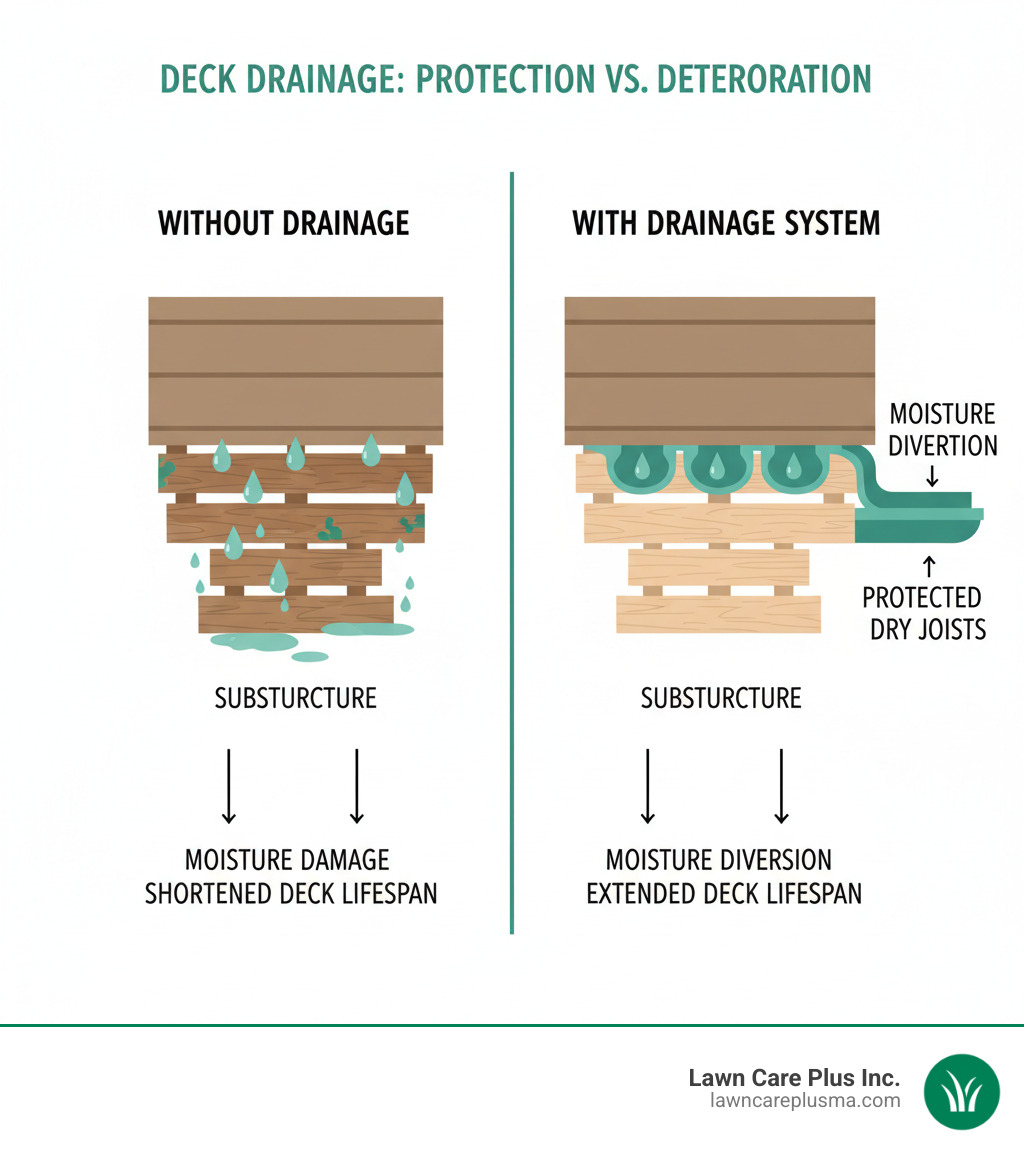
Common porch drainage system vocab:
Why Proper Drainage Matters for Your Deck’s Health and Longevity
Your deck represents a significant investment in your home—often costing thousands of dollars and adding real value to your property. Yet most homeowners don’t realize that the biggest threat to that investment isn’t visible from above. It’s happening silently underneath, where water drips through the deck boards and goes to work destroying the structural framework that holds everything up.
A porch drainage system acts as an invisible shield, catching water before it can soak into your deck’s wooden skeleton. Without this protection, every rainstorm becomes a potential disaster in slow motion.
Here’s what’s really at stake when water repeatedly hits your deck’s substructure:
Water damage starts immediately. Each time it rains, water seeps through the gaps between deck boards and saturates the joists and beams below. These wooden supports aren’t designed to stay wet—they’re meant to remain dry and stable. When moisture becomes a constant companion, the wood fibers begin to break down and lose their strength.
Mold and mildew thrive in damp conditions. That dark, moisture-rich environment under your deck becomes a perfect breeding ground for fungal growth. You’ll notice the musty smell first, then the dark stains spreading across your deck’s underside. Beyond being unsightly, mold can trigger respiratory problems for your family and accelerate the decay process.
Rotting joists spell serious trouble. This is where things get expensive. When your deck’s support beams start rotting, they lose their ability to safely hold weight. Screws loosen, boards sag, and eventually the entire structure becomes unsafe. We’ve seen beautiful decks that needed complete rebuilds simply because water was allowed to do its damage unchecked.
Your foundation takes a beating too. All that water dripping through your deck has to go somewhere. Often, it pools around your home’s foundation, seeping into basements and crawl spaces. This creates a cascade of problems that extend far beyond the deck itself. Just as retaining wall drainage protects hardscaping investments, proper deck drainage safeguards your home’s foundation from water intrusion.
But a porch drainage system isn’t just about preventing problems—it’s about creating opportunities. For liftd decks, installing drainage transforms that wasted, dripping space underneath into a genuinely usable outdoor room. Suddenly you have a dry area for storage, entertaining, or relaxing that stays comfortable even during rainstorms.
The bottom line? A quality drainage system can add decades to your deck’s lifespan while protecting your home’s foundation and doubling your usable outdoor space. Understanding how to waterproof under a deck is essential for any homeowner who wants their investment to last. It’s about directing water where it belongs—away from your home—rather than letting it pool where it causes the most harm.
Key Types of Porch Drainage System Solutions
When you’re looking at porch drainage system options, it helps to understand they aren’t all created equal. The right choice depends on whether you’re building a new deck or working with an existing one, your deck’s height, and your goals for the space underneath.
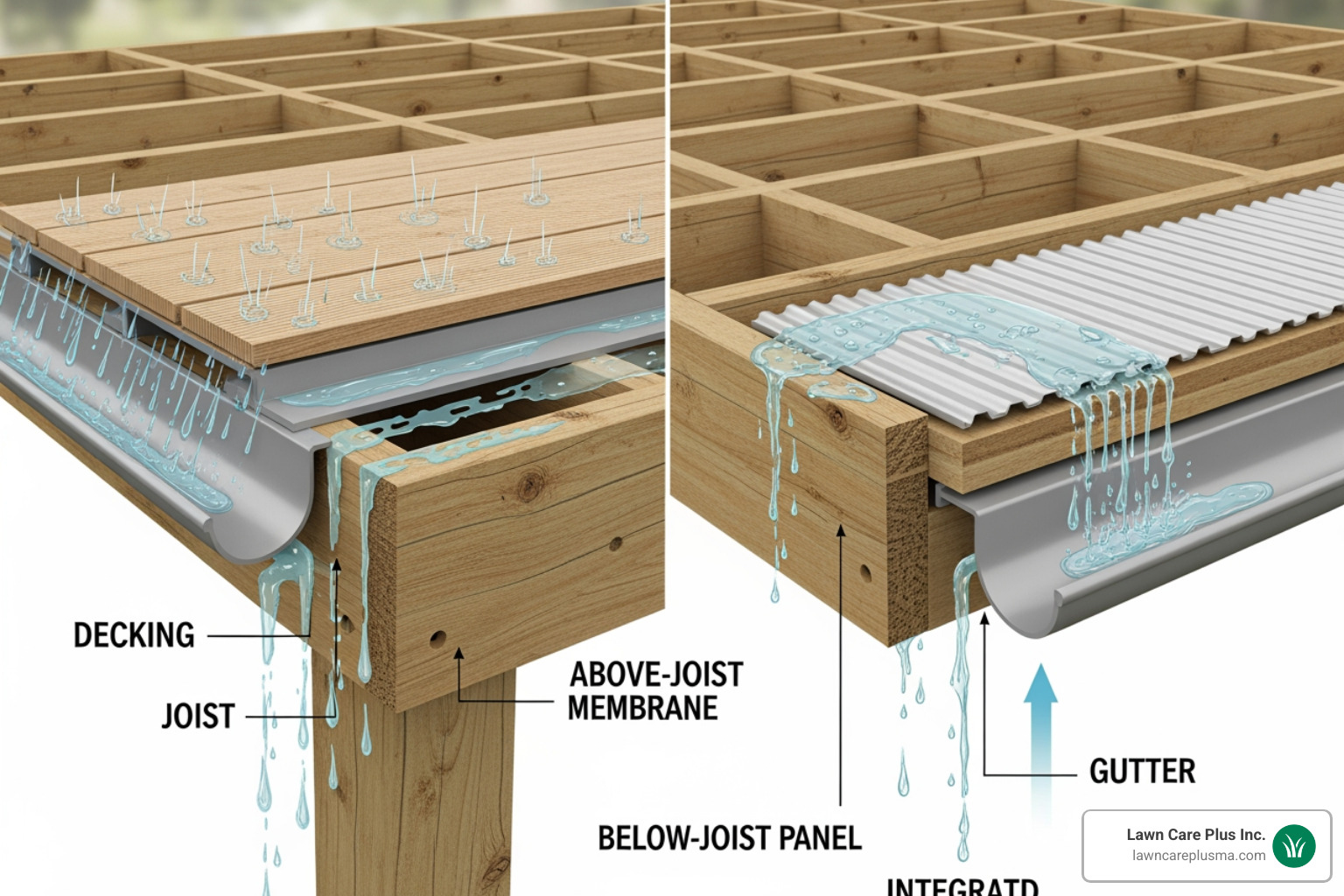
The three main approaches are above-joist systems that catch water at the source, below-joist systems that catch it with a finished ceiling, and ground-level solutions that manage water after it hits the ground. Let’s review each type.
Above-the-Joist Drainage (Membranes & Troughs)
This “built-in” approach is installed during construction. A waterproof membrane or trough network sits on the joists, under the deck boards. Water drips through the decking, hits the sloped surface, and is channeled into a gutter and downspout, completely bypassing the deck’s frame.
This system offers 100% substructure protection, keeping joists dry and screws secure. Most systems use durable materials like butyl rubber tape and PE plastic to withstand extreme temperatures. The Trex RainEscape system is a prime example, creating a complete barrier with a 25-year warranty. Installation is straightforward for new builds, as shown in this helpful installation overview.
The main thing to know about above-joist systems is that they work best during new construction or when you’re already replacing your deck boards, as they are difficult to retrofit.
Below-the-Joist Porch Drainage System (Panels & Ceilings)
If you have an existing deck, below-joist systems are the ideal solution. They create a finished, water-catching ceiling underneath your deck. These systems attach to the bottom of the joists, using interlocking panels to form a pitched, watertight surface. Water drips through the deck boards, hits the panels, and is channeled into integrated gutters.
A key benefit is the finished ceiling look, which transforms the under-deck area into a true outdoor room. Panels are often made from durable solid extruded vinyl or PVC that resists rot, rust, and fading. TimberTech DrySpace is a popular choice, known for its durability and 25-year warranty. Another option is the Zip-Up UnderDeck system, which features removable panels for easy access to utilities.
Below-joist systems are perfect for retrofitting existing decks because they install from underneath without disturbing the deck boards. This water management principle is similar to other surface drainage systems.
Ground-Level Drainage Solutions
Managing water at ground level is crucial, especially for ground-level porches and to handle runoff from liftd decks.
Underground downspouts connect to your gutter system, carrying rainwater through buried pipes far from your foundation to prevent water damage. They often release water through a pop-up bubbler pot, allowing you to mow right over them.
French drains, which are gravel-filled trenches with a perforated pipe, are effective for redirecting surface and groundwater away from saturated areas. Learn more in our guide to installing a French drain for gutters.
Proper grading is another simple yet vital solution, shaping the landscape to ensure water flows away from your home’s foundation. These ground-level solutions complement deck drainage systems, creating a complete water management strategy for your property and preventing water from pooling where it can cause harm.
Creating Your Dry Outdoor Oasis: Benefits and Design Ideas
The real change happens when you realize that protecting your deck isn’t just about preventing damage—it’s about open uping completely new possibilities for how you use your outdoor space. A well-designed porch drainage system doesn’t just keep water out; it invites life in.

Doubling Your Outdoor Living Space
Here in the Boston Metro-West area, where every square foot of usable outdoor space counts, an under-deck drainage system is like finding a whole new room in your home. That forgotten area beneath your liftd deck—the one that’s currently just a dripping, dark wasteland—can become a bright, welcoming extension of your living space. You’re essentially doubling your outdoor square footage without adding a single new board to your deck.
From Storage to Sanctuary
Once you’ve got a dry, protected ceiling overhead, the creative possibilities start flowing. Want an outdoor kitchen where you can grill without racing against rain clouds? With proper drainage, you can safely install appliances and prep stations under your deck. Picture yourself hosting dinner parties where a sudden shower doesn’t send everyone scrambling indoors.
A screened-in porch becomes another fantastic option. You get all the fresh air and ambiance of the outdoors, but with protection from bugs, sun, and weather. It’s perfect for those summer evenings when the mosquitoes think they own the place.
Maybe you just need practical dry storage—a place where patio cushions, garden tools, and kids’ outdoor toys can live without developing that telltale smell of mildew. Or perhaps you’re dreaming bigger, adding ceiling fans and lighting to create a genuinely comfortable outdoor room that’s usable from morning coffee through late-night conversations.
Bringing Your Vision to Life
The beauty of a protected under-deck space is its versatility. You might create a cozy lounge area with comfortable seating and soft lighting, perfect for unwinding after a long day. Or set up an al fresco dining space where family meals become special occasions, surrounded by the sounds of nature without the interruption of raindrops.
For families, this space can become a kids’ play zone—a shaded, dry area where children can play regardless of the weather forecast. If you work from home, imagine having a quiet outdoor office nook where you can take calls with a garden view. Even something as simple as a garden prep station makes a huge difference, giving you a dedicated spot for potting plants and storing supplies without tracking dirt through the house.
The key is that adding utilities like electrical wiring for fans, lights, or even outdoor speakers becomes completely feasible once you have that protected ceiling. You’re not just creating a covered area—you’re building a genuine outdoor room that extends your home’s comfort and functionality into the fresh air.
Choosing and Installing Your System: A Practical Guide
Selecting the right porch drainage system isn’t something you want to rush into. It’s like planning any major home improvement—you need to think about what you’re working with, what you want to achieve, and what you’re comfortable spending. The good news? Once you understand your options, the decision becomes much clearer.
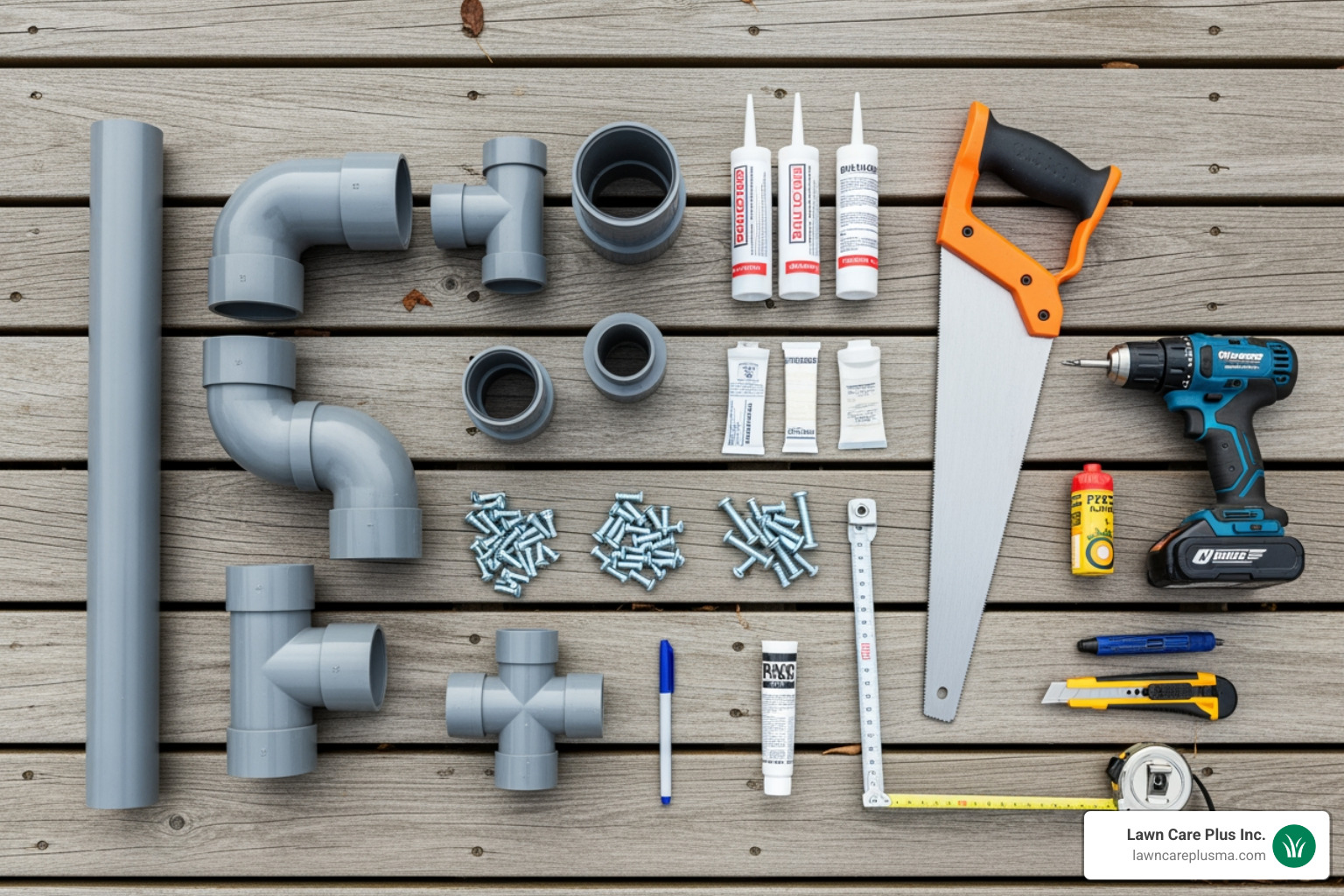
Start with your deck’s current situation. Are you building new, or do you already have a deck that needs protection? New construction gives you more flexibility—you can install above-joist systems that integrate seamlessly into the structure. If you’re working with an existing deck, below-joist ceiling systems are your friend. They attach right to what you already have without tearing everything apart.
Budget matters, but so does value. Yes, professional installation costs more upfront than a DIY approach. But here’s what I’ve learned after years in this business: a properly installed system protects your investment for decades. A poorly installed one? That’s just money down the drain—literally. The cost difference between system types can be significant, but cheaper isn’t always better when you’re talking about protecting your home’s structure.
Think about the look you want. Some homeowners prefer the clean, finished ceiling appearance of below-joist panels. Others are fine with a more functional approach as long as it works. There’s no wrong answer here—it’s about what matters to you and how you plan to use the space underneath.
Be honest about your DIY skills. Some manufacturers market their systems as DIY-friendly, and for someone with solid carpentry experience, that might be true. But these systems need precise installation to work properly. A small mistake in pitch or alignment can mean water pooling instead of draining. In our Boston Metro-West climate, where we get everything from torrential summer storms to heavy snow, you want a system that’s installed right the first time.
Key Considerations for Choosing the Right Porch Drainage System
Before you commit to any system, let’s talk about the practical details that will make or break your project’s success.
Your deck’s height off the ground determines more than you might think. A low deck might limit your options for creating usable space below, while a higher deck opens up exciting possibilities for outdoor rooms. It also affects how easy the system will be to install and maintain.
Joist spacing is non-negotiable. Most decks are built with joists either 12 inches or 16 inches apart (measured from center to center). Your drainage system needs to match this spacing exactly. Don’t assume—measure your actual joists before ordering anything. This simple step prevents headaches later.
Our Massachusetts weather demands tough materials. We see it all—heavy spring rains, humid summers, freezing winters with ice dams. Systems made from solid extruded vinyl or high-quality PVC hold up beautifully because they resist rot, rust, and fading. They also handle our freeze-thaw cycles without cracking. If a system includes downspouts, look for ice guards that prevent winter blockages.
Warranty protection gives you peace of mind. The best manufacturers stand behind their products with 25-year warranties. That’s not just marketing—it’s a commitment that the system will perform for decades. When you’re investing thousands of dollars in protecting your deck, that warranty matters.
Material durability extends beyond the drainage panels themselves. Think about how water moves through the entire system—from collection to discharge. We apply similar thinking when we design sidewalk drainage solutions around properties. Every component needs to withstand years of use without degrading.
Understanding the Costs
Let’s talk numbers, because understanding costs helps you make informed decisions. The price of a porch drainage system varies considerably based on what you choose and who installs it.
Material costs alone can range from a few dollars per square foot for basic above-joist membranes to $15 or more per square foot for premium below-joist ceiling systems. Ground-level solutions like French drains typically run $2 to $7 per square foot for materials, while underground downspout extensions are priced per linear foot, usually $1 to $4.
Professional installation adds to the bottom line, but it also adds expertise and warranty protection. Installation costs typically range from $8 to $20 per square foot for above-joist systems, $10 to $35 per square foot for below-joist ceiling panels, and $10 to $25 per square foot for French drains. Underground downspouts run about $5 to $15 per linear foot installed.
These are average costs based on online data, not quotes from Lawn Care Plus Inc. Your actual project cost can range from $5 to well over $25 per square foot depending on your specific situation. The complexity of your deck’s layout, accessibility challenges, the premium level of materials you choose, and local labor rates in the Boston Metro-West area all factor into the final price.
For homeowners in our service area, we always recommend getting a detailed, site-specific estimate. Every property is different, and a professional assessment ensures you’re not surprised by hidden complications or unexpected costs down the road.
Frequently Asked Questions about Porch Drainage
We get a lot of questions about porch drainage systems, and for good reason! It’s a significant investment that impacts both the functionality and longevity of your outdoor living space. Over the years, I’ve heard just about every concern homeowners have, so let’s tackle the most common ones together.
Can a drainage system be installed on an existing deck?
Here’s the good news: yes, absolutely! If you’re worried that you’d need to tear up your entire deck to add drainage, you can breathe easy. While above-joist systems work best during new construction or when you’re already replacing deck boards, below-joist systems are specifically designed for retrofitting existing decks.
These retrofit systems attach directly to the underside of your current deck joists, creating a new, dry ceiling below without disturbing the deck boards above. It’s honestly one of the best upgrades you can make to an existing deck. You get all the benefits of a modern drainage system—protection from water damage, usable dry space underneath, and extended deck life—without the hassle and expense of a complete rebuild.
I’ve seen countless homeowners transform their damp, unusable under-deck areas into beautiful outdoor rooms with this approach. It’s a fantastic way to maximize your investment in your existing structure.
How do these systems handle debris like leaves and dirt?
This is one of the most practical questions we hear, and it’s a smart one. After all, what good is a drainage system if it clogs up after the first autumn leaf drop?
Most modern porch drainage systems are designed with real-world conditions in mind. The troughs and gutters are typically wide enough to prevent common debris like leaves and twigs from causing immediate blockages. Many systems also incorporate a gentle slope that keeps water moving, which naturally helps flush away smaller particles and dirt.
That said, these systems aren’t completely maintenance-free—nothing outdoors is! But the upkeep is minimal. You’ll want to clear the gutters and downspouts periodically, especially after heavy storms or during fall when leaves are dropping. It’s really no different from maintaining your roof gutters. A quick check of the system’s exit points a few times a year ensures water is flowing freely.
Some systems even feature debris filters or screens, particularly for ground-level components like underground downspouts. These catch larger items before they can enter the system. With just a bit of occasional attention, your drainage system will provide years of trouble-free performance.
What materials are best for a porch drainage system?
When you’re investing in a porch drainage system, you want materials that will stand up to everything our Massachusetts weather throws at them—from scorching summer sun to freezing winter temperatures, heavy rain, and snow.
The best materials are those that resist rot, rust, and fading while maintaining their structural integrity over decades. High-density polyethylene (HDPE) is excellent for flexible membranes and trough systems because it handles UV radiation and extreme temperatures without cracking or degrading. It’s the workhorse of drainage materials.
For below-joist ceiling panels, solid extruded vinyl is a top choice. It’s incredibly strong and completely weather-resistant, which means it won’t rot, rust, or fade even after years of exposure. I’ve seen vinyl systems that still look great after decades of use. Plus, it’s easy to clean when you do need to maintain it.
PVC (polyvinyl chloride) is another reliable option, commonly used for both panels and piping. It shares many of vinyl’s benefits—moisture resistance, no corrosion, and chemical resistance—while being lightweight and relatively easy to work with during installation.
You’ll also find butyl rubber tape in quality above-joist systems. This material is essential for creating watertight seals at seams and connections, and it stays flexible through temperature swings without losing its adhesive properties.
When we evaluate drainage systems for our clients in the Boston Metro-West area, we always look for these proven materials. They’re not just about immediate performance—they’re about protecting your investment for the long haul.
Maximize Your Property’s Potential with Professional Drainage Solutions
When you step back and look at everything a porch drainage system brings to your home, it’s pretty remarkable. You’re not just keeping water from dripping through—you’re protecting your deck’s bones, preventing thousands of dollars in future repairs, and open uping outdoor living space you never knew you had. That dark, damp area under your deck? It could be your new favorite spot to entertain friends or relax with family.
The peace of mind that comes with a properly installed drainage system is invaluable. No more worrying about rotting joists every time it rains. No more watching your deck deteriorate year after year. Instead, you’re investing in a solution that works quietly in the background, protecting your home while you enjoy the beautiful outdoor spaces you’ve created.
But here’s the thing about drainage projects—they’re more complex than they might appear at first glance. Getting the pitch right, ensuring proper integration with your existing structure, connecting everything to effective ground-level drainage—these details make the difference between a system that works flawlessly for decades and one that causes headaches down the road.
For homeowners throughout the Boston Metro-West area, that’s where professional expertise becomes essential. At Lawn Care Plus Inc., we’ve spent years mastering the intricacies of water management and hardscaping. We understand how our New England weather—from heavy spring rains to harsh winter freezes—impacts outdoor structures. We know which materials hold up best and how to integrate drainage solutions seamlessly into your property’s landscape.
Whether you’re building a brand-new deck and want to do it right from the start, looking to breathe new life into an existing structure, or need comprehensive water management across your entire property, we bring the experience and attention to detail that ensures lasting results. Your outdoor spaces deserve to be both beautiful and built to last.
Explore our hardscaping and landscape construction services and find how we can help transform your outdoor living areas into dry, functional spaces that protect your investment for years to come.
