
Retaining walls are an essential element of landscape design, offering both functional and aesthetic benefits. These robust structures are more than just a way to prevent soil erosion; they also improve the beauty and usability of your outdoor space. Whether you’re dealing with a steep slope on your property or simply want to create a distinct garden area, retaining walls can transform your landscape.
- Purpose: Retaining walls hold back soil, turning sloped areas into flat, usable land.
- Materials: Options range from natural stone and timber to concrete blocks and gabions.
- Design: With thoughtful design, these walls can add visual interest and even increase property value.
- Benefits: Practical advantages include improved drainage and reduced flooding risk. A well-designed wall can also significantly improve the aesthetic appeal of your garden or yard.
In the Boston Metro-West area, expert installation by Lawn Care Plus Inc. ensures that your retaining wall not only looks great but also stands the test of time.
Key retaining walls vocabulary:
– Landscape Wall
– block wall
– concrete block retaining wall
Types of Retaining Walls
When it comes to retaining walls, there are several types to choose from, each with its own unique features and benefits. Let’s explore the most common types: gravity walls, cantilevered walls, sheet piling, anchored walls, and diaphragm walls.
Gravity Walls
Gravity walls rely on their own weight to hold back soil. They’re typically made from heavy materials like concrete blocks or stone. Their simple design makes them a popular choice for shorter walls.
- Material Options: Concrete blocks, stones, or even large boulders.
- Ideal For: Areas with plenty of space, as they require a wide base to counteract the pressure from the soil.
Cantilevered Walls
Cantilevered walls are built from steel-reinforced concrete. They have an “L” or “T” shape, with a base that extends into the ground.
- Advantages: Use less material than gravity walls due to their design.
- Best Suited For: Taller walls that need to support more weight.
Sheet Piling
Sheet piling walls are made by driving thin sheets of material into the ground. They are perfect for tight spaces and soft soil.
- Materials: Steel, vinyl, or wood.
- Application: Often used for temporary structures or in urban areas where space is limited.
Anchored Walls
Anchored walls can be constructed in various styles, but they include extra support through cables or rods anchored into the soil or rock behind them.
- Strength: Provides additional support for high-load areas.
- Use Case: Ideal for slender walls that need extra reinforcement.
Diaphragm Walls
Diaphragm walls are known for their stiffness and watertight properties. They are often used in urban construction projects where space and time are limited.
- Construction: Typically expensive but save on space and time.
- Key Feature: Excellent for sites requiring deep excavation or water retention.
Each type of retaining wall has its own set of advantages and is suitable for different scenarios. Whether you need something simple and sturdy like a gravity wall or something more complex like a diaphragm wall, choosing the right type is crucial for the success of your project.

Materials for Retaining Walls
When it comes to building retaining walls, selecting the right materials is key. Each material offers unique benefits and challenges, so let’s explore the most popular choices: concrete blocks, natural stone, timber, gabions, and bricks.
Concrete Blocks
Concrete blocks are a favorite for many homeowners and professionals. They are durable, affordable, and versatile.
- Advantages: Easy to install, especially if you opt for interlocking blocks. They offer a clean, modern look and can be used for walls of various heights.
- Considerations: Ensure proper drainage behind the wall to prevent pressure build-up.
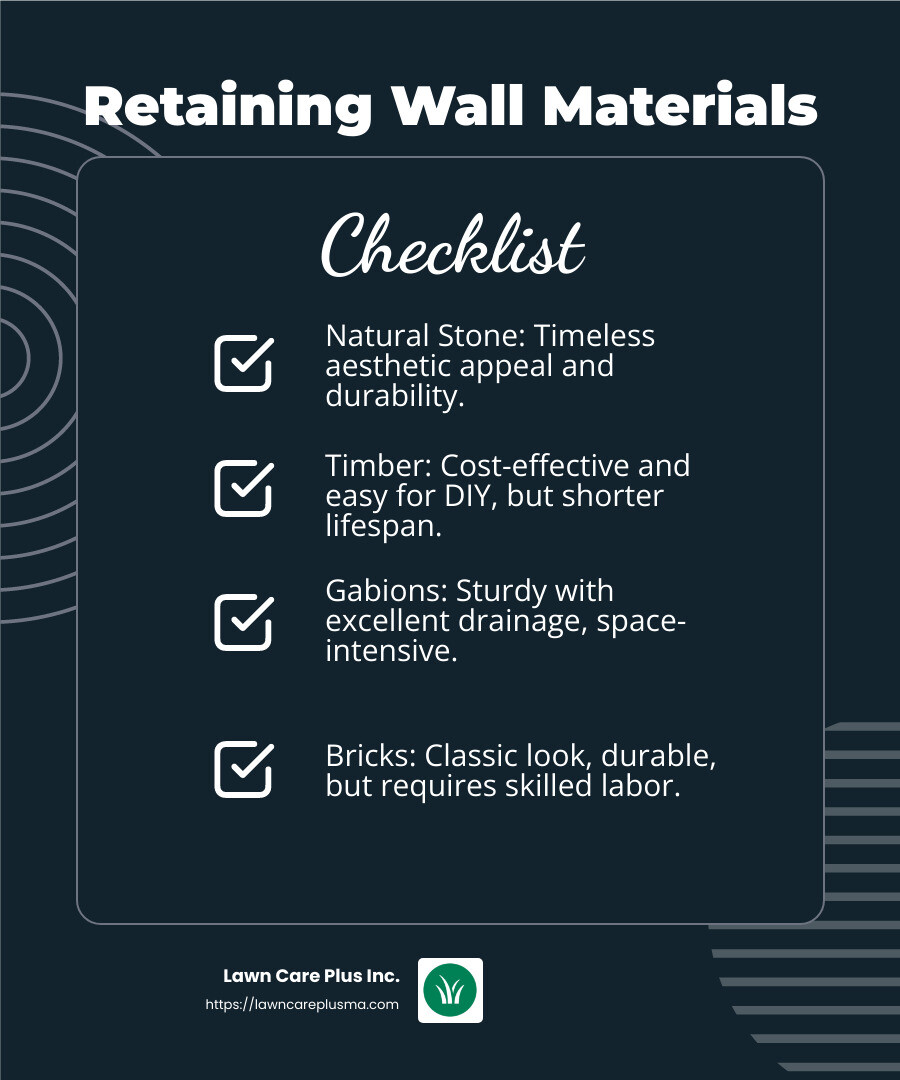
Natural Stone
Natural stone gives a timeless, neat appearance. It blends beautifully with the surrounding landscape, making it a popular choice for those seeking a more organic look.
- Benefits: Aesthetic appeal and durability. Stones like bluestone and fieldstone are common choices.
- Challenges: Can be more expensive and labor-intensive to install.
Timber
Timber retaining walls are cost-effective and provide a rustic charm. They are often used in residential gardens.
- Pros: Inexpensive and easy to work with, especially for DIY projects.
- Cons: Shorter lifespan compared to stone or concrete. Pressure-treated wood and preservatives can extend its longevity.
Gabions
Gabion walls are made from wire cages filled with rocks or other materials. They offer a rugged, industrial look.
- Strengths: Sturdy and excellent for drainage, as water can pass through easily.
- Limitations: Can take up more space and may not suit all landscape styles.
Bricks
Bricks offer a classic look and can be used to build strong, durable walls. They are often used in traditional landscape designs.
- Advantages: Long-lasting and can be matched to existing structures for a cohesive look.
- Drawbacks: Requires skilled labor for proper installation, which can increase costs.
In conclusion, the choice of material for your retaining wall depends on your budget, aesthetic preferences, and the specific requirements of your project. Whether you opt for the modern appeal of concrete blocks or the timeless beauty of natural stone, each material offers its own set of benefits.
Benefits of Retaining Walls
Retaining walls offer a multitude of benefits that go beyond just holding soil in place. Let’s explore the key advantages they bring to your landscape.
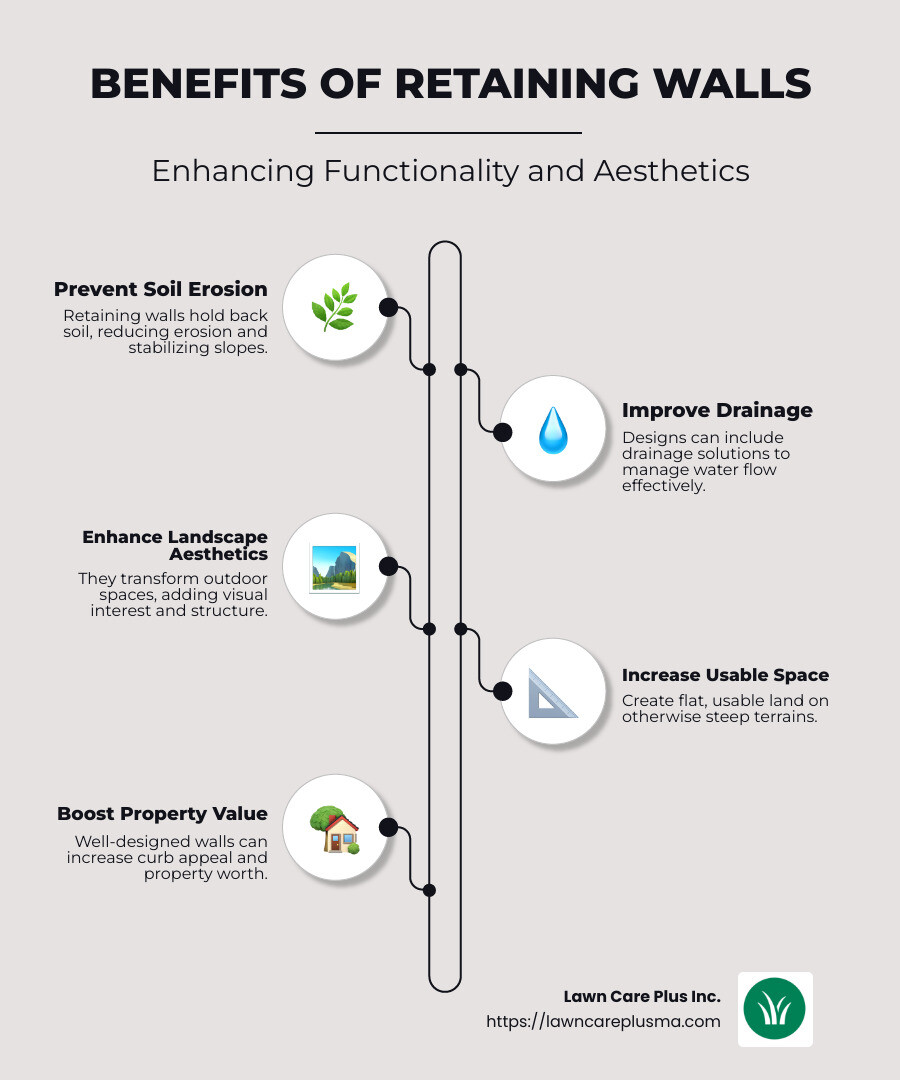
Soil Erosion Prevention
One of the primary functions of retaining walls is to prevent soil erosion. When you have sloped areas in your yard, heavy rain can wash away soil, leading to landscape damage and even structural issues. A well-constructed retaining wall acts as a barrier, keeping the soil intact and protecting your property from erosion.
Drainage Improvement
Proper drainage is crucial for maintaining a healthy landscape. Retaining walls can be designed with built-in drainage systems to redirect water away from your home and garden. This helps prevent waterlogging and reduces the risk of flooding. As noted by experts, drainage materials like gravel can be incorporated to alleviate hydrostatic pressure behind the wall.
Landscape Improvement
Retaining walls can transform your outdoor space into a more functional and aesthetically pleasing area. They allow you to create terraced gardens, level out uneven land, and incorporate steps or pathways. This not only improves the look of your yard but also makes it more usable for activities and planting.
Property Value Boost
Investing in retaining walls can increase the value of your property. As Mauricio Lobeira points out, flatter, more uniform surfaces are more desirable and can command higher prices. Retaining walls not only add structural integrity but also improve the overall curb appeal, making your home more attractive to potential buyers.
Retaining walls are a smart investment for any homeowner looking to protect and improve their property. They provide essential support and functionality while boosting the visual appeal and value of your landscape.
Retaining Walls: Design and Installation
Designing and installing retaining walls can be a rewarding project, but it’s important to consider a few key factors to ensure success.
DIY Considerations
Building a retaining wall yourself can be a fulfilling DIY project, especially for smaller, low-level walls. However, it’s important to prepare thoroughly. You’ll need to plan the location, choose the right materials, and ensure you have the necessary tools. That this is a labor-intensive task, often requiring at least one helper for digging and heavy lifting.
Pros of DIY:
- Cost savings on labor
- Complete control over the design
- Personal satisfaction from completing the project
Cons of DIY:
- Requires significant time and effort
- Potential for structural issues if not done correctly
Professional Installation
For larger or more complex retaining walls, hiring a professional is often the best choice. Professionals like those at Lawn Care Plus have the expertise to handle challenging installations, ensuring the wall is both functional and visually appealing.
Benefits of Professional Installation:
- Expertise in soil composition and drainage
- Access to high-quality materials and tools
- Compliance with local building codes and regulations
Drainage Systems
Proper drainage is critical for the longevity of your retaining wall. Without it, water can build up behind the wall, increasing pressure and potentially leading to failure. Incorporating drainage solutions like gravel backfill and weep holes can help manage water flow and reduce hydrostatic pressure.
Structural Stability
The structural stability of a retaining wall is paramount. Gravity walls, for example, rely on their mass to hold back soil, while cantilevered walls use a footing to provide additional support. It’s essential to understand the soil type and load requirements for your wall to prevent issues like sliding or overturning.
Whether you choose to tackle the project yourself or hire professionals, understanding these aspects of retaining walls will help ensure a successful installation. Next, we’ll address some common questions about retaining walls to further clarify your options and considerations.
Frequently Asked Questions about Retaining Walls
What is the cheapest type of retaining wall?
When it comes to affordability, poured concrete and pressure-treated pine are often the go-to choices for cost-effective retaining walls.
- Poured Concrete: This option is durable and strong, making it a popular choice for many homeowners. It can be more affordable than natural stone and offers a sleek, modern look. However, it requires proper installation to avoid cracking over time.
- Pressure-Treated Pine: Wood, especially pressure-treated pine, is one of the least expensive materials for retaining walls. While it is budget-friendly, it has a shorter lifespan compared to concrete or stone. Using a wood preservative can help extend its durability.
What are the main types of retaining walls?
Retaining walls come in various forms, each suited to different needs and site conditions. Here are the main types:
- Gravity Walls: These rely on their own weight to hold back soil. They are typically made from heavy materials like stone or concrete blocks and are ideal for shorter walls.
- Cantilever Walls: These use a slab or footing to provide extra support, making them suitable for taller walls. They are commonly constructed from reinforced concrete.
- Embedded Walls: Also known as sheet piling walls, these are driven into the ground and are ideal for tight spaces or areas with soft soil.
- Reinforced Soil Walls: These incorporate materials like geogrid to reinforce the soil, offering flexibility and strength in various settings.
What is the purpose of a retaining wall?
Retaining walls serve several important functions in landscape design:
- Soil Erosion Prevention: By holding back soil, retaining walls prevent erosion, especially on sloped landscapes.
- Drainage Improvement: Properly designed walls can help manage water flow and reduce the risk of flooding or water damage.
- Landscape Leveling: Retaining walls create level spaces in sloped yards, making them more usable for gardens, patios, or other outdoor features.
Understanding these aspects can help you choose the right type of retaining wall for your needs. Next, we’ll explore how retaining walls can improve your property and boost its value.
Conclusion
At Lawn Care Plus Inc., we understand the transformative power of retaining walls in enhancing both the functionality and beauty of your outdoor spaces. Serving the Boston Metro-West area, we offer a comprehensive range of services that cater to both residential and commercial clients. Our expertise extends beyond just retaining walls to include lawn maintenance, landscape installations, hardscaping, and more.
Why Choose Lawn Care Plus Inc.?
- Comprehensive Services: From creating stunning patios and walkways to ensuring your lawn is in top shape, we provide a full suite of landscaping and hardscaping services. Our goal is to address all your outdoor needs with precision and care.
- Local Expertise: Being based in Massachusetts, our team is well-acquainted with the local climate and soil conditions. This allows us to design and install retaining walls that are not only aesthetically pleasing but also structurally sound and suited to the environment.
- Experienced Team: Our skilled professionals bring years of experience to every project, ensuring quality craftsmanship and attention to detail. Whether you need a simple garden wall or a complex slope stabilization, we have the expertise to deliver exceptional results.
Retaining walls are more than just structural necessities; they are opportunities to improve your landscape’s visual appeal and functionality. Whether you’re looking to prevent soil erosion, improve drainage, or create beautiful, level terraces, we can help you achieve your vision.
Find how our retaining wall solutions can add value and elegance to your property. Learn more about our services and get in touch with us today. Let’s create a landscape that you and your loved ones can enjoy for years to come.
