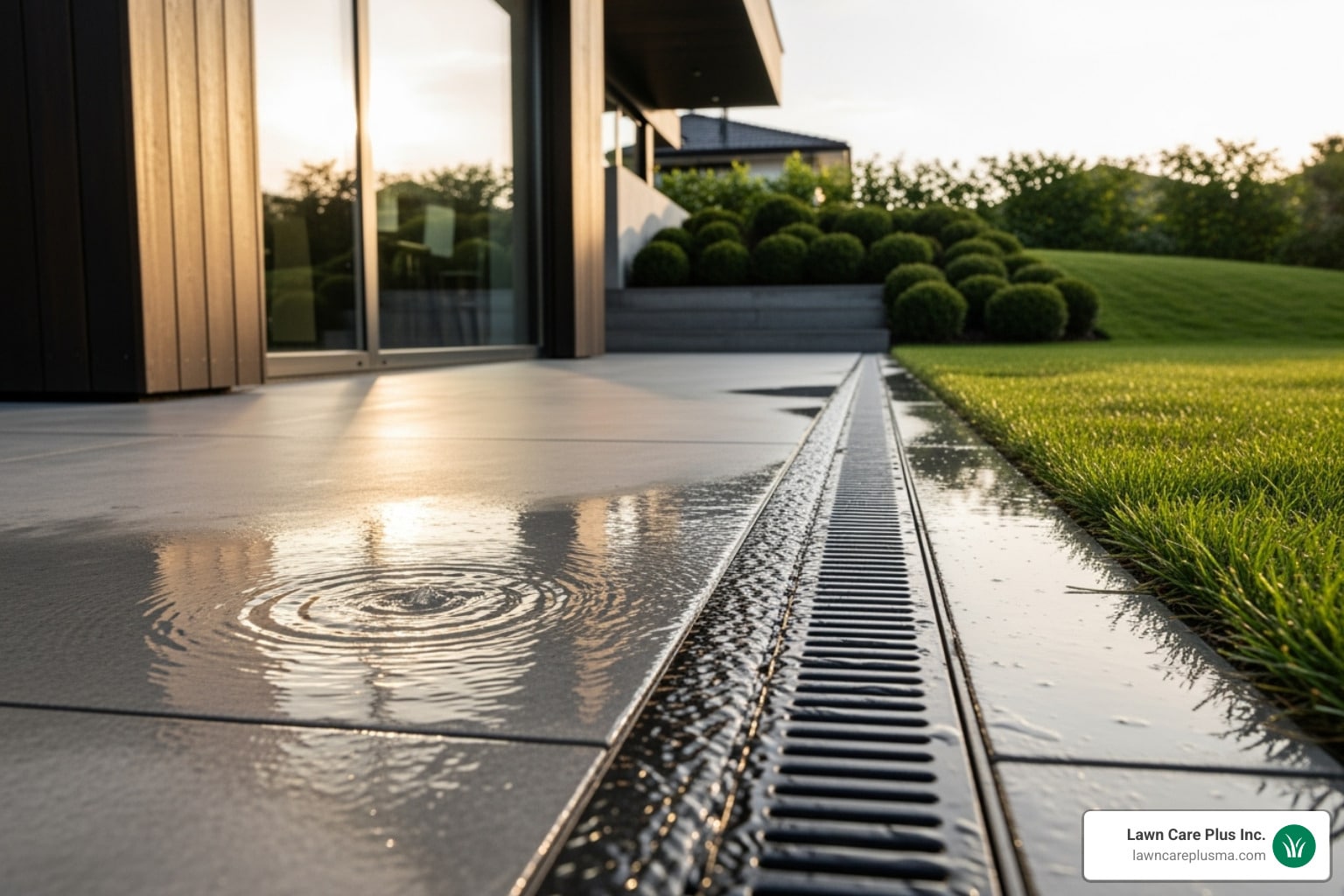
Understanding the Basics of Surface Drainage
A surface drainage system is designed to remove excess water from your property’s surface through channels, ditches, or specially constructed drains that direct water away from buildings and landscaped areas.
Key Types of Surface Drainage Systems:
- Open Drains – Shallow to deep ditches that channel water away
- Grassed Waterways – Natural-looking channels lined with vegetation
- Channel Drains – Linear drains installed in hardscaped areas
- Catch Basins – Collection points that capture surface runoff
- French Drains – Gravel-filled trenches with perforated pipes
- Swales – Shallow depressions that slow and filter water flow
Have you ever noticed your yard turning into a small lake after heavy rain? You’re not alone. In Massachusetts, where we experience significant seasonal rainfall and snow melt, many property owners struggle with water that pools and lingers long after storms pass.
Surface drainage system works by using gravity and the natural slope of your land to move water away from problem areas. The system shapes your landscape into a watershed that conveys runoff into an organized drainage network. This orderly removal of excess water ensures that it doesn’t sit stagnant, causing issues.
Why it matters: Without proper surface drainage, excess water can damage your foundation, kill plants, create muddy areas, and turn your beautiful landscape into a waterlogged mess. The likelihood of surface water flooding is increasing due to more intense and frequent rainfall patterns. We’ve seen in areas like Boston, Brookline, and Newton how even a slight increase in precipitation can overwhelm properties without adequate drainage.
Surface drainage system is most effective on flat lands where slow water infiltration, low soil permeability, or shallow soil layers prevent rainwater from naturally soaking into the ground. This makes it particularly valuable for Massachusetts properties with clay soils or minimal natural slope. It’s about working with your land to manage water, not letting water manage you!
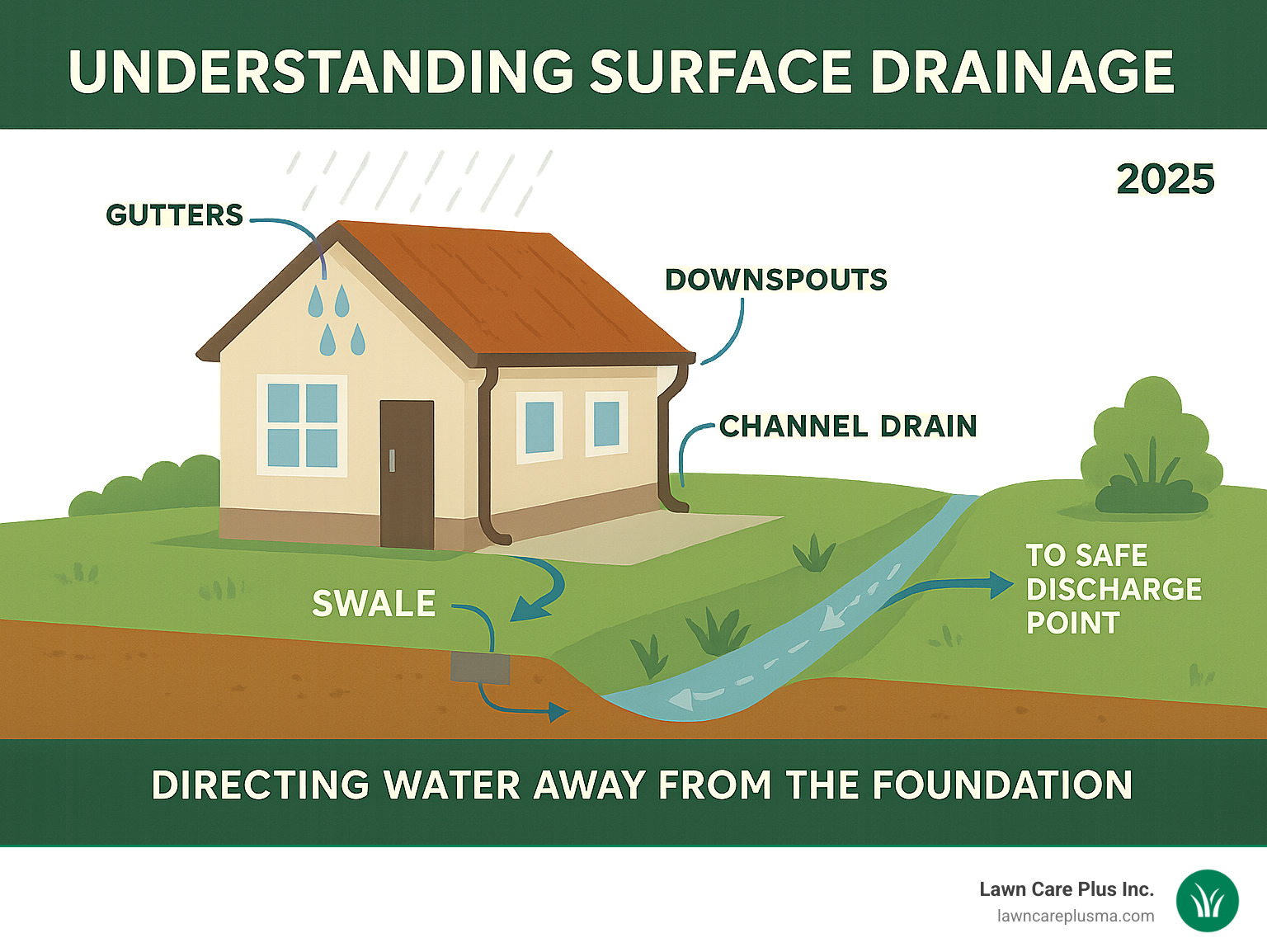
Basic surface drainage system glossary:
Why a Surface Drainage System is a Smart Investment for Your Property
When you’re dealing with standing water in your yard after every rainstorm, it’s tempting to think it’s just a minor inconvenience. But here’s the truth: that pooling water is silently threatening your property’s foundation, drowning your plants, and turning your beautiful outdoor space into a muddy mess. A well-designed surface drainage system isn’t just about convenience – it’s about protecting one of your biggest investments: your home.
Think about it this way: you wouldn’t ignore a leaky roof, so why ignore water that’s constantly threatening your foundation? A surface drainage system acts like an insurance policy for your property, quietly working behind the scenes to prevent thousands of dollars in potential damage while keeping your landscape healthy and beautiful.
Key Advantages of Surface Drainage
The benefits of installing a surface drainage system go far beyond just having a drier yard, though that’s certainly nice too! Let’s explore why this investment pays dividends year after year.
Foundation protection is probably the most critical benefit. When water pools around your home’s foundation, it creates hydrostatic pressure that can lead to cracks, settling, and serious structural issues. We’ve seen too many homeowners in Newton and Brookline face expensive foundation repairs that could have been prevented with proper drainage. A surface drainage system channels that water away before it becomes a problem.
Your plants will thank you too. Waterlogged soil is like holding your garden’s breath – roots can’t get the oxygen they need, leading to root rot and plant death. By managing surface water effectively, you’re creating the perfect growing environment where your plants get moisture without drowning. This is especially important for our Garden Land Drainage Solutions where healthy soil conditions are essential.
Erosion control becomes effortless with proper surface drainage. Instead of watching your valuable topsoil wash away with every heavy rain, the system guides water flow in an organized way that protects your landscape investment. This is particularly valuable on sloping properties where runoff can quickly carve unwanted channels through your yard.
From a practical standpoint, a surface drainage system dramatically improves your property’s usability. No more muddy patches that force you to take the long way around to your garden shed, or soggy areas where the kids can’t play after rain. Your entire outdoor space becomes functional and enjoyable, rain or shine.
The cost-effectiveness is another compelling reason to invest. Simple surface drainage solutions often require less excavation and materials than complex subsurface systems, making them an accessible starting point for most homeowners. Plus, property values tend to increase when buyers see that water management has been thoughtfully addressed – it’s one less worry for potential purchasers.
Potential Drawbacks and Considerations
While we’re big believers in the power of surface drainage systems, we also believe in being completely honest about the considerations you should keep in mind.
Visual impact is often the first concern homeowners raise. Open drains and swales can change the look of your landscape, but this doesn’t mean they have to be eyesores. With thoughtful design, these elements can actually improve your property’s appearance, blending naturally with your existing hardscaping and plantings. We’ve found that most homeowners are pleasantly surprised by how attractive a well-designed drainage system can be.
Maintenance requirements are real but manageable. Your surface drainage system will need regular attention – clearing leaves from channel drains, removing debris from catch basins, and ensuring water flows freely. Think of it like maintaining your gutters; it’s not difficult, but it needs to be done consistently. Fall cleanup is especially important to prepare for winter runoff.
Clogging potential exists with any drainage system. Leaves, soil, and debris naturally accumulate over time, which can reduce effectiveness if ignored. The good news is that surface drainage problems are usually visible and accessible, making maintenance straightforward compared to buried systems.
A surface drainage system primarily handles water on top of the ground. If you’re dealing with high groundwater levels or water seeping up from below, surface drainage alone might not solve the problem. In these cases, we might recommend combining surface solutions with subsurface drainage for comprehensive water management.
Installation costs for complex systems can vary significantly depending on your property’s needs. Simple solutions like basic swales are quite affordable, while extensive grading or sophisticated channel drain networks require a larger investment. The key is finding the right balance for your specific situation and budget. For more detailed information about project investments, you can explore hardscaping costs to get a better understanding of what different solutions might involve.
The bottom line? Most homeowners find that the peace of mind and property protection far outweigh these considerations, especially when working with experienced professionals who can design systems that minimize drawbacks while maximizing benefits.
Common Types of Surface Drainage Systems
When it comes to managing water on your property, there’s no one-size-fits-all approach. The right surface drainage system depends on your specific needs, your land’s natural slope, and how much water you’re dealing with. Think of it like choosing the right tool for the job – you wouldn’t use a teaspoon to empty a swimming pool!
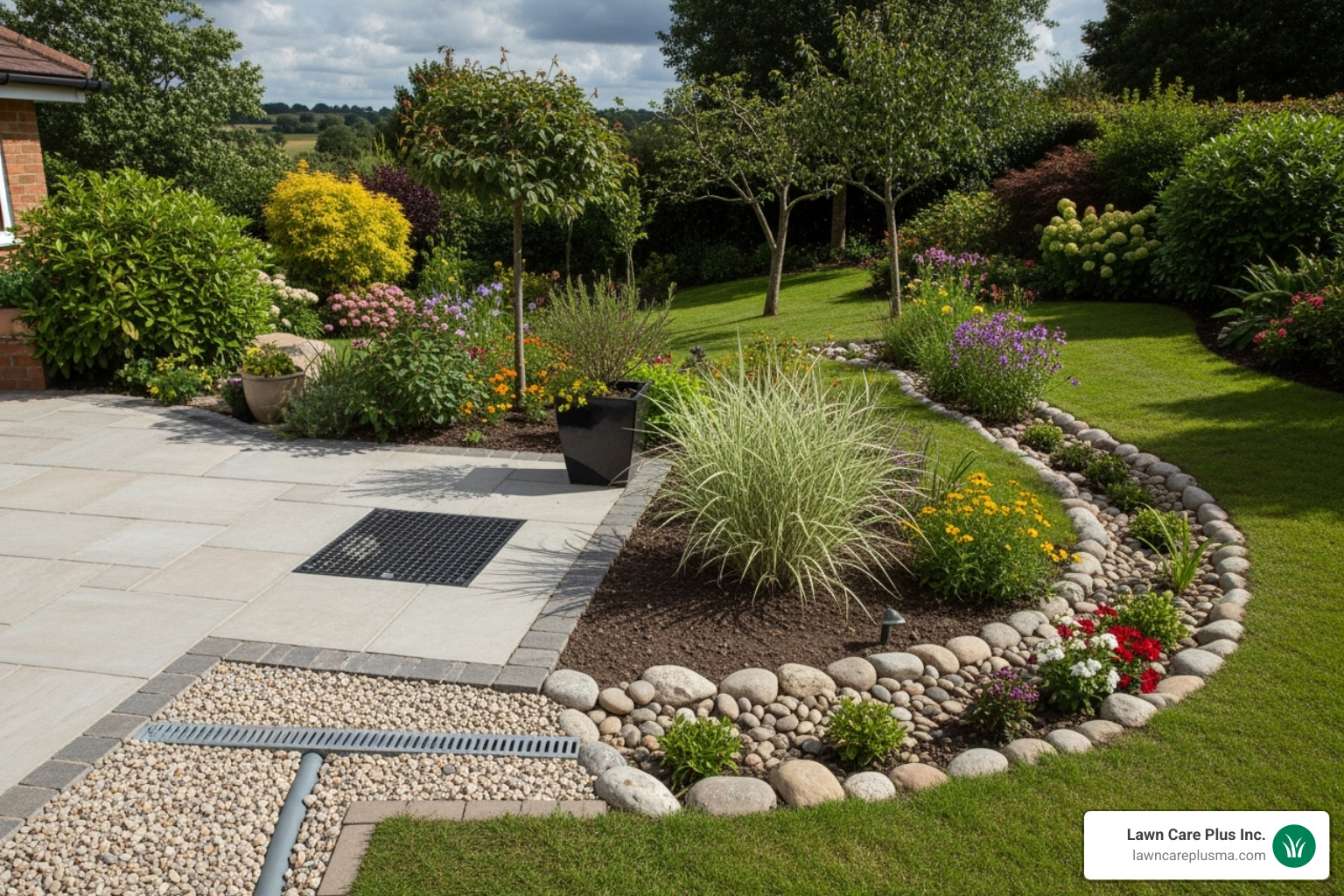
At Lawn Care Plus Inc., we combine time-tested traditional techniques with modern hardscaping solutions to create systems that are both effective and beautiful. Let’s explore the main categories of surface drainage system options available for your Massachusetts property.
Open Drains and Waterways
These traditional drainage methods work by reshaping your land to guide water where you want it to go. They’re particularly effective for larger properties where you have room to work with nature’s flow.
Shallow ditches are the simplest option – never deeper than a foot, these small channels can be created with basic hand tools. They’re perfect for moving water away from those annoying shallow puddles that form in your yard. Think of them as gentle water highways that guide runoff toward larger drainage systems.
For more significant water issues, medium depth drains step up to the challenge. These V-shaped channels with flat bottoms can handle much more water flow. They’re designed with just the right gradient – steep enough to keep water moving quickly, but not so steep that they damage themselves or cause erosion.
Grassed waterways are where function meets beauty. These shallow channels lined with dense grass look completely natural while doing the heavy lifting of water management. They’re fantastic for preventing erosion on slopes and can even provide habitat for local wildlife. It’s drainage that actually improves your landscape!
On sloped properties, levees (or graded banks) work by removing soil on the downslope side to prevent runoff from picking up speed and causing erosion. These follow your land’s natural contours and work best when spaced about thirty to fifty meters apart.
The humps and hollows system is particularly clever – it creates a series of parallel ridges with shallow valleys between them. Water naturally sheds from the humps into the hollows, which act as a network of surface drains. This system works beautifully for larger, open properties where you want comprehensive water management across a wide area.
Modern Hardscape Drainage Solutions
For homes with patios, driveways, and walkways, we often recommend more discreet drainage solutions that blend seamlessly with your hardscaping. These modern approaches are perfect for the suburban Massachusetts properties we work with regularly.
Channel Drainage System options, also called trench drains, are linear drains that run along the edges of your hard surfaces. They collect water continuously along their entire length – imagine a very long, narrow catch basin. These are ideal for driveways and patios where you need to manage water without disrupting the clean lines of your hardscape.
Catch basins work as collection points, gathering water from specific problem areas through grated openings. They’re perfect for those low spots where water always seems to collect, directing it into underground pipes that carry it safely away from your property.
Dry wells offer an environmentally friendly solution by temporarily storing runoff underground and allowing it to slowly soak into the surrounding soil. They’re excellent for managing water from downspouts and help recharge the groundwater naturally.
French drains remain one of our most popular surface drainage system solutions. These gravel-filled trenches with perforated pipes collect surface water as it filters down through the stones. They’re incredibly versatile – perfect for soggy lawns, foundation protection, or Installing a French Drain for Gutters.
These modern solutions integrate beautifully with comprehensive Domestic Surface Water Drainage Systems and work particularly well for Sidewalk Drainage Solutions.
Surface vs. Subsurface Drainage: A Quick Comparison
Understanding the difference between surface and subsurface drainage helps you choose the right approach for your property’s specific water challenges. Both have their place in a comprehensive Land Drainage System.
| Feature | Surface Drainage | Subsurface Drainage |
|---|---|---|
| Purpose | Removes water from the surface | Manages groundwater and soil saturation |
| Visibility | Usually visible (channels, drains) | Hidden underground |
| Cost | Generally lower initial investment | Higher installation costs |
| Maintenance | Regular cleaning of visible components | Less frequent but more complex |
| Best For | Ponding water, runoff management | High water tables, soggy soil |
Surface drainage excels at handling runoff from rain and snow melt, preventing water from pooling on your property’s surface. It’s your first line of defense against water damage and works great for managing water from impervious surfaces like roofs and driveways.
Subsurface drainage, on the other hand, tackles deeper moisture problems by managing groundwater and removing excess water from the soil itself. It’s essential when you’re dealing with consistently soggy conditions caused by high water tables or poor soil drainage.
The most effective approach often combines both systems, creating a comprehensive water management strategy that protects your property from surface to subsoil. For more technical details, you can reference Surface Drainage | Biosystems & Agricultural Engineering.