
Why Discreet Slot Drainage Starts With the Right Material
ACO Brickslot drain stainless steel is a slimline slot drain system designed to collect surface water through a narrow opening that aligns with paving joints — so the drain virtually disappears into the finished surface.
Here’s a quick summary of what it is and when to use it:
| Question | Quick Answer |
|---|---|
| What is it? | A stainless steel slot-top drain that sits flush with brick or stone paving |
| Key slot width | 12 mm (0.47 in) — matches standard paving joints |
| Material grade | 304 stainless steel, 11-gauge |
| Best for | Coastal, commercial, de-icing, or high-appearance areas |
| Load rating | Up to Load Class C (250 kN) for commercial traffic |
| Pairs with | ACO KlassikDrain K100 (4 in) or K200 (8 in) channels |
| ADA compliant? | Yes — heel-resistant slot opening of 8 mm |
For property owners and managers in New England, this matters a lot. Boston winters mean de-icing salts are a fact of life — and those salts are brutal on standard galvanized steel. A stainless steel brickslot drain holds up where galvanized won’t.
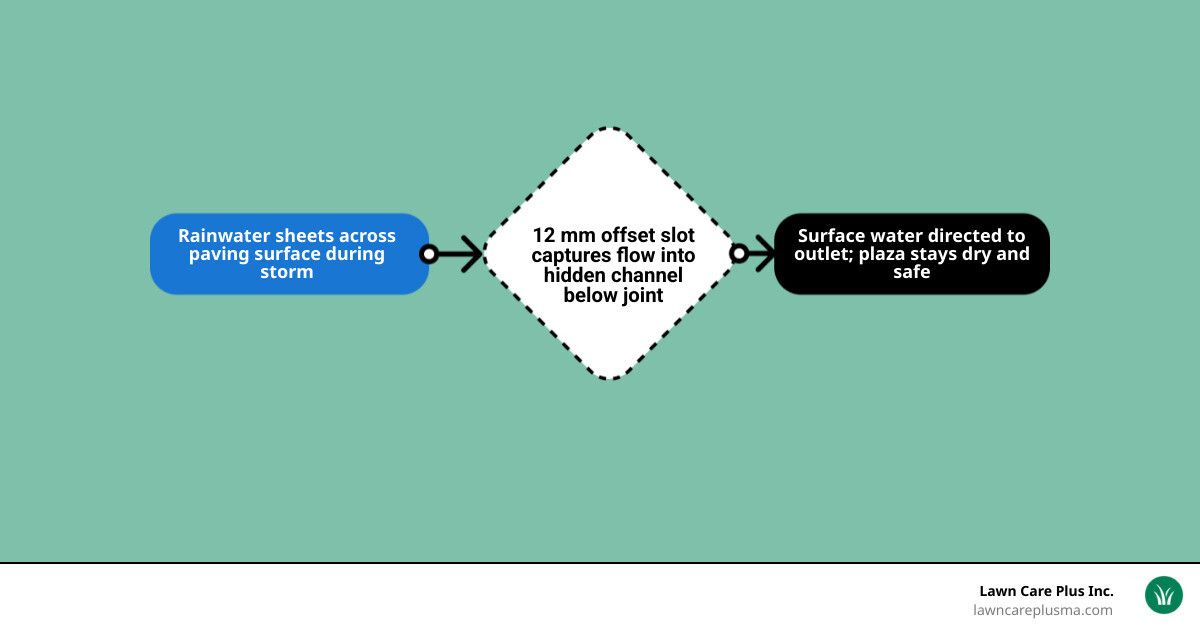
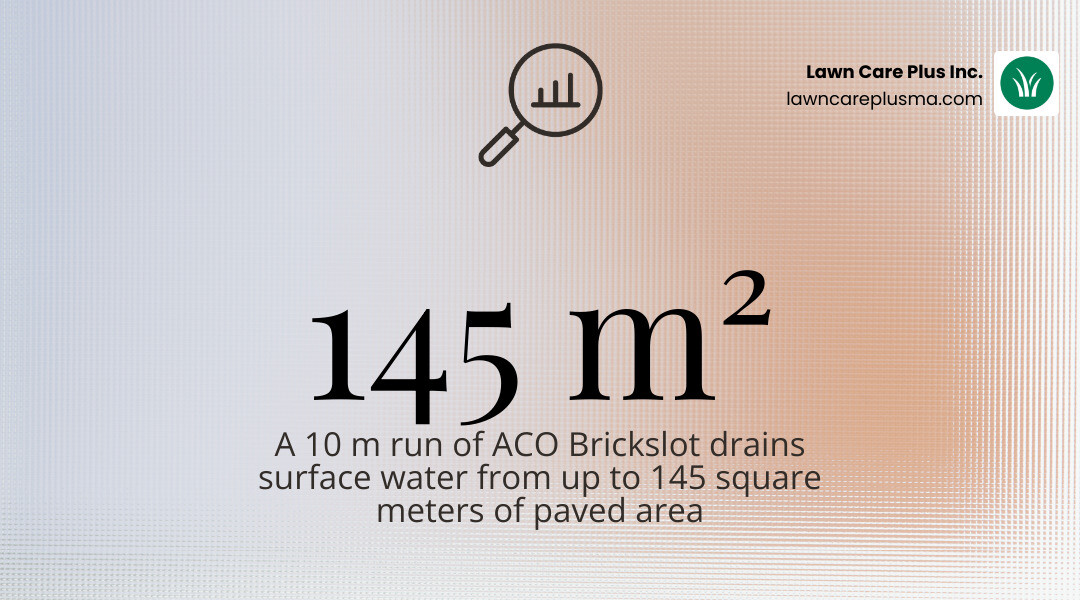
Think about a busy downtown retail plaza during a heavy spring storm. Without the right drainage, water sheets across the surface, pools at storefront thresholds, and turns outdoor seating areas into a slip hazard. A properly installed ACO Brickslot system quietly handles that runoff — a single 10-meter run can drain up to 145 m² of paved area during a 50 mm/hour rainfall event — while staying nearly invisible underfoot.
I’m Tim DiAngelis, owner of Lawn Care Plus, Inc., a full-service hardscaping and landscaping company serving Greater Boston and Metro-West, and I’ve specified ACO Brickslot drain stainless steel on commercial and residential hardscape projects where both drainage performance and a clean, finished appearance are non-negotiable. In this guide, I’ll walk you through everything you need to know — from material selection and slot configurations to installation best practices and ordering tips.
Aco brickslot drain stainless steel definitions:
What ACO Brickslot Drain Stainless Steel Is and How It Differs From Galvanized
When we talk about high-end hardscaping in areas like Newton or Brookline, the choice of material isn’t just about how it looks on day one—it’s about how it handles the Massachusetts climate five years down the line. The aco brickslot drain stainless steel represents the premium tier of the ACO Brickslot family, offering a combination of structural integrity and chemical resistance that standard materials simply can’t match.
What is aco brickslot drain stainless steel?
At its core, the system consists of a “slot top” grating that sits atop a polymer concrete or polypropylene trench channel. Specifically, the aco brickslot drain stainless steel refers to the upper portion—the visible part—that interfaces with your pavers. It is designed to replace a traditional wide grate with a discreet 12 mm (0.47 inch) inlet.
This system is engineered to work with the ACO KlassikDrain K100 (4-inch internal width) or K200 (8-inch internal width) channels. By using vertical sides on the slot upstand, we can lay brick or stone pavers directly against the unit’s edge. This creates a seamless integration where the drain looks like nothing more than a slightly wider mortar joint or paving gap. It is the ultimate tool for sidewalk drainage solutions where you don’t want a massive metal grate breaking up the pattern of the stone.
Stainless steel vs galvanized: material, finish, and durability
While galvanized steel is a durable and economical choice for many domestic applications, stainless steel is the heavy hitter. ACO manufactures these stainless units from 11-gauge 304-grade stainless steel.

Here is how they stack up:
| Feature | Galvanized Steel | 304 Stainless Steel |
|---|---|---|
| Material | Carbon steel with zinc coating | 11-gauge 304 Stainless |
| Corrosion Resistance | Good (can wear over time) | Excellent (acid and salt resistant) |
| Aesthetics | Dull grey, can develop “white rust” | Bright, clean, and modern finish |
| Best Use | Residential driveways, inland areas | Coastal, commercial, food-service |
| Maintenance | Standard cleaning | Easier to keep “like new” |
The primary difference we see in the field is how they handle “insult.” If a galvanized coating is scratched during installation or by heavy machinery, the underlying steel can begin to corrode. Stainless steel is “stainless” all the way through, meaning it maintains its appearance and structural strength even in high-traffic or chemically harsh environments.
When stainless steel is the better specification choice
We often recommend the stainless steel version for specific scenarios in the Boston Metro-West area:
- Coastal Exposure: If you are in a town with higher salt air exposure, stainless is non-negotiable.
- Heavy De-Icing Areas: Commercial plazas in places like Boston or Cambridge that see heavy use of rock salt and liquid de-icers need the chemical resistance of 304 stainless.
- High-Appearance Thresholds: For the entrance of a luxury storefront or a high-end patio and fire pit installation, the refined edge of stainless steel provides a much cleaner architectural finish.
- Food Service Areas: If the drain is near an outdoor cafe or restaurant where acidic food spills or harsh cleaning chemicals might be present, stainless is the safest bet.
Why Specifiers Use ACO Brickslot Drain Stainless Steel in Paving
Architecture is often the art of hiding the “ugly” but necessary parts of a building. Drainage is a perfect example. We need to move thousands of gallons of water, but we don’t want to see the “plumbing.” The aco brickslot drain stainless steel allows us to do exactly that.
How the 12 mm offset slot blends into brick and stone paving
The genius of the design is the 12 mm (0.47 inch) offset slot. Most brick and stone pavers are installed with a joint width that isn’t too far off from this dimension. By aligning the slot with the planned paving joints, the drain becomes part of the pattern.
The upstand height—the “neck” of the drain—is typically 105 mm, though 65 mm options exist for shallower pavers. This height allows the unit to sit deep enough that the pavers (typically up to 80 mm thick) can be bedded on a 1/8 inch bedding layer right up to the vertical edge of the stainless steel. The result is a flush, professional finish that looks like it was carved into the stone.
Safety and accessibility benefits in pedestrian areas
Safety is a major concern for commercial property managers. Traditional grates can be a nightmare for high heels, bicycles, and wheelchairs.
The aco brickslot drain stainless steel is designed with “HeelGuard” standards in mind. The slot opening is typically 8 mm (0.31 inches) wide at the surface, flaring out to a wider 22 mm (0.87 inch) throat below. This flare is critical—it prevents debris from getting wedged in the slot while ensuring that even the thinnest stiletto heel won’t get stuck. This makes the system fully ADA-compliant and safe for use in busy pedestrian precincts and public hardscaping projects.
Drainage performance and suitable load classes
Don’t let the slim profile fool you; this system is a workhorse.
In terms of strength, the system is highly versatile:
- Load Class B 125: Certified for pedestrian and domestic vehicular use (think private driveways).
- Load Class C 250: Certified for 56,202 lbs of commercial vehicle traffic. This makes it suitable for delivery bays, parking lots, and urban plazas.
Whether we are installing a new driveway in Wellesley or a commercial courtyard in Canton, we can select a version of the aco brickslot drain stainless steel that handles the expected weight without failing.
Compatible Channel Systems, Slot Configurations, and Access Options
A common mistake is thinking the “Brickslot” is the whole drain. It’s actually a two-part system. You need the lower channel to carry the water and the stainless steel slot top to collect it.
Which channel systems pair with aco brickslot drain stainless steel
The stainless steel Brickslot tops are designed to fit perfectly onto ACO’s KlassikDrain and MultiDrain series.
- K100 / MultiDrain 100: These are 4-inch (100 mm) internal width channels. This is the most common size for residential and light commercial work.
- K200 / MultiDrain 200: These are 8-inch (200 mm) internal width channels, used when you have massive amounts of water to move over long runs.
When we plan a land drainage system, we look at the total square footage of the paved area to determine if the 4-inch or 8-inch channel is required to prevent overtopping during a “100-year storm” event.
Single, heel-resistant, and twinslot configurations explained
Depending on the aesthetic and hydraulic requirements, there are several configurations:
- Single Slot: The classic 12 mm discreet opening.
- Heel-Resistant Offset: Specifically designed to be tucked against a wall or threshold while remaining safe for pedestrians.
- Twinslot: Used primarily with the 8-inch channels (K200), this features two parallel 12 mm slots for doubled intake capacity while maintaining the discreet look.
Maintenance access features that should never be skipped
If a slot drain clogs and you don’t have an access point, you’re in trouble. You can’t just lift a 12 mm slot like you can a traditional grate.
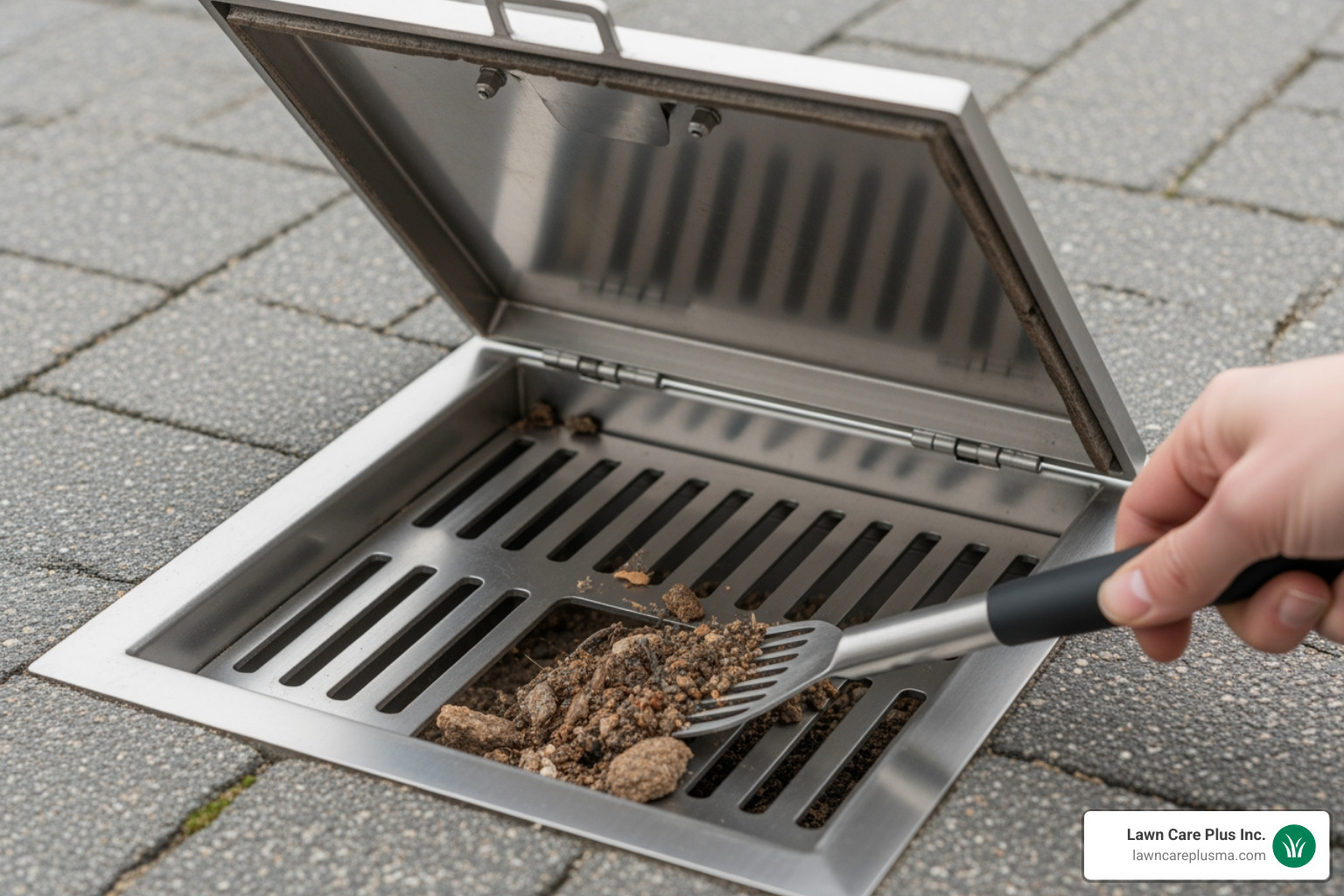
Every run of aco brickslot drain stainless steel must include Access Units. These are 0.5-meter sections that look identical to the rest of the drain but feature a removable “trap door.”
We always install these at:
- The start of a run.
- Every change in direction (corners).
- Directly over the outlet or catch basin (sump).
By removing the access cover, we can insert a high-pressure hose or a vacuum to clear out silt and leaves that have made their way into the channel. For more on keeping your property functional, check out our guide on commercial property maintenance.
Installation Best Practices for a Durable, Discreet Finish
Proper installation is the difference between a drain that lasts decades and one that heaves after the first New England frost. Here is how we handle these projects at Lawn Care Plus.
Layout and base preparation for aco brickslot drain stainless steel
The most important step happens before the first shovel hits the dirt. We align the Brickslot run with the planned paving joints. If the drain is “crooked” compared to the bricks, it will stand out like a sore thumb.
We excavate a trench wide enough to accommodate the channel plus a minimum of 4 to 6 inches of concrete encasement on all sides. The subbase must be compacted stone, not loose soil, to prevent the entire line from settling.
Setting channels, checking elevations, and paving to the edge
We set the channels in a bed of wet concrete, using a laser level to ensure the slope is perfect. If the drain doesn’t slope toward the outlet, water will sit in the channel, freeze in the winter, and eventually crack the polymer concrete.
Once the channels are set and the concrete has cured, we lay the pavers.
- Vertical Edge: We ensure the pavers are butted tight against the stainless steel upstand.
- Bedding: We use a 1/8-inch bedding allowance to ensure the top of the paver is exactly flush with the top of the stainless steel slot.
- Protective Covers: ACO provides temporary plastic covers that sit inside the slot. Do not remove these until the paving and grouting are 100% finished. This prevents sand and mortar from clogging the brand-new drain.
Post-installation testing, cleaning, and inspection
After the project is paved, we perform a “water test.” We run a hose at the high end of the run and watch the water flow through the access units to the outlet. Once we confirm the flow is clear, we remove the protective covers and give the stainless steel a final wipe-down.
In towns like Needham or Milton, where we see heavy leaf fall, we recommend a quarterly debris check. It only takes five minutes to pop the access unit and ensure no silt has built up.
Product Specs, Drawings, Ordering Notes, and Where to Verify Details
Before you hit “buy,” you need to make sure the parts match your project.
Dimensions, materials, and lengths to confirm before ordering
- Lengths: Available in 1-meter (39.37″) and 0.5-meter (19.69″) sections.
- Upstand Height: Standard is 105 mm (4.13″). If you are using thin tiles or setts, you may need the 65 mm (2.5″) “shallow” version.
- Slot Width: 12 mm is standard, but check if your project requires the 8 mm “extra-fine” heel-guard version.
- Material: Verify it is Grade 304 Stainless Steel (Type 472/473).
What to check in technical documents before final specification
Always download the [PDF] ACO Drain® Brickslot brochure before finalizing your plans. You need to verify the Load Class. If you are installing this in a driveway in Watertown that will see heavy delivery trucks, you must specify the Class C 250 version rather than the standard pedestrian-rated Class B.
Ordering and specification tips to avoid project mistakes
- The “No-Solo” Rule: You cannot order the stainless steel Brickslot tops alone. They are part of a system. You must order the corresponding K100 or K200 channels at the same time.
- Corner Units: If your drain turns a 90-degree corner, order a specific corner unit. Mitring these in the field is difficult and often results in sharp edges.
- Lifting Tools: Don’t forget to order the lifting keys. Trying to pry open an access unit with a screwdriver will scratch the beautiful stainless steel finish.
Frequently Asked Questions About ACO Brickslot Drain Stainless Steel
Is aco brickslot drain stainless steel comfortable and safe for pedestrians?
Absolutely. Because the slot is only 12 mm wide at most (and often 8 mm in heel-resistant versions), it is significantly safer than traditional grates. It won’t catch bicycle tires, canes, or stiletto heels. It’s the standard for sidewalk drainage in high-end shopping districts.
How often should aco brickslot drain stainless steel be cleaned?
For residential properties in areas like Belmont or Brighton, a quarterly check is usually enough. If you have large oak or maple trees nearby, you should check it after the leaves fall in autumn and again after the spring thaw. Most of the time, a quick flush with a garden hose through the access unit is all that’s needed.
Where is aco brickslot drain stainless steel most often used?
We see them most in:
- Luxury Patios: Where the owner doesn’t want an industrial-looking drain.
- Pool Surrounds: Where bare feet need a smooth, safe surface.
- Garage Thresholds: To prevent water from driving under the garage door.
- Commercial Plazas: Where thousands of people walk daily.
Conclusion
Choosing the right drainage is about more than just moving water; it’s about preserving the beauty and safety of your investment. The aco brickslot drain stainless steel is the gold standard for anyone looking for a “hidden” drainage solution that doesn’t compromise on strength or longevity.
At Lawn Care Plus Inc., we’ve seen how the Massachusetts weather can test a hardscape. Whether you’re a homeowner in Wellesley looking to dry out a soggy patio or a commercial manager in Boston needing an ADA-compliant plaza upgrade, we have the expertise to design and install a system that works.
If you’re ready to upgrade your property’s drainage with a system that’s as discreet as it is durable, we’re here to help. From landscape installations to complex masonry services, our team ensures every detail—including your slot drains—is handled with precision.
Ready to get started? Contact us today for a consultation on your next project.
Summary Checklist for Specifiers:
- [ ] Confirm Load Class (B125 for residential, C250 for commercial).
- [ ] Select 304 Stainless Steel for salt/chemical resistance.
- [ ] Match upstand height to paver thickness (105 mm vs 65 mm).
- [ ] Plan Access Units at all outlets and corners.
- [ ] Align slot run with paving pattern for maximum “invisibility.”
- [ ] Ensure 4-6 inches of concrete encasement for structural support.
