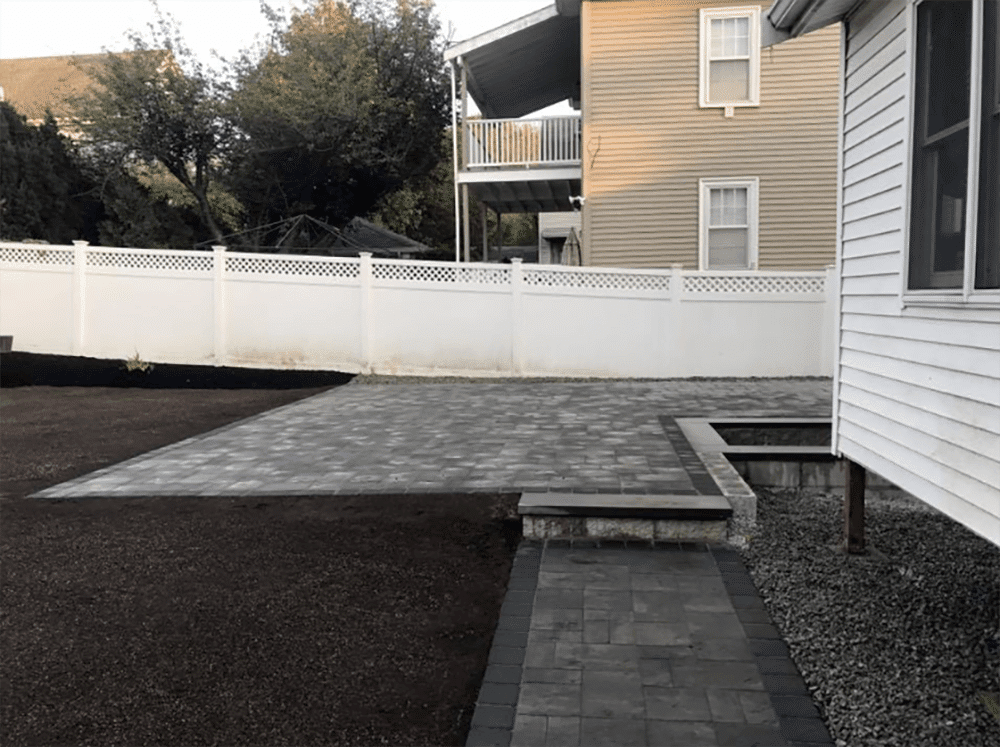
Transform Your Outdoor Space: Patio and Walkway Design Ideas
A well-designed patio and walkway can completely change how your home looks and feels from the outside — and how much you enjoy your yard from the inside.
Here’s a quick overview of the most popular patio and walkway styles to inspire your project:
| Style | Best For | Common Materials |
|---|---|---|
| Curved walkway | Softening formal entryways | Bluestone, brick, concrete pavers |
| Straight path | Modern or symmetrical homes | Granite, large-format pavers |
| Flagstone stepping stones | Garden paths, casual spaces | Bluestone, sandstone, slate |
| Gravel path | Budget-friendly DIY projects | Pea stone, decomposed granite |
| Paver patio | Outdoor entertaining areas | Concrete pavers, clay brick, natural stone |
| Rustic fire pit patio | Backyard retreat | Fieldstone, mixed pavers |
Whether you’re starting from scratch or refreshing an aging concrete path, the right design makes your outdoor space more functional, more beautiful, and more valuable.
From simple gravel paths to custom bluestone patios with seating walls and built-in lighting, there are options for every budget, style, and skill level. This guide walks you through the best ideas, materials, and layouts to help you plan your perfect project.
I’m Tim DiAngelis, owner of Lawn Care Plus, Inc., and over the past decade I’ve designed and installed countless patio and walkway projects across the Greater Boston and Metro-West area — from simple garden paths to full backyard hardscape transformations. I’ll share what actually works here in New England, so you can make confident decisions for your property.
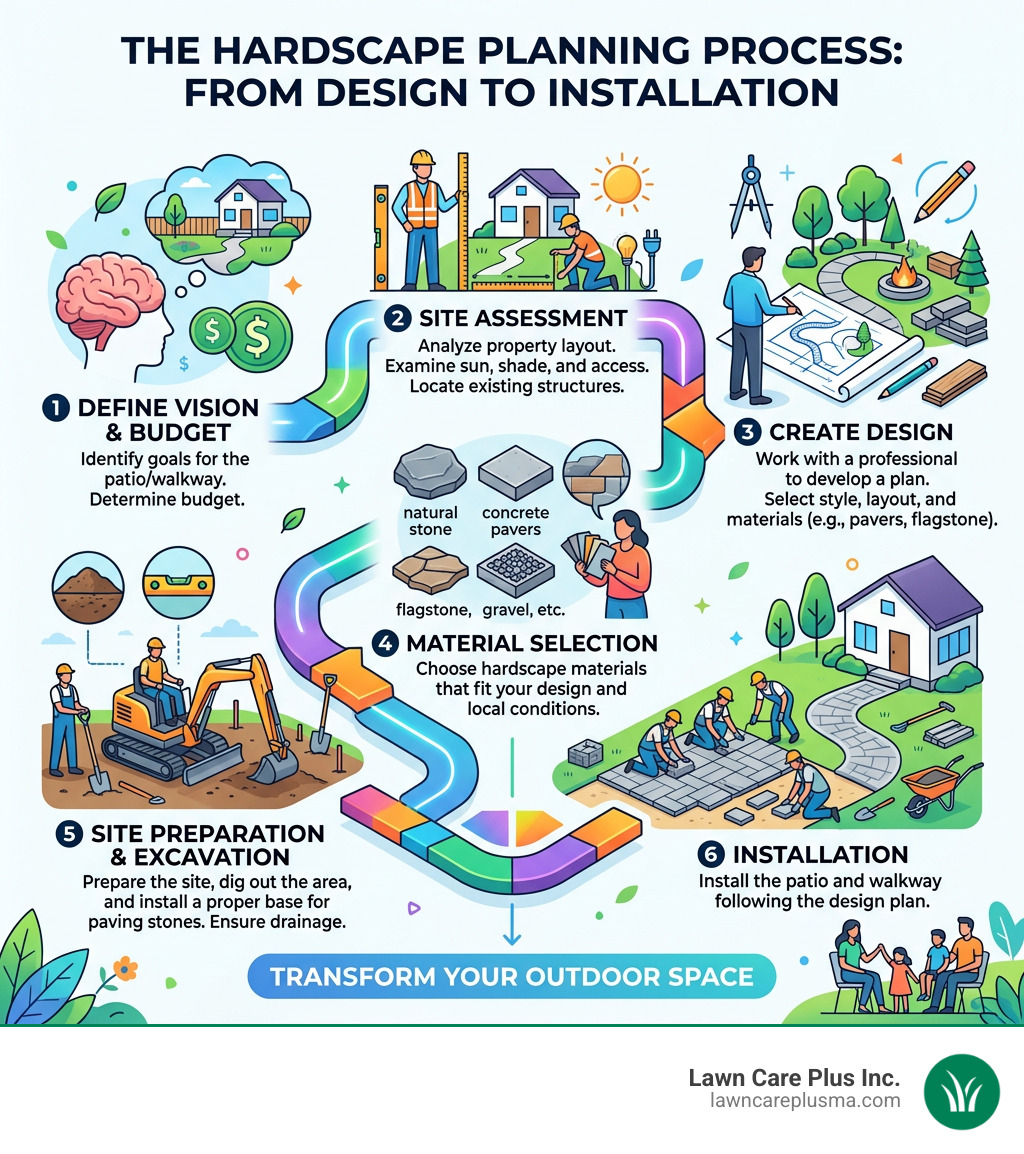
Patio and walkway word guide:
Popular Materials for Your Patio and Walkway
Choosing the right material is the most important decision you’ll make for your patio and walkway. In Massachusetts, our materials have to be “tough as nails” to survive the freeze-thaw cycles that turn lesser stones into gravel over a few winters.
When you are looking at how to choose the right walkway material for your home, consider both the “vibe” of your house and the maintenance you’re willing to do.
Natural Stone (Bluestone and Granite)
Natural stone is the gold standard in New England. A bluestone walkway installation offers a timeless, elegant look that fits perfectly with the historic architecture in towns like Newton, Brookline, and Milton.
- Pros: Incredibly durable, stays cool underfoot, and increases property value significantly.
- Cons: Higher material cost and requires precision cutting.
- Expert Tip: We often use “natural cleft” bluestone for a more rustic, textured feel, or “thermal” bluestone for a perfectly flat, modern surface.
Concrete Pavers
Modern pavers have come a long way. Brands like Techo-Bloc offer products that mimic the look of slate, travertine, or even wood. They are engineered to be de-icing salt resistant, which is a lifesaver during our Boston winters.
- Pros: Huge variety of colors and shapes; easy to replace a single unit if it gets stained.
- Cons: Can look “manufactured” if you don’t choose a high-quality line.
Clay Brick
Nothing says “Old World Charm” like a brick patio and walkway. We see these frequently in historic areas like Boston and Dedham.
- Pros: Color never fades because it’s baked in; very traditional.
- Cons: Can be slippery when moss grows on it in shaded areas.
Gravel and Pea Stone
Gravel is the ultimate budget-friendly option. It’s excellent for drainage and provides that satisfying “crunch” when you walk on it. To keep it from migrating into your lawn, we always recommend professional-grade edging.
| Material | Durability | Maintenance | Best Use |
|---|---|---|---|
| Bluestone | High | Low | Main patios, front entries |
| Concrete Pavers | High | Medium | Driveways, pool decks |
| Clay Brick | Medium-High | Medium | Historic pathways |
| Flagstone | High | Medium | Casual garden paths |
| Gravel | Low-Medium | High | Side yards, fire pit areas |
Essential Design Patterns and Layouts
The pattern you choose for your patio and walkway dictates the “movement” of the space. A straight path feels formal and direct, while a curving path invites you to slow down and enjoy the landscaping.

If you’re wondering how to install patio pavers, the layout is where the math meets the art. Here are the most popular patterns we install:
- Herringbone: The pavers are set at 45 or 90-degree angles to each other. This is the strongest pattern for heavy traffic because the interlocking design prevents shifting. Plus, it looks fantastic on a large patio.
- Running Bond: This is the classic “staggered” look you see in brickwork. It’s simple, elegant, and results in the least amount of material waste.
- Basketweave: Pairs of pavers are laid horizontally and then vertically. It creates a woven look that is very popular for traditional New England homes.
- Jack-on-Jack (Stack Bond): Pavers are lined up perfectly in rows and columns. This is a very modern, minimalist look.
- Pinwheel: A central small square paver is surrounded by four larger rectangular pavers. It’s decorative and adds a lot of visual interest.
Standard Dimensions for a Functional Patio and Walkway
We’ve all been on a walkway that felt too narrow—you end up walking in the grass just to pass someone. When planning the dos and donts of walkway design, keep these numbers in mind:
- 36-Inch Width: This is the absolute minimum for a standard walkway. It fits one person comfortably.
- 48-Inch Width: This is the “comfort” standard. It allows two people to walk side-by-side without bumping shoulders.
- Wheelchair Accessibility: For full accessibility, the path must be at least 36 inches wide, but you really want a 60-inch-wide turnaround area at certain points to allow a wheelchair to change direction safely.
Budget-Friendly DIY Patio and Walkway Options
If you’re looking to save some money, you don’t have to sacrifice style. Gravel paths are a fantastic entry-level project. They are versatile and work well in secondary areas of the yard.
Another great option is using stepping stones. Instead of a solid path, you place large stones (like Goshen stone or bluestone) with gaps in between. You can fill those gaps with grass, creeping thyme, or decorative pebbles. This reduces the amount of stone you need to buy and looks very organic. For a deeper dive into the technical side, check out how to build DIY pathways and patios: planning, designing and installing.
Planning and Installing Your Hardscape Project
The “secret sauce” of a long-lasting patio and walkway isn’t the stone on top—it’s what’s underneath. In Massachusetts, the ground moves. Frost heaves can turn a flat patio into a roller coaster if the base isn’t right.
Here is the process we follow for every professional installation, and it’s what you should aim for if you’re following a beginners guide to installing a patio:
- Excavation: We typically dig down 8 to 12 inches. You need room for the base, the bedding sand, and the stone itself.
- Drainage: This is critical. A patio should always slope away from your house (usually a 1-inch drop for every 8 feet of distance). We also check for any underground utilities before we start digging.
- Base Materials: We use a thick layer of “crushed stone” or “ABC stone.” This is the foundation.
- Compaction: You can’t just stomp on it. We use heavy mechanical plate compactors to ensure the base is rock-solid. If the base isn’t compacted, your pavers will shift.
- Geotextile Fabric: We lay down landscape fabric to keep the base materials from mixing with the soil while still allowing water to drain.
- Edge Restraints: Think of these as the “frame” for your project. They hold the pavers in place so they don’t migrate outward over time.
- Polymeric Sand: Once the stones are laid, we sweep this special sand into the joints. When it gets wet, it hardens like glue, keeping weeds out and the stones in.
Enhancing Your Space with Decorative Elements
Once the main patio and walkway are in place, it’s time for the “extras” that turn a yard into an outdoor room.
- Fire Pits: A fire pit is the ultimate focal point. Whether it’s a simple ring of stones or a custom-built gas feature, it extends your patio season into the crisp fall nights. Just be sure to follow fire pit safety guidelines and check local regulations in your town.
- Seating Walls: These are low stone walls (usually 18-24 inches high) that provide extra seating for guests and help define the “edges” of your patio.
- LED Lighting: We love installing low-voltage lighting directly into the steps or the borders of a walkway. It looks beautiful and makes the space much safer at night.
- Outdoor Kitchens: For the serious entertainer, adding a built-in grill or a full outdoor kitchen can make your backyard the go-to spot for summer BBQs.
For more inspiration, check out our favorite patio design ideas.
Maintenance and Long-Term Care
We often hear people say they want a “maintenance-free” yard. While nothing is truly maintenance-free, a well-built patio and walkway comes pretty close. To keep it looking new, follow these tips:
- Weed Prevention: If you used polymeric sand, you’re already ahead of the game. If a few stubborn weeds pop up, don’t reach for the harsh chemicals first. A spray bottle of vinegar and water can do wonders.
- Handheld Torches: For weeds in gravel paths, a handheld weed torch is an effective (and surprisingly fun) way to clear the path.
- Sealing: We recommend sealing natural stone or pavers every 3-5 years. This protects them from oil stains, salt damage, and the harsh New England sun.
- Shifting Pavers: If you notice a stone starting to rock or dip, it’s usually a sign of a base issue. It’s best to lift the affected stones, add a bit more bedding sand, re-level, and re-compact before it gets worse.
For a full breakdown of upkeep, read our guide on paver walkways: everything you need to know for your outdoor space.
Frequently Asked Questions about Hardscaping
What is the average cost of a professional installation?
Based on internet data averages, a professional patio and walkway installation can range anywhere from $5,000 to $75,000+.
Please note: These are average costs based on general internet data and are not actual costs for Lawn Care Plus Inc. projects.
The final price depends heavily on the materials chosen (bluestone vs. gravel), the size of the area, and the complexity of the site (slopes, drainage needs, etc.). For a detailed look at how we price projects, see our page on the cost to install paver walkway.
What are the best eco-friendly paving options?
If you’re concerned about water runoff, permeable pavers are the way to go. These are designed with larger gaps filled with small stones, allowing rainwater to soak directly into the ground rather than running off into the street or your basement. This helps recharge the local groundwater and reduces the load on city storm drains.
How do I prevent common installation mistakes?
The most common mistake beginners make is skipping the base compaction or failing to account for the drainage slope. Always check your local building codes and HOA permits before you start digging. In many Massachusetts towns, you may need a permit for larger hardscape projects or if you’re working near a property line.
Conclusion
Building a beautiful patio and walkway is an investment in your home and your lifestyle. Whether you’re picturing a winding brick path through a rose garden in Wellesley or a sleek, modern bluestone patio for entertaining in Newton, the right design and proper installation are key.
At Lawn Care Plus Inc., we take pride in building hardscapes that stand the test of time and the New England weather. From the initial design to the final sweep of sand, our team is dedicated to making your outdoor vision a reality.
If you’re ready to transform your yard, contact a professional patio installer today. We serve residential and commercial clients throughout the Boston Metro-West area, including Walpole, Norwood, Needham, and beyond. Let’s build something beautiful together!