
Getting Started with Hydro Seeding
Hydro seeding is a modern planting method that uses a nutrient-rich slurry sprayed onto your soil to promote quick, healthy grass growth. This mixture, or slurry, typically contains grass seed, fertilizer, protective mulch, and water. Sometimes, a green dye for visibility and binding agents (tackifiers) are added.
Here’s how it works:
- The slurry is sprayed directly onto prepared soil.
- The mulch acts as a protective blanket, holding seeds in place, retaining moisture, and shielding them from birds or weather.
- The fertilizer provides an immediate nutrient boost for faster germination and establishment.
This method is known for its speed, efficiency, and ability to create a uniform, vibrant lawn. For property owners in the Boston Metro-West area, understanding hydro seeding is key to achieving a beautiful outdoor space.
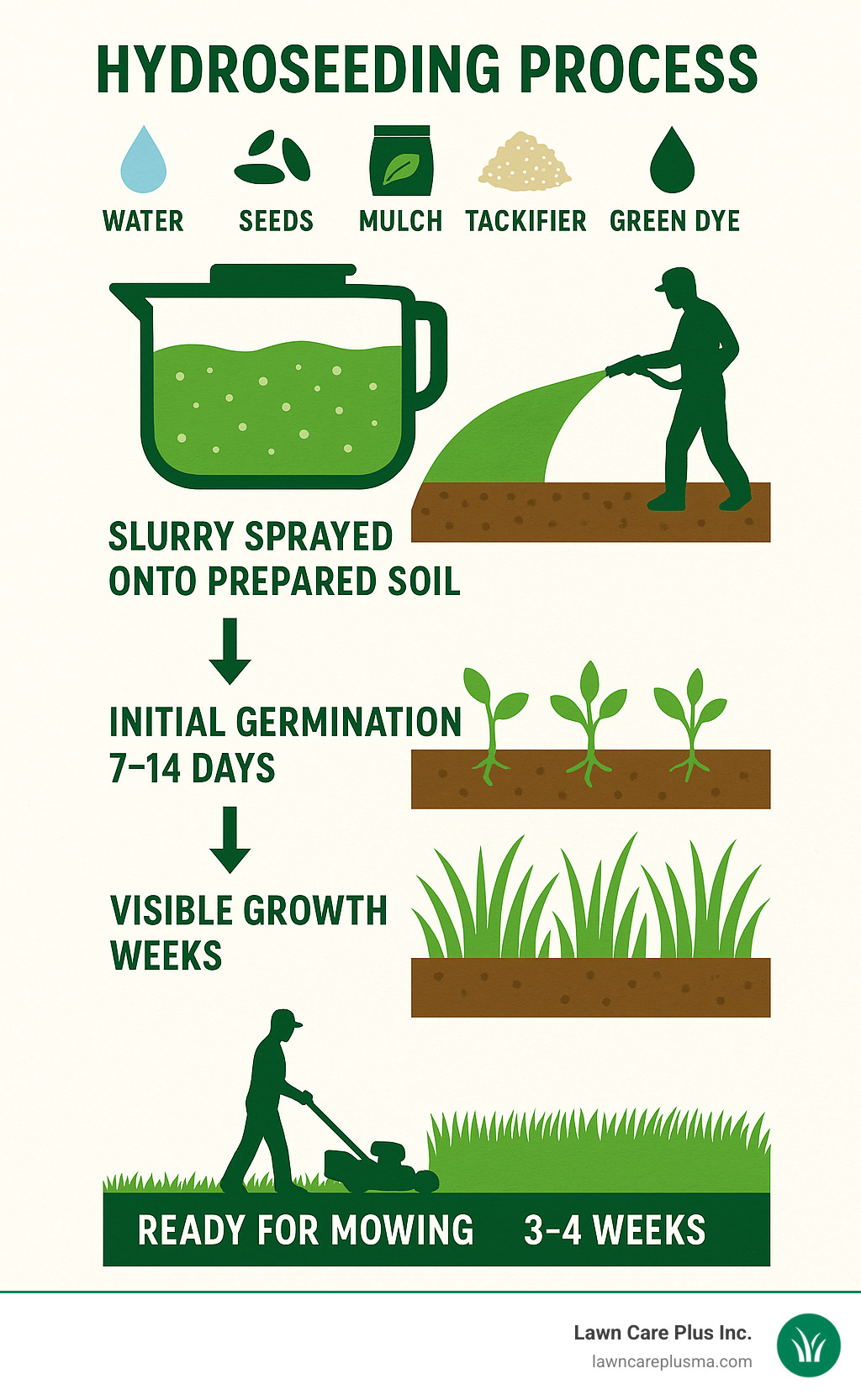
Simple guide to hydro seeding:
What is Hydroseeding and How Does It Work?
At Lawn Care Plus Inc., we specialize in hydro seeding, a smart and efficient way to establish a new lawn. Also known as hydraulic mulch seeding or hydro-mulching, this process uses a specialized, water-based mixture to help grass grow quickly and uniformly.
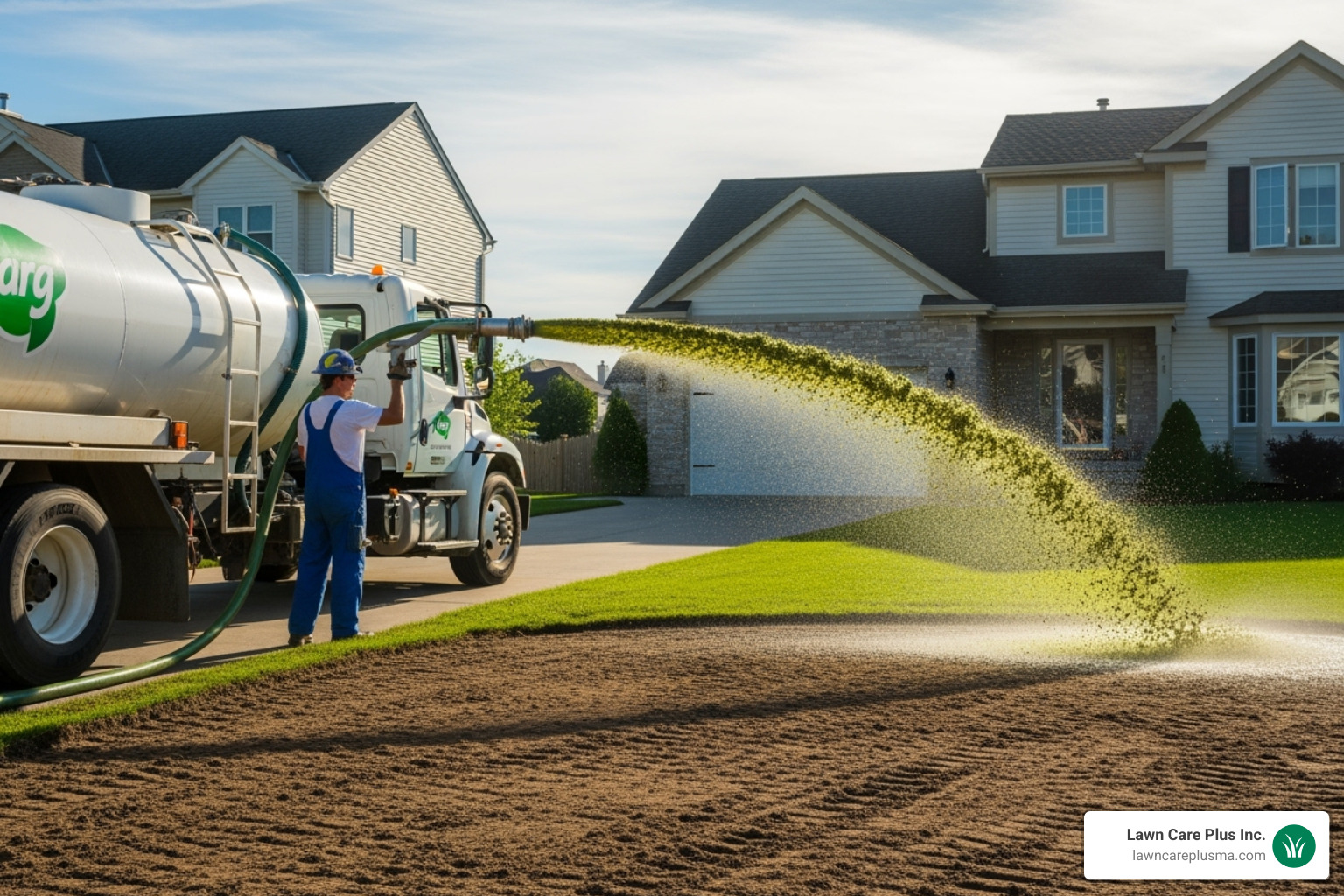
It all starts with a special tank where we mix water with a carefully chosen blend of ingredients to create a thick slurry. This nutrient-rich liquid is then sprayed under high pressure directly onto your prepared soil, ensuring an even layer of seeds and beneficial materials across the entire area.
Once applied, the mulch in the slurry bonds the seeds to the soil, preventing them from being washed away by rain or blown by wind. It also creates a mini-greenhouse effect, holding moisture to keep seeds damp and warm, which is perfect for germination. This makes hydro seeding an excellent method for erosion control, especially on slopes, as it helps hold the soil in place immediately. For more details, see our page on What Is Hydroseeding.
The Key Components of a Hydroseed Slurry
The success of hydro seeding lies in the slurry’s ingredients. Each component plays a vital role in growing a healthy, green lawn.
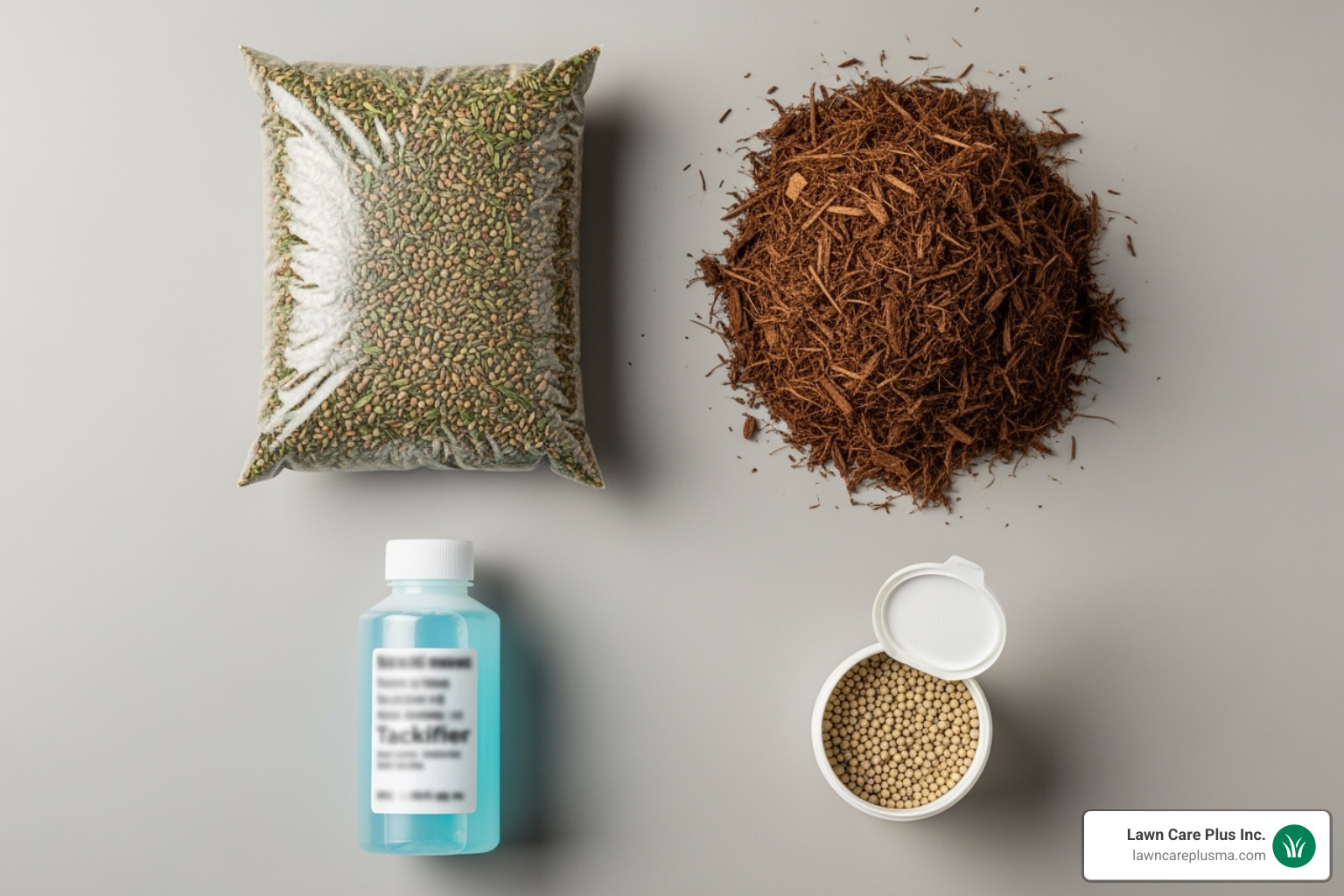
Here’s what goes into our hydro seed slurry:
- Grass Seed: We use high-quality seed blends, guaranteed to be at least 98% pure, ensuring you grow grass, not weeds. Learn more at our Hydro Grass Seed page.
- Fiber Mulch: Typically made from recycled wood fibers, the mulch protects seeds and has excellent water retention, holding up to 10 times its weight in water. This creates a moist environment for faster sprouting.
- Fertilizer: A balanced, slow-release fertilizer is included to provide essential nutrients for strong root development from the very beginning.
- Tackifying Agents: These natural binders help the slurry adhere to the soil, preventing washout on slopes or in heavy rain.
- Green Dye: This non-toxic dye helps our applicators see where the slurry has been sprayed, ensuring complete and even coverage.
Choosing the Right Seed for Your Massachusetts Lawn
Picking the right grass seed is crucial for a lasting hydro seeded lawn in Massachusetts. We create custom seed blends based on several factors:
- Climate Suitability: Cool-season grasses like Kentucky Bluegrass, Perennial Ryegrass, and Fescues are best suited for our region’s distinct seasons.
- Sunlight Exposure: We select special sun and shade mixes to ensure strong growth whether your yard is sunny or has significant shade.
- Traffic and Use: For high-traffic areas, we recommend tougher grass varieties that can withstand wear and tear.
- Soil Type: We can perform soil tests to determine the best seed type and any amendments needed. Most grasses prefer a soil pH between 6.5 and 7. You can also check the USDA Plant Hardiness Zone Map for guidance.
By selecting the right blend, we ensure your hydro seeded lawn is not just beautiful but also resilient and perfectly suited to local conditions.
The Main Advantages of Hydro Seeding
When you want a lush, green lawn, hydro seeding offers a perfect balance of cost, quality, and speed. At Lawn Care Plus Inc., we’ve seen this method consistently outperform traditional approaches for homeowners in the Boston Metro-West area.
- Cost-Effectiveness: Hydro seeding is significantly more affordable than laying sod. While hand-seeding may seem cheaper initially, the superior results and efficiency of hydroseeding make it a smarter long-term investment.
- Superior Quality and Health: Seeds germinate directly in your soil, developing deeper, stronger roots than sod, which can suffer from transplant stress. The slurry provides a perfect nursery environment for a robust start.
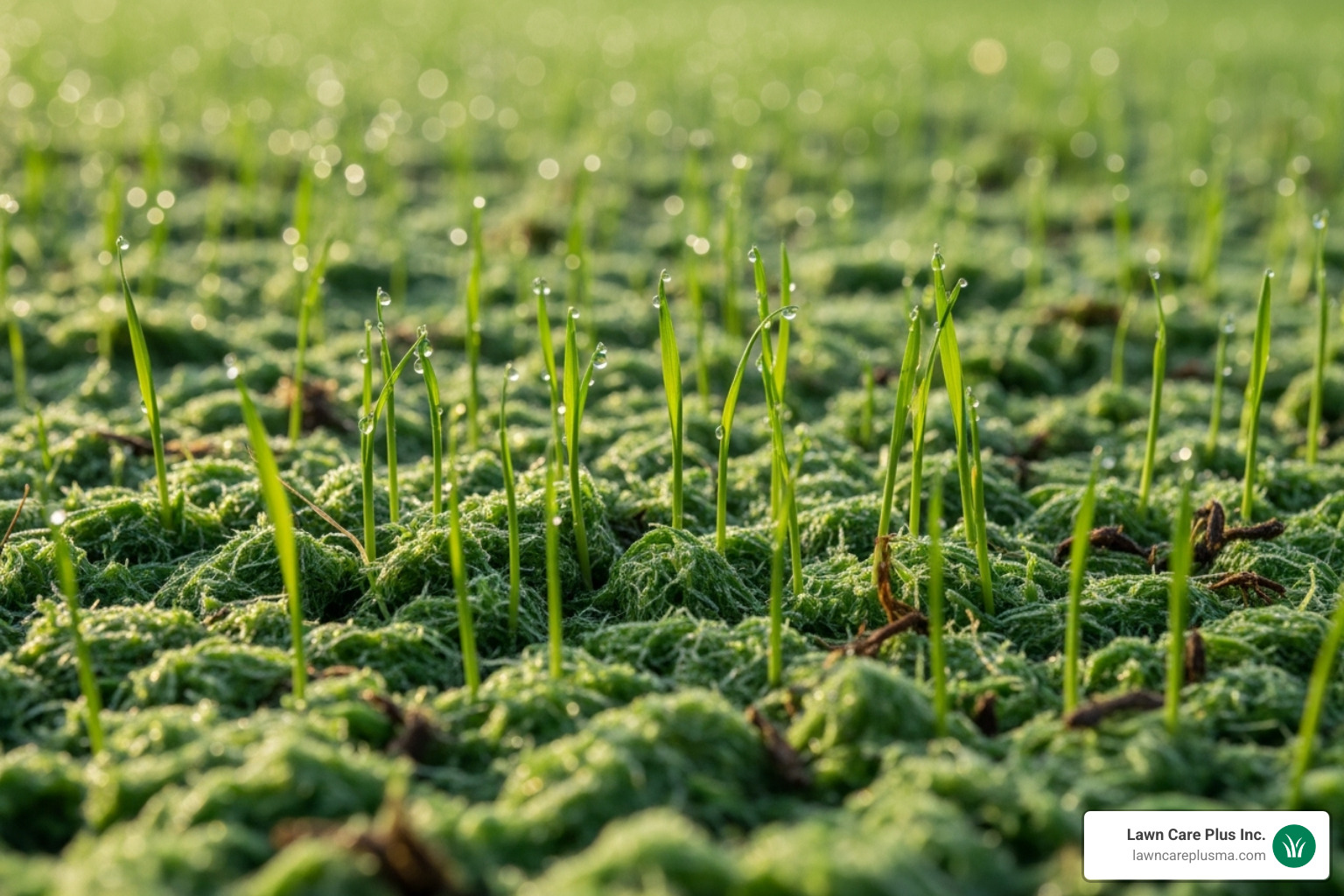
- Speed and Efficiency: You’ll typically see sprouts within 7 to 14 days, with a mow-ready lawn in about 3 to 4 weeks. We can cover large areas much faster than with sod or hand-seeding.
- Erosion Control: The mulch and tackifiers create an immediate protective barrier, holding soil in place on slopes or erosion-prone areas from the moment of application.
- Versatility: The spray application ensures even coverage on any terrain, including hillsides, corners, and other hard-to-reach spots.
- Moisture Retention: The fiber mulch can hold up to 10 times its weight in water, creating a self-irrigating environment that reduces your watering duties.
- Uniform Coverage: Unlike sod with its seams or patchy hand-seeding, hydro seeding delivers beautifully consistent growth for a picture-perfect lawn.
Disadvantages and Important Considerations
While we love hydro seeding, it’s important to understand the full picture to ensure success.
- Intensive Initial Watering: For the first few weeks, the area must be kept consistently moist. This requires diligent watering until the grass is established.
- Weather Vulnerability: A heavy downpour within the first 24-48 hours can potentially wash away some seeds. We monitor forecasts carefully when scheduling applications.
- Not an Instant Lawn: Unlike sod, hydro seeding requires patience. You’ll see sprouts in a week or two, but it takes time for the lawn to fully mature.
- Professional Equipment: Achieving optimal results requires professional-grade equipment. DIY kits rarely provide the same consistent coverage and adhesion.
- Soil Preparation is Critical: The area must be properly cleared, graded, and prepared to ensure good seed-to-soil contact. This prep work is the foundation for a great result.
Cost and Results: Hydroseeding vs. Traditional Methods
When planning a new lawn, homeowners often ask, “What’s the best value?” In our experience at Lawn Care Plus Inc., hydro seeding frequently hits the sweet spot between outstanding results and affordability. It offers a fast, high-quality lawn at a fraction of the cost of sod.
| Metric | Hydroseeding | Traditional Seeding (Broadcast/Hand) | Sod Installation |
|---|---|---|---|
| Cost | Lower to Moderate | Lowest | Highest |
| Installation | Fast application (minutes/hours for large area) | Slow (manual spreading, raking) | Moderate (labor-intensive, piece by piece) |
| Growth Time | Fast germination (7-14 days), visible in weeks | Slow germination (weeks), full establishment months | Instant green |
| Final App. | Uniform, dense, lush, deep roots | Can be patchy, susceptible to birds/washout | Instant, but can have seams, shallower roots |
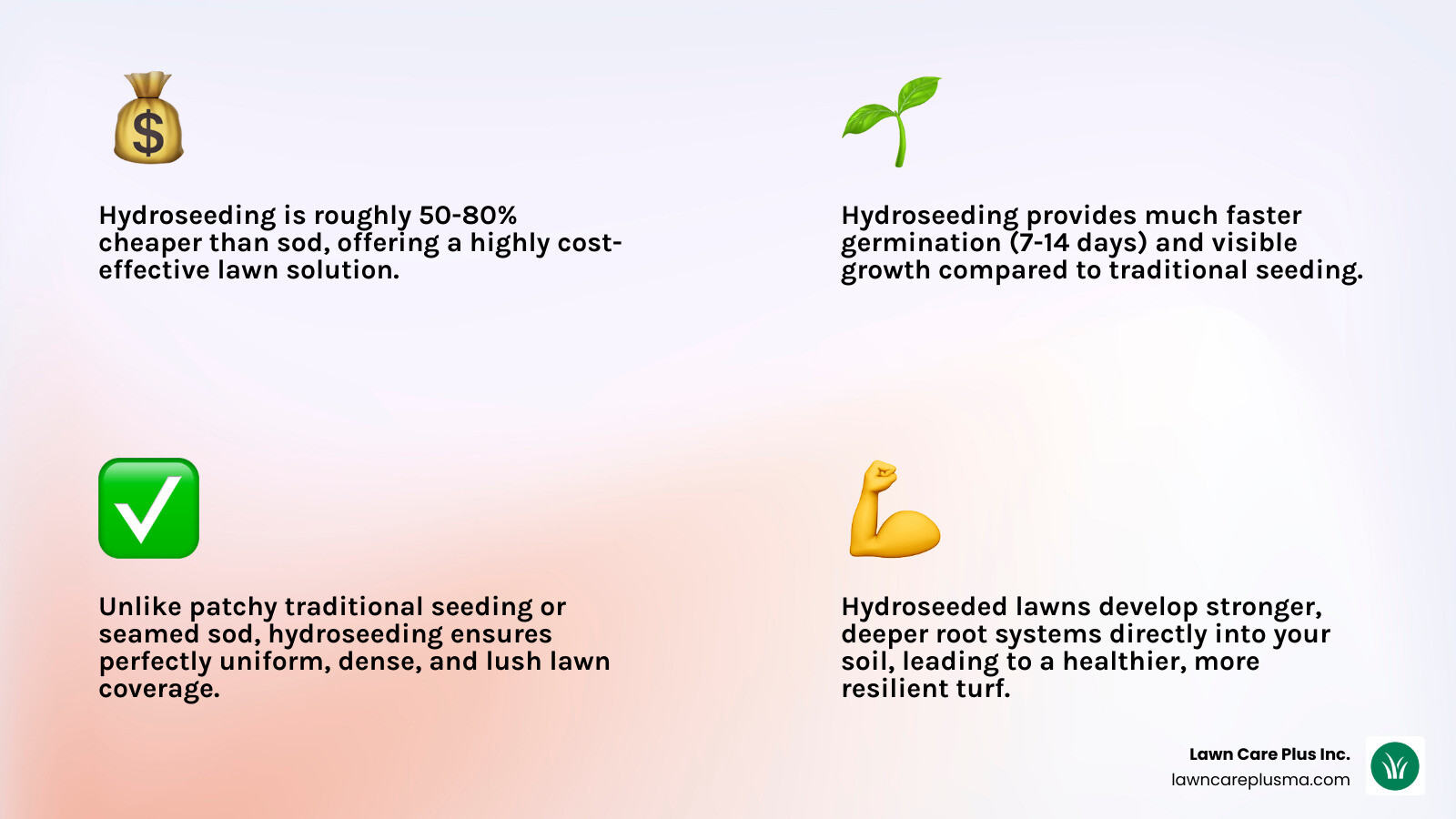
Based on internet data, hydro seeding typically costs between $0.15 and $0.90 per square foot. In comparison, sod can range from $0.70 to $2.50 per square foot or more, meaning hydo seeding can offer savings of 50-80%. While traditional seeding is cheaper, it often comes with issues like uneven coverage and washout.
Please note: These are average costs based on internet data and not actual costs for Lawn Care Plus Inc.
With hydro seeding, grass develops deep roots directly in your soil. Germination appears within 7 to 14 days, and your lawn is often ready for its first mow in 3 to 4 weeks. For detailed pricing, visit our Hydroseeding Cost page.
Understanding the Typical Cost of Hydro Seeding
Several factors influence the final cost of a hydro seeding project. While average costs based on internet data range from $0.15 to $0.90 per square foot, your project’s specifics will determine the final price.
These are average costs based on internet data and not actual costs for Lawn Care Plus Inc.
Key factors include:
- Lawn Size: Larger areas typically have a lower cost per square foot due to crew efficiency.
- Slope and Terrain: Steep or difficult terrain may require more time and specialized techniques, increasing the cost.
- Site Accessibility: If our equipment cannot easily reach the area, additional labor may be required.
- Seed Type: Premium seed blends designed for specific conditions like shade or high traffic cost more than basic mixes.
- Soil Preparation: The amount of clearing, grading, or soil amendment needed will impact the overall project cost.
For a closer look at these factors, visit our Hydroseeding Cost Per Square Foot page. A personalized consultation is the best way to get an accurate estimate.
Your Guide to a Successful Hydroseeded Lawn
Achieving a vibrant lawn with hydro seeding is a partnership. It requires careful site preparation, precise application, and diligent aftercare. At Lawn Care Plus Inc., we guide you through each step to ensure your new lawn thrives.
Site Preparation: Laying the Groundwork
Proper site preparation is the foundation for success. First, we ensure the area is cleared of all debris, rocks, and existing weeds. Next, we grade the soil to create a smooth, even surface with proper drainage. For best results, we recommend adding a 2-inch blend of quality topsoil and compost to enrich the soil. A final grading ensures the surface is perfectly smooth and ready for the hydro seed application.
Application Process: The Green Change
Once the site is prepped, our team arrives with our professional hydroseeder. We mix a custom blend of grass seed, fiber mulch, fertilizer, and tackifiers with water. Using high-pressure equipment, our technicians spray the slurry evenly across the prepared soil. The green dye in the mix ensures uniform coverage with no missed spots.
Maintenance for a Newly Hydroseeded Lawn
Post-application care, especially watering, is the most critical factor for success.
- Watering Schedule: For the first two weeks, water daily 2-3 times for short periods (15-60 minutes). The goal is to keep the top inch of soil consistently moist, like a damp sponge, but not muddy. In weeks 3-4 and beyond, as the grass grows taller, reduce watering frequency to 2-3 times per week but for longer durations to encourage deep root growth.
- Mowing the New Lawn: Your lawn is ready for its first mow when the grass reaches 3-4 inches in height. Always use the one-third rule: never cut more than one-third of the grass blade’s height. Use your mower’s highest setting and leave the clippings on the lawn as a natural fertilizer.
- Fertilization Plan: The slurry includes a starter fertilizer. We recommend applying a balanced, slow-release fertilizer after the first mowing and again 30-40 days later for continued health.
- Weed Control Precautions: Do NOT use weed killer on your new lawn in its first season, as it can kill the delicate new grass. Some weeds may appear from seeds already in your soil, but the new, thickening turf will naturally crowd most of them out over time.
Is DIY Hydro Seeding a Good Idea?
While DIY hydro seeding is possible for small patches, we recommend hiring professionals for the best results on larger areas. DIY attempts face challenges with equipment rental costs, achieving the correct slurry mix consistency, and proper application. Application errors can lead to patchy growth or suffocated seeds.
When you hire Lawn Care Plus Inc., you get our experience and precision. We select the best seed blend for your property, use professional equipment for perfect coverage, and save you significant time and effort. Our goal is to deliver the lush, uniform lawn you’re dreaming of. For a new lawn, professional services provide peace of mind and a superior outcome. Find Local Hydroseeding Companies to get started.
Frequently Asked Questions about Hydroseeding
We know you might have questions about hydro seeding. Here are answers to some of the most common inquiries we receive.
Does hydroseed contain weeds?
No. High-quality hydro seed mixtures do not contain weeds. The grass seed we use is guaranteed to be 98% pure, with the remaining 2% being inert matter, not weed seeds. Any weeds that appear in a new lawn almost always come from dormant seeds already existing in your soil, which are activated by the new watering schedule. Unlike straw, the wood fiber mulch we use is clean and weed-free. As your new grass thickens, it will naturally choke out most of these weeds.
Can heavy rain wash away hydroseed?
This is a valid concern, especially within the first 24-48 hours after application. However, our professional hydro seed slurry contains tackifying agents—natural binders that help the mulch and seed adhere firmly to the soil. This creates a protective crust that significantly reduces the risk of washout. We also monitor weather forecasts to schedule applications during favorable conditions, giving your new lawn the best possible start.
What is the best time of year to hydroseed in Massachusetts?
Timing is crucial for success. The best windows for hydro seeding in Massachusetts are:
- Spring (Mid-April to Early June): This is an excellent time, as warming soil temperatures (50-65°F) and natural rainfall promote quick germination before the summer heat.
- Early Fall (Late August to October): This is often considered the best time. The soil is still warm, but cooler air temperatures are less stressful on new grass. Seeding in the fall allows the lawn to establish a strong root system before winter, leading to vigorous growth the following spring.
We generally advise against hydro seeding in the peak of summer (July-August) due to heat stress, or too late in the fall when an early frost could halt growth.
Get a Lush, Green Lawn with Professional Hydroseeding
There’s nothing more rewarding than watching a bare patch of soil transform into a vibrant, green lawn. At Lawn Care Plus Inc., we help homeowners across the Boston Metro-West area achieve this with professional hydro seeding.
When you choose hydro seeding, you’re making a smart investment. This method is cost-effective, delivering premium results for significantly less than sod. It also produces high-quality results, as the grass grows deep, strong roots directly in your native soil.
You’ll be amazed by the fast establishment. Green shoots typically emerge within 7 to 14 days, and your lawn will be ready for its first mow in just a few weeks. For properties with slopes, hydro seeding also provides immediate and effective erosion control.
Our team at Lawn Care Plus Inc. understands the challenges of the Massachusetts climate. We use our expertise and state-of-the-art equipment to select the right seed blends, prepare your site correctly, and ensure a precise, uniform application. We provide detailed care instructions and are here to support you as your new lawn develops.
Ready to transform your property? Explore our Lawn Care Services and contact us today for a consultation. We would love to help you create the lush, green lawn you’ve been dreaming of!
