
Why Commercial Roof Snow Removal is Critical for Property Safety
Commercial roof snow removal is the process of safely clearing snow and ice from business property rooftops to prevent structural damage, water intrusion, and potential roof collapse. This essential winter maintenance protects both your building investment and occupant safety.
Key aspects of commercial roof snow removal:
- When to act: Remove snow when it reaches 4 feet deep or shows signs of excessive weight (sagging ceilings, creaking sounds)
- Weight matters more than depth: One cubic foot of snow weighs 7-30 pounds depending on moisture content
- Professional approach: Requires specialized equipment, safety training, and knowledge of different roofing materials
- Timing is critical: Proactive removal prevents ice dams, drainage blockages, and structural stress
- Cost-effective prevention: Professional removal costs far less than emergency repairs or roof replacement
“The first snowfall is beautiful, a pristine white blanket covering everything and creating warm and fuzzy feelings. After a few snowfalls, we all lament that the snow should stop,” notes one commercial roofing expert. For property managers, this sentiment shifts quickly from appreciation to concern as snow accumulates on flat commercial roofs.
Winter brings unique challenges to commercial property management. Unlike residential sloped roofs that naturally shed snow, flat commercial roofs collect and hold snow loads that can quickly exceed structural limits. One inch of wet, dense snow equals 1.66 pounds per square foot – and that weight adds up fast.
The stakes are high. Commercial roofs typically handle 40 pounds per square foot, but older buildings may have reduced capacity. When snow load approaches these limits, building stress becomes visible through sagging ceilings, sticking doors, and ominous creaking sounds.
This guide covers everything property managers need to know about protecting their commercial buildings from winter’s weight, from recognizing danger signs to choosing the right removal approach.

Commercial roof snow removal vocabulary:
- commercial snow removal services
- how much does commercial snow removal cost
- commercial snow removal contract
The Weight of Winter: Key Risks of Snow on Commercial Roofs
When snow blankets your commercial building, it might look peaceful from the ground. But up on that flat roof, you’re dealing with a silent threat that can literally bring down your business. Commercial roof snow removal isn’t just about aesthetics – it’s about preventing thousands of pounds of frozen water from overwhelming your building’s structure.
The biggest danger comes from something called snow load – the technical term for all that weight pressing down on your roof. Think of it this way: your roof was designed to handle a specific amount of weight, just like a bridge has a weight limit for trucks. Snow creates what engineers call a “live load,” meaning it’s not permanent like your HVAC equipment, but it can change dramatically based on weather conditions.
Here’s where it gets tricky. One cubic foot of light, fluffy snow might weigh only seven pounds – not too scary. But that same volume of heavy, wet snow can weigh up to 30 pounds. That’s more than four times heavier! This is why simply measuring snow depth doesn’t tell the whole story. A foot of wet snow can be more dangerous than three feet of the powdery stuff.
Freeze-thaw cycles add another layer of trouble to your winter worries. During the day, temperatures rise and snow melts. That water seeps into tiny cracks in your roofing material. Then nighttime temperatures drop, the water freezes and expands, making those cracks bigger. It’s like nature is slowly prying your roof apart, one freeze at a time.
When snow and ice pile up, they love to block your drainage systems. Your roof drains, scuppers, and gutters are supposed to move water away from your building quickly. But when they’re clogged with snow and ice, melting water has nowhere to go. It pools on your roof, adding even more weight and looking for any way to get inside your building.

The Danger of Ice Dams
Ice dams are one of winter’s sneakiest problems. These thick ridges of ice form along roof edges, creating a barrier that traps melting water behind them. Think of them as tiny frozen dams that back up water where it doesn’t belong.
When ice dams form, they create a domino effect of problems. The trapped water sits against your roof membrane much longer than it should, gradually working its way underneath and into your building. This leads to roof membrane damage as materials break down from constant moisture exposure.
Once water gets past your roof’s defenses, you’re looking at interior leaks that can damage everything from your ceiling tiles to expensive equipment. The moisture doesn’t just disappear either – it creates perfect conditions for mold growth, which brings its own set of health concerns and costly remediation requirements.
Your building’s insulation takes a hit too. Wet insulation loses its effectiveness, meaning your heating system works harder and your energy bills climb higher. It’s like wearing a soaked winter coat – it just doesn’t keep you warm anymore.
How Snow Load Affects Structural Integrity
Understanding the difference between live loads and dead loads helps explain why snow is so concerning. Dead loads are permanent – your roof structure, HVAC units, and other fixed equipment. Live loads change, and snow is the heaviest live load most commercial roofs will ever face.
The snow load numbers are eye-opening. One inch of wet, dense snow adds 1.66 pounds per square foot to your roof. A 10,000 square foot roof with just six inches of heavy snow is supporting over 99,000 pounds – that’s nearly 50 tons!
Uneven snow distribution makes things even more dangerous. Wind doesn’t spread snow evenly like frosting on a cake. Instead, it creates snow drifts that pile up behind rooftop equipment, around parapet walls, and in corners. These concentrated loads can overwhelm specific areas of your roof even when the overall snow depth seems manageable.
Roof design vulnerabilities compound these problems. Older buildings might have been built under less stringent snow load requirements. Poor drainage systems, inadequate structural support, or deferred maintenance can significantly reduce your roof’s ability to handle winter’s weight.
Age matters too. Structural components weaken over time, and what your roof could handle when it was new might be too much for it today. This is why proactive commercial roof snow removal becomes more critical as buildings age.
For comprehensive winter property protection strategies, our Commercial Property Maintenance services can help you stay ahead of these seasonal challenges.
Timing is Everything: When to Remove Snow and Warning Signs
Think of snow removal timing like cooking pasta – wait too long, and you’ve got a mushy mess on your hands. The difference is, with commercial roof snow removal, waiting too long could mean dealing with a much more expensive (and dangerous) problem than overcooked dinner.
The sweet spot for snow removal isn’t just about depth – it’s about understanding what you’re dealing with. The general guideline is to take action when snow reaches four feet deep, but that fluffy powder that landed yesterday is a completely different beast than the heavy, wet snow that’s forecast for tonight. One foot of wet, dense snow can weigh as much as several feet of the light stuff, making it far more dangerous to your roof’s structural integrity.
This is where being proactive rather than reactive becomes crucial. The Federal Emergency Management Agency (FEMA) offers some reassurance – if your roof meets current building codes and is well-maintained, it won’t collapse from reasonable snow loads. But “reasonable” is the key word here. When heavy snowfall is predicted, or when existing snow starts compacting and soaking up moisture from rain or melting, that’s your cue to spring into action.
The real challenge lies in reading the signs before they become emergencies. Snow density matters more than most people realize. That innocent-looking blanket of white can quickly transform into a crushing weight that tests every beam and joint in your building.
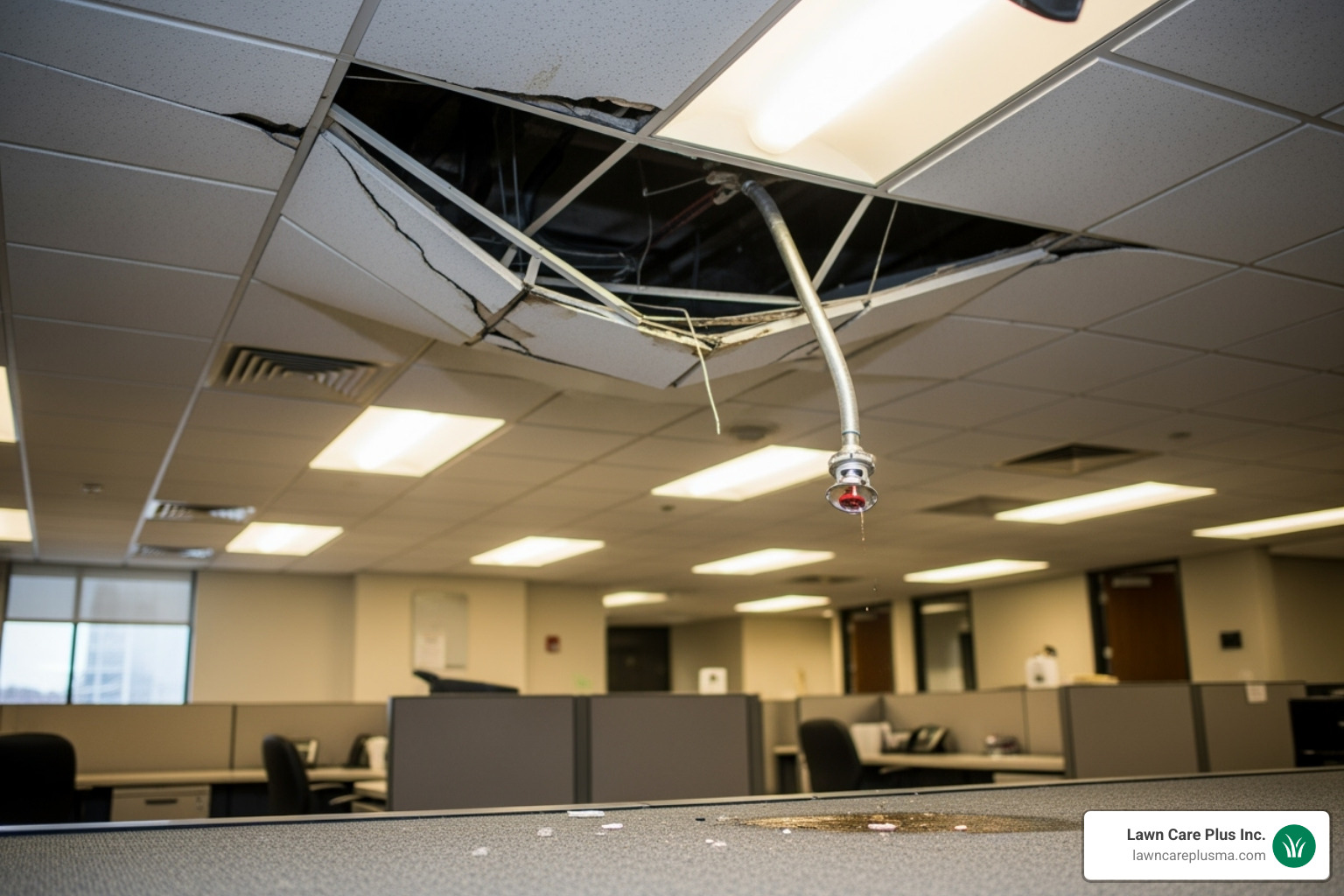
Key Signs Your Roof is Under Stress
Your building has a voice – it just doesn’t speak in words. When a commercial roof is struggling under too much snow weight, it communicates through subtle (and sometimes not-so-subtle) warning signs that smart property managers learn to recognize.
Sagging ceilings are often the first red flag. Walk through your building and look up – any noticeable dips or bowing in ceiling tiles or drywall, especially in large open areas, means your roof is working overtime. Similarly, if your sprinkler heads or fire suppression lines appear lower than usual, that’s your building’s way of saying the structure above is deflecting under pressure.
Your ears can be just as important as your eyes. Unusual noises like creaking, popping, or cracking sounds coming from the roof structure or walls are your building’s equivalent of groaning under strain. These sounds shouldn’t be ignored – they’re often the soundtrack to structural stress.
Don’t forget to check how things move around your building. Doors and windows on the top floor that suddenly become stubborn to open or close can indicate that your building frame is distorting under the roof’s weight. It’s like your building is holding its breath under all that snow.
Cracks in walls or masonry are perhaps the most serious warning sign. New cracks or existing ones that are widening, particularly near the top of walls or where walls meet ceilings, signal that your structure is under significant strain.
If you spot unusual water collections on the roof after melting, especially in areas where water didn’t pool before, it suggests your roof structure may be deforming and creating new low spots.
Here’s the most important part: if you notice any of these signs, resist the urge to climb up and investigate yourself. Instead, contact a professional structural engineer or qualified commercial roof snow removal service immediately. Your safety is worth more than satisfying curiosity.
Developing a Proactive Snow Removal Plan
The best time to plan for a snowstorm is when the sun is shining. Developing a proactive approach to snow removal is like having insurance – you hope you never need it, but you’ll be grateful it’s there when you do.
Pre-winter inspections are your first line of defense. A thorough professional roof inspection in the fall helps identify vulnerabilities, drainage issues, or potential problem areas before they become buried under snow. Think of it as a health check-up for your roof – addressing small issues now prevents major headaches later.
Establishing clear removal triggers takes the guesswork out of decision-making during a storm. Work with professionals to set specific guidelines for when snow removal should occur. This might be based on snow depth (typically 18-24 inches of accumulated snow), forecasts for heavy wet snow, or predictions of rain falling on existing snow accumulation.
The smartest move you can make is securing a Commercial Plowing Contract before winter arrives. Don’t wait for the first blizzard to start making phone calls – by then, everyone else is doing the same thing. Having a contract in place ensures you’re on the priority list when the snow starts flying.
Understanding your local building codes is more than just paperwork – it’s about knowing what your roof was designed to handle. Building codes specify minimum snow load capacity for your area, and knowing these numbers helps you make informed decisions about when to act.
Finally, consider preventive measures like snow guards and wind baffles. While more common on sloped roofs, these tools can prevent dangerous snow slides and help distribute snow loads more evenly across your roof surface.
Winter weather is unpredictable, but your response doesn’t have to be. With proper planning and professional support, you can face whatever winter throws your way with confidence.
Clearing the Way: Methods for Commercial Roof Snow Removal
When winter dumps its white burden on your commercial building, the question isn’t if you need to remove it—it’s how to do it safely. Let’s be honest: climbing onto a snow-covered roof in freezing temperatures isn’t exactly a weekend hobby. Commercial roof snow removal requires specialized knowledge, proper equipment, and a healthy respect for the dangers involved.
Safety must always come first. Working on an icy roof in winter conditions is inherently risky. You’re dealing with slippery surfaces, bitter cold, hidden obstacles, and the very real possibility of falls or hypothermia. There’s also the risk of electrocution from hidden power lines or equipment buried under the snow.
This is why we strongly advise against the DIY approach for commercial roof snow removal. The potential cost savings simply don’t justify the risks to life and property. Professional services bring the right training, equipment, and insurance coverage to handle these hazardous conditions safely and efficiently.
When it comes to tool selection, protecting your roof membrane is crucial. Sharp-edged shovels, ice picks, or heavy machinery can easily puncture or tear roofing materials, turning a snow problem into a costly leak disaster. The key is using gentle techniques with appropriate equipment that gets the job done without damaging your investment.
For comprehensive winter property care, explore our Snow Removal Service options.
Comparing Snow Removal Techniques
Different snow conditions and roofing materials call for different approaches. Here’s how the most common commercial roof snow removal techniques stack up:
| Technique | Effectiveness | Cost | Risk of Roof Damage | Ideal Use Case |
| Shoveling | High effectiveness for deep snow | High | High (if not careful) | Deep, heavy snow; small areas; professional use |
| Roof Rakes | Moderate effectiveness for light to medium snow | Low | Low (if handled well) | Lighter snow; sloped roofs; edges of flat roofs |
| Steamers | High effectiveness for ice dams | High | Low (if done by pros) | Ice dams; delicate areas; preventing water intrusion |
| De-icing Agents | Moderate effectiveness for melting ice | Medium | High (can damage roof) | Minimal use; only roof-safe products; emergency spots |
Shoveling remains the most effective method for heavy snow accumulation, but it requires skill and patience. The wrong technique or tools can cause significant damage to your roof membrane.
Roof rakes work well for lighter snow and are particularly useful along roof edges where ice dams typically form. They’re less labor-intensive but won’t handle heavy, wet snow effectively.
Steam removal is excellent for ice dams and areas where precision matters most. While more expensive, it’s gentle on roofing materials and highly effective for problem spots.
De-icing agents should be used sparingly and only with products specifically designed for roofing systems. Many common ice melts can corrode metal components and damage membrane materials.
Best Practices for Safe and Effective Commercial Roof Snow Removal
When we perform commercial roof snow removal, we follow proven practices that protect both our crew and your property. Working in sections allows us to manage the job systematically while distributing the remaining snow load evenly as we progress.
We always avoid sharp tools that could puncture or scratch your roof membrane. Plastic-headed shovels and non-metallic implements are our tools of choice. This might take a bit longer, but it prevents costly damage that could plague you for years.
Here’s something many people don’t realize: we leave a thin snow layer on purpose. Scraping the roof completely clean increases the risk of tool damage to the membrane. That final inch or two of snow actually protects your roof during the removal process.
Proper snow placement on the ground requires careful planning. Removed snow is incredibly heavy—much heavier than most people expect. We designate safe disposal areas away from building entrances, emergency exits, fire hydrants, and landscaping. We also consider drainage patterns to prevent meltwater from creating new problems.
Clearing drains and scuppers is often the most critical step. After removing the bulk of the snow, we ensure all drainage systems are completely clear. This allows meltwater to flow freely and prevents ice dam formation that could cause serious water damage.
Our crews are trained in working in the cold safety protocols. This includes proper winter clothing, regular warm-up breaks, staying hydrated, and recognizing early signs of cold-related injuries. We follow all OSHA guidelines to keep everyone safe during these challenging conditions.
Considerations for Different Roofing Materials
Not all commercial roofs are created equal, and each material type requires a custom approach to snow removal. EPDM roofs feature durable rubber membranes, but they can be vulnerable to punctures from sharp tools or excessive foot traffic. We use extra caution and specialized techniques to avoid tears that could lead to expensive repairs.
TPO and PVC membranes are single-ply thermoplastic materials that are generally robust but become extremely slippery when wet or icy. They’re also sensitive to certain chemical de-icers, so we’re careful about any products used during the removal process.
Metal roofing presents unique challenges. While designed to shed snow naturally, heavy accumulation can still occur, especially in valleys or behind rooftop equipment. Metal surfaces become dangerously slippery, requiring specialized safety equipment and techniques.
Modified bitumen roofing, with its asphalt-based composition, can be easily scuffed or damaged by aggressive shoveling. We use gentle techniques and appropriate tools to preserve the integrity of this roofing system.
Understanding these material differences is crucial for effective commercial roof snow removal that preserves your roof’s lifespan and warranty. For specialized services in your area, check out our Snow Management in Boston MA offerings.
Every roofing material has its quirks and vulnerabilities. That’s why professional snow removal isn’t just about moving snow—it’s about understanding how to protect your specific investment while keeping your building safe and operational throughout winter’s worst weather.
The Professional Advantage: Why Hire Experts
Picture this: it’s 3 AM on a Tuesday, and you get a call that your building’s roof is sagging under the weight of wet snow. The emergency repair crew quotes you $50,000 just to make it safe, and that’s before they even start fixing anything. Your business has to shut down for weeks, costing you thousands more in lost revenue.
Sound like a nightmare? It doesn’t have to be. Commercial roof snow removal professionals exist to prevent exactly these scenarios, and frankly, we’ve seen too many property owners learn this lesson the hard way.
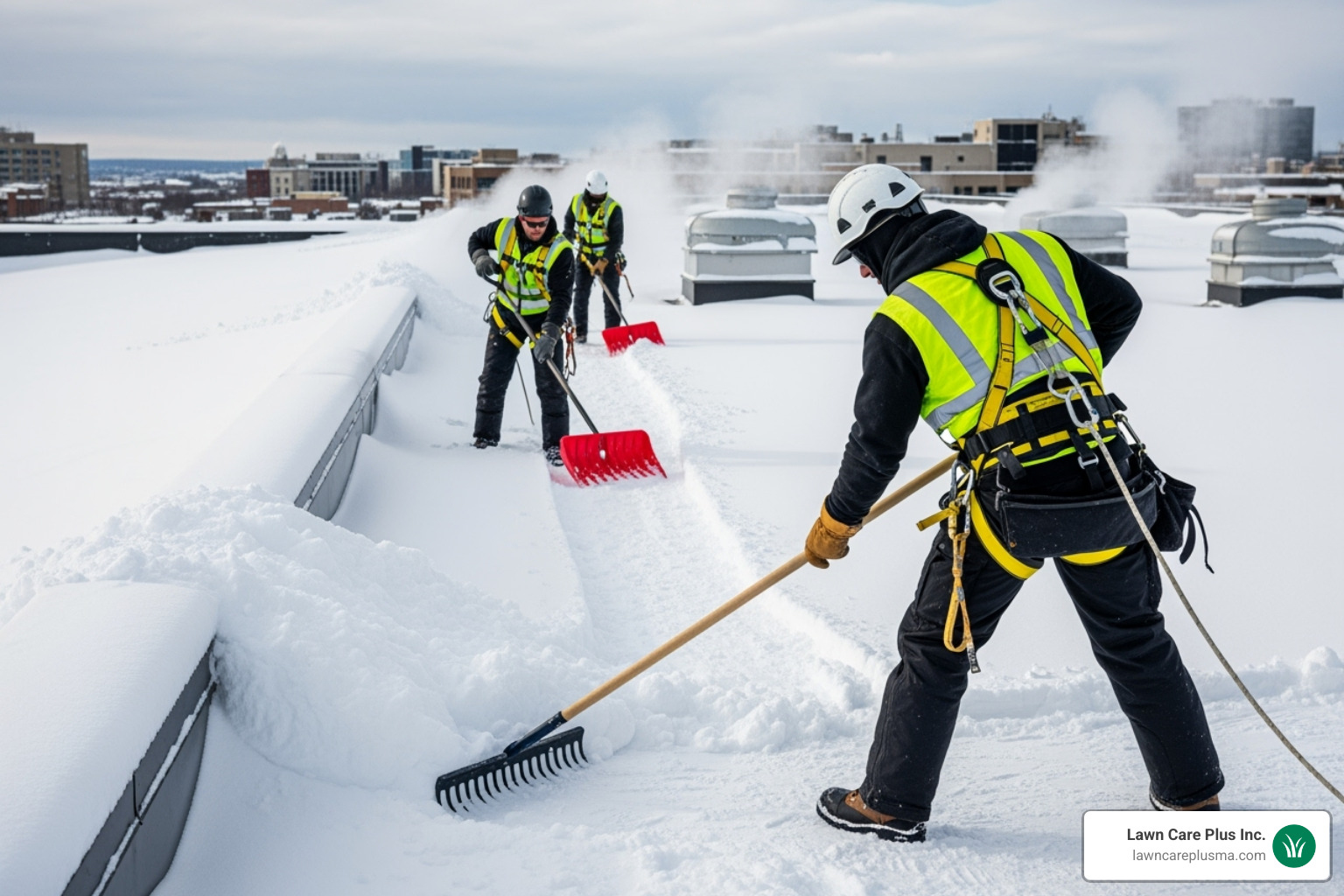
When you hire professional commercial roof snow removal services, you’re not just paying for someone to shovel snow. You’re investing in specialized expertise, proper equipment, comprehensive insurance coverage, and most importantly, your peace of mind. Our crews understand snow load calculations, recognize the warning signs of structural stress, and know how to work safely on different roofing materials without causing damage.
The liability aspect alone should give any property owner pause. If an untrained person falls through your roof or gets injured attempting snow removal, guess who’s potentially on the hook? Professional services carry their own insurance and workers’ compensation, protecting your business from devastating lawsuits.
The Financial Equation: Neglect vs. Professional Service
Let’s be honest about the math here. The cost of professional commercial roof snow removal might make you wince initially, but it’s pocket change compared to what you’ll face if things go wrong.
Roof collapse costs can easily reach into the millions. We’re talking complete structural rebuilds, damaged equipment and inventory, and potential lawsuits if anyone gets hurt. Even a partial collapse can shut down your business for months while repairs are made.
Business interruption is often the hidden killer. Your building might look fine from the outside, but if inspectors deem it unsafe due to excessive snow load, you’re closed until the problem is resolved. Every day of closure means lost revenue, disappointed customers, and disrupted operations that can take months to fully recover from.
Emergency repair expenses always cost more than preventive maintenance. When you’re dealing with a crisis, contractors can charge premium rates because you have no choice but to pay them. You’re also competing with other emergency situations, which can delay repairs even further.
Professional commercial roof snow removal costs vary widely based on factors like roof size, accessibility, and snow conditions. Based on internet data, you might see quotes ranging from a few hundred dollars for smaller jobs to several thousand for large, complex commercial buildings. The wide range reflects the complexity involved – a simple, accessible roof will cost far less than a multi-level building with equipment and obstacles.
When you compare these preventive costs to the potential disaster scenarios, the choice becomes pretty clear. For detailed pricing information specific to your situation, check out How Much Does Commercial Snow Removal Cost? to get a better understanding of the investment involved.
The Role of a Professional Commercial Roof Snow Removal Company
At Lawn Care Plus Inc., we’ve been helping Boston Metro-West area businesses weather New England winters for years. We understand that commercial roof snow removal isn’t just about moving snow – it’s about protecting your entire operation.
Our expertise goes beyond basic snow shoveling. We know how different roofing materials respond to snow loads, understand the unique challenges of flat commercial roofs, and can spot potential problems before they become disasters. When we arrive at your property, we’re not just looking at snow depth – we’re assessing the overall situation and making informed decisions about the safest, most effective removal approach.
Massachusetts Snow Removal Law compliance isn’t optional, and we make sure every job meets local regulations and building codes. The rules exist for good reason, and we stay current on all requirements to keep your property compliant and safe. You can learn more about these regulations at Massachusetts Snow Removal Law.
Safety compliance is non-negotiable in our business. Our crews follow strict OSHA guidelines for working at heights and in cold weather conditions. This protects our team members and shields your business from liability issues. Professional safety equipment, proper training, and established protocols aren’t luxuries – they’re essential requirements.
After every commercial roof snow removal job, we conduct a post-removal inspection to check for any issues that may have been hidden under the snow. Sometimes the snow removal process reveals existing problems like damaged membranes or blocked drains. Catching these early can save you significant money and prevent bigger problems down the road.
Most importantly, we provide peace of mind. When you have a professional snow removal plan in place, you can focus on running your business instead of constantly worrying about your roof. You know that experienced professionals are monitoring conditions and will take action before problems develop.
That peace of mind is priceless, especially during those heavy snow events when every property owner in the area is scrambling for help. Our existing clients get priority service because they planned ahead.
Frequently Asked Questions about Commercial Roof Snow Removal
Winter weather brings a lot of questions, and we’ve heard just about all of them over the years. Property managers call us worried, building owners wonder if they’re overreacting, and facility teams want to know what’s normal and what’s not. Here are the answers to the most common questions we get about commercial roof snow removal.
How much snow is too much for a commercial flat roof?
Here’s the thing that surprises most people: it’s not really about how deep the snow is, it’s about how heavy it gets. We’ve seen roofs handle four feet of light, fluffy snow without breaking a sweat, but then struggle with just twelve inches of that heavy, wet stuff that feels like concrete.
Snow weight is the real enemy here. Light snow might weigh around seven pounds per cubic foot, but when it gets wet and dense, that same amount of space can weigh up to 30 pounds. That’s more than four times heavier! Add some rain on top of existing snow, and you’ve got a recipe for trouble.
The smart approach is knowing your building’s limits and watching for warning signs. If you’re seeing sagging ceilings, hearing creaking sounds, or noticing doors that suddenly stick, that’s your building telling you it’s stressed. Most commercial roofs are designed to handle about 40 pounds per square foot, but older buildings might have less capacity.
Our general rule? If you’ve got four feet of snow up there, it’s time to call in the pros. But don’t wait that long if the snow looks heavy or if there’s been rain mixed in.
Can I use salt or ice melt on my commercial roof?
We get this question a lot, especially from folks who are handy with winter maintenance on their parking lots and sidewalks. The short answer is don’t do it – and here’s why.
Most de-icing products, particularly those with chlorides (which is most of them), are basically roof killers. They’ll corrode metal components, eat away at roofing membranes like TPO, PVC, and EPDM, and can even void your roof warranty. We’ve seen expensive roofing systems damaged by well-meaning property managers who thought they were being proactive.
The damage happens slowly but surely. Those chemicals seep into tiny cracks, freeze and expand, then create bigger cracks. Before you know it, you’re dealing with leaks and membrane replacement costs that make professional snow removal look like pocket change.
If you absolutely must use something, make sure it’s specifically designed for roofing systems – but even then, use it sparingly and with extreme caution. Steam removal by professionals is much safer and more effective for dealing with ice dams and stubborn ice buildup.
Does my commercial property insurance cover roof collapse from snow?
This is probably the most important question we get, and unfortunately, the answer isn’t simple. Coverage varies dramatically from policy to policy, and the devil is definitely in the details.
Most commercial property insurance policies do cover damage from snow and ice weight – that’s the good news. The potentially bad news is that many policies have exclusions, especially if they can prove negligence or lack of proper maintenance contributed to the problem.
Here’s what we’ve learned from working with property managers over the years: being proactive and documenting your efforts can make all the difference if you ever need to file a claim. Keep records of your snow removal activities, take photos of conditions, and maintain a paper trail showing you were being responsible about winter maintenance.
Some insurance providers even offer incentives for proactive commercial roof snow removal programs because they know it reduces their risk. It’s worth having a conversation with your insurance agent about your specific policy, what’s covered, what’s not, and whether there are any requirements or benefits related to snow management.
The bottom line? Don’t assume you’re covered, and don’t assume you’re not. Review your policy, ask questions, and remember that preventing a problem is always cheaper than dealing with the aftermath of a collapse – both financially and in terms of business disruption.
Conclusion
Winter’s first snowfall always feels magical – that pristine white blanket changing your commercial property into a winter wonderland. But as we’ve explored throughout this guide, that beautiful snow can quickly become a serious threat to your building’s safety and your bottom line.
The message is clear: proactive management is key. Don’t wait until you hear those ominous creaking sounds or see sagging ceilings. By then, you’re already in crisis mode, and the costs can skyrocket from hundreds of dollars in preventive care to potentially millions in structural repairs and business interruption.
Protecting your investment means more than just maintaining your landscaping during the growing season. Winter property care is equally crucial. Your commercial roof represents a significant portion of your building’s value, and commercial roof snow removal is simply smart asset protection. Think of it as insurance you can see working.
Ensuring safety should never be an afterthought. Your employees, customers, and visitors depend on you to maintain a safe environment year-round. Professional snow removal isn’t just about preventing roof collapse – it’s about demonstrating your commitment to everyone who enters your building.
The value of professional services becomes crystal clear when you consider the alternative. Yes, hiring experts costs money upfront. But compare that to emergency repairs, business shutdowns, insurance claims, and potential liability issues. Professional commercial roof snow removal isn’t an expense – it’s a wise investment in your property’s future.
Winter will always bring challenges, but you don’t have to face them alone. For comprehensive winter property care, from parking lots to rooftops, consider a trusted Snow Management partner like Lawn Care Plus Inc. We understand the unique demands of Massachusetts winters and the Boston Metro-West area’s commercial properties.
When that next snowstorm hits, you’ll sleep better knowing your property is protected by professionals who treat your building like their own. After all, winter may be inevitable, but winter damage doesn’t have to be.
