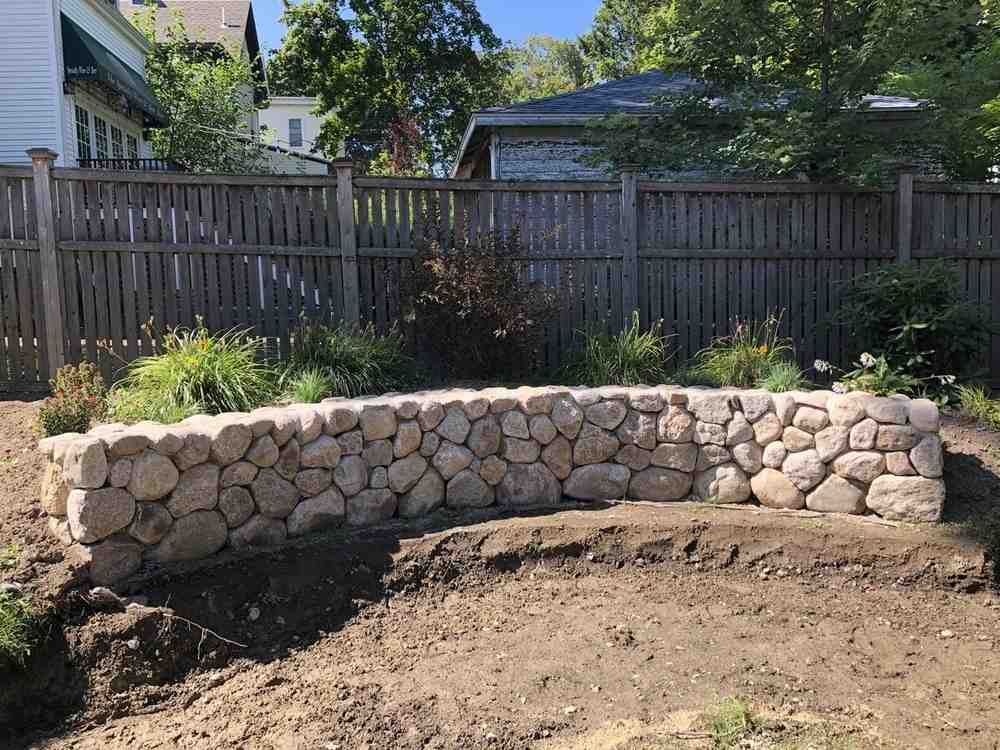
Understanding The Best Retaining Walls: What They Are and Why They Matter
The Best Retaining Walls are structures designed to hold back soil on sloped terrain, serving both functional and aesthetic purposes in landscaping. If your backyard is a muddy slope or your garden is sliding away, a retaining wall is the solution.
Key Functions of Retaining Walls:
- Hold Back Soil and prevent it from sliding down slopes.
- Control Erosion to protect your property from soil loss and water damage.
- Create Usable Space by turning steep slopes into flat areas for patios, gardens, or lawns.
- Manage Drainage by directing water runoff away from structures.
- Boost Property Value by improving curb appeal and adding functional outdoor living areas.
These structures are engineered solutions that fight against powerful natural forces. The soil behind a wall exerts lateral earth pressure, and when saturated with water, it adds immense hydrostatic pressure. A properly designed wall resists both forces while managing drainage.
In Massachusetts, with our freeze-thaw cycles and varied terrain, retaining walls are essential for many properties. They prevent erosion, create terraced gardens, and stabilize soil around driveways and foundations. Modern systems are stronger and more attractive than ever, offering solutions for any need or budget.
This guide covers the types of retaining walls, the best materials, design and drainage requirements, and the DIY vs. pro decision, so you can understand what your property needs.
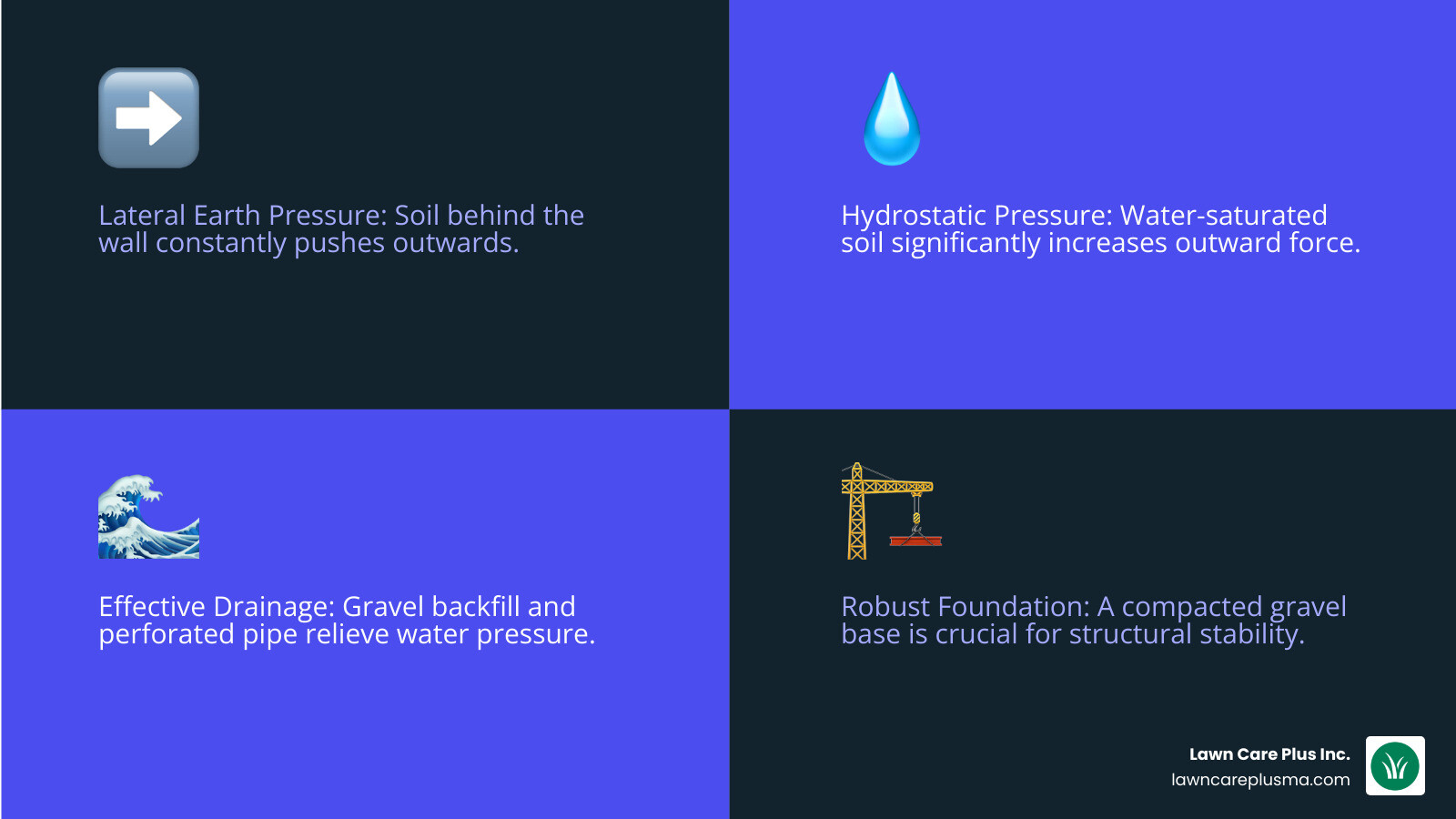
Retaining Walls terms made easy:
Exploring the Different Types of Retaining Walls
Not all retaining walls are created equal. Each type uses different engineering principles to resist soil pressure. Understanding these types helps you choose the right solution, as the wrong wall can fail, while the right one will last for generations.
Gravity Walls
Gravity walls resist soil pressure through sheer mass and weight. Built from large natural stones or massive concrete blocks, their strength is simple physics: they are too heavy to be pushed over. Most are built wider at the base with a slight backward lean called batter or setback, which helps the wall lean into the soil. A good rule of thumb is that the base should be 50 to 60 percent as thick as the wall is tall. This large footprint makes them best for shorter walls or where space is plentiful.
Cantilevered Walls
When you need height without bulk, cantilevered walls are the answer. These retaining walls are built from reinforced concrete in an “L” or inverted “T” shape. The secret is the steel rebar inside the concrete. The weight of the soil on the horizontal base helps anchor the wall, allowing for a much thinner profile than a gravity wall. This makes them ideal for tight spaces and durable enough for Massachusetts’ freeze-thaw cycles.
Segmental Retaining Walls (SRW)
Segmental retaining walls are modular systems using interlocking concrete blocks that stack without mortar. The blocks connect via pins, lips, or tongue-and-groove systems. Many SRWs also use geogrid reinforcement—tough fabric sheets laid in the soil behind the wall. This creates a mechanically stabilized earth (MSE) system, turning the soil itself into part of the structure and dramatically increasing strength. Premium blocks have compressive strengths of 5000 PSI and handle freeze-thaw cycles well. Their versatility in color, texture, and style makes them a popular choice. For more details, see our guide to block retaining walls. The National Concrete Masonry Association also offers info on Segmental Retaining Walls.
Anchored Walls
For extreme heights or challenging soil, anchored walls provide extra support. These retaining walls use steel cables or rods driven deep into the earth behind the wall and connected to the wall face. These anchors pull the wall back into the slope, counteracting the soil’s push. This technique allows for taller, thinner walls that can handle enormous loads, though it requires specialized equipment and engineering.
Sheet Piling Walls
Sheet piling is the solution for tight spaces and soft soils. Thin, interlocking sheets of steel, vinyl, or wood are driven vertically into the ground to form a continuous barrier. For stability, the sheets must be embedded deep—typically with one-third of their length above ground and two-thirds below. Sheet piling works well for waterfronts or narrow work areas and can be reinforced with tie-back anchors for taller applications.
Materials Matter: Choosing the Right Look and Longevity
Your retaining wall material choice impacts the project’s aesthetic, longevity, budget, and maintenance. It’s a key decision that shapes the entire outcome.
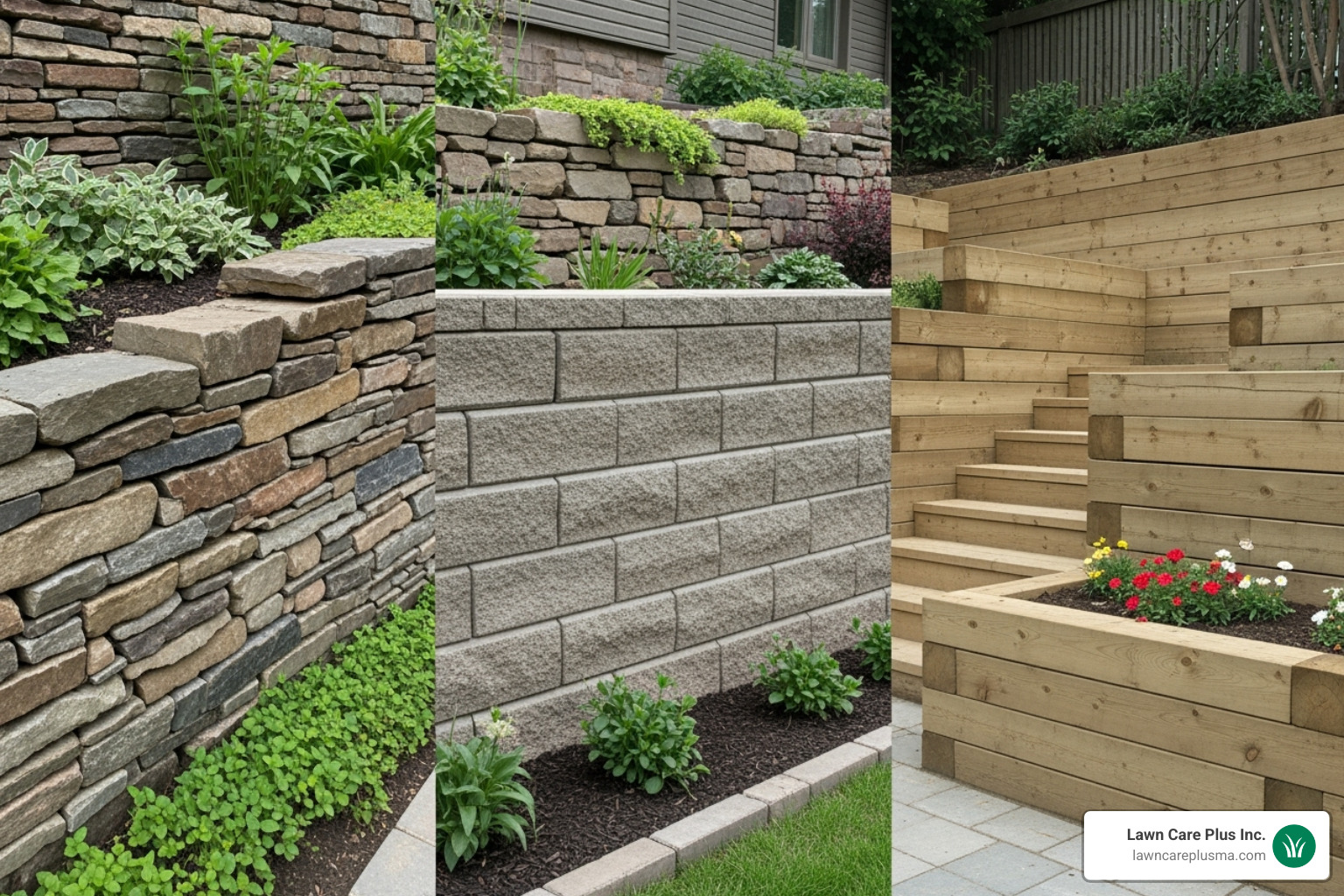
Concrete Blocks
Concrete blocks are the workhorses of retaining walls, offering a great balance of practicality and design flexibility.
- Pros: They are durable against freeze-thaw cycles, versatile in shape and color, and cost-effective. Their uniform size simplifies installation, reducing labor costs. Premium blocks boast compressive strengths over 5000 PSI.
- Cons: Some find the manufactured look less organic than natural stone, though modern blocks can mimic natural textures well.
At Lawn Care Plus Inc., we often use high-quality concrete blocks for their performance and longevity. Learn more about concrete block retaining walls.
Natural Stone
A natural stone retaining wall offers timeless beauty and unique character that lifts any landscape.
- Pros: Each stone is unique, creating a one-of-a-kind look. Natural stone is also extremely durable, capable of lasting for centuries when properly installed.
- Cons: It requires a higher material investment and more skilled labor. The irregular shapes and heavy weight mean installation is complex and time-consuming, adding to the cost.
Our masonry services specialize in crafting these beautiful and robust stone features.
Wood & Timber
Wood and timber retaining walls provide a rustic, natural aesthetic that suits informal settings and garden beds.
- Pros: They have a lower initial cost than stone or concrete and can be suitable for smaller DIY projects.
- Cons: Wood has a much shorter lifespan (10-20 years), as it’s susceptible to rot and insects in our damp Massachusetts climate. It is not suitable for walls over 2-3 feet or for critical structural support.
Poured Concrete
Poured concrete delivers exceptional strength with a clean, modern aesthetic, ideal for contemporary designs.
- Pros: When reinforced with steel rebar, it creates an incredibly strong and stable structure. It can be formed into various shapes and finished with different textures.
- Cons: Installation requires professional formwork and expertise, increasing costs. The look can feel stark, and there’s a risk of cracking if not properly engineered for freeze-thaw climates.
Gabion Walls
Gabion walls are wire mesh cages filled with rocks, offering an industrial-chic look and practical advantages.
- Pros: They provide excellent drainage, eliminating the hydrostatic pressure that can destroy solid walls. They are permeable, reducing erosion, and can be relatively affordable.
- Cons: Gabions can be bulky and require a lot of space. They also need specific types of rock fill that are larger than the mesh openings.
The Blueprint for Success: Design, Drainage, and Installation
A retaining wall is only as good as its design, drainage, and foundation. Flaws in any of these areas can lead to failure, regardless of the materials used. A successful project rests on getting these three pillars right.
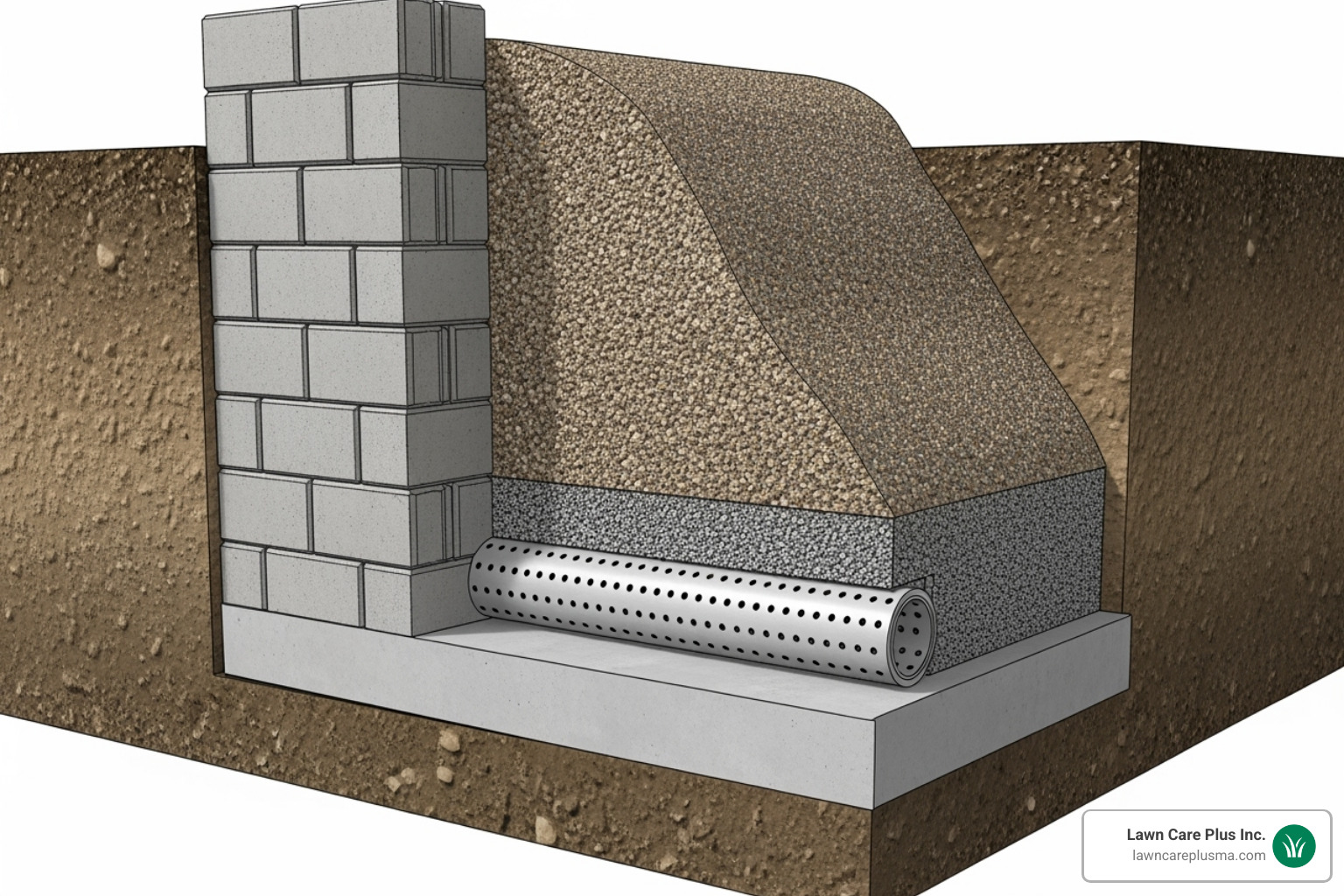
Key Design Factors for Retaining Walls
Several factors determine a wall’s design:
- Soil type: Clay soil holds water and increases pressure, while sandy soil drains better but can shift. Soil properties must be assessed.
- Surcharge loads: Any weight on top of or behind the wall, like a driveway or another slope, must be factored into the engineering.
- Frost line: In Massachusetts, the foundation must extend below the frost line to prevent heaving during freeze-thaw cycles.
- Height and length: Walls over 2 feet tall require advanced engineering. The International Building Code requires structural walls to have a safety factor of 1.5 against sliding and overturning, often necessitating a civil engineer’s review.
The Crucial Role of Retaining Wall Drainage
Water is the number one enemy of retaining walls. Accumulated water creates hydrostatic pressure that can cause even the strongest wall to bow, crack, or collapse. Proper drainage is non-negotiable.
A complete drainage system includes:
- Gravel backfill: A layer of clean gravel at least 12 inches deep behind the wall allows water to flow down freely.
- Perforated drain pipe: Installed at the base of the gravel, this pipe (or French drain) collects water and channels it to a safe discharge point.
- Weep holes: Small openings in the wall face that allow water to escape directly.
- Geotextile fabric: This fabric wraps the gravel backfill, preventing soil from clogging the drainage system.
Without proper drainage, a wall is destined to fail. Learn more about drainage solutions for sloping land.
Building a Solid Foundation
A wall is only as strong as its base. A proper foundation prevents settling and shifting.
- Excavation: A trench is dug below the finished grade. At least half the height of the first course of blocks (or a full block for walls over 3 feet) should be buried for stability.
- Compacted gravel base: A 4- to 6-inch layer of crushed stone is compacted to create a firm, level, and well-draining platform.
- Leveling the first course: This row must be perfectly level side-to-side and front-to-back, as any imperfection is magnified as the wall rises.
- Burying the first course: This anchors the wall and creates a stable “toe” that resists forward movement.
For a deeper dive, visit our page on retaining wall foundations.
From Functional to Fabulous: Enhancing Your Landscape
Retaining walls are powerful design elements that can transform your outdoor space. Beyond holding back soil, they create opportunities to turn challenging slopes into stunning, functional areas that boost curb appeal and property value.
Maximizing Usable Space on Sloped Properties
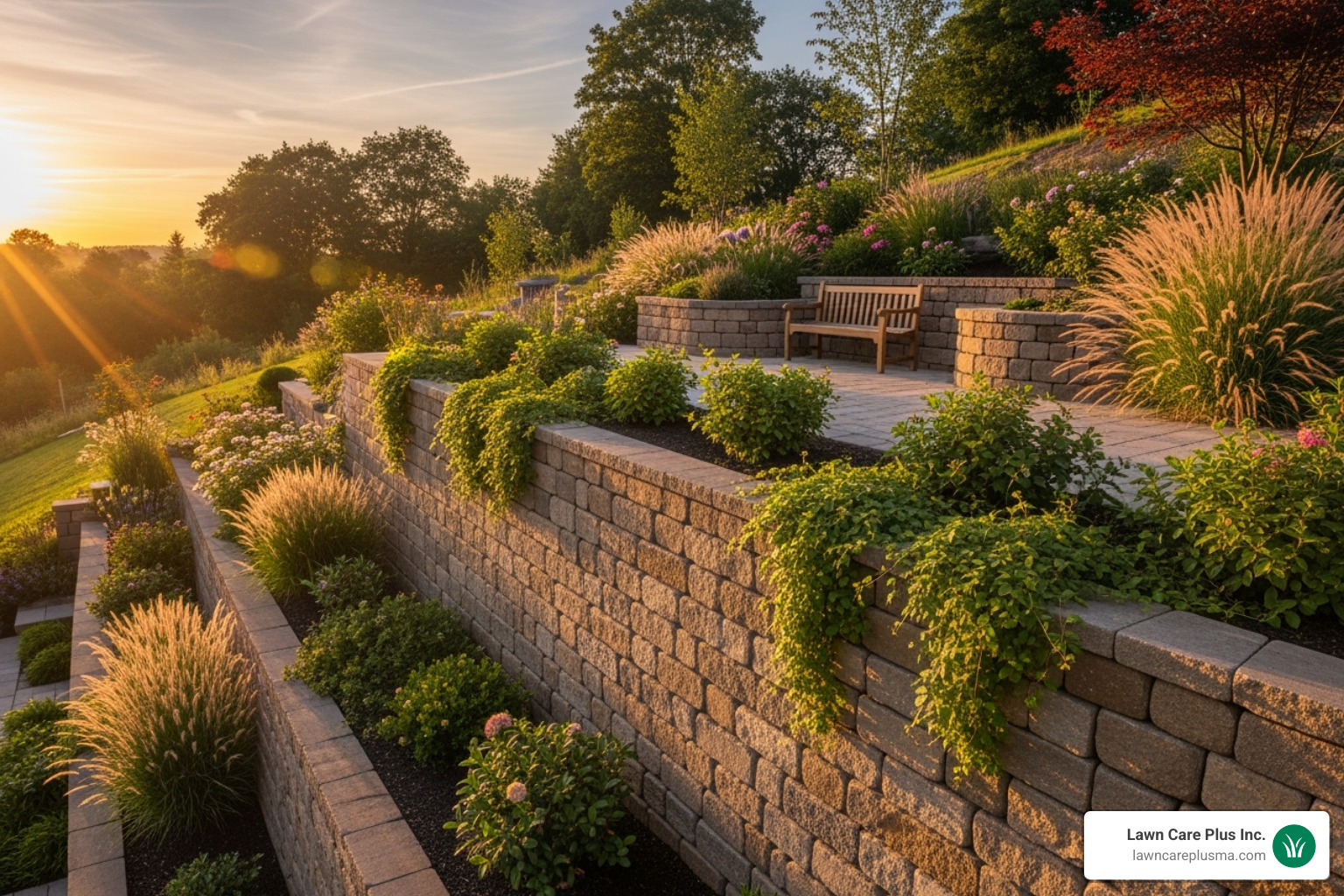
Retaining walls open up a sloped property’s hidden potential. By creating terraced gardens, a steep hillside can become multiple level planting beds, preventing erosion and adding visual depth. The possibilities extend beyond gardens. A wall can carve out a level patio for dining, a safe play area for children, or define different outdoor “rooms” within your landscape, separating a dining area from a lounging space. This purposeful organization lifts your entire outdoor environment. Explore ideas with our patio installation services.
Boosting Curb Appeal and Property Value
A well-designed retaining wall is a significant investment that improves your property’s aesthetic and market value. From the timeless look of natural stone to the clean lines of modern concrete blocks, walls can be customized to complement any architectural style. We ensure the design harmonizes with your home by carefully considering:
- Color: Materials can match your home’s exterior for a unified look or provide a beautiful contrast.
- Texture: The rough feel of natural stone creates a different mood than the smooth finish of premium concrete blocks.
- Pattern: Different block laying patterns or cap treatments can turn a functional structure into an architectural statement.
The goal is to turn the functional into the beautiful. For more inspiration, see our guide to retaining wall design ideas for every style of home.
Innovative Retaining Wall Ideas
Think of retaining walls as multifunctional landscape elements. Consider integrating features like:
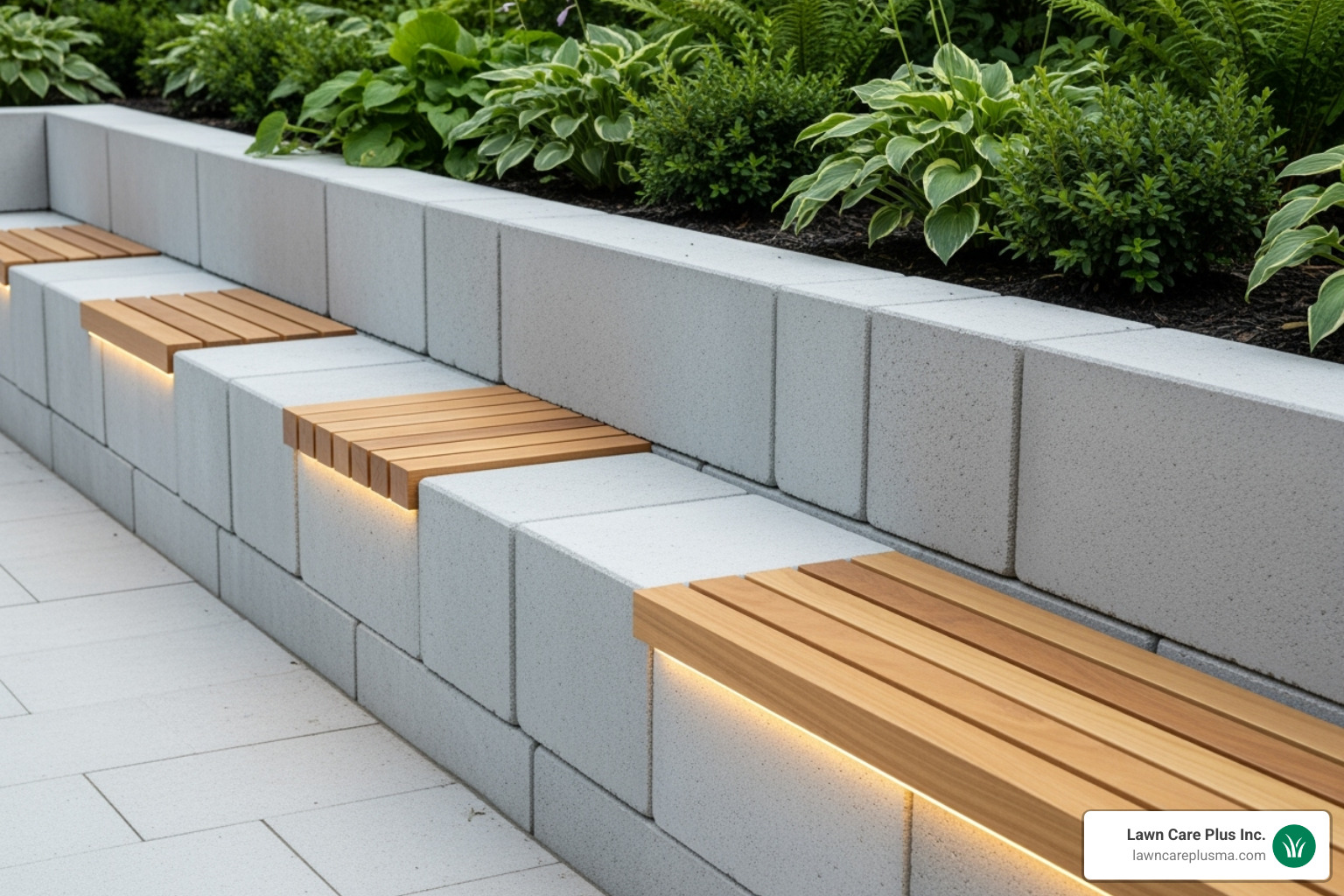
- Integrated Seating: A low wall around a patio can double as built-in bench seating.
- Built-in Lighting: Low-voltage LED lights improve safety and create dramatic evening ambiance.
- Planters and Green Walls: Integrated planting pockets or vertical gardens soften the hardscape with living plants.
- Water Features: A wall provides a perfect backdrop for a cascading waterfall or tranquil fountain.
- Fire Pits: An integrated fire pit creates a sunken, sheltered conversation area. Find more ideas on our patio fire pits page.
Retaining walls are the foundation for creating outdoor spaces that are both remarkably functional and genuinely beautiful.
DIY vs. Hiring a Professional Retaining Wall Contractor
Deciding whether to build your own retaining wall or hire a professional depends on the project’s scope and complexity. While DIY can be rewarding, retaining walls involve engineering principles where mistakes can have serious consequences.
DIY Considerations for Small Retaining Walls
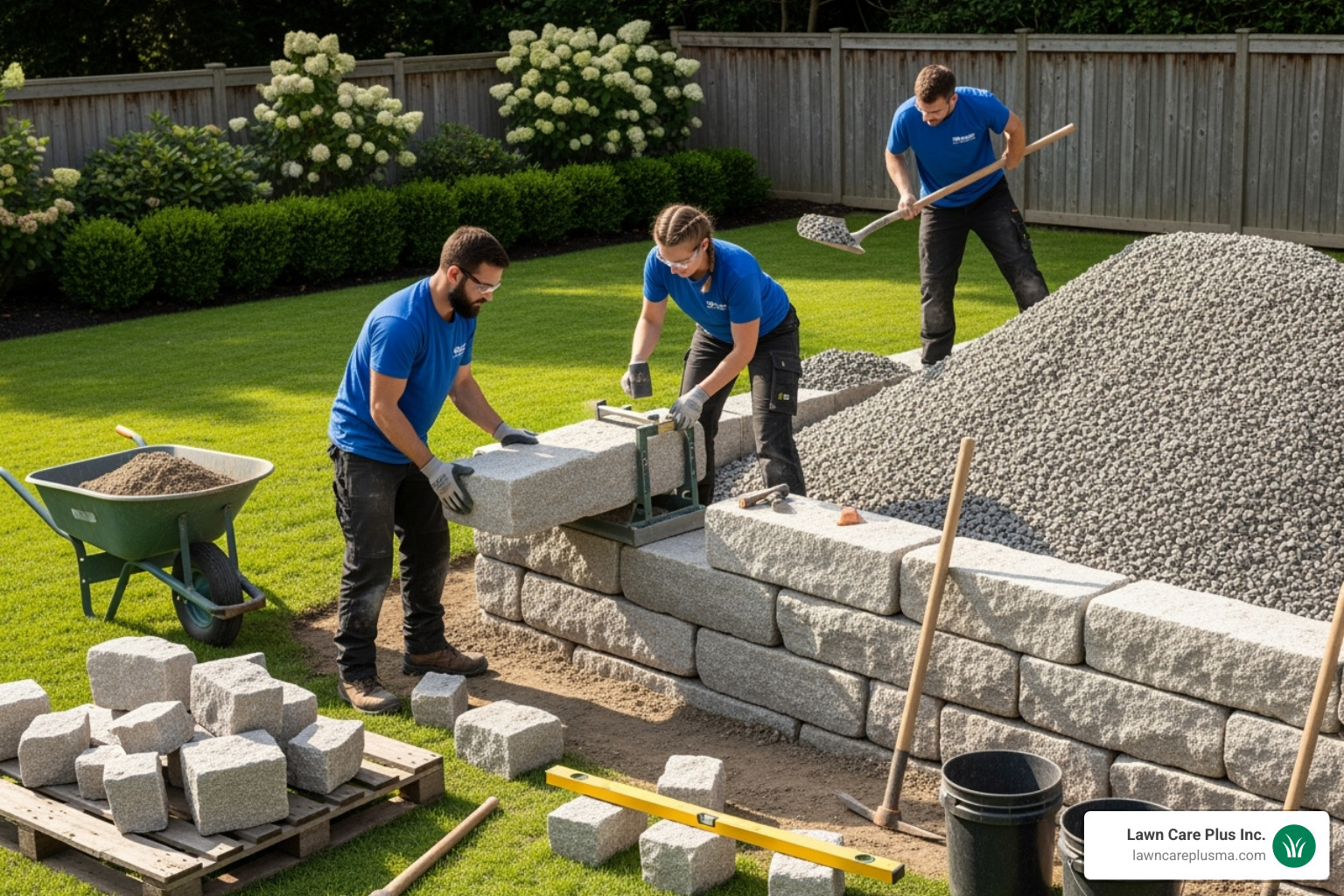
A small, decorative retaining wall can be a manageable DIY project. If you’re considering this route, stick to walls under 2 to 3 feet in height. At this scale, the forces are manageable and you likely won’t need engineered plans or permits.
Be prepared with the right tools (shovels, a good level, tamper, etc.) and safety gear. Always buy about 10% extra material for cuts and mistakes. Be honest about the challenges: achieving a perfectly level first course is difficult, proper drainage is essential, and moving tons of soil and stone is back-breaking labor.
When to Call a Professional Builder
For anything beyond a simple decorative border, hiring experienced professionals is essential for safety and longevity. Call a pro if:
- The wall will be over 3 to 4 feet tall. These require engineering expertise and, in Massachusetts, often an architect or engineer’s review for walls over 2-4 feet.
- The wall will support critical loads like a driveway or foundation.
- Your property has steep slopes or poor soil conditions that require specialized design.
- The project requires local permits. Most Massachusetts towns require permits for walls over a certain height, a process professionals handle routinely.
- The project needs an engineered design to meet building codes and ensure it won’t fail.
At Lawn Care Plus Inc., our team of experienced retaining wall builders handles the engineering, permits, and proper installation. We build walls throughout the Boston Metro-West area that stand strong through New England’s challenging weather.
Frequently Asked Questions about Retaining Walls
Here are clear answers to the most common questions we hear from homeowners across Massachusetts about this significant property investment.
How long do retaining walls last?
Lifespan depends heavily on the material and quality of installation. A wall with poor drainage will fail prematurely, regardless of material.
- Wood/Timber: 10 to 20 years, as it’s susceptible to rot and insects.
- Segmental Concrete Blocks: 50 to 100+ years when installed correctly with proper drainage. Premium blocks are engineered for our freeze-thaw cycles.
- Poured Concrete & Natural Stone: 100+ years, sometimes even centuries. These are the champions of longevity.
How much does a retaining wall cost?
The final price varies widely. Key factors include:
- Height and Length: Taller, longer walls require more material, labor, and engineering.
- Material Choice: Wood is often the most budget-friendly, while natural stone is a premium option.
- Site Access: Difficult access can increase labor costs.
- Drainage & Foundation: Poor soil or high water tables may require more extensive work.
Based on internet data, average costs for retaining walls can range from $25 to over $100 per square foot. Please note: These are average costs based on internet data and not actual costs for Lawn Care Plus Inc. We provide detailed quotes customized to your specific project. For more insights, visit our page on retaining wall costs.
Does my retaining wall need a permit in Massachusetts?
Most likely, yes. Massachusetts towns typically require permits for retaining walls exceeding a certain height, often 2 or 4 feet, but the exact threshold varies by municipality. You must always check with your local building department before starting. For structural walls over 2 feet, an engineer’s review is often required, and for walls over 4 feet, an architect may need to be involved.
When you work with Lawn Care Plus Inc., we handle the entire permitting process, ensuring your project complies with all local regulations throughout the Boston Metro-West area.
Conclusion: Build a Wall That Stands the Test of Time
Retaining walls are the heroes of landscape design, turning challenging properties into beautiful, functional, and valuable assets. They prevent erosion, create usable space, and manage drainage. The keys to success are choosing the right type and material, and ensuring proper design and drainage—these are the difference between a wall that lasts for decades and one that fails.
A well-built retaining wall is a long-term investment in your property’s safety and beauty, providing the foundation for the patio you’ve always wanted or protecting your home from a sliding slope.
For expert retaining wall design and installation in the Boston Metro-West area, the team at Lawn Care Plus Inc. has the knowledge to build walls that stand the test of time. We understand Massachusetts soil, weather, and building codes.
Ready to transform your challenging slope into a stunning outdoor oasis? Contact us today to start your hardscaping project!