What Does Basement Waterproofing Actually Cost?
Basement waterproofing cost typically falls between $2,000 and $15,000 for most homeowners, with the national average sitting around $5,000–$5,500. Here’s a quick snapshot to help you estimate your project:
| Scope of Work | Typical Cost Range |
|---|---|
| Minor interior sealing (cracks, paint) | $600 – $2,000 |
| Interior drainage system (French drain + sump pump) | $3,000 – $8,000 |
| Exterior waterproofing with membrane | $7,000 – $15,000 |
| Full interior + exterior combined system | $8,000 – $20,000+ |
Note: These are average costs based on national internet data and do not represent actual pricing from Lawn Care Plus.
If you’ve ever walked downstairs and caught that unmistakable smell of damp concrete — or noticed a spreading stain creeping along the base of your basement wall — you already know how fast a small moisture problem can feel like a big emergency.
The truth is, water is patient. It finds every crack, every gap, every weak joint. And in the Greater Boston area, where we deal with heavy spring rains, dense clay soils, and relentless freeze-thaw cycles, basements take a serious beating year-round.
The cost to protect yours depends on several key factors:
- Where the water is coming from (surface runoff vs. hydrostatic pressure vs. condensation)
- Whether you need interior or exterior work — or both
- The size and age of your home
- The severity of existing damage
Understanding these variables is the difference between a smart investment and an expensive surprise.
I’m Tim DiAngelis, owner of Lawn Care Plus, Inc., and over more than a decade of working on drainage, hardscaping, and landscape systems throughout Greater Boston and Metro-West, I’ve seen how unmanaged water around a home’s foundation directly drives up basement waterproofing cost — often by the time it’s already too late for the easy fix. In this guide, I’ll walk you through everything you need to know to budget confidently and make the right call for your property.
Relevant articles related to basement waterproofing cost:
Average Basement Waterproofing Cost in 2026
As we navigate through April 2026, we’ve seen that the basement waterproofing cost for a standard residential project often fluctuates based on regional demand and material availability. While the national average hovers around $5,233, homeowners in the Northeast—specifically in high-moisture areas like Boston, Newton, and Brookline—should expect to pay a premium. In fact, data suggests that Northeast residents often pay 15% to 30% above the national average due to labor rates and the complexity of our local geological conditions.
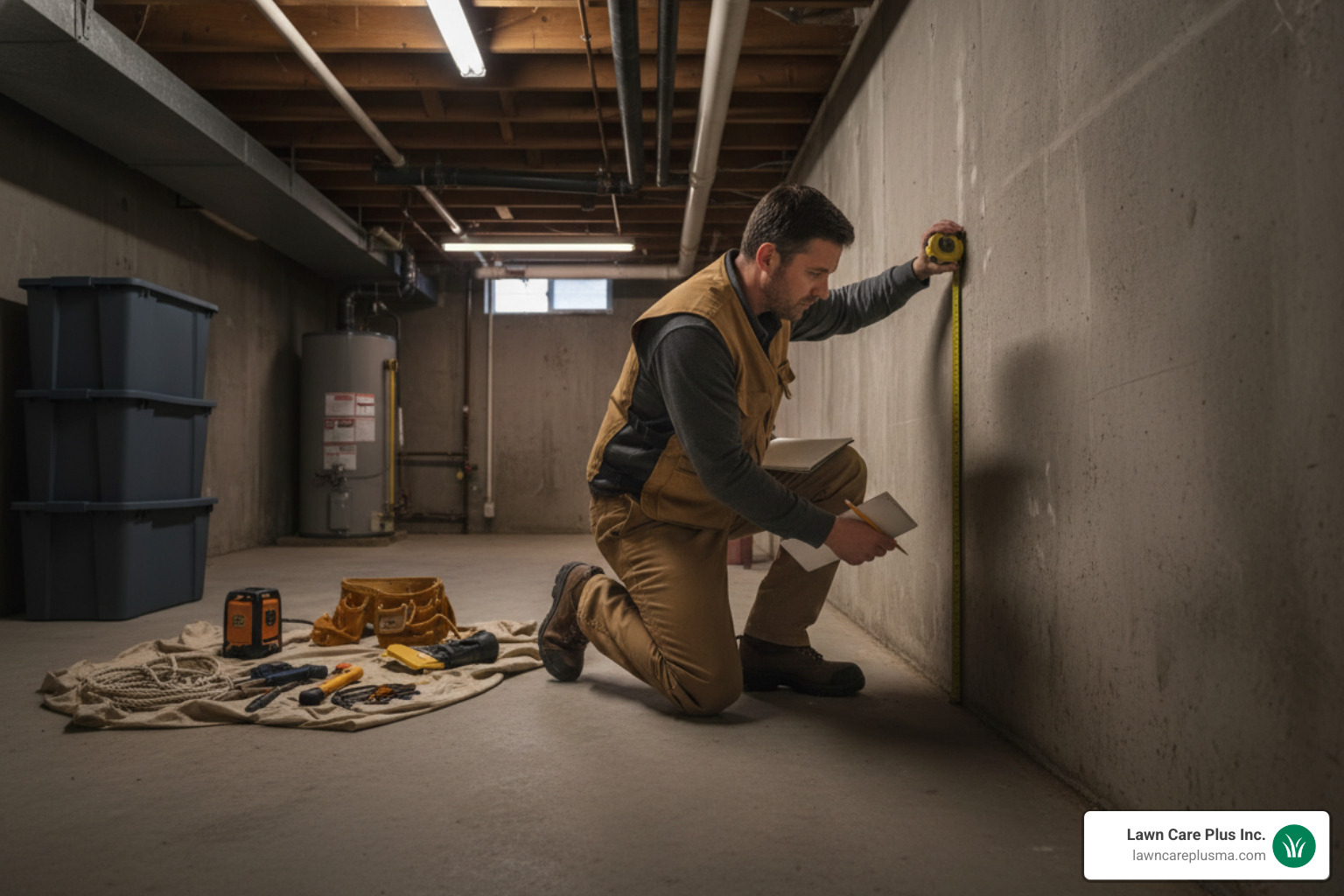
When you start looking at quotes, you’ll likely see prices presented in two ways: per square foot of the floor area or per linear foot of the wall perimeter. It’s important to remember that these are average costs based on internet data and not actual costs for Lawn Care Plus.
| Pricing Metric | Low End | Average | High End (Extensive) |
|---|---|---|---|
| Per Square Foot | $3.00 | $6.50 | $10.00+ |
| Per Linear Foot (Drains) | $25.00 | $85.00 | $120.00+ |
For a more detailed look at how these systems are structured, you can check out more info about inside basement drainage systems. Generally, minor fixes like sealing a single foundation crack might cost as little as $600, while a full-scale exterior excavation for a large home in Wellesley or Needham can easily climb toward $20,000 or $30,000. For comprehensive data on these trends, How Much Does Basement Waterproofing Cost? [2026 Data] | Angi provides excellent benchmark figures.
How Size Impacts Basement Waterproofing Cost
Size is the most obvious driver of your total bill, but it doesn’t always scale linearly. A 500-square-foot basement might cost between $1,750 and $4,000 to waterproof using standard interior methods. However, as the space grows, economies of scale can sometimes kick in for materials, though labor remains a constant.
- 1,000 sq. ft. Basement: On average, homeowners spend about $13,640 for a full system, with typical ranges falling between $12,447 and $14,833.
- 2,000 sq. ft. Basement: For larger homes in areas like Weston or Milton, costs can range from $24,817 to nearly $30,000.
The “linear perimeter” is often a more accurate measure for drainage systems. If you have a 1,500-square-foot ranch with 115 linear feet of wall, your cost will be determined by the footage of the drainage track installed along that perimeter, rather than just the open floor space.
Factors Influencing Your Basement Waterproofing Cost
Why does one neighbor pay $4,000 while another in the same zip code pays $12,000? It usually comes down to what’s happening beneath the surface.
Soil Composition and Hydrostatic Pressure
In the Boston Metro-West area, we frequently encounter heavy clay soils. Clay is a “heavy” soil—it holds onto water like a sponge. When it gets saturated, it expands, creating immense hydrostatic pressure against your foundation walls. This pressure is what forces water through microscopic pores in concrete or gaps in the mortar of block walls. Excavating in clay is also more labor-intensive than sandy soil, which can increase the hourly labor rate, currently averaging around $200 per hour for specialized contractors.
Home Age and Foundation Material
If you live in a pre-1950s home in Roslindale or Hyde Park, your foundation might be made of fieldstone or brick rather than poured concrete. These older materials are beautiful but porous. They often require more specialized membranes or even structural reinforcement before they can be truly waterproofed. Furthermore, older homes often lack “footers”—the concrete base that walls sit on—which makes installing modern interior drainage more complex.
Local Climate Challenges
Our local weather is a major factor. Boston receives about 45 inches of precipitation annually. When you combine that with heavy snowmelt in the spring and the freeze-thaw cycles that cause the ground to heave, your foundation is under constant stress. For a deeper dive into managing these environmental factors, see more info about drainage solutions.
Signs You Need to Invest in Basement Waterproofing Cost
You don’t always need a flood to know you have a problem. Keep an eye out for these “early warning” signs:
- Efflorescence: This looks like a white, powdery or crystalline substance on your walls. It’s actually salt left behind when water evaporates. It’s a clear sign that moisture is moving through the masonry.
- Mold and Musty Odors: If it smells like a locker room, you have a moisture problem. Mold can begin growing within 24–48 hours of a leak.
- Wall Cracks: Horizontal cracks are particularly concerning as they often indicate that hydrostatic pressure is bowing your walls inward.
- Peeling Paint or Rust: If the paint is bubbling or your laundry machine’s feet are rusting, the humidity levels are too high.
Interior vs. Exterior: Comparing Methods and Prices
This is the “big” decision every homeowner faces. Do you fix it from the inside or the outside?
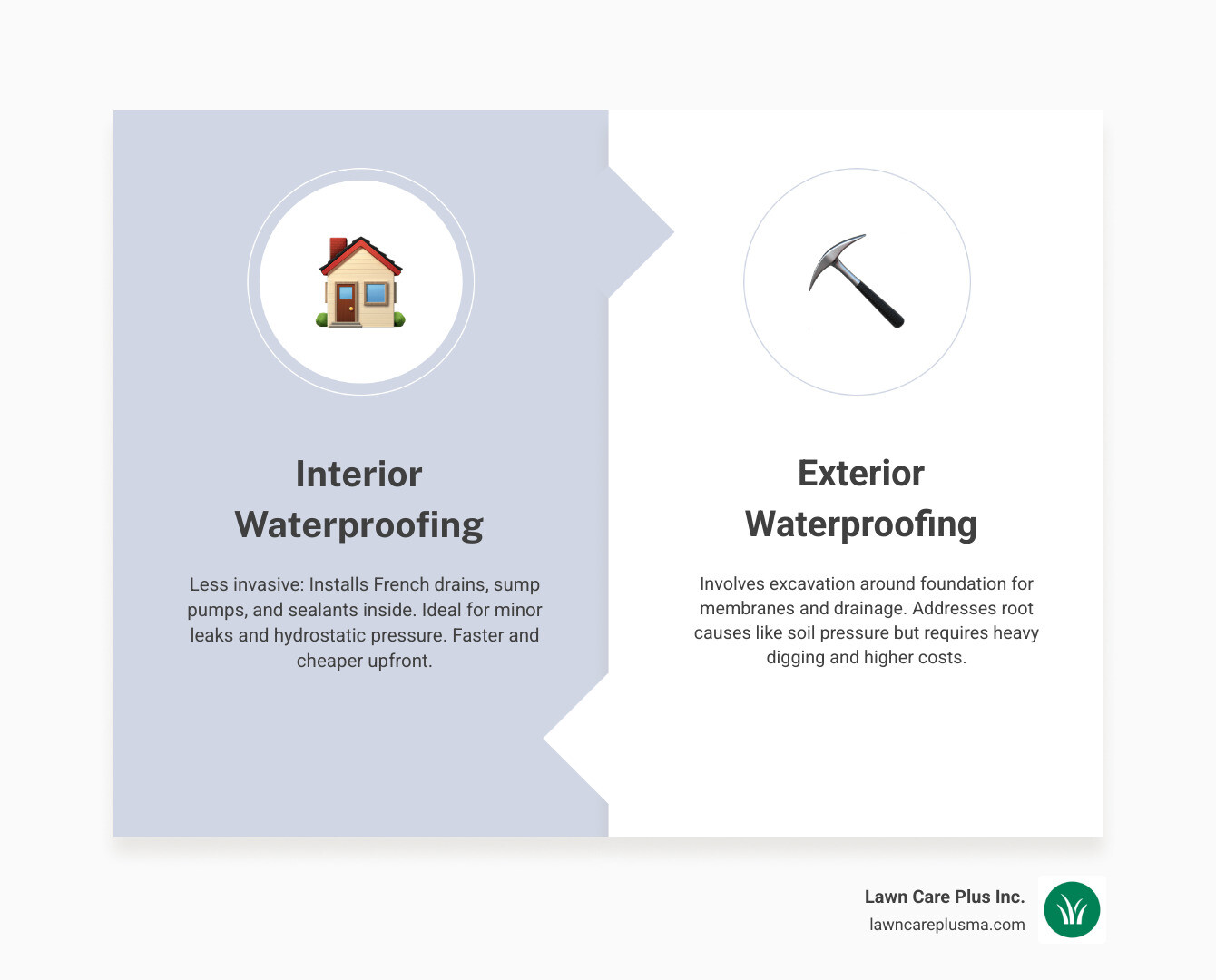
Exterior Waterproofing (The “Cure”)
Exterior waterproofing is widely considered the most effective method because it stops water before it ever touches your foundation. However, it is also the most expensive. It involves excavating the soil all the way down to the footer, cleaning the wall, and applying a heavy-duty waterproof membrane or sheet.
- Typical Cost: $7,000 – $15,000+ (Average $70–$150 per linear foot for excavation).
- Pros: Protects the structural integrity of the wall; prevents internal wall mold.
- Cons: High cost; disrupts landscaping, decks, and walkways.
Interior Waterproofing (The “Management”)
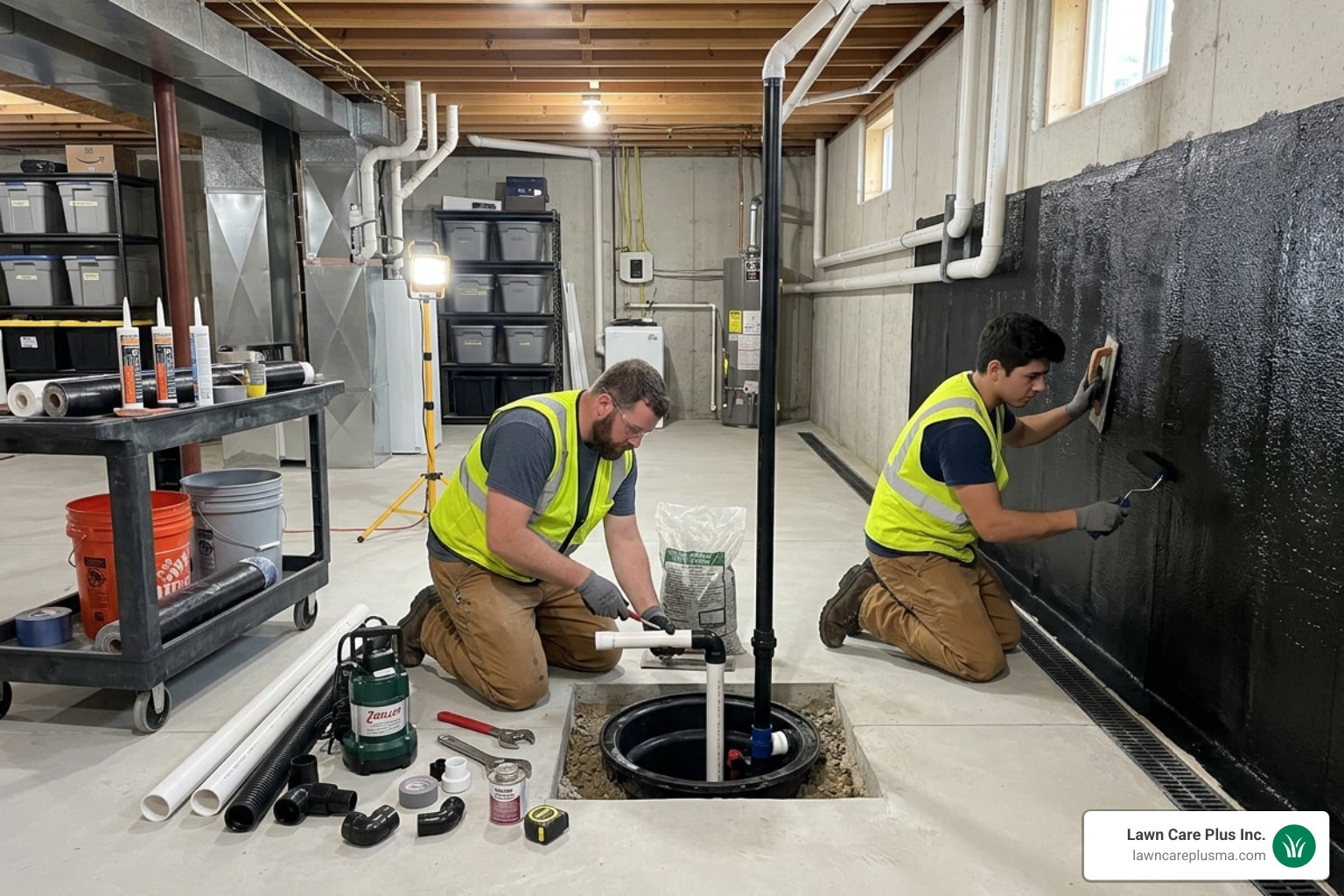
Interior systems are designed to manage water that has already made it past the wall. This usually involves an interior French drain (weeping tile) installed under the floor slab that directs water to a sump pump.
- Typical Cost: $3,000 – $8,000.
- Pros: Much more affordable; can be done in any weather; no yard disruption.
- Cons: Doesn’t stop water from entering the wall itself; requires a functional sump pump.
For a comparison of these methods, How Much Does Basement Waterproofing Cost? (2026 Pricing) | This Old House offers a fantastic breakdown of long-term durability. You can also learn about specific interior setups here: more info about interior French drains.
Common Method Costs
- Waterproof Paint/Sealant: $2 – $7 per sq. ft. (Best for minor condensation, not active leaks).
- Sump Pump Installation: $1,200 – $2,500 (Essential for interior systems).
- Vapor Barrier: $1,500 – $3,000 (Great for preventing humidity and odors).
- Crack Injection (Epoxy/Polyurethane): $800 – $1,500 per crack.
Additional Expenses: Foundation Repair and Mold Remediation
Sometimes, a wet basement is just the tip of the iceberg. If water has been intruding for years, you might face secondary costs that aren’t strictly “waterproofing” but are necessary to complete the job.
Foundation and Structural Repairs
If your walls are bowing or have large structural cracks, you’ll need to fix them before sealing the basement.
- General Foundation Repair: $2,000 – $8,000 (Average $5,000).
- Structural Underpinning: If the foundation is settling, costs can exceed $25,000.
Mold Remediation
If the dampness has turned into a biological colony, you need professionals to remove it safely.
- Mold Removal: $500 – $3,500 for most basements, though severe cases can hit $9,000+.
Windows and Permits
- Egress Windows: If you’re waterproofing to finish the basement into a bedroom, an egress window is a legal requirement. These typically cost $2,500 – $5,000 per window, or up to $12,000 for a full “all-inclusive” system.
- Permits: Depending on whether you live in Boston or a suburb like Dedham, permits can range from $75 to $500.
For more on the hardware used in these projects, see more info about basement drainage pipes.
Saving Money on Your Basement Waterproofing Cost
Waterproofing doesn’t always have to break the bank. Here are a few ways to keep the basement waterproofing cost manageable:
- Gutter and Downspout Maintenance: This is the #1 “free” fix. Ensure your gutters are clean and your downspouts extend at least 6 to 10 feet away from your foundation. This solves roughly 90% of minor basement dampness.
- Landscape Grading: Ensure the ground slopes away from your house at a rate of at least 1 inch per foot for the first 6 feet.
- DIY Prep Work: You can save on labor by clearing out the basement yourself, removing old drywall, or pulling up flooring before the contractors arrive.
- Off-Peak Scheduling: Many contractors are slammed in the spring and summer. Scheduling your project for the winter months can sometimes lead to better rates or faster start dates.
- Get Multiple Quotes: Always get at least three written estimates to compare methods and warranties.
Professional vs. DIY: Is Waterproofing Worth the Investment?
We get asked all the time: “Can I just buy some waterproof paint at the hardware store and do this myself?”
For minor condensation issues, sure. A $50 bucket of masonry sealer can help. But for active leaks or hydrostatic pressure, DIY fixes are often a “band-aid on a bullet wound.”
The Case for Professional Installation
- Industrial-Grade Materials: Pros have access to 40-mil membranes, high-volume sump pumps, and specialized epoxy injections that you won’t find at a big-box store.
- Warranties: Most professional systems come with a 20- to 50-year warranty—many of which are transferable to the next homeowner.
- Equipment: Excavating 8 feet down or jackhammering a concrete floor requires specialized machinery and safety protocols.
- Root Cause Identification: A pro can tell the difference between a plumbing leak, a cove joint issue, or a high water table.
ROI and Home Value
Does a dry basement pay off? Absolutely.
- Resale Value: A leaky basement can reduce your home’s value by 10% to 25%. Conversely, a professionally waterproofed basement can see a 30% ROI at resale.
- Livable Square Footage: In high-value markets like Brookline or Newton, turning a 1,000-square-foot damp basement into a dry, finished family room can add six figures to your home’s market value.
To understand how this fits into your broader property strategy, read more info about land drainage systems.
Frequently Asked Questions about Basement Moisture
Does basement waterproofing increase home value?
Yes. Beyond just protecting the structure, a dry basement allows for “finished” square footage. Homebuyers in the Boston area are often wary of older homes with wet basements; having a certified, warrantied system in place is a massive selling point that can increase your sale price by $10,000 to $15,000.
How long does a professional waterproofing system last?
It depends on the method. Interior French drains and weeping tiles typically last 20 to 30 years. High-quality exterior membranes can last 50 years or more. Sump pumps, however, are mechanical and usually need replacement every 7 to 10 years.
What is the difference between a French drain and a weeping tile?
In the context of basement waterproofing, they are often used interchangeably. Technically, a “weeping tile” is the perforated pipe itself (which used to be made of clay tiles, hence the name), while a “French drain” is the entire system of a gravel-filled trench containing that pipe. Both serve the same purpose: giving water a path of least resistance to flow away from your home.
Conclusion
At Lawn Care Plus Inc., we believe that a beautiful home starts with a solid, dry foundation. While we are experts in the Greater Boston area for landscaping, hardscaping, and masonry, we know that your outdoor projects—like those stunning new patios or retaining walls—are only as good as the drainage systems protecting them.
Managing basement waterproofing cost is about being proactive rather than reactive. By addressing exterior drainage, maintaining your gutters, and choosing the right professional system for your specific soil type and home age, you aren’t just spending money—you’re protecting your most valuable asset.
Whether you’re in Belmont, Watertown, or anywhere in the Metro-West area, don’t let a damp basement dampen your home’s potential. If you’re ready to secure your property’s future, contact us for a professional drainage assessment and let’s get your home bone dry for good.