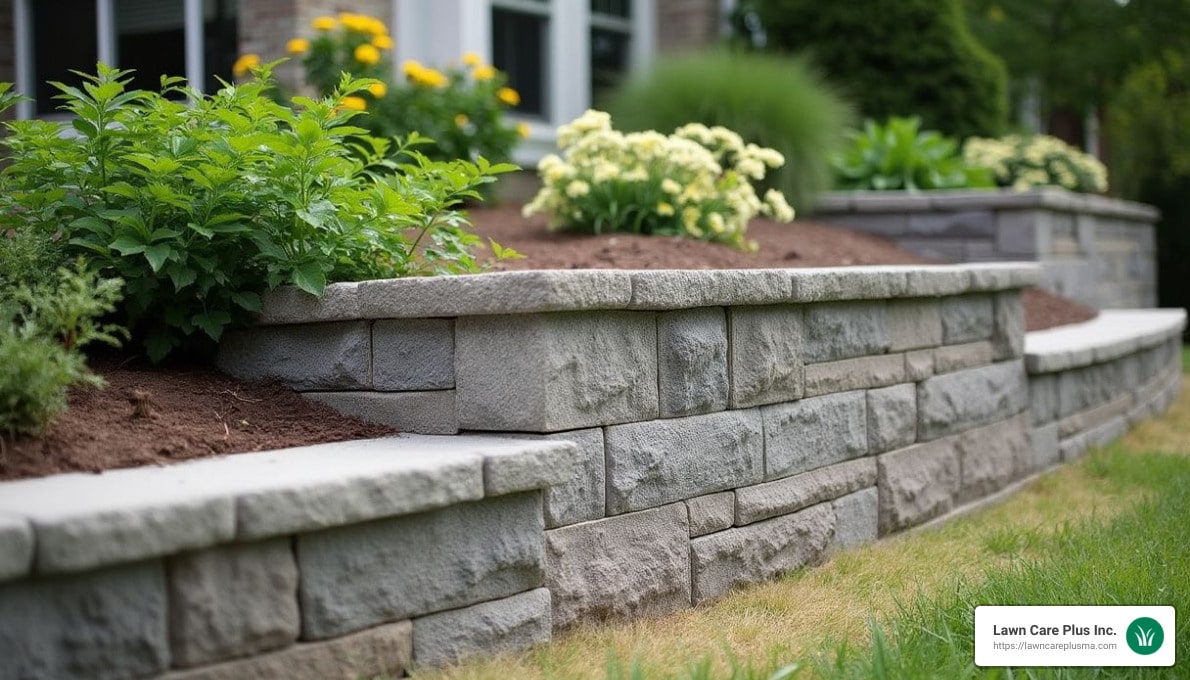
Introduction: Taming Your Slope
When you build a retaining wall on a slope, you engineer a structure to hold back soil, prevent erosion, and create usable, level space on challenging terrain. This guide covers the entire process, from site assessment to the final capstone.
Quick Answer: Essential Steps to Build a Retaining Wall on a Slope
- Plan and Assess – Evaluate slope grade, soil type, water runoff, and check local building codes
- Obtain Permits – Required for walls over 4 feet in most areas; call 811 to locate utilities
- Excavate and Level – Dig a trench below frost line, typically 6-12 inches deep minimum
- Build a Solid Base – Install 4-6 inches of compacted crushed gravel for foundation
- Install Drainage – Place perforated pipe at base and create gravel column behind wall
- Stack and Backfill – Set blocks with proper setback (lean into hill), stagger joints, compact gravel in layers
- Finish and Grade – Add capstones, grade soil away from wall, and landscape
Here’s a reality check: approximately 30% of DIY retaining walls fail within five years, and poor drainage is responsible for about 75% of those failures. A 4-foot-high, 15-foot-long wall can hold back 20 tons of saturated soil. This isn’t just a landscaping project—it’s a structural battle against gravity and water pressure.
The good news? With proper planning, materials, and attention to drainage and foundation, you can transform your sloped yard into terraced gardens or level patios. A well-built retaining wall can increase property value by 15%, offering nearly a 100% return on investment.
This project demands respect. You’re building a structure to withstand immense pressure from soil, water, and freeze-thaw cycles. Cutting corners leads to expensive repairs. This guide covers the engineering principles, material choices, construction steps, and common mistakes for any retaining wall project.
I’m Tim DiAngelis, owner of Lawn Care Plus, Inc. With over a decade of experience installing hardscapes in Greater Boston and Metro-West, I’ve learned that success when you build a retaining wall on a slope depends on three things: a rock-solid foundation, proper drainage, and understanding your site’s specific conditions.
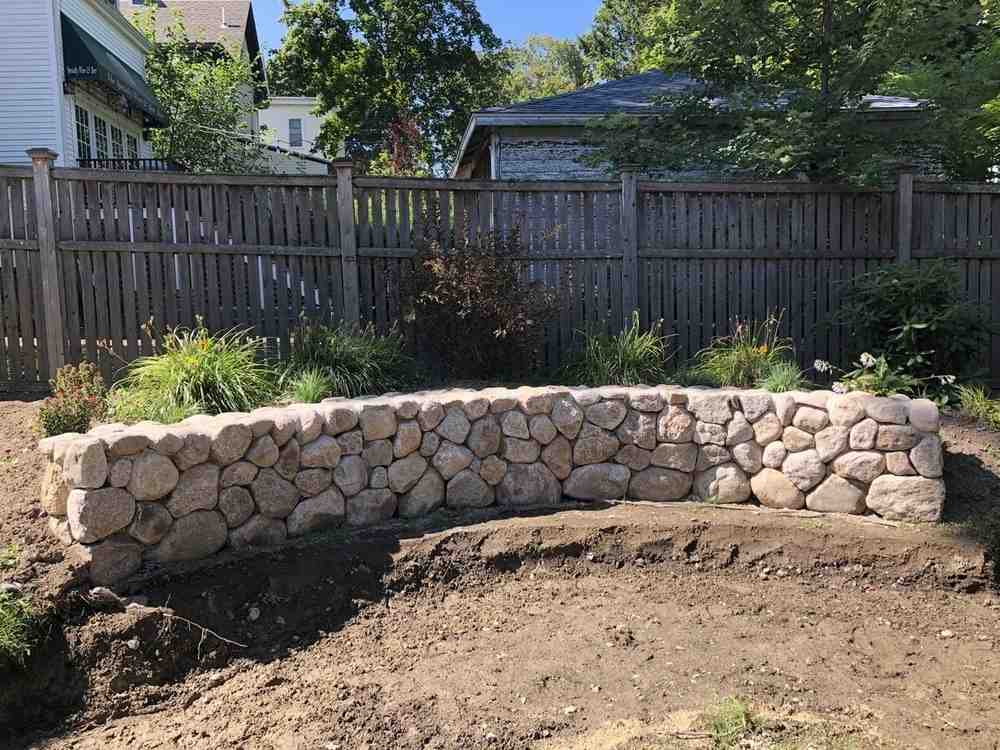
Build a retaining wall on a slope terms you need:
The Science and Strategy Behind a Stable Wall
Understanding the forces at play is crucial before you build a retaining wall on a slope. A retaining wall is a structural element designed to withstand immense pressure. Proper planning is the groundwork for long-term stability.
Understanding Your Site’s Demands
Every slope is unique, dictating the wall’s design. A thorough site assessment is the first step.
- Slope Grade: The slope’s steepness is a primary factor. Steeper slopes (30%+) exert more pressure and often require professional engineering. The Allan Block Retaining Wall Planning Guide notes that slopes above the wall add pressure, while slopes below can destabilize the foundation.
- Soil Type Analysis: Soil type is critical. Clay soils, common in Massachusetts, expand when wet and exert pressure. Sandy soils drain well but may need reinforcement. We test soil properties; for example, soils with a friction angle below 27° or a plasticity index over 20 are unsuitable for the reinforced zone and must be replaced.
- Water Runoff Patterns: Water is the primary enemy of retaining walls, with poor drainage causing 75% of failures. We observe water runoff patterns to design systems (grading, swales, internal drains) that divert water away from the wall.
- Climate Considerations: New England’s freeze-thaw cycles cause frost heaving, where frozen soil expands and pushes on the wall. To prevent this, the wall’s footing must be below the local frost line or on a deep, well-drained gravel base.
For more in-depth information on how different landscapes affect wall design, explore our resources on Landscape Retaining Walls.
Choosing the Right Wall Type and Materials
Your choice of material and wall type impacts durability, aesthetics, and cost, especially on a slope.
Note: The cost ranges in the table below are broad averages based on internet data, not actual pricing for Lawn Care Plus. They’re intended only for general budgeting and comparison.
| Material Type | Average Internet Cost Range (per sq ft of wall face) | Durability | DIY-Friendliness | Aesthetics |
|---|---|---|---|---|
| Interlocking Concrete Blocks | ~$20–$250 | High | High | Versatile, modern to rustic |
| Pressure-Treated Timber | ~$10–$90 | Moderate (15–20 yrs) | Moderate | Natural, rustic |
| Poured Concrete | ~$15–$180 | Very High | Low (Pro required) | Industrial (can be veneered) |
| Natural Stone/Brick | ~$15–$200 | High | Low (Skilled Pro required) | Classic, neat, rustic (Stone); Formal (Brick) |
All ranges above are approximate internet-based averages only and are not Lawn Care Plus pricing.
- Gravity Walls: Rely on mass and a backward lean (batter) to resist soil pressure. Simple design, but typically limited to 3–4 feet high without reinforcement.
- Cantilever Walls: L-shaped reinforced concrete walls that use the soil’s weight on a footing for stability. Can be built up to 25 feet high, suitable for large slopes.
- Anchored Walls: Use cables or tiebacks anchored in the soil behind the wall for extra support. Used for very tall or heavily loaded walls.
- Mechanically Stabilized Earth (MSE) Walls: Composite structures of compacted backfill layered with reinforcement (geogrids). Cost-effective and quick to build for tall walls.
While interlocking blocks are popular for their balance of strength and ease of installation, timber walls provide a natural look but are not as long-lived as masonry options. For more information on block options, see our guides on Blocks for Retaining Wall and Concrete Block Retaining Wall.
Step-by-Step Guide: How to Build a Retaining Wall on a Slope
With planning complete, here are the practical, meticulous steps to build a retaining wall on a slope for a durable, beautiful result.
Step 1: Excavation and a Rock-Solid Foundation
The foundation is the most critical part of the wall. A weak foundation guarantees failure.
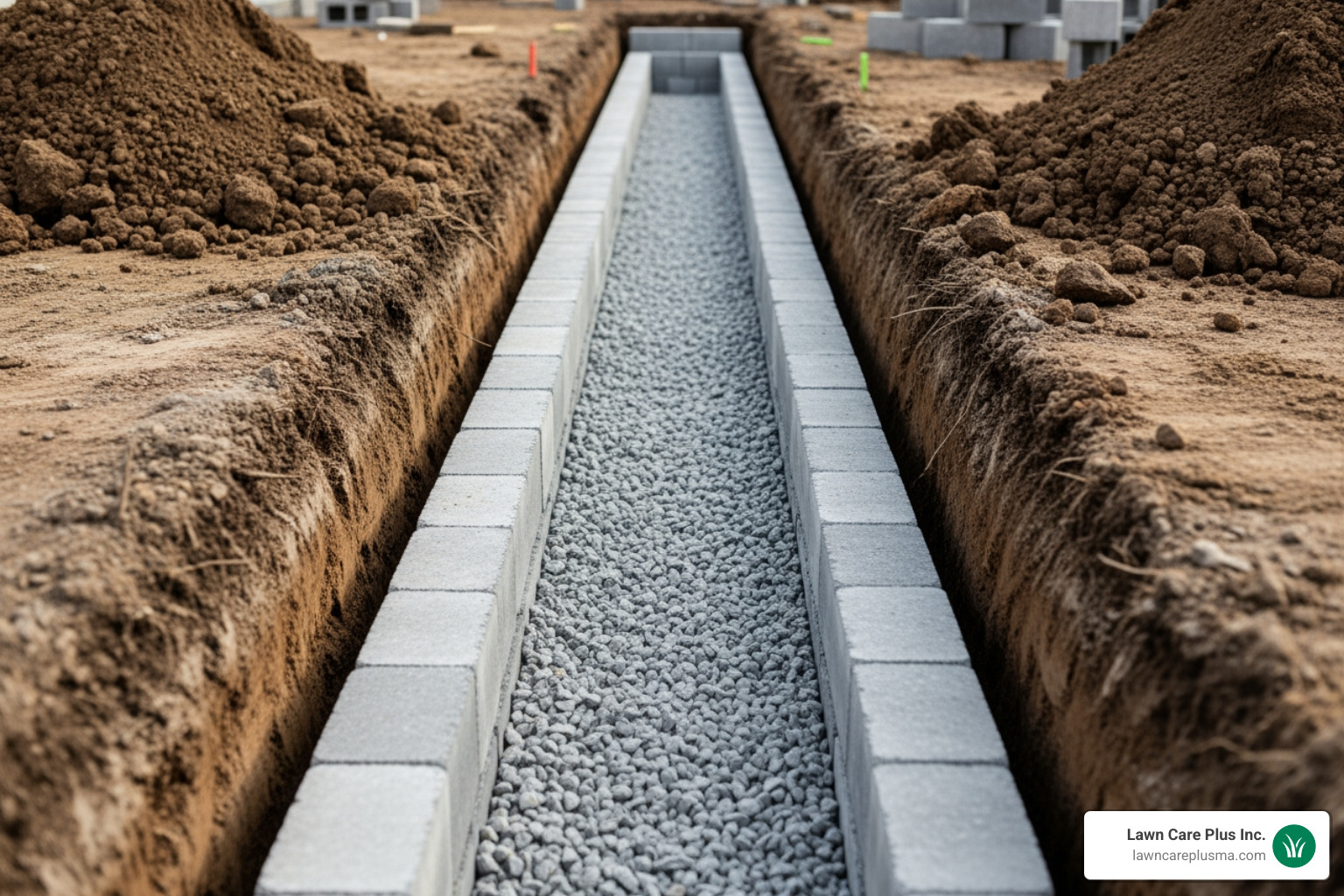
- Marking the Layout: Mark the wall’s layout with stakes and string. Plan for at least three feet of level working space behind the wall for every foot of wall height.
- Site Preparation: Clear all vegetation and roots. On steep or long sites, a mini excavator is efficient for digging and cutting level “benches” into the slope.
- Trench Depth and Width: Dig a trench twice the block width and at least 12 inches deep, or below the local frost line in Massachusetts, to protect against frost heave.
- Creating a Level Base: The trench bottom must be perfectly level. Use a long level and straightedge, as any unevenness creates instability.
- Crushed Gravel Base: Fill the trench with a 4-6 inch layer of crushed gravel (e.g., 3/4-minus) to create a stable, draining base.
- Compaction: This step is vital. Compact the gravel base with a vibrating plate tamper to prevent settling and ensure a solid footing.
For more details on preparing the groundwork, visit our page on Retaining Wall Foundation.
Step 2: Installing Drainage and Building the Wall
With the foundation set, install the drainage system and begin stacking the wall.
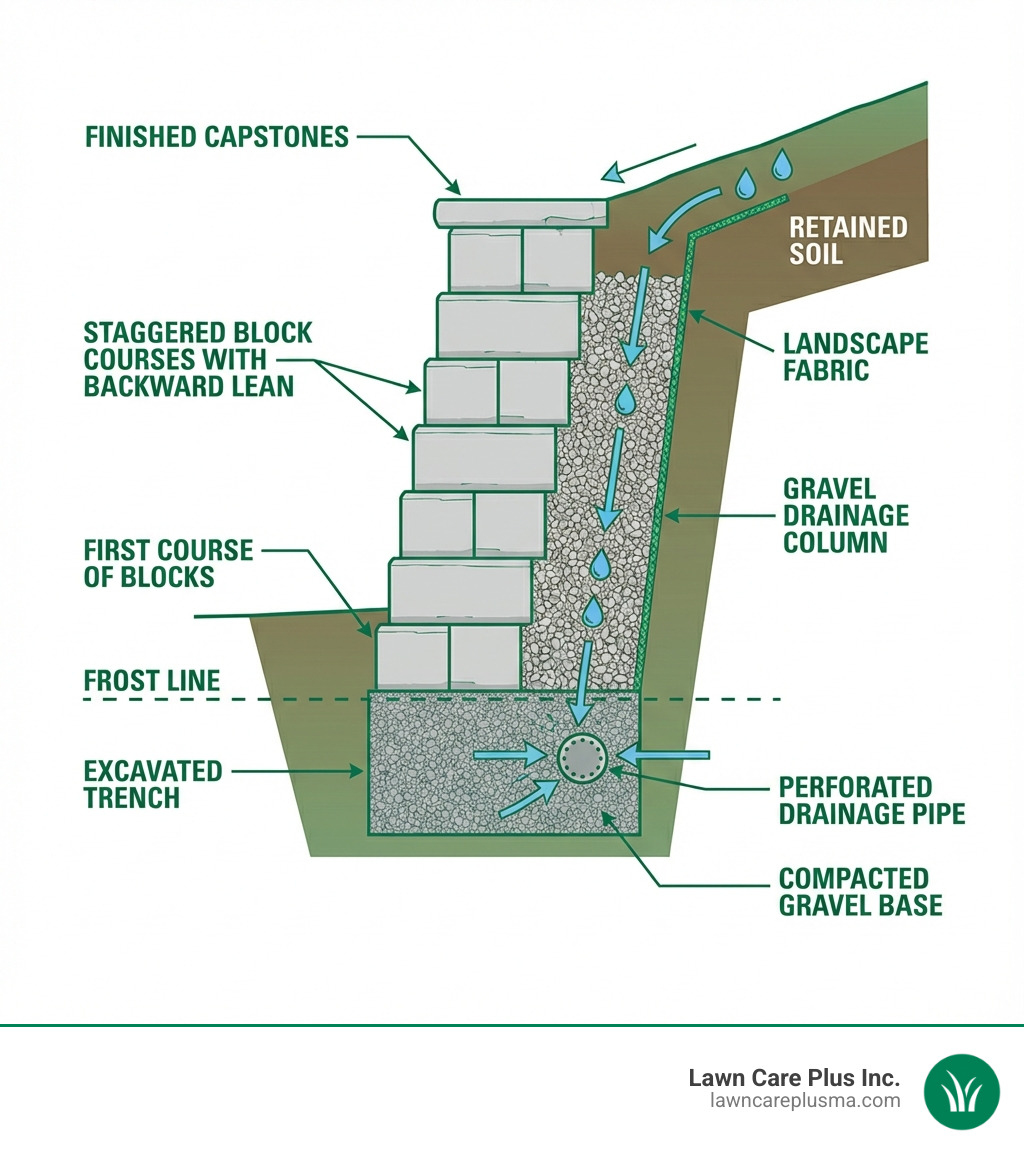
- Perforated Drain Pipe: Behind the first course of blocks, install a 4-inch perforated PVC drainpipe (holes down). Slope it gently (1 inch per 8 feet) to an outlet to drain water away.
- Gravel Backfill: Create a drainage column at least 12 inches wide behind the wall, filling it with clean crushed gravel. This allows water to reach the drainpipe and prevents pressure buildup.
- Landscape Fabric: Line the excavated area behind the gravel column with permeable landscape fabric. This filter prevents soil from clogging the gravel and drainpipe.
- Laying the First Course: Lay the first course on the compacted base, starting at the lowest point. Ensure each block is tight and perfectly level (front-to-back and side-to-side). Use a rubber mallet to set blocks firmly.
- Building Upward: Stack subsequent courses, staggering the joints for strength. For walls over 3 feet, add geogrid reinforcement at specified intervals. Backfill with clean crushed gravel and compact it after every course or two, constantly checking for level and proper batter.
For an in-depth look at managing water behind your wall, see our dedicated guide on Retaining Wall Drainage.
Step 3: Backfilling, Compaction, and Finishing Touches
The final stages involve backfilling, compaction, and finishing touches to ensure the wall’s integrity.
- Backfilling in Lifts: Backfill behind the wall in thin layers (“lifts”) of 3-4 inches. Use well-draining sandy or gravelly soil, not moisture-retaining topsoil.
- Compacting Each Layer: Compact each lift thoroughly with a hand or plate tamper. This non-negotiable step prevents settling and directs pressure downwards, ensuring stability.
- Capstones: Add capstones to the top of the wall for a finished look and to block water infiltration. Secure them with high-quality construction adhesive.
- Final Grading: Grade the topsoil above the wall to slope away from it for at least a few feet. This final grading is critical for directing surface water away.
- Landscaping: For landscaping, avoid planting large trees or shrubs within three feet of the wall, as their roots can cause damage. Smaller plants and groundcovers are ideal for stabilizing soil.
For a comprehensive overview of the entire construction process, including these finishing steps, explore our Build Retaining Walls guide.
Avoiding Failure: Common Mistakes and Long-Term Care
A retaining wall is a significant investment. To ensure its longevity, you must avoid common pitfalls and perform regular maintenance.
Common Mistakes to Avoid When You build a retaining wall on a slope
Construction errors can cause major problems. Here are the most common mistakes:
- Inadequate Foundation: A leading cause of failure is an inadequate foundation. Bury the first course at least one-tenth the wall’s height and thoroughly compact the gravel base to prevent settling.
- Poor Drainage: As emphasized, poor drainage is the primary enemy, causing 75% of failures. Forgetting a drainpipe, using insufficient gravel backfill, or omitting landscape fabric leads to hydrostatic pressure and wall collapse.
- Forgetting Reinforcement: Taller walls (over 3-4 feet) require reinforcement. Forgetting to add geogrid (for block walls) or “deadmen” anchors (for timber walls) compromises the wall’s strength against soil pressure.
- Improper Backfill: Using native clay soil for backfill instead of crushed gravel is a common mistake. Clay retains moisture, becomes heavy, and exerts immense pressure on the wall.
- Ignoring the Batter: A vertical wall fights gravity. Building with a slight backward lean, or “batter,” into the hill uses gravity to increase stability.
Here are the top 3 wall-killers we see:
- Water Pressure: Saturated soil behind the wall creates immense hydrostatic pressure, pushing the wall outward.
- Shallow Base: A foundation that isn’t deep enough (especially not below the frost line) allows for movement, settling, and frost heave.
- No Reinforcement: Taller walls or those under significant load require geogrid or other anchors; without them, the wall simply can’t hold the pressure.
Maintenance for Longevity and When to Call a Pro
Proactive maintenance ensures your wall’s longevity, but sometimes professional help is necessary.
- Regular Inspection: Inspect your wall annually and after heavy rain for any signs of distress.
- Checking for Bulging or Cracks: Fill small cracks with masonry caulk. Large cracks or any bulging indicate structural instability and require a professional consultation.
- Clearing Drain Outlets: Keep drain outlets clear of debris. A clogged drain allows water to build up, defeating its purpose.
- Erosion Control: Check for erosion at the wall’s top and base. Add soil and groundcover as needed to prevent washouts.
- When to Call a Pro: You should absolutely contact a professional for:
- Walls over 4 feet tall: These typically require professional engineering and specialized construction techniques.
- Complex slopes: Very steep, unstable, or unusually shaped slopes demand expert assessment.
- Proximity to structures: If the retaining wall is near a house foundation or driveway, professional design is paramount.
- Signs of significant failure: Large cracks, severe bulging, or leaning are clear indicators that the wall is failing and requires immediate professional assessment.
For any concerns or to explore professional repair options, please visit our Retaining Wall Repair Near Me page. If you’re considering a new installation, understanding The Benefits of Hiring a Professional for Your Retaining Wall Installation is a great next step.
Frequently Asked Questions about Building a Retaining Wall
We often hear similar questions from homeowners looking to build a retaining wall on a slope. Here are some of the most common inquiries, answered with our expertise.
How much does it cost to build a retaining wall on a slope?
The cost to build a retaining wall on a slope can vary significantly based on several factors, including the wall’s height, length, materials chosen, site accessibility, and the complexity of the slope. Based on broad averages from internet data (not Lawn Care Plus pricing), the cost typically ranges from about $20 up to $250 or more per square foot of wall face.
- Material Influence: As seen in our materials table, interlocking concrete blocks, timber, poured concrete, and stone or brick all have different price points. Internet-based averages show that simpler materials and designs can start near the low end of the range, while premium materials, complex layouts, or decorative finishes can reach or exceed the high end.
- Labor Costs: These internet-based figures often assume typical labor, but more complex installations on very steep or difficult-to-access slopes will naturally incur higher labor costs.
- Site-Specific Challenges: Factors like difficult excavation, extensive drainage requirements, or the need for heavy machinery can also increase the overall price.
All price figures above are average ranges based on internet data only and are not actual costs for Lawn Care Plus. For a precise estimate custom to your specific project in the Boston Metro-West area, we recommend a personalized consultation. You can find more detailed information on our Retaining Wall Cost page.
How high can I build a retaining wall myself?
For most DIY enthusiasts, the general rule of thumb is that you can safely build a retaining wall on a slope up to three to four feet high. Walls exceeding this height typically involve greater soil pressure, require more complex engineering, and often fall under local building code regulations.
- Local Code Variations: Many municipalities in Massachusetts require permits for retaining walls over four feet tall. These permits often necessitate engineered plans to ensure safety and stability. Always check with your local building department (e.g., in Belmont, Dedham, or Needham) before starting any project.
- Engineering Requirements for Taller Walls: For walls over four feet, or those supporting significant loads (surcharges), professional engineering is almost always required. An engineer will perform calculations to determine the necessary foundation, reinforcement (like geogrid), and drainage to ensure the wall can safely withstand the forces acting upon it. Trying to build a tall wall without proper engineering can lead to catastrophic failure.
What is the single most critical factor for a long-lasting wall?
Without a doubt, the single most critical factor for a long-lasting and stable retaining wall is proper drainage.
- Hydrostatic Pressure: Water accumulating behind a retaining wall creates immense hydrostatic pressure. This pressure is far more destructive than the dry weight of the soil alone. It can push against the wall with incredible force, leading to bulging, cracking, and eventual collapse.
- Saturated Soil & Frost Heave: Saturated soil becomes heavier and less stable. In colder climates like ours in Massachusetts, this saturated soil is also prone to frost heaving. When the water in the soil freezes and expands, it can lift and shift sections of the wall, compromising its structural integrity.
- Foundation & Base Preparation: While a strong foundation and properly compacted base are essential, their effectiveness is greatly diminished without adequate drainage. A well-drained wall ensures that water can escape, preventing the buildup of pressure and the destructive effects of freeze-thaw cycles.
Therefore, meticulous attention to installing a perforated drainpipe, creating a robust gravel drainage column, and using landscape fabric to keep the system clear is paramount to a retaining wall’s success and longevity.
Conclusion: Reclaim Your Landscape with Confidence
Building a retaining wall on a slope is more than just a construction project; it’s an investment in the usability, safety, and aesthetic appeal of your property. We’ve explored the intricate dance between gravity, soil, and water, and the critical steps required to ensure your wall stands strong for decades to come.
The key takeaways are clear:
- Planning is paramount: A thorough understanding of your site’s unique characteristics, including slope grade, soil type, water runoff, and local climate, forms the bedrock of a successful project.
- Drainage is non-negotiable: It is the single most critical factor for preventing wall failure. A well-designed and installed drainage system protects your investment from the destructive forces of hydrostatic pressure and frost heave.
- A solid foundation ensures stability: From proper excavation below the frost line to a carefully compacted gravel base, the groundwork dictates the overall strength and longevity of your retaining wall.
While many smaller retaining walls can be a rewarding DIY endeavor, we understand that projects on steep slopes, those requiring significant height, or those in close proximity to critical structures demand expert precision. For complex projects or simply for the peace of mind that comes with professional craftsmanship in the Boston Metro-West area, the expert Retaining Wall Installers at Lawn Care Plus Inc. are here to help. We are dedicated to ensuring your project is designed and built to last, changing your challenging slope into a beautiful, functional, and stable part of your landscape.
Ready to transform your sloped property? Contact us today to explore our professional landscape retaining wall services and let us help you reclaim your outdoor space with confidence.