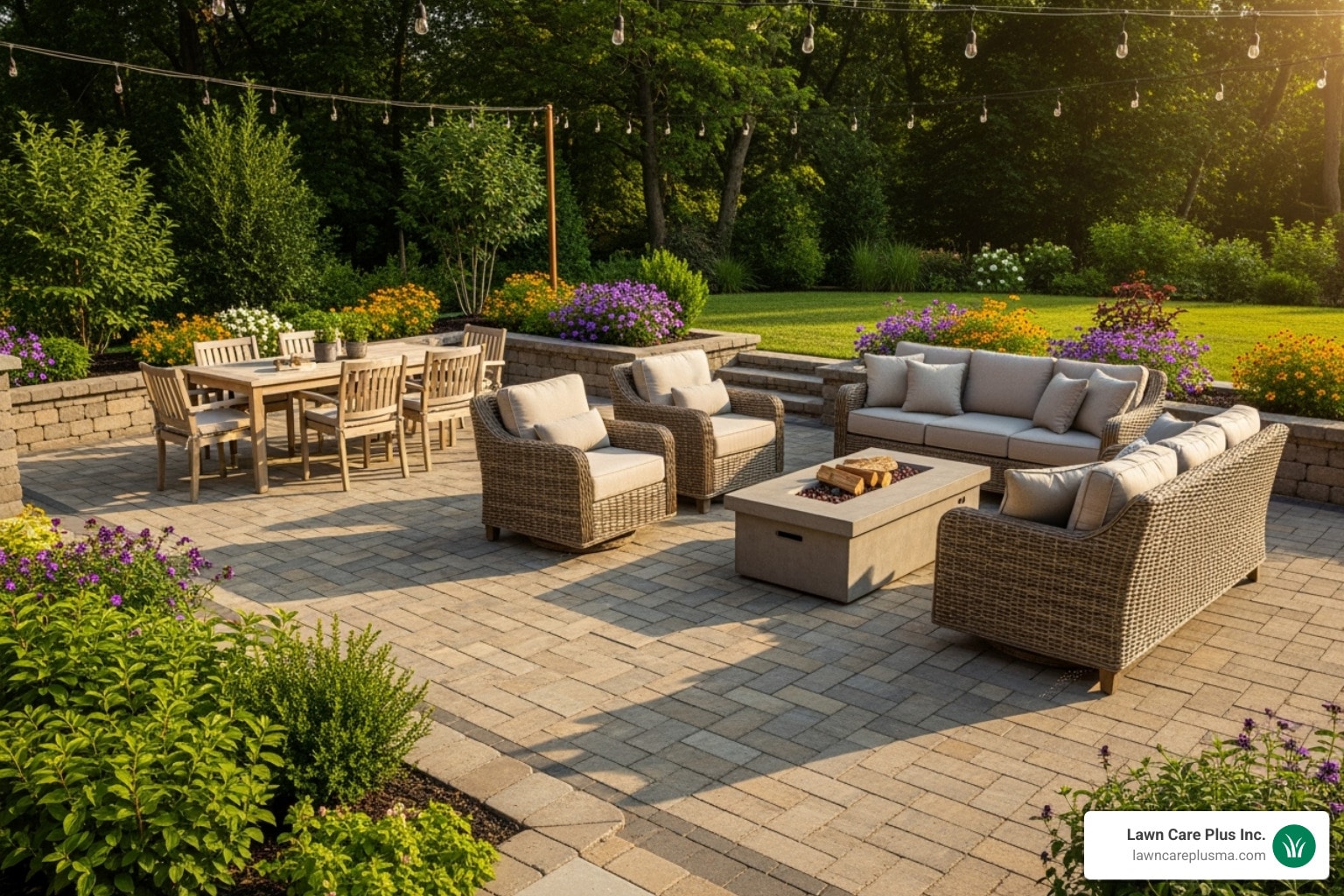
Transform Your Backyard with a Custom Paver Patio

Building a patio out of pavers is a rewarding home improvement project that creates a beautiful, durable outdoor living space. Whether you’re a DIY enthusiast or hiring a pro, understanding the process is key. The modular nature of pavers makes them more DIY-friendly than poured concrete, and a typical patio can be completed in 3-5 days.
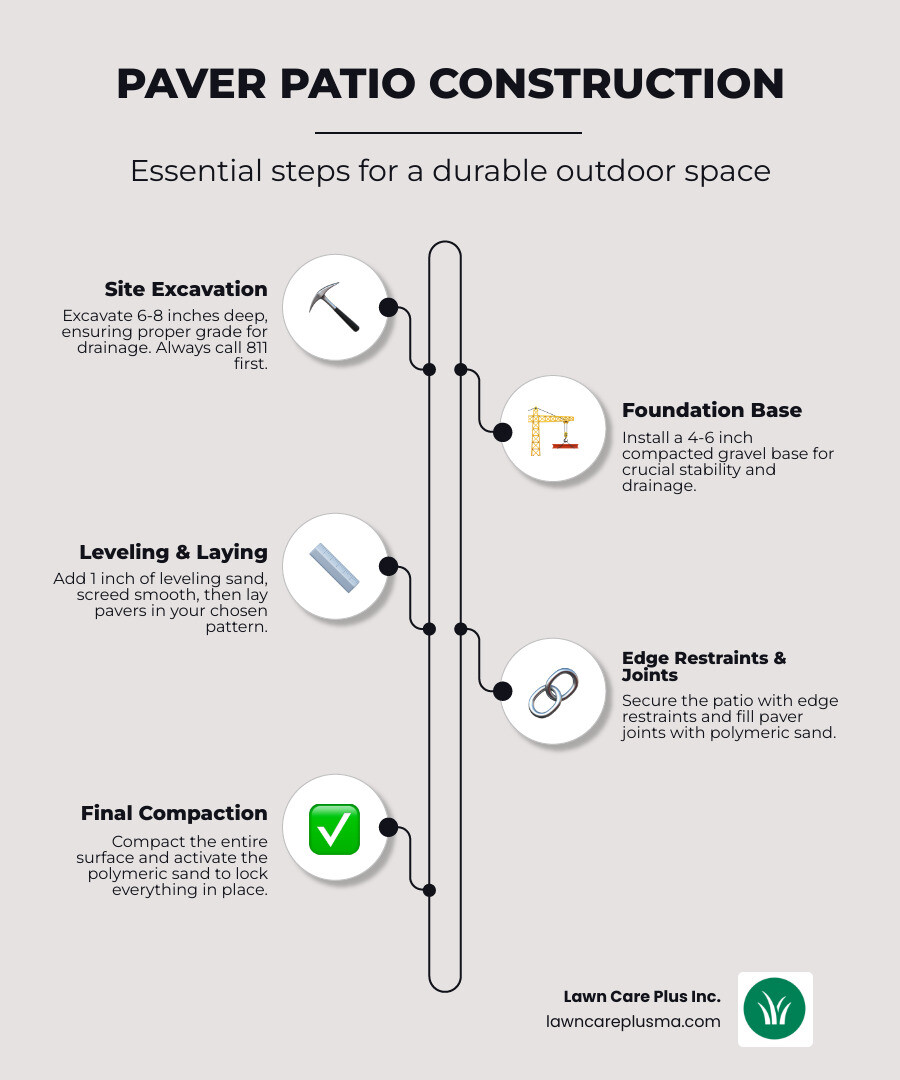
The basic steps include:
- Excavate 6-8 inches deep.
- Install a 4-6 inch compacted gravel base.
- Add a 1-inch layer of leveling sand.
- Lay pavers in your chosen pattern.
- Secure with edge restraints.
- Fill joints with polymeric sand, then compact and activate it.
Why choose pavers? They are resistant to cracking, provide excellent drainage, and are easy to repair by replacing individual stones. Pavers come in a wide variety of materials, colors, and patterns to match any home’s aesthetic.
I’m Tim DiAngelis, owner of Lawn Care Plus, Inc. For over a decade, I’ve helped homeowners in Greater Boston and Metro-West create stunning outdoor spaces. Building a patio out of pavers requires careful execution, but the results are transformative.
This guide will walk you through every step, from planning and material selection to creating a solid foundation for professional-quality results.
Common building a patio out of pavers vocab:
Planning Your Perfect Paver Patio
Before digging, meticulous planning is the first step to creating your dream outdoor space. This involves visualizing your patio’s purpose, choosing materials, and budgeting. A well-thought-out plan ensures a smooth installation and a result you’ll love. For more info on patio design ideas, we have additional resources.
Choosing the Right Paver Material
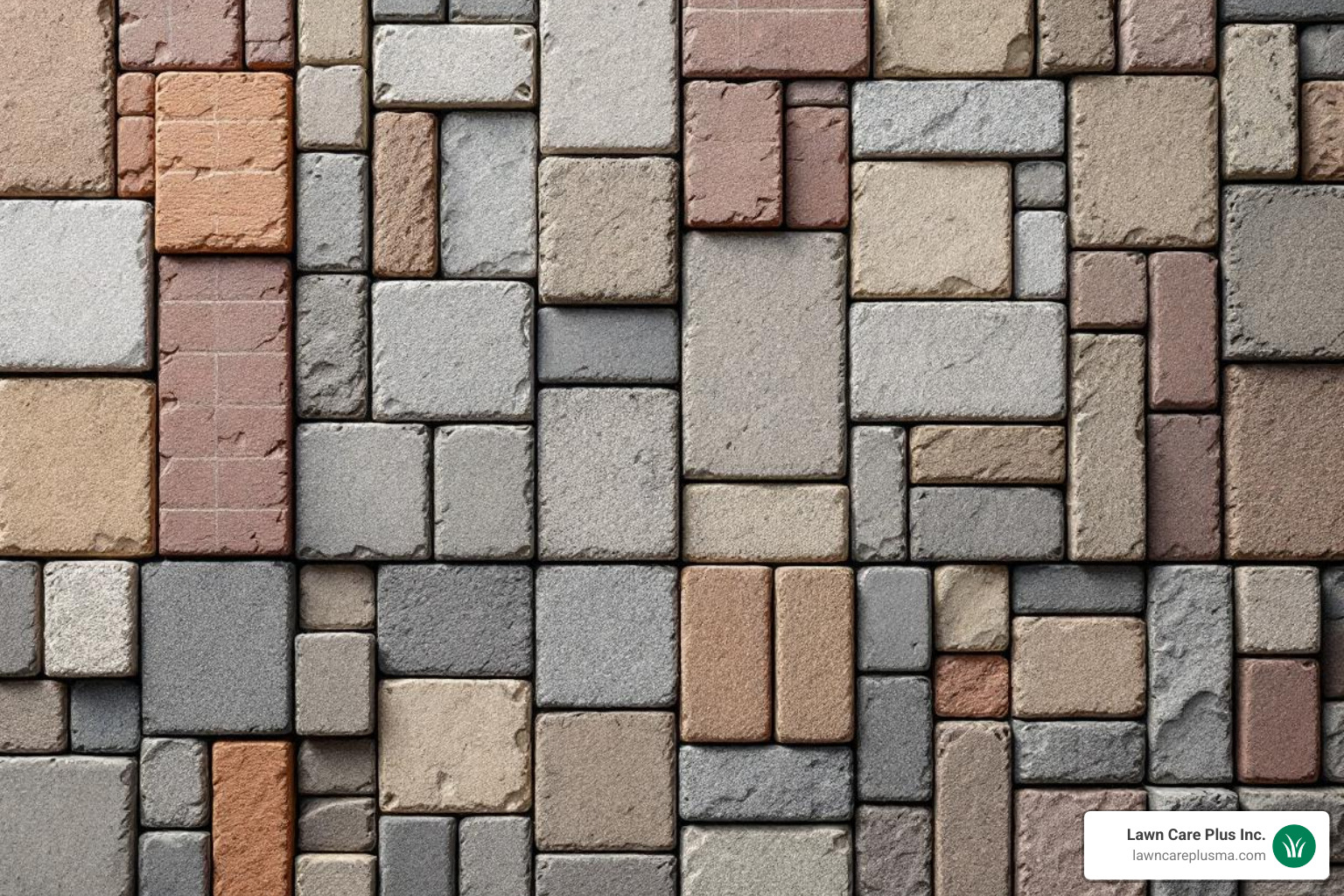
The paver you choose impacts your patio’s look, durability, and cost. Let’s explore the common options:
- Concrete Pavers: The most popular choice due to their versatility. They are highly durable, cost-effective, and come in a vast array of colors and styles that can mimic natural stone or brick. Their main drawback is that colors can fade over time.
- Brick Pavers: For a classic, timeless aesthetic, brick offers a warm, inviting feel. They are durable, have good slip resistance, and a long lifespan, but they are more expensive than concrete and have a limited color palette.
- Natural Stone Pavers: Materials like bluestone, granite, and slate offer best elegance. They are extremely durable and unique, which can increase property value. However, they are the most expensive option and can be challenging to install.
- Permeable Pavers: An eco-friendly choice designed to allow water to drain through them into the ground. They are excellent for managing stormwater runoff but may require a specific base design and can be more costly.
For more info about patio pavers, explore our detailed resources.
Budgeting Your Project: DIY vs. Professional Installation
The cost of building a patio out of pavers varies based on a DIY approach versus hiring professionals. Internet averages suggest a DIY project can cost $500 to $1,500, primarily for materials and tool rentals. Concrete pavers typically cost $3 to $7 per square foot.
For professional installation, the national average for a 280-square-foot patio is about $3,800, with a typical range of $2,400 to $7,000. Complex projects can exceed $10,000. Professional installation offers expertise, efficiency, and peace of mind. All pricing referenced here is based on internet averages and not actual Lawn Care Plus pricing. We provide custom quotes for projects in Massachusetts.
For more info on the cost to install a paver patio, we offer detailed breakdowns.
Selecting a Paver Pattern
The paver pattern defines your patio’s aesthetic. Some are easier for DIY installation than others.
- Running Bond: The easiest and fastest pattern, with pavers offset by half, requiring minimal cuts.
- Stack Bond: Pavers are laid in straight, continuous lines for a modern look. It highlights any imperfections.
- Herringbone Pattern: A classic “V” shape that interlocks well, making it great for high-traffic areas but requiring more cuts.
- Basketweave Pattern: Rectangular pavers are laid in pairs, alternating direction to mimic a woven look.
- Random Patterns: Mixes different paver sizes for a natural, organic look. Requires careful planning to avoid awkward gaps.
- Soldier Course Border: A border of pavers laid side-by-side around the perimeter. It provides a clean, defined finish, especially in a contrasting color.
Gathering Your Essential Tools and Materials
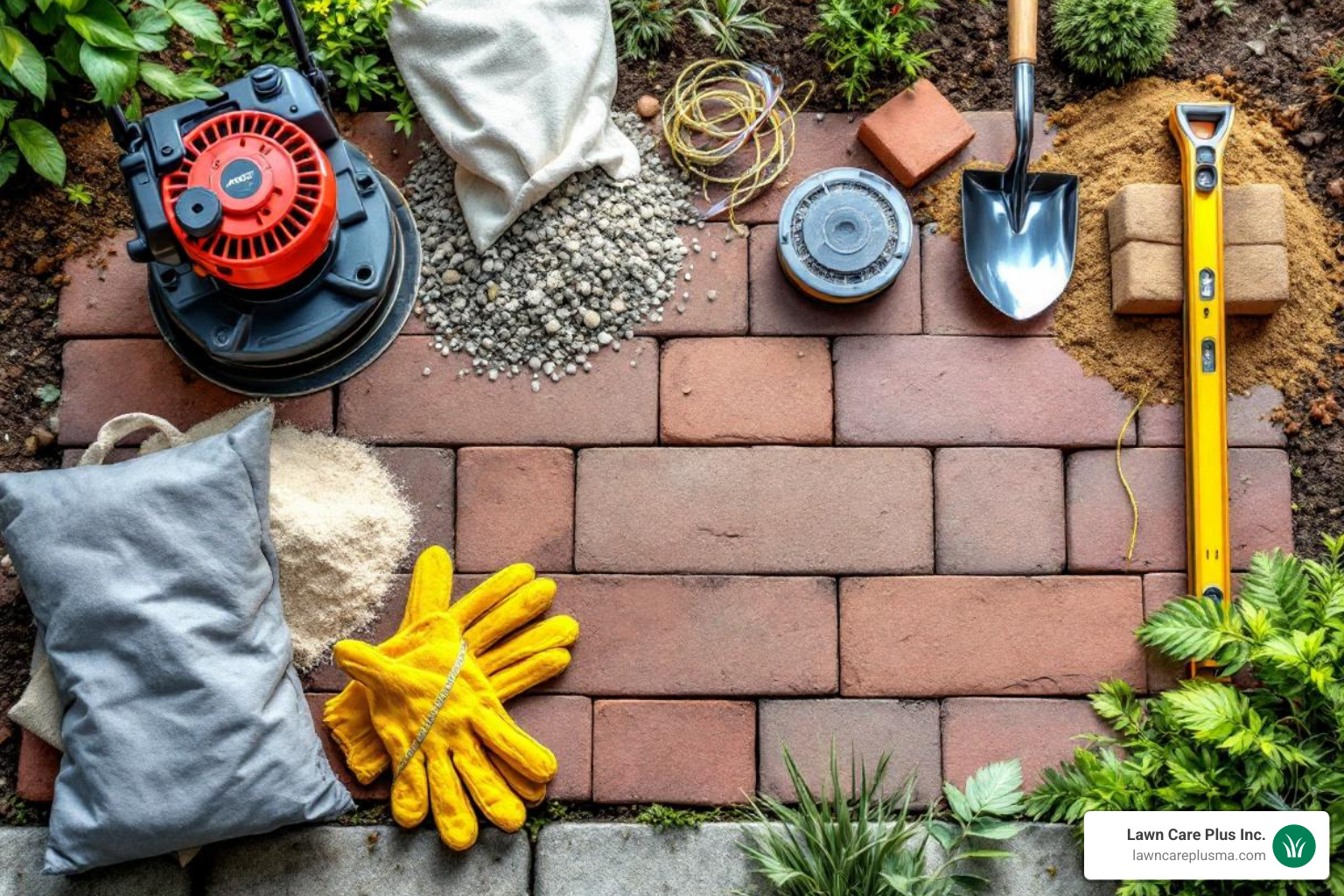
With your design finalized, it’s time to gather your tools and materials. Proper preparation saves headaches later. Always prioritize safety with sturdy gloves, safety glasses, and a back brace, as pavers can be heavy.
Must-Have Materials
Here’s what you’ll need for building a patio out of pavers:
- Pavers: Order 10-15% extra for cuts and future repairs.
- Paver Base (Crushed Stone/Gravel): Use 3/4-inch clean gravel for a stable, well-draining foundation.
- Leveling Sand (Coarse Bedding Sand): A 1-inch layer of concrete sand provides a cushion for pavers.
- Plastic Edging (Edge Restraints): Prevents pavers from shifting. Metal edging is a more durable alternative.
- Polymeric Sand: Swept into joints and activated with water to lock pavers, prevent weeds, and deter insects.
- Weed Mat (Geotextile Fabric): A crucial barrier between soil and the paver base to prevent weeds and stabilize the foundation.
- Landscape Stakes: To secure the weed mat and plastic edging.
Essential Tools
Having the right tools improves efficiency and quality:
- Shovel & Pickaxe: For excavation.
- Wheelbarrow: For moving materials.
- Plate Compactor: Essential for compacting soil and base layers. Can be rented.
- Level: A 6-foot level is ideal for checking grade.
- Rubber Mallet: To gently tap pavers into place.
- Stakes and String/Chalk Line: For outlining the patio area.
- Screed (2×4 lumber and metal pipes): To create a consistent depth for the leveling sand.
- Wet Saw or Paver Splitter: For cutting pavers. Always use safety gear.
- Rake: For spreading base material.
- Push Broom: For sweeping polymeric sand.
- Framing Square: To ensure a square layout.
- Hand Tamper: For compacting small areas.
For large jobs, renting a mini skid steer from Home Depot can save significant time and effort during excavation.
The Ultimate Step-by-Step Guide to Building a Patio Out of Pavers
With your plan and materials ready, let’s start building a patio out of pavers. This guide breaks down the process into manageable steps. For more info on building a paver patio, check out our detailed resources.
Step 1: Site Preparation and Excavation
A well-prepared site is the most critical part of a long-lasting patio.
- Outline and Square: Mark your patio’s perimeter with stakes and string or spray paint. Use a framing square to ensure 90-degree corners.
- Call 811: Before digging, call 811 (the national “Call Before You Dig” hotline) to locate underground utility lines and prevent accidents.
- Excavate: Dig 6 to 10 inches deep below the desired final patio height. This depth accommodates 4-6 inches of base, 1 inch of sand, and the paver’s thickness (usually 2-3 inches).
- Set the Grade: To ensure proper drainage, create a slope of 1/8 to 1/4 inch per foot away from your house. Use a level and a long straightedge to check the grade as you dig.
- Compact the Soil: Use a plate compactor to create a firm, compacted sub-base. For large areas, renting a mini skid steer can save significant time and labor. For more info on patio construction, refer to our guides.
Step 2: Creating a Solid Foundation
This layer-by-layer process ensures stability and prevents settling.
- Install Weed Fabric: Roll out contractor-grade geotextile fabric over the compacted soil, overlapping seams by at least 12 inches. This prevents weeds and stabilizes the base.
- Add Paver Base: Spread a 4 to 6-inch layer of 3/4-inch crushed stone. For best results, add and compact the base in 2-3 inch layers. Lightly spray with water to reduce dust and aid compaction. Use a plate compactor until the base is firm. We often rent a compactor that I rented from Home Depot for this step.
- Add and Screed Leveling Sand: Spread a 1-inch layer of coarse bedding sand. To level it, place two parallel metal pipes on the base and pull a straight 2×4 board across them to screed the sand smooth. Remove the pipes, fill the voids, and avoid walking on the prepared sand bed.
Step 3: Laying and Cutting the Pavers
This is where your design comes to life.
- Laying the Pavers: Start from a straight edge, like your house’s foundation, and work outward. Use string lines or a chalk line to keep rows straight. Place pavers directly onto the sand bed without dragging them, maintaining a 1/8-inch gap. Gently tap each paver with a rubber mallet to set it. Work from the surface of already-laid pavers to avoid disturbing the sand.
- Cutting Pavers: Most patios require cuts for edges and patterns. A wet saw provides clean, precise cuts and is best for natural stone. An angle grinder works for smaller cuts, while a paver splitter is fast for straight cuts on standard pavers. Always wear safety glasses, hearing protection, and a dust mask when cutting.
For tips on how to lay pavers in a straight line, our guide on how to install paver patio offers more detail.
Step 4: Installing Edge Restraints and Finishing the Joints
These final steps lock your patio together.
- Install Edge Restraints: Secure plastic or metal edging around the patio’s perimeter with landscape spikes every 8-12 inches. This is critical to prevent pavers from shifting and spreading over time.
- Fill Joints with Polymeric Sand: Pour polymeric sand over the dry patio and use a push broom to sweep it into all the joints until they are full.
- Compact the Sand: Run a plate compactor (with a protective mat) over the pavers to vibrate the sand deep into the joints. Sweep more sand into any gaps that settle.
- Activate the Sand: Lightly mist the patio with a garden hose to activate the polymeric sand. This hardens the sand, locking the pavers in place. Avoid a strong water stream that could wash the sand out.
Finishing, Maintenance, and Troubleshooting
With the hard work done, let’s cover the finishing touches, long-term care, and common troubleshooting for your new paver patio. For more info on hardscaping services, including maintenance plans, explore our offerings.
Essential Finishing Touches for Your New Patio
- Final Cleaning: After the polymeric sand cures (24-48 hours), sweep away any residue.
- Applying Sealer (Optional): A sealer can improve color, protect against stains, and inhibit weeds, but it requires reapplication every 2-3 years. Apply it with a roller or sprayer on a completely dry surface.
- Furnish and Decorate: Personalize your space with patio furniture from Joss & Main, a 9′ Patio Umbrella from Pottery Barn, and Pillows & Pots from Pottery Barn.
- Landscaping: Integrate the patio with surrounding garden beds or plants to soften the edges.
Best Practices for Paver Patio Maintenance
Keep your patio looking great with these simple tasks, as noted in our guidance on regular maintenance.
- Regular Cleaning: Sweep away debris and rinse with a garden hose periodically to prevent stains.
- Stain Removal: Address spills quickly. Use kitty litter for oil, a paver-specific cleaner for rust, and paint thinner for paint. Always test cleaners on a small area first.
- Re-sanding Joints: Inspect joints annually and sweep in new polymeric sand as needed.
- Seasonal Care: In Massachusetts, avoid harsh de-icing chemicals. Use sand for traction on ice.
Troubleshooting Common Paver Patio Problems
- Settled Pavers: If pavers sink, it’s likely due to a poorly compacted base. Remove the affected pavers, add/remove and re-compact the base material, and reinstall the pavers.
- Weed Growth: While polymeric sand and a weed mat are effective, some weeds may appear. Pull them by hand or use a hardscape-safe weed killer.
- Efflorescence: This harmless white, powdery deposit is caused by salts in the pavers. It usually washes away with rain over time, or you can use a specialized efflorescence cleaner.
- Ant Infestations: Treat ant hills with an outdoor-rated ant killer or diatomaceous earth. Re-sanding with polymeric sand can also help.
Frequently Asked Questions about Building a Patio Out of Pavers
Building a patio out of pavers is a big project, and questions are common. Here are some answers to the most frequent concerns.
When is it better to hire a professional for building a patio out of pavers?
While a DIY paver patio is achievable, hiring a professional is wise in certain situations:
- Complex Designs: Intricate patterns, multiple levels, retaining walls, or significant grading challenges benefit from professional expertise.
- Time Constraints: A professional crew can complete the job much faster than a typical DIYer.
- Physical Labor: The work is physically demanding. Professionals have the equipment and experience to handle heavy lifting and machinery safely.
- Drainage: Proper drainage is critical in Massachusetts to prevent water damage and issues from freeze-thaw cycles. A pro can ensure it’s done right.
- Guarantees: Reputable installers offer warranties, providing peace of mind that the patio is built to last.
If you’re considering a professional in the Boston Metro-West area, our team at Lawn Care Plus specializes in high-quality installations. You can find professional patio builders through our local service pages.
Can you build a fire pit on a paver patio?
Yes, a fire pit is a fantastic addition to a paver patio, but safety is paramount.
- Use Fire-Rated Materials: Ensure both the pavers under the fire pit and the pit itself are rated for high heat to prevent cracking. Natural stone like granite or bluestone and specific concrete pavers are good choices.
- Maintain Clearances: Keep the fire pit a safe distance from your home, fences, furniture, and other combustible materials, following local building codes.
- Consider an Insulating Pad: For extra protection, place an insulating pad beneath a portable fire pit.
- Use a Kit: Many DIY fire pit kits include fire-rated blocks and a metal insert, simplifying safe construction.
For more info on patio fire pits, check out our design ideas and safety guidelines.
How long does it take to build a paver patio?
The timeline for building a patio out of pavers depends on size, complexity, and experience. For a standard 280-square-foot patio, a DIY project typically takes 3 to 5 days. A professional crew can often complete the same job in 2-3 days.
Key factors influencing the duration include:
- Excavation: Digging by hand takes much longer than using rented machinery.
- Base Preparation: Compacting the base in layers is time-consuming but essential.
- Paver Pattern: Simple patterns are faster to lay than intricate ones requiring many cuts.
- Curing Time: Polymeric sand needs 24-48 hours to cure before the patio can be used.
Conclusion: Your Dream Patio Awaits
Building a patio out of pavers is an investment that pays dividends in both lifestyle and property value. From the initial planning and selection of durable materials like concrete, brick, or natural stone, through the meticulous steps of excavation, base preparation, and paver laying, to the final touches of polymeric sand and sealing, each stage contributes to a resilient and beautiful outdoor space.
The benefits are clear: a durable, low-maintenance patio that resists cracking, offers excellent drainage, and can be easily repaired. It transforms your backyard into an inviting outdoor living area, perfect for entertaining, relaxing, or simply enjoying the Massachusetts seasons. We’ve seen countless homeowners improve their curb appeal and create lasting memories on their custom paver patios.
For homeowners in Massachusetts, the experts at Lawn Care Plus Inc. offer comprehensive hardscaping and patio installation services. Our experienced team is dedicated to bringing your vision to life, ensuring a high-quality, long-lasting patio that meets your needs and exceeds your expectations.
Ready to transform your backyard? Contact us today for a consultation on your custom patio project!