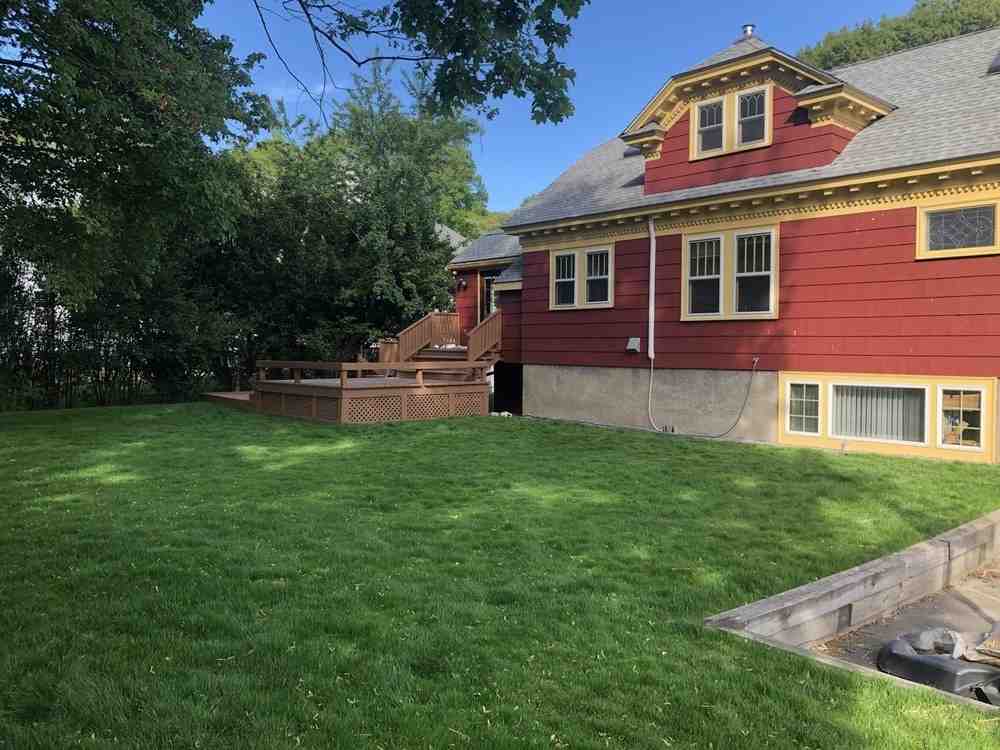
Transform Your Outdoor Living Space
Building decks and patios can transform your backyard into a functional, beautiful extension of your home. These outdoor living spaces create gathering spots for family, quiet corners for relaxation, and entertainment areas that boost home value. A well-built deck, for instance, can return about 66% of its cost upon resale.
But the first big question is: Should you build a deck or a patio? The answer depends on your yard’s terrain, your budget, and your lifestyle. A deck offers liftd views and works well on sloped lots, while a patio provides a solid, ground-level surface that’s often more affordable.
Quick Answer: Building Decks and Patios
- Choose Your Structure – Decks are raised platforms, while patios are ground-level paved surfaces.
- Assess Your Yard – Decks are ideal for uneven terrain; patios require flat ground.
- Plan Your Budget – Decks typically have higher costs but offer a strong ROI; patios are more affordable upfront.
- Select Materials – Wood, composite, or PVC for decks; concrete, pavers, or stone for patios.
- Check Permits – Most deck and many patio projects require local building permits.
- Build or Hire – DIY is an option, but professionals ensure faster completion and warrantied work.
In Massachusetts, choosing the right materials is critical to withstand our four-season climate. This guide will walk you through every decision, from planning to construction, to help you create an outdoor space your family will enjoy for years.
Building decks and patios basics:
Deck vs. Patio: Making the Right Choice for Your Home
Choosing between building decks and patios is more than an aesthetic decision; it’s about what works for your yard, budget, and lifestyle. Let’s break down the fundamental differences to help you select the perfect fit for your Massachusetts home. It’s a key part of Designing a Functional Outdoor Living Space.
What is the Difference Between a Deck and a Patio?
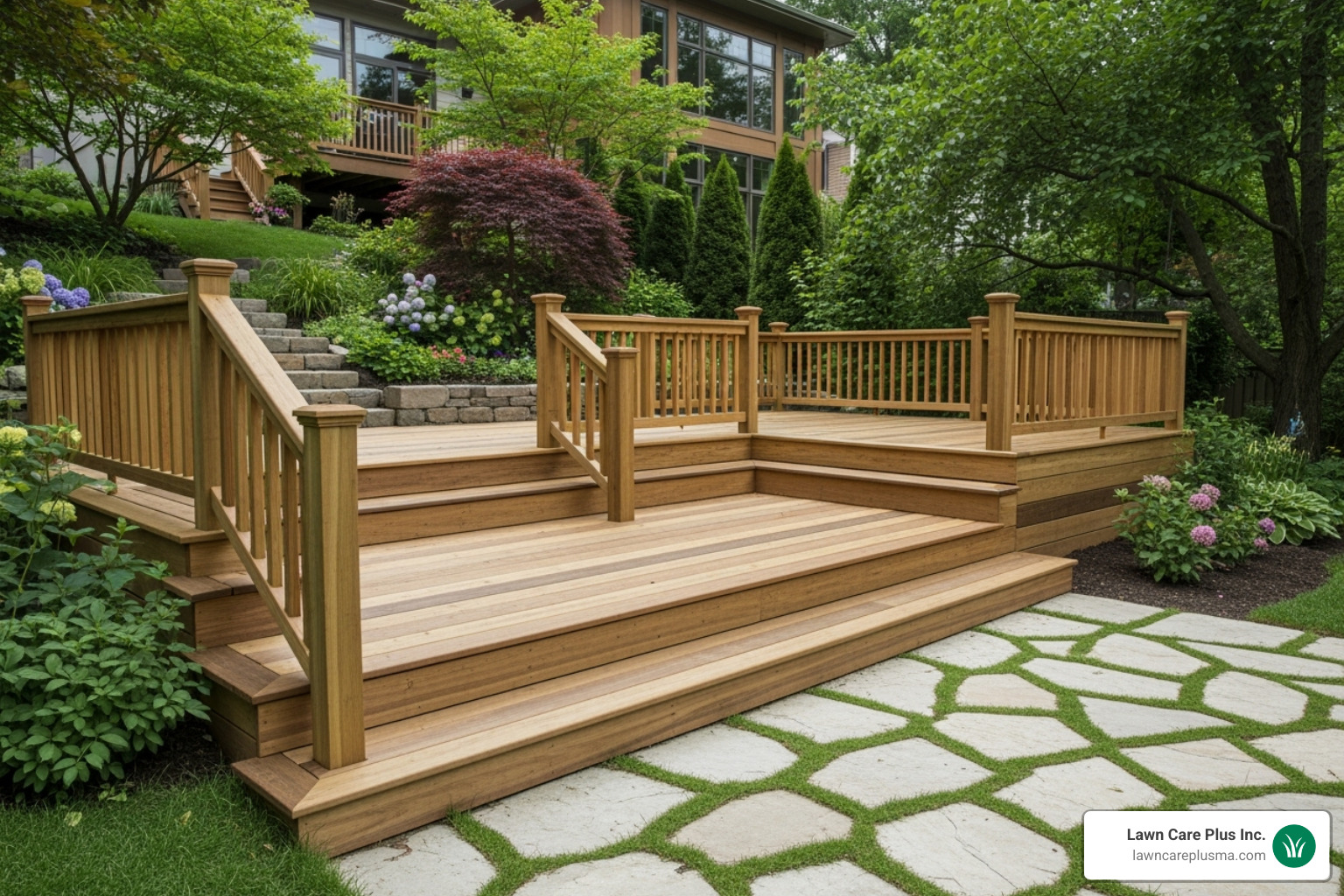
The core difference is elevation and materials. A deck is a raised platform, usually made of wood or composite materials, supported by a structural frame. Because they are liftd, decks are perfect for sloped or uneven ground and can be attached directly to your house for a seamless transition. A patio sits directly on the ground. It’s a paved surface made of concrete, pavers, or stone, built on a prepared base of gravel and sand. Patios require relatively flat terrain and blend naturally into the surrounding landscape.
Pros and Cons of Building a Deck
Building decks is an excellent choice for many homeowners, especially those with challenging yards.
Pros:
- Solves Sloped Terrain: Easily built over uneven or hilly ground without expensive grading.
- Offers Better Views: The elevation can provide scenic views over fences or into surrounding landscapes.
- High ROI: Decks typically deliver a strong return on investment, often around 66%.
- Highly Customizable: Easily accommodates features like built-in benches, multiple levels, and pergolas.
Cons:
- Higher Cost: The required structural foundation makes decks generally more expensive than patios.
- Requires Maintenance: Wood decks need regular cleaning and sealing. Composite decking reduces this but isn’t maintenance-free.
- Permits Needed: Nearly all deck projects require building permits and safety inspections.
- Weight Limits: Heavy items like hot tubs or large outdoor kitchens require extra structural support.
Pros and Cons of Building a Patio
Building patios appeals to those seeking durability, low maintenance, and a seamless connection to their yard.
Pros:
- More Affordable: Patios typically cost less to install than decks of a similar size.
- Extremely Durable: Materials like pavers and stone can last for decades with minimal upkeep, handling harsh Massachusetts winters well.
- Low Maintenance: Requires little more than sweeping and occasional power washing.
- Excellent for Heavy Features: Patios provide a rock-solid base for heavy items like stone kitchens or large fire pits.
Cons:
- Needs Flat Ground: Requires a level surface, which can mean costly excavation on sloped yards.
- Can Crack or Shift: Poured concrete can crack in freeze-thaw cycles, though pavers handle movement better.
- Can Be Slippery: Some materials become slippery when wet, requiring textured finishes for safety.
- Absorbs Heat: Hardscape materials can get very hot in direct summer sun.
Planning and Designing Your Outdoor Project
With a choice made between a deck and a patio, the next step is turning your vision into a concrete plan. Thoughtful planning at this stage is crucial for creating a functional, beautiful space that complements your home and lifestyle, tying directly into your overall Hardscape and Landscape strategy.

How to Plan and Design Your Project Effectively
Effective design starts with defining how you’ll use the space. Will it be for large gatherings, quiet mornings, or outdoor cooking? Your intended use dictates the ideal size, layout, and features.
- Size and Scale: Ensure the structure is proportional to your home and yard. It should feel like a natural extension, not an overwhelming addition.
- Layout and Flow: Plan for clear pathways from the house to the outdoor space and into the yard to avoid bottlenecks.
- Sun and Shade: Observe your yard at different times of day to determine the best placement for dining or lounging areas and to identify where shade structures like pergolas might be needed.
- Home Integration: The design should complement your home’s architectural style. Modern homes pair well with clean lines, while traditional homes suit classic wood or stone.
- Visualize Your Plan: Using design software can help you experiment with layouts and materials before construction begins, preventing costly mistakes.
Choosing the Best Materials for Decks and Patios
The materials you select for building decks and patios define the look, longevity, and maintenance requirements of your space.
Deck Materials:
- Pressure-Treated Wood: A cost-effective choice that resists rot and insects. It requires regular staining or sealing for protection.
- Cedar and Redwood: Offer natural beauty and resistance to rot but come at a higher price. They also need sealing to maintain their color.
- Composite Decking: A popular low-maintenance option from brands like Trex, made of wood fibers and recycled plastics. It resists staining and fading but has a higher upfront cost.
- PVC Decking: The ultimate low-maintenance choice. It’s lightweight, highly resistant to moisture, and great for pool areas.
Patio Materials:
- Poured Concrete: An affordable and versatile option. Proper installation is key to preventing cracks in Massachusetts’ climate. Our Concrete Patio Installation service ensures this is done right.
- Stamped Concrete: Mimics the look of stone or brick at a lower cost, offering a decorative finish.
- Pavers: Extremely durable and versatile, available in countless styles. They are strong, drain well, and individual units can be replaced if damaged. We are an expert Paver Patio Installer.
- Natural Stone: (Flagstone, bluestone) Offers best, timeless beauty. It’s the most expensive option and requires skilled installation, but the result is a one-of-a-kind, organic look.
Permits and Safety Considerations
Navigating permits and safety rules is a non-negotiable step. Skipping it can lead to fines or unsafe structures.
- Check Local Codes: Every Massachusetts town has specific building codes. Always check with your local building department before starting.
- Permits: Decks almost always require a permit. Patios may not, but it’s crucial to verify, especially if adding features like pergolas or outdoor kitchens.
- Safety Requirements: For decks, this includes proper footing depth (below the 48-inch frost line in MA), railing height (typically 36 inches), and baluster spacing.
- Utilities: Always call 811 before digging to have underground utility lines marked. This is a free and essential safety service.
- Electrical Work: Hire a licensed electrician for any outdoor lighting or outlets to ensure everything is up to code and safe.
- DIY Safety: If tackling the project yourself, use proper safety gear. For guidance, resources like Family Handyman are helpful, but don’t hesitate to call professionals for complex tasks.
The Ultimate Guide to Building Decks and Patios
With planning complete, it’s time to build. Understanding the construction process for building decks and patios is valuable whether you’re hiring a pro or doing it yourself. This is where our expertise in Hardscaping Services shines.
High-Level Steps for Deck Construction
Building a deck requires precision at every stage, from the foundation to the finishing touches.
- Site Prep & Footings: The area is cleared, and concrete footings are poured below the frost line to provide a stable anchor.
- Framing: Posts, beams, and joists are installed to create the deck’s structural skeleton.
- Ledger Board Attachment: For attached decks, a ledger board is securely fastened and flashed to the house to prevent water damage.
- Decking Installation: Deck boards are laid across the joists with proper spacing for drainage.
- Stairs & Railings: The final step is adding stairs for access and code-compliant railings for safety. Our Outdoor Deck Builders are experts in these requirements.
High-Level Steps for Patio Construction
A long-lasting patio depends on a properly prepared base.
- Excavation & Grading: The area is dug out and sloped slightly away from the house for proper drainage.
- Gravel Base: A layer of compacted gravel is added to provide a stable, well-draining foundation.
- Sand Layer: A thin layer of sand is spread and leveled to create a smooth bed for the patio material.
- Setting Materials: Pavers are carefully placed, or forms are built for pouring concrete.
- Finishing: For pavers, joints are filled with polymeric sand to lock them in place. For concrete, control joints are cut to manage cracking. Our Patio Installation team handles this with precision.
Popular Features to Improve Your Space
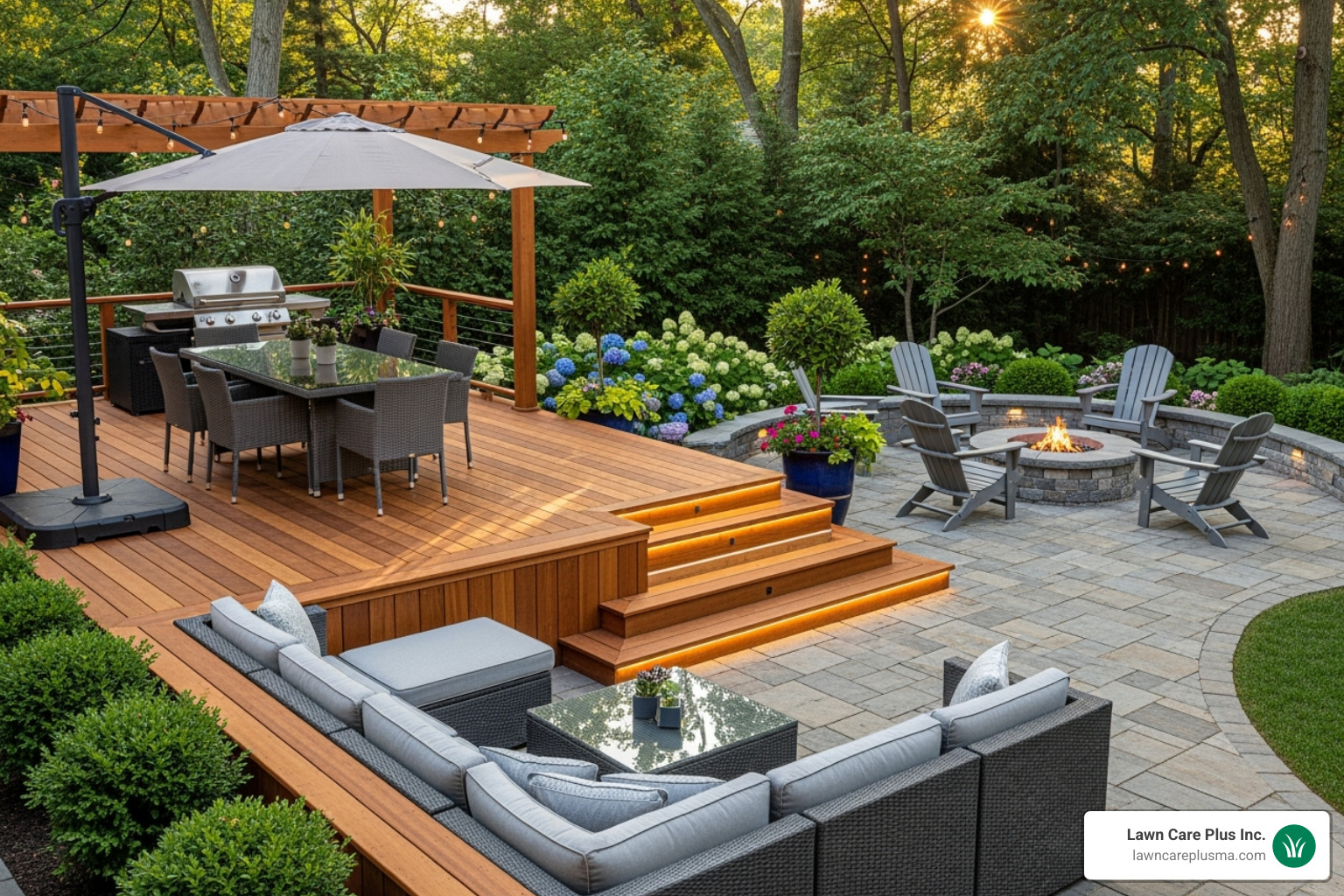
Lift your deck or patio from a simple platform to a true outdoor living room with these popular additions.
- Outdoor Kitchens: Include a built-in grill, sink, and counter space to make outdoor entertaining a breeze.
- Fire Pits: Create a natural gathering spot for cozy evenings. Learn more about Patio Fire Pits.
- Pergolas: Add architectural interest and partial shade, defining the space and making it more intimate.
- Built-in Seating: Provides permanent, weather-proof seating and can include hidden storage.
- Landscape Lighting: Extends the use of your space after dark while enhancing safety and ambiance. Companies like Trex offer integrated lighting solutions.
- Water Features: The sound of a small fountain can mask neighborhood noise and create a tranquil atmosphere.
Maximizing Your Investment: Costs, Maintenance, and Professional Help
When building decks and patios, it’s important to consider the full financial picture, from the initial build cost to long-term value and upkeep. Making a smart investment also means finding the right professionals to bring your vision to life.
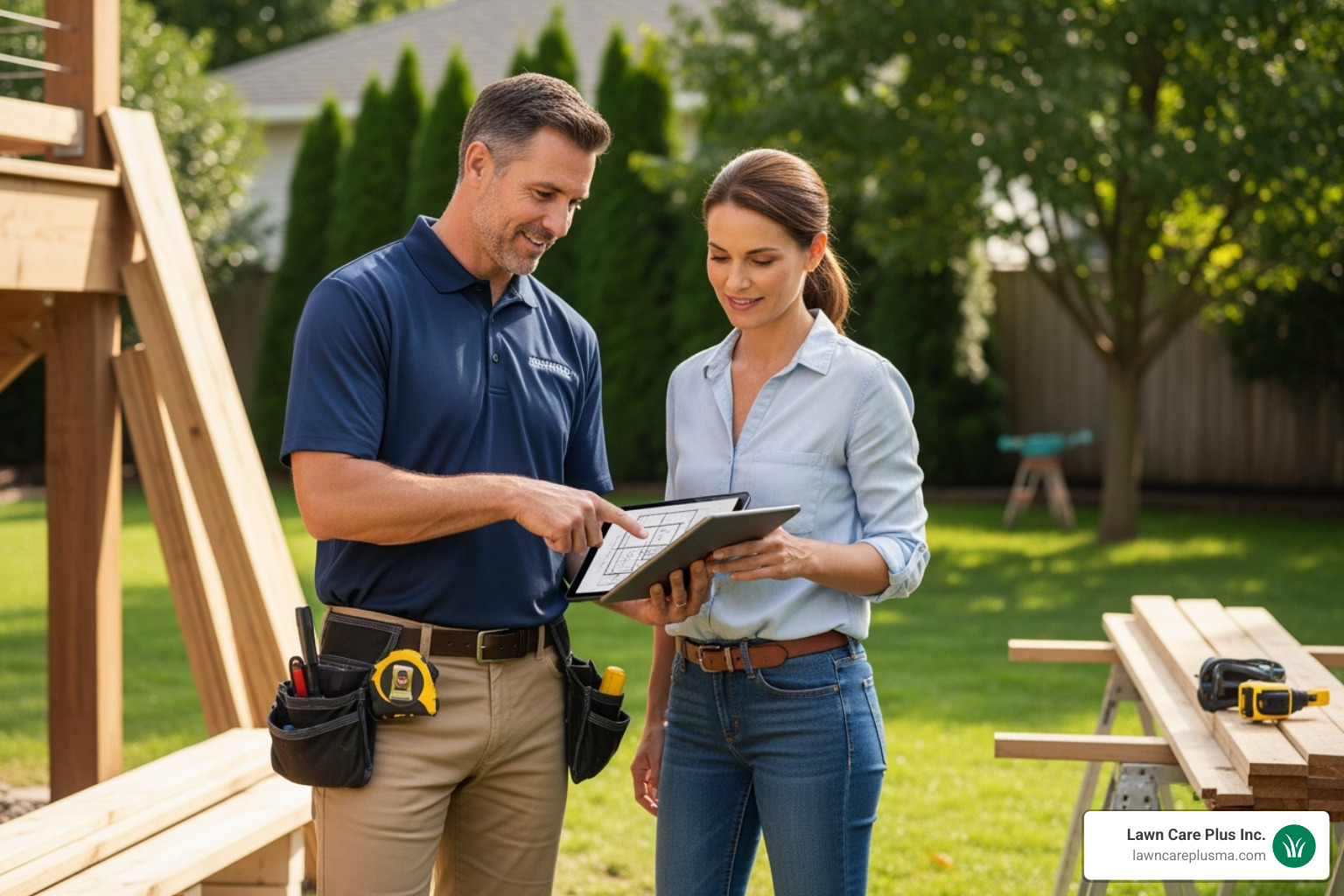
Comparing the Costs of Building Decks and Patios
Project costs vary based on size, materials, and design complexity. The following figures provide a general idea for budgeting purposes.
Please note these are average costs based on internet data and not actual costs for Lawn Care Plus.
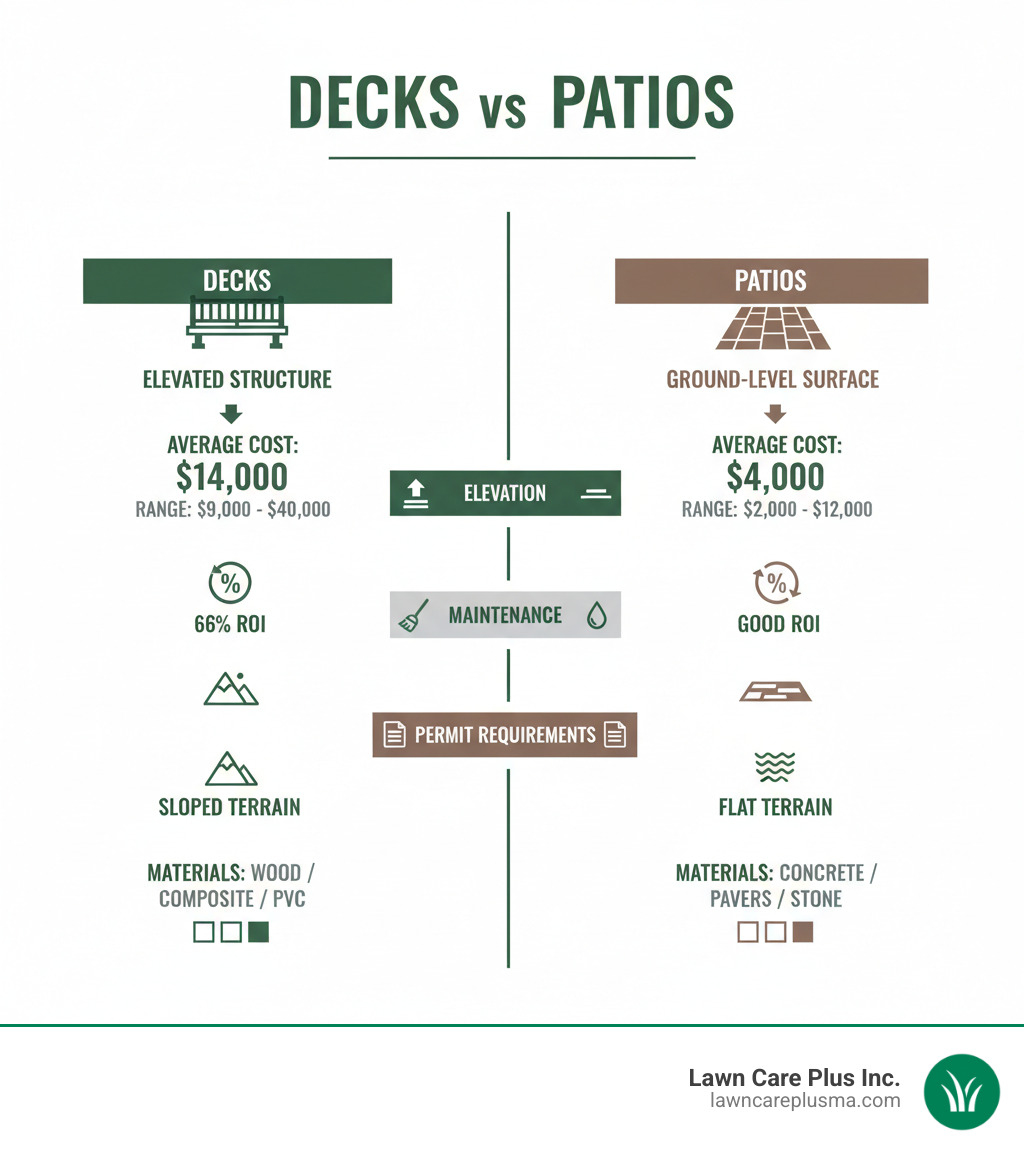
- Decks: The average project cost is around $14,000, with a typical range of $9,000 to $42,000 or more. Premium materials like Trex composite decking and complex, multi-level designs will be at the higher end of the scale.
- Patios: The average cost is closer to $4,000, with most projects falling between $2,000 and $12,000+. A simple concrete slab is most affordable, while intricate natural stone designs are a premium investment. For more details, see our Cost to Install Paver Patio guide.
Material and labor are the two biggest cost drivers. While pressure-treated wood is cheaper upfront, low-maintenance composites can save money over time. Labor costs increase with challenging sites and custom features.
Return on Investment (ROI) and Maintenance Requirements for Decks and Patios
An outdoor space is an investment in your home’s value and your quality of life.
- Return on Investment: Decks offer an excellent ROI, typically returning about 66% of their cost at resale. Patios also add significant value, especially given their durability and low maintenance. Explore The Benefits of Adding a Patio to Your Outdoor Space.
- Deck Maintenance: Wood decks require annual cleaning and sealing every 1-3 years to prevent rot and UV damage. Composite and PVC decks need only occasional washing with soap and water.
- Patio Maintenance: Patios are very low-maintenance. Regular sweeping, occasional weeding between pavers, and a power wash every few years will keep them looking great.
Choosing the Right Deck or Patio Builder
Selecting the right contractor is the most important decision you’ll make. As experienced Deck and Patio Builders in Massachusetts, we know what to look for.
- Local Experience: Hire a builder who understands Massachusetts’ climate and local building codes.
- Portfolio and References: Review past work to assess quality and ask for client references.
- License and Insurance: Always verify that your contractor is fully licensed and insured to protect yourself.
- Detailed Quotes: A professional provides an itemized quote that clearly breaks down costs for materials and labor.
- Clear Communication: Choose a builder who listens, answers questions, and provides regular project updates.
We are proud to be a trusted local Deck Contractor and team of Patio Builders.
Frequently Asked Questions about Building Decks and Patios
Homeowners often have similar questions when planning to add an outdoor living space. Here are concise answers to the most common inquiries about building decks and patios.
How long does it take to build a deck or patio?
The timeline depends on several factors. A simple patio might take a few days, while a complex, multi-level deck could take 2-4 weeks. Key factors influencing the duration include:
- Project size and complexity
- Materials being used
- Weather conditions
- Permit approval and inspection schedules
A professional crew will always complete the job faster than a typical DIY timeline.
Can I build on a sloped yard?
Yes, but your choice of structure is critical. Decks are the ideal solution for sloped yards. Their post-and-beam construction allows them to be built over uneven ground without major excavation.
Patios require a flat surface. On a sloped yard, this means either regrading the land to create a level area or building retaining walls to create terraced levels. This adds complexity and cost, so a professional assessment is highly recommended for sloped properties.
Which is better for a family with kids?
Both decks and patios can be great for families, but each has different safety considerations.
- Decks: For any raised deck, safety is paramount. Code-compliant railings with balusters spaced no more than 4 inches apart are essential to prevent falls. Choosing splinter-free composite or PVC decking is also a smart move for protecting bare feet.
- Patios: The biggest advantage of a patio is that it’s at ground level, eliminating any risk of falling. This provides peace of mind for parents of toddlers. Kids can move freely between the patio and the lawn. When choosing materials, opt for a non-slip, textured surface that is less abrasive in case of tumbles.
A well-designed and safely constructed space of either type will be a wonderful addition for any family.
Conclusion
Building decks and patios transforms your backyard from a simple patch of grass into a vital extension of your home. It creates a dedicated space for relaxation, entertainment, and making memories with family and friends. By carefully considering your property, budget, and lifestyle, you can design an outdoor oasis that you’ll cherish for years to come.
From choosing between a deck and a patio to selecting the right materials and features, thoughtful planning is the key to success. While DIY can be rewarding, partnering with a professional ensures your project meets safety codes, withstands the local climate, and is built to the highest standard of craftsmanship.
At Lawn Care Plus Inc., we specialize in creating beautiful, durable outdoor spaces that stand up to the New England weather. We handle every detail with care, from initial design to final construction.
We are proud to serve communities throughout the Boston Metro-West area, including Belmont, Boston, Brighton, Brookline, Canton, Chestnut Hill, Dedham, Hyde Park, Jamaica Plain, Mattapan, Medfield, Milton, Needham, Newton, Norwood, Randolph, Readville, Roslindale, Walpole, Watertown, and Westwood.
Ready to transform your backyard? Start your patio construction project today and let’s create something beautiful together.