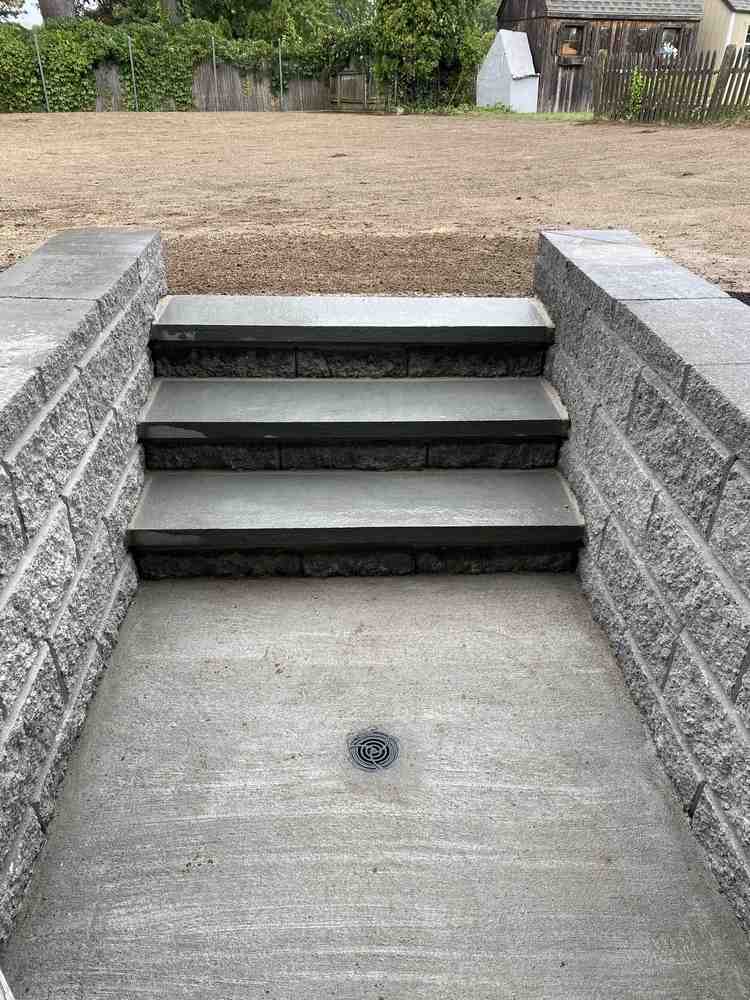
Why Above and Below Ground Drainage Systems Matter for Your Property
Above and below ground drainage systems work together to move water away from your home, protecting your foundation, lawn, and hardscaping from costly water damage.
Here’s a quick comparison to answer the core question:
| Feature | Above-Ground Systems | Below-Ground Systems |
|---|---|---|
| Location | Surface level | Buried beneath soil |
| Primary job | Redirect surface runoff | Manage groundwater and subsurface water |
| Common examples | Gutters, downspouts, swales, grading | French drains, catch basins, dry wells |
| Best for | Roof runoff, paved surfaces, mild drainage issues | High water tables, basement flooding, saturated soil |
| DIY-friendly? | Often yes | Usually requires a professional |
| Visibility | Visible | Hidden underground |
Most properties need both types working together. A home with great gutters but no subsurface drainage can still end up with a flooded basement. A well-installed French drain won’t help much if the gutters are dumping water right against the foundation.
Poor drainage is one of the most common — and most overlooked — causes of foundation damage, erosion, and landscape deterioration. As one drainage guide puts it, water damages foundations faster than almost anything else.
I’m Tim DiAngelis, owner of Lawn Care Plus, Inc., a full-service landscaping and property maintenance company serving Greater Boston and Metro-West, where I’ve spent over a decade helping homeowners solve drainage challenges with both above and below ground drainage systems. If you’re dealing with standing water, soggy soil, or erosion on your Massachusetts property, this guide will help you understand your options and make the right call.
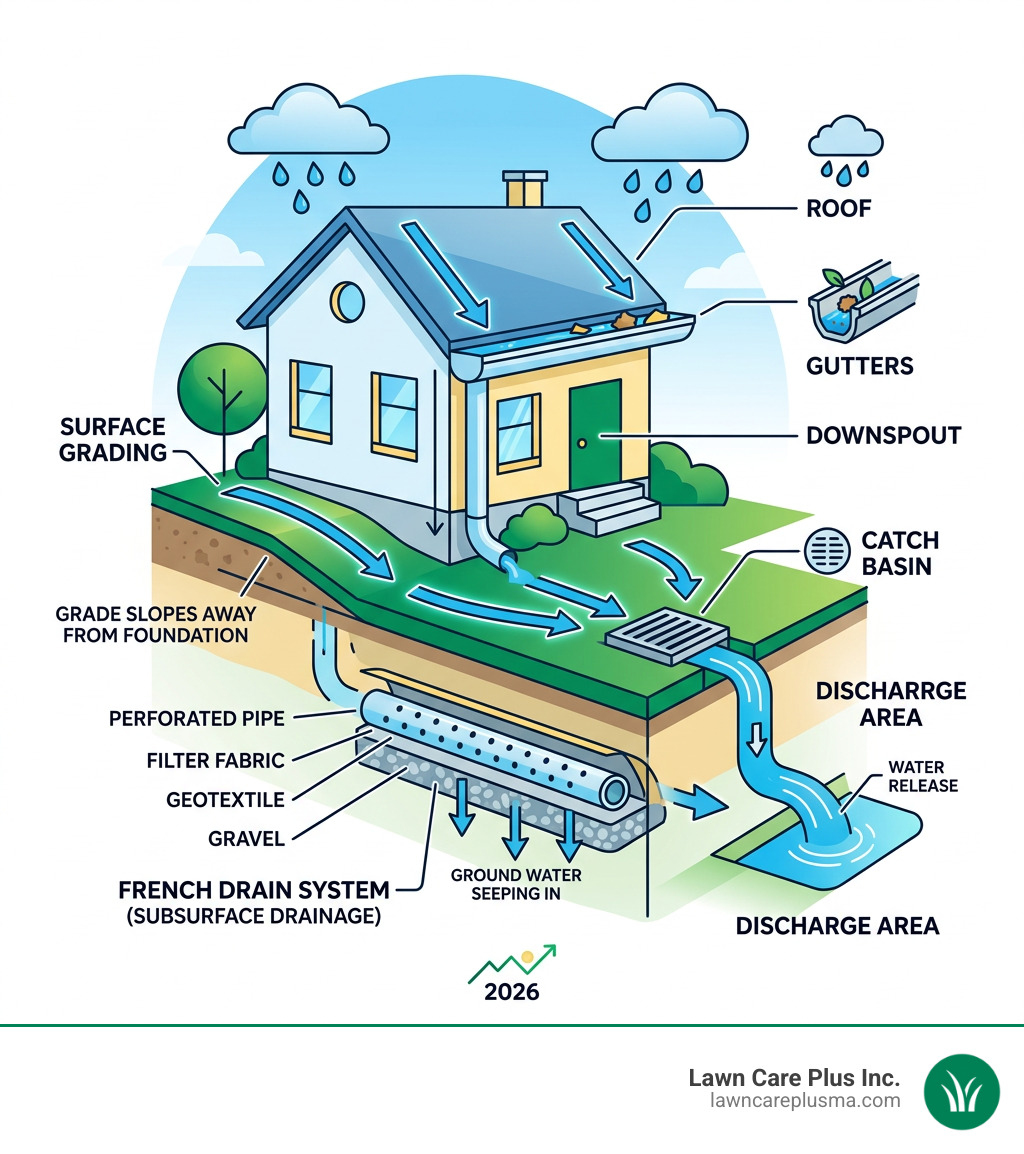
Related content about above and below ground drainage systems:
Understanding Above and Below Ground Drainage Systems
When we talk about above and below ground drainage systems, we are essentially describing the property’s circulatory system. Just as your veins move blood, these systems move wastewater from homes and industries as well as stormwater runoff to safe discharge points.
The fundamental difference lies in where the water is collected. Above-ground systems deal with water before it hits the soil or while it is still sitting on top of it. Below-ground systems—often referred to as subsurface drainage—deal with water that has already soaked into the earth or is rising from a high water table.
In places like Newton or Needham, where we deal with a mix of heavy clay and rocky New England soil, understanding this distinction is vital. Gravity is our best friend here; most of these systems rely on a natural slope to move water. However, the infrastructure is quite different.
| Feature | Above-Ground | Below-Ground |
|---|---|---|
| Installation Depth | 0 to 6 inches (surface) | 18 inches to 5+ feet |
| Primary Materials | PVC, Aluminum, Stone, Grass | HDPE, Perforated PVC, Concrete, Cast Iron |
| Water Source | Rain, Snowmelt, Roof Runoff | Groundwater, Seepage, Saturated Soil |
| Primary Goal | Prevent Pooling & Erosion | Relieve Hydrostatic Pressure |
Primary Purposes of Above-Ground Drainage Systems
The main goal of an above-ground system is to manage water the moment it falls. Think of your roof in a heavy Boston downpour. Without gutters, that water would cascade off the shingles, hammering the soil around your foundation and causing surface erosion.
Proper grading around your home is the most critical above-ground “system” you have. It isn’t a pipe or a basin; it’s the actual shape of your land. By sloping the earth away from the house—ideally 6 inches of drop over the first 10 feet—you ensure that water never has the chance to pool near your basement walls. This protects the structural integrity of your home from the get-go.
Primary Purposes of Below-Ground Drainage Systems
Below-ground systems are the “silent defenders.” They are essential for homes in areas like Milton or Canton where the water table might be high. When soil becomes completely saturated, it exerts “hydrostatic pressure” against your foundation. This pressure is what forces water through tiny cracks in concrete, leading to those dreaded basement puddles.
A subsurface drainage system works by giving that underground water a path of least resistance. Instead of pushing against your wall, the water enters a buried pipe and is whisked away. This is also how we manage “soggy lawn syndrome,” where a backyard stays muddy for days after the sun comes out. For more details on these deep-earth solutions, check out our more info about land drainage.
Materials and Components: Above vs. Below Ground
Choosing the right materials is the difference between a system that lasts 40 years and one that fails after the first winter freeze. The American Society for Testing and Materials (ASTM) provides strict guidelines for these conduits to ensure they can handle the weight of the soil and the chemical makeup of the groundwater.
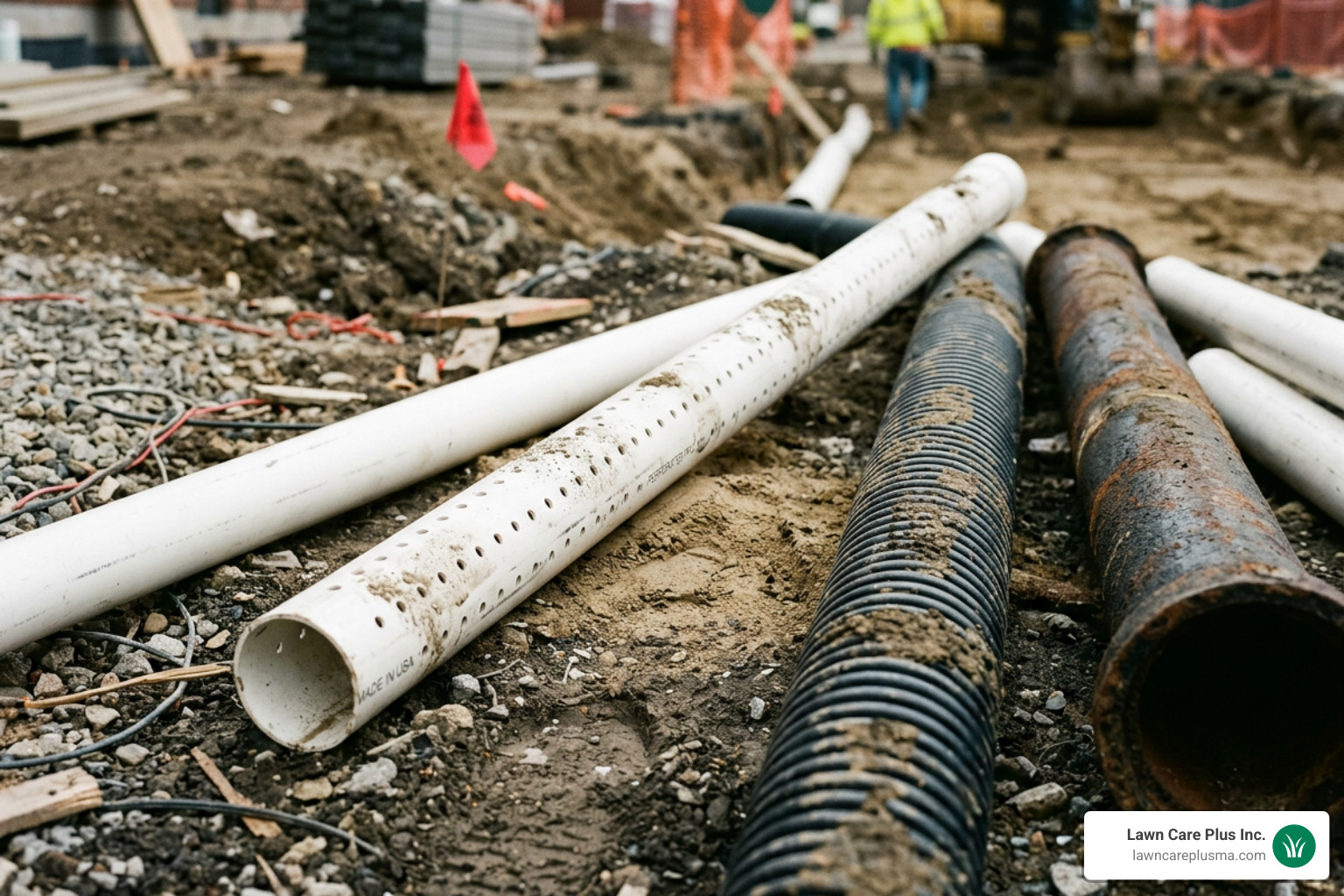
- PVC and ABS: These are the kings of residential drainage. PVC is lightweight, inexpensive, and resistant to the acids found in soil. For above-ground use, solid PVC is common. For below-ground, we often use perforated PVC, which has small holes to let groundwater in.
- HDPE (High-Density Polyethylene): This is the flexible, black corrugated piping you often see. It’s great for long runs because it doesn’t require as many fittings, though it can be harder to clean than smooth-wall PVC.
- Galvanized Steel and Cast Iron: You’ll mostly see these in older Boston homes or heavy-duty commercial applications. They are incredibly durable and can handle high pressure, but they are prone to corrosion over decades.
- Filter Fabric: This is a “hidden” material but perhaps the most important for below-ground systems. It acts as a shield, letting water into the pipe while keeping out the silt and soil that would eventually clog it. We always recommend high-quality geotextile for French drains to ensure longevity.
Common Above-Ground Solutions
In our neck of the woods, we use a variety of surface-level tools to keep properties dry:
- Gutters and Downspouts: The first line of defense. They catch roof water and move it away.
- Surface Grading: Reshaping the lawn to ensure water flows toward the street or a wooded area.
- Grass Swales: These are shallow, sloped ditches covered in grass. They look like a natural part of the landscape but act as a highway for rainwater.
- Rain Gardens: A beautiful way to handle drainage. We plant deep-rooted native plants in a slight depression, allowing the soil to naturally absorb runoff.
- Porch and Deck Drainage: Specialized systems that prevent water from rotting the supports under your outdoor living spaces. You can find more info about porch drainage here.
Common Below-Ground Solutions
When surface solutions aren’t enough, we go underground:
- French Drains: A trench filled with gravel and a perforated pipe. It’s the gold standard for intercepting groundwater.
- Catch Basins: These are buried “boxes” with a grate on top. They sit at low points in your yard or at the end of a downspout to collect water and move it into a solid underground pipe.
- Dry Wells: An underground basin where water is collected and then slowly allowed to dissipate back into the soil. This is a great “eco-friendly” option that recharges the local water table.
- Downspout Extensions: Taking your gutters and installing a French drain for gutters allows that roof water to be discharged 20 or 30 feet away from the house, rather than right at the corner of the foundation.
Installation, Maintenance, and Cost Comparisons
Installing above and below ground drainage systems is a tale of two intensities. Above-ground fixes like adding downspout extensions or minor landscape grading can often be DIY weekend projects.
Below-ground systems, however, require serious excavation. You have to call “Dig Safe” (811) to mark utility lines, and you need to ensure a consistent slope—usually at least 1 inch of drop for every 8 feet of pipe. If the slope is off, the water just sits in the pipe, turns into a mosquito hotel, and eventually clogs with sediment.
Maintenance is also key. We recommend that you assess your sump pump once a year and clean your gutters at least twice—once in the spring and once after the leaves fall in autumn. For underground pipes, a professional “camera inspection” every few years can spot root intrusions before they cause a backup.
Average Costs for Above and Below Ground Drainage Systems
Note: The following are average costs based on internet data and are not actual quotes for Lawn Care Plus Inc. services. Costs in the Boston Metro-West area can vary significantly based on soil rockiness and accessibility.
| System Type | Average Low-End Cost | Average High-End Cost |
|---|---|---|
| French Drain (per linear foot) | $10 | $150+ |
| Dry Well (Professional Install) | $1,500 | $5,000+ |
| Channel Drain (per linear foot) | $30 | $450+ |
| Lawn Aeration (Large Yard) | $150 | $600+ |
| Rain Garden (DIY Materials) | $5 / sq ft | $25+ / sq ft |
When looking at these numbers, the high end often reflects complex projects involving heavy machinery, concrete cutting, or massive amounts of stone backfill. Investing in a complete guide to drainage solutions now can save you tens of thousands in foundation repairs later.
Choosing the Right System for Your Property
The “best” system depends entirely on your specific slice of Massachusetts.
- Soil Type: If you live in an area with heavy clay (common in parts of Watertown or Belmont), water won’t soak in quickly. You’ll likely need a combination of aggressive surface grading and a robust French drain.
- Terrain Slope: If your yard slopes toward your house, you are fighting a battle against gravity. In these cases, we often install “interceptor drains” at the base of the slope to catch water before it reaches the foundation.
- Water Table: If you can dig a two-foot hole and see water at the bottom, you have a high water table. Surface grading won’t fix this; you need a sump pump and a subsurface system.
- Local Regulations: Many towns have rules about where you can discharge water. In most cases, you cannot simply pipe your yard water onto your neighbor’s property or directly into the municipal sanitary sewer.
For properties with unique challenges, we often design drainage solutions for sloping land that use a “tiered” approach, combining retaining walls with built-in weep holes and buried pipes.
Signs You Need Above-Ground Drainage Improvements
You don’t need to be an engineer to spot surface issues. Keep an eye out for:
- Gutter Overflows: If water is spilling over the sides during a storm, your gutters are either clogged or undersized.
- Soil Washout: If you see “mini-canyons” forming in your mulch beds or under your downspouts.
- Puddles on Walkways: Standing water on your driveway or sidewalk that stays for more than 24 hours.
- Basement Window Leaks: Water coming in through the top of the window usually means surface water is pooling right against the house.
Check out our domestic surface water drainage guide for more tips on spotting these surface-level red flags.
Signs You Need Below-Ground Drainage Improvements
Subsurface issues are often more subtle until they become a crisis:
- Foundation Cracks: Vertical or horizontal cracks in your basement walls are a sign of extreme hydrostatic pressure.
- Soggy Lawn: If your grass feels like a wet sponge even three days after it rains.
- Mosquito Breeding: Persistent damp spots are the perfect nursery for pests.
- Efflorescence: That white, powdery substance on your basement walls. It’s actually salt left behind as groundwater seeps through the concrete and evaporates.
- Root Blockages: If you have large trees near your house, their roots in French drains can cause the entire system to back up.
Frequently Asked Questions about Residential Drainage
Can I connect my downspouts directly to the sewer line?
In almost every municipality we serve—from Boston to Walpole—the answer is a firm no. Most modern systems are “separate,” meaning rainwater must go to a storm drain or soak into the ground. Connecting them to the sanitary sewer can overwhelm the water treatment plant and is often illegal.
How long do underground French drains typically last?
With professional installation and the use of high-quality filter fabrics, a French drain can last 30 to 40 years. The main “killer” of these systems is silt infiltration or tree root intrusion. Regular maintenance and keeping water-loving trees (like Willows) at least 50 feet away will extend that lifespan.
What is the best soil for grading around a foundation?
You want a clay-rich soil for the actual grading. Why? Because clay is relatively impermeable. It acts like a “cap” that sheds water away from the house. If you use sandy, porous topsoil right against the foundation, the water will just soak straight down to your basement walls.
Conclusion
Managing water on your property doesn’t have to be a mystery. By integrating above and below ground drainage systems, you create a “dry envelope” around your home. Whether it’s a simple gutter adjustment or a complex network of French drains and catch basins, the goal is the same: peace of mind during the next New England Nor’easter.
At Lawn Care Plus Inc., we’ve spent years perfecting these systems for our neighbors in Brookline, Newton, Dedham, and beyond. We don’t just dig trenches; we design long-term solutions that blend seamlessly with your landscape.
Ready to stop worrying about the rain? Contact us for professional drainage services today, and let’s get your property flowing in the right direction!