
Why Finding the Right Driveway Replacement Contractor Matters
Driveway replacement contractors handle the complete tear-out and installation of new driveways, changing cracked, sunken surfaces into smooth, durable pathways that boost your home’s curb appeal and value.
Quick contractor selection checklist:
• Licensed & insured with BBB ratings
• Written estimates covering full scope and timeline
• Portfolio of recent work in your area
• Clear warranty terms for materials and workmanship
• No upfront payment demands or door-to-door sales
Your driveway replacement is a major investment that can last 20 to 40 years when properly maintained. The right contractor makes the difference between a smooth project and costly headaches down the road.
Thoroughly vetting contractors matters because poor communication and unprofessional service can turn what should be a straightforward home improvement into a frustrating and costly experience.
Professional driveway replacement involves:
– Complete demolition and debris removal
– Proper grading and drainage setup
– Quality sub-base installation
– Expert concrete or asphalt pouring
– Appropriate curing and sealing
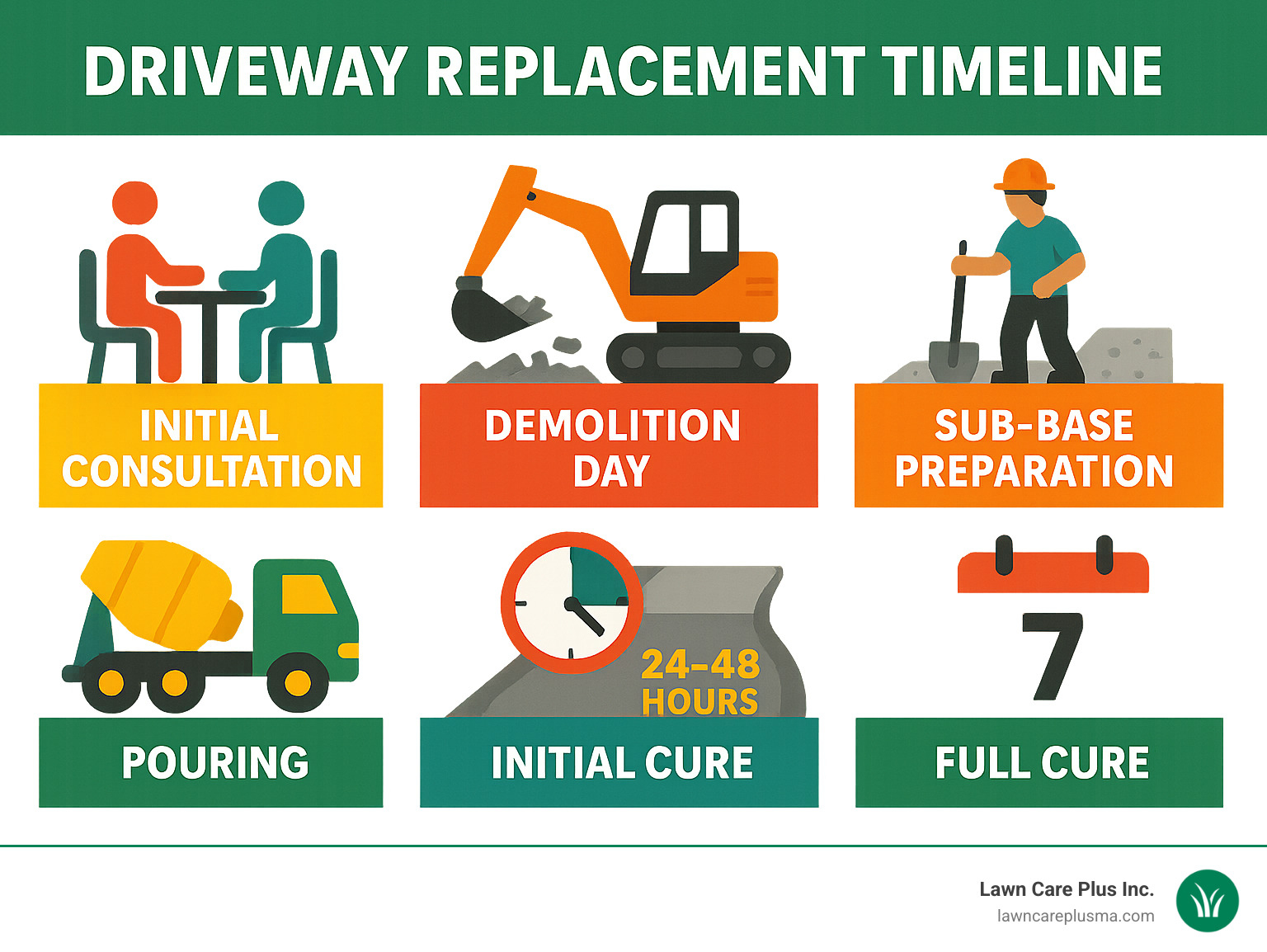
The process typically takes 3-7 days depending on size, weather, and material choice. During this time, you’ll need alternative parking arrangements while your new surface cures.
Relevant articles related to driveway replacement contractors:
– cost of replacing driveway
– driveway crack repair
– asphalt driveway cost
Understanding Driveway Replacement Contractors
When your driveway starts looking more like a patchwork quilt than a smooth surface, it’s time to call in the professionals. Driveway replacement contractors are the specialists who handle everything from that first swing of the demolition hammer to the final protective seal on your brand-new driveway.
Think of us as the conductors of a complex orchestra. We coordinate demolition crews who carefully tear out your old surface, excavation teams who dig down to create proper foundations, and skilled pavers who craft your new driveway with precision. The whole process requires permits, utility locates (nobody wants to hit a gas line!), proper drainage planning, and warranties that give you peace of mind for years to come.
The industry has different types of specialists, but here at Lawn Care Plus Inc., we’re what you’d call full-service contractors. Some companies focus only on asphalt, others stick to concrete, but we handle both materials. This flexibility means we can recommend the best option for your specific situation rather than pushing whatever we happen to specialize in.
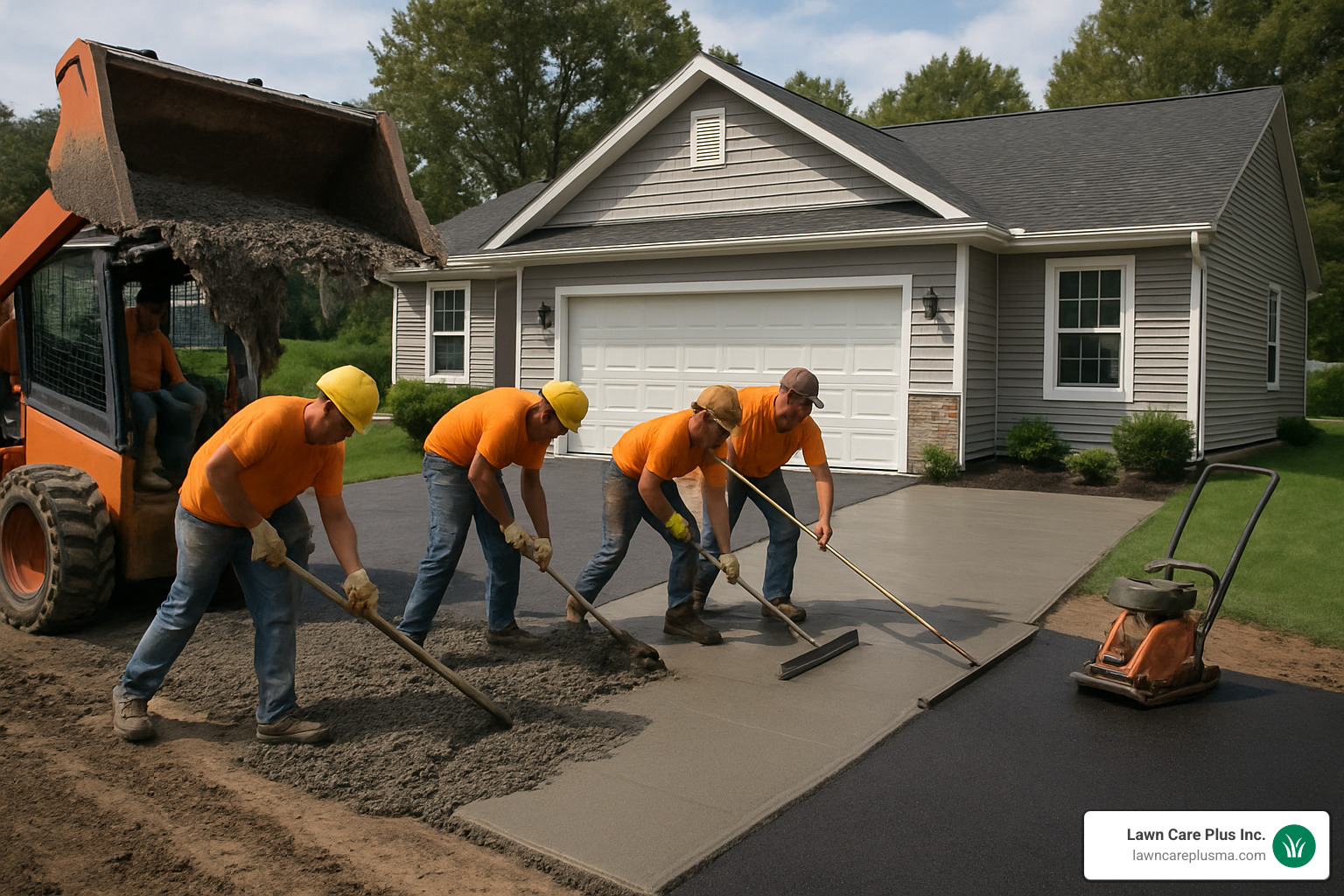
Professional contractors bring expertise that goes far beyond just pouring concrete or laying asphalt. We understand soil conditions, compaction requirements, and local building codes that vary from town to town. The excavation alone requires specialized equipment that most homeowners don’t have sitting in their garage.
One of the biggest advantages of hiring professionals is our focus on drainage solutions. Poor drainage kills more driveways than heavy trucks ever will. We grade your new surface properly and can incorporate French drains or other water management systems that prevent the freeze-thaw cycles that destroy Massachusetts driveways every winter.
Services Offered by Driveway Replacement Contractors
Modern driveway replacement contractors offer much more than basic tear-out and replacement services. When we talk about full-depth replacement, we’re removing everything down to the sub-base and starting completely fresh. This differs from resurfacing, where we apply new material over existing surfaces—something that only works when the foundation underneath is still solid.
Decorative finishes have become incredibly popular, especially with concrete installations. Stamped concrete can mimic expensive brick, natural stone, or tile patterns at a fraction of the cost. Exposed aggregate creates beautiful textured surfaces that look great and provide excellent traction. Colored concrete lets you customize your driveway to complement your home’s exterior perfectly.
For those brave enough to face Massachusetts winters without a snow shovel, snow-melt systems are a game-changer. These radiant heating systems prevent ice formation and eliminate the need for deicing salts that gradually damage concrete surfaces. They’re an investment upfront but pay dividends in convenience and surface protection.
Professional edging and borders aren’t just about looks—though they do add that crisp, finished appearance that makes neighbors jealous. Proper edging prevents your driveway surface from degrading at the edges and creates clean transition lines to your landscaping or walkways.
When to Call Professional Driveway Replacement Contractors
Certain warning signs tell you loud and clear that your driveway has moved beyond the “slap some patch on it” stage into full replacement territory. Alligator cracking—those interconnected cracks that really do look like reptile skin—signals that the foundation itself has failed. No amount of crack filler will fix structural problems.
Freeze-thaw damage is particularly brutal in New England. When water gets into cracks and freezes, it expands with incredible force, creating more cracks in a destructive cycle that gets worse every winter. You’ll see widespread cracking and surface spalling that makes your driveway look like it’s shedding its skin.
Heaving creates those annoying (and dangerous) raised sections where frost has literally pushed parts of your driveway upward. This usually means the original installation didn’t go deep enough or drainage problems allowed water to accumulate underneath.
Pooling water after every rainstorm is nature’s way of telling you that your drainage is shot. While minor puddles might be fixable, extensive pooling typically requires starting over with proper grading.
Even well-maintained driveways eventually wear out. Most reach the replacement conversation around the 20-year mark, regardless of material. At that point, you’re usually looking at a surface that’s served you well but simply can’t keep up with Massachusetts weather and daily traffic anymore.
Concrete vs. Asphalt: Material Showdown
When you’re ready to work with driveway replacement contractors, the concrete versus asphalt decision will shape everything from your project timeline to your maintenance routine for decades to come. Let’s break down what each material brings to the table.
Concrete driveways are the marathon runners of the driveway world. They typically last 20-40 years with proper care and can handle whatever you throw at them—literally. Got a boat trailer or RV? Concrete won’t flinch under heavy loads the way asphalt might.
The design possibilities with concrete are where things get exciting. You can stamp it to look like brick or natural stone, add color to complement your home’s exterior, or go with exposed aggregate for that sophisticated textured look. It’s like having a blank canvas for your driveway.
But here’s the catch—patience is required. You’ll wait about 7 days before driving on new concrete, compared to just 24-48 hours for asphalt. If you need your driveway back quickly, this timeline matters.
Asphalt driveways take a different approach. They’re the practical choice that gets you back on the road faster and costs less upfront. Based on current market data, asphalt averages significantly less per square foot than concrete, though prices can vary dramatically based on local conditions and project complexity.
Asphalt also plays nicer when repairs are needed. Patches blend seamlessly, while concrete repairs often remain visible as permanent reminders of that time the delivery truck took a wrong turn.
The maintenance stories differ too. Concrete might crack from freeze-thaw cycles and needs periodic sealing, but it doesn’t demand the regular attention that asphalt requires. Asphalt needs resealing every 2-3 years to stay flexible and water-resistant—think of it as regular spa treatments for your driveway.
One quirk of asphalt: it can soften in extreme heat, potentially showing tire marks or impressions from heavy objects. This rarely becomes an issue in our moderate New England summers, but south-facing driveways that bake in afternoon sun might see some softening.
| Feature | Concrete | Asphalt |
|---|---|---|
| Lifespan | 20-40 years | 15-25 years |
| Initial Cost | Higher | Lower |
| Design Options | Extensive (stamping, coloring) | Limited |
| Curing Time | 7 days | 24-48 hours |
| Maintenance | Seal every 2-5 years | Seal every 2-3 years |
| Heavy Load Tolerance | Excellent | Good |
| Repair Visibility | Patches show | Blends well |
Climate Matters: Picking the Right Surface
Massachusetts weather doesn’t mess around, and your driveway material choice needs to account for our freeze-thaw cycles, salt exposure, and temperature swings.
Concrete faces specific challenges in our climate. When water sneaks into tiny cracks and freezes, it expands with incredible force—enough to create bigger cracks in a destructive winter-long cycle. The salt we spread for safety can also deteriorate concrete surfaces over time.
But don’t write off concrete yet. High-quality concrete with proper air entrainment (tiny air bubbles that give water somewhere to expand) and regular sealing handles these challenges beautifully. It’s all about working with experienced driveway replacement contractors who understand local conditions.
Asphalt actually loves cold weather—it stays stable and performs well through our winters. The summer heat presents more challenges, as intense sun can soften asphalt enough to show tire impressions or footprints. This rarely becomes problematic in our area, but it’s worth considering for driveways that get full southern exposure.
Drainage design becomes your secret weapon regardless of which material you choose. Proper installation includes a slight crown (center elevation) to shed water toward edges, adequate slope to prevent pooling, and smart integration with your existing landscape drainage. Poor drainage destroys driveways faster than any other factor—even faster than teenage drivers learning to parallel park.
Your sealant schedule will depend on both material choice and climate exposure. Concrete sealers protect against water penetration and salt damage, typically applied every 2-5 years depending on traffic and weather exposure. Asphalt sealcoating should happen every 2-3 years to maintain flexibility and water resistance.
The bottom line? Both materials can thrive in Massachusetts when properly installed and maintained. Your choice often comes down to budget, timeline, design preferences, and how much ongoing maintenance fits your lifestyle.
More info about Driveway Replacement Options
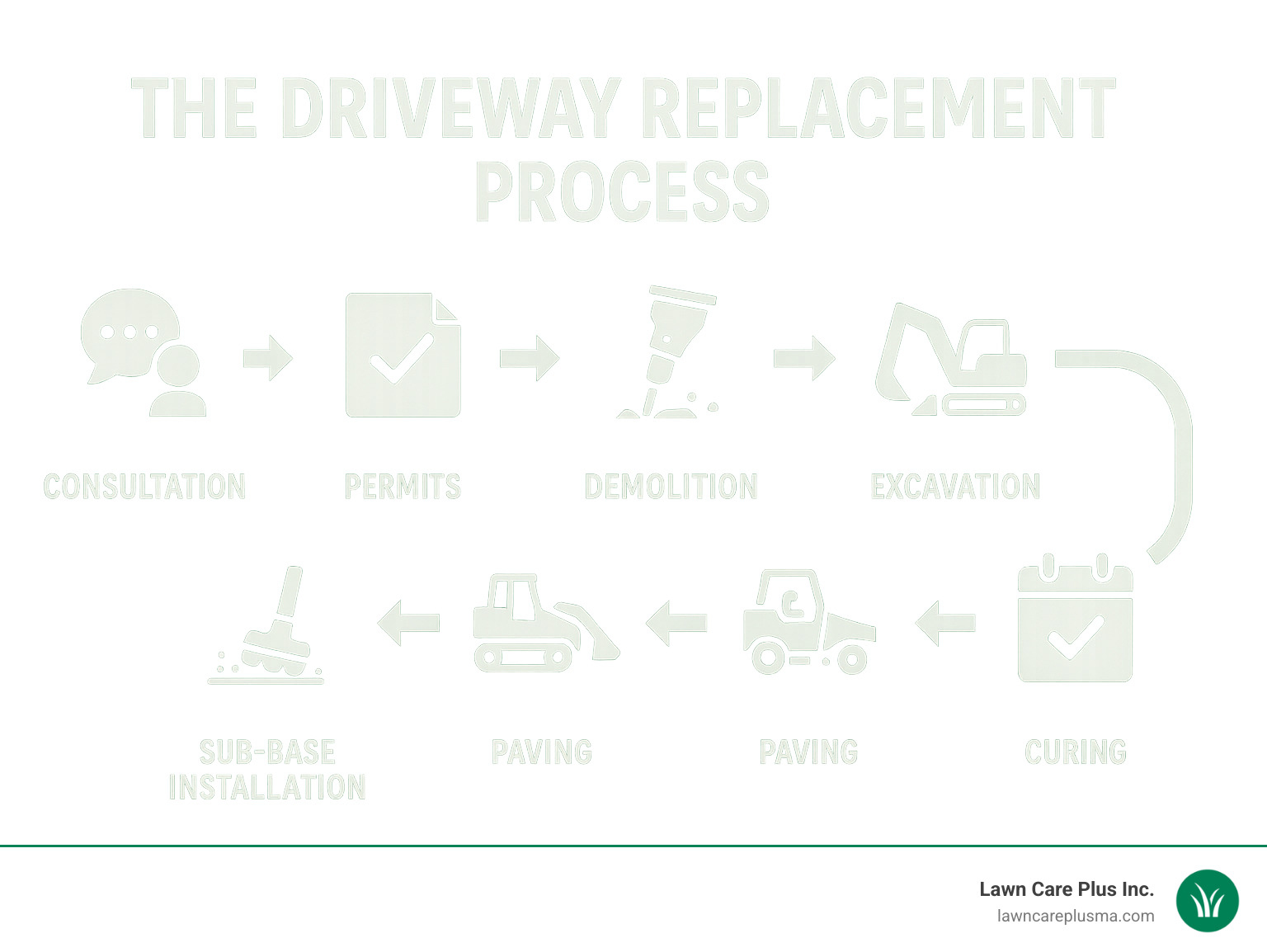
The Driveway Replacement Process Start-to-Finish
Getting a new driveway might seem overwhelming, but understanding what happens each step of the way makes the whole experience much smoother. When you work with experienced driveway replacement contractors, you’re getting a well-orchestrated process that’s been refined through hundreds of projects.
Everything starts with a thorough site inspection where contractors walk your property, measuring dimensions and checking for potential hiccups. They’re looking at drainage patterns, soil conditions, and any underground utilities that might complicate things. This isn’t just a quick look—good contractors spend real time understanding what they’re working with.
The utility location step happens next, and it’s absolutely critical for safety. Professional contractors always call DigSafe (it’s free!) to mark underground gas, electric, water, and communication lines. You definitely don’t want a jackhammer hitting your gas line—trust us on that one.
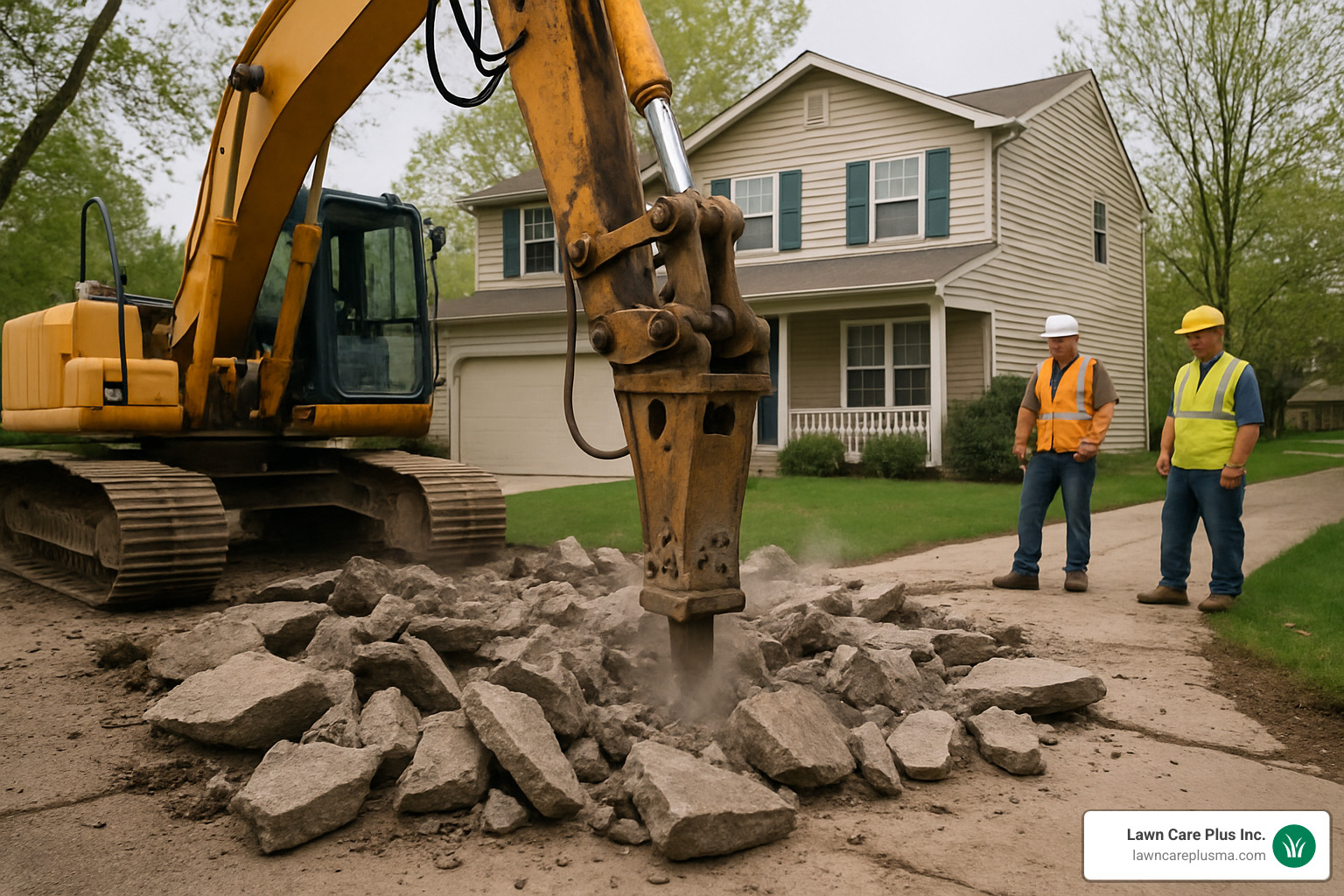
When demolition day arrives, you’ll hear the heavy machinery before you see it. Breaking up concrete requires serious equipment like jackhammers or specialized breakers, while asphalt can often be cut and removed in manageable sections. Quality driveway replacement contractors haul away every bit of debris instead of burying it somewhere on your property, which would create settling problems down the road.
The sub-base preparation phase is where the magic really happens, even though it’s not the glamorous part. This foundation work involves digging down to the right depth (usually 4-8 inches below where your final surface will be), then installing and carefully compacting gravel base material. Getting the grade perfect for proper drainage takes skill and experience. Most driveway failures trace back to shortcuts taken during this crucial step.
Pouring or paving day depends heavily on Mother Nature’s cooperation. Concrete simply can’t be placed when it’s freezing or during heavy rain, while asphalt needs dry conditions and temperatures above 50°F to compact properly. Professional contractors watch weather forecasts like hawks and adjust schedules when needed rather than rushing a pour in bad conditions.
The curing phase requires patience, but it’s what turns your investment into a long-lasting surface. Concrete reaches initial strength within a day or two but keeps getting stronger for weeks. You’ll need to wait a full week before driving on new concrete, while asphalt typically handles light traffic within 24-48 hours once it cools down.
Homeowner Prep Checklist
Success with your driveway replacement starts with good preparation on your end too. The biggest challenge most homeowners face is vehicle relocation—you’ll need somewhere else to park for several days, possibly longer if weather throws a curveball. Start coordinating with neighbors early, or consider renting nearby parking space if you have valuable vehicles.
Tree trimming and landscaping protection prevents headaches during construction. Low-hanging branches interfere with equipment operation, and nearby plants might need temporary shields from debris and heavy machinery. Most professional contractors handle this coordination, but thinking ahead helps everything go smoother.
HOA permits and neighbor notification shows good neighborly manners and prevents conflicts. Some homeowner associations require architectural approval even for driveway replacement, especially in communities with strict aesthetic rules. Giving neighbors a heads-up about noise and equipment schedules goes a long way toward maintaining good relationships.
Budget buffers account for those surprise findies that happen once excavation begins. Hidden utilities, questionable soil conditions, or unexpected drainage needs can bump up costs. Planning for a 10-15% contingency keeps financial stress at bay if complications surface.
Pet safety deserves special attention during active construction. Heavy machinery, open excavations, and construction debris create real hazards for curious pets. Plan temporary relocation or secure containment during work periods—it’s much easier than dealing with an emergency vet visit.
Typical Timeline & Downtime
Excavation day typically takes one full day for standard residential driveways, though larger or more complicated projects stretch longer. This creates the most disruption—expect heavy equipment noise and complete inability to access your driveway. It’s usually the messiest day too.
Pour day represents the most weather-sensitive phase of the entire project. Concrete pours must happen in favorable conditions, which sometimes means adjusting schedules when weather doesn’t cooperate. Asphalt installation offers a bit more flexibility but still requires dry conditions and reasonable temperatures.
Curing windows determine when life gets back to normal. Concrete needs a full week before you can drive on it, though you can walk on it safely after a day or two. Asphalt typically allows light vehicle traffic within 24-48 hours once the surface cools and hardens properly.
Weather delays can stretch timelines significantly, especially during New England’s famously unpredictable spring and fall seasons. Professional contractors build flexibility into their schedules and communicate delays promptly rather than leaving you guessing. Rushing installation in poor conditions always compromises quality and longevity—it’s never worth the risk.
Budgeting, Warranties & Financing Your New Driveway
Planning your driveway replacement budget involves more than just getting a quote from driveway replacement contractors. You’ll need to consider the full scope of costs, from basic materials and labor to potential add-ons that can transform a simple replacement into a stunning home improvement.
The financial investment varies significantly based on your material choice and project complexity. Based on internet research, asphalt installations typically range from $3-5 per square foot for standard work, while concrete projects generally cost $6-15 per square foot. However, these are average costs found online and not actual costs for Lawn Care Plus—your specific project may differ based on site conditions and design choices.
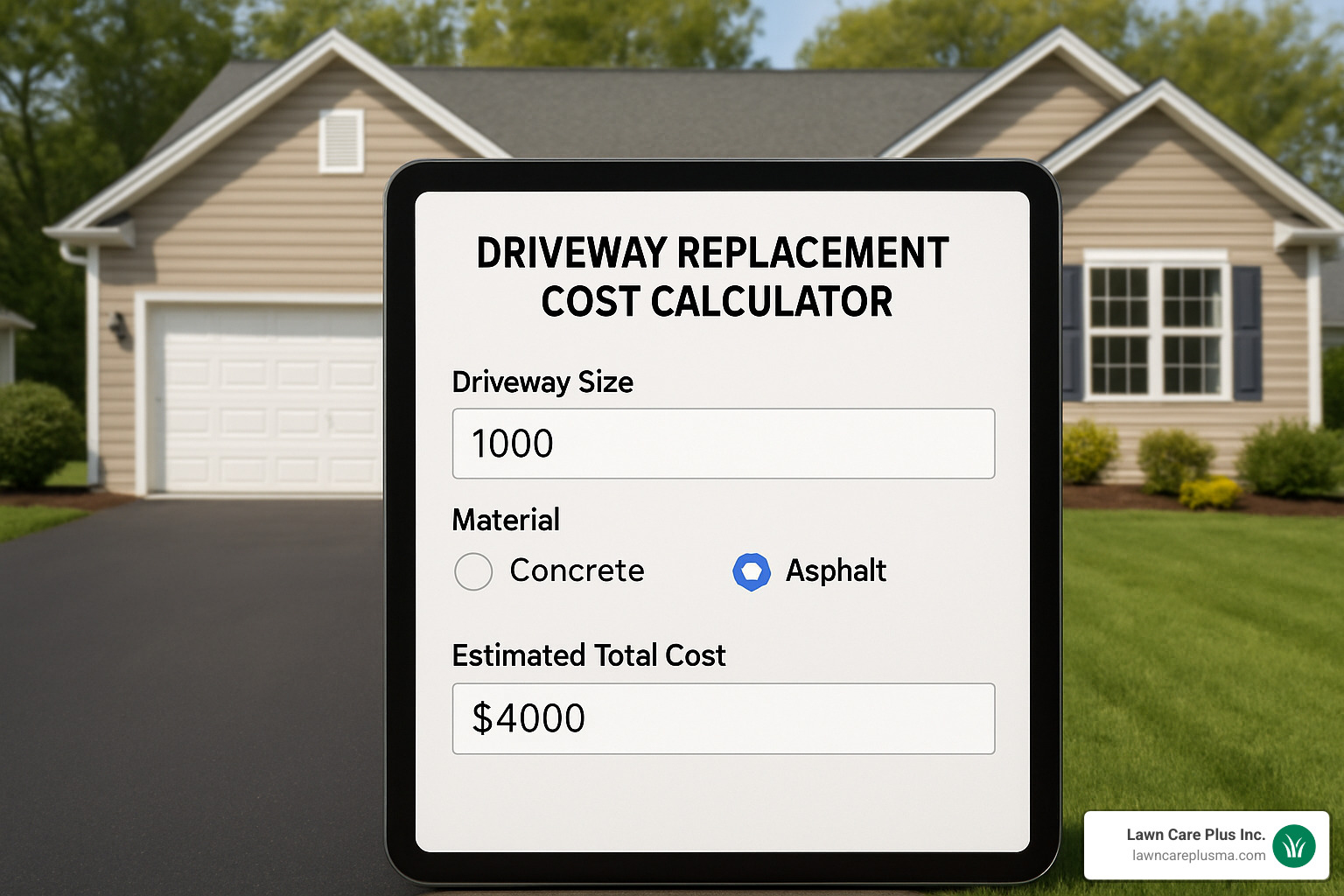
Regional factors play a major role in Massachusetts pricing. Our skilled labor market and higher living costs typically push project costs above national averages. Removal costs for your existing driveway add to the base price, especially if you have thick concrete or heavily reinforced surfaces that require specialized equipment to break up and haul away.
Add-on features can significantly impact your total investment. Decorative stamping, colored concrete, or integrated drainage systems increase costs but often provide excellent value through improved curb appeal and functionality. Smart driveway replacement contractors provide detailed estimates that break down each cost component, helping you understand exactly what you’re paying for.
Warranties offer crucial protection for your investment. Manufacturer warranties typically cover material defects, while workmanship guarantees protect against installation problems. Quality contractors stand behind their work with warranties ranging from one to five years for workmanship, with longer coverage for major structural issues.
More info about Asphalt Driveway Replacement Cost Calculator
Average Costs & What Affects Them
Understanding what drives driveway replacement costs helps you budget realistically and avoid surprises. Based on current internet research, asphalt installations typically range from $3-5 per square foot for basic work, though premium projects can reach three times that amount with decorative elements and complex site preparation. These are average costs found online and not actual costs for Lawn Care Plus.
Concrete costs vary even more widely, from $6-15 per square foot for standard installations up to $45+ per square foot for elaborate stamped and colored finishes. The dramatic price range reflects the material’s versatility and the skill required for premium decorative work.
Excavation depth significantly impacts your final bill when existing surfaces require deep removal or poor soil conditions demand additional base material. Standard excavation assumes six to eight inches of depth, but challenging conditions may require twelve or more inches of excavation and base preparation.
Thickness requirements depend on your intended use and soil conditions. Standard residential driveways use four-inch concrete or two to three inches of asphalt over proper base, but heavy vehicle use or poor soil may require increased thickness and reinforcement.
Decorative finishes like stamping, coloring, or exposed aggregate can add 50-200% to base concrete costs but create distinctive appearances that boost property value. These premium finishes require skilled craftsmen and specialized materials, justifying the additional investment for homeowners seeking unique curb appeal.
Drainage solutions become necessary when site conditions create water management challenges. French drains, catch basins, or permeable paving materials add costs but prevent expensive future damage from water infiltration and freeze-thaw cycles that plague Massachusetts driveways.
Financing & Payment Schedules
Home equity loans often provide the most cost-effective financing for major driveway replacement projects. These secured loans typically offer lower interest rates than unsecured options and may provide tax advantages when used for home improvements that increase property value.
Specialized financing programs like GreenSky have helped finance over one million home improvement projects, offering convenient application processes and competitive rates. Many contractors partner with financing companies to streamline approval and funding processes, making it easier to move forward with your project.
Credit cards work for smaller projects but rarely offer optimal rates for major replacements. However, promotional financing offers through home improvement credit cards sometimes provide 0% interest periods that can benefit well-qualified applicants who can pay off balances quickly.
Phased payment schedules protect both homeowners and contractors throughout the project. Typical schedules include small deposits to secure scheduling, progress payments tied to completion milestones, and final payment upon satisfactory completion. Avoid contractors demanding large upfront payments or full payment before work completion—these are major red flags.
Lien releases become important legal protections when contractors use subcontractors or material suppliers. Ensure your contract includes provisions for lien releases upon payment, protecting your property from claims by unpaid suppliers or subcontractors who might otherwise place liens on your home.
Choosing the Right Contractor: Reviews, References & Red Flags
Finding the right driveway replacement contractors can feel overwhelming, but breaking down the process into manageable steps makes it much easier. Think of it like hiring any professional—you want someone skilled, trustworthy, and easy to work with.
BBB ratings provide your first checkpoint for evaluating contractors. These ratings reflect real customer experiences, complaint resolution, and overall business practices. An A+ rating doesn’t guarantee perfection, but it shows a contractor takes customer satisfaction seriously. Lower ratings or missing BBB profiles might signal potential issues worth investigating further.
Licensure requirements protect homeowners by ensuring contractors meet basic competency standards. In Massachusetts, contractors working on projects above certain dollar amounts must maintain state licenses and proper insurance coverage. Don’t feel awkward asking to see licenses—professional contractors expect this question and readily provide verification.
Insurance protection covers two critical areas: liability insurance protects your property from construction damage, while workers’ compensation protects you from injury claims. Request current certificates of insurance before work begins. This simple step prevents major headaches if accidents occur.
Portfolio reviews reveal more than fancy websites ever could. Quality contractors proudly show recent projects similar to yours, highlighting their craftsmanship and attention to detail. Pay attention to finish quality, clean edges, and overall appearance. If a contractor hesitates to show recent work, that’s concerning.
On-site estimates separate serious contractors from fly-by-night operators. Accurate estimates require seeing your specific conditions, measuring dimensions, and assessing potential complications. Contractors offering phone estimates or refusing site visits likely cut corners elsewhere too.
Change order policies deserve discussion upfront. Construction projects sometimes reveal unexpected issues requiring scope adjustments. Professional contractors explain their change order process clearly, including approval procedures and pricing methods for additional work.
More info about Driveway Repair
Reading Reviews Like a Pro
Online reviews contain valuable insights when you know what to look for. Moving beyond simple star ratings, focus on specific performance indicators that predict your likely experience.
Scope clarity reviews reveal communication skills. Look for comments about how well contractors explained project details, timeline expectations, and cost breakdowns. Poor communication creates misunderstandings that lead to disputes and frustration.
Timeline adherence indicates reliability and project management abilities. Contractors consistently finishing on schedule demonstrate professionalism and respect for customers’ lives. Weather delays happen in New England, but chronic delays suggest overcommitment or poor planning.
Communication quality becomes crucial during construction projects. Questions arise, decisions need making, and problems require solving. Reviews mentioning responsive, clear communication predict smoother project experiences.
Cleanup quality reflects attention to detail and customer consideration. Professional contractors remove debris, protect landscaping, and leave sites safe and tidy. Reviews complaining about messy job sites often indicate broader quality issues.
Dispute resolution shows contractor character. Even excellent contractors occasionally face problems, but their response reveals professionalism. Look for reviews describing fair, prompt problem-solving rather than defensive or dismissive responses.
Red Flags When Hiring Driveway Replacement Contractors
Certain warning signs should immediately raise your guard when evaluating driveway replacement contractors. These red flags often indicate scams, poor quality work, or unprofessional business practices.
Door-to-door sales represent perhaps the biggest red flag in contracting. Legitimate contractors build businesses through referrals and reputation, not aggressive sales tactics. Be especially wary of contractors claiming “leftover materials” from nearby jobs or offering limited-time pricing pressure. Quality work doesn’t require high-pressure sales.
Cash upfront demands signal potential scams or serious cash flow problems. Professional contractors accept reasonable deposits but never require full payment before completion. Legitimate businesses accept checks and credit cards, providing payment verification and recourse if problems arise.
Unmarked trucks and unprofessional appearance suggest questionable operations. Quality contractors invest in professional vehicles, uniforms, and equipment reflecting their commitment to quality work. If they won’t invest in their business appearance, why trust them with your property?
Vague contracts create opportunities for disputes and surprise charges. Professional contracts specify materials, timeline, work scope, payment schedule, and warranty terms clearly. Refuse contracts with ambiguous language or missing essential details. If they can’t write clear contracts, expect communication problems throughout the project.
Pressure tactics including artificial urgency or “sign today” demands indicate predatory practices. Legitimate contractors provide time for consideration and comparison shopping. Quality work speaks for itself without manipulation.
One homeowner’s cautionary experience illustrates these dangers perfectly: “The technician stopped mid-lift to warn of damage and asked me to sign a waiver to continue.” This mid-project waiver demand represents exactly the manipulation professional contractors avoid through proper planning and transparent communication.
Trust your instincts—if something feels wrong, it probably is. Quality contractors understand that major home improvements require careful consideration and welcome questions about their processes, credentials, and experience.
Frequently Asked Questions about Driveway Replacement
How long will a new driveway last?
A properly installed driveway becomes a long-term investment that serves your family for decades. Concrete driveways typically last 30-40 years when professionally installed with quality materials and proper maintenance. Asphalt driveways generally provide 12-20 years of reliable service, though exceptional installations with meticulous care can reach 30-35 years.
The secret to longevity lies in professional installation quality. When driveway replacement contractors properly prepare the sub-base, ensure adequate thickness, and use appropriate materials for New England’s climate, your new driveway weathers decades of freeze-thaw cycles, heavy snow loads, and daily traffic.
Your maintenance habits significantly impact lifespan. Regular sealing protects surfaces from water penetration and salt damage. Prompt crack repair prevents small issues from becoming major problems. Even simple practices like avoiding heavy vehicle parking and cleaning oil spills help preserve your investment.
Climate conditions in Massachusetts challenge driveways through temperature extremes and moisture cycles. However, modern materials and installation techniques handle these stresses effectively when applied by experienced professionals.
Do I need permits for replacement?
Permit requirements vary significantly across Massachusetts communities, making this one of the most common questions we hear. Many municipalities require permits for complete driveway replacement, especially when projects change dimensions, alter drainage patterns, or switch materials from the original installation.
Professional driveway replacement contractors typically handle permit applications as part of their comprehensive service. We understand local building codes, setback requirements, and impervious surface regulations that affect residential driveways. This expertise saves you time navigating municipal offices and ensures compliance with all applicable codes.
Some communities have specific restrictions on driveway width, surface materials, or drainage connections. Others require engineering reviews for driveways on steep slopes or near wetlands. These regulations protect neighborhood character and prevent drainage problems that could affect neighboring properties.
Always verify permit status before work begins, even when contractors handle applications. Unpermitted work can create problems during home sales and may require expensive corrections to meet code requirements.
Can I stay in my home during the project?
Absolutely—you can remain comfortable in your home throughout the driveway replacement process. Most families find the temporary inconveniences manageable with proper planning and realistic expectations about the construction timeline.
Vehicle access represents the primary challenge during replacement. You’ll need alternative parking for several days while demolition, excavation, and installation proceed. Many homeowners coordinate with neighbors for temporary parking or arrange to park on nearby streets where permitted.
Construction noise occurs primarily during demolition and excavation phases. Heavy equipment operates during normal business hours, typically starting around 7 AM and finishing by late afternoon. The loudest activities—breaking up old concrete and compacting sub-base materials—usually complete within the first day or two.
Utility disruptions are rare but possible when water, gas, or electrical lines run beneath existing driveways. Experienced contractors coordinate with utility companies to minimize service interruptions and provide advance notice of any planned shutoffs. Most utility work involves brief interruptions rather than extended outages.
Emergency access requires temporary planning during active construction phases. Ambulances, fire trucks, and delivery services may face access challenges while heavy equipment occupies your driveway area. Professional contractors work efficiently to minimize these disruptions and can accommodate emergency needs when necessary.
The inconvenience period typically lasts 3-7 days depending on project scope and weather conditions. Most homeowners find the temporary adjustments worthwhile for decades of improved curb appeal and functionality.
Conclusion
Choosing the right driveway replacement contractors transforms what could be a stressful home improvement project into a smooth investment in your property’s future. When you find contractors who combine technical expertise with genuine care for your satisfaction, the results speak for themselves—a beautiful, durable driveway that improves your home’s curb appeal and serves your family for decades.
The project value extends far beyond the immediate visual improvement. A professionally installed driveway eliminates trip hazards, improves drainage, and provides reliable access regardless of weather conditions. You’re not just fixing a surface problem—you’re creating a foundation that supports your daily life while boosting your property’s market value.
Smart maintenance tips help protect your investment for years to come. Simple practices like prompt crack sealing, regular cleaning to prevent stain buildup, and appropriate winter care extend your driveway’s lifespan significantly. The beauty of working with quality contractors is that they provide specific guidance custom to your material choice and local climate challenges.
This is typically a one-time hire decision for many homeowners. Most people replace their driveway once every 20-30 years, making contractor selection particularly important. You want partners who understand that this project represents a significant investment in your home’s future.
The difference between adequate and exceptional results often comes down to experience with local conditions. Massachusetts weather presents unique challenges—from harsh freeze-thaw cycles to heavy snow loads—that require contractors who truly understand how to build for longevity in our climate.
At Lawn Care Plus Inc., we’ve spent years perfecting our approach to driveway replacement throughout the Boston Metro-West area. Whether you’re dealing with a failing asphalt surface in Wellesley or planning an neat stamped concrete installation in Needham, our team brings the expertise and attention to detail that turns vision into reality.
More info about hardscaping services
Your driveway replacement project deserves contractors who view it as more than just another job. Lawn Care Plus Inc. delivers seamless driveway replacements across Metro-West MA, combining technical excellence with the kind of personal service that makes the entire process enjoyable rather than stressful.
Ready to transform your property’s entrance into something you’ll be proud to come home to every day? We’re here to make that vision a reality with the professionalism and quality you deserve.
