
Understanding Fall Leaf Cleanup Pricing in New England
Fall leaf cleanup prices vary widely across the country, but getting a clear picture of what you should expect to pay can save you from sticker shock when those colorful leaves start covering your lawn.
Quick Answer: National Fall Leaf Cleanup Price Ranges
- Small yards (under 1/4 acre): $150-$350
- Medium yards (1/4 to 1/2 acre): $250-$600
- Large yards (1/2 to 1 acre): $400-$1,000
- Multi-acre properties: $800-$2,500+
Note: These are average costs based on national data and not actual costs for any specific company.
If you’re a homeowner in the Boston Metro-West area, you’re probably watching those beautiful maples and oaks transform your yard into a stunning autumn landscape. But as any New England homeowner knows, what goes up must come down – and when it does, you’ll be faced with the annual decision of tackling the cleanup yourself or hiring professionals.
The cost of professional leaf removal depends on several key factors that can make the difference between a reasonable seasonal expense and a budget-busting surprise. Yard size is the biggest driver of cost, but the number of trees, your local market rates, and the cleanup method all play important roles in your final bill.
Understanding these pricing factors helps you make an informed decision about whether to grab your rake or call in the pros. After all, there’s nothing quite like the satisfaction of a clean yard heading into winter – whether you achieve it through your own sweat equity or by writing a check to someone else.
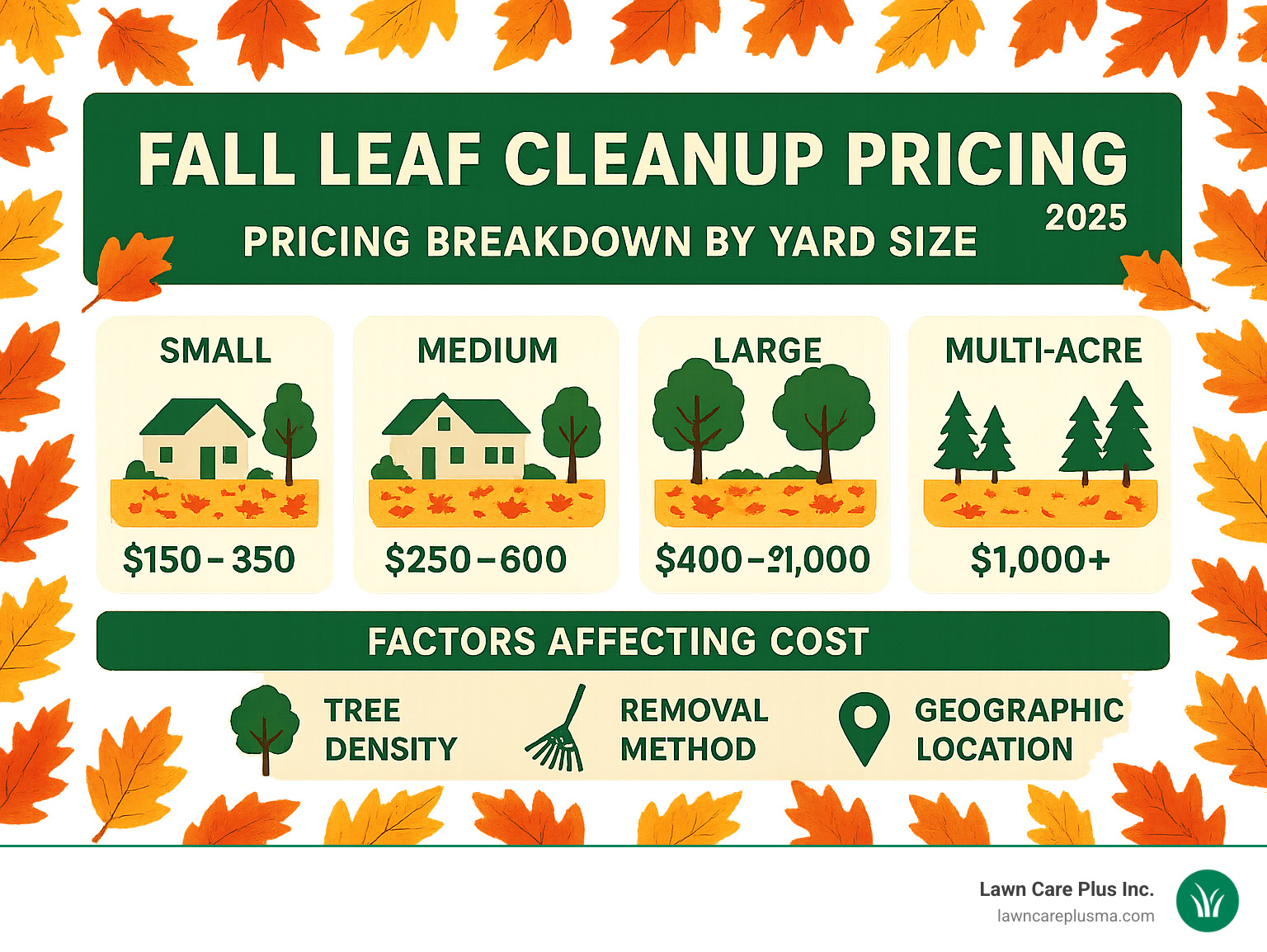
Fall leaf cleanup prices terms you need:
Breaking Down Professional Fall Leaf Cleanup Prices
When you start researching fall leaf cleanup prices, you’ll see a wide spread. According to multiple 2025 cost studies, the national average runs about $350-$376, but real-world bills often fall anywhere from $190 to $1,200+ depending on the yard.
Why the swing? Labor makes up roughly 90 % of the invoice. Crews in the Boston Metro-West area usually charge on the higher end of the national $40-$75 per-hour range because of higher wages, fuel costs, and demand.
All prices below are broad internet averages, not Lawn Care Plus quotes. For an exact estimate in Metro-West, please Contact Us.
Common Pricing Models for Leaf Removal
| Model | Typical Range* | Best For |
|---|---|---|
| Hourly | $40-$75 per hr | Small, variable projects |
| Per sq. ft. | $0.02-$0.10 | Mid-size lawns with even coverage |
| Per acre | $400-$1,000+ | Large, open properties |
| Per bag | $10-$75 | Light jobs, DIY combos |
| Flat rate | Set after site visit | Predictable budgeting |
*Again, these are internet averages, not Lawn Care Plus pricing.
How Removal Methods Affect Cost
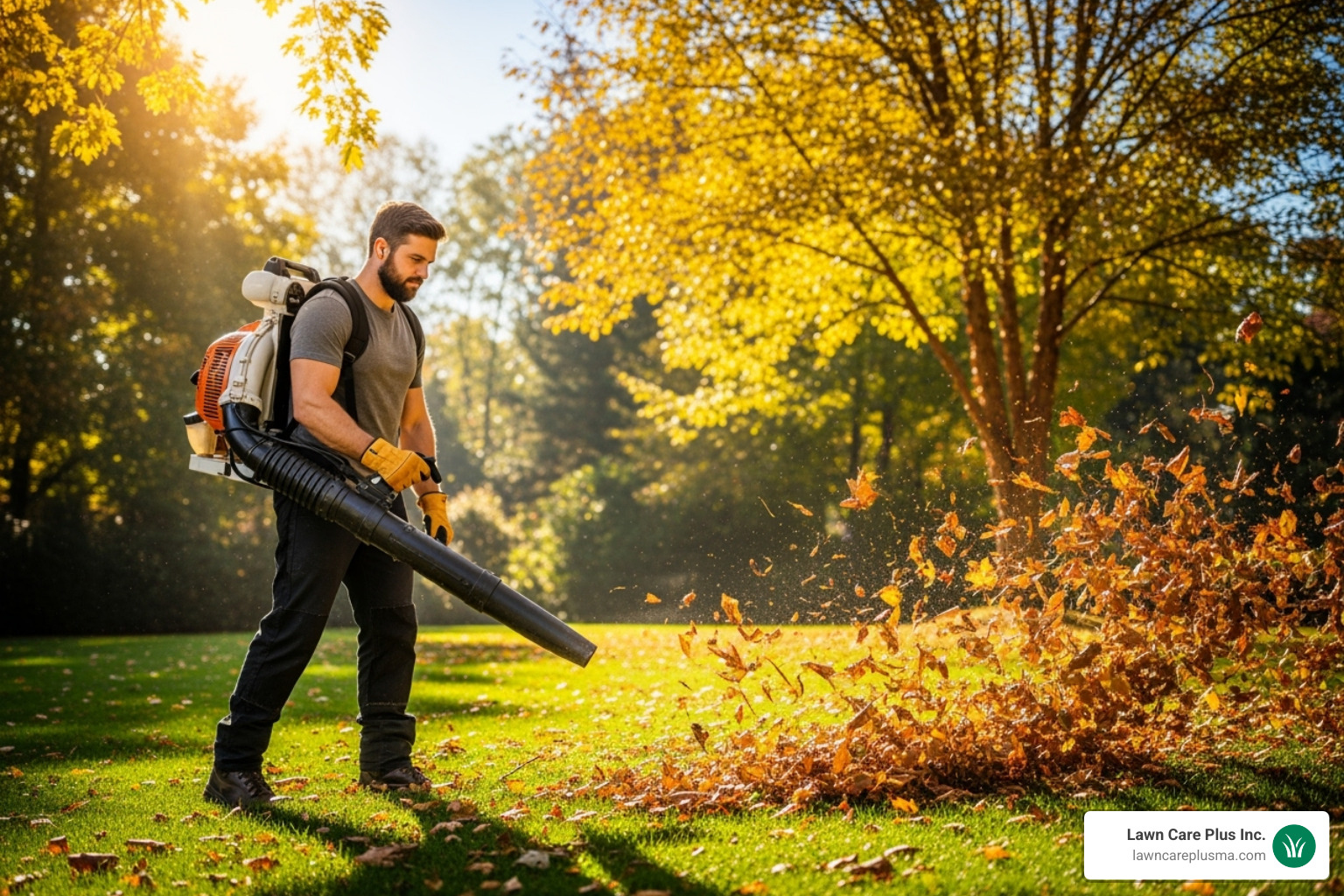
Method | Avg. Hourly Cost* | Notes
——-|——————|—Leaf blowing | $15-$45 | Fast, but leaves must be moved somewhere
Raking | $25-$50 | Gentle around beds; slower
Vacuuming | $40-$60 | Most thorough; handles wet debris
Mulching | Varies | Shreds leaves for reuse, lowering disposal fees
How Service Frequency Impacts Your Bill
• One-time cleanup: $200-$850
• Seasonal package (2-3 visits): 10-20 % less per visit than one-off service
• Bi-weekly/Monthly: Keeps lawns healthier; higher total but easier on grass
• Annual maintenance bundle: Best overall value for clients who outsource all yard care. See our Landscaping Maintenance Services Near Me page for details.
Key Factors That Influence Your Final Quote

No two properties are alike, so pros look at a handful of big drivers before quoting your fall leaf cleanup prices.
1. Yard Size & Layout
• Small (<¼ acre): $150-$250*
• Medium (¼-½ acre): $250-$500*
• Large (½-1 acre): $500-$1,000+*
Tight beds, fences, slopes, or stairs can raise costs even on small lots because crews must switch to hand tools.
2. Tree Density & Leaf Type
More trees = more labor. Oaks drop heavy, thick leaves; maples mat together; wet leaves take 2-3× longer to move than dry ones. Schedule service before heavy rains whenever possible.
3. Geographic Location & Disposal Rules
Metro-West labor runs higher than rural areas, and local dump fees or bagging rules add to the total. Pros who already know the Boston-area regulations save you both money and headaches—see Brush and Leaf Removal Near Me.
*Ranges above are internet averages, not Lawn Care Plus quotes. Get a firm number by requesting a free estimate.
DIY vs. Hiring a Pro: A Cost and Effort Comparison
The decision between grabbing your rake and calling in the professionals goes far beyond just comparing dollar amounts. When autumn arrives and your yard transforms into a colorful carpet of leaves, you’re really weighing time, sweat equity, and peace of mind against your budget.
Here’s the honest truth: fall leaf cleanup prices for professional services might make you wince initially, but the time savings alone can be remarkable. What could eat up your entire weekend (or several weekends if you’re dealing with a large property) gets knocked out by a professional crew in just a few hours. For many homeowners, especially those juggling work and family commitments, that time savings becomes priceless.
But there’s more to consider than just convenience. Professional crews show up with commercial-grade equipment that makes quick work of even the most stubborn leaf piles. They handle all the disposal logistics, know your local regulations, and can spot potential lawn problems that might escape your notice. Plus, let’s be honest – no one enjoys nursing a sore back after a weekend of intensive raking.
For busy homeowners or those with physical limitations, hiring a leaf removal pro often proves to be the most practical solution. But that doesn’t mean DIY is always the wrong choice – it depends entirely on your specific situation.
The Cost of DIY Leaf Removal
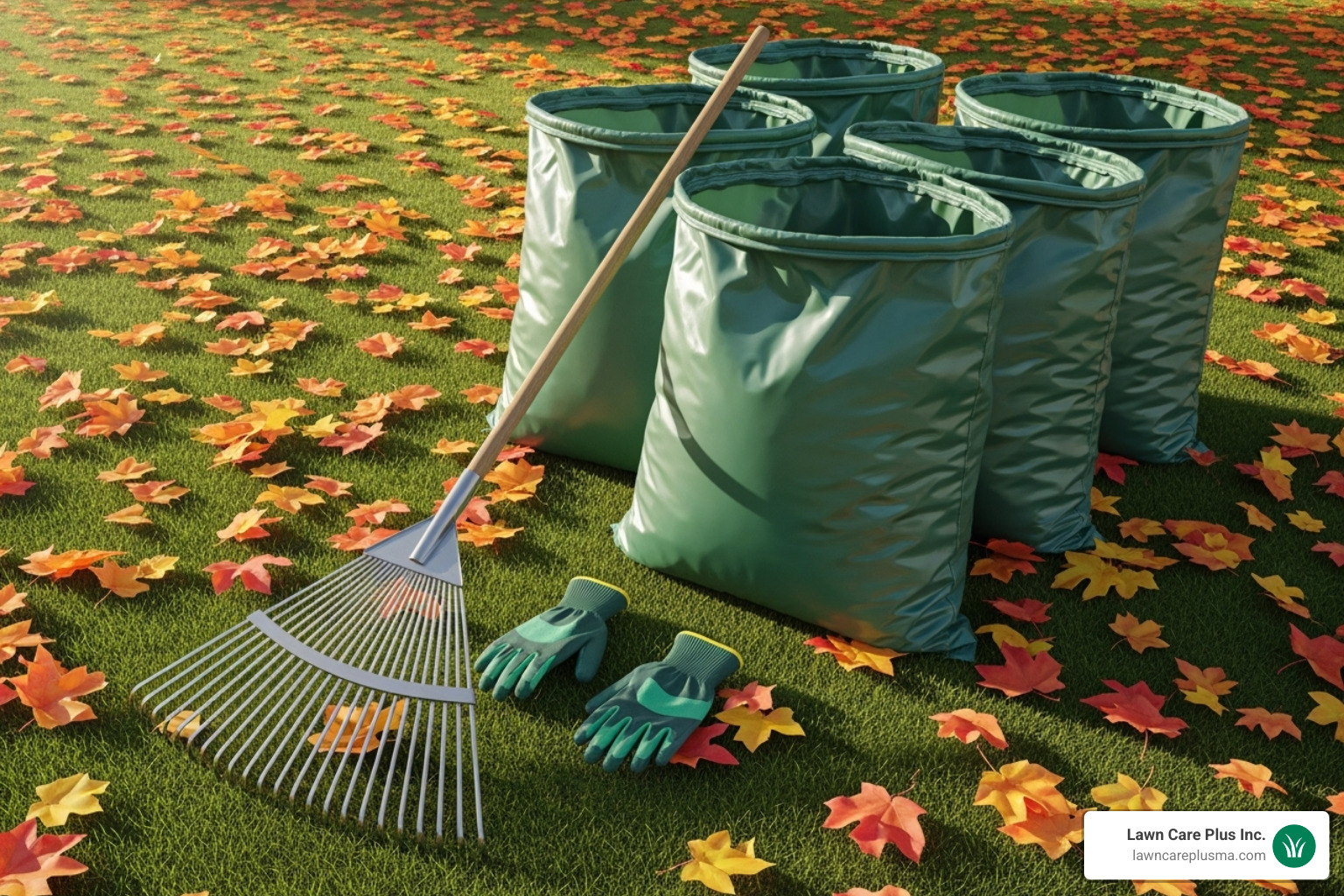
The DIY route requires some upfront investment, but once you’ve got your tools, the ongoing costs stay pretty manageable. The key is understanding exactly what you’re getting into – both financially and physically.
Your essential toolkit includes a quality leaf rake (expect to spend $15-$50 for one that won’t break mid-season), yard bags (about $25 for 100 biodegradable bags that most municipalities require), and work gloves ($10-$25 to save your hands from blisters). If you’re dealing with a larger property, a leaf blower ($50-$400) can be a game-changer, and a leaf vacuum ($80-$400) provides the most thorough cleanup but requires a bigger investment.
The time commitment is where many homeowners get surprised. Plan on spending 2-4 hours per quarter-acre, and that’s assuming you know what you’re doing and the conditions cooperate. Wet leaves, steep terrain, or dense tree coverage can easily double that time. And let’s not forget – this isn’t light work. Raking and bagging leaves is genuinely strenuous, especially if you’re not used to physical labor.
Ongoing costs add up too. You’ll need replacement bags each season, fuel for any powered equipment, and potentially disposal fees depending on your local regulations. Some municipalities charge for yard waste pickup or require specific bag types, which can add $50-$150 to your annual costs.
When is Professional Leaf Removal Worth It?
Several situations make professional leaf removal not just convenient but practically essential. Recognizing these scenarios helps you make the smart choice for your specific circumstances.
Large properties over half an acre become increasingly challenging to manage solo. The sheer time and physical effort required often makes professional service cost-effective when you factor in the value of your time and the superior results you’ll get.
Time constraints make professional service a no-brainer for many homeowners. If you’re juggling demanding work schedules, family commitments, or simply prefer to spend your weekends doing something other than yard work, professional cleanup can be incredibly valuable.
Physical limitations shouldn’t be overlooked. Leaf cleanup is genuinely demanding work that may not be suitable for everyone. Age, health conditions, or physical limitations can make professional service not just convenient but necessary for safety reasons.
Proper disposal and lawn health represent hidden benefits of professional service. Experienced crews understand proper disposal methods and can identify potential lawn health issues during cleanup. They’ll spot problems like fungal diseases, pest infestations, or drainage issues that homeowners might miss entirely.
The long-term benefits matter too. Leaving leaves on your lawn can cause serious damage, a fact confirmed by turf experts at the UMass Amherst Extension. A thick layer of leaves can lead to mold growth, grass suffocation, and pest habitat creation. Professional cleanup ensures thorough removal and can prevent costly lawn restoration projects come spring. For comprehensive solutions, explore Need Yard Clean Up services that address all these concerns.
Smart Leaf Management: Add-On Services and Money-Saving Tips
Fall cleanup is the perfect time to bundle other maintenance while the crew—and their equipment—are already on-site.
Popular Add-Ons (Average National Ranges*)
- Gutter cleaning: $100-$350
- Garden-bed cleanup & perennial cut-back: $75-$250
- Final mow of the season: $40-$100
- Lawn aeration: $90-$250
- Dethatching: $160-$225
For bigger debris jobs, see our Brush Clean Up Services.
Easy Ways to Trim Your Bill
- Book early. Many pros give 10-20 % off for clients who reserve summer dates for fall work.
- Mulch moderate leaf layers with a mower to skip disposal fees and feed your soil.
- Compost on-site if you have the space; your garden reaps the rewards next spring.
- Tackle open lawn yourself, then hire pros for beds, slopes, or that final pre-snow pass.
- Seasonal contracts lock in lower per-visit rates and guarantee you a spot during the October-November rush.
*All pricing references are broad internet averages, not actual Lawn Care Plus fees.
Frequently Asked Questions about Fall Leaf Cleanup
When is the best time to get fall leaf cleanup done?
Timing is everything when it comes to fall leaf cleanup, and getting it right can save you both money and headaches. Most New England homeowners find that a strategic two-phase approach works best for their properties.
Your first cleanup should happen in mid to late October, after about 60-70% of your leaves have fallen. This sweet spot captures the bulk of your leaf drop while they’re still relatively dry and manageable. Dry leaves are lighter, easier to move, and won’t clog equipment – which means lower costs and better results.
The second cleanup typically falls in late November or early December, right before that first significant snowfall hits. This final pass ensures your lawn heads into winter in prime condition, without a suffocating blanket of leaves that could spell trouble come spring.
Here’s a pro tip: avoid scheduling cleanup during or right after rain events. Wet leaves are heavy, stubborn, and much harder to remove efficiently. Most professional services will charge premium rates for wet-weather cleanup because it takes significantly more time and effort. Nobody wants to pay extra for something that could have been avoided with better timing.
Preventing lawn suffocation is crucial during this period. Leaves left too long start forming dense mats that block sunlight and air circulation. This creates the perfect storm for fungal diseases and mold growth that can devastate your lawn over the winter months.
For homeowners who want to take the guesswork out of timing, consider professional Fall Leaves Clean Up services that handle the scheduling and ensure optimal results.
Is it bad to leave leaves on the lawn all winter?
Yes, leaving leaves on your lawn all winter can cause serious damage that might require expensive repairs come spring. While it might seem harmless to let nature take its course, those beautiful fall leaves can become your lawn’s worst enemy if left unchecked.
Lawn suffocation is the biggest concern. Thick layers of leaves create an impermeable barrier that blocks sunlight and prevents air circulation. Your grass essentially can’t breathe, and without sunlight, it can’t photosynthesize. This is especially problematic with large leaves from oak and maple trees, which are common throughout New England.
Moisture becomes trapped underneath leaf layers, creating a perpetually damp environment that’s perfect for fungal diseases and mold growth. New England’s freeze-thaw cycles make this even worse, as the constant moisture changes create ideal conditions for lawn diseases that can spread rapidly once spring arrives.
Pest problems multiply when leaves provide cozy overwintering spots for insects and rodents. These unwanted guests don’t just damage your lawn – they can also move on to attack your plantings and even find their way into your home.
The matted grass issue is perhaps the most visually obvious problem. Compressed leaves form dense mats that are incredibly difficult to remove in spring. These mats kill grass through prolonged contact, leaving you with dead patches that require reseeding or sodding to restore.
Professional Lawn Care services understand these risks and can help prevent costly spring restoration projects through proper fall cleanup timing and techniques.
What do professionals do with the leaves they remove?
Understanding disposal methods helps you choose services that match your environmental values and budget preferences. Most professional services offer several options, and knowing what’s available can help you make the best choice for your situation.
Hauling away is the most common approach, where professionals remove leaves from your property entirely and transport them to composting facilities or approved disposal sites. This method provides the cleanest results and completely eliminates the leaves from your property, though it may cost more due to disposal fees.
Bagging for municipal pickup offers a middle-ground solution that many homeowners prefer. Professional services will bag leaves according to your local requirements and place them for municipal pickup. This approach often provides cost savings while ensuring proper disposal and compliance with local regulations.
On-site composting is an environmentally friendly option that some companies offer if you have adequate space and interest. They’ll create compost piles on your property, allowing you to benefit from the organic matter while eliminating disposal costs entirely. This approach requires space and your willingness to manage the composting process.
Mulching services create valuable organic matter for your landscape beds while eliminating disposal costs. Professional mulching breaks down leaves into small pieces that can be used around plants and trees, providing natural fertilizer and moisture retention. This sustainable approach offers long-term benefits for your landscape health.
Client preference drives the decision in most cases. Many professional services offer multiple disposal options, allowing you to choose the approach that best fits your budget, environmental values, and property needs. Some homeowners even combine methods – composting some leaves while having others hauled away.
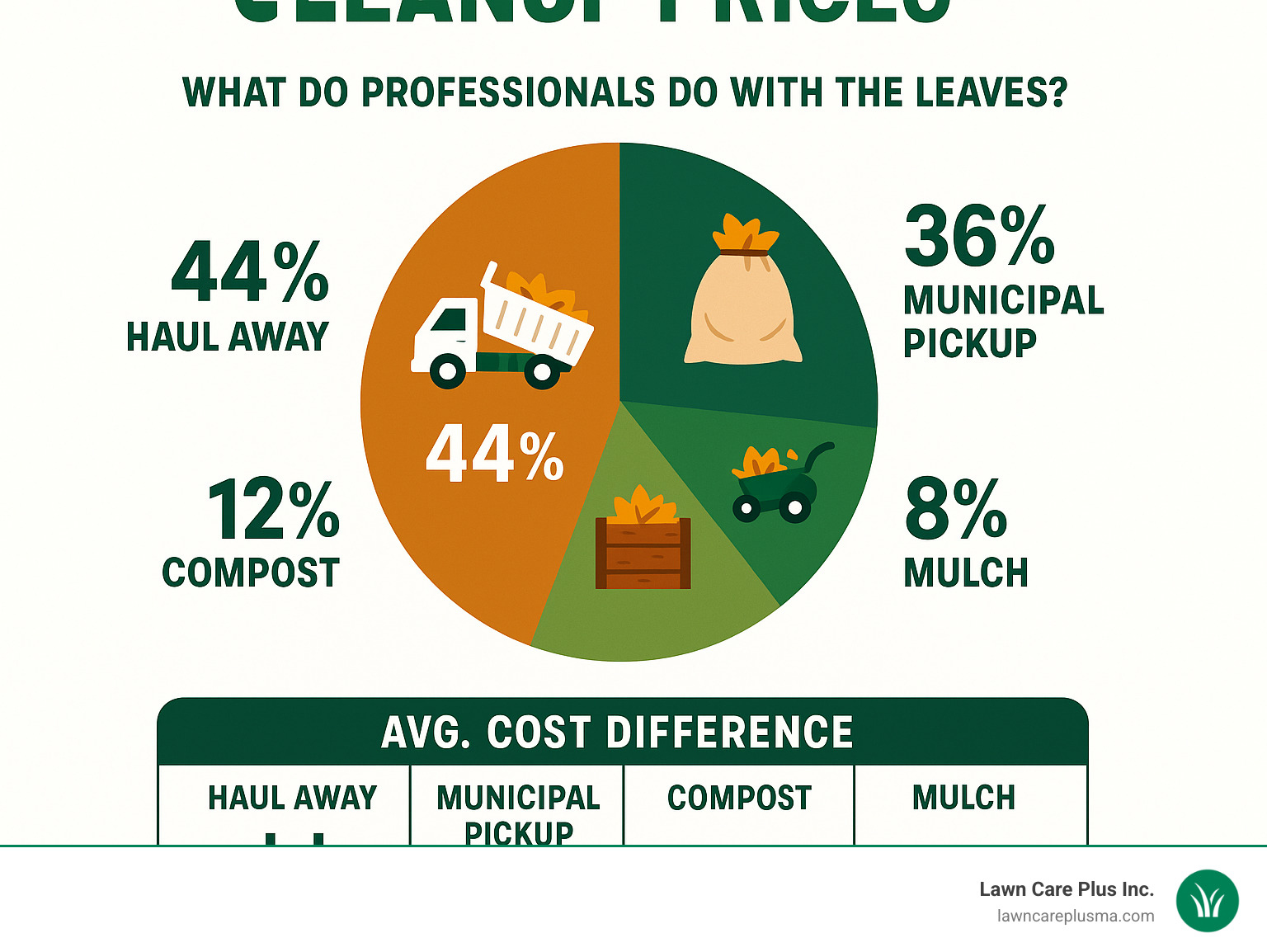
Disposal fees vary significantly by location and method chosen. Municipal pickup might be free in some areas while costing extra in others. Professional hauling typically includes disposal costs in the quoted price, making it easier to budget for your fall leaf cleanup prices.
Reclaim Your Yard This Fall
As the last leaves drift down from your trees, you now have a clear picture of what fall leaf cleanup prices look like across different scenarios. Armed with this knowledge, you can make the choice that works best for your budget, schedule, and back!
The truth is, there’s no one-size-fits-all answer to the leaf cleanup dilemma. A small suburban yard with a couple of ornamental trees might be a perfect weekend DIY project, while a sprawling property dotted with mature oaks could turn into a month-long ordeal without professional help.
The real value of proper leaf cleanup goes far beyond just appearance. You’re protecting your lawn from suffocation, preventing mold and pest problems, and maintaining your property’s value. Think of it as an investment in next spring’s curb appeal – because nothing says “I gave up in November” quite like finding dead, matted grass patches when the snow melts.
When weighing DIY versus professional service, the cheapest option isn’t always the smartest. You might save a few hundred dollars by doing it yourself, but if you throw out your back or spend every weekend in October cursing at wet leaves, was it really worth it? Professional services bring efficiency, proper equipment, and the kind of experience that comes from doing this job hundreds of times each season.
For homeowners in the Boston Metro-West area who want to skip the leaf-induced drama, Lawn Care Plus Inc. offers expert Spring and Fall Clean-Ups for both residential and commercial properties. Our team understands that New England autumns are beautiful but brief – and when those leaves start falling, they don’t wait for your schedule to clear up.
The gorgeous fall foliage that makes our region famous doesn’t have to become your seasonal nemesis. With realistic expectations about costs, a clear understanding of your property’s needs, and the right approach for your situation, you can actually enjoy autumn instead of dreading it.
Whether you choose to tackle the job yourself or call in reinforcements, the important thing is acting before those leaves become a soggy, lawn-killing mess. Your future self (and your grass) will thank you come spring.