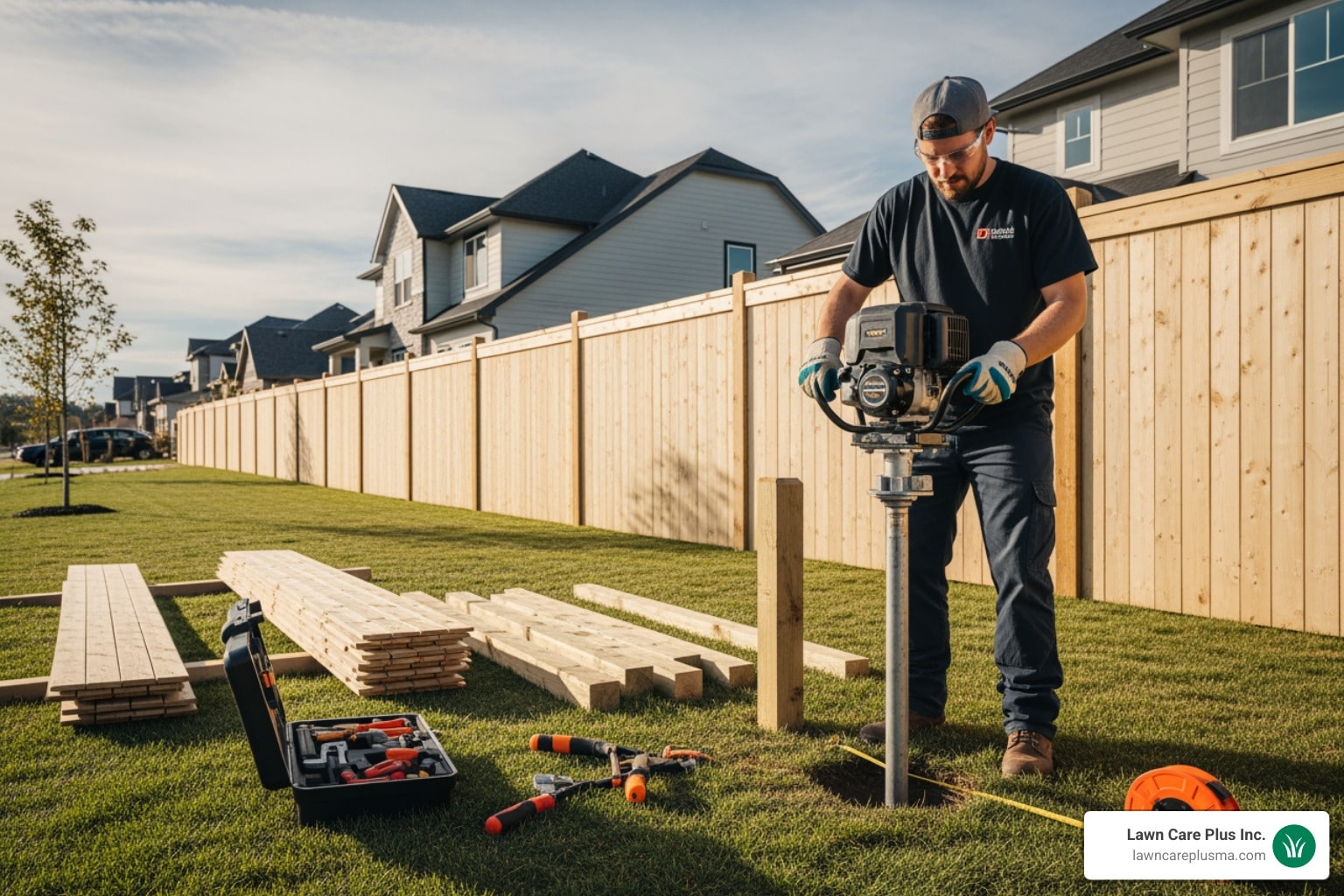
Why Choosing the Right Fence Installer Matters for Your Property
A Fence Installer is a professional who designs, builds, and installs fences for residential, commercial, and industrial properties. They handle the entire process from material selection and permits to site prep and final installation, ensuring your fence is structurally sound, legally compliant, and built to last.
Key reasons to hire a professional fence installer:
- Expertise – They understand local building codes, property lines, and underground utilities
- Quality materials – Access to premium wood, vinyl, aluminum, composite, and metal fencing options
- Proper installation – Ensures posts are set correctly in concrete and panels are level and secure
- Time savings – Most residential projects are completed in 1-3 days
- Warranty protection – Professional installations typically include labor and material guarantees
A new fence is more than just a boundary marker. It’s an investment that improves your property’s security, privacy, and curb appeal while potentially increasing your home’s value. With the U.S. fence and gate market projected to reach $11.2 billion by 2030, homeowners across the country are recognizing the lasting benefits of quality fencing. Whether you’re looking to keep pets safe, create a private backyard retreat, or add architectural interest to your landscape, choosing the right fence installer is critical to achieving results that look great and stand the test of time.
But not all fence installers are created equal. The difference between a fence that lasts for decades and one that saggs, warps, or fails within a few years often comes down to the expertise of the professional you hire. Navigating local permits, property surveys, challenging terrain, and selecting materials for New England’s weather requires an experienced installer’s knowledge, which a DIY approach can’t replicate.
I’m Tim DiAngelis, owner of Lawn Care Plus, Inc., where we’ve been providing professional hardscaping services including fence installation to residential and commercial clients throughout Greater Boston and Metro-West for over a decade. In this guide, I’ll walk you through the seven essential things you need to know before hiring a Fence Installer—so you can make an informed decision and get a fence that delivers beauty, functionality, and lasting value for your property.
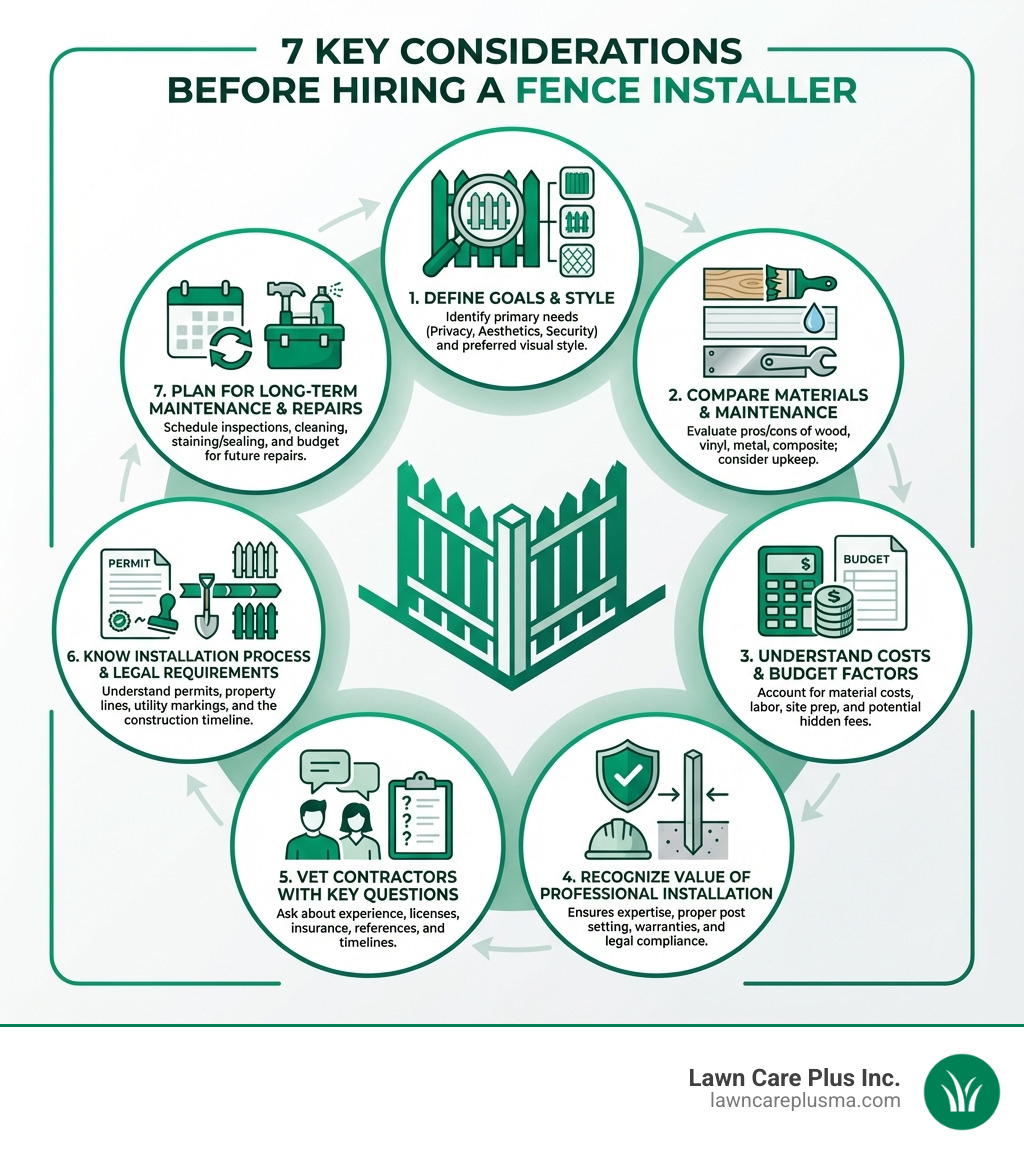
Fence Installer basics:
#1: Define Your Fencing Goals and Choose a Style
Before considering materials or budgets, the first step is to define your goals. Why do you want a fence for your property in Belmont, Newton, or Canton, MA? This initial step guides all subsequent decisions and helps your Fence Installer provide the best solution.
Common reasons homeowners and businesses in the Boston Metro-West area invest in fencing include:
- Privacy: To create a secluded outdoor living space, shield your yard from neighbors, or block unsightly views.
- Security: To deter intruders, protect valuable assets, or simply feel safer in your home or business.
- Aesthetics: To improve your property’s curb appeal, complement its architectural style, or define garden spaces.
- Pet Containment: To create a safe and secure area for pets to roam without escaping. We specialize in Pet Fence Installation.
- Pool Safety: To meet local Massachusetts regulations for pools to prevent accidental drowning. We can assist with Pool Safety Fence Installation that meets all safety codes.
- Property Lines: To clearly mark property boundaries, which can prevent disputes and add value.
- Residential Fencing: From charming picket fences to robust privacy barriers, residential needs vary widely.
- Commercial Fencing: Businesses often require fencing for security, access control, or to define operational areas.
Once your goals are clear, we can explore the various styles available to match your functional needs and aesthetic preferences.
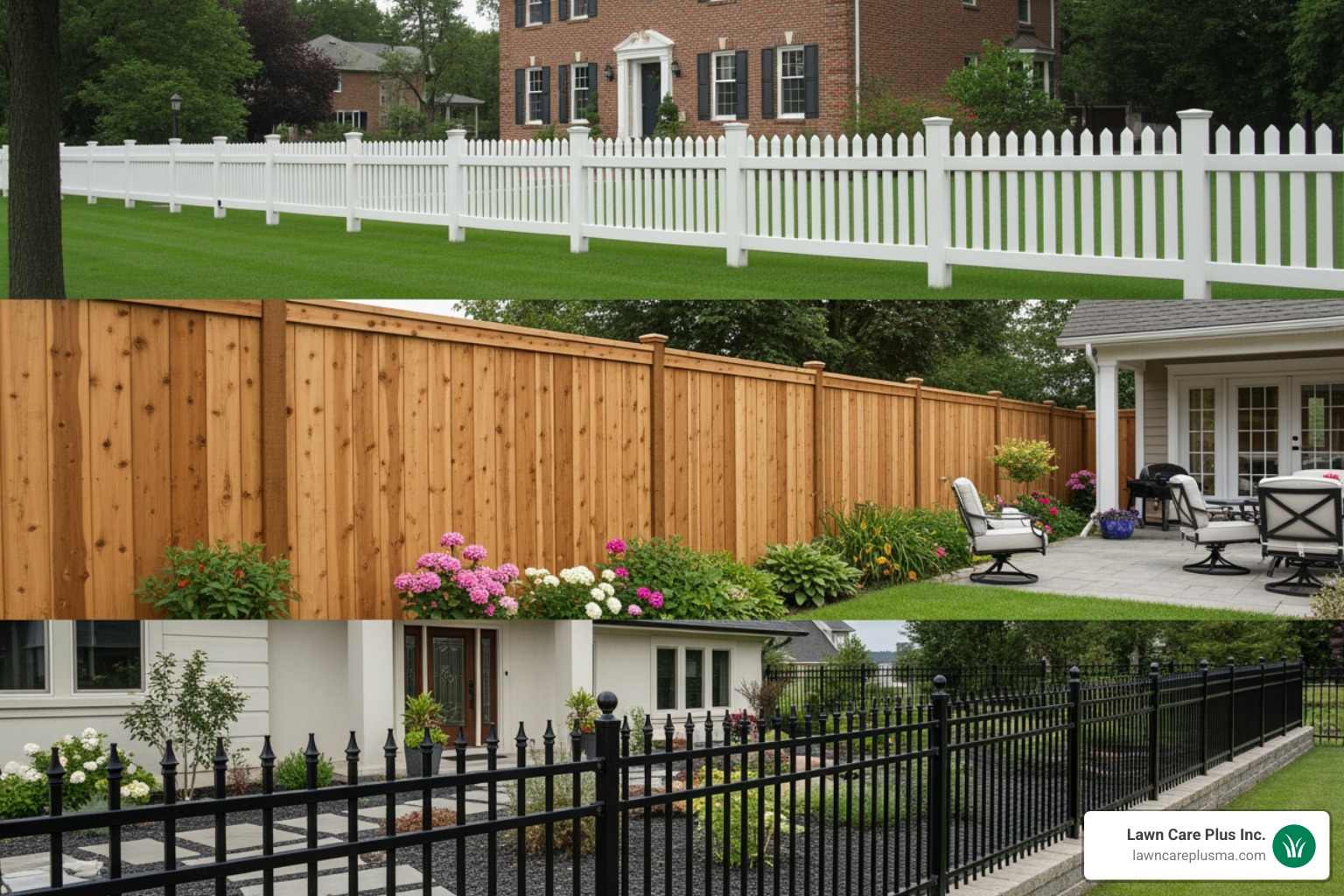
Fence Styles and Their Benefits
The style of your fence significantly impacts its function and appearance. Here are some popular options:
- Picket Fence: A classic choice for aesthetics, offering charm and defining boundaries without obstructing views. Perfect for adding curb appeal to homes in Brookline or Wellesley.
- Privacy Fence: Typically 6-8 feet tall with no gaps between boards, ideal for maximum seclusion and noise reduction. A popular choice for backyards in tight-knit communities like Brighton or Dedham.
- Semi-Privacy Fence: Offers a balance of privacy and airflow, often featuring spaced pickets or lattice tops.
- Ornamental Fence: Made from metal (aluminum or steel), these fences provide elegance and security. They are often chosen for their decorative appeal and durability, common in more upscale residential or commercial settings in Newton or Chestnut Hill.
- Post-and-Rail Fence: A rustic style, often used for large properties or to contain livestock, though it can also add a pastoral aesthetic to residential landscapes.
- Custom Fencing: For unique needs or challenging landscapes, a custom design is the perfect solution. We believe in customization, ensuring your fence perfectly complements your Massachusetts home or business.
- Pre-fabricated Panels: A more economical and quicker installation option, using pre-built sections.
#2: Compare Fencing Materials: Pros, Cons, and Maintenance
The material you choose for your fence determines its durability, maintenance requirements, and overall aesthetic. In New England’s climate, selecting a material that can withstand harsh winters and humid summers is crucial for long-term value.
| Material | Average Cost* (National) | Lifespan | Maintenance Level | Best Use |
|---|---|---|---|---|
| Wood | Moderate | 10-20 years | High | Privacy, traditional aesthetic, customization |
| Vinyl (PVC) | High | 20-30+ years | Low | Privacy, modern look, low maintenance |
| Aluminum | Moderate to High | 30-50+ years | Low | Security, ornamental, low maintenance |
| Composite | High | 25-35+ years | Very Low | Privacy, eco-friendly, wood-like appearance |
*These are average costs based on internet data and not actual Lawn Care Plus pricing. Actual costs for your project will vary based on specific materials, design, and site conditions.
Wood Fencing
Wood fencing remains the most popular type in the U.S., accounting for about 60% of the market. Its natural look, versatility, and affordability make it a timeless choice for many Massachusetts homeowners.
- Pros: Offers a classic, natural aesthetic that can be stained or painted to match your home. Highly customizable in terms of height, style, and design. Cedar, a popular choice, is renowned for its natural resistance to decay, insects, and moisture, making it a durable option for our region. We specialize in Building a Cedar Fence.
- Cons: Requires significant maintenance. Wood is susceptible to rot, warping, and pest infestations if not properly cared for.
- Maintenance: Regular cleaning, staining, and sealing are essential to prolong its lifespan and maintain its appearance, especially in New England’s weather.
Vinyl (PVC) Fencing
Vinyl fencing has surged in popularity due to its low maintenance and modern appeal.
- Pros: “Our PVC Fencing is made from 100% Quality PVC and is virtually maintenance free!” It’s incredibly durable, resistant to rot, pests, and weathering, and won’t warp or splinter. “Vinyl fencing is stronger than wood and more durable in windy conditions and with environmental exposure,” making it a great choice for areas like the Massachusetts coast. Available in various colors and styles, it maintains its appearance over time.
- Cons: Generally has a higher upfront cost than wood. While strong, it can be prone to cracking in extreme cold or from impact, though modern vinyl is much more resilient.
- Maintenance: Requires minimal maintenance—just an occasional wash with soap and water.
Metal Fencing (Aluminum & Steel)
For elegance, security, and unobstructed views, metal fencing is an excellent choice. “Metal fences offer unparalleled security and reliability.”
- Pros: Aluminum is rust-proof and lightweight, making it easy to install and maintain. Steel offers superior strength and security. Both are highly durable, come in various ornamental designs, and require minimal maintenance. “Aluminum fences have a premium powder coating finish for durability against weathering” and often come with a limited lifetime warranty against cracking, peeling, chipping, blistering, and corrosion.
- Cons: It can be more expensive than wood or chain link and might not offer the same level of privacy as solid panels.
- Maintenance: Primarily involves inspecting for damage or rust (for steel) and touching up paint as needed.
Composite Fencing
A newer option, composite fencing combines the aesthetics of wood with the low maintenance of vinyl.
- Pros: Often made from recycled materials, making it an eco-friendly choice. It mimics the look of wood but is highly durable, resistant to rot, pests, and warping. “Azek is a composite material that captures the warmth of wood, but lasts longer, stays cooler, and retains its true color over time.”
- Cons: It has a high initial cost, similar to or exceeding vinyl, and can be heavier than other materials, potentially increasing installation costs.
- Maintenance: Very low, typically just requires occasional cleaning. We offer Composite Fencing Installation.
#3: Understand the Costs and Create a Budget
Understanding the financial investment for a new fence is crucial. While we cannot provide specific pricing without a detailed assessment of your property in Boston, Hyde Park, or elsewhere in our service area, we can discuss cost factors and national averages.
Please note: The average cost of fence installation in the U.S. ranges from $1,500 to $4,000, with some projects costing as much as $10,000 or more (based on internet data, not actual Lawn Care Plus pricing). These are national averages, and costs can vary significantly based on local market conditions, material availability, and the complexities of your project in Massachusetts.
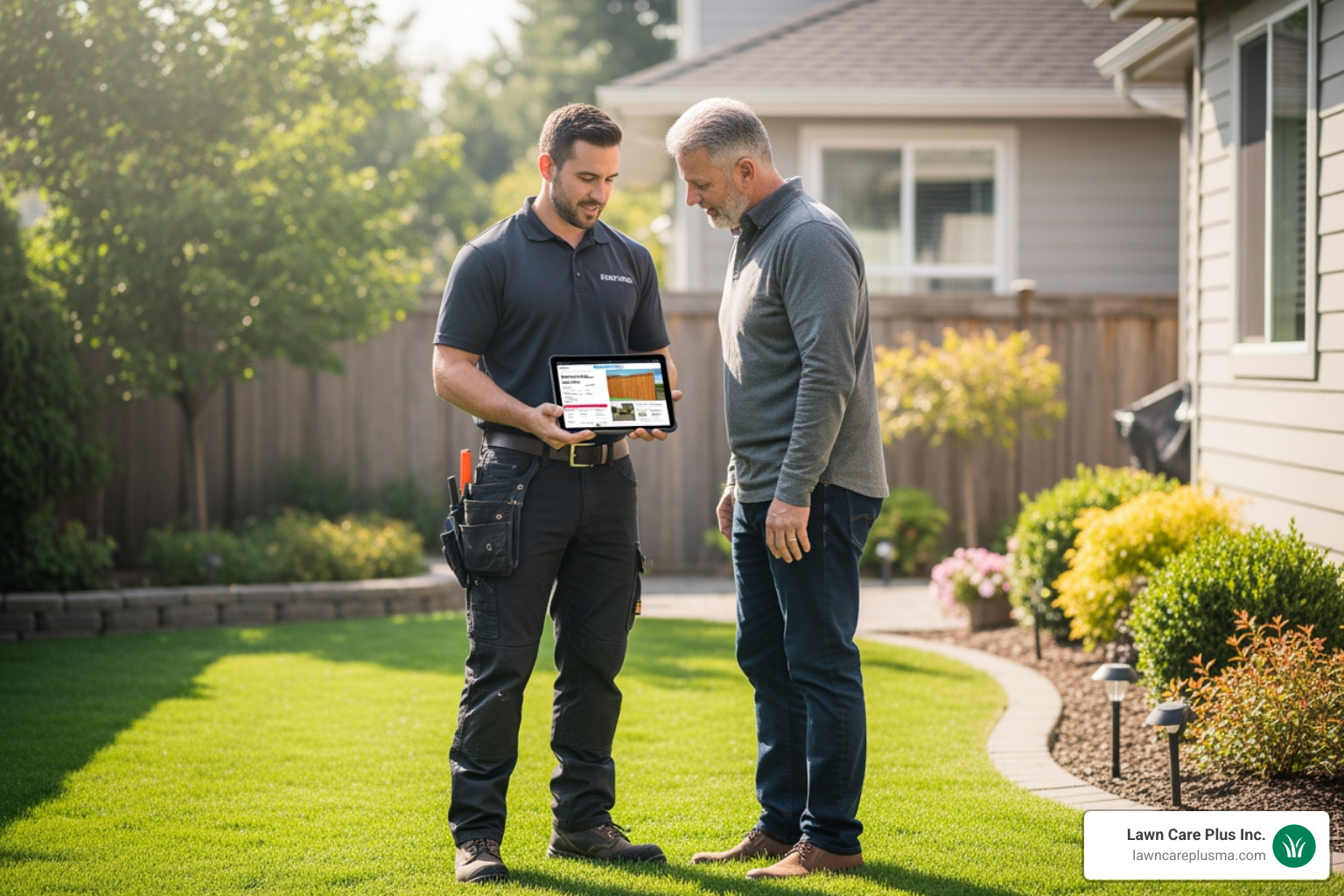
What Influences the Price of a Fence Installation?
Several key factors impact the total cost of your fence project:
- Linear Footage: The longer the fence, the more materials and labor are required.
- Fence Height: Taller fences require more material and often more robust posts and installation techniques.
- Material Choice: As discussed, different materials have vastly different price points. Wood is generally more affordable than vinyl or composite.
- Labor Costs: The average hourly wage for a Fence Installer in the United States was $21.50 in 2023 (based on internet data, not actual Lawn Care Plus pricing). This cost contributes significantly to the overall project price.
- Terrain Complexity: Installing a fence on uneven or sloped ground, or in rocky soil common in New England, can increase labor time and costs.
- Gate Installation: Adding gates, especially custom or automated ones, will add to the total.
- Old Fence Removal: If an existing fence needs to be torn down and disposed of, this is an additional service.
Financing Your Fence Project
A new fence is a significant investment, but it doesn’t have to break the bank. Many homeowners and businesses explore financing options to make their projects more manageable.
- Home Improvement Loans: Traditional loans from banks or credit unions.
- Contractor Financing Partnerships: Some Fence Installer companies partner with lenders for specialized financing plans. As one source noted, options through partners like Synchrony Bank can include “payments as low as $99 a month, no payments for up to 1 year, and low interest rates.” These options can help you budget.
- For more information on financing solutions, you can explore resources like this one.
#4: Why Hiring a Professional Fence Installer is a Smart Investment
While the idea of a DIY fence installation might seem appealing to save money, the benefits of hiring a professional Fence Installer far outweigh the perceived savings, especially in a region like the Boston Metro-West area where specific regulations and challenging terrain are common.
Choosing a professional over a DIY approach ensures:
- Expertise: Professionals understand local building codes, property line nuances, and the best installation techniques for different materials and soil conditions.
- Efficiency: We have the right tools and experience to complete the job quickly and correctly, often in just 1-3 days for residential projects.
- Specialized Tools: From post-hole diggers to concrete mixers and specialized cutting equipment, a professional arrives fully equipped.
- Warranty Protection: Most reputable installers offer warranties on both materials and labor, giving you peace of mind.
- Safety: Handling heavy materials, digging deep holes, and working with power tools carries risks. Professionals are trained to work safely.
- Avoiding Common Mistakes: Incorrect post depth, improper alignment, and failure to account for ground shifts can lead to costly repairs down the line.
Common Challenges a Professional Fence Installer Overcomes
Our region’s unique geography presents several problems that only an experienced Fence Installer can expertly steer:
- Sloped Terrain: Building a fence on uneven ground requires skill. As one expert explained, “Building a fence on a slope requires skill and experience. We have developed a fencing method that allows the fence to more closely follow the grade of the slope.” Our craftsmen can customize panels or stick-build your fence to ensure a smooth transition that follows the ground’s grade.
- Rocky Soil: Digging post holes in the rocky soil prevalent in Massachusetts can be a back-breaking task without the right equipment. Professionals come prepared for this.
- Underground Utilities: Hitting a utility line during digging can be dangerous and expensive. Professionals know to “Call 811 to request a utility survey to identify and mark underground lines” before any digging begins.
- Property Line Accuracy: Ensuring your fence is installed “within your property” is critical to avoid disputes. A professional will advise on the need for a property survey to establish clear boundaries.
- Local Building Codes: Every town in the Boston Metro-West area, from Dedham to Watertown, may have specific regulations regarding fence height, setbacks, materials, and permits. A professional Fence Installer is familiar with these requirements.
The Value of Experience and a Reputable Fence Installer
When you hire a seasoned Fence Installer, you’re not just paying for labor; you’re investing in years of accumulated knowledge and skill.
- Quality Craftsmanship: An experienced team ensures precision, durability, and a flawless finish. They pay attention to details that make your fence stand out.
- Problem Solving: Unexpected issues, like encountering an old foundation or a stubborn tree root, are handled efficiently without delaying the project.
- Time Savings: What might take a DIY enthusiast weeks can often be completed by professionals in a few days.
- Peace of Mind: Knowing that your fence is structurally sound, compliant with all regulations, and built to last provides invaluable peace of mind. We pride ourselves on being a Reliable Fence Company in our service areas.
#5: Vet Your Contractor: Key Questions to Ask
Choosing the right Fence Installer is crucial for a successful project. Just as you wouldn’t hire an inexperienced doctor, you shouldn’t entrust your property to an unproven contractor. Due diligence is key. We encourage you to thoroughly vet any potential contractor, and checking their credentials, like their BBB rating, is a great start. You can check company ratings for businesses in the Boston area.
Key Questions for Your Potential Fence Installer
Here’s a list of essential questions to ask every potential Fence Installer before making your decision:
- Licensing and Insurance: “Are you licensed and insured?” This is non-negotiable. A licensed contractor adheres to industry standards, and insurance protects you from liability in case of accidents or damage during the project.
- Portfolio and References: Can they provide examples of their past work, especially in your area (e.g., Milton, Norwood, or Randolph)? Can they connect you with previous clients for references?
- Material and Labor Warranties: What warranties do they offer on the materials and their workmanship? Some aluminum fences, for instance, come with a limited lifetime warranty, and many professional installations include a one-year labor warranty.
- Permit Process: Will they handle the acquisition of all necessary local building permits for your town in Massachusetts? This is a critical step to ensure your fence is legal.
- Project Timeline: What is the estimated start and completion date? How do they handle potential delays due to weather or material availability?
- Payment Schedule: What is the payment structure? Is a deposit required, and what are the milestones for subsequent payments?
- Subcontractors: Do they use subcontractors, and if so, are those subcontractors also licensed and insured?
#6: Know the Installation Process and Legal Requirements
Understanding the fence installation process and being aware of the legal requirements in your Massachusetts town can help ensure a smooth project. A professional Fence Installer will guide you through every step, ensuring compliance and quality.
The Professional Fence Installer’s Step-by-Step Process
While every project has its unique aspects, a typical professional fence installation follows a structured process:
- Initial Consultation: We’ll discuss your goals, material preferences, and budget, offering expert recommendations for your property in places like Roslindale or Watertown.
- Detailed Quote: You’ll receive a comprehensive, transparent quote outlining all costs, materials, and services.
- Contract Signing: Once you’re comfortable, a formal contract is signed, detailing the scope of work, timeline, and payment schedule.
- Permit Acquisition: Your Fence Installer will handle applying for any necessary local building permits.
- Site Preparation: This involves clearing the fence line, removing obstacles, and marking the precise location of each post.
- Utility Marking: Before any digging, we’ll ensure 811 is called to mark all underground utility lines.
- Post Setting (Concrete): Posts are set at the correct depth and spacing, typically in concrete, to ensure structural integrity, especially for New England’s frost heave.
- Panel or Picket Installation: Once posts are secure, the fence panels, pickets, or rails are installed, ensuring they are level and properly aligned.
- Gate Hanging: Gates are precisely hung and adjusted for smooth operation, including installing latches and hardware.
- Final Walk-through: A thorough inspection with you to ensure your complete satisfaction with the finished product.
Navigating Permits, Property Lines, and Regulations
Legal and logistical considerations are paramount for any fence project in Massachusetts:
- Local Building Permits: “Apply for proper building permits before fence installation if directed by local code.” Regulations vary by town (e.g., Boston, Newton, Wellesley), often dictating height limits, setbacks from property lines, and material restrictions.
- Property Survey: To avoid disputes, “the real way to understand and know who a fence belongs to is to have a property survey done.” This accurately establishes your property lines.
- Homeowners’ Association (HOA) Rules: If your property is part of an HOA in areas like Chestnut Hill or Needham, “check with your homeowners association for any applicable regulations” regarding fence style, color, and height.
- Calling 811: This national service is essential. “Call 811 to request a utility survey to identify and mark underground lines” before any digging. This prevents dangerous and costly damage to utility lines.
- Easements: “Check for easements in your deed that may limit fence design and location.” An easement grants another party the right to use a portion of your property, which could affect where your fence can be built.
- Neighborly Etiquette: While not legally required, discussing your fence plans with neighbors can foster good relations and prevent future issues.
#7: Ensure Longevity with Proper Maintenance and Repair
Your new fence is an investment, and like any investment, it requires proper care to ensure its longevity and maintain its beauty. Even the most durable fences aren’t “a lifetime product” without some attention. Understanding the maintenance needs for your chosen material and recognizing signs of wear and tear will help you protect your investment.
Maintenance Tips for Different Fence Types
- Wood: Regular cleaning, staining, and sealing are crucial. Inspect annually for signs of rot, insect damage, or loose fasteners. Staining and sealing every few years (depending on climate exposure) will protect against moisture and UV damage. We offer Fence Restoration and Staining services to keep your wood fence looking its best.
- Vinyl & Composite: These materials are known for being low maintenance. A simple washing with soap and water or a power washer will remove dirt and mildew. Inspect periodically for any cracks or loose panels.
- Metal (Aluminum & Steel): Minimal maintenance is needed. Inspect for any scratches in the powder coating on aluminum that could lead to corrosion, and touch up paint as needed. For steel, check for rust, especially at joints or where paint may have chipped. Keep hinges and latches lubricated.
Signs Your Fence Needs Repair or Replacement
Ignoring small issues can lead to larger, more expensive problems. Here are “signs you may need a fence replacement” or significant repair:
- Leaning Posts: If posts are leaning, rotting at the base, or no longer securely set in the ground, the structural integrity of your fence is compromised.
- Rotting or Warped Wood: Extensive rot, especially near the ground, or severely warped boards indicate significant damage that may require replacement.
- Cracked or Broken Panels: Large cracks, splintering, or broken sections not only look bad but also reduce the fence’s effectiveness for privacy or security.
- Rust and Corrosion: For metal fences, widespread rust that cannot be easily treated indicates the material is degrading.
- Sagging Gates: Gates that no longer close properly, drag on the ground, or have loose hinges are a common sign of wear and tear, often requiring adjustment or hardware replacement.
- Loose Hardware: Missing screws, nails, or loose brackets can weaken the fence structure over time.
Frequently Asked Questions about Fence Installation
How much does a new fence typically cost?
Fence cost varies widely based on material, length, height, and labor, with national averages ranging from $1,500 to over $12,000 (based on internet data, not actual Lawn Care Plus pricing). Always get a detailed quote for your specific project.
How long does it take to install a fence?
A standard residential fence installation can often be completed in 1-3 days, but the total timeline depends on material availability, weather, and permit requirements. Larger or more complex projects, or those requiring old fence removal, may take 3-4 days or more.
What is the most durable, low-maintenance fence material?
Vinyl and composite fencing are top choices for durability and minimal maintenance, as they don’t rot, warp, or require staining. Aluminum is also highly durable and rust-proof. These materials are excellent for enduring the varied weather conditions of Massachusetts.
Conclusion
Hiring a Fence Installer for your property in the Boston Metro-West area is a significant decision that impacts your home’s aesthetics, security, and value for years to come. By understanding your fencing goals, comparing materials, budgeting wisely, appreciating the value of professional expertise, vetting contractors thoroughly, knowing the installation process and legalities, and planning for ongoing maintenance, you’re well on your way to making an informed decision.
At Lawn Care Plus Inc., we are committed to providing our residential and commercial clients with durable, beautiful, and expertly installed fences that stand the test of time and complement the unique character of our Massachusetts communities. Our experienced team is ready to assist you with everything from initial design to flawless installation and beyond.
Contact us today for a comprehensive consultation on your next hardscaping or landscaping project!