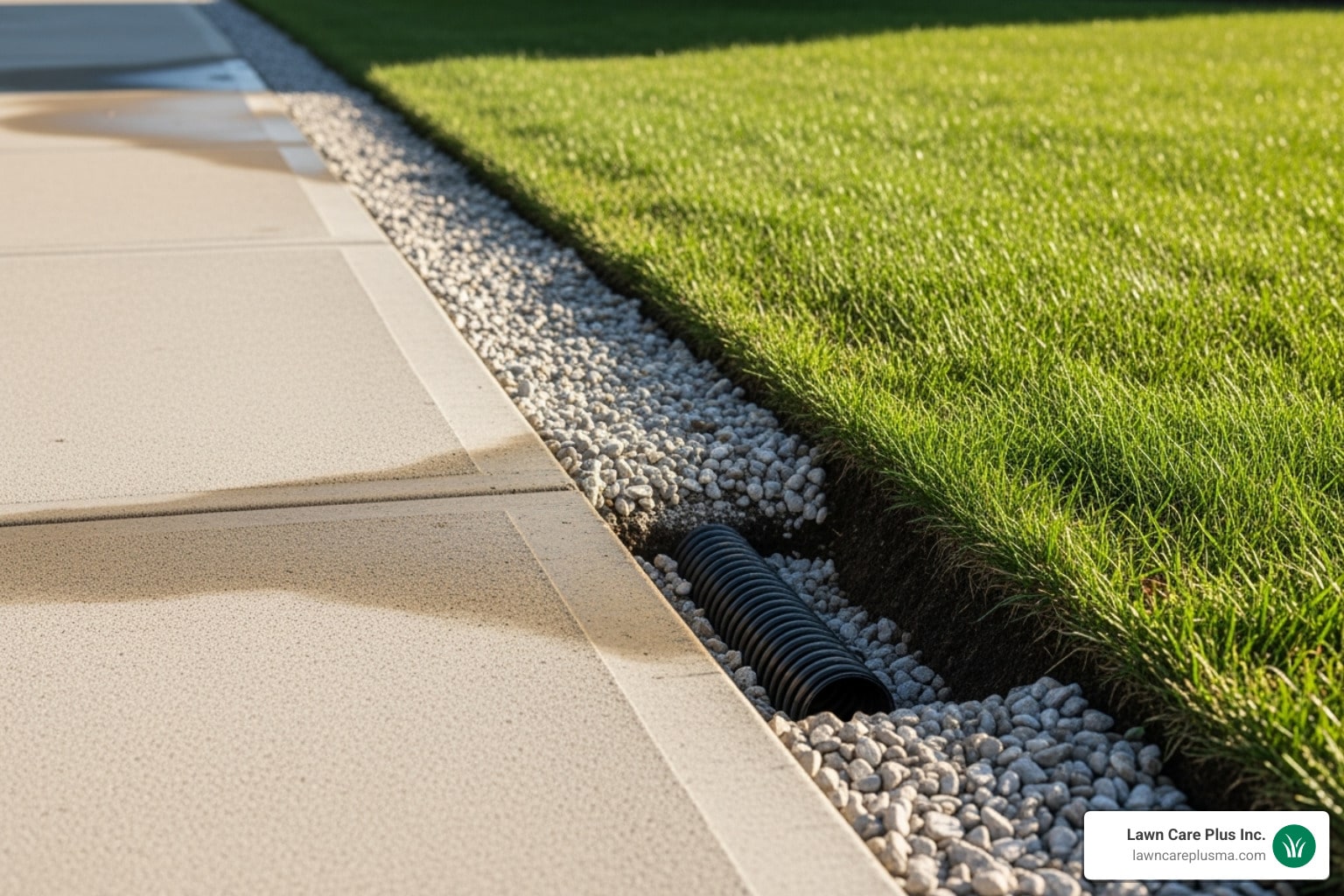
Why Your Sidewalk Needs a Drainage Solution
French drain sidewalk installation is a proven solution for managing water around concrete walkways. When water pools near your sidewalk, it can cause cracking, heaving, and dangerous ice patches while threatening your home’s foundation. These issues often lead to soil erosion and expensive repairs.
Quick Answer for French Drain Sidewalk Installation:
- Purpose: Capture and redirect subsurface water away from sidewalks and foundations
- Location: Install 4-6 feet away from the house foundation, alongside the walkway
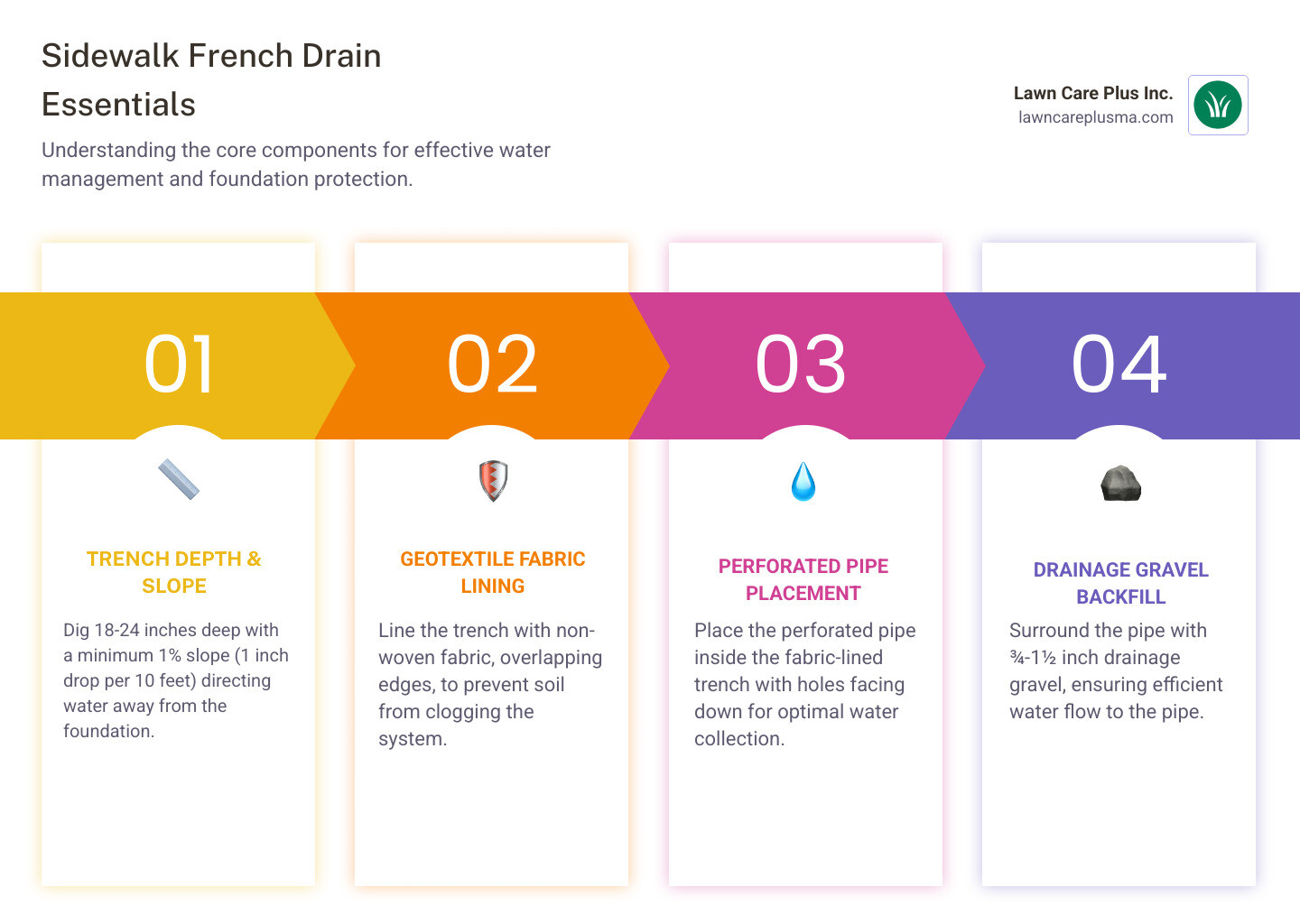
- Depth: Dig 18-24 inches deep with at least 1% slope (1 inch drop per 10 feet)
- Materials: Perforated pipe, drainage gravel (¾-1½ inches), and geotextile fabric
- Cost: $20-100+ per linear foot depending on complexity and location
A French drain is essentially a sloped trench containing a perforated pipe surrounded by gravel. This underground system uses gravity to intercept and channel both surface and groundwater away from problem areas. Water flows through the porous gravel into the pipe, which then directs it to a safe discharge point. It’s a simple, effective way to prevent water from accumulating and causing damage.
While a French drain excels at managing subsurface water, it differs from a channel drain, which is a grated surface drain for hardscapes like driveways. Both are excellent tools, but they serve different purposes. You can learn more about all our Sidewalk Drainage Solutions.
French drain sidewalk word list:
Signs You Need a French Drain for Your Sidewalk
Your property will often show clear signs when a drainage problem exists. Here’s what to look for:
- Soggy Lawn Next to Walkway: If the grass next to your sidewalk remains saturated long after rain, it indicates poor drainage that can affect your sidewalk and foundation.
- Persistent Puddles: Puddles on or near your sidewalk that don’t drain are a clear sign of trouble and can become dangerous ice patches in winter.
- Water in Basement: Moisture or leaks in your basement or crawlspace near the sidewalk mean water is penetrating your foundation.
- Cracked or Heaving Concrete: Water-saturated soil can freeze and thaw, causing concrete slabs to shift, crack, or heave, creating tripping hazards.
- Icy Patches in Winter: Persistent icy spots on your sidewalk are a symptom of poor drainage where water accumulates and freezes.
- Efflorescence on Foundation Walls: A white, powdery substance on your foundation walls is a mineral deposit left by seeping water, indicating a moisture problem.
If you’re experiencing these issues, it’s time to address your drainage. For a full range of solutions, explore our Domestic Drainage System options.
Planning and Preparation for Your French Drain Sidewalk Project
A successful french drain sidewalk installation depends on proper preparation. Before you start digging, a solid plan is essential.
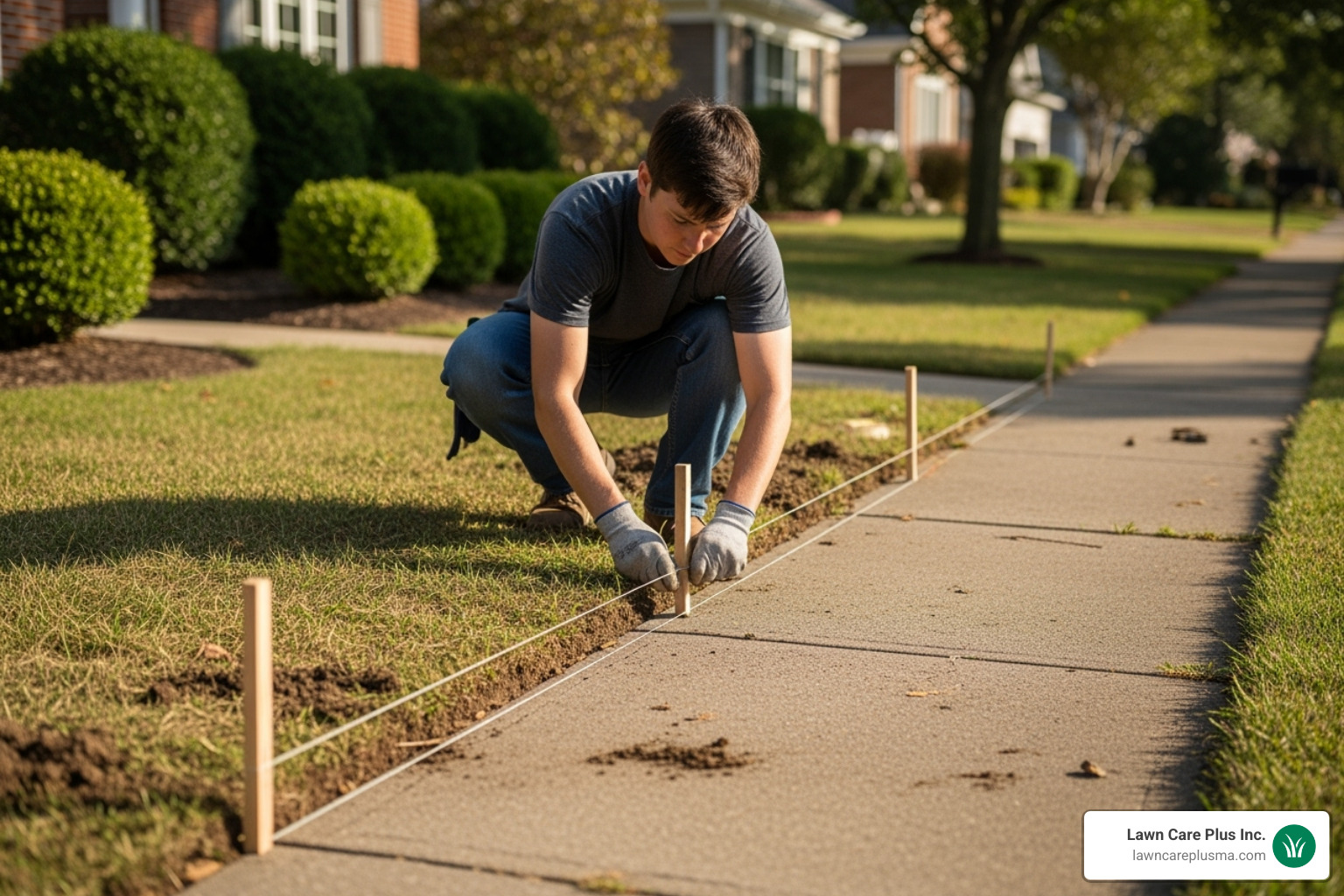
First, perform a site assessment. Observe your property during and after rain to see where water pools and flows. Understanding your yard’s natural slope is crucial, especially if it directs water toward your house.
Before digging, calling 811 (Dig Safe) is non-negotiable. This free service marks underground utility lines, preventing dangerous and expensive accidents involving gas, electrical, or water lines. Make the call at least 48 hours before you plan to dig.
Next, choose a discharge point. Your French drain needs a lower elevation to drain to, such as the street, a storm drain (if local codes permit), a dry well, or a downslope area far from any structures. Never direct water into a neighbor’s yard.
Calculating slope is critical. Your drain needs at least a 1 percent slope—a drop of 1 inch for every 10 feet of pipe—to ensure water flows continuously. For more information on managing water flow, you can review the Principles of Exterior Drainage. For challenging terrain, see our Drainage Solutions for Sloping Land.
Key Components and Materials
Gathering the right materials is key to a successful project. Each component has a specific role in managing water.
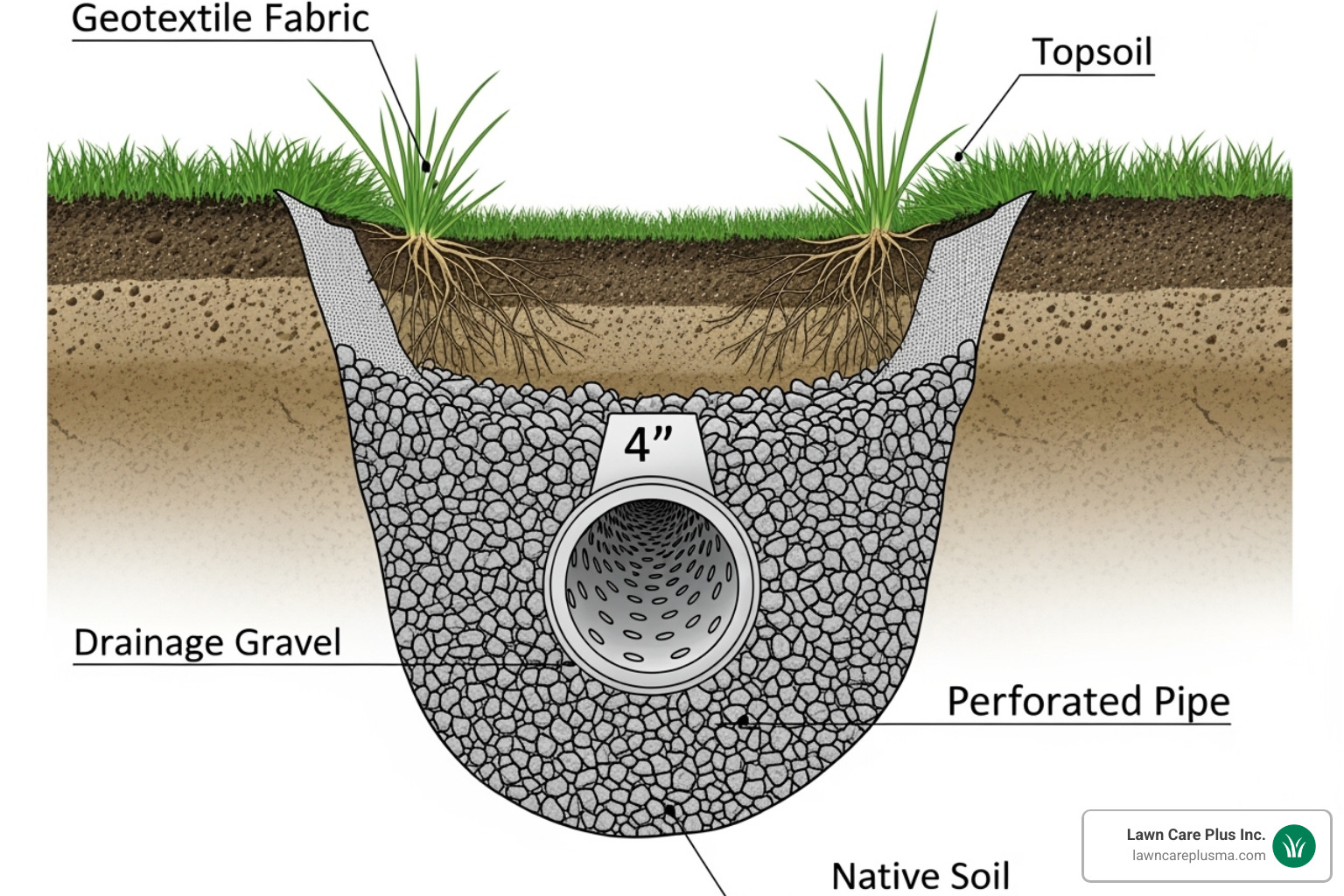
- Perforated Pipe: Typically 4-inch diameter, either flexible or rigid PVC. The holes should face down to collect water from the saturated soil.
- Non-Woven Geotextile Fabric: This acts as a filter, allowing water in while keeping out soil and silt that can clog the system.
- Drainage Gravel: Use clean, washed gravel between 3/4 to 1 1/2 inches in size to create a porous channel for water.
- Catch Basins: These are useful for collecting surface water from specific problem spots.
- Solid Pipe: Used to carry water from the end of the perforated pipe to the discharge point without leaking.
- Tools: You will need a shovel or trenching tool, measuring tape, stakes, string, and a level.
Where to Locate the Drain
Proper placement is essential for an effective french drain sidewalk.
The ideal location is on the uphill side of the sidewalk to intercept water before it reaches the walkway. The most common placement is alongside the walkway.
Regarding distance from the foundation, placing the drain 4-6 feet away from the house can protect both the sidewalk and the foundation by intercepting subsurface water before it gets too close. For more complex drainage around structures, our Retaining Wall Drainage solutions might offer additional ideas.
The goal is to intercept water before it becomes a problem, not after it has already caused damage.
Step-by-Step Guide to Installing a French Drain Sidewalk System
Installing a french drain sidewalk system is a manageable project when broken down into clear steps. This process creates an underground highway for water that will protect your property for years.
Step 1: Dig the Trench
This phase sets the foundation for the entire system.
Begin by marking your trench path with stakes and string to ensure a straight line. Dig a trench that is 6 inches wide and 18 to 24 inches deep. This depth is effective for capturing subsurface water and helps protect the pipe from frost in colder climates.
The most critical part is maintaining a minimum 1% slope for gravity-fed drainage. Check the slope of the trench bottom continuously with a level. The bottom should be smooth to prevent water from pooling. For long trenches, renting a trenching machine is recommended. Proper trenching is a key part of any Land Drainage System.
Step 2: Line the Trench and Add Gravel
Next, prepare the trench to ensure the system’s longevity.
Lay the geotextile fabric along the entire trench, leaving plenty of excess fabric on both sides to wrap over the top later. This fabric barrier prevents soil and silt from clogging the gravel and pipe.
Then, add a base layer of drainage gravel about 2 to 3 inches deep. Spread it evenly along the bottom of the trench, maintaining the proper slope. This gravel bed provides a stable, permeable base for the pipe.
Step 3: Place the Perforated Pipe
Now it’s time to install the pipe that will carry water away.
Position the pipe with the holes facing down. This allows water to enter from the bottom as the ground becomes saturated, which is the most effective method of collection. Securely connect any pipe sections with the proper fittings to prevent soil intrusion.
If you are connecting catch basins, ensure they are positioned to capture surface water from problem areas and that the connection to the pipe is watertight and sloped correctly. For integrating multiple water sources, see our guide on Installing a French Drain for Gutters.
Step 4: Backfill and Finish
This final step conceals the system and restores your landscape.
Surround the pipe completely with gravel, filling the trench to about 3 inches below ground level. This gravel envelope allows water to flow freely to the pipe from all directions.
Fold the excess geotextile fabric over the top of the gravel, creating a protective lid that prevents soil from migrating down into the system.
Finally, top the trench with soil and your desired surface material, such as sod to blend into the lawn or decorative river rock for an attractive border along your sidewalk.
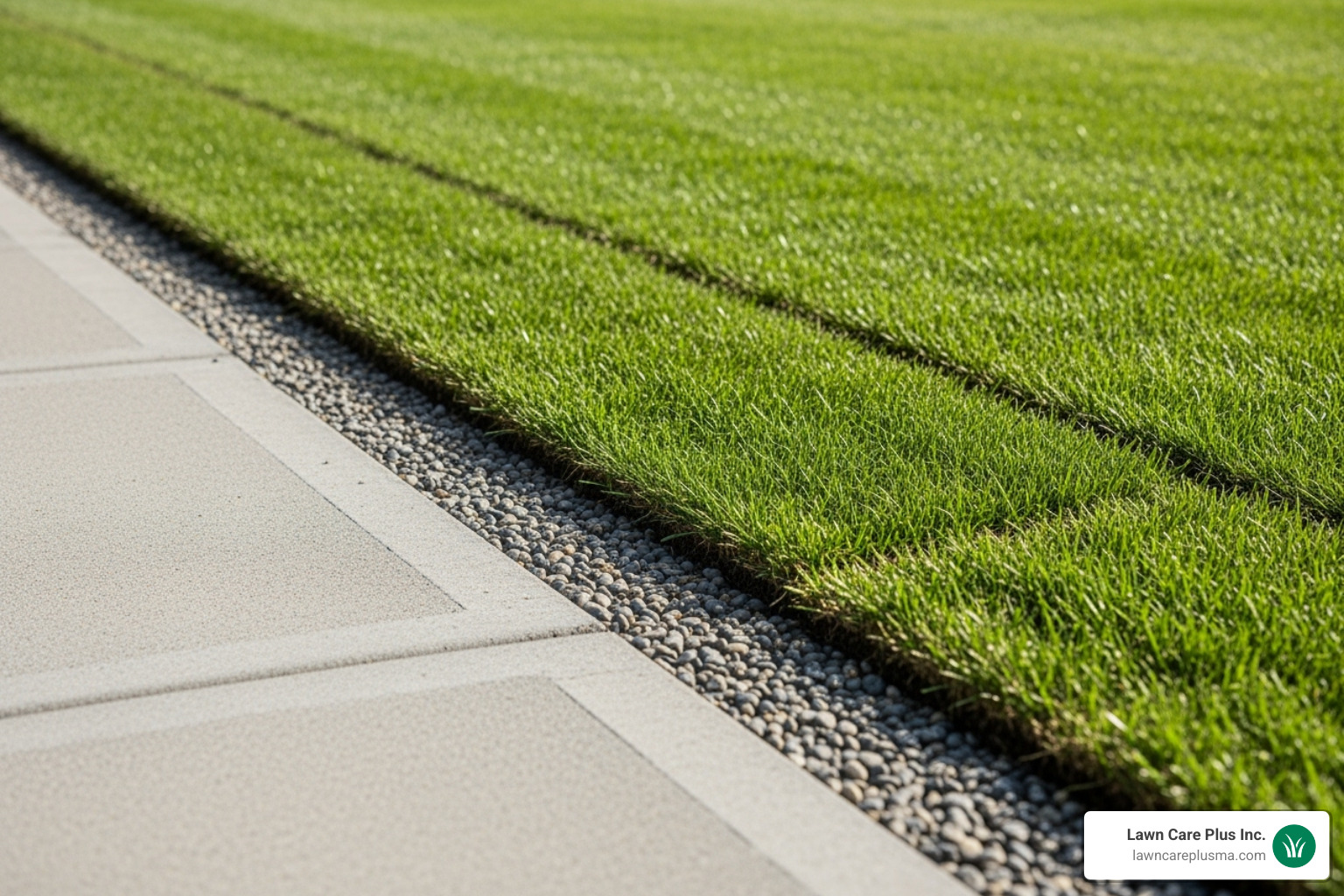
Once complete, a well-installed french drain sidewalk system works invisibly to protect your property.
Common Challenges and Long-Term Maintenance
A properly installed french drain sidewalk is a durable solution, often lasting 20 to 30 years or more. However, minimal maintenance is required to prevent common issues and ensure longevity.
The most common challenges include:
- Clogging: Fine soil and silt can gradually enter the system, reducing flow. Using geotextile fabric and clean, correctly sized gravel during installation is the best prevention.
- Tree Roots: Trees are drawn to water, and their roots can penetrate and block the drain pipe over time.
- Soil Settlement: The ground around the trench may settle during the first year. This is normal and can be fixed by adding more topsoil.
Avoiding Potential Installation Problems
Avoiding common mistakes during installation is crucial for a long-lasting system.
- Hitting Utility Lines: Always call 811 (Dig Safe) before you dig. Hitting a gas, electric, or water line is dangerous and can lead to costly repairs.
- Improper Slope: A French drain requires a minimum 1% slope to function. Without it, water will sit in the pipe, leading to clogs and system failure.
- Using Wrong Materials: Use non-woven geotextile fabric and clean, washed gravel. Dirty gravel or the wrong fabric will compromise the system’s effectiveness.
- Illegal Connections: Always check local building codes before connecting your drain to a municipal storm drain. Unauthorized connections can result in fines.
Maintaining Your French Drain Sidewalk for Longevity
Regular, simple maintenance will keep your French drain working effectively for decades.
- Inspect the Discharge Point: Regularly check the outlet for leaves, sediment, or other debris that could cause a backup. Ensure pop-up emitters open and close freely.
- Flush the System: Every few years, flush the pipe with pressurized water from an access point to clear out accumulated silt.
- Keep Catch Basins Clear: If your system has catch basins, clean them out regularly to remove leaves and debris. Filters can help but also require cleaning.
- Manage Tree Roots: Be vigilant if you have large trees near your drain. Signs of reduced flow after rain could indicate root intrusion. For detailed strategies, see our guide on Roots in French Drain.
Staying observant and addressing small issues promptly will prevent them from becoming major problems.
Frequently Asked Questions about Sidewalk French Drains
Homeowners often have questions when dealing with water issues around their sidewalks. Here are answers to the most common inquiries about french drain sidewalk installations.
How much does it cost to install a French drain next to a sidewalk?
The cost for a professionally installed french drain sidewalk can vary significantly. Based on internet averages, the range is typically $20 to $100+ per linear foot. Please note this is not an official quote from Lawn Care Plus Inc.
Factors that influence the final price include:
- Soil Type: Rocky or clay soil is more difficult to excavate than sandy loam.
- Accessibility: Difficult-to-reach areas can increase labor time.
- Length and Depth: Longer and deeper systems require more materials and labor.
- Permits: Projects that require permits or connection to municipal systems will have additional costs.
While a DIY approach saves on labor, remember to factor in equipment rental, materials, and your own time.
Can a French drain go under a concrete sidewalk?
Yes, a French drain can be installed under a concrete sidewalk, but it is a complex job best left to professionals. The process requires specialized equipment and skills to avoid damaging the walkway.
Methods include cutting sections of the sidewalk with concrete saws or, in some cases, tunneling underneath the slabs. Tunneling is very labor-intensive and risks undermining the concrete’s stability.
After installation, the concrete must be repaired or repoured, matching the existing finish and ensuring a stable, level surface. Due to this complexity, we recommend professional installation. This type of project often falls under our Masonry Services, where our team handles both the drainage and concrete work.
How deep should a French drain be next to a sidewalk?
For most french drain sidewalk projects, a depth of 18 to 24 inches is standard. This depth is effective for several reasons:
- It intercepts subsurface water where most problems begin.
- It provides enough depth to establish a proper 1% slope over long distances.
- In Massachusetts, it helps protect the pipe from shifting due to the ground freezing and thawing (frost line considerations).
While this is a general guideline, the ideal depth can vary based on the local water table and the specific drainage goals. The key is to dig deep enough to create a reliable, long-term solution.
Protect Your Property with Professional Drainage Solutions
Investing in a french drain sidewalk system is a smart move to protect your property’s value and safety. It’s a proactive solution that prevents water damage before it starts.
A properly installed French drain delivers multiple benefits:
- Prevents Costly Repairs: It stops water from cracking foundations, heaving concrete, and flooding basements.
- Improves Curb Appeal: It eliminates soggy lawns, soil erosion, and unsightly puddles, creating a clean, stable look.
- Improves Safety: By removing standing water, it prevents dangerous slipping hazards, especially icy patches in winter.
- Promotes a Healthier Landscape: Good drainage prevents waterlogged soil, keeping your grass and plants healthy.
While this guide covers the DIY basics, drainage projects can be complex. Factors like soil conditions, property slope, and local regulations often require professional expertise to ensure a lasting solution.
At Lawn Care Plus Inc., we have years of experience solving drainage challenges for homeowners throughout the Boston Metro-West area. Our team understands the unique soil conditions and building codes in Massachusetts. We have the equipment and knowledge to design and install a french drain sidewalk system that is integrated seamlessly with your landscape.
Don’t let water problems damage your property. Contact us for a hardscaping and drainage consultation and let our experts provide the peace of mind you deserve.